Cascais day trip from Lisbon: train, marina, Boca do Inferno and Guincho beach
Last reviewed
How do I get from Lisbon to Cascais for a day trip?
Take the train from Cais do Sodré station — it runs every 30 minutes, takes 40 minutes, and costs €2.40 round trip on a Viva Viagem card. No booking needed. Cascais station is right at the seafront, 5 minutes' walk from the marina.
| Where | Cascais, 40 min west of Lisbon by train |
| Cost | €4.40 round trip train; €40-60/person for lunch and extras |
| Time needed | Full day (9:30am-7pm) for the complete route |
| Getting there | Train from Cais do Sodré, every 30 min |
| Best time | May-June, September-October |
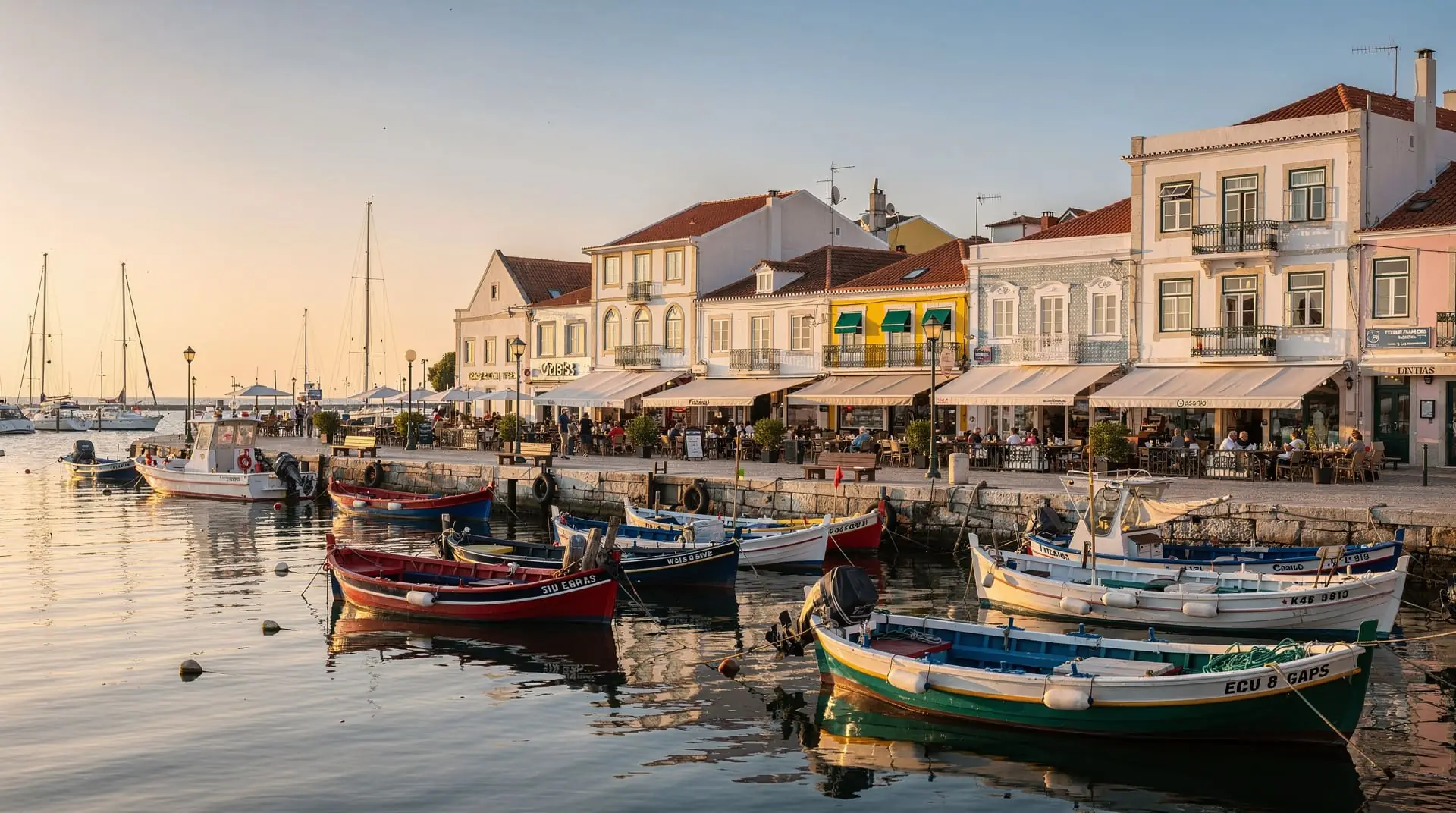
Cascais is the most effortless day trip from Lisbon. There’s no advance booking, no bus connection at the other end, no parking negotiation. The train from Cais do Sodré drops you 400 metres from the fishing harbour in 40 minutes, for €2.40 round trip. Cascais delivers genuine Portuguese coast character — the working harbour, the 19th-century summer villas, the Atlantic sea cliffs at Boca do Inferno, and Guincho beach in the dunes — without the crowds that make Sintra logistically demanding.
It is also a town that rewards time. The morning train, a slow walk along the seafront, lunch at a proper seafood restaurant, an afternoon at Guincho, and a sunset return — that is a good day.
Getting there: the Cascais line
From: Cais do Sodré station (central Lisbon, metro green line, walk from Baixa-Chiado) Journey time: 40 minutes Frequency: Every 30 minutes from approximately 5:30am until midnight Cost: €2.20 single on a Viva Viagem card (reusable, €0.50 for the card). Round trip: €4.40. The Lisboa Card includes all Cascais line trains.
The Cascais line is one of the most scenic commuter railways in Europe. It runs along the north bank of the Tagus estuary, past Belém, then turns along the Atlantic coast, stopping at Estoril (casino, gardens, faded belle époque grandeur) before arriving at Cascais. The sea is visible from the train for much of the coast section.
There is no need to take an earlier train than you’d otherwise want — Cascais manages its tourist flow well and there’s no equivalent of the Sintra 7am race. A 9am or 10am departure from Cais do Sodré is entirely civilised.
Cascais town: what to do and in what order
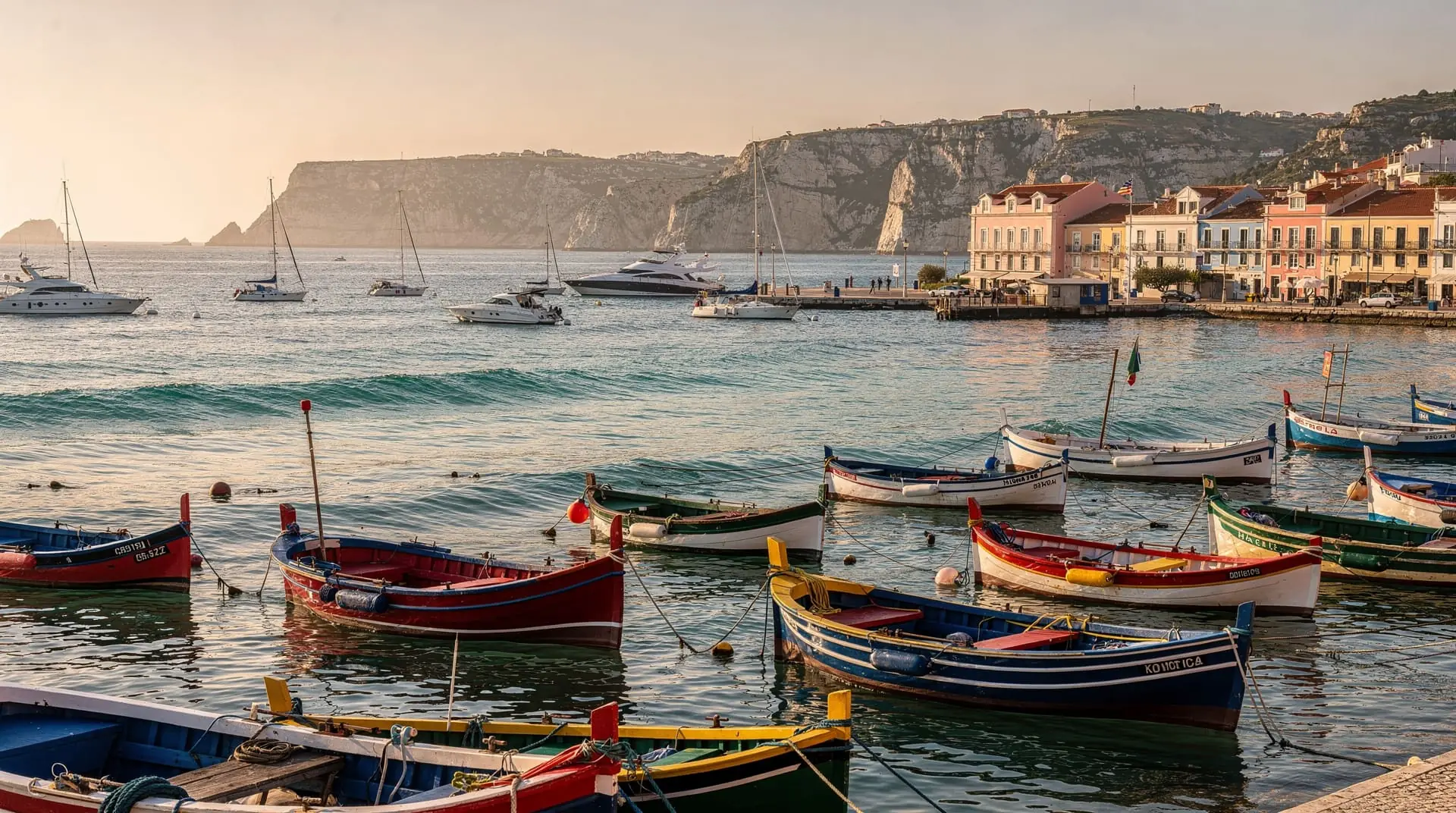
The fishing harbour and market
Start here. The harbour at Praça da República has fishing boats from early morning; the daily fish market (Mercado da Vila) is a five-minute walk north, open until around 1pm. The old town radiating from the harbour is compact and genuinely Portuguese — tiled buildings, a few good pastry shops, the 17th-century Citadel of Cascais (now a luxury hotel but the exterior and terrace are accessible). The seafront promenade runs 2 km east toward Estoril.
Casa da Guia (west of town, on the Boca do Inferno road) is a cluster of restaurants, cafés and shops in a cliff-side complex. Better quality than the harbour restaurants and slightly less tourist-adjusted pricing.
The Cascais Cultural Centre and Museu do Mar
For a couple of hours’ cultural diversion: the Paula Rego House of Stories (Museu Paula Rego, 15 min walk from the centre) is genuinely one of Portugal’s finest art museums — Rego’s unsettling narrative paintings are world-class and the building by Eduardo Souto de Moura is outstanding. Not on every tourist itinerary; worth knowing about.
The Museu do Mar is smaller and nautically focused — model ships, diving equipment, fishing heritage. Interesting if maritime history is your interest; skippable otherwise.
Boca do Inferno
2 km west of Cascais centre along the coast road (walkable in 20–25 minutes, or take a taxi). The “Mouth of Hell” is a sea arch in the limestone cliffs where Atlantic swells surge and boom — the spray can reach 20+ metres in winter storms. In summer, the drama is more modest but the geological forms are still impressive.
Best visited in the morning before the large tour buses arrive (they cluster here around 11am–1pm). There’s a small café above the cliffs, often hawkers selling stones and crafts. The clifftop walk from Boca do Inferno continues toward Cabo Raso (lighthouse, 4 km further), though this is a long walk back.
A 20-minute visit is appropriate; don’t build your day around it.
Guincho beach
12 km northwest of Cascais, reachable by taxi (€12–15 each way), bicycle (rental available in town — flat road along the coast), bus line 405 from Cascais centre (departs approximately every 60–90 minutes), or car.
Guincho is one of the great Atlantic beaches — 4 km of sand between pine-covered dunes, backed by the Serra de Sintra, with the kind of reliable wind that makes it a serious kitesurfing and windsurfing location. The water is cold year-round by Mediterranean standards (17–19°C in summer) but swimmable for Atlantic-acclimatised northern Europeans.
There are two restaurants at Guincho. O Farol and Porto Santa Maria are the established seafood restaurants at the beach end — expect €35–50 per person for a full seafood lunch with wine. Neither is cheap, but fresh grilled fish with Atlantic views and the wind in your hair is the point.
Cycling option: Rent a bike in Cascais (multiple shops near the station, around €15/day for a standard bike, €25–30 for an e-bike) and cycle the dedicated coastal cycling path to Guincho. This is genuinely pleasant, about 45 minutes at a leisure pace.
Cascais e-bike tour to Sintra and Guincho beachThe day trip route: a full day structure
9:30am: Train from Cais do Sodré.
10:10am: Arrive Cascais. Walk to the fishing harbour, Mercado da Vila (if open), and the seafront promenade.
11:00am: Walk to Boca do Inferno (25 min along the coastal path). Spend 20–30 minutes at the sea cliffs.
12:00pm: Return to Cascais centre or Casa da Guia for lunch. At O Batel (Rua dos Ramos, fishing harbour area), a workday-lunch favourite: grilled fish, house wine, affordable. At Casa da Guia, a higher-end option with better views. At Mar do Inferno (literally at Boca do Inferno), mid-range seafood.
2:00pm: Taxi or bus 405 to Guincho beach. Swim, walk, sit. The light in the late afternoon is particularly good for photographs.
5:00–5:30pm: Return by taxi to Cascais station.
6:00–7:00pm: Train back to Lisbon. Time the return for a Tagus estuary sunset — on clear evenings, the train coastal section in the final light is memorable.
Combining Cascais with Sintra or Cabo da Roca
Cascais + Sintra
The Cascais and Sintra railway lines connect at the Sintra end — you can take a local bus from Cascais to Sintra (bus line S1 or S2, approximately 40 minutes) or train via Lisbon. The traditional combined day is: morning in Sintra, afternoon train to Cascais, dinner at the harbour. See the Sintra vs Cascais comparison if you’re still deciding how to split your time between the two.
This is a long day (7am–9pm) but genuinely achievable without running. The sequence works best Sintra → Cascais (not the other way around, as you’re likely to be more tired in the afternoon and Sintra requires more energy). See Sintra day trip for the morning section.
Cascais + Cabo da Roca
Bus 403 runs from Cascais centre to Cabo da Roca (the westernmost point of continental Europe) in approximately 35–40 minutes, a few times daily. Check the Scotturb timetable carefully — there are roughly 4–6 buses per day and gaps can be long.
Cabo da Roca is a wind-blasted cliff with a lighthouse, a modest café, and a marker stone at the westernmost tip. The views are spectacular — open Atlantic, no land between you and North America. Worth 45–60 minutes. Not worth a long dedicated detour.
Where to eat in Cascais
O Batel (Rua dos Ramos 16): reliable fish restaurant near the harbour, honest prices, popular with locals. Grilled dourada and lulas (squid) recommended.
Casa da Guia (complex, west of centre): multiple restaurants at different price points sharing cliff-top terraces and sea views. Mid-range to expensive. The setting is worth it for a sit-down lunch.
Mar do Inferno (Estrada do Guincho, near Boca do Inferno): seafood restaurant directly above the sea cliffs. Good for a seafood rice or cataplana, mid-range prices.
Porto Santa Maria / O Farol (Guincho beach): the two beach restaurants at Guincho. Both expensive by Portuguese standards (€40–60 per person), excellent fish, spectacular location.
Avoid the restaurants immediately around Cascais station — they’re aimed at tourists getting off the train and the quality is below what’s available a few streets in.
Sailing and boat trips from Cascais
Cascais has an active yacht harbour and several operators running coastal boat trips — sunset sailing, coastal cruises, and private boat charter. These are genuinely lovely if you have time for a late afternoon option before the train back.
Cascais sunset boat trip with welcome drinksA 2-hour sunset sailing trip typically costs €40–55 per person, departing around 4–5pm. The coastal views from the water — Boca do Inferno, the dunes toward Guincho, the Serra de Sintra rising above — are different and worthwhile.
Practical information
Getting around Cascais: The town centre is walkable. Taxis wait at the station. Bikes are the best way to reach Guincho. Uber and Bolt work in Cascais; response times can be slow on summer afternoons.
Beach safety at Guincho: Guincho has strong Atlantic rip currents and is not suitable for weak swimmers or children. The flags system is enforced: green flag (safe), yellow flag (caution), red flag (no swimming). Summer afternoons usually bring stronger winds and waves — morning swimming is calmer.
Weather: Cascais is on the Atlantic and catches the wind. Lisbon might be 28°C while Guincho is 22°C and breezy. Bring a light layer for the beach and evening.
When to avoid: August weekends in Cascais itself are busy with Lisbon residents on the beach. The town remains manageable but the beach at Cascais town is packed. Head to Guincho for space.
Frequently asked questions about the Cascais day trip
How long is the train ride from Lisbon to Cascais?
40 minutes from Cais do Sodré. The train runs every 30 minutes throughout the day. The journey is along the coast with sea views for the final section.
Do I need to book the Cascais train in advance?
No. The Cascais line runs on commuter-rail frequency — show up, load your Viva Viagem card (€0.50 card + €2.20 per journey), and board. No seat reservations, no advance tickets needed.
Is Cascais better than Sintra for a day trip?
Different trips for different interests. Sintra has UNESCO palaces, dramatic mountain landscape and more historical depth, but requires advance planning and early starts to manage the crowds. Cascais is easier, more relaxed, better for beach time, and works on any day without preparation. If you can only do one, Sintra is more remarkable. If you have two days for day trips, Sintra first, Cascais second.
Is Cascais suitable for families with young children?
Yes, it’s one of the most family-friendly day trips. The town beach is calm and safe for children. The promenade is flat and pushchair-friendly. The fish market is interesting for older children. Guincho is too rough for young swimmers. See family beaches near Lisbon.
What’s the best time to visit Cascais?
May, June, September and October give the best combination of warm weather, manageable crowds and long daylight. July and August are busy on weekends when Lisbon families use the beach. January–March are quiet with cool Atlantic weather — fine if you’re not there for swimming.
Can I combine Cascais with Sintra in one day?
Yes — it’s a long but manageable day. Sintra in the morning by the first Rossio train, Cascais in the afternoon by the Sintra–Cascais bus or return to Lisbon and change. A guided Sintra and Cascais day tour handles the logistics if you prefer not to navigate connections.
Is Estoril worth a stop on the way to Cascais?
Estoril (one stop before Cascais on the train) is best known for its casino — the largest in Europe when it opened in 1916, still operating. The casino gardens along the seafront are pleasant. It’s worth a 30-minute stop if 1940s–50s espionage history (Ian Fleming reportedly based Casino Royale on Estoril during the war) appeals to you. Otherwise, continue to Cascais.
The day at a glance
| Time | Activity |
|---|---|
| 9:30am | Train from Cais do Sodré |
| 10:10am | Arrive Cascais — harbour, market, promenade |
| 11:00am | Walk to Boca do Inferno |
| 12:00pm | Lunch in Cascais or Casa da Guia |
| 2:00pm | Bus or bike to Guincho beach |
| 5:00pm | Return to Cascais station |
| 6:00-7:00pm | Train back to Lisbon |
This is the full-day version; a beach-only or town-only visit can compress comfortably into four to five hours by dropping either Guincho or Boca do Inferno.
Cascais versus a beach-only visit
If your main goal is simply time on sand rather than the full town-and-cliffs circuit described above, a beach-focused visit skips Boca do Inferno and Guincho in favour of the town beaches (Praia da Rainha, Praia da Conceição) right by the station — see the Cascais beaches guide for the full comparison. This cuts the day down to a relaxed four to five hours and works well if you are combining Cascais with something else, such as a morning in Sintra or an afternoon fado booking back in Lisbon.
A third option worth mentioning: some visitors treat Cascais purely as a lunch stop en route to or from Cabo da Roca and Sintra by car or private tour, without ever really “doing” the town. This works logistically but skips the harbour and seafront walk that make Cascais worthwhile in its own right — if you have any flexibility at all, budget at least two hours in the town itself rather than treating it as a drive-through. Even a short stop is better spent at the harbour and seafront than in the car park, since that’s where the town’s actual character shows.
Honest verdict
Related guides

Sintra day trip from Lisbon: the definitive plan from the 7am train to sunset
The honest Sintra day trip guide: 7am Rossio train, Pena Palace first, Regaleira after lunch, ticket stack reality, crowds, and what to skip.
Tomar day trip from Lisbon: the Templar city, Convent of Christ and the Nabão river
Tomar day trip guide — 2-hour train from Oriente, Convent of Christ (Templar HQ), 15th-century synagogue, walk along the Nabão, last train back timing.
Best day trips from Lisbon: ranked by distance, transport and honest effort
Best day trips from Lisbon ranked honestly — Sintra, Cascais, Évora, Arrábida, Óbidos, Nazaré, Fátima, Comporta. Real logistics, prices and timing.
Best beaches near Lisbon — ranked by type and access
The 6 best beaches near Lisbon ranked: Caparica, Carcavelos, Cascais, Guincho, Arrábida, Comporta. By train, bus, and car with honest tips.
Ready to book? Top tours for this guide
We earn a small commission if you book through GetYourGuide — at no extra cost to you. Every tour is hand-picked and verified.
Cascais: Sunset Boat Trip with Welcome Drinks
Cascais: Sailing Tour with Drink
Cascais: 2-Hour Private Luxury Sunset Cruise with a Drink
Amazing Tour on Classic Venetian Boat With Drinks
Boat tour: charming Cascais Coast to Lisbon lighthouse