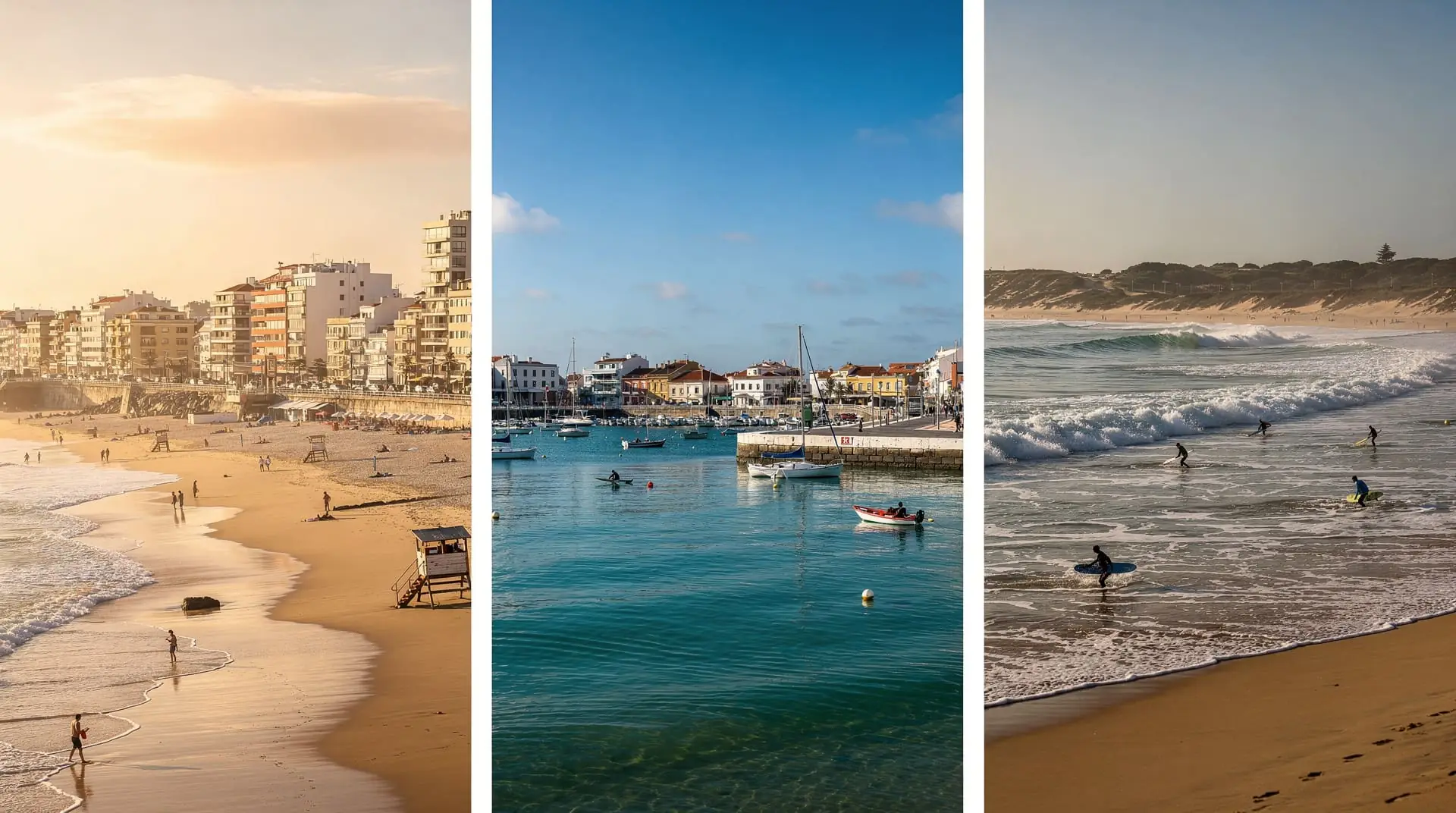
Best beaches near Lisbon — ranked by type and access
Last reviewed
What are the best beaches near Lisbon?
The closest beaches by public transport are Carcavelos (25 min by train from Cais do Sodré, €2.30) and Costa da Caparica (ferry plus bus, about 45 min). For turquoise water, Arrábida is in a different class but requires a car or organised tour. Comporta is the most beautiful and most remote — 1.5 hours south by car. Atlantic water stays 17-22°C even in August.
Six beaches, six completely different experiences
| Closest by train | Carcavelos, 25 min from Cais do Sodré |
| Most beautiful | Arrábida — turquoise water, needs a car or tour |
| Wildest | Comporta, 1.5hrs south, dune landscape |
| Water temp | 14-16°C winter, 19-22°C late summer |
| Season | June–September for swimming; Arrábida has a summer vehicle cap |
Lisbon sits at the mouth of the Tagus, and the Atlantic coastline begins immediately north and south of the city. Within 90 minutes you can reach everything from a flat suburban strand reachable by commuter train to a remote national park bay where the water turns turquoise green. The difficult part is not finding a beach — it is choosing the right one for your schedule, transport, and expectations.
One thing every visitor should know before booking anything: the Atlantic stays cold. Water temperature in the Lisbon region runs 17-22°C in peak summer (July-September) and drops to 14°C in winter. That is a sharp contrast to the Mediterranean. The locals swim happily. Most northern Europeans find it bracing rather than cold. If you expect warm water, Arrábida is your best bet — the sheltered bays trap slightly warmer water than the exposed western coast.
Here are the six beaches that actually justify the journey, ordered by the type of trip they suit.
Carcavelos — the easiest beach day in the Lisbon area
Best for: First-timers, surfers, a quick half-day from the city.
Praia de Carcavelos is 7 kilometres of wide sand backed by a promenade of cafés and surf shops. It is not Portugal’s most beautiful beach, but it is the most practical beach near Lisbon by a significant margin. The train from Cais do Sodré (Cascais line) reaches Carcavelos station in 25 minutes and costs €2.30 single with a Viva Viagem card. From the station it is a 10-minute walk to the sand.
The beach handles large crowds reasonably well thanks to its sheer size. Arrive before 11am in July-August to find a good spot. There are lifeguards from June to September, a cluster of surf schools along the western end, and a Fort (Forte de São Julião da Barra) at the southern tip that makes a decent landmark.
Water is cleaner than at some more urban beaches. Wave quality on an average Atlantic swell is good enough for beginner surf lessons. Several schools operate here with morning group lessons around €30-40 per person.
Getting there: Train from Cais do Sodré (Cascais line) to Carcavelos, 25 minutes, €2.30. Trains run every 20 minutes in summer. By car: A5 then follow signs, about 25 minutes from Lisbon but parking fills quickly in summer — paid car park near the beach, roughly €2-3/hour.
Costa da Caparica — Lisbon’s surf coast
Best for: Surfers, beach-bar culture, a full day south of the Tagus.
Costa da Caparica is a 30-kilometre stretch of Atlantic beach running south from Almada. The northern section, accessible from Lisbon by ferry and bus or by a direct bus from Praça de Espanha (bus 161, about 45 minutes), is the busiest and most developed: beach bars, surf schools, and the famous Transpraia mini-train that runs along the promenade in summer connecting the numbered praias (beaches).
The numbered system is practical. Praia 1 (at the main town) is the most developed. Praia 9 (Posto 9) has a good beach bar scene. Praia 17 onwards is increasingly quiet and popular with naturists. If you want a livelier atmosphere, stay north. If you want empty sand, take the Transpraia south.
Wave quality is the best close to Lisbon on this stretch of coast. Swells from the northwest pump consistent beach breaks suitable for all levels. In winter, when the swells get serious, international surf contests sometimes run at Caparica.
Getting there: Ferry from Belém or Cacilhas (Cais do Sodré ferry terminal) then bus 135 from Cacilhas to Caparica (about 40 minutes total from central Lisbon). Direct bus 161 from Praça de Espanha metro, about 45 minutes. By car via Ponte 25 de Abril: 30 minutes but traffic backs up in summer.
Full detail: Costa da Caparica beaches guide.
Cascais beaches — town beaches on the Estoril coast
Best for: Combining beach with a town day trip, calmer water, families.
The Cascais coastline has several distinct beaches within easy reach of the town centre. Praia da Rainha and Praia da Conceição sit almost in the town, with calm protected water and views of the old fishing harbour. They are small and fill quickly in summer, but the convenience is hard to beat.
Praia do Tamariz, just east in Estoril, is wider and backed by the famous Estoril Casino gardens — slightly kitsch but genuinely pleasant. Swimwear boutiques and café terraces line the promenade.
Five kilometres west of Cascais on the bus 405/415 route (about 15 minutes, €1.90), Praia do Guincho is an entirely different proposition: exposed Atlantic, powerful wind, and dune landscape. It is beautiful but not for swimming unless conditions are calm — the currents can be serious. The bus runs every hour or two in summer.
Getting there: Train from Cais do Sodré to Cascais, 40 minutes, €2.30 single. Runs every 20-30 minutes. From Cascais bus terminal, buses 405 and 415 run to Guincho in about 15 minutes.
Full detail: Cascais beaches guide and Guincho surf beach guide.
Arrábida — the best beach in the Lisbon region, full stop
Best for: Turquoise water, snorkelling, a special day out, the wow factor.
Arrábida Natural Park south of Setúbal contains the most visually spectacular beaches reachable from Lisbon. The limestone mountains of the Serra da Arrábida drop directly into the sea, creating sheltered bays with water that turns green and turquoise in summer. Praia de Galapinhos is consistently voted one of Portugal’s best beaches. Portinho da Arrábida, Galapos, and Figueirinha are all superb in their own ways.
The catch: access is genuinely difficult without a car, and in summer (June 15 to September 15) the National Park restricts vehicle access to the coastal road after 8am when the car parks are full. This means either arriving before 8am or taking an organised tour. A day tour from Lisbon that includes transport, beach time, and often a snorkelling excursion is the practical solution for most visitors.
Water quality is exceptional — Arrábida has some of the cleanest seawater in Portugal. Visibility for snorkelling is regularly 8-10 metres. The park also has restrictions on umbrella installations in some areas to protect the ecosystem.
Day tour to Arrábida Natural Park from LisbonGetting there: By car — A2 then A12, about 50-60 minutes to Setúbal, then follow the coastal road (allow 75 minutes total). By tour: several operators run combined Arrábida days from Lisbon, some adding wine tasting at Azeitão or dolphin watching in the Sado estuary.
Full detail: Arrábida beaches guide.
Comporta — wild dunes, horses, and serious solitude
Best for: A day of pure beach without development, alternative Lisbon escape.
Comporta is south of the Arrábida, across the Sado estuary, and it feels like a different country from the suburban beach scene near Lisbon. The landscape is flat, covered in pine forest and rice paddies, backed by enormous Atlantic dunes. Praia do Carvalhal, Praia do Pego, and Praia da Comporta itself are wide, wild, and relatively uncrowded compared to anything closer to the city.
The village of Comporta has an unlikely reputation as a destination for the fashionable crowd from Lisbon and beyond — a few good restaurants, the Sublime Comporta hotel at the expensive end, and an artsy, low-key atmosphere. Most visitors come for the day, park, walk the dunes, swim (currents permitting), and leave.
Be honest about the currents: Comporta beaches face directly west with no shelter. Atlantic swells can generate strong longshore drift and rip currents. Non-swimmers and young children should stick to the river beach at Tróia (across the estuary) where the water is calmer.
Small group Arrábida and Comporta wine tour from LisbonGetting there: By car only in practice — about 90-100 minutes from Lisbon via the A2 and then south from Alcácer do Sal, or via the Tróia ferry from Setúbal (40 minutes from Lisbon by train, then a 30-minute ferry, then a 30-minute drive south). No practical public transport to the beaches themselves.
Full detail: Comporta beaches guide.
Guincho — the windiest and wildest beach near Cascais
Best for: Kitesurfers, photographers, dramatic Atlantic scenery.
Praia do Guincho, 5 kilometres west of Cascais, is where the Sintra-Cascais Natural Park meets the Atlantic. Wind is the defining feature — Guincho is one of the windiest beaches on the Portuguese coast, regularly used for kite-surfing and windsurfing competitions. When the northwest wind is blowing (most afternoons), standing up requires some effort.
On still mornings, which do occur, Guincho is breathtaking: wide pale sand, massive dunes, and the Cabo da Roca cliffs visible to the north. The water is cold and clear. Swimming is possible when conditions are calm but treat the currents with respect.
The restaurant above the beach, Restaurante Bar do Guincho (formerly Hotel do Guincho restaurant), serves good fish and seafood with panoramic views — lunch here, then an afternoon walk towards Cabo da Roca, is an excellent half-day.
E-bike tour from Cascais to Sintra via GuinchoGetting there: Bus 405/415 from Cascais station, 15-20 minutes, €1.90. Buses run roughly hourly in summer — check schedules. By bike: 5km cycle path from Cascais town centre along the coast, about 20-25 minutes. By car: 10 minutes from Cascais, paid parking at the beach.
Full detail: Guincho surf beach guide.
Comparing the options: which beach for which trip
| Beach | Transport | Time from Lisbon | Water | Crowds | Best for |
|---|---|---|---|---|---|
| Carcavelos | Train | 25 min | Cold | Busy | Surf, convenience |
| Caparica | Ferry + bus | 45 min | Cold | Busy-very busy | Surf, beach bars |
| Cascais town beaches | Train | 40 min | Cold | Busy | Families, day trip combo |
| Guincho | Train + bus | 60 min | Cold | Moderate | Wind sports, scenery |
| Arrábida | Car or tour | 75 min | Cool-mild | Busy July-Aug | Turquoise water, wow factor |
| Comporta | Car | 90-100 min | Cold | Light | Wild landscape, dunes |
Water temperature: what to actually expect
Atlantic water off the Lisbon coast is consistently cooler than visitors expect based on the latitude. In January and February it drops to 14°C — genuinely cold. By June it has risen to 17-18°C. Peak summer (August-September) brings the warmest water at 20-22°C, sometimes touching 23°C in protected bays like Portinho da Arrábida. October water is still swimmable at 19-20°C and the beaches are quieter.
The thermocline effect from Atlantic upwelling can create cold patches even in summer, particularly on the exposed western coast (Guincho, Caparica). Arrábida’s sheltered bays are reliably the warmest water in the region.
Best beach by month
| Month | Water temp | Best pick | Notes |
|---|---|---|---|
| April-May | 15-17°C | Carcavelos, Cascais town | Cold for swimming, good for a windy walk |
| June | 17-19°C | Caparica, Carcavelos | Warming fast, crowds building |
| July-August | 19-22°C | Arrábida, Comporta | Warmest water, book Arrábida tours ahead |
| September | 19-21°C | Arrábida, Cascais town | Warm water, thinning crowds — arguably the best month |
| October | 18-20°C | Cascais town, Carcavelos | Still swimmable, very quiet |
| November-March | 14-16°C | None for swimming | Guincho and Caparica still good for a bracing coastal walk |
September stands out across nearly every beach on this list: the water is close to its warmest, the summer crowds have thinned noticeably, and accommodation prices near the coast start dropping. See the best time to visit guide for how this fits the wider Lisbon calendar.
Practical planning tips
Timing: The Portuguese beach season runs June to September, with July and August at peak crowding and prices. April, May, and October are excellent for visits — good weather, fewer people, lower accommodation prices near the coast.
Lisboa Card: Covers trains to Carcavelos and Cascais (both on the Cascais line from Cais do Sodré) plus some buses. A Lisboa Card makes sense if you are also visiting monuments in the city.
Parking: At any popular beach in July-August, plan to arrive before 9am if driving, or use public transport. Arrábida in particular has a summer vehicle restriction that makes public transport or tour booking not optional — it is genuinely the better choice.
Sun and safety: Portuguese sun in July-August is intense. Factor 30+ is a minimum. The Atlantic beach culture is more physical than some other coasts — surfing and swimming in swells requires more care than flat-water beaches. Respect red flag warnings at all beaches.
Surf lessons: Both Caparica and Carcavelos have well-established surf schools offering beginner lessons from around €35-45 for a 2-hour session including equipment. Book ahead in July-August.
Combining beaches with Lisbon’s day trips
The beaches near Lisbon slot naturally into existing day-trip routes:
- Sintra + Guincho + Cascais: Train to Sintra, visit palaces in the morning, bus to Guincho for lunch and a walk, bus 405/415 back to Cascais for an early evening drink, train back to Lisbon. Full and satisfying.
- Arrábida + Azeitão wine: A well-packaged tour combines beach time at Portinho or Galapinhos with a visit to one of the Azeitão quintas for Moscatel tasting — two of the Setúbal peninsula’s best things in one day.
- Cascais town + Praia da Rainha: An easy morning add-on to a Cascais day — visit the market and museum in the morning, lunch at a restaurant on the waterfront, afternoon at the beach.
See the day trips from Lisbon guide and how many days in Lisbon for full itinerary planning.
What beach days actually cost
None of these beaches charge entry, but the incidental costs vary. At Carcavelos or the Cascais town beaches, budget €2-3 return train fare, €8-12/hour for a sunbed and umbrella if you want one (most people just bring a towel), and €30-40 for a beginner surf lesson if that is on the agenda. At Arrábida, the main cost is the organised tour itself — typically €45-70 per person including transport and often a snorkelling stop, which is genuinely the easier route given the summer parking restriction. Comporta is the most expensive to reach independently once you factor in car rental or a taxi from the nearest train station, but there is nothing to pay once you are on the sand. Food is the biggest variable everywhere: a beach-bar lunch runs €10-20 per person at Carcavelos or Caparica, while the restaurants above Guincho and in Comporta village charge closer to €20-35 for a full seafood meal.
Bringing your own water, snacks, and sun protection from a supermarket rather than buying from beach kiosks cuts costs significantly — kiosk prices at the busiest beaches (Carcavelos, Caparica) run 30-50% above supermarket prices in July and August.
Equipment rental is straightforward at the train-accessible beaches: surf schools at Carcavelos and Caparica rent boards and wetsuits by the hour even without a lesson, and SUP or kayak rental is common at Cascais. Arrábida and Comporta have little to no rental infrastructure on the beach itself, so bring or rent snorkelling gear in Lisbon beforehand if that is part of the plan — the Arrábida tours that include a snorkelling stop typically provide masks and fins as part of the package, which is one more reason to book the tour rather than trying to arrange gear independently. For a quick reference on what each beach charges and offers, keep the comparison table above handy while planning — it saves re-reading the full write-up for each option once you’ve narrowed down your shortlist.
Which beach for which traveller
First-timers with half a day free: Carcavelos. It requires no planning, the train is direct, and you get a proper beach with surf schools and cafés without giving up a full day of sightseeing.
Families with young kids: Cascais town beaches (Praia da Rainha, Praia da Conceição) or Carcavelos — both have lifeguards in season, flat sand, and calm-enough water. See the Cascais beaches guide for the full breakdown of each bay.
Couples wanting a scenic full day out: Arrábida, ideally via an organised tour that handles the summer vehicle restriction and adds a snorkelling stop.
Groups chasing an Instagram-worthy landscape without airport-level crowds: Comporta, on a weekday, with lunch booked in the village.
Surfers of any level: Costa da Caparica for consistency and surf schools, Guincho for more advanced, wind-affected conditions.
Honest verdict
Frequently asked questions about beaches near Lisbon
How warm is the sea near Lisbon?
Atlantic water off Lisbon ranges from 14-16°C in winter to 19-22°C in late summer (August-September). Even at peak summer the ocean rarely feels warm compared to the Mediterranean. Bring a wetsuit if you plan to surf or spend long periods in the water. Arrábida bays are slightly warmer thanks to sheltered geography.
Which Lisbon beach is best for families with young children?
Praia de Carcavelos is the best family beach for ease of access — 25 minutes by train from Cais do Sodré (€2.30), flat sand, lifeguards in summer, beach bars, and parking if you drive. In the Cascais area, Praia da Conceição and Praia da Rainha are smaller, sheltered bays with calmer water than the open Atlantic.
Can I reach Arrábida without a car?
Arrábida is very difficult without a car. The easiest option is a day tour from Lisbon — these include transport, beach time, and often a snorkelling stop. In summer, some operators run shuttle buses from Setúbal to the park entrance, but Setúbal itself requires a 50-minute train from Lisbon plus a local bus. A day tour is genuinely the practical choice.
What beach should I go to on a tight schedule in Lisbon?
Carcavelos for pure ease — board the train at Cais do Sodré, 25 minutes, done. It is a proper beach with good waves, surf schools, and enough space to find a spot. In summer go early (before 11am) as it fills up. If you have a morning free during a Cascais day trip, Praia da Rainha in the town centre is a calmer option.
Is Comporta worth the trip from Lisbon?
Yes, but only if you go prepared. It is 1.5 hours by car each way, parking can be expensive near the main beaches in July and August, and the surf can produce dangerous currents on some stretches. The reward is wild, unspoiled dune landscape that looks nothing like the suburban Portuguese coast. Go on a weekday if possible and spend a full day.
Are there nude beaches near Lisbon?
Yes. The southern stretches of Costa da Caparica (from Praia 17 southwards) are naturist-friendly and informal. Troia peninsula also has naturist sections. These areas are accessible by the Transpraia mini-train or by car along the Caparica strip.
What is the water like at Guincho beach?
Guincho faces directly west into the Atlantic with no natural shelter, producing cold water (17-19°C in summer), powerful swells, and significant wind. Swimming is possible on calm mornings but the beach is genuinely dangerous in rough conditions — respect red and yellow flag warnings. It is primarily a wind-sports and photography beach rather than a family swimming beach.
Related guides
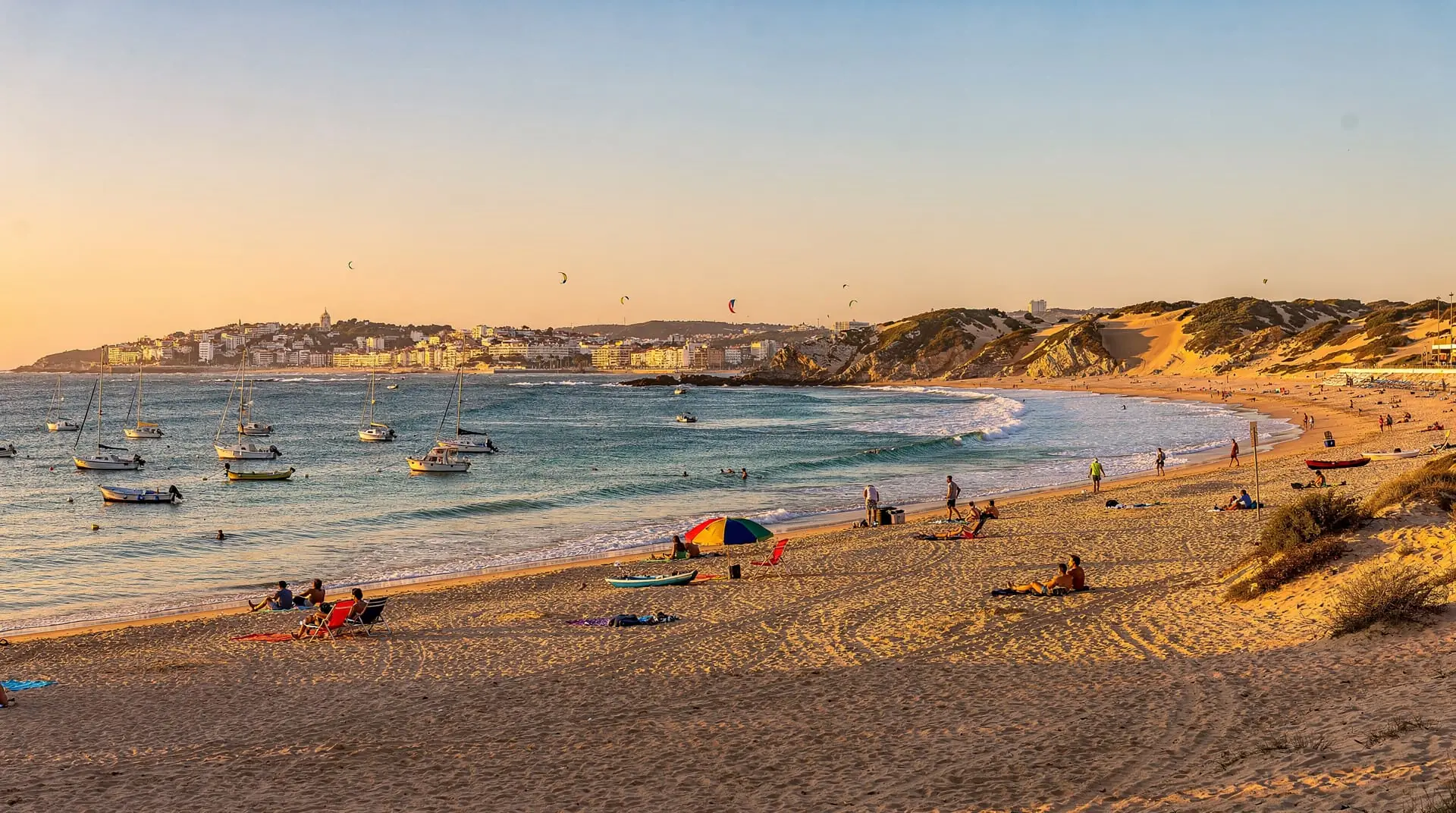
Cascais beaches — from town bays to Guincho's Atlantic wind
Guide to all Cascais beaches: Praia da Conceição, Praia da Rainha, Praia do Tamariz, and Guincho. By train from Lisbon in 40 minutes.
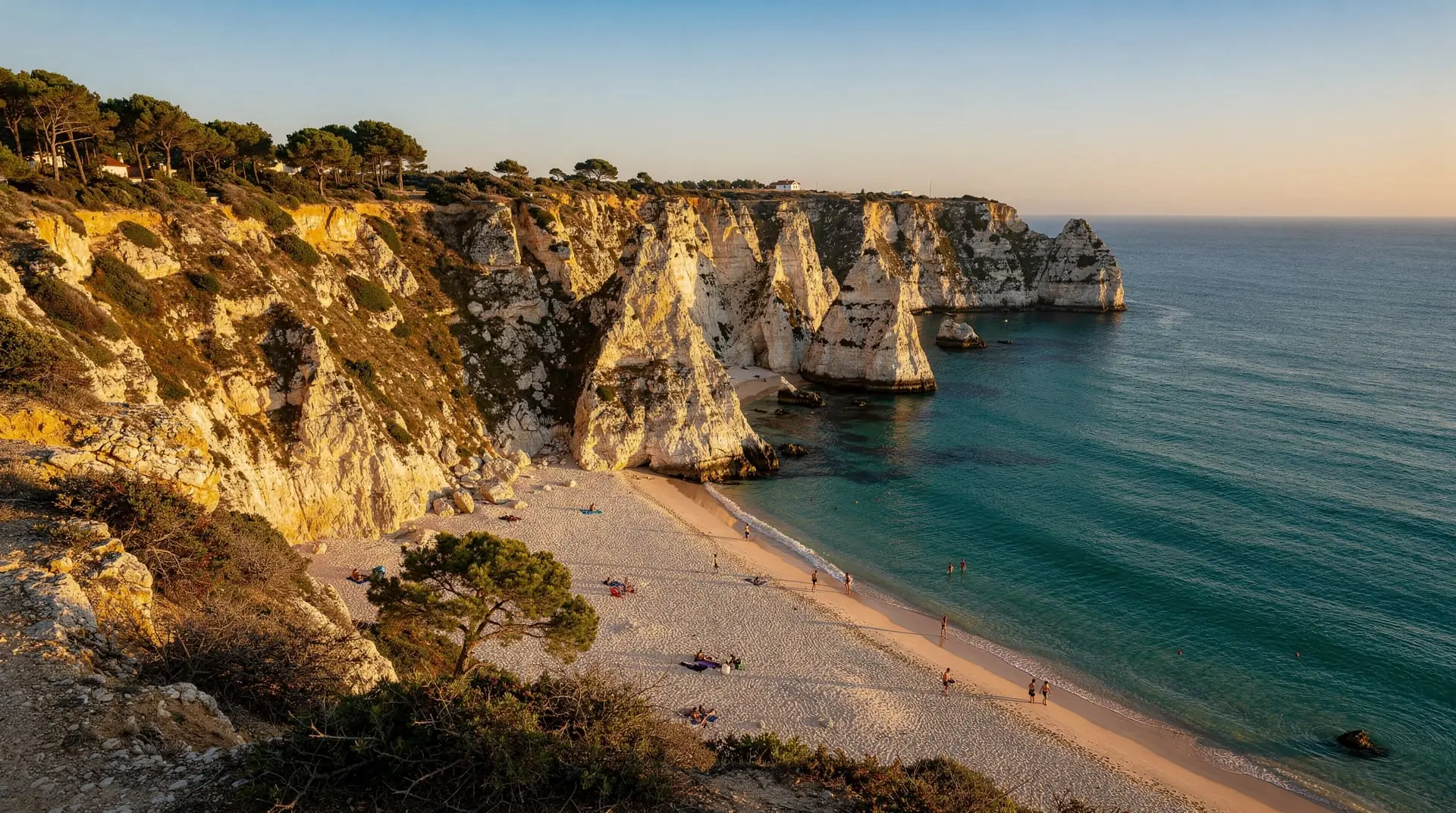
Arrábida beaches — turquoise water, limestone cliffs, summer access rules
Complete guide to Arrábida beaches: Galapinhos, Galapos, Portinho, Figueirinha. Turquoise water, access restrictions June-Sept, and how to get there.
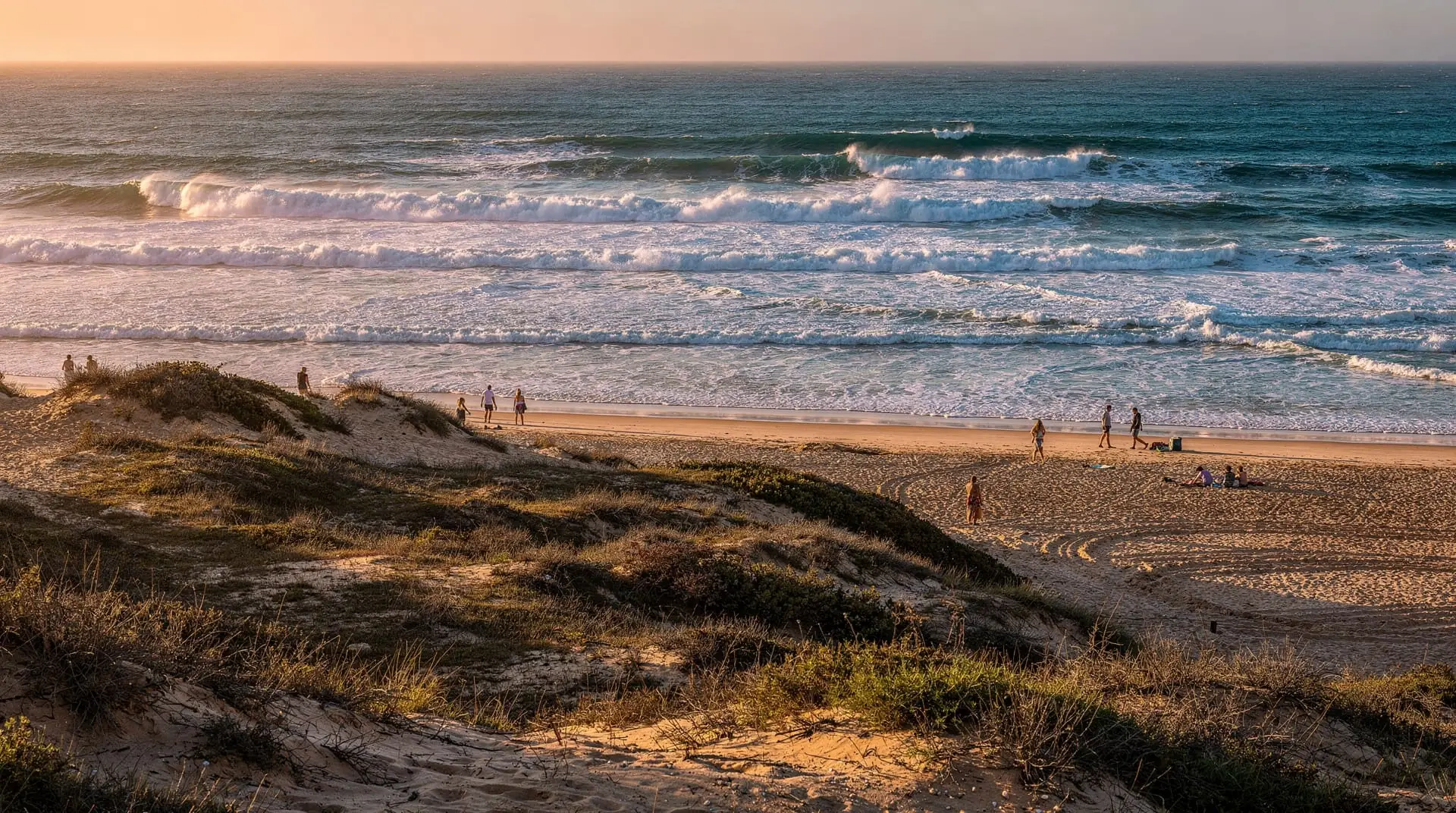
Comporta beaches — wild dunes, strong currents, and what to know before you go
Guide to Comporta beaches: Praia do Carvalhal, Praia do Pego, Praia da Comporta, dune walks, Sublime beach club, and honest advice on currents and access.
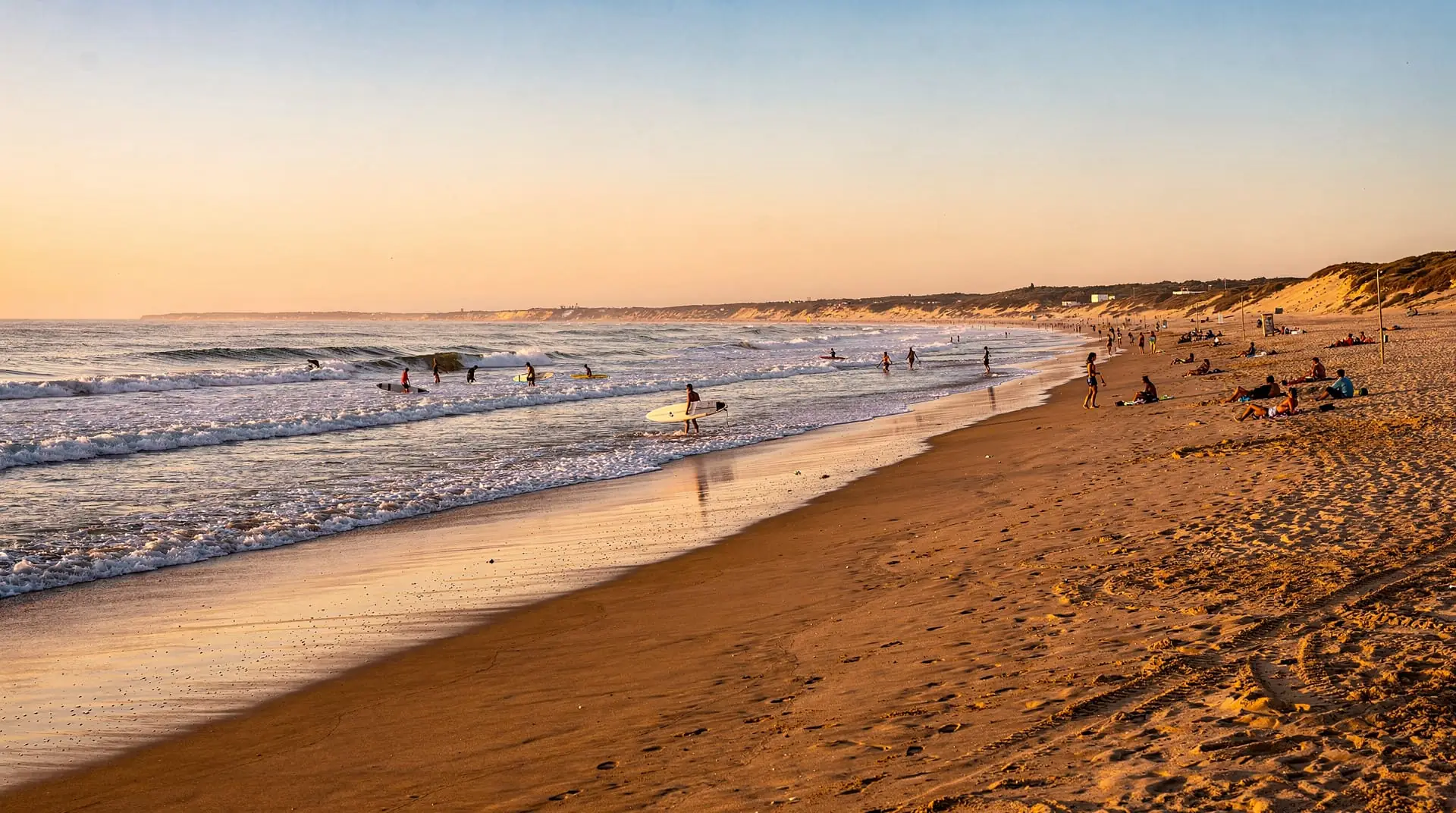
Costa da Caparica beaches — the complete guide to Lisbon's surf coast
Everything about Costa da Caparica: the Transpraia mini-train, best praias, surf spots, beach bars, and how to get there from Lisbon.
Ready to book? Top tours for this guide
We earn a small commission if you book through GetYourGuide — at no extra cost to you. Every tour is hand-picked and verified.

Lisbon: 48-Hour Hop-On-Hop-Off Bus Tour and Oceanarium Entry
Lisbon: MAAT Entry Ticket & Dolphin Watching Boat Tour
Lisbon: Alfama, Mouraria Walking Tour with Fado Night, Tapas
Lisbon: Hop-On Hop-Off Bus Tour
Lisbon: 1-or 2-Day Hop-On Hop-Off Bus Tour