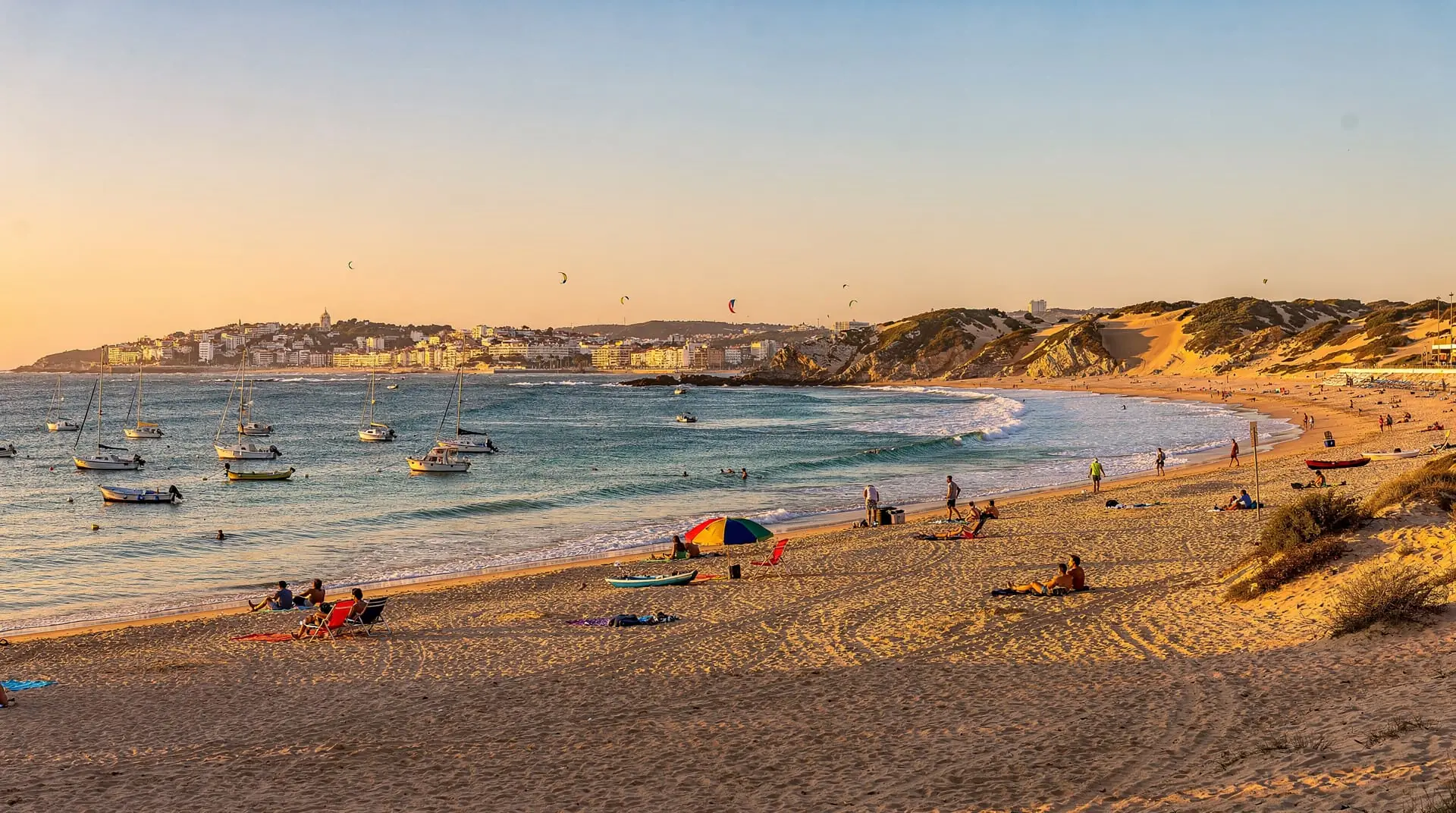
Cascais beaches — from town bays to Guincho's Atlantic wind
Last reviewed
Which beaches are in Cascais and how do I get there?
Cascais has three beaches in the town centre (Praia da Rainha, Praia da Conceição, and Praia da Ribeira) plus Praia do Tamariz in Estoril 2km east and Praia do Guincho 5km west. Reach Cascais by train from Cais do Sodré in 40 minutes for €2.30. For Guincho, take bus 405 or 415 from Cascais bus terminal (15 minutes, €1.90).
| Where | Cascais town (3 beaches), Estoril (Tamariz), Guincho 5km west |
| Getting there | Train from Cais do Sodré, 40 min, €2.30 |
| Cost | Free access; sun loungers €8-12/set |
| Water temp | 14-19°C depending on season |
| Best for | Families and town-beach ease (Rainha/Conceição); wind sports (Guincho) |
Cascais beaches in context
Cascais is a compact, well-preserved fishing town 40 minutes west of Lisbon by train. It became a resort town in the 19th century when the Portuguese royal family built summer residences here, and the legacy is visible: a promenade of painted villas, a small marina, a working harbour that still lands fish each morning, and a string of beaches that range from sheltered town bays to the full-force Atlantic.
Getting here is simple. The Cascais train line runs from Cais do Sodré in central Lisbon along the coast, stopping at Estoril before reaching Cascais terminus. Journey: 40 minutes, €2.30 single, trains every 20-30 minutes. The train itself is pleasant, following the shoreline for much of the route.
This guide covers every beach in the Cascais area in order from east (Estoril) to west (Guincho), with practical detail for each.
Praia de Tamariz — Estoril’s wide town beach
Estoril is the stop before Cascais on the train and has its own beach immediately below the casino gardens. Praia do Tamariz is the widest of the town beaches in this stretch — a proper stretch of sand with room to spread out even in summer.
The casino backdrop is part of the experience. Estoril Casino is the largest casino in Europe by floor space and has a colourful history (Ian Fleming reportedly partly based the setting of Casino Royale on it). The landscaped gardens between casino and beach are pleasant for a walk.
What to know: The beach fills quickly on summer weekends, particularly Sunday. The water is slightly calmer here than at Guincho thanks to the Estoril headland providing partial shelter from northwest swells. There are changing rooms, lifeguards (June-September), and several café-bars along the esplanade.
Transport: Estoril train station is 2 minutes’ walk from the beach. Train from Cais do Sodré: 35 minutes, €2.30.
Praia da Ribeira — the smallest, most central beach
Walking east from the Cascais town centre along the seafront, the first beach you reach is Praia da Ribeira. It sits at the edge of the old fishing harbour, small, and often busy with children. The water is sheltered and relatively calm — one of the few spots on this coastline where the swell is reduced enough for comfortable swimming without ocean experience.
Practical for an afternoon dip during a town visit. Not a destination beach in its own right.
Praia da Rainha and Praia da Conceição — the heart of Cascais beach life
These two beaches sit side by side in the town centre, separated by a small breakwater. Together they form the social core of Cascais beach life. On a summer afternoon they are genuinely busy — sunbeds packed, the promenade behind them crowded with ice cream sellers and cyclists — but they manage to stay less frantic than Caparica because the town is smaller and the overall visitor volume more contained.
Praia da Rainha (“Queen’s Beach”) is the smaller and slightly more sheltered of the two. Named for the Portuguese queens who used the adjacent palaces in summer. The sand is white and the water clear by town-beach standards. It is overlooked by the Cascais Cultural Centre (old citadel) which makes for a handsome backdrop.
Praia da Conceição is larger and slightly more exposed. Better for swimming across the whole width of the beach rather than just the protected inner section. On a calm day the water is good. On a day with northwest swell running, some waves reach the beach — not surfing waves, but enough to make swimming slightly lively.
Both beaches have:
- Lifeguards from June to September, 9am to 7pm
- Showers and changing rooms (small charge)
- Multiple café-bars on the esplanade behind
- Sun lounger and umbrella rental (€8-12 for a set in summer)
Getting there: 5-minute walk from Cascais train station. Follow the seafront west.
Praia do Guincho — the wild Atlantic option
Five kilometres west of Cascais, Guincho is a completely different beach — exposed, windy, and spectacular. See the dedicated Guincho guide for full detail.
Quick summary for Cascais visitors: Bus 405 and 415 run from Cascais bus terminal (adjacent to the train station) to Guincho beach in about 15-20 minutes. Buses run roughly hourly in summer — confirm the return schedule before going. The beach is beautiful but swimming requires respect for the conditions; the wind and currents can be serious. The restaurant at the top of the dune, Bar do Guincho, does good fish for lunch at around €20-25 per main.
E-bike tour from Cascais to Sintra via GuinchoCombining beaches with a Cascais day trip
The town of Cascais is worth 2-3 hours of exploration even without the beach: the Museu do Mar (sea museum), the old fishing harbour with morning auction, the market on Wednesday and Saturday, the Paula Rego Story House museum 1km from the centre, and a good restaurant scene.
A sensible day: arrive by 10am on the train from Lisbon, visit the town, swim at Praia da Conceição in the early afternoon, then walk or take the bus to Guincho for a late afternoon look and early dinner at Bar do Guincho, then bus back to Cascais and evening train to Lisbon.
If you are combining with Sintra: train to Sintra first (via Rossio from Lisbon, 40 minutes), visit Pena Palace in the morning (book tickets online well in advance in summer — queues without pre-booking are 60-90 minutes), then take a bus or taxi down to Cascais for the afternoon. The Sintra day trip guide has the logistics.
Sintra, Natural Park, and Cascais beaches full-day tourWater temperature and swimming conditions
Atlantic water at Cascais is the same as the rest of the Lisbon coast: 17-19°C in summer (July-September), 15-16°C in spring (April-May), and 14°C in winter. It does not feel warm. The Portuguese swim happily; many northern European visitors find it cold but refreshing.
The town beaches (Rainha, Conceição, Ribeira) are sheltered enough that the water is relatively flat and easy. Tamariz at Estoril is similar. Guincho is categorically different — treat it as a wild Atlantic beach, not a town beach.
On days when northwest swell is running, small waves reach even the most sheltered Cascais beaches. This is not dangerous but it changes the character of the swimming. Check the surf forecast if calm water is important to you.
Eating near Cascais beaches
Pastelaria Garrett on Rua Frederico Arouca: the town’s most reliable pastelaria for coffee, pastéis de nata (€1.20), and a seat to watch the town go by. Open from 7am.
Furnas do Guincho (on the road between Cascais and Guincho): a cave restaurant in a natural rock formation serving fresh grilled fish. Atmospheric and genuinely good. Book ahead on summer weekends (around €25-35 per person for a full meal).
Mar do Inferno (Boca do Inferno, 2km west of Cascais): seafood restaurant overlooking the dramatic rock formation where the Atlantic crashes. The setting is spectacular; the food is solid Portuguese; prices are mid-range (€20-30 main).
O Mercado (central Cascais, near the old market building): good for lunch — sandwiches, salads, and daily specials at honest prices (€8-12 for a lunch special).
What to do in Cascais beyond the beach
Cascais rewards a few hours of slow exploration away from the sand. The town is compact enough to cover on foot and has more substance than the beach-resort reputation suggests.
Museu do Mar (Museum of the Sea): On Rua Júlio Pereira de Mello, about 10 minutes’ walk from the station. Dedicated to the maritime history and marine biology of the Cascais coast. Entry is free (or with Lisboa Card). Well done, not touristy, covering local fishing history, navigation, and the ecology of the regional coastline.
Casa das Histórias Paula Rego: The most significant cultural institution in Cascais. The Paula Rego Story House is a purpose-built museum (designed by Eduardo Souto de Moura in 2009) dedicated to the work of Portuguese-British artist Paula Rego. Rego’s narrative figurative painting is disturbing, powerful, and rarely comfortable — not what the beach-town setting suggests. Entry approximately €5. About 1km from the centre, 15 minutes’ walk from the station.
Old fishing harbour: The working harbour north of the town beaches still lands fish in the early morning (the auction starts around 5-6am — an atmospheric but very early option). By mid-morning the auction is over, but fishing boats are moored and nets are being repaired. The covered Mercado de Peixe (fish market) is adjacent.
Cascais market: Wednesday and Saturday mornings at the covered market on Rua Padre Moisés da Silva. Fruit, vegetables, local bread, honey, and some crafts. Smaller than Lisbon’s markets but genuinely local in character.
Boca do Inferno: Two kilometres west of town along the coastal road, the Boca do Inferno (“Mouth of Hell”) is a dramatic sea cave and arch where Atlantic waves crash with force even on moderate swell days. A viewing platform overlooks the formation. Free to visit, 30 minutes from the town centre on foot or 10 minutes by bike.
Surf schools and water sports near Cascais
While the town beaches are calmer, the Cascais area has a strong surf and water-sports scene centred on Guincho and the outer coastline.
Surf lessons at Cascais: Several surf schools operate in the Cascais area, using beaches including Praia da Rainha on calmer swell days and the outer beaches when conditions allow. Group lessons run around €35-50 for a 2-hour session including equipment.
Paddleboarding: Available for rent (around €15-20/hour) from several operators near the beaches. The sheltered waters of Praia da Ribeira and the marina area are the best locations for SUP beginners.
Kayaking and boat tours: The Cascais bay and coastal caves are accessible by kayak from the beaches. Guided kayak tours covering the sea caves near Boca do Inferno run approximately €30-45 per person.
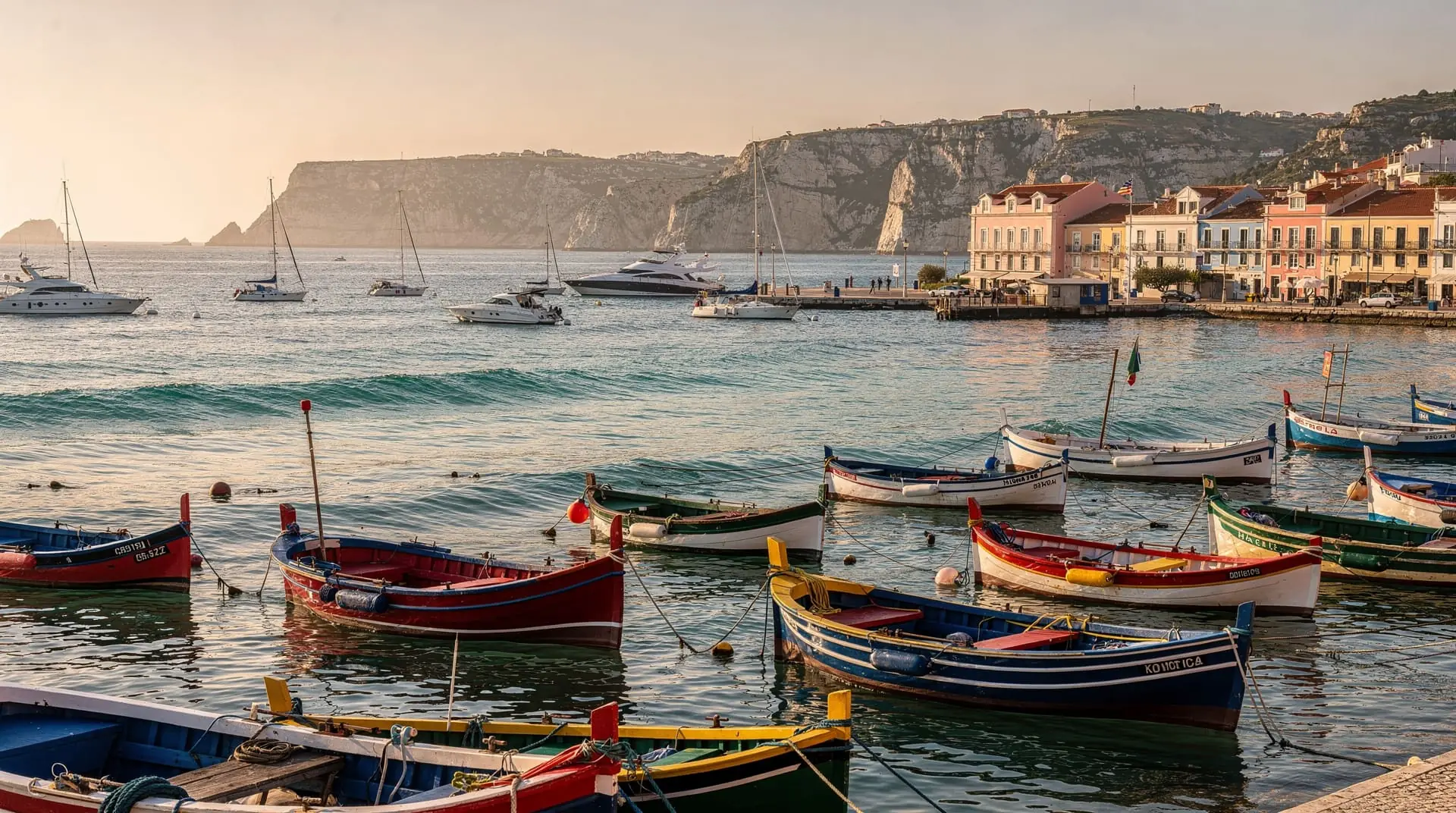
Sailing cruises: Cascais marina is a significant sailing hub and several operators offer sunset sailing trips and coastal boat tours departing from here. A 2-hour sunset cruise from the marina, returning by early evening, is a pleasant alternative to the beach afternoon and works well as the day’s final activity before taking the train back to Lisbon.
Cascais sunset boat trip with welcome drinksThe Estoril to Cascais seafront walk
One of the best short walks on the Lisbon coast: the 2km seafront path between Estoril and Cascais. The walk follows the promenade above the rocks and small beaches, passing below the casino gardens, through the beach areas, and into the town of Cascais. Done at sunset with the Atlantic light catching the whitewashed buildings — this is one of those walks that explains exactly why the Estoril coast attracted the wealthy and the exiled from across Europe in the 20th century.
The path is flat, paved, and accessible. Cafés and restaurants line the Cascais end. On summer evenings the promenade becomes Cascais’s social living room — families, joggers, older couples, and visitors mixing naturally.
Cascais in the shoulder season
April, May, June, and September are consistently excellent months for Cascais. The crowds are significantly lighter than July-August, the beaches are quieter, and the coastal light has a quality that differs from the stark summer midday glare. Hotel and rental prices drop noticeably outside of July and August.
October Cascais brings occasional Atlantic storms that make the Guincho and Boca do Inferno particularly dramatic — the Boca do Inferno in a 3-metre swell is a genuinely impressive natural spectacle. The town itself retains its character year-round in a way that beach resorts can lose in the off-season.
Winter (November-February): Cascais stays active as a commuter town and has its own cafés and restaurants independent of the beach economy. Many beach bars close, but the town’s restaurants, the museum, and the seafront walk remain.
Practical planning information
Lisboa Card: Valid on trains to Cascais and Estoril, and on some buses. If you already have a Lisboa Card for monument visits, use it on the train.
Bike rental: Several shops near Cascais station rent e-bikes and standard bikes. The coastal cycling path from Cascais to Guincho is 5km of mostly flat, well-marked trail along the seafront — excellent on a bicycle. E-bike rental €15-25/day, standard bike €8-15/day.
Train timetables: The Cascais line runs from Cais do Sodré in Lisbon to Cascais with stops at Belém, Cascais (via Sintra is a separate line and does not stop at Cascais). The last train back from Cascais to Lisbon runs around 11pm-midnight — check the Comboios de Portugal website for exact times.
Parking: Cascais has paid parking near the station and beaches. In July-August, it fills by 10am on weekends. The train is always faster and less stressful.
Accessible beaches: Praia da Rainha has beach wheelchairs available in summer (enquire at the Cascais tourist office on the seafront, open daily 9am-6pm). The seafront promenade is flat and paved throughout.
Lockers: The Cascais train station has left-luggage lockers, useful if arriving by early morning train and wanting to go to the beach immediately.
The Cascais Line train: what to know
The Cascais line is one of the most pleasant commuter train routes in Portugal — 40 minutes of Atlantic and estuarine views from Cais do Sodré to Cascais, with a dozen stops along the way that are each worth exploring.
Key stops between Lisbon and Cascais:
- Belém (15 minutes from Cais do Sodré): the monument cluster — Tower, Jerónimos, Monument to the Discoveries. If you have a full day, disembark here in the morning, visit Belém, then reboard and continue to Cascais.
- Estoril (37 minutes): Praia do Tamariz, the casino, the park. Worth a brief stop if the weather is good.
- Cascais (40 minutes): the terminus. From here, buses connect to Guincho and Cabo da Roca.
Train frequency: Every 20-30 minutes from Cais do Sodré in normal hours; more frequent during morning and evening rush hours. The last train back from Cascais is around 11pm-midnight — check the Comboios de Portugal app for live schedules.
Lisboa Card: If you have a Lisboa Card (24h, 48h, or 72h), it covers travel on the Cascais line at no additional cost. This is one of the strongest arguments for the Lisboa Card if you are planning a day at the Cascais beaches.
Bikes on trains: Permitted outside peak hours (outside 7-9am and 5-7pm on weekdays) at no additional charge. A bike rack is available in the end wagons. Useful for cycling the Guincho coast path.
See also: trains to Sintra and Cascais, Cascais day trip guide, best beaches near Lisbon, Sintra vs Cascais comparison.
A half-day beach plan for Cascais
For visitors with roughly four hours rather than a full day, a tight but satisfying plan: arrive on the mid-morning train, walk the 10 minutes from the station to Praia da Conceição or Praia da Rainha, swim and relax for 90 minutes to 2 hours, then walk the short seafront stretch into the old town for lunch at O Mercado or a similar café-style spot. This covers the beach and a taste of the town without needing to reach Guincho, which adds at least 90 minutes round trip once you factor in the bus wait and the walk back.
If Guincho is the priority instead, flip the order: take the bus straight from the station (buses depart from the terminal adjacent to the train station) to arrive by late morning, spend two to three hours at the beach and lunch at Bar do Guincho or Furnas do Guincho, then bus back to Cascais for a shorter look at the town before the return train. Trying to fit both the town beaches and Guincho properly into under six hours is possible but rushed — better to pick one focus and do it well.
Either version pairs naturally with a Sintra morning if you are doing a combined day — see the Cascais day trip guide for the logistics of linking the two. Whichever plan you choose, keep the beach comparison table above on hand for a quick decision once you’re on the ground and checking conditions.
The beaches compared
| Beach | Type | Water | Crowds | Best for |
|---|---|---|---|---|
| Praia da Ribeira | Sheltered harbour | Calmest | Moderate | Easy dip, families |
| Praia da Rainha | Town bay | Calm | Busy | Photogenic, small |
| Praia da Conceição | Town bay | Calm-moderate | Busy | Space, all-day swimming |
| Praia do Tamariz | Estoril, wide | Moderate | Busy weekends | Room to spread out |
| Praia do Guincho | Open Atlantic | Cold, strong currents | Moderate | Wind sports, scenery |
Honest verdict
Related guides
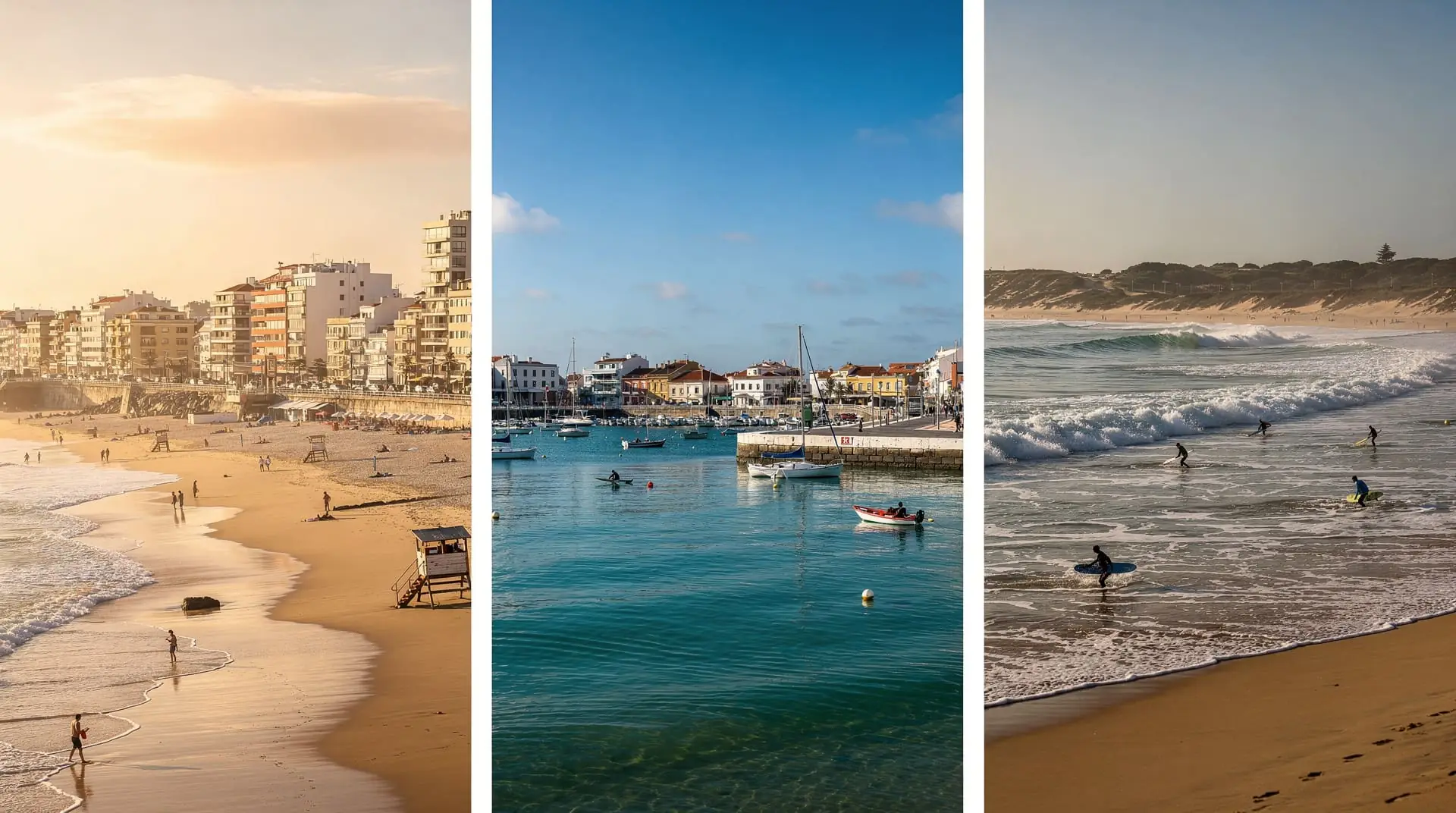
Best beaches near Lisbon — ranked by type and access
The 6 best beaches near Lisbon ranked: Caparica, Carcavelos, Cascais, Guincho, Arrábida, Comporta. By train, bus, and car with honest tips.
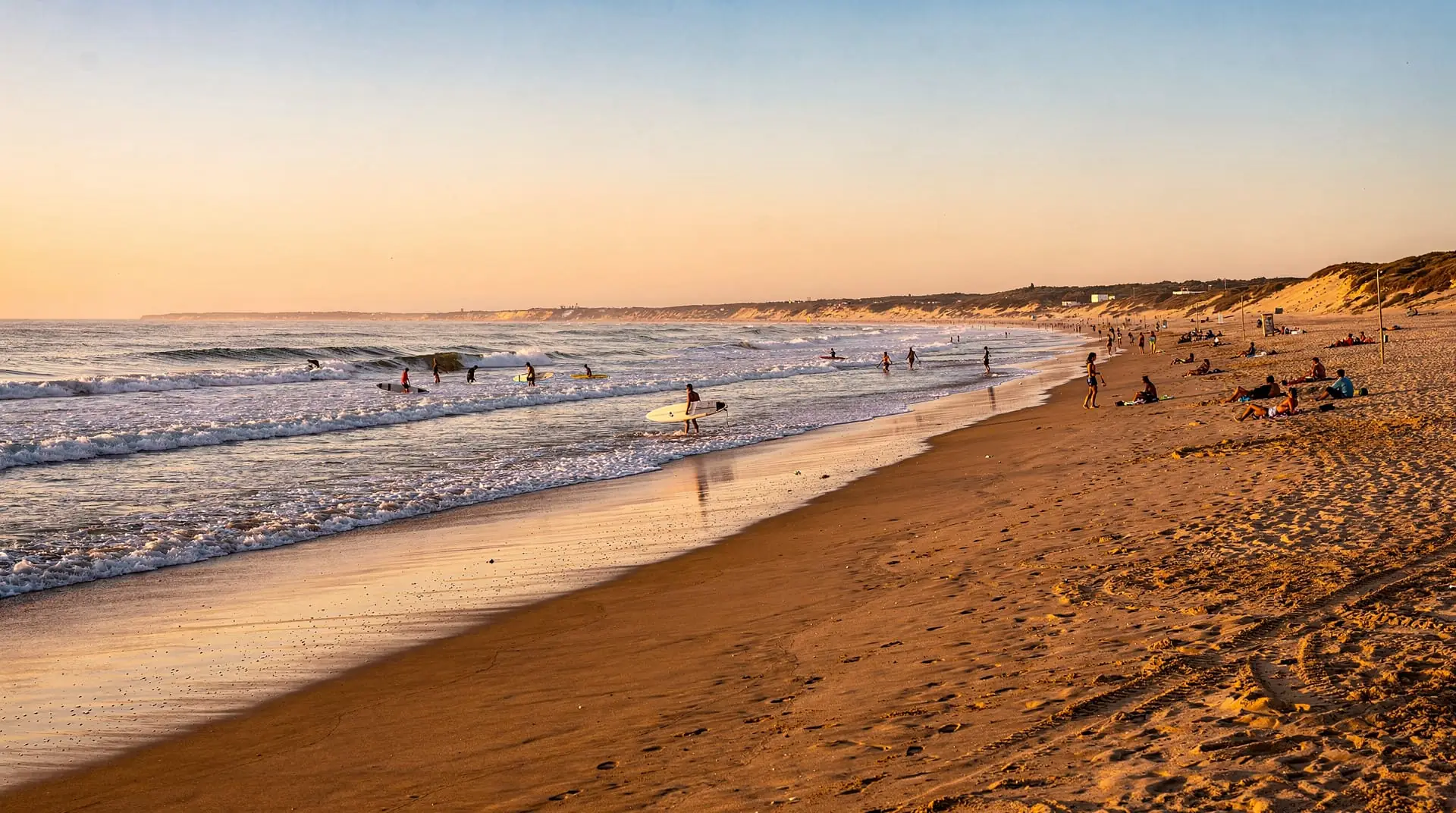
Costa da Caparica beaches — the complete guide to Lisbon's surf coast
Everything about Costa da Caparica: the Transpraia mini-train, best praias, surf spots, beach bars, and how to get there from Lisbon.
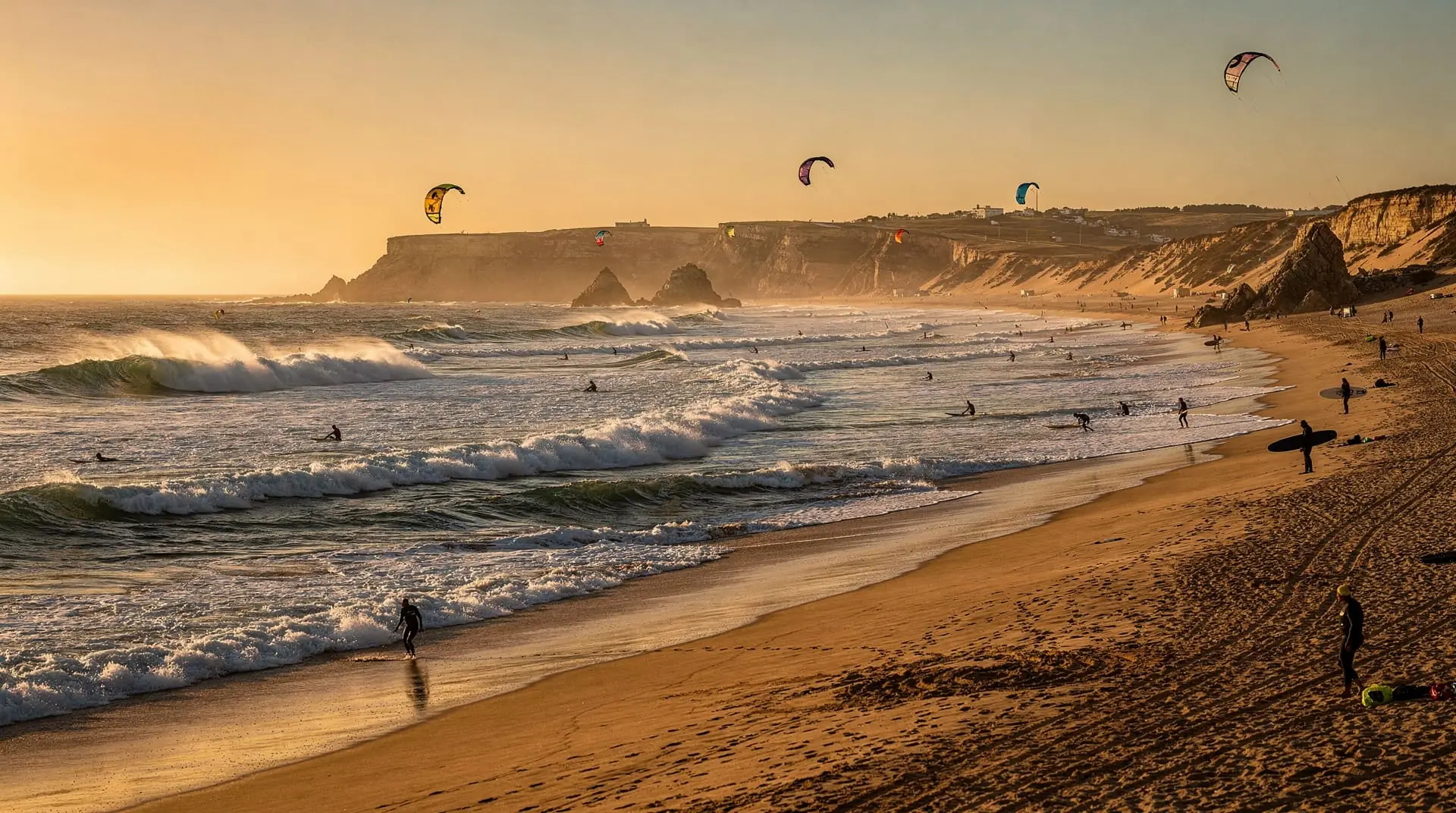
Guincho surf beach — wind, kites, and the most dramatic beach near Cascais
Praia do Guincho: wind conditions, surf and kite scene, Bar do Guincho lunch, Cabo da Roca pairing, and how to get there from Cascais by bus or bike.
Arrábida beaches — turquoise water, limestone cliffs, summer access rules
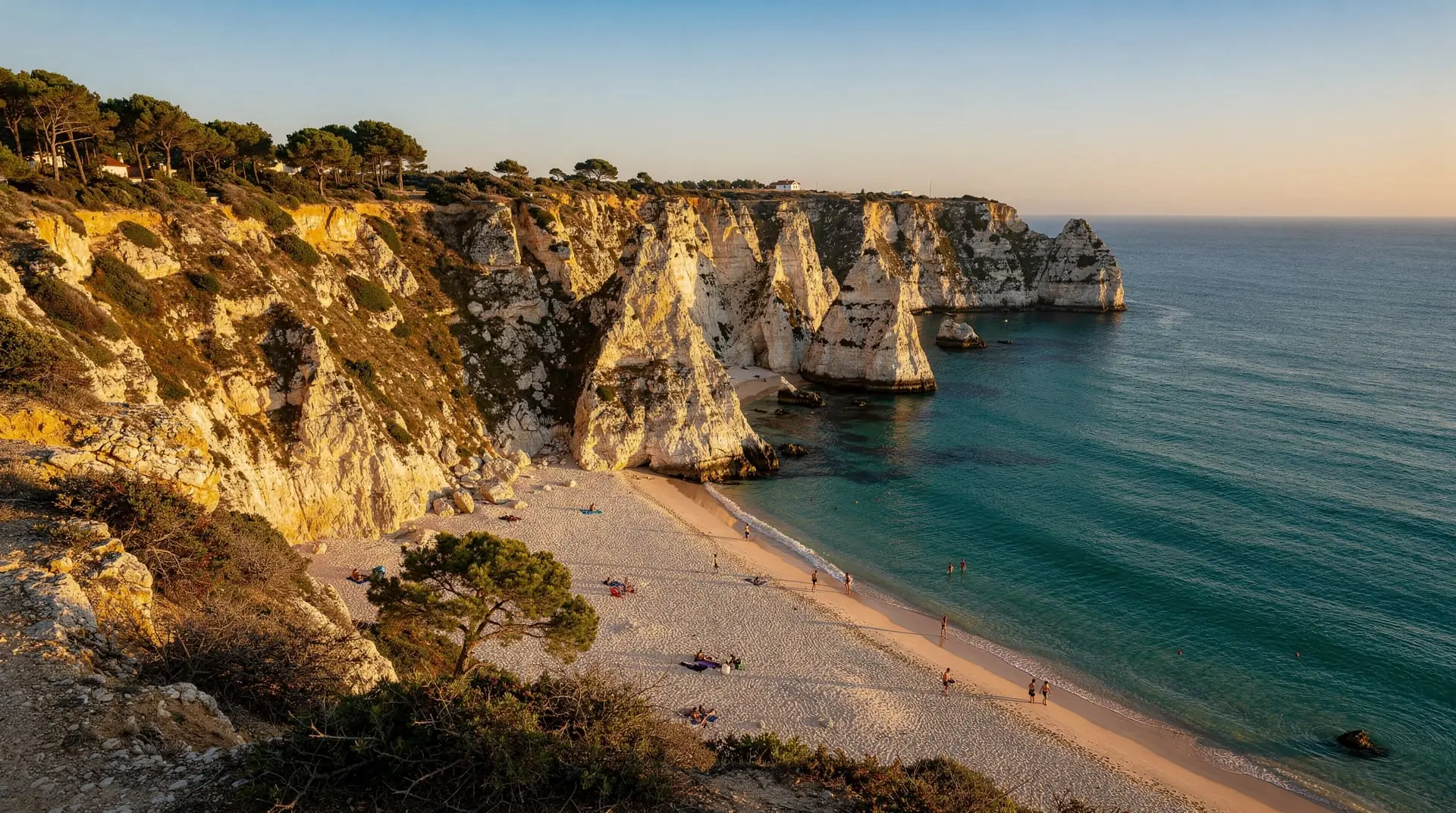
Complete guide to Arrábida beaches: Galapinhos, Galapos, Portinho, Figueirinha. Turquoise water, access restrictions June-Sept, and how to get there.
Ready to book? Top tours for this guide
We earn a small commission if you book through GetYourGuide — at no extra cost to you. Every tour is hand-picked and verified.
Cascais: Sunset Boat Trip with Welcome Drinks
Cascais: Sailing Tour with Drink
Cascais: 2-Hour Private Luxury Sunset Cruise with a Drink
Amazing Tour on Classic Venetian Boat With Drinks
Boat tour: charming Cascais Coast to Lisbon lighthouse