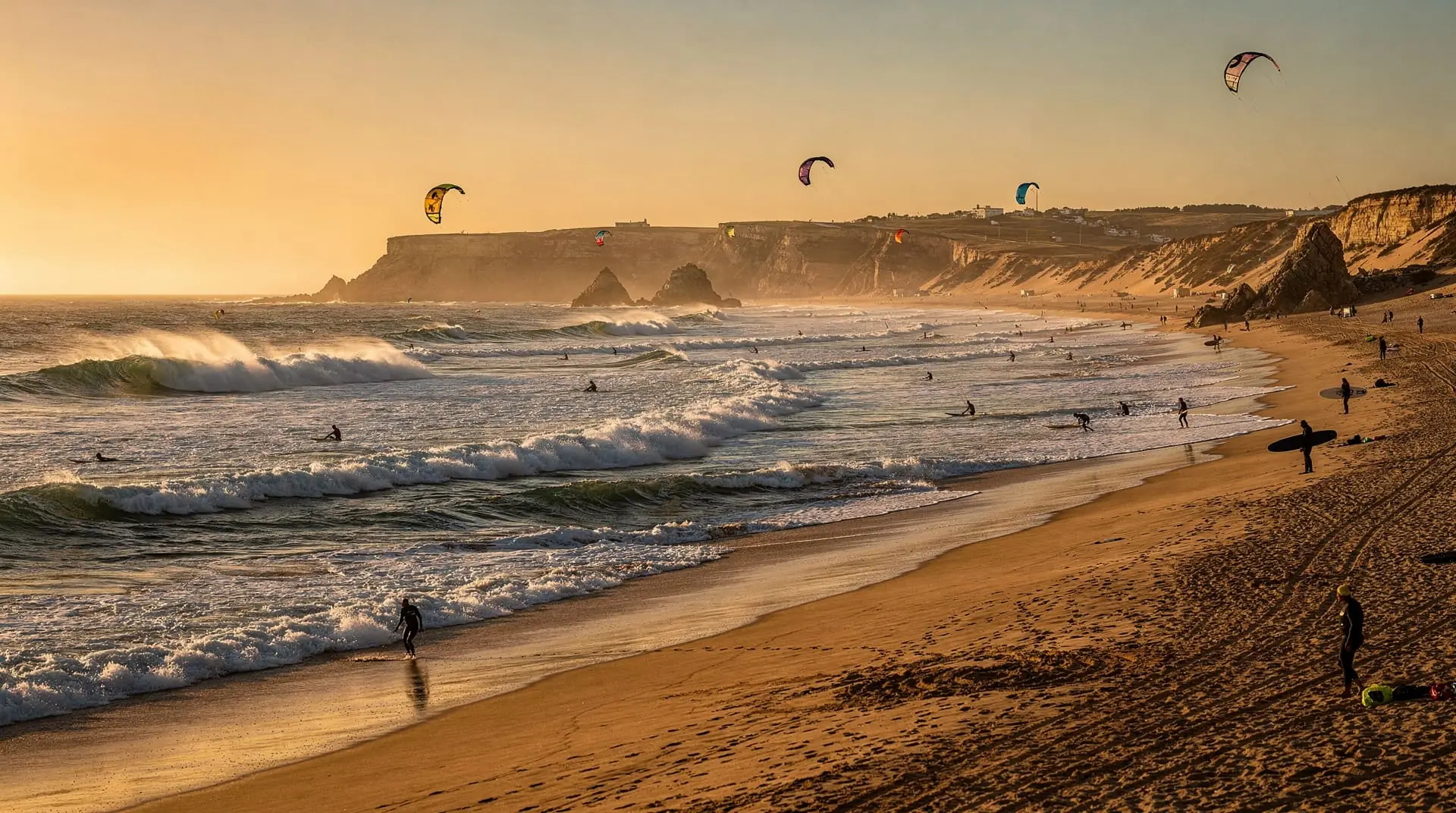
Guincho surf beach — wind, kites, and the most dramatic beach near Cascais
Last reviewed
Is Guincho beach good for swimming?
Swimming at Guincho is possible on calm mornings but the beach is primarily a wind-sports and photography beach rather than a family swimming beach. The northwest wind picks up most afternoons. Currents can be serious on swell days. The beach is spectacular — wide pale sand, dunes, and dramatic cliffs — but treat it as a wild Atlantic beach, not a sheltered bay. Arrive before noon for calmer conditions.
Praia do Guincho rewards visitors who show up with the right expectations: this is a wind-and-wave beach on the edge of a natural park, not a sheltered swimming cove. Get the timing and the transport right and it is one of the most dramatic short trips out of Cascais.
| Where | 5km west of Cascais, edge of Sintra-Cascais Natural Park |
| Best for | Surfing, kite/windsurfing, dramatic photography, lunch with a view |
| Cost | Free beach access; lunch around €30-40pp; kite lesson €80-120 |
| Getting there | Bus 405/415 (~€1.90), e-bike 15-20 min, car 10 min |
| Best time | Morning (calmer) for beach/swim; afternoon for wind sports |
What makes Guincho unlike the other Cascais beaches
Praia do Guincho sits five kilometres west of Cascais town on the edge of the Sintra-Cascais Natural Park. The other Cascais beaches — Rainha, Conceição, Tamariz — are sheltered town beaches backed by promenades and cafés. Guincho is the opposite: a wide open Atlantic strand where the northwest wind blows consistently, the dunes shift with each season, and the horizon is nothing but ocean all the way to Brazil.
The beach was briefly famous in the 1960s as the location for a Formula 1 race (the 1984 Portuguese Grand Prix was held at Estoril but Guincho was used for testing and filming due to its photogenic coast road). It appears in several Portuguese films and has a particular quality in Portuguese coastal photography — the green-grey water, the pale dunes, the lighthouse-shaped restaurant building at the beach car park.
Whether it is right for your day depends entirely on what you want from a beach.
Wind and wave conditions
Guincho is one of the windiest beach locations on the Portuguese coast. The Sintra peninsula funnels the prevailing northwest Atlantic wind, and Guincho sits directly in the path. On a typical summer afternoon, wind speeds of 25-40 km/h are common. On strong northerly days in winter, it can exceed 60 km/h — legitimately difficult to stand upright.
Morning conditions: Generally calmer than afternoons. The sea breeze builds from noon onwards. If you want to swim or spend time on the sand without fighting the wind, aim to arrive by 10am and plan to leave by 1pm. Morning light is also best for photography.
Afternoon conditions: The wind typically peaks between 2pm and 6pm. This is when the kite-surfers and windsurfers dominate the water offshore. The wind is consistent enough that Guincho has hosted major kite-surfing and windsurfing competitions including stages of the PWA World Tour.
Swell: Guincho picks up northwest Atlantic swells well. On surfable swell days (typically autumn and winter), the beach break runs along the full length of the sand. In summer, swells are smaller and less consistent — occasionally flat enough for swimming, occasionally breaking large enough to create real currents.
Surf at Guincho
Guincho is a legitimate surf destination with a character quite different from Caparica or Carcavelos. The combination of wind and swell means conditions change quickly, and the exposed location means it is not an appropriate place for complete beginners.
Best conditions for surfing: Autumn and winter (October-February) bring the best swells. Northwest or north swells in the 1.5-3 metre range produce good beach-break waves along the central section of the beach. Morning sessions before the wind builds are the quality sessions.
Surf schools: A few surf operators work at Guincho in summer, but the main surf lesson operations are based in Cascais or Carcavelos. If you want a lesson specifically at Guincho, book with a Cascais-based school that specifies Guincho in their description and check the daily conditions before going.
Equipment: Board rental is available from operators in Cascais (several shops near the station). Bringing rented equipment to Guincho by bus is awkward — most surfers come by car.
Who Guincho is for in terms of surf: Intermediate to experienced surfers who can handle variable conditions, offshore-generated currents, and variable swell. The beach break can be punchy when swell combines with the wind chop.
Kite-surfing and windsurfing at Guincho
The wind at Guincho is reliable enough to sustain a small kite-surfing and windsurfing community year-round, and in summer the southern section of the beach becomes a recognised launch zone. If you are a kite-surfer or windsurfer looking for reliable wind within striking distance of Lisbon, this is the correct answer.
Wind school: Kite School Portugal operates at Guincho with lessons for beginners and intermediate riders. Lesson packages run around €80-120 for a half-day session including equipment. Book in advance for summer.
Equipment rental: Available from school operators at the beach. You must hold an IKO or VDWS certification to rent independently — schools will ask for proof.
Right of way: The kite-surf launch zone uses the southern section of the beach. Swimmers use the northern section. The separation is informal but generally respected.
Bar do Guincho: lunch with a view
The restaurant above the northern end of the beach is the main practical reason for non-surfers to make the trip to Guincho. Restaurante Bar do Guincho (formerly part of the Hotel do Guincho, now operating under the same name) serves a menu focused on seafood and grilled fish with panoramic views from the terrace across the beach and ocean.
Pratas do dia (daily specials) run around €18-25 for a main course. The cataplana (seafood stew in a copper pot) is the signature dish and worth ordering. The menu also includes arroz de marisco (seafood rice), grilled fish of the day, and a reasonable wine list with good representation of Setúbal and Colares local wines (Colares is grown on sandy soil just north of Guincho, one of the most unusual wine appellations in Portugal).
Practical note: The restaurant fills quickly for lunch on summer weekends. Arriving at noon secures a table without difficulty. Arriving at 1pm on a Saturday in July may mean a wait. Reservations recommended for groups.
Budget: Expect €30-40 per person including starter, main, and a glass of wine. Worth it for the setting and the food quality.
How to get to Guincho from Cascais
Bus 405 and 415: The public bus option. Both routes run from Cascais bus terminal (directly adjacent to the train station) along the coastal road to Guincho, stopping at the car park above the beach. Journey time about 15-20 minutes. Fare approximately €1.90 with a Viva Viagem card.
The buses run roughly once per hour in summer (hourly or slightly more frequent in July-August) — confirm the current schedule from Cascais terminal or the TST website before relying on it for your return. Missing the last bus back from Guincho means an expensive taxi back to Cascais (about €12-15).
By bicycle: A well-maintained cycle path runs from Cascais town centre west along the seafront and continues to Guincho. The route is approximately 5km and mostly flat, with one gradual hill near the end. Journey time by regular bike: 25-30 minutes. By e-bike: 15-20 minutes. Bike rental in Cascais: €8-15/day standard, €15-25/day e-bike, from several shops near the station.
Guided e-bike tour from Cascais to Guincho and SintraBy car: The coastal road (Estrada Marginal, N247) runs directly from Cascais to Guincho in 10 minutes. Paid car park at the beach (approximately €2-3/hour, €8-10/day cap in summer). In July-August weekends the car park fills by 11am — arrive before 10am or come by bus or bike.
Pairing Guincho with Cabo da Roca
The logical extension of a Guincho visit is Cabo da Roca, 8km north along the coast road. Cabo da Roca is the westernmost point of continental Europe — a dramatic headland with a lighthouse and vertiginous cliffs dropping to the Atlantic. The views are genuinely impressive and the location has a wild, end-of-the-world quality that the tour-bus crowds (it is on every Sintra day-trip itinerary) somewhat diminish.
By bus from Guincho: Bus 405 continues north from Guincho towards Sintra, stopping at Cabo da Roca. The journey takes about 20 minutes. Return to Cascais from Cabo da Roca on the same bus (runs in both directions).
Walking: A trail runs along the clifftop from Guincho north to Cabo da Roca — part of the long-distance Rota Vicentina coastal trail. Allow 1.5-2 hours one-way (5km, moderate, some exposed cliff sections). The views from the path in both directions are among the best on the entire Portuguese coast.
Combined day: Cascais in the morning (market, harbour, old town), bus to Guincho for lunch at Bar do Guincho, then bus north to Cabo da Roca for the afternoon, then bus back to Cascais for the evening train to Lisbon. A very full day but manageable without a car.
Walking and nature in the Sintra-Cascais Natural Park
Guincho sits at the edge of the Sintra-Cascais Natural Park, one of the most significant protected areas in the greater Lisbon region. The park covers 145,000 hectares of Atlantic coastline, pine forest, and the Sintra hills, and its coastal section around Guincho is particularly rich in birdlife and plant communities.
Walking trails from Guincho:
The coastal section of the Percurso dos Altos de Cascais (PR-CLB 03) runs north from the Guincho car park along the clifftop towards Cabo da Roca. The marked trail takes 2-2.5 hours one-way to Cabo da Roca (5km), following the cliff edge with constant Atlantic views. The terrain is scrubby heath and rock, exposed to the wind, with no facilities between Guincho and Cabo da Roca. Wear sunscreen, bring water, and start early in summer.
South from Guincho towards Cascais, the coastal path follows the clifftop past a series of rocky inlets and small coves. This section (2km to the first Cascais viewpoint) is shorter and less strenuous, suitable for an hour’s gentle walking.
Flora and birds: The dune system behind Guincho supports stonecrops, sea lavender, and marram grass. Raptors hunt the scrubland above the cliffs — Eurasian sparrowhawks and peregrine falcons are both present. In winter, Audouin’s gulls join the commoner herring and yellow-legged gulls on the beach.
Guincho in winter
The wind that makes summer swimming difficult makes winter visits genuinely dramatic. From November to March, Atlantic storms approach the Portuguese coast from the northwest, and Guincho receives the full force. Waves regularly exceed 4-5 metres from shore. The beach is nearly empty of people. The restaurant stays open (reduced hours) and serves as a refuge for those who come specifically to watch the ocean in the angry season.
Winter walking on the Guincho coast — with proper waterproof clothing — is among the finest Atlantic walking available anywhere in Europe. The light in winter mornings, when the storm clears and leaves the ocean grey-green and heaving, and the Cabo da Roca lighthouse is visible against the sky, is extraordinary.
For surfers: the big winter swells that make Nazaré globally famous also send rideable energy south to Guincho. On a 4-5 metre northwest swell the beach breaks at Guincho are serious big-wave territory for very experienced surfers only. Guincho is not Nazaré — there is no single mythical wave — but the power of a winter session at Guincho should not be underestimated.
The history of Guincho
The Guincho name probably derives from the Portuguese word “guincho” (winch or crane) — a reference to the coastal loading mechanisms that once operated in the area, or possibly to the sound of the wind through the dunes.
The beach became known internationally in the 1960s and 1970s when Formula 1 testing was conducted on the coastal road between Cascais and Guincho. The road’s combination of fast straights and technical corners made it useful for tyre and car development. The road retains a slightly racing-circuit feel on quiet mornings — long, empty, and fast-curving.
The Hotel do Guincho, now operating as a Relais and Châteaux property, was built in a converted 17th-century coast guard fort above the beach. Its restaurant (Fortaleza do Guincho) is one of the best in the Lisbon area, with a Michelin star and a wine list focused on Portuguese producers. Dinner at Fortaleza do Guincho with the sound of the Atlantic below costs around €80-120 per person — a special occasion option.
Bar do Guincho (the simpler restaurant at beach level) serves lunch and some evenings at a fraction of the Fortaleza price and with similarly good views.
Practical information
Getting there from Lisbon: Train from Cais do Sodré to Cascais (40 min, €2.30) then bus 405/415 from Cascais terminal to Guincho (15-20 min, €1.90). Total from central Lisbon: about 65-70 minutes.
Water temperature: 17-19°C in summer, 14-16°C in winter. Consistent with the rest of the Atlantic coast near Lisbon — cold by Mediterranean standards.
Facilities at the beach: Car park, one main restaurant (Bar do Guincho) and the Fortaleza do Guincho above, toilets adjacent to the car park. No beach showers. No sunbed rental. No lifeguard service in 2025-2026.
Red flag warning: When the red flag is flying, do not enter the water. Guincho has serious conditions on rough days that can be underestimated by visitors.
Natural park rules: Guincho lies within the Sintra-Cascais Natural Park. No campfires, no overnight camping, no vehicle access off the designated road and car park. Dogs must be on leads on the clifftop paths.
Photography: Guincho is one of the most photographed beaches in Portugal for a reason. Sunset from the northern dunes with Cabo da Roca visible on the horizon is exceptional — arrive 45 minutes before sunset and walk to the dune crest above the car park. Blue hour photography (immediately after sunset) on a clear evening produces some of the most dramatic coastal images on the entire Portuguese coast.
Best months: May, June (less busy than July-August, flowers on the dune system), September-October (post-summer, swell building, fewer people, excellent light).
Common visitor mistakes at Guincho
Arriving by car at 11am on a summer Saturday: The car park has around 100 spaces and fills completely by 10am on peak summer weekends. There is no overflow parking — the road back to Cascais has no safe verges. The bus is the only practical transport on peak weekend days unless you arrive before 9am.
Assuming the wind will drop in the afternoon: It never does. Wind at Guincho builds through the morning and peaks between 2pm and 5pm. If you want calm conditions, go in the morning. If you like wind sports, go in the afternoon.
Swimming without reading the conditions: The beach has no lifeguards. A red flag (when posted) means do not enter the water. On days without flags, judge conditions yourself — if the waves are breaking heavily and there are few swimmers, there is a reason. The currents at Guincho are stronger than they look from the car park.
Missing the walk to the dune crest: The low dune above the car park takes 5 minutes to climb and provides the view that appears in all the best photographs of Guincho — the full sweep of the beach with the Cabo da Roca headland on the horizon. Most visitors stay at car park level. The dune crest is worth the extra 5 minutes.
Leaving without trying the restaurant: Bar do Guincho, directly above the beach, serves good grilled fish and seafood at prices that are not cheap but not unreasonable for the location and quality. Skipping it because of the setting (it looks like a hotel restaurant) is a mistake — the cataplana and the grilled dourada are genuinely good.
Guincho for non-surfers, families, and photographers
Not everyone visiting Guincho wants to paddle out or launch a kite, and the beach still works for a shorter, calmer visit if you plan around the wind. Families with young children generally do best in the morning window (before 11am), staying close to the car park where the sand is widest and the wind has not yet picked up. Building sandcastles in a stiff breeze is not much fun for a toddler, so treat Guincho as a photo-and-walk stop for families rather than a full beach day — family beaches near Lisbon covers gentler, more sheltered options if a proper swimming beach is the priority.
For photographers, Guincho at golden hour is genuinely one of the best coastal shoots near Lisbon: the combination of dune grass, kite-surfer silhouettes and the Cabo da Roca headland on the horizon rarely disappoints. Bring a wide lens and expect sand in your gear if the wind is up — a lens cloth is not optional here.
If you would rather watch the wind sports than join them, the terrace at Bar do Guincho gives a grandstand view of the kite-surf launch zone at no extra cost — order a coffee and watch for twenty minutes before deciding whether the conditions tempt you into a lesson.
Where to base yourself for a longer Guincho visit
Most visitors do Guincho as a half-day trip from Cascais, but if wind sports or surfing are the main reason for your Lisbon trip, basing yourself in Cascais rather than central Lisbon cuts the daily commute to almost nothing — a 15-minute e-bike ride instead of an hour each way. Cascais also has more surf-shop infrastructure (board and wetsuit rental, repair) than Lisbon proper. See surf lessons in Lisbon for how Guincho compares with the gentler beginner breaks closer to the city, and the Sintra-Cascais coast itinerary for combining Guincho with Sintra and Cabo da Roca over one or two days without a car.
FAQ
Is Guincho suitable for beginner surfers? Not really. Guincho’s exposed position means conditions change quickly and currents can be strong even on modest swell days. Beginners are better served by the gentler, more sheltered breaks around Carcavelos or Costa da Caparica; see surf lessons in Lisbon for beginner-friendly options, and treat Guincho as a step up once you have a season or two of experience.
Can I get to Guincho without going through Cascais first? Practically, no — Cascais is the transport hub. Trains from Lisbon’s Cais do Sodré terminate at Cascais station, and the 405/415 buses to Guincho depart from the adjacent bus terminal. There is no direct rail or bus link from central Lisbon to Guincho itself.
See also: Cascais beaches guide, Cabo da Roca destination, Sintra-Cascais Natural Park guide, best beaches near Lisbon, surfing near Lisbon.
Related guides
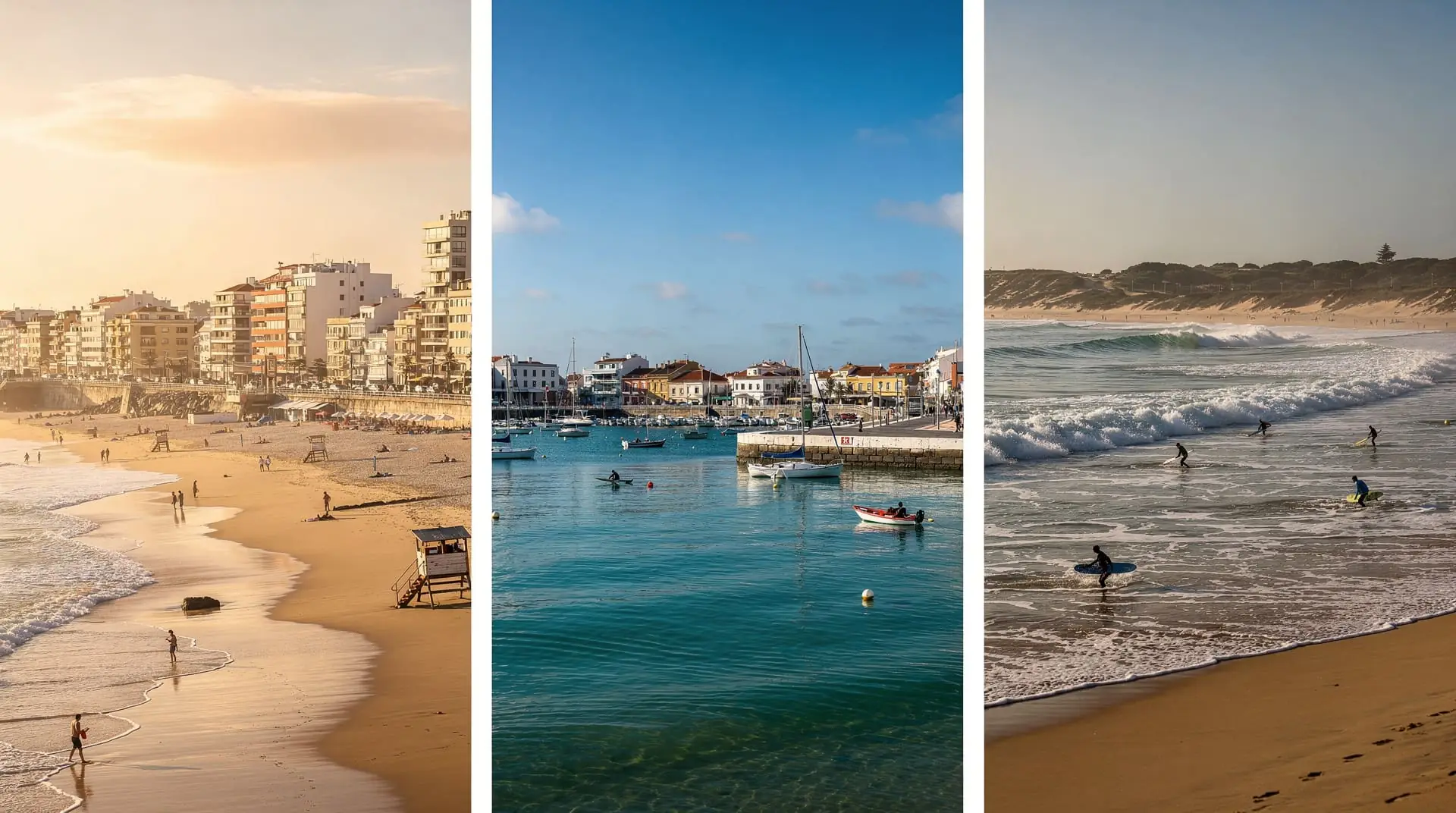
Best beaches near Lisbon — ranked by type and access
The 6 best beaches near Lisbon ranked: Caparica, Carcavelos, Cascais, Guincho, Arrábida, Comporta. By train, bus, and car with honest tips.
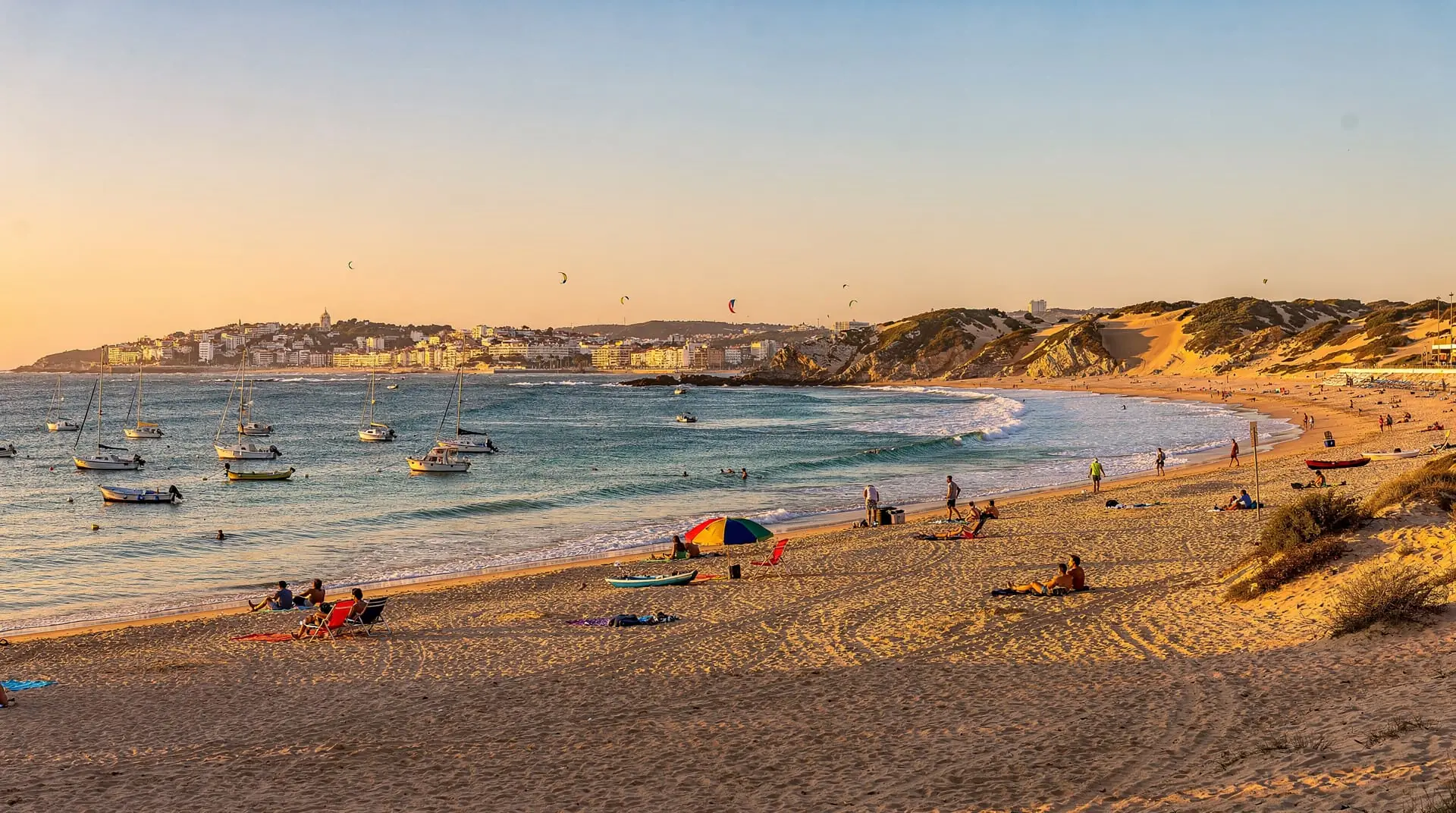
Cascais beaches — from town bays to Guincho's Atlantic wind
Guide to all Cascais beaches: Praia da Conceição, Praia da Rainha, Praia do Tamariz, and Guincho. By train from Lisbon in 40 minutes.
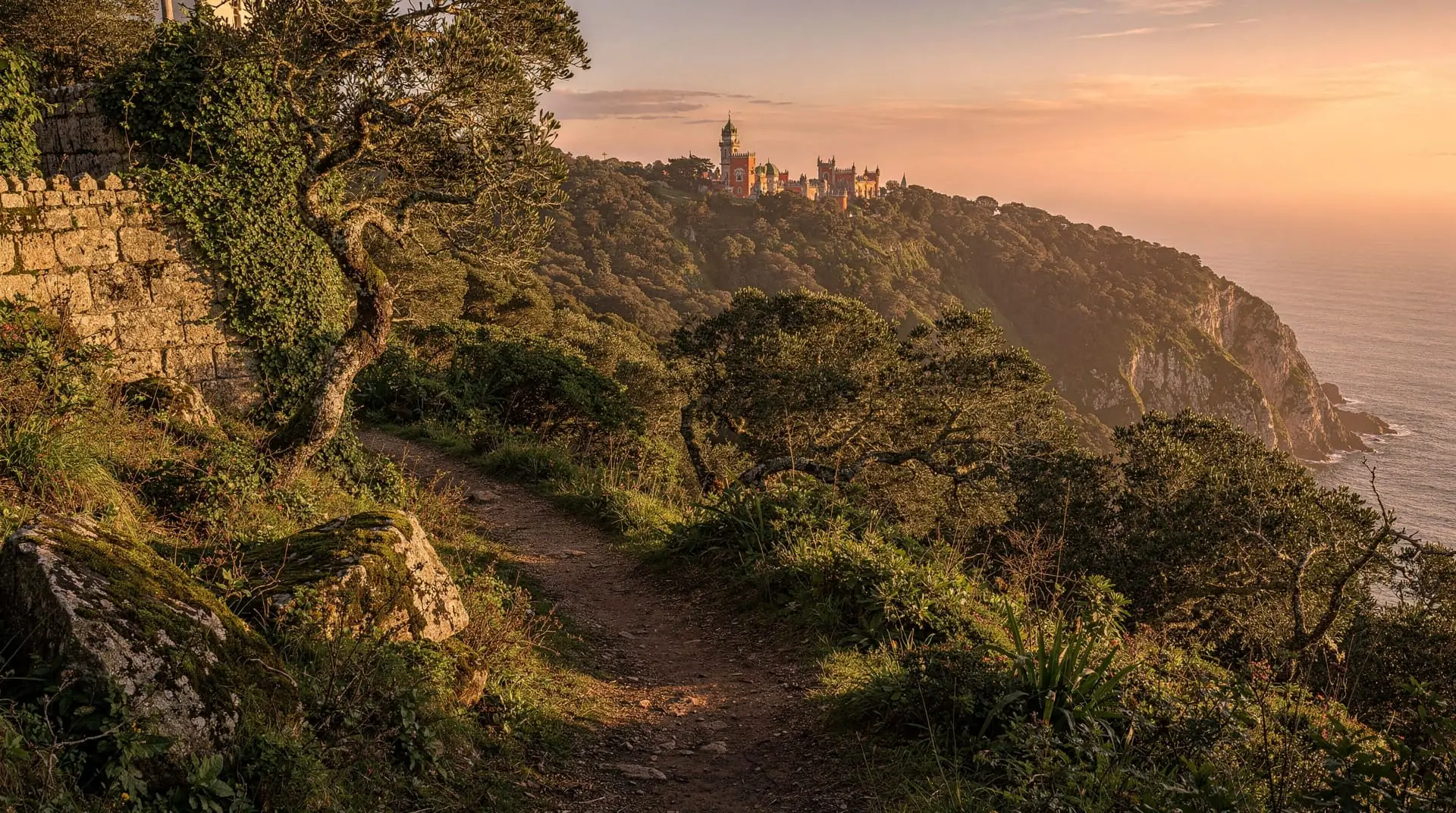
Sintra-Cascais Natural Park: Pena gardens, Capuchos convent and Cabo da Roca
Sintra-Cascais Natural Park: Pena gardens, Capuchos convent, coastal dunes, Cabo da Roca cliffs, and how to explore beyond the monuments.
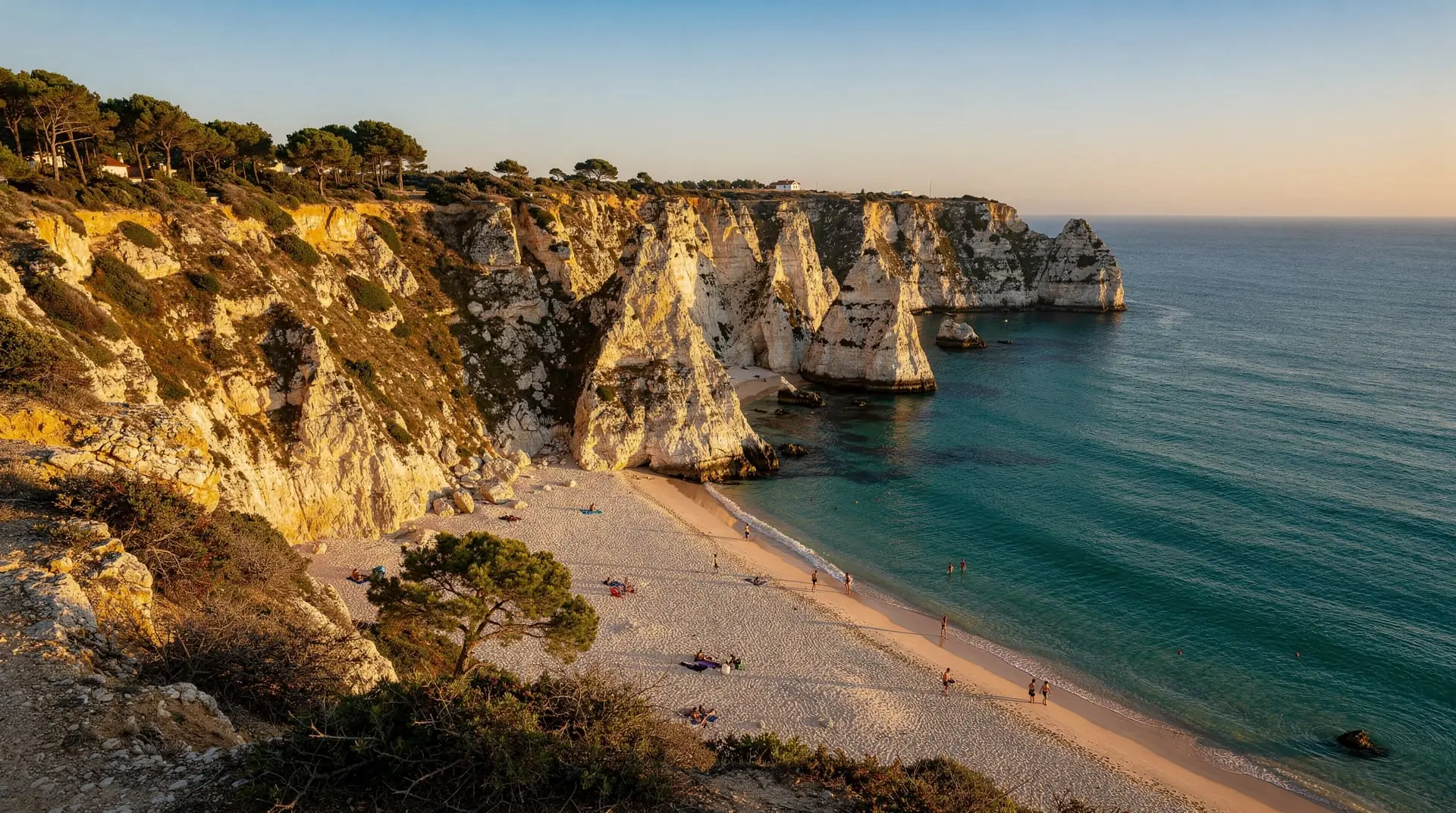
Arrábida beaches — turquoise water, limestone cliffs, summer access rules
Complete guide to Arrábida beaches: Galapinhos, Galapos, Portinho, Figueirinha. Turquoise water, access restrictions June-Sept, and how to get there.
Ready to book? Top tours for this guide
We earn a small commission if you book through GetYourGuide — at no extra cost to you. Every tour is hand-picked and verified.
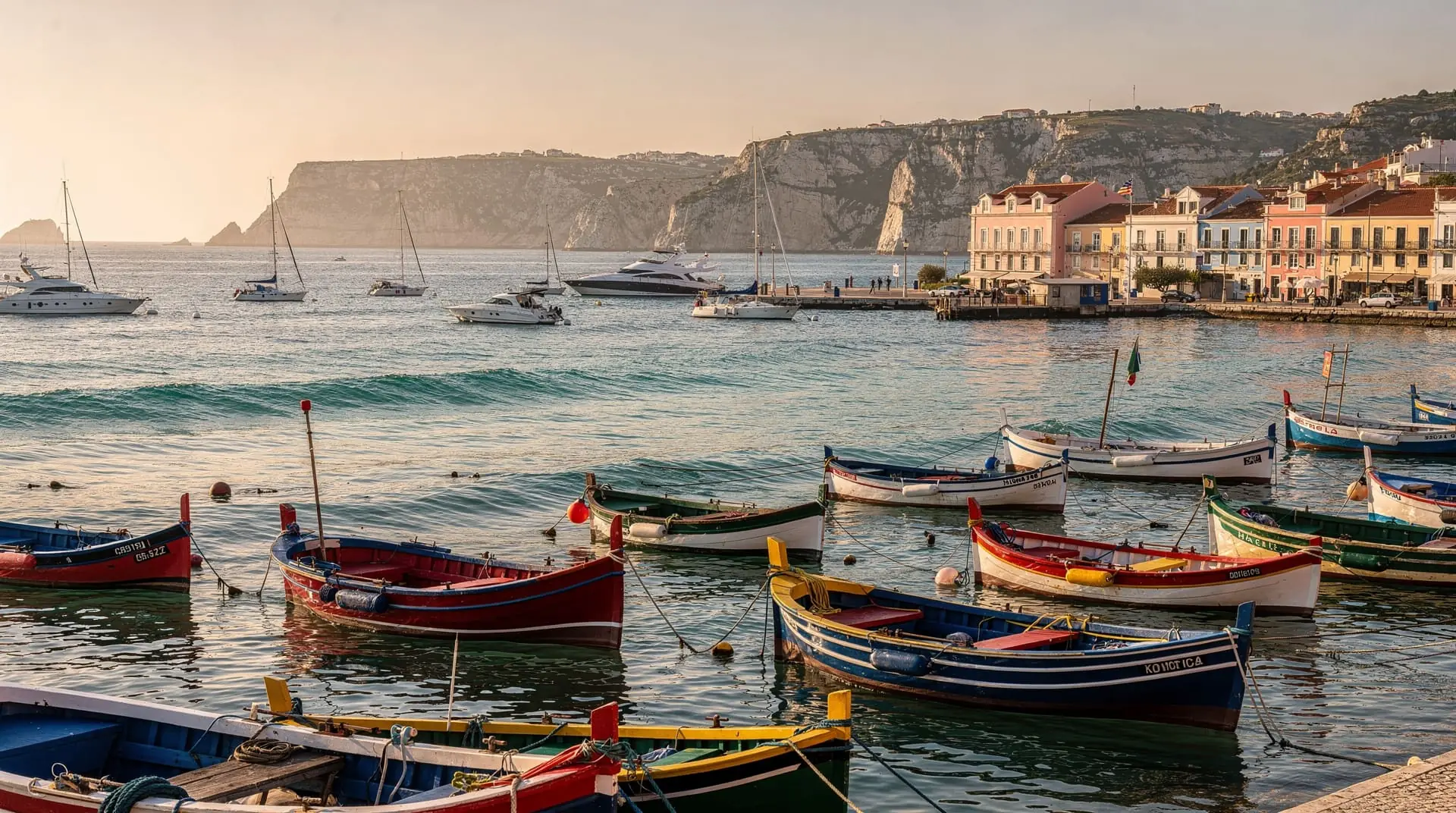
Cascais: Sunset Boat Trip with Welcome Drinks
Cascais: Sailing Tour with Drink
Cascais: 2-Hour Private Luxury Sunset Cruise with a Drink
Amazing Tour on Classic Venetian Boat With Drinks
Boat tour: charming Cascais Coast to Lisbon lighthouse