Arrábida beaches — turquoise water, limestone cliffs, summer access rules
Last reviewed
Are the Arrábida beaches worth the trip from Lisbon?
Absolutely — Arrábida has the most beautiful beaches reachable from Lisbon. Galapinhos has been voted Portugal's best beach multiple times. The catch is access: in summer (June 15 to September 15) the coastal road closes to vehicles after 8am when car parks are full. Book a day tour from Lisbon or arrive very early. Water is noticeably warmer and clearer than the Atlantic coast.
| Where | Serra da Arrábida, 50-65 min south of Lisbon |
| Access | Vehicle restriction June 15-Sept 15 on the coastal road |
| Cost | Free beach access; parking €3-5/day; organised tours €50-90 |
| Water temp | 17-23°C depending on season, warmer than the open Atlantic |
| Best months | May-June and September for beauty without the permit squeeze |
Why Arrábida is different
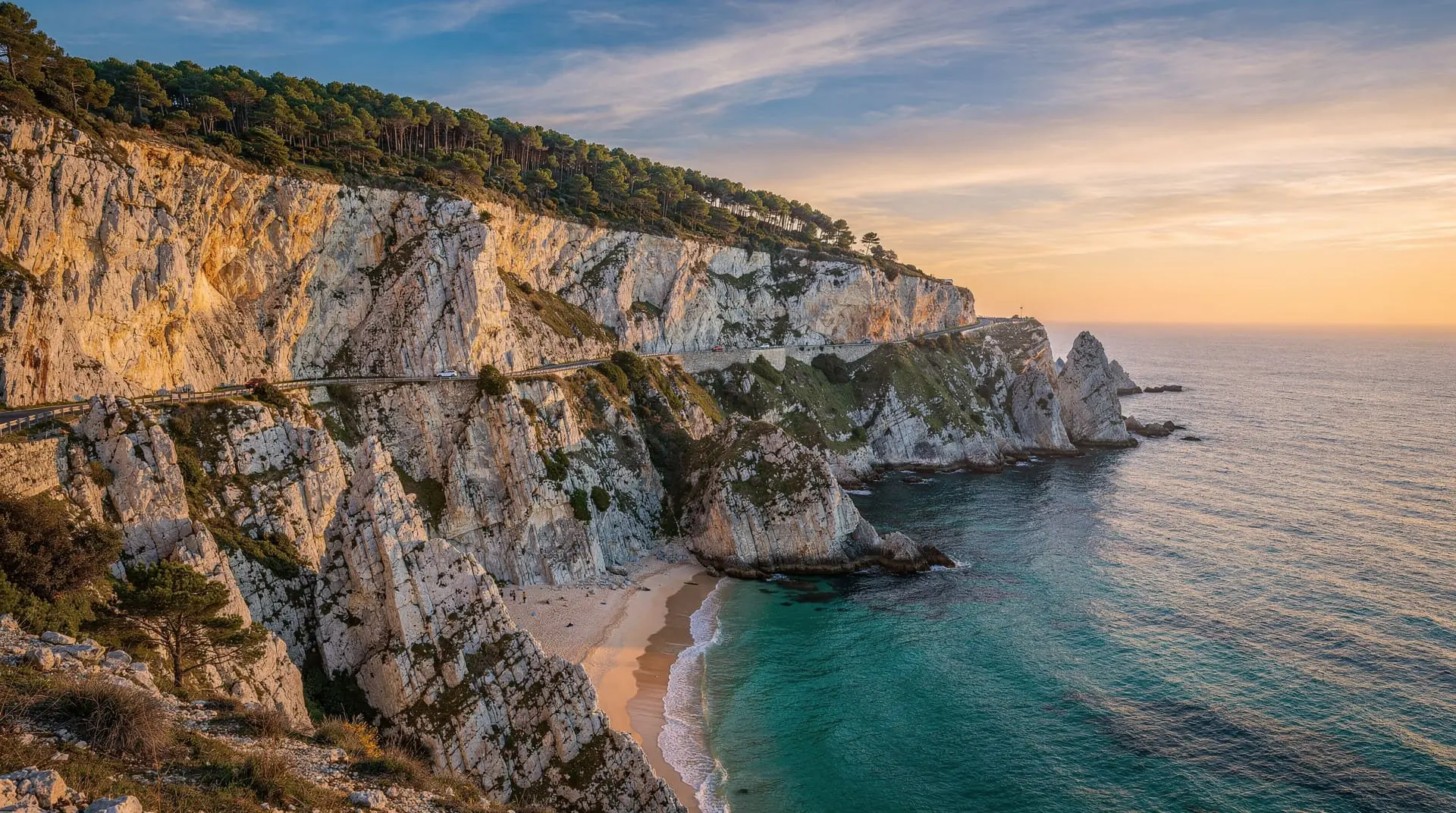
The Serra da Arrábida is a limestone mountain range that runs parallel to the coast south of Setúbal, rising sharply from the sea to peaks of 500 metres. The limestone is white and porous, and where it meets the water it creates sheltered coves with exceptional clarity and colour. The water here is not the typical grey-green Atlantic — in summer it shifts towards turquoise-green and blue, sometimes reaching 22-23°C in the protected bays, several degrees warmer than the open Atlantic coast near Cascais or Caparica.
This is why Arrábida consistently ranks as one of the best beach areas in Portugal, and not just as a regional novelty. Praia de Galapinhos has been voted Portugal’s best beach in multiple national polls. Portinho da Arrábida appears in most serious European coastal rankings. The area is protected as a Natural Park and that protection is visibly effective — the water quality and the coastal ecosystem are in far better condition than almost anywhere else reachable from a major city.
The main complication is access, and it is worth understanding before you go.
The four main Arrábida beaches
Praia de Galapinhos
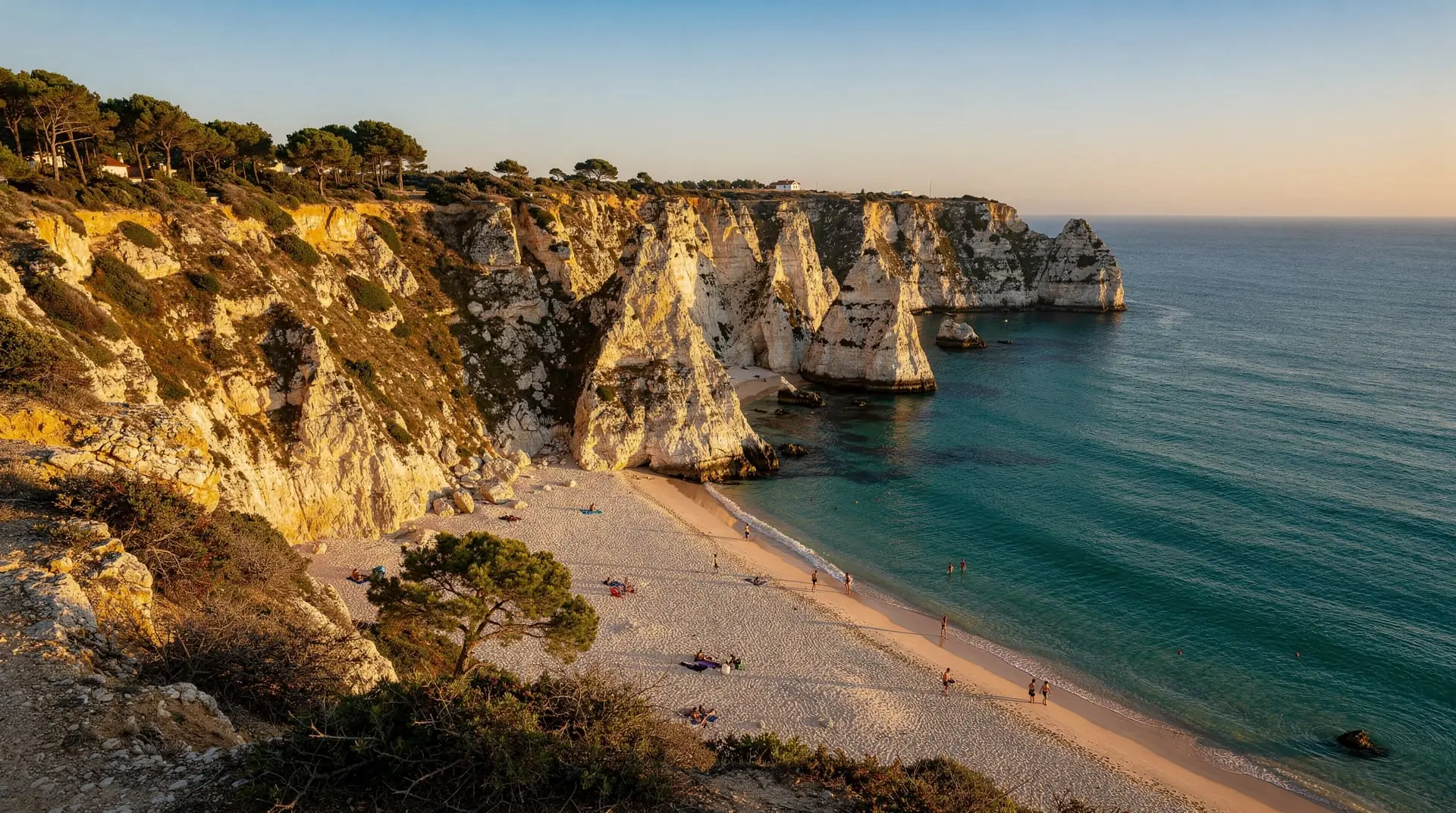
The most celebrated beach in the park. A narrow cove framed by limestone cliffs, with fine white-golden sand and water that genuinely turns blue-green in good conditions. It is accessible only on foot (a 15-minute downhill path from the coastal road, steep enough to slow the crowds) or by boat from Sesimbra or Portinho.
The footpath is the key detail: no vehicles reach the beach itself, which means Galapinhos stays noticeably quieter than Portinho even on a busy summer day. There are no facilities — no bar, no showers, no umbrella rental. Bring everything you need including water and food. The walk back up to the road in the midday heat is worth planning for.
In summer, parking on the coastal road above is subject to the vehicle restriction (see below). If you arrive by tour, the operator handles logistics. If you come by car, you need to be at the road by 8am to have a realistic chance of parking near the Galapinhos path.
Praia de Galapos
A smaller cove about 1km east of Galapinhos, also accessible by foot from the coastal road. Similar character: limestone cliffs, clear water, minimal facilities. Slightly less well-known and therefore slightly less crowded. The path to Galapos from the road is shorter and easier than Galapinhos.
Good snorkelling around the rocky outcrops at both ends of the cove — bring a mask.
Portinho da Arrábida
The most developed beach in the park and the one with the best facilities — a bar/restaurant (Restaurante Quinta das Arábidas), showers, changing rooms, and lifeguards in summer. The water is sheltered and relatively calm, good for swimming and paddleboarding. Snorkelling around the underwater reserve (part of the Arrábida Marine Park) requires a permit, available from the park authority or through tour operators.
Portinho is accessible by the coastal road when parking allows, and by boat from Sesimbra. Several boat tour operators from Sesimbra include Portinho as a stop.
The underwater visibility at Portinho is exceptional — 8-10 metres on a good day. The marine reserve protects octopus, sea bream, barracuda, and various reef fish. Even without a permit, snorkelling in the outer area of the cove is rewarding.
Boat tour of Arrábida beaches and caves from Sesimbra with snorkellingPraia de Figueirinha
The easternmost and most accessible of the main Arrábida beaches, located closer to Setúbal with a larger car park and more direct road access. This makes it busier than the other beaches but also easier to reach, particularly for visitors without a tour who are coming by public transport.
From Setúbal city (accessible by train from Lisbon Oriente or Setúbal station — check Comboios de Portugal timetables), local buses run to Figueirinha in summer. It is the one Arrábida beach that is theoretically accessible without a car, though the bus service is infrequent and you should verify current schedules.
Figueirinha has a bar, showers, toilets, and lifeguards. The sand is wider and the beach less dramatic than Galapinhos, but the water is still noticeably cleaner and clearer than the Atlantic coast beaches near Lisbon.
Comparing the four beaches
| Beach | Access | Facilities | Best for |
|---|---|---|---|
| Galapinhos | 15-min footpath only | None | Quiet, most beautiful cove |
| Galapos | Short footpath | None | Snorkelling, slightly quieter than Galapinhos |
| Portinho da Arrábida | Coastal road or boat | Bar, showers, lifeguards | Families, easiest full day out |
| Figueirinha | Direct road, some public bus | Bar, showers, toilets, lifeguards | Visitors without a car |
The summer vehicle restriction: what it means in practice
Between June 15 and September 15, Estrada Nacional 379-1 (the coastal road through the park) is closed to vehicles when the capacity limit is reached. This typically happens between 8am and 9am on sunny summer days, sometimes earlier in peak July-August weekends.
Once the road is closed, vehicles are turned back at a checkpoint. There is no waiting queue — the road is simply closed until cars leave and space opens. In practice, on a Saturday in August, it can stay closed until mid-afternoon.
What this means for you:
If you have a car, you must arrive at the park entrance before 8am. This is realistic but means a very early start from Lisbon (leave by 6:30am). Parking inside the park costs €3-5/day at the main car parks.
If you take an organised day tour from Lisbon, the operator deals with access logistics. Most tours leave Lisbon early enough to beat the restriction, or use boat access for the most popular coves.
If you come by boat from Sesimbra (the most flexible option), the restriction does not apply.
Camping and staying overnight near Arrábida
Most visitors do Arrábida as a day trip, but staying a night in Setúbal or Sesimbra opens up an early-morning visit to Galapinhos before the day-trippers and vehicle checkpoints arrive — arguably the best way to experience the beach. Setúbal has the wider hotel selection and better transport connections back to Lisbon; Sesimbra is smaller and more focused on the fishing-village atmosphere, with boat tours departing directly from its harbour. Both towns are 20-40 minutes from the park entrance depending on which beach you’re heading to, well short of the pre-dawn drive required from Lisbon itself.
Getting to Arrábida from Lisbon
By car: A2 south (toll, approx. €1.40) then A12 towards Setúbal. Follow signs for Arrábida/Portinho. Total journey: 50-65 minutes depending on traffic. Leave Lisbon by 6:30am in summer to guarantee access before the road closes.
By organised day tour: The practical choice for the majority of visitors. Tours from Lisbon run daily in summer, combining Arrábida beach time with wine tasting at Azeitão quintas, dolphin watching in the Sado estuary, or a visit to Sesimbra. Journey time in a minibus or private vehicle: about 75 minutes. Operators handle the access restriction.
Full-day Arrábida Natural Park and Sesimbra tour from LisbonBy train + local bus to Figueirinha: Train from Lisbon (Oriente or Entrecampos) to Setúbal — about 50-55 minutes, around €4.60 single. From Setúbal, summer bus services to Figueirinha (check Mobiatura/TST schedules for current routes — services change). Not reliable enough for Galapinhos or Portinho. Practical only for Figueirinha.
By boat from Sesimbra: Sesimbra is a small fishing town south of the park with a good boat tour industry. Several operators run Arrábida cave and beach tours daily in season, covering Galapinhos, Galapos, and Portinho with snorkelling stops. Sesimbra itself is reachable by bus from Setúbal or by car (40 minutes from Setúbal, 70 minutes from Lisbon).
Photography and the best light
Arrábida’s turquoise colour is genuinely at its best in the two or three hours either side of midday, when the sun is high enough to light the seabed and the water reads blue-green rather than the darker tone it takes on at sunrise or sunset. This runs slightly against the usual golden-hour advice for landscape photography — for the water colour specifically, come between 11am and 3pm. For dramatic cliff photography instead, the late-afternoon light raking across the limestone from the west produces strong shadows and texture, particularly viewed from the Convento da Arrábida viewpoint above Portinho.
Snorkelling and marine park rules
The Arrábida Marine Park covers 53,000 hectares of the coastal zone and is one of the most protected marine areas in Portugal. The reserve has two zones:
Área de Ambiente Marinho Protegido: General snorkelling and swimming allowed. No fishing or anchoring. This covers most of the bays.
Reserva Marinha Total: Total protection zone — no activities other than research. Access only with a permit.
For general snorkelling, you do not need a permit in the main swimming areas. For scuba diving and organised underwater tours, operators must be licensed by the park authority. Check that any tour operator you book with holds the appropriate park concession.
What you can see snorkelling: Sea bream (dourada), mullet, wrasse, occasional bass, octopus hiding in rock crevices, moray eels, starfish. The kelp forest around the rocky outcrops at Galapinhos is particularly good. Visibility is usually 6-10 metres.
Practical advice for a successful Arrábida day
Book tours in advance: In summer (July-August), day tours from Lisbon to Arrábida fill weeks ahead. Do not assume you can book the day before.
Bring your own food to Galapinhos and Galapos: No facilities at these beaches. The walk down with a heavy cool-bag is annoying but unavoidable. Pack water, sunscreen, snacks, and shade if you need it (umbrella installation in some areas of the park requires a permit, and some sections prohibit them entirely).
Wear sensible footwear for the paths: The limestone paths to Galapinhos and Galapos are uneven and can be slippery when wet. Flip-flops are not suitable. Trainers or walking sandals with grip are better.
Go on a weekday if you can: The vehicle restriction is still in force on weekdays in summer, but the beaches are significantly less crowded from Monday to Thursday than on weekends.
Water temperature expectations: Arrábida water is warmer than the open Atlantic coast. In August, expect 20-23°C in the sheltered coves — much more comfortable than Guincho or Caparica (17-19°C). Still cooler than the Mediterranean. A shorty wetsuit is unnecessary in summer for most people, but useful in May, June, or October.
Combining Arrábida with Azeitão wine and Sesimbra
The Setúbal peninsula — the piece of land between the Tagus and the Sado — has three things worth combining: Arrábida beaches, Azeitão wine (Moscatel de Setúbal is a distinct and excellent fortified wine), and Sesimbra (a small fishing village with its own beach and Moorish castle).
A well-organised day tour covers all three. Arrive at Portinho or Galapinhos in the morning, swim and snorkel, then drive or be transferred to one of the Azeitão quintas (José Maria da Fonseca is the main producer and runs tours and tastings) for a late-morning tasting, then down to Sesimbra for lunch on the waterfront.
Sesimbra’s central beach, Praia de Sesimbra, is attractive though less dramatic than Arrábida — good for a swim if energy levels allow. The Castelo above the village has views across the bay. Lunch at one of the restaurants on Rua da Praia: fresh fish, reasonable prices (€12-18 for a grilled fish main), no tourist-trap pretension.
See the Setúbal and Arrábida day trip guide for full logistics on combining these elements.
Wildlife and nature in the Arrábida marine environment
The Arrábida Marine Park is not just a beach destination — it is one of the richest marine ecosystems on the Iberian Atlantic coast. The combination of limestone substrate, clear water, and protected status has produced a biodiversity that is unusual for coastal Portugal.
Cetaceans: Common bottlenose dolphins inhabit the Sado estuary year-round and regularly enter the Arrábida bays. Sightings from the clifftop above Portinho and Galapinhos are not uncommon in early morning. The commercial dolphin-watching operations run from Setúbal (see the dolphin watching guide) and sometimes conduct tours that pass through the park’s outer waters.
Seabirds: Yellow-legged gulls breed on the limestone cliffs above Galapinhos. Cormorants dry their wings on the sea-level rocks between coves. In winter, razorbills and guillemots pass offshore on migration.
Underwater: The rocky reef system around the Arrábida headlands supports one of the most diverse assemblages of Mediterranean and Atlantic fish species in Portugal. Outside the strict reserve zones, recreational snorkellers regularly encounter octopus, moray eels, sea bream, barracuda (juvenile), and Atlantic wrasse. The kelp beds around the outer rocks are particularly productive.
Wine tasting at Azeitão — combining with the beach
The town of Azeitão, 15km north of Arrábida by the inland route, is the heart of the Setúbal wine appellation and worth combining with any Arrábida beach visit. The appellation is known for two things: Moscatel de Setúbal (a fortified sweet wine made from Muscat grapes, aged in old casks and available in 5-year, 10-year, and 20-year versions) and increasingly for world-class dry reds from Castelão grapes.
José Maria da Fonseca (at Azeitão, open to visitors daily) is the oldest continuously operating wine company in Portugal (founded 1834) and offers cellar tours and tastings. The 20-year Moscatel is a genuinely extraordinary wine — amber-coloured, complex, with dried apricot and walnut character, served chilled as an aperitif or with cheese.
Quinta de Bacalhôa (adjacent to Azeitão) is a Renaissance palace with gardens and a winery producing some of the best dry reds in the Setúbal region. The wine tour here is architecturally interesting in addition to oenologically.
Combined Arrábida and Azeitão tours typically run from Lisbon in the morning, visit a beach for swimming and lunch, then drive to an Azeitão quinta for a tasting before returning. Well-organised versions of this day rate as one of the most satisfying things you can do in the Lisbon region.
When to visit Arrábida
May and June: The optimal combination of manageable crowds and reliable beach weather. The car parks are not yet at the summer restriction threshold on weekdays. Wild flowers on the limestone slopes — yellow cistus, lavender, and rosemary. Water is 17-18°C but swimmable. Book accommodation in Setúbal or Sesimbra.
July and August: Peak season. Beaches are at their most crowded and beautiful simultaneously. The vehicle restriction is firmly in effect. A day tour is the most sensible logistics choice. Water temperature peaks at 21-23°C in the sheltered bays.
September and October: The best shoulder season. Summer crowds have diminished, water is still warm (19-21°C in September, cooling to 17-18°C in October), and the limestone cliffs take on a different light. September weekends are still busy; weekdays after September 15 (when the vehicle restriction officially lifts) are nearly empty.
November to April: The park is quieter and the hiking is excellent. The beaches are cold (14-16°C water, frequent Atlantic wind) but the landscape — empty limestone coves, migrating raptors overhead, crystal-clear water with nobody in it — has its own appeal. The Galapinhos trail in December with clear skies and no tourists is a very different experience from August.
Arrábida by season, at a glance
| Season | Water temp | Crowds | Access |
|---|---|---|---|
| May-June | 17-18°C | Low-moderate | No restriction yet |
| July-August | 21-23°C | Very high | Vehicle permit/restriction in force |
| September-October | 17-21°C | Moderate, quieter after mid-Sept | Restriction lifts Sept 15 |
| November-April | 14-16°C | Very low | Open access, cold water |
What to pack for an Arrábida beach day
There is no shop at Galapinhos or Galapos, so pack as if the day has no fallback: water (at least 1.5 litres per person given the walk down and the sun), reef-safe sunscreen, snacks or a packed lunch, a snorkel mask if you want to explore the rocky outcrops, and sturdy sandals or trainers for the limestone path rather than flip-flops. A dry bag is useful if you plan to swim with valuables. Portinho and Figueirinha have bars and toilets, so pack lighter if those are your destination.
Practical safety summary
Before visiting Arrábida, be clear on the following:
No jellyfish season: Portuguese waters see occasional jellyfish blooms in late summer, particularly after northwest winds. Ask locally before swimming if in doubt.
Sun at altitude: The limestone cliffs reflect UV. Factor 30+ is minimum; sunburn at Arrábida happens fast even on slightly overcast days.
Loose rock: The paths above Galapinhos and Galapos traverse limestone that is stable in dry conditions but can be loose after rain. Do not walk near cliff edges after wet weather.
Mobile reception: Limited or absent in the coves themselves (cliffs block signal). Tell someone where you are going before visiting remote sections of the park independently.
See also: Setúbal and Arrábida day trip, dolphin watching Setúbal, Sesimbra day trip, Azeitão destination, best beaches near Lisbon, and the broader Arrábida Natural Park guide for hiking trails beyond the beaches themselves.
Related guides
Best beaches near Lisbon — ranked by type and access
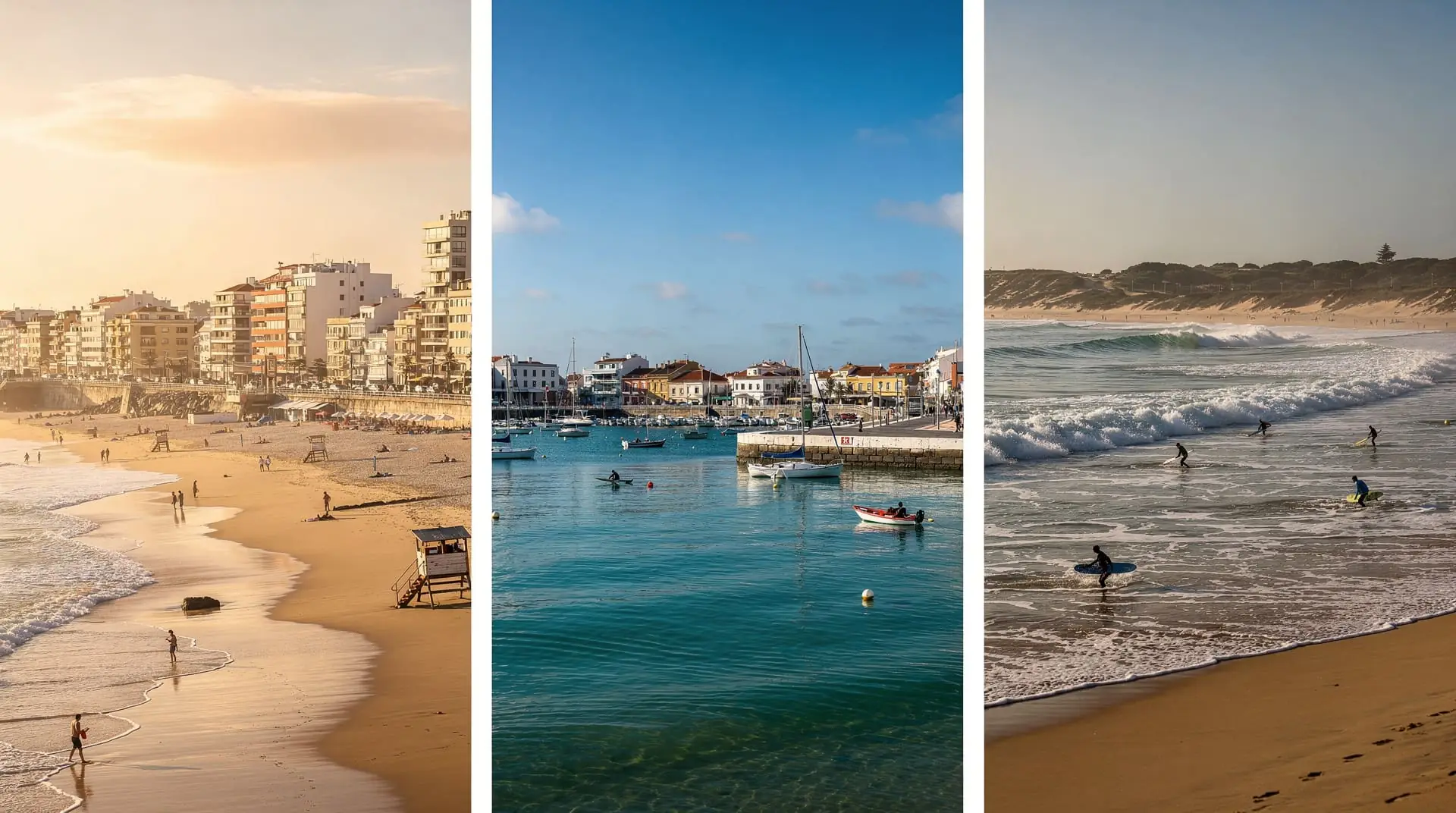
The 6 best beaches near Lisbon ranked: Caparica, Carcavelos, Cascais, Guincho, Arrábida, Comporta. By train, bus, and car with honest tips.
Arrábida Natural Park: beaches, hiking trails and the summer road permit
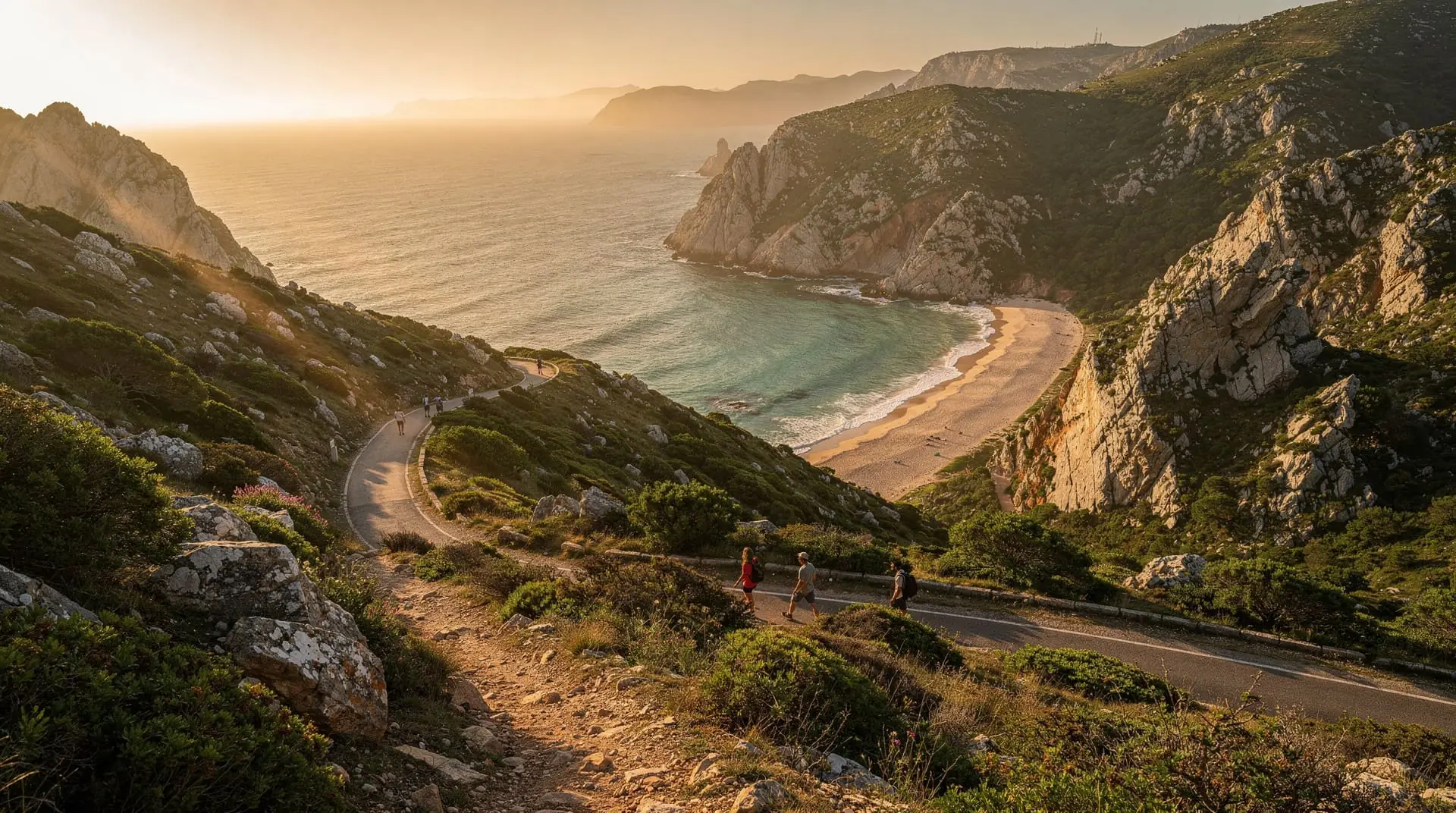
Arrábida Natural Park guide: summer N379-1 road restriction, hiking trails, Convento da Arrábida, best beaches inside, and access tips.
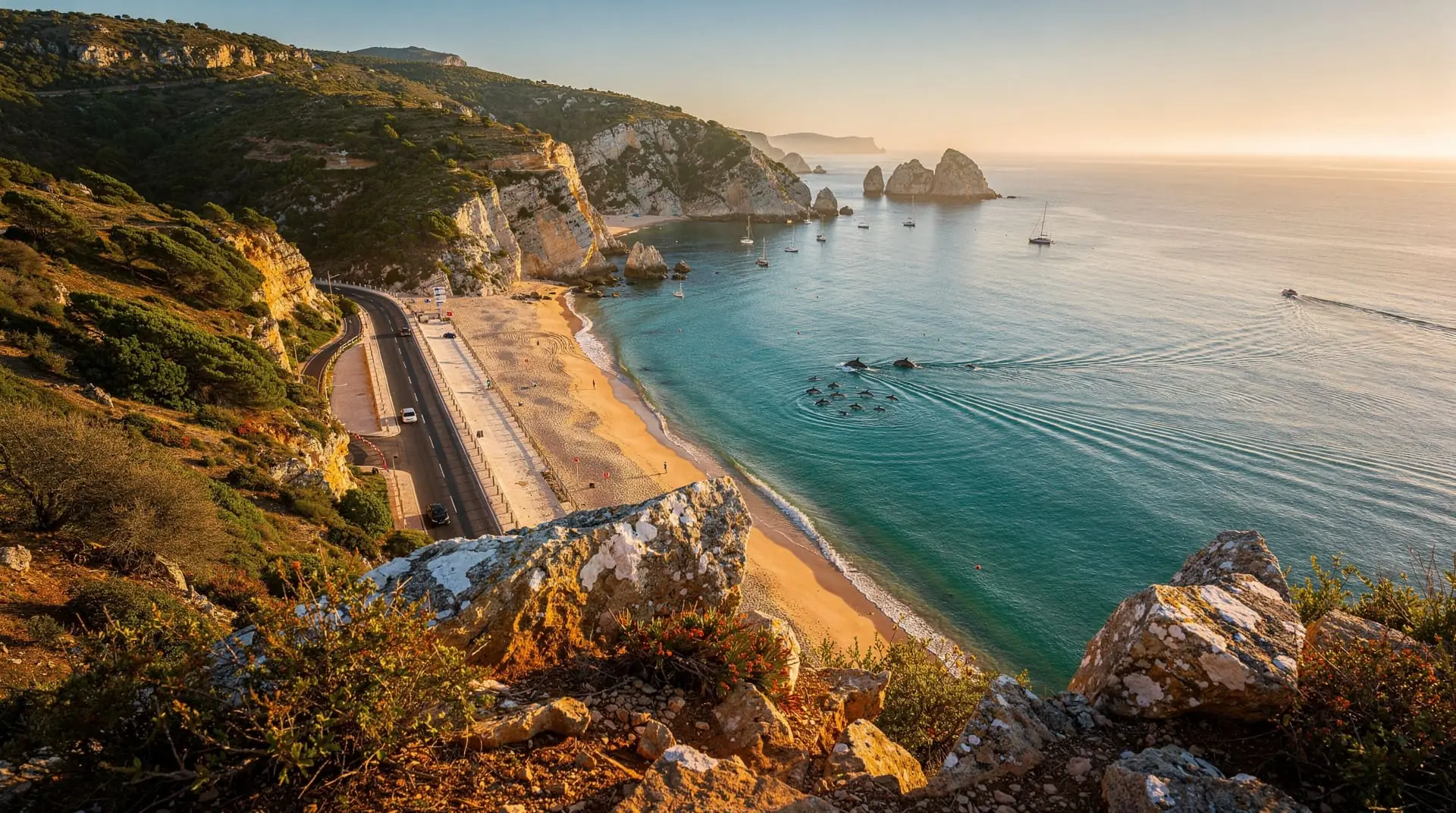
Setúbal and Arrábida day trip: beaches, dolphins and the summer road restrictions
Setúbal and Arrábida day trip — Galapinhos beach, Portinho da Arrábida, dolphin watching, summer road restrictions explained, and carless options.
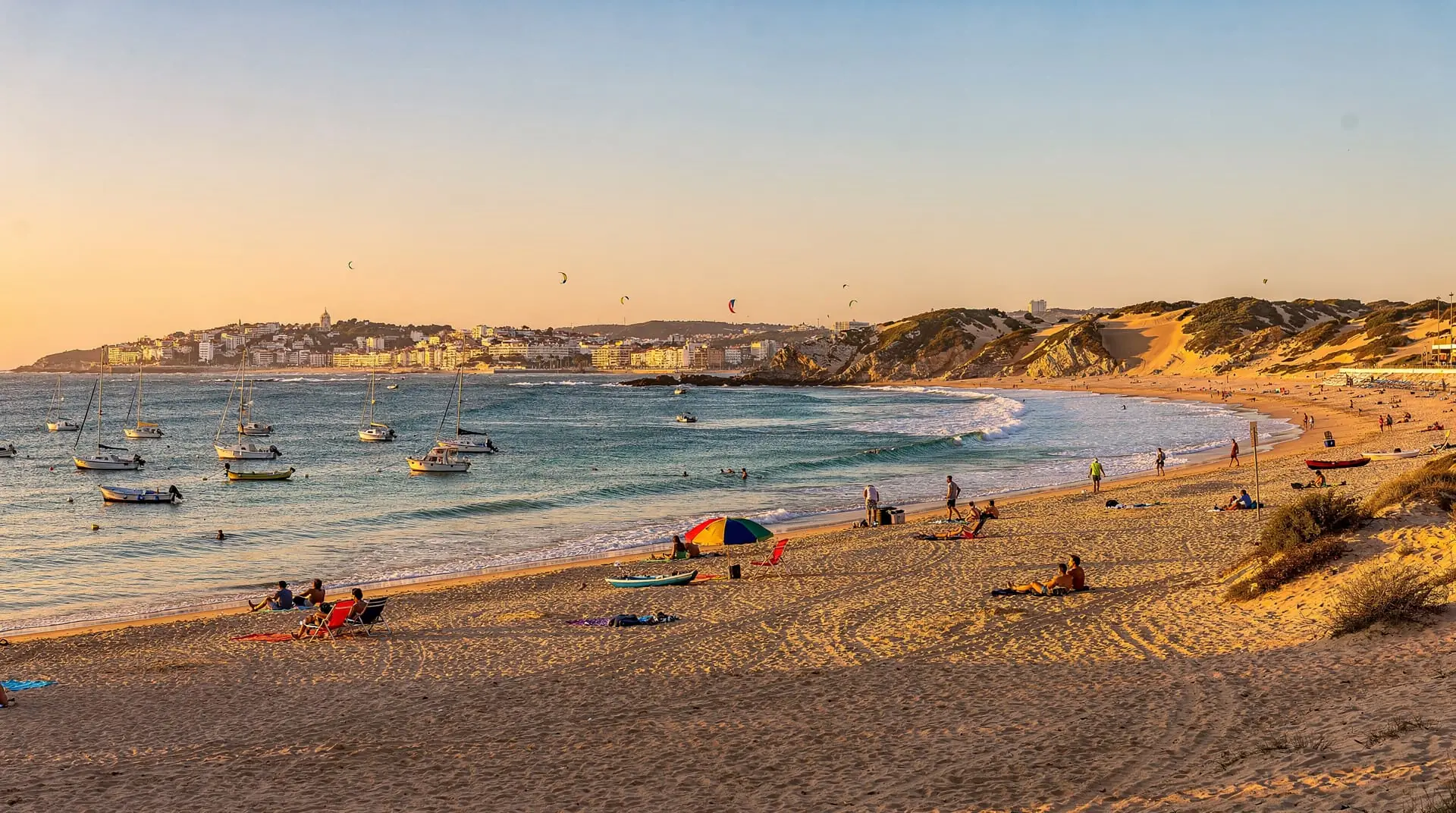
Cascais beaches — from town bays to Guincho's Atlantic wind
Guide to all Cascais beaches: Praia da Conceição, Praia da Rainha, Praia do Tamariz, and Guincho. By train from Lisbon in 40 minutes.
Ready to book? Top tours for this guide
We earn a small commission if you book through GetYourGuide — at no extra cost to you. Every tour is hand-picked and verified.