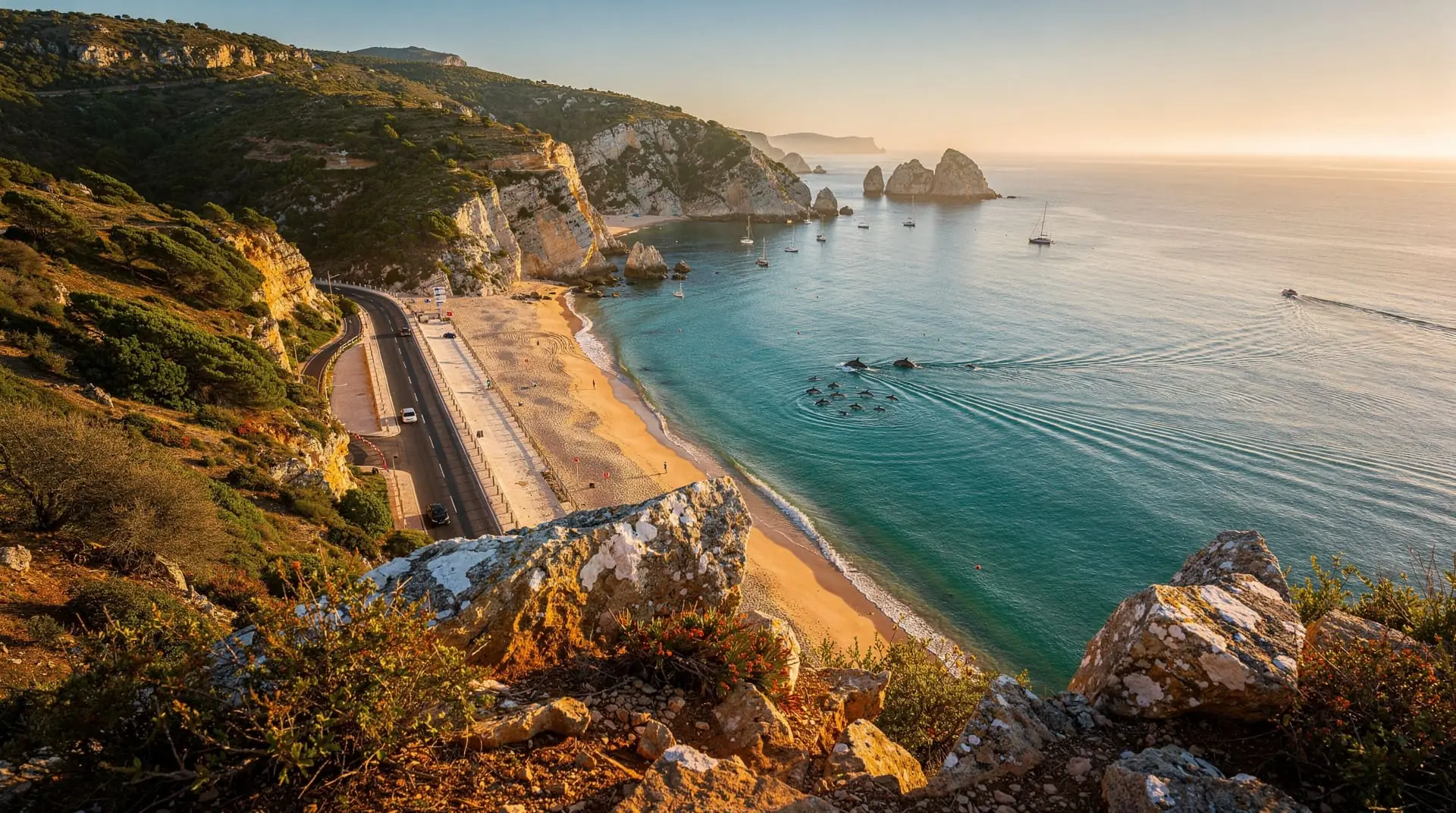
Setúbal and Arrábida day trip: beaches, dolphins and the summer road restrictions
Last reviewed
How do I get to Arrábida beach from Lisbon for a day trip?
In summer (July–August) private cars are prohibited on the Arrábida coastal road without a timed access permit — the park runs a paid shuttle. The easiest option is a guided day tour from Lisbon, which handles transport and beach access. Without a car or tour, take the bus to Setúbal and join a boat tour to the beaches from there.
The Arrábida Natural Park occupies a limestone ridge on the Setúbal Peninsula south of Lisbon, dropping directly into water of Caribbean clarity. Galapinhos beach — 400 metres of white sand between pine trees and 100-metre cliffs — consistently ranks among the finest beaches in mainland Portugal. Portinho da Arrábida, a larger cove with a marine research station and two restaurants, is accessible by road. The water in August is 22–24°C.
Getting there is the challenge. The coastal road through the park (N379-1) is restricted from July through September — private vehicles require a timed access permit, which sells out in advance, and on the most popular weekends the road is closed to private vehicles entirely in favour of a park-managed shuttle bus. The park’s solution works reasonably well; the preparation required is higher than most visitors expect.
This guide covers how to get to Arrábida on a day trip from Lisbon regardless of season, what to do when you get there, and what the summer access reality actually involves.
| Where | Setúbal Peninsula, ~55km south of Lisbon |
| Cost | Train around €4.50 each way; boat tour €35–50; guided tour €50–85 |
| Time needed | Full day |
| Getting there | Fertagus train to Setúbal, or organised tour from Lisbon |
| Best time | July–August for swimming; access permit needed on summer weekends |
Getting to Setúbal from Lisbon
By public transport:
- Fertagus train from Roma-Areeiro (or Entrecampos/Oriente): crosses the 25 de Abril Bridge, 45–55 minutes to Setúbal. Approximately €4.50 each way. Most direct option.
- Rede Expressos / TST bus: from Lisbon, 60–75 minutes.
Setúbal itself is easily reached. The problem is the final 15–25 km to the park beaches, which has no regular public bus service.
By car: 55 km south of Lisbon via the A2/A12 (toll road) or the free N252 through Palmela. Drive time approximately 50–60 minutes.
By organised tour from Lisbon: By far the easiest summer option — the tour operator handles the shuttle permits or has park access through their own licences. Depart Lisbon in the morning, return in the evening. Costs €50–85 per person depending on tour length and inclusions.
Arrábida Natural Park and Sesimbra day trip from LisbonThe summer road access situation: the honest explanation
Between July 1 and September 15, the Arrábida park road between Portinho and Galapinhos/Galapos is restricted to:
- Vehicles with a valid timed access ticket (purchased at portalsisma.apambiente.pt — these go on sale approximately 14 days in advance and popular weekend slots sell out in hours).
- Park shuttle buses operating from the Portinho car park.
- Licensed tour operators with park agreements.
- Residents and services.
In practice: if you’re driving on a summer weekend, you need to have booked the access slot in advance. Show up without one and you’ll be turned back at the checkpoint. The shuttle from the park car park runs regularly and takes about 20 minutes to reach Galapinhos; the car park itself also requires advance reservation on busy weekends.
Outside July 15 – August 31, access is less restricted, though the road can still be controlled on peak weekends in June and early September.
The practical implication: In summer, a guided tour or the sea approach (boat from Setúbal or Sesimbra) are the reliable ways for visitors to reach the most beautiful beaches without the access lottery — the Arrábida day tour with wine tasting is one such option that sidesteps the access lottery entirely while adding an Azeitão wine stop.
The Setúbal morning: market and town
Before heading to the beaches, Setúbal town itself deserves time. The Mercado do Livramento (covered market, open until 1pm) is one of the finest in the Setúbal district — tiled walls, fresh fish from the estuary, moscatel wine from Azeitão, local cheese and bread. Come before 10am for the full selection.
The Igreja de Jesus (15th century, Manueline-transition architecture) on Rua do Bocage is one of the earliest examples of Manueline stonework in Portugal — twisted columns of local Arrábida stone in the nave interior. Worth a 20-minute visit.
Lunch options in Setúbal: Restaurante O Beco (Rua do Bocage area, solid grilled fish) or Tasquinha do Cais (near the waterfront, fresh choco frito — fried cuttlefish, the town’s signature dish). Choco frito is the food Setúbal is most proud of.
The beaches: what you’re actually visiting
Portinho da Arrábida
The most accessible of the Arrábida beaches by road. A small cove (200m of sand) with parking above and a concrete ramp down to the water. The marine research station is there. Two seasonal restaurants operate at beach level in summer. Water clarity is exceptional — the limestone geology filters the marine environment. Snorkelling around the rocky headlands is very good.
How to reach: By park-managed shuttle (summer), by car with access permit, or by boat from Setúbal or Sesimbra.
Galapinhos (Praia de Galapinhos e Galapos)
The more spectacular of the two main beaches — 400m of fine white sand in a bay enclosed by limestone cliffs and pine forest. No permanent facilities (a seasonal café sometimes operates). The absence of infrastructure is the point. Blue flag beach. Water visibility 10+ metres.
How to reach: By shuttle from Portinho or by boat tour from Setúbal/Sesimbra. No direct road access in summer.
Portinho das Adegas (Praia das Adegas)
Smaller cove, accessible only by sea. Completely wild, usually less crowded. Boat tours from Sesimbra often visit this and Portinho together.
Boat tours from Setúbal: the summer access solution
The sea approach bypasses the road access restrictions entirely. Multiple operators run boat tours from Setúbal port to the Arrábida beaches — typically 3–4 hours, stopping at two or three beaches, with snorkelling stops.
Costs: approximately €35–50 per person. Depart Setúbal typically at 10am and 2pm. Book through Vertigem Azul or similar operators in Setúbal; or through GetYourGuide as below.
This is also how to visit Arrábida if you don’t have a car and summer access restrictions are in force.
From Sesimbra (south side of the Arrábida peninsula), boat tours reach the same beaches but approach from the opposite direction.
What to pack for the boat tours
The boat approach to the Arrábida beaches involves getting in and out of the water for snorkelling stops and, depending on swell, some spray on the ride out. A change of clothes for the return journey, a dry bag or waterproof phone pouch, and reef-safe sunscreen (applied well before boarding, since some operators ask you not to apply it on board near the snorkelling areas) all make the day more comfortable. Life jackets are provided and typically mandatory while the boat is moving, even for confident swimmers.
Most operators run a fixed number of daily departures rather than continuous service, so booking a specific time slot in July and August is worth doing a few days ahead rather than turning up and hoping for space — particularly for the popular 10am departure, which tends to sell out first.
Dolphin watching from Setúbal
The Sado Estuary between Setúbal and Tróia supports a resident population of around 27 bottlenose dolphins — one of the only resident dolphin populations in European coastal waters (rather than migratory). They can be seen year-round, with sightings rates above 90% from April through October. The estuary also has significant flocks of flamingos in the shallow areas near Tróia.
Dedicated dolphin watching tours depart Setúbal port, typically 2.5–3 hours, and often combine estuary dolphins with a coastal approach to Arrábida bay. These are different from the Arrábida beach tours — the dolphin tours stay in the estuary; the beach tours go into the ocean.
See our dedicated dolphin watching guide for operators, best season, and what to expect.
Setúbal dolphin watching boat tourThe wine dimension: Azeitão and Moscatel
The Setúbal Peninsula is one of Portugal’s important wine regions — primarily the Moscatel de Setúbal dessert wine (DOC), produced from Muscat grapes grown on the sandier soils toward Azeitão. The José Maria da Fonseca winery in Azeitão (15 km north of Setúbal) offers cellar tours and tastings, including vintage Moscatel going back decades. The Bacalhôa winery is also nearby.
Several day tours from Lisbon combine Arrábida beaches with an Azeitão wine tasting in the early afternoon before the beach — this is a genuinely good use of the day. See our Setúbal Moscatel wine guide.
Full day itinerary
8:00am: Fertagus train from Roma-Areeiro or Entrecampos to Setúbal (55 min), or meet organised tour at Marquês de Pombal.
9:15am: Mercado do Livramento in Setúbal — buy choco frito snack or coffee and pastry.
10:00am: Board boat tour from Setúbal port to Arrábida beaches (or join organised tour vehicle for Galapinhos).
10:30am–1:00pm: Galapinhos and/or Portinho da Arrábida — swimming, snorkelling, walk the beach.
1:30pm: Return to Setúbal or Portinho restaurant for lunch. Choco frito at a seafront restaurant.
3:00pm: Optional Azeitão wine tasting (15 min drive north, or part of tour).
5:00pm: Return train to Lisbon or tour drop-off.
Practical information
Water temperature: 19–22°C in summer, dropping to 14–16°C in winter. Atlantic water, colder than the Mediterranean. Wetsuit not needed in summer; some people wear one in spring and autumn.
Water temperature by month:
| Month | Approx. temperature | Swimming |
|---|---|---|
| May | 16–18°C | Cool, doable for confident swimmers |
| June–September | 21–24°C | Comfortable |
| October | 18–20°C | Cooling |
| November–April | 14–16°C | Cold, walking season instead |
What to bring: Sunscreen (limestone reflects heat), water, snorkelling gear (rentable on many boat tours), cash for beach-side restaurants (card sometimes not accepted).
Accommodation option: If you want a full day at Arrábida without the rush, overnight in Setúbal. The drive from Setúbal to the park in the morning before summer access restrictions are in force (before 8am) is easy.
Arrábida in winter (October–March): Access restrictions are lifted, car parks are empty, the park is spectacular. Cold for swimming but excellent for walking the clifftop trails and the GR11 coastal path. One of the best off-season destinations near Lisbon.
Alternative approaches and further reading
If Sesimbra rather than Setúbal is your preferred base, the Sesimbra day trip guide covers the southern approach to the same park, including boat access to Galapinhos that bypasses the summer road restrictions entirely. For the park itself beyond the two headline beaches, see the Arrábida Natural Park guide and Arrábida beaches guide for the fuller picture, and the Setúbal destination guide for the town beyond the day-trip logistics.
If beaches further afield interest you, Comporta offers a different, dune-backed stretch of coast south of the Sado estuary, and the best beaches near Lisbon guide ranks Arrábida against the other options within day-trip range.
Frequently asked questions about the Setúbal and Arrábida day trip
Can I visit Arrábida beach without a car in summer?
Yes, via two routes: (1) Join a guided day tour from Lisbon — operators have park access permissions or use the shuttle. (2) Take the Fertagus train to Setúbal and join a boat tour from the port to the beaches. The boat avoids road restrictions entirely.
What are the Arrábida access restrictions exactly?
July 1 – September 15, the coastal park road requires a timed access permit purchased in advance online (portalsisma.apambiente.pt). Permits for busy summer weekends often sell out within hours of release. A park shuttle runs from the Portinho car park to the restricted beaches. Outside this period, access is unrestricted.
Which beach is better — Galapinhos or Portinho da Arrábida?
Galapinhos is more dramatic and more beautiful — wilder, more enclosed, no permanent facilities. Portinho da Arrábida is easier to access (by road) and has seasonal restaurants. If you’re on a boat tour, you’ll likely see both.
Is the water at Arrábida warm enough for swimming?
In July and August, yes — 21–24°C. In June and September, 18–20°C. In May, 16–18°C. Cold by Mediterranean standards but comfortable for most Atlantic swimmers. The water clarity is exceptional year-round.
Is Arrábida worth visiting without a beach day?
Yes — the GR11 coastal hiking trail along the limestone ridge has dramatic Atlantic views and connects to the chapels and forests of the Arrábida Convent (Serra). The park’s interior has cork oak forest and walking routes. Not purely a beach destination.
How does Setúbal compare to Sesimbra for a day trip?
Setúbal is a real city with a good market and better dolphin watching (Sado Estuary). Sesimbra is a smaller fishing village with a calmer, more sheltered beach and a medieval castle. Both access Arrábida — Setúbal from the north, Sesimbra from the south. Sesimbra’s beach is better for swimming; Setúbal is better for wine, culture and dolphin watching.
Related guides

Dolphin watching from Setúbal: Sado Estuary resident dolphins, operators and season
Dolphin watching in Setúbal — resident Sado bottlenose dolphins, best season (Apr–Oct), 3-hour tours, certified eco-operators, and Arrábida beach combos.

Sesimbra day trip from Lisbon: beach, castle, espadarte and how to get there by bus
Sesimbra day trip — TST bus from Praça de Espanha (75 min, €3.60), sheltered beach, medieval castle, espadarte fish lunch. Lisbon's underrated coast.
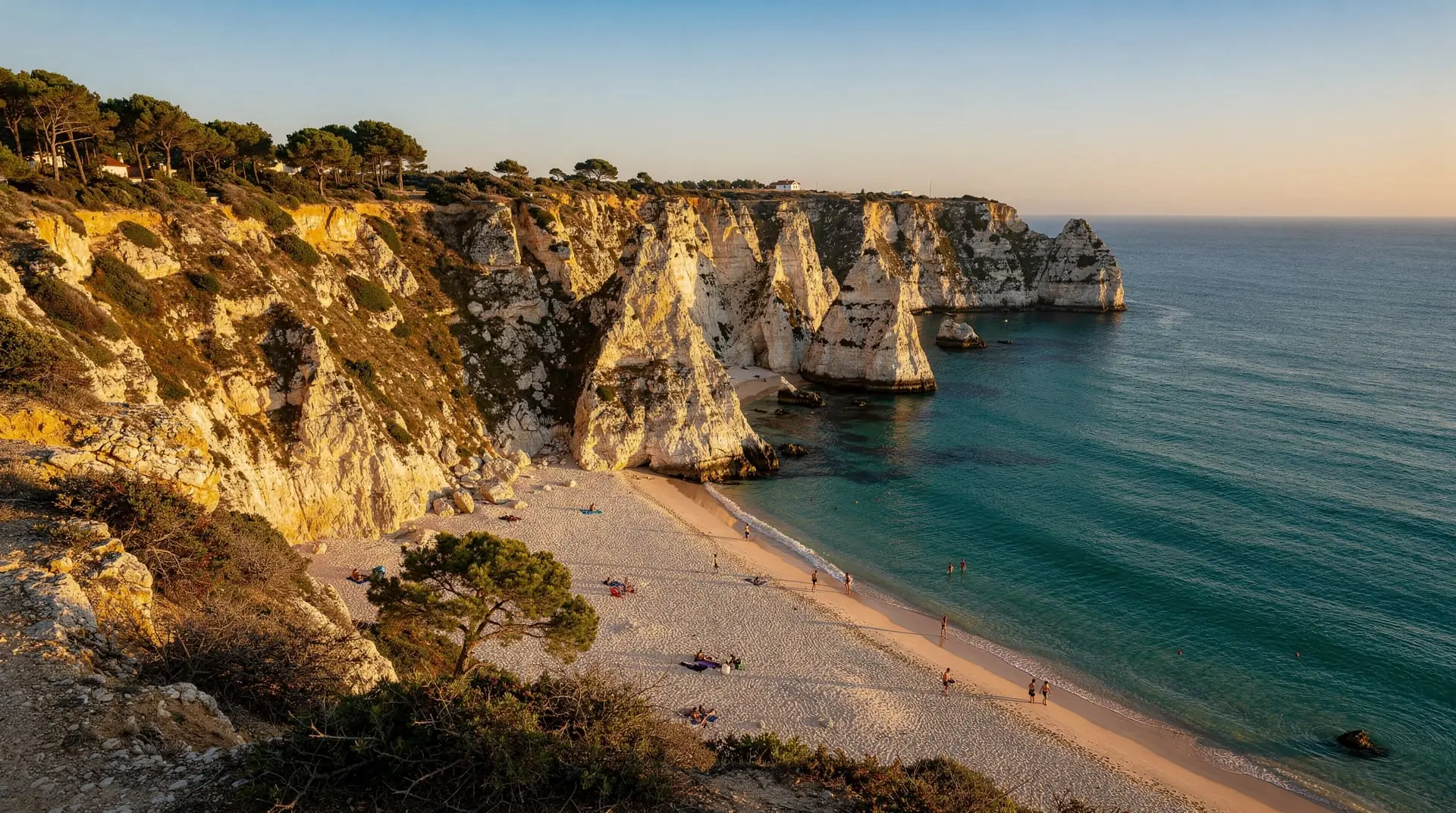
Arrábida beaches — turquoise water, limestone cliffs, summer access rules
Complete guide to Arrábida beaches: Galapinhos, Galapos, Portinho, Figueirinha. Turquoise water, access restrictions June-Sept, and how to get there.
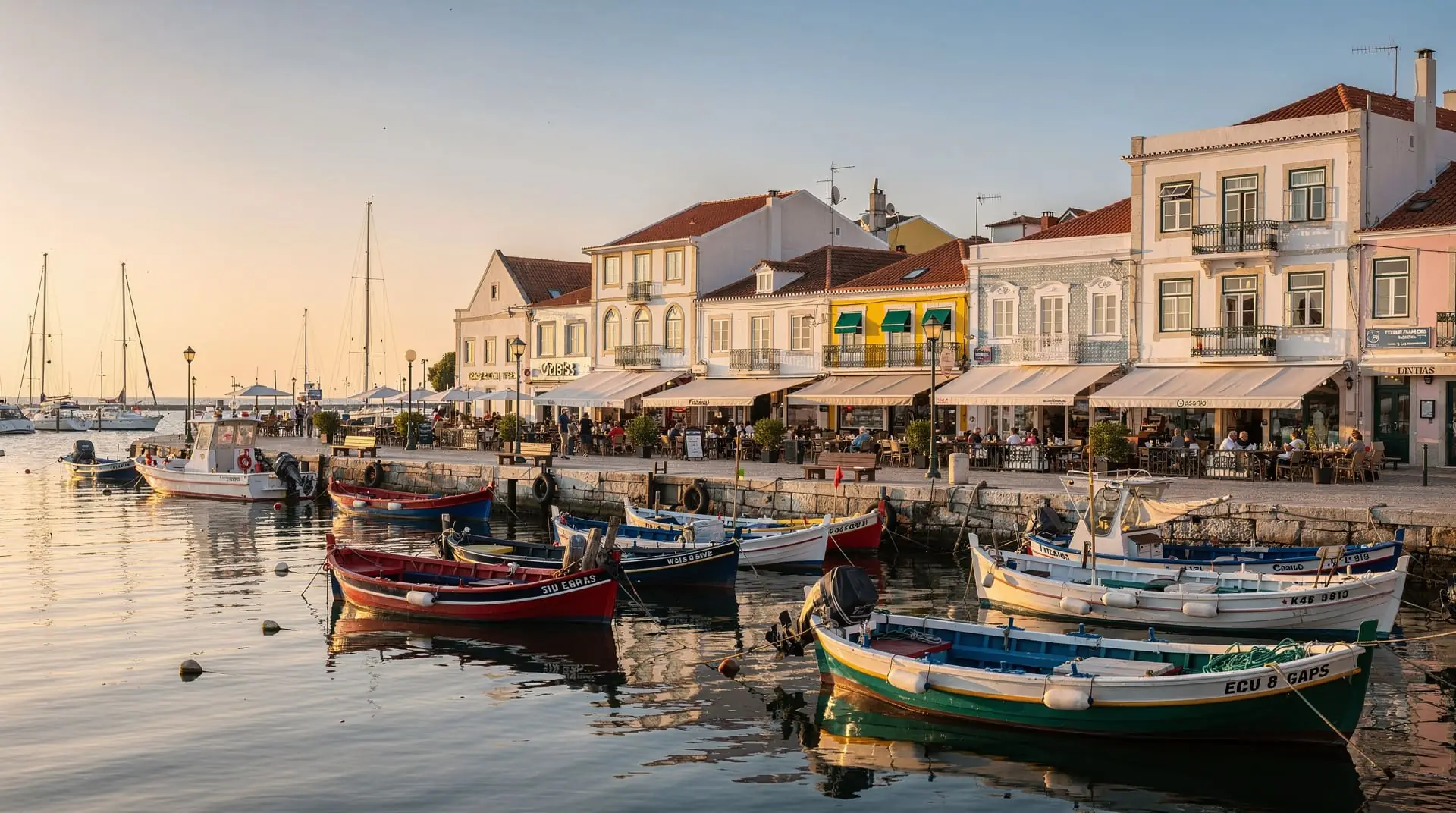
Cascais day trip from Lisbon: train, marina, Boca do Inferno and Guincho beach
How to do a Cascais day trip from Lisbon — 40-min train from Cais do Sodré, marina walk, Boca do Inferno, Guincho lunch, and the best time to return.
Ready to book? Top tours for this guide
We earn a small commission if you book through GetYourGuide — at no extra cost to you. Every tour is hand-picked and verified.
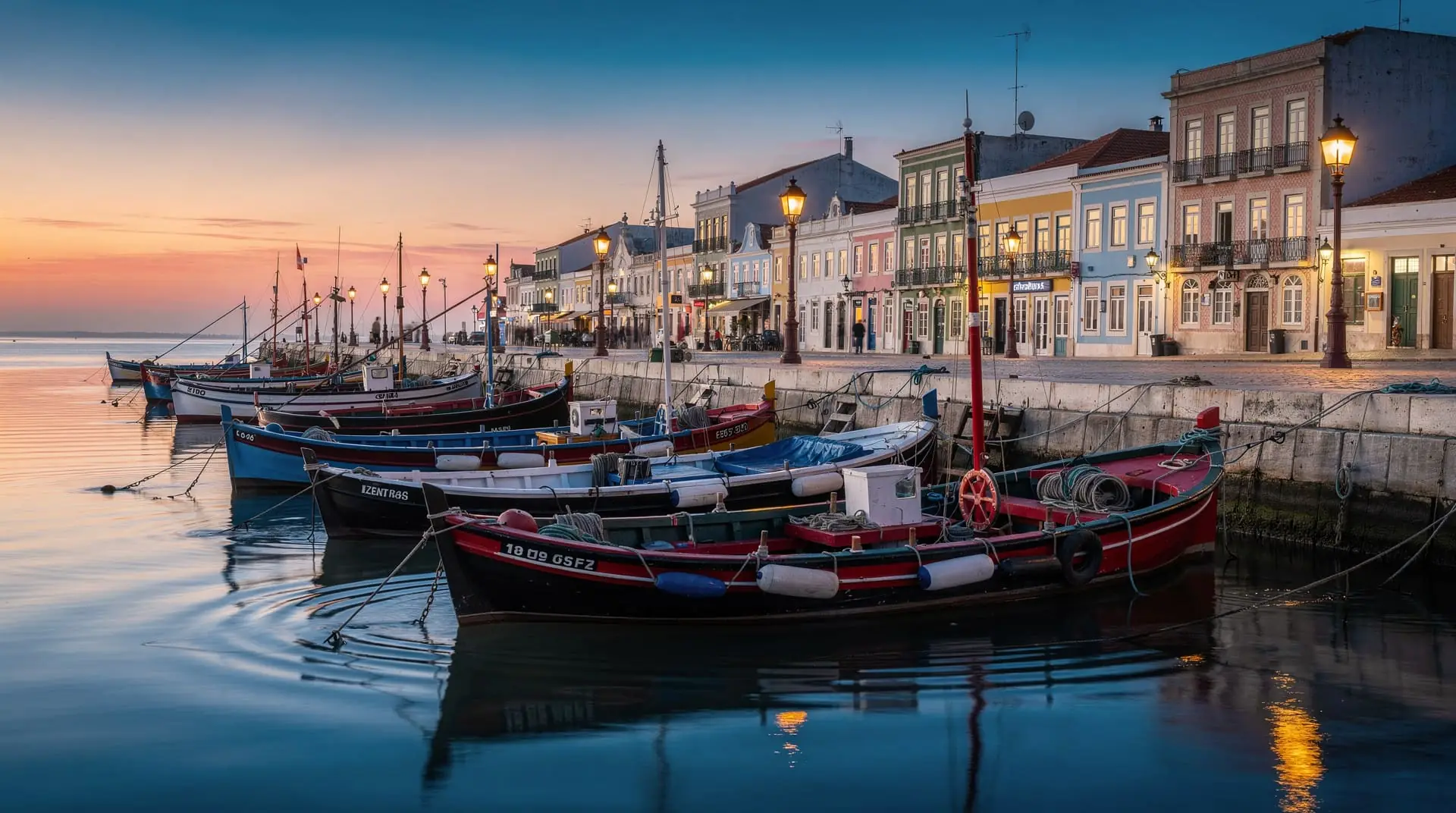
Setúbal: Dolphin Watching Boat Tour
Setúbal: Dolphin Watching Tour (Catamaran)
Setúbal and Tróia: Dolphin Watching and Arrábida Bays
Dolphin Watching in the Wild - Half Day Tour
Setubal: Tróia and Roman Ruins Boat Transfer