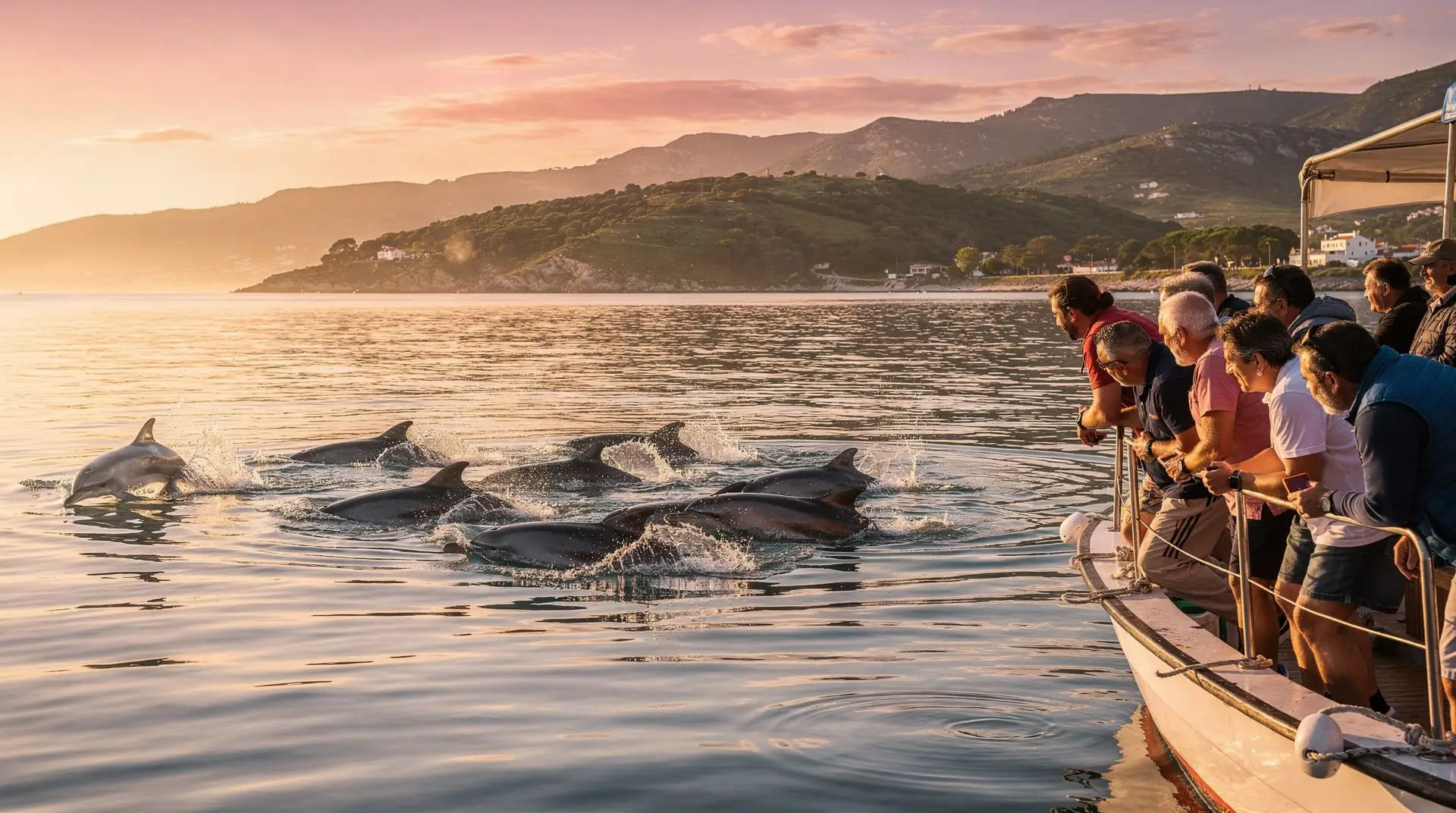
Dolphin watching from Setúbal: Sado Estuary resident dolphins, operators and season
Last reviewed
Can I see dolphins near Lisbon on a day trip?
Yes — the Sado Estuary near Setúbal (50 km from Lisbon) has a resident community of approximately 27 bottlenose dolphins, one of the very few resident dolphin populations in Europe. Tours run year-round from Setúbal port, with sighting rates above 90% April–October. Tours last 2.5–3 hours.
The Sado Estuary Bottlenose Dolphin Community is one of the most studied and most accessible resident dolphin populations in Europe. Unlike the migratory dolphins seen on open-sea tours, the Sado dolphins live year-round in the estuary between Setúbal and Tróia — an enclosed, shallow-water environment that the same family groups have occupied for at least 50 years of documented observation.
The community currently numbers approximately 27 individuals, down from 40+ in the 1980s. The decline is attributed to fishing net entanglement, vessel strikes, and habitat degradation. The remaining animals are individually identifiable by fin shape and scar patterns; marine biologists from the Centro de Ciências do Mar (University of Algarve) have documented every animal’s history, family relationships and behaviour. When you go on a tour, you’re watching dolphins with known names and life histories.
Sighting rates April through October exceed 90%. Tours run from Setúbal port, typically 2.5–3 hours.
| Where | Setúbal marina, ~50km / 50–60min south of Lisbon |
| Cost | €35–55/adult; combined Arrábida tours €50–70 |
| Time needed | 2.5–3 hours on the water; half a day with transport |
| Getting there | Fertagus train from Roma-Areeiro/Entrecampos (55 min), or car |
| Best time | Morning departures, April–October for 90%+ sighting rates |
Getting to Setúbal from Lisbon
By Fertagus train: From Roma-Areeiro, Entrecampos or Oriente stations in Lisbon, crossing the 25 de Abril Bridge to Barreiro, then continuing on the Fertagus line to Setúbal. Total journey approximately 55 minutes. Cost: approximately €4.50 each way. This is the most direct public transport option.
By bus: TST/Rede Expressos service from Lisbon, approximately 60–75 minutes. Less frequent than the train.
By car: A2 south from Lisbon (toll road), cross the 25 de Abril Bridge or take the Vasco da Gama Bridge (A12) south and join the A2/IC3 toward Setúbal. Approximately 50 km, 50–60 minutes.
Once in Setúbal, the boat departure point is at the marina (Doca de Recreio), about a 15-minute walk from the Fertagus train station (or a short taxi).
The Sado dolphins: what you’re actually seeing
The Sado bottlenose dolphins (Tursiops truncatus) are large animals — adults reach 2.5–3.5 metres and 200–300 kg. Bottlenose dolphins are the species familiar from television — the ones with the characteristic curved mouth that makes them appear to be smiling. They’re intelligent, social animals with complex relationships.
The Sado community is distinct from the open-ocean bottlenose dolphins that occasional tours from other Portuguese ports encounter. These animals chose to settle in the estuary and have remained. Researchers believe the estuary’s abundant fish (particularly mullet and sea bass in the Sado river mouth) sustains the population through winter when ocean fish are scarcer.
The estuary is also a staging area for flamingos (visible year-round in the shallower northern sections near Alcácer do Sal), cormorants, herons and, in autumn and winter, significant migratory wading birds. A dolphin tour therefore also functions as excellent birdwatching.
Dolphin watching tour operators from Setúbal
Several operators run dolphin tours from Setúbal marina, certified by the Observatório da Sado (the conservation body that regulates dolphin watching in the estuary). Look for CERT-certified operators (Cetacean Research and Tourism) — they operate to guidelines limiting vessel speeds near dolphins, minimum approach distances, and time spent with each group.
What to look for in an operator:
- CERT certification or equivalent eco-certification
- Maximum 12 passengers (smaller groups are less disruptive to dolphins)
- Hydrophone available (you can listen to the dolphins’ vocalisations underwater)
- Marine biologist or certified naturalist on board
- Portuguese Institute of Sea and Atmosphere (IPMA) cooperation
Tour costs typically run €35–55 per person. Shorter (90-min) tours and longer (3–4 hour) tours combining dolphins with Arrábida bay are both available.
Setúbal dolphin watching boat tour Setúbal dolphin watching tour by catamaranSeason and sighting reliability
April–October: Best season. Dolphins are most active in the outer estuary and occasionally venture into the bay near Tróia. Sighting probability exceeds 90% on most tours. The estuary in summer also has excellent visibility and calm conditions.
November–March: Dolphins are present year-round (this is their home, not a migration route), but they spend more time in the inner estuary and behaviour changes in winter. Sighting probability drops to 70–80%. Sea conditions can be rougher and tours occasionally cancel due to weather. Water temperature 13–16°C.
Best time of day: Morning tours (departing 9–10am) often have the best dolphin activity. The animals tend to fish more actively in the early morning.
What to expect on a dolphin watching tour
A standard 3-hour tour from Setúbal runs as follows:
Departure: Setúbal marina, typically 9am or 10am. You board a rigid inflatable (RIB) or catamaran depending on the operator. Life jackets provided. Bring layers — the estuary can be windy.
Transit to the outer estuary (30 min): The boat runs southwest through the estuary. The view of Setúbal from the water, the Arrábida ridge above, and the Tróia peninsula across the water is excellent.
Search phase (45–60 min): The guide uses experience, boat communication and sometimes a drone or hydrophone to locate the dolphin group. The animals usually reveal themselves quickly — this is a small estuary and the pods follow predictable routes.
Encounter (30–60 min): When dolphins are found, the boat approaches slowly and stops. Dolphins frequently approach boats — the Sado animals are accustomed to watching vessels and occasionally bow-ride. You may be watching the dolphins while a dolphin watches you. This is genuinely moving.
Return (30 min): Some tours stop on the Tróia beach or at the Roman ruins of Cetobriga (1st–5th century AD, accessible from the Tróia ferry terminal) before returning to Setúbal.
Combining dolphin watching with Arrábida beaches
Some operators combine the dolphin tour with a coastal approach to the Arrábida beaches — entering the ocean from the estuary mouth, rounding the headland, and stopping at Portinho da Arrábida or Galapinhos for swimming. These combined tours run 4–5 hours and cost approximately €50–70 per person.
This is one of the best-value combined experiences near Lisbon: resident dolphins in the estuary, then turquoise limestone coves for swimming in the afternoon.
Setúbal and Tróia: dolphin watching and Arrábida baysSee our Setúbal and Arrábida day trip guide for the full beach-day version, and the Arrábida beaches guide if you want to plan the swimming portion in more detail. For a broader look at how this compares with other operators and boat types, our companion dolphin watching guide covers the same pod from a different angle, including cancellation policy and what to bring.
The Tróia Peninsula and Roman ruins
Across the estuary from Setúbal, the Tróia Peninsula is a 30-km finger of sand dune extending south. The Tróia ferry runs from Setúbal hourly (€3–4 each way, 15 minutes) and deposits you at a modern resort complex at the peninsula’s north tip. Adjacent to the resort are the ruins of Cetobriga — a significant 1st–5th century AD Roman garum (fermented fish sauce) production site. Fish tanks, storage rooms and mosaic floors are partially excavated and open to visitors.
South of the resort, Tróia beach extends for kilometres without development — wide sand, Atlantic waves, protected habitat. Not suitable for weak swimmers due to ocean swells on the outer beach.
See the Tróia destination guide for more.
Conservation context
The Sado dolphin community is classified as Endangered in Portugal. The main threats are:
- Accidental entanglement in fishing nets (gill nets and trammel nets set in the estuary)
- Vessel collisions (high-speed recreational boats)
- Habitat degradation from industrial activity, water quality changes
- Noise pollution disrupting the dolphins’ sonar
Responsible dolphin watching — with certified operators — generates income that supports conservation and monitoring. It also creates a local economic incentive for fishermen and boat operators to coexist with the dolphins rather than view them as competition.
The research station (Centro de Estudos do Mar e das Pescas) in Setúbal tracks each animal’s survival and reproductive success. The current population (27 animals) has not recovered from its historical high. Visiting with a responsible operator is genuinely beneficial, not just neutral.
Practical information
Booking: Book in advance, particularly in July and August when tours fill quickly. Morning slots go first.
What to wear: Wind-proof layer even in summer (the open boat at speed is cold). Sunscreen. Non-slip shoes. No hard-soled shoes on RIB boats.
Seasickness: The estuary is sheltered, making this tour significantly calmer than open-sea whale or dolphin watching. Motion sickness is uncommon. If you’re susceptible, take medication 30 minutes before departure and sit in the middle of the boat.
Cameras: Bring yours. The dolphins often approach within 3–5 metres. A medium telephoto (85–200mm) is sufficient.
Children: Minimum age varies by operator — typically 3–5 years. Children generally love dolphin watching. Life jackets in children’s sizes are available.
No guarantees: Wildlife encounters are never certain. On the rare tour where dolphins are not found (less than 10% of tours April–October), most operators offer a partial refund or complimentary rescheduling.
Toilets and facilities: Available at the marina before departure; none on most smaller RIB vessels, so use facilities beforehand. Catamarans typically have an onboard toilet.
Frequently asked questions about dolphin watching in Setúbal
Are the Sado dolphins resident or migratory?
Resident — they live in the Sado Estuary year-round. The same family groups have been documented for over 50 years. This makes the Setúbal dolphin watching experience more reliable than pelagic tours, where cetaceans are encountered on migration routes.
What species of dolphin is in the Sado Estuary?
Bottlenose dolphins (Tursiops truncatus) — the large, curved-mouth dolphin familiar from television and aquariums. Adults reach 2.5–3.5 metres. They’re social animals that live in pods with complex family structures.
What is the sighting success rate?
Above 90% April–October on responsible tours. The estuary is small enough that the dolphins are usually found within 30–45 minutes.
Are dolphin watching tours safe for children?
Generally yes, but check with specific operators — minimum ages vary. The estuary is sheltered and tours are calmer than ocean tours. Life jackets in children’s sizes are provided. Most children over 5 can participate comfortably.
How long is the dolphin watching tour from Setúbal?
Standard tours are 2.5–3 hours. Combined dolphin + Arrábida beach tours run 4–5 hours. Book the time that fits your overall day plan.
Is it ethical to do dolphin watching tours?
With certified, responsible operators: yes. The Observatório da Sado certifies operators who follow approach distance guidelines, limit engine noise, and don’t pursue dolphins. These operators also fund or cooperate with conservation research. Avoid operators who advertise close approaches or guarantee “swimming with dolphins.”
Can I combine dolphin watching with other Setúbal activities?
Yes. Setúbal itself has a good fresh-fish market, the early Manueline Igreja de Jesus, and a waterfront promenade — easily filled in an hour or two before or after the tour. For a fuller day, pair the tour with Sesimbra to the south or an afternoon at the Arrábida beaches. Families often combine it with the wider family day trips options in the region.
Setúbal as a base beyond the tour
The Setúbal destination guide covers the town in more depth if you want to build a fuller day or overnight stay around the dolphin tour rather than treating it as a there-and-back excursion. Setúbal’s old town has a compact historic centre, the Bocage house-museum, and — a short walk from the marina — the São Filipe fort with sweeping views over the estuary and out toward Tróia, a good sunset spot after an afternoon tour.
Related guides
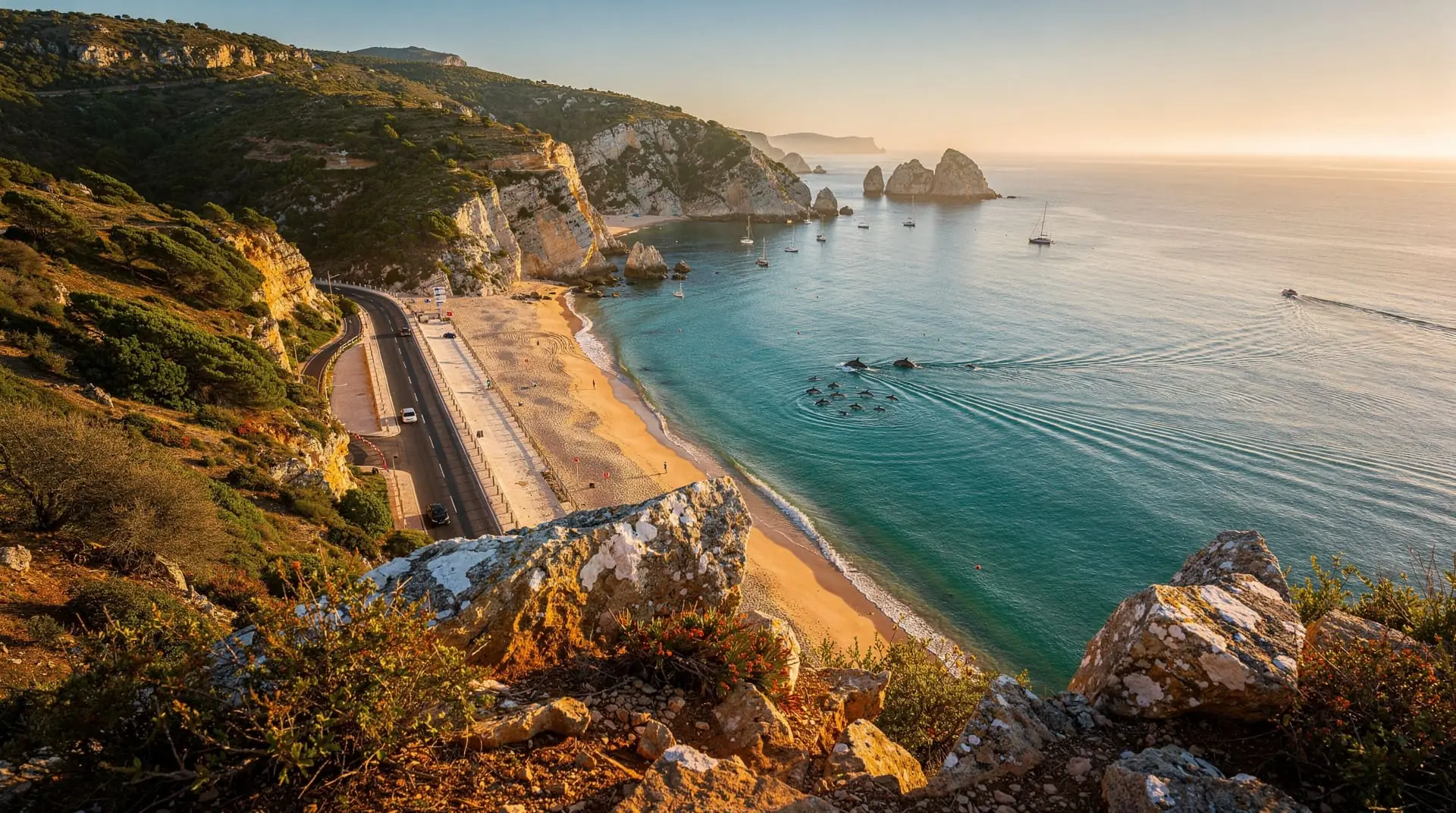
Setúbal and Arrábida day trip: beaches, dolphins and the summer road restrictions
Setúbal and Arrábida day trip — Galapinhos beach, Portinho da Arrábida, dolphin watching, summer road restrictions explained, and carless options.
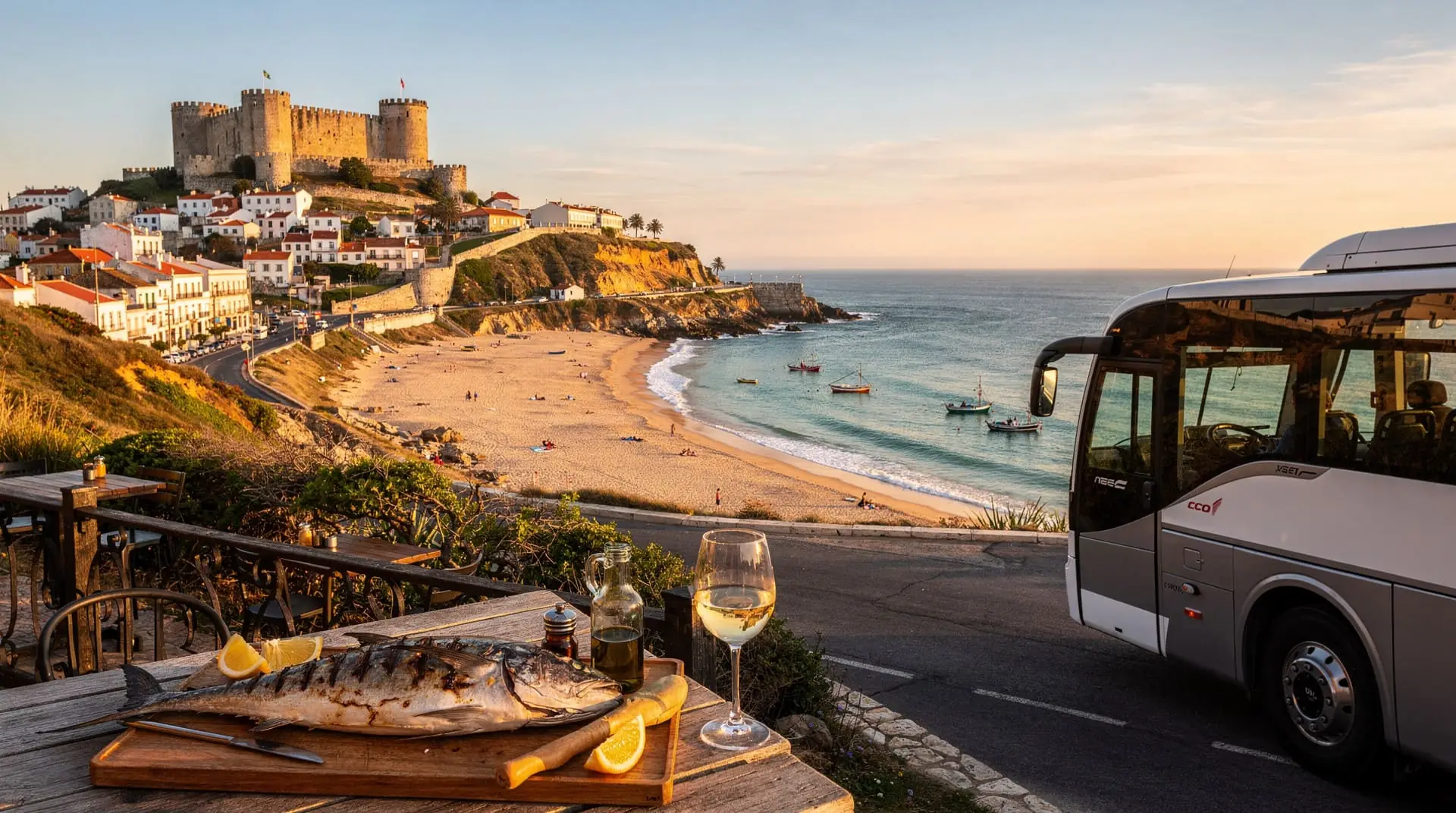
Sesimbra day trip from Lisbon: beach, castle, espadarte and how to get there by bus
Sesimbra day trip — TST bus from Praça de Espanha (75 min, €3.60), sheltered beach, medieval castle, espadarte fish lunch. Lisbon's underrated coast.
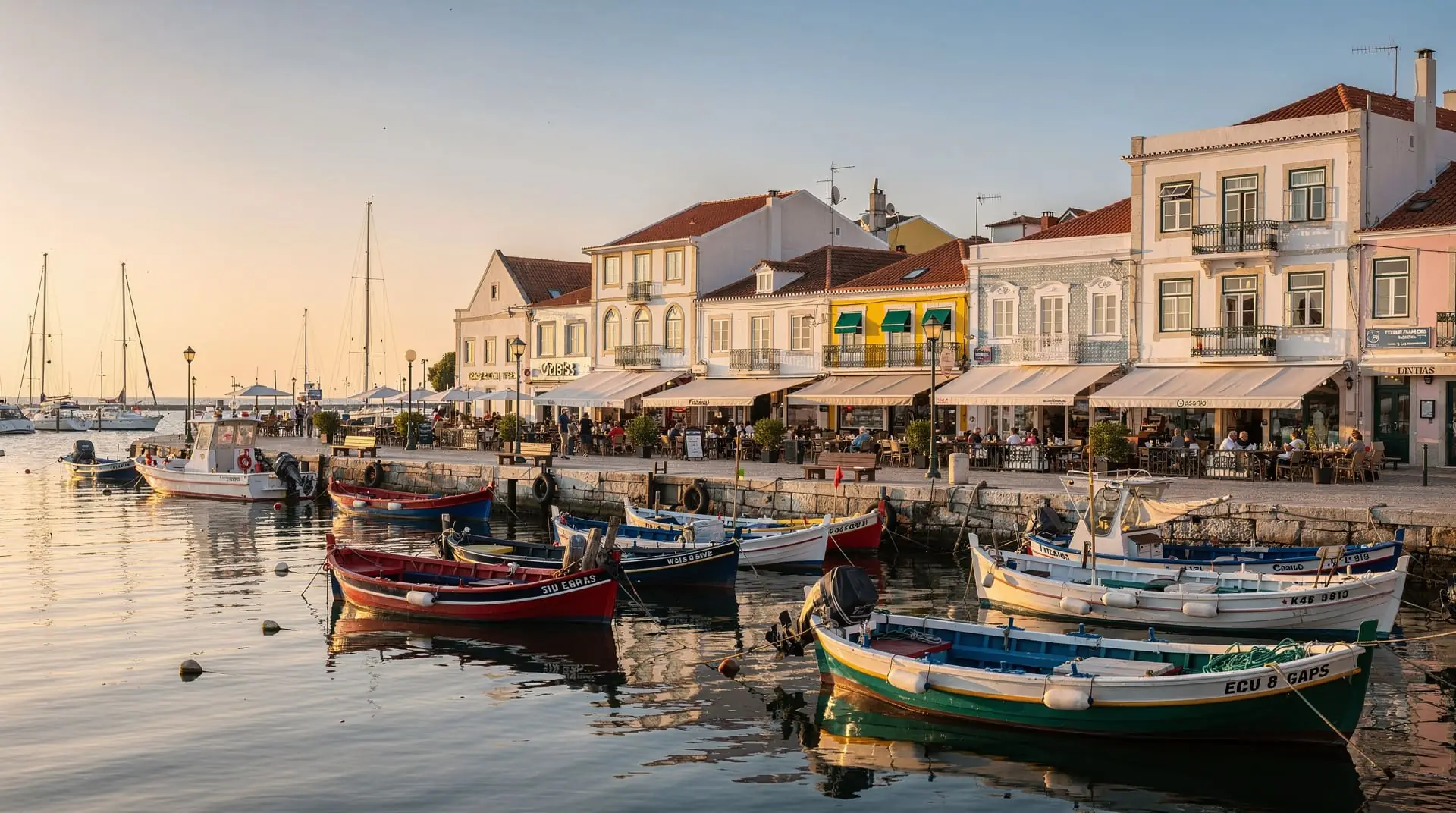
Cascais day trip from Lisbon: train, marina, Boca do Inferno and Guincho beach
How to do a Cascais day trip from Lisbon — 40-min train from Cais do Sodré, marina walk, Boca do Inferno, Guincho lunch, and the best time to return.
Best day trips from Lisbon: ranked by distance, transport and honest effort
Best day trips from Lisbon ranked honestly — Sintra, Cascais, Évora, Arrábida, Óbidos, Nazaré, Fátima, Comporta. Real logistics, prices and timing.
Ready to book? Top tours for this guide
We earn a small commission if you book through GetYourGuide — at no extra cost to you. Every tour is hand-picked and verified.
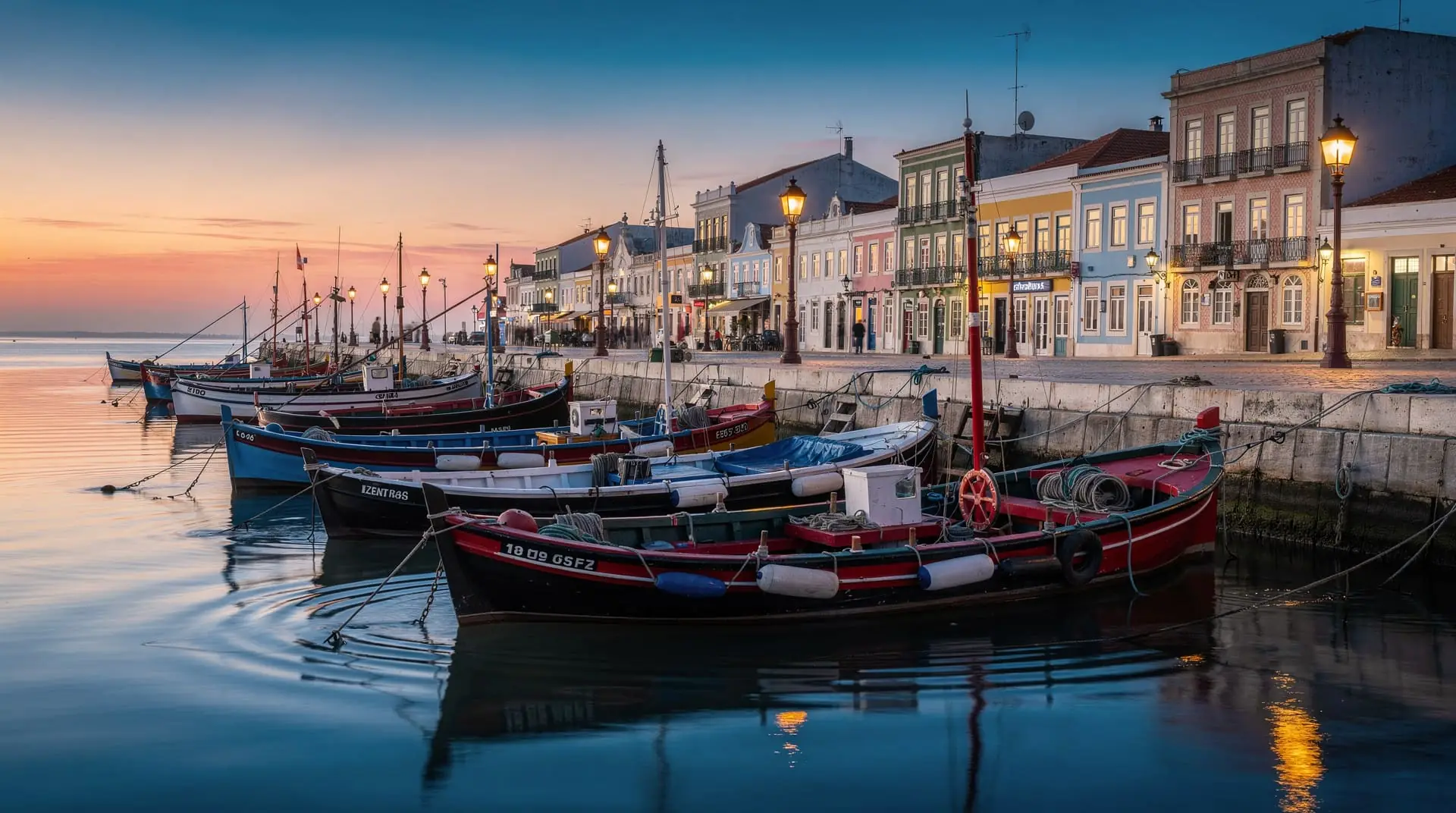
Setúbal: Dolphin Watching Boat Tour
Setúbal: Dolphin Watching Tour (Catamaran)
Setúbal and Tróia: Dolphin Watching and Arrábida Bays
Dolphin Watching in the Wild - Half Day Tour
Setubal: Tróia and Roman Ruins Boat Transfer