Moscatel de Setúbal and Azeitão: Portugal's great sweet wine
Last reviewed
How do I visit the Moscatel de Setúbal wineries near Lisbon?
Azeitão is 35 km south of Lisbon on the A2/A38 — about 40 minutes by car. José Maria da Fonseca (Rua José Augusto Coelho 11) offers guided tours and tastings daily (€12-18 per person). Bacalhôa is 3 km away near Palmela. Without a car, take a taxi or rideshare from Setúbal (15 min, ~€12) or join a wine tour from Lisbon.
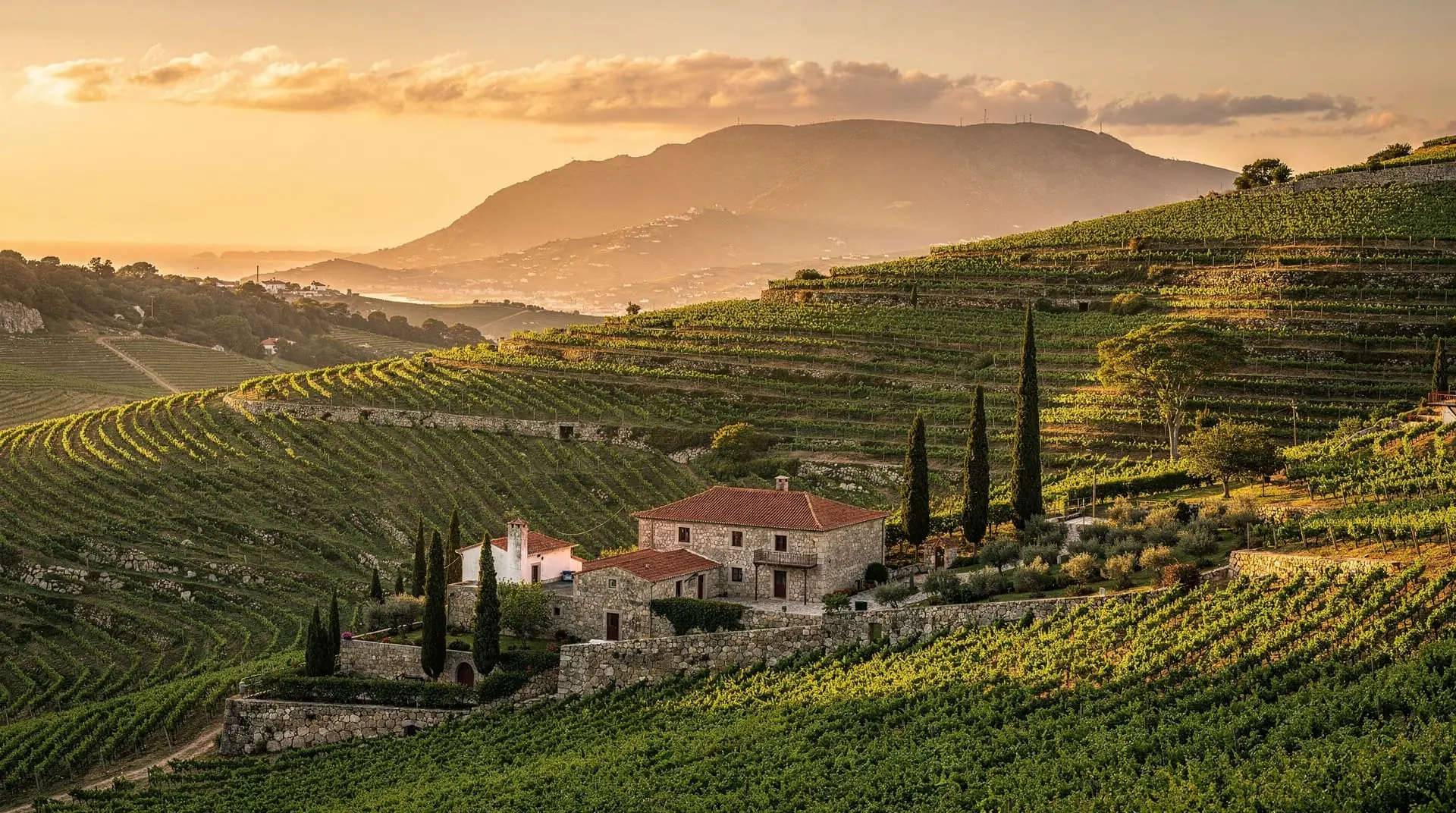
Thirty-five kilometres south of Lisbon, on the Setúbal Peninsula between the Arrábida mountains and the Tagus estuary, sits one of Portugal’s most distinctive wine zones. Azeitão is a small town of whitewashed houses, tiled churches, and two wine estates that have been producing Moscatel de Setúbal since the early 19th century. The wine — sweet, fortified, aged in oak — was once served at European royal courts and is still one of Portugal’s best-kept secrets.
This guide covers how to visit, what to taste, and how to combine a winery day with the rest of what the Setúbal Peninsula offers.
| Where | Azeitão, ~35km south of Lisbon |
| Cost | Tours €12–20 per person; lunch €15–28 |
| Time needed | Half day (winery) to full day (with Arrábida) |
| Getting there | Car (40 min) or Fertagus train to Setúbal + taxi |
| Best time | Saturday morning for the Azeitão market |
What is Moscatel de Setúbal
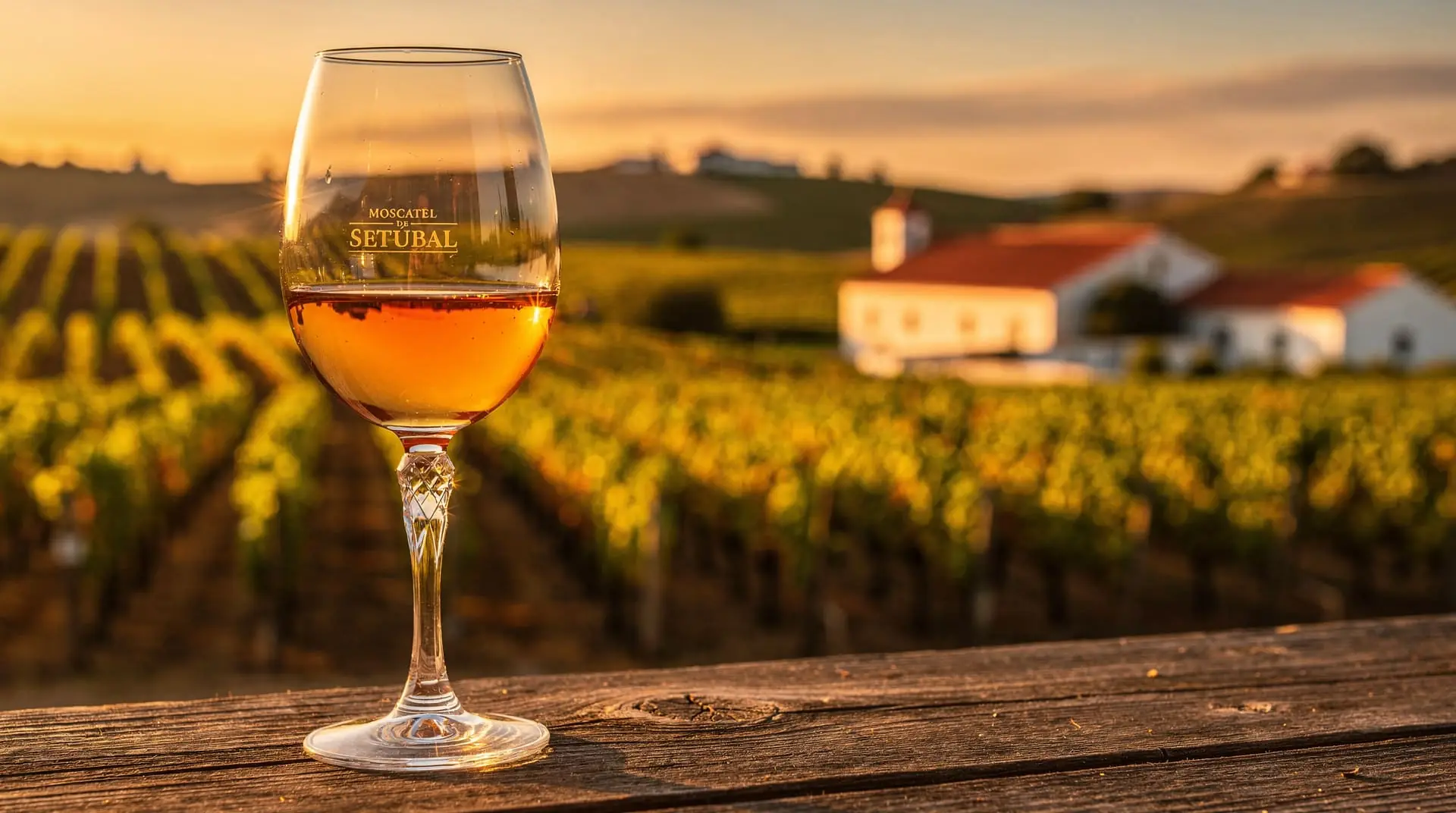
Moscatel de Setúbal is a fortified wine, which means grape spirit is added during fermentation to stop it before all the sugar is consumed. The result is sweet (120-180 g/L residual sugar), around 18-20% alcohol, and built to age.
Two grape varieties are used: Moscatel de Setúbal (a local variant of Muscat Blanc à Petits Grains), which gives floral, orange-peel, and apricot character, and Moscatel Roxo (a rare pink-skinned mutation), which adds a deeper colour and more spice. After fortification, the wine macerates with the grape skins for two to three months — unusually long — before being pressed and aged in small oak barrels.
The result evolves dramatically with age:
- 5-year: Amber, fresh, orange blossom, dried apricot, honey
- 10-year: Deeper amber, dried fruits, slight nuttiness, caramel
- 20-year: Mahogany, fig jam, almond, toffee, subtle oxidative complexity
- Vintage Moscatel: A single year declaration, released after 30+ years — extraordinary but rare and expensive (€40-80+)
Unlike port, which is aged mostly in Vila Nova de Gaia, Moscatel de Setúbal is aged at the producing estate. It is a DOC wine: only Moscatel produced in the legally defined Setúbal zone can carry the name.
José Maria da Fonseca — the historic estate
Address: Rua José Augusto Coelho 11, Vila Nogueira de Azeitão
Hours: Tue-Sun 10:00-17:00 (last tour 16:00)
Prices: Guided tour €12 (standard), €18 (premium, includes older Moscateis)
Phone: +351 212 198 940
Website: jmfonseca.pt
Founded in 1834 by José Maria da Fonseca, a merchant who bought a quinta in Azeitão and began bottling wine for sale — a revolutionary act at a time when most Portuguese wine was sold in bulk. His Periquita (from the Castelão grape) became Portugal’s first nationally distributed bottled wine. The estate has been in the family for six generations.
The guided tour takes you through the historic adega: centuries-old clay amphoras that predate the current oak barrels, vast wooden lagares (treading tanks) where workers crushed grapes by foot until mechanisation in the 1970s, and a private museum with bottles going back to the 1880s. The oldest bottles on display — shrivelled, leaking, wax-sealed — are artifacts as much as wines.
The tasting component includes 4-5 wines: usually a Periquita white and red, a Setúbal table wine, the 5-year Moscatel, and — on the premium tour — the 10- or 20-year Moscatel. The difference between the 5-year and 20-year is striking enough to justify the extra €6.
The estate shop sells bottles at winery prices, including the 20-year Moscatel (€18), the rare Moscatel Roxo (€22), and older vintage releases not found in Lisbon shops.
Bacalhôa Wines — the other major estate
Address: Quinta da Bacalhôa, Azeitão (near Palmela, 3 km from José Maria da Fonseca)
Hours: Mon-Sat by appointment (book via bacalhoa.com or +351 210 989 869)
Prices: Tours from €20 per person
Bacalhôa is a different kind of estate: its 16th-century palace (Quinta da Bacalhôa) is one of Portugal’s finest Renaissance buildings, with a formal garden, a decorative lake, and an extraordinary 18th-century azulejo panel of Susanna and the Elders considered a national treasure.
The wine operation is modern and ambitious. The estate produces a full range of table wines (the Bacalhôa Chardonnay was notably one of Portugal’s first quality Chardonnays) alongside Moscatel de Setúbal and a Moscatel Roxo that has won international awards. Their Animus range (€8-12) offers the best daily-drinking wines from the estate.
Visit Bacalhôa on the same day as José Maria da Fonseca — they are 3 km apart and visits take 90 minutes each, making for a full wine morning before an Arrábida afternoon.
José Maria da Fonseca vs Bacalhôa:
| José Maria da Fonseca | Bacalhôa | |
|---|---|---|
| Booking | Walk-in Tue–Sun (groups 8+ book ahead) | By appointment only |
| Price | €12–18 | From €20 |
| Highlight | Historic adega, 1880s bottle museum | 16th-century Renaissance palace and gardens |
| Best for | First-time visitors, easier logistics | Architecture and garden lovers who plan ahead |
A day trip itinerary from Lisbon
Getting there
By car: A2 towards Setúbal, exit at Azeitão. 35-40 minutes from Lisbon. Parking available at both estates. Return the same way.
Without a car: This is harder but possible. Take the Fertagus train from Roma-Areeiro or Entrecampos to Setúbal (50-60 minutes, €5.60 return). From Setúbal station, a taxi or Uber to Azeitão takes 15 minutes (€10-14). Alternatively, join an organised wine tour from Lisbon — these pick up centrally and handle all logistics.
Organised wine tours: Multiple operators offer Azeitão and Arrábida combination tours from Lisbon. These typically include the winery visit, a stop at Arrábida beach, and return transport. For a smaller, more personalised pace, the private Arrábida and Azeitão wine region tour covers the same ground without joining a larger group.
Book a Setúbal, Arrábida, and Azeitão tour with wine tasting from LisbonSuggested day itinerary
09:00 — Depart Lisbon by car or rideshare
10:00 — Arrive Azeitão, walk through the village centre (Igreja de São Simão, weekly Saturday market)
10:30 — José Maria da Fonseca guided tour (90 minutes, purchase bottles at the shop)
12:30 — Lunch in Azeitão: Quinta das Torres (set in a 16th-century palace, lunch menu €22-28, book ahead) or simpler tasca Cervejaria Azeitão for fresh fish and local wine
14:00 — Bacalhôa visit (by appointment only — book in advance)
16:00 — Drive 20 minutes to Portinho da Arrábida for a swim in turquoise water
18:00 — Return to Lisbon via A38/A2
If you skip Bacalhôa, use the afternoon at Arrábida Natural Park or Sesimbra — both are 20-30 minutes from Azeitão. See the Setúbal Arrábida day trip for full logistics.
Azeitão village
The village itself merits an hour. The Saturday morning market (Feira de Azeitão, 07:00-13:00 in the main square) sells local produce including fresh cheese (Queijo de Azeitão — a semi-soft sheep’s milk cheese from the Arrábida foothills, DOP protected, available at the market for €5-8 per wheel).
Queijo de Azeitão deserves special mention: it is one of Portugal’s finest cheeses, almost unknown outside the Setúbal region, and pairs beautifully with the 10-year Moscatel. Buy at the market and eat with your winery purchases.
The Igreja de São Simão has an unusual azulejo interior depicting hunting scenes — unusual subject matter for a church, dating to the 18th century.
Why Moscatel de Setúbal stayed under the radar
Port and vinho verde both built international export markets in the 18th and 19th centuries through British trading houses; Moscatel de Setúbal largely didn’t, and remains one of Portugal’s least internationally known fortified wines despite being made in a similar style and quality bracket. Local demand absorbed most of the production, and the estates never developed the marketing infrastructure that made port a household name abroad.
This has an upside for visitors: prices at the source remain modest relative to comparable fortified sweet wines from other regions, and the wineries themselves are far less crowded than an equivalent Porto cellar visit or a Sauternes château tour. A tasting slot on a Tuesday morning rarely needs advance booking outside peak summer weekends, and the guides have time to answer questions rather than moving groups through on a strict schedule.
For visitors who have already done a port lodge tour in Porto or the Douro, Azeitão offers a genuinely different comparison rather than a repeat experience — different grape, different ageing philosophy (at the estate rather than in a coastal warehouse), and a noticeably smaller, less commercialised operation on the ground.
Buying Moscatel de Setúbal in Lisbon
If you cannot make the winery trip, Moscatel de Setúbal is available in Lisbon:
Best selection: Garrafeira Nacional (Rua Santa Catarina 28, Chiado) — they stock multiple vintages and producers including older José Maria da Fonseca releases.
By the Wine (Rua das Flores 41-43, Chiado): Fonseca wines including the 20-year Moscatel, served by the glass (€6-8) or bottle (€18-22).
Airport: The basic 5-year Moscatel appears in duty-free at inflated prices. Better to buy in Chiado before departure.
Supermarkets: The Periquita table wines from Fonseca are in Continente and Pingo Doce for €7-9. The Moscatel is less common in supermarkets — find it at wine shops.
Other Setúbal Peninsula wines to try
While in the region, look for:
Moscatel Roxo: The pink-skinned variant, more complex and spiced than the standard Moscatel. Bacalhôa makes one of the best; hard to find in Lisbon. If you see it at the winery, buy a bottle.
Periquita (Castelão): The red grape of the region. Medium-bodied, red cherry, earthy, food-friendly. An everyday wine — excellent value at €7-10.
Palmela DOC whites: Less common but interesting. Arinto and Fernão Pires grapes make crisp whites suited to the local seafood.
Arrábida wine: The Arrábida Natural Park has several small producers making wines from vines grown in the park itself — minimal production, high quality, only available locally. Ask at restaurants in Sesimbra.
Take a guided Setúbal wine tour focused on MoscatelHonest tips
Bacalhôa requires advance booking: Do not show up without an appointment. The estate has limited tour slots and the visit can be cancelled entirely if they have a private event.
José Maria da Fonseca is worth the premium tour: The difference between the standard (€12) and premium (€18) tour is access to older Moscateis — the 20-year tasting is the highlight. Worth the extra €6.
Saturday market at Azeitão fills up: The Queijo de Azeitão cheese sells out by 10:00. Arrive early if that is a priority.
Combine with Arrábida: Azeitão alone does not fill a full day for most visitors. The beach at Portinho da Arrábida — 20 minutes away — is justification enough for the trip. See the Arrábida Natural Park guide.
Driving back: Moderate wine consumption at tastings is fine for driving, but between José Maria da Fonseca and Bacalhôa you will have tasted 6-8 wines. Designate a driver or use an organised tour.
Connecting to the broader Lisbon wine scene
The Azeitão winery visit slots naturally into a broader wine exploration:
- Compare Moscatel de Setúbal with port at wine bars in Lisbon
- Learn the regional context: port vs Lisbon-area wines
- Extend the wine journey to the Alentejo: Évora wine day trip
- Explore vineyards closer to Lisbon: vineyards near Lisbon
For trip planning, see day trips from Lisbon and use the day trip matcher to combine this with Arrábida or Sesimbra.
Azeitão in context: the wider Setúbal Peninsula
Azeitão is one stop within a larger peninsula worth a full day or more. The Azeitão destination guide and Setúbal destination guide cover the towns beyond the wineries themselves. If wine is only part of your interest, the peninsula also offers dolphin watching in the Sado Estuary — see the dolphin watching guide — and the dune-backed beaches further south around Comporta. For a broader introduction to the Lisbon-area wine scene beyond Moscatel specifically, see wine tasting in Lisbon.
Related guides
Alentejo wine day trip from Lisbon: Évora, Cartuxa, and Esporão
Full-day guide to Alentejo wineries from Lisbon: Cartuxa near Évora, Herdade do Esporão in Reguengos, red blends to taste, booking tips, and honest logistics.
Vineyards near Lisbon: Colares, Carcavelos, Bucelas, and Adega Mãe
Vineyards within 60 km of Lisbon: ungrafted Colares vines, near-extinct Carcavelos, Bucelas Arinto whites, and Adega Mãe. Day trip guide.
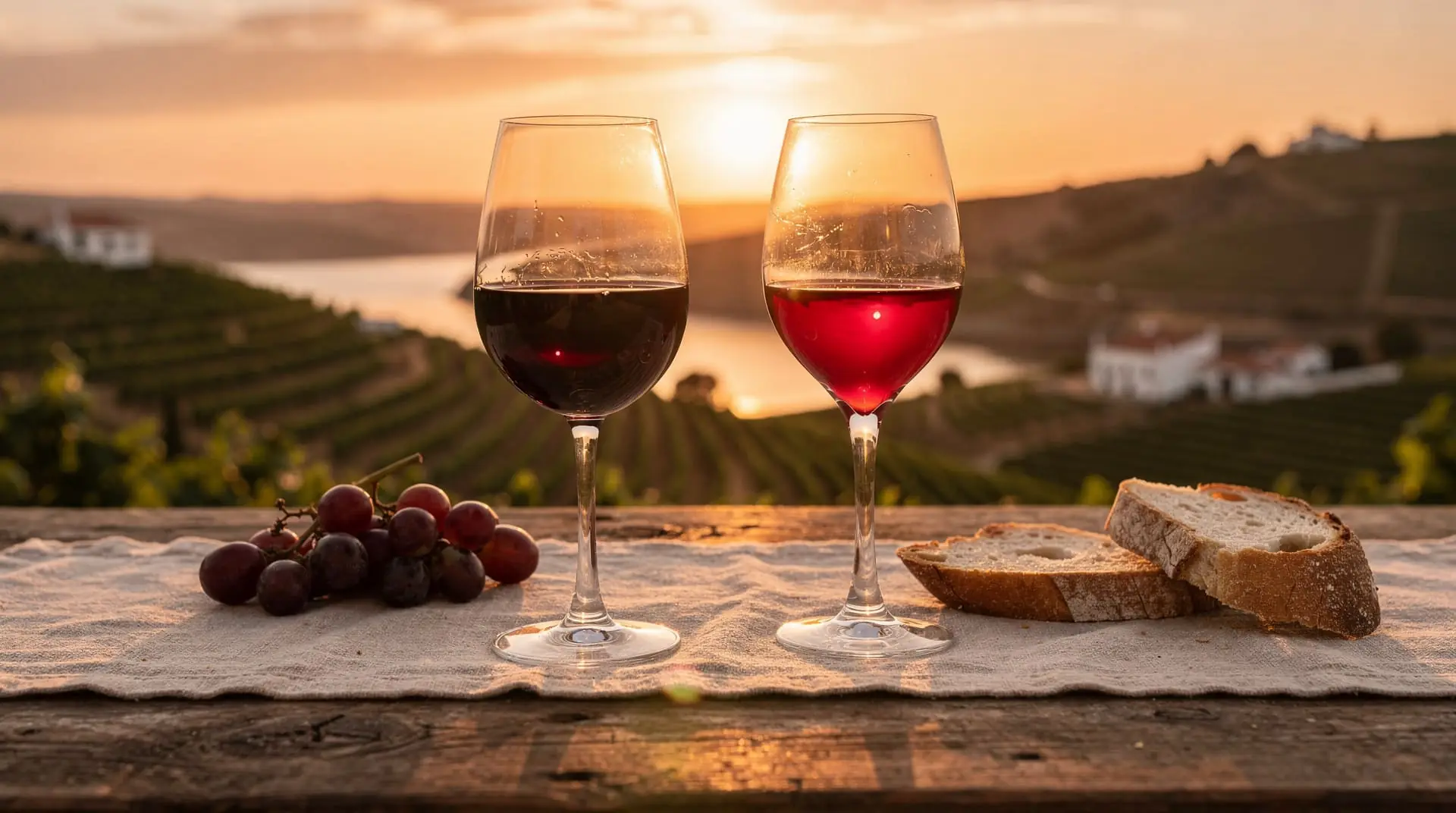
Port wine vs Lisbon-area wines: what to drink and where
Port vs Lisbon-area wines: Bucelas whites, Colares reds, Setúbal Moscatel, and Alentejo blends. What to drink and where in Lisbon.
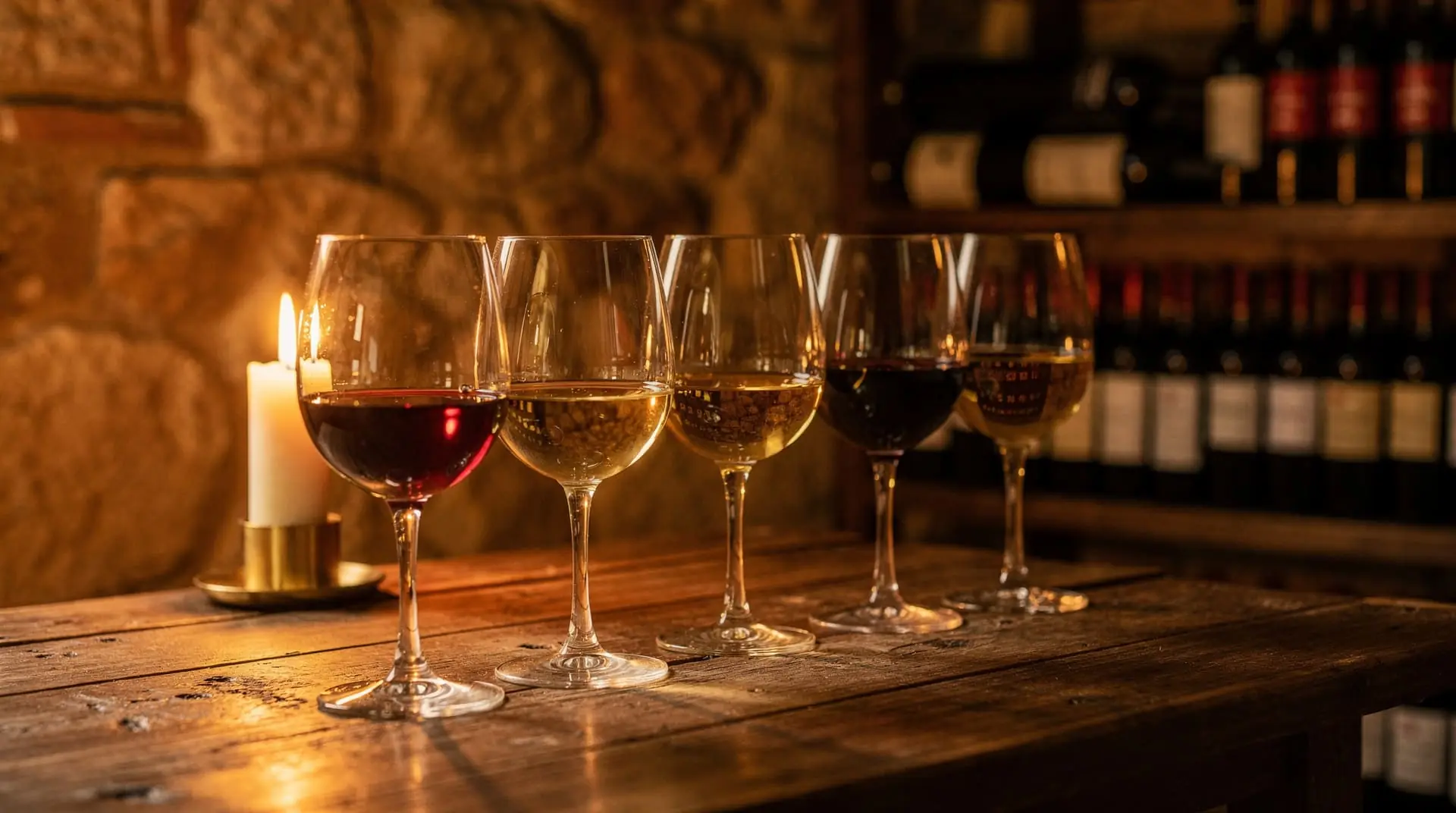
Wine tasting in Lisbon: the best experiences in 2026
From sommelier-led tastings in Chiado to tapas pairings in Bairro Alto, the best wine tasting experiences in Lisbon. Real prices, real venues, honest picks.
Ready to book? Top tours for this guide
We earn a small commission if you book through GetYourGuide — at no extra cost to you. Every tour is hand-picked and verified.