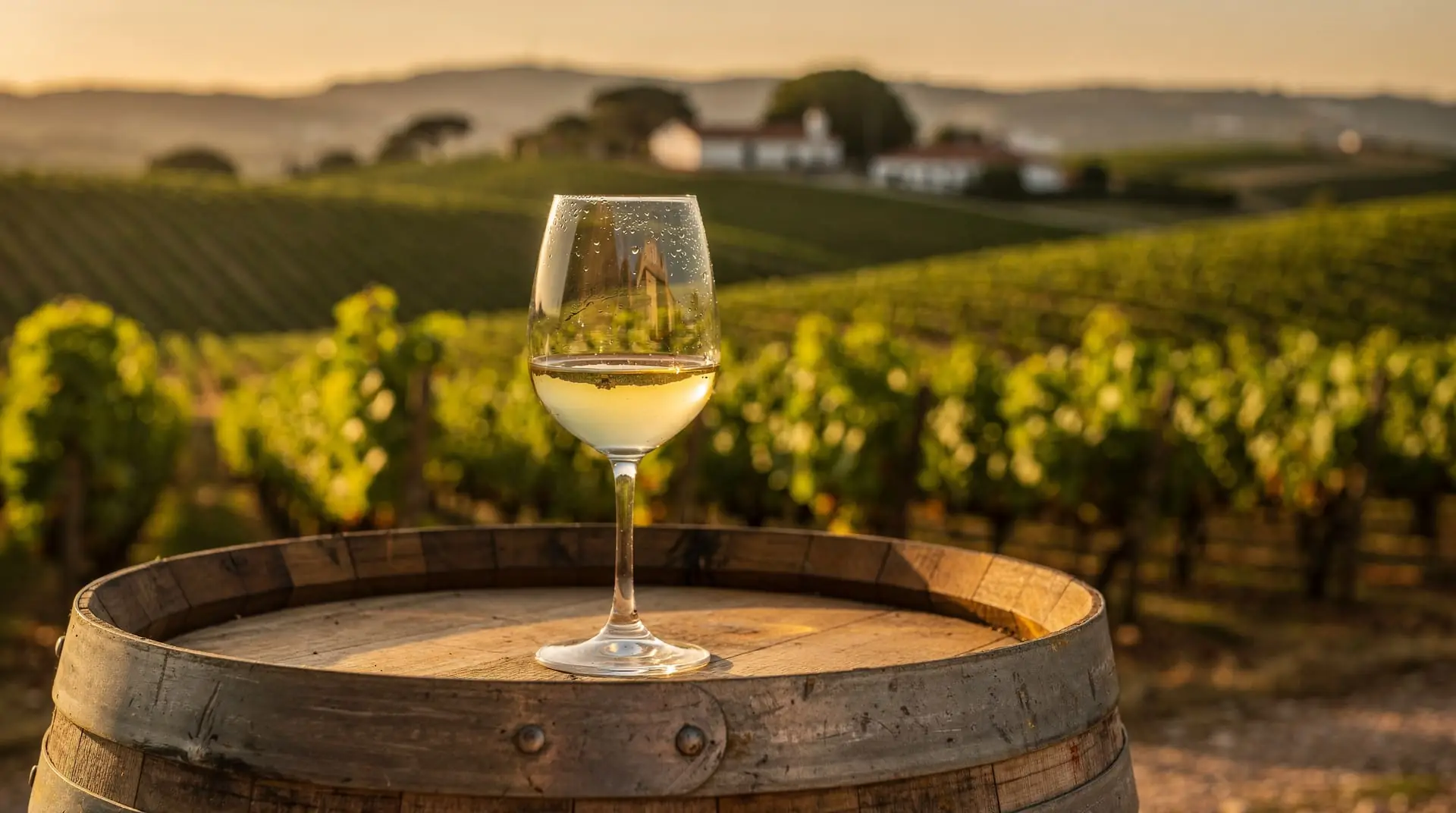
Vineyards near Lisbon: Colares, Carcavelos, Bucelas, and Adega Mãe
Last reviewed
Which vineyards near Lisbon are worth visiting on a day trip?
Colares (40 km west, near Sintra) for historic ungrafted vines and the cooperative; Bucelas (30 km north, 45 min by car) for Arinto whites; Adega Mãe (Torres Vedras area, 60 km north) for a modern estate with good guided tours. Carcavelos is nearly extinct but Quinta dos Pesos still receives visitors. Most require advance booking.
Lisbon is unusual among European capitals: within 60 km, you can visit wine regions of genuine historical significance that have almost disappeared from the modern wine world. Colares still grows ungrafted vines on Atlantic sand dunes — the same vines that survived phylloxera when the rest of Europe’s vineyards died. Carcavelos, between Estoril and Oeiras, produced wine that English merchants shipped home in the 17th century; barely any vineyard remains today. Bucelas quietly makes some of Portugal’s best dry whites. None of these is a day trip brochure staple. That is precisely why they are worth visiting.
| Where | Colares (40km), Bucelas (30km), Carcavelos (20km), Adega Mãe/Torres Vedras (60km) |
| Cost | Tastings around €12-25 per person; bottles €8-50 |
| Time needed | Half day for one estate, full day for a loop of two or three |
| Getting there | Car is easiest; Colares reachable by train + bus 441; Bucelas and Adega Mãe need a car or taxi |
| Best time | September for harvest atmosphere; April-June and September-October for comfortable touring |
When to go: a seasonal note
None of these estates are set up for casual walk-in crowds, so timing changes what you get more than it would at a big commercial winery.
| Season | What to expect |
|---|---|
| Sept-Oct (harvest) | Most atmospheric — you may see grapes being brought in, especially at Colares’ cooperative. Book further ahead. |
| Nov-Mar | Quietest months; some producers reduce hours or close for a winter break. Always call first. |
| Apr-Jun | Comfortable touring weather, vines in leaf, good availability. |
| Jul-Aug | Hot inland at Bucelas and Adega Mãe; Colares stays cooler on the coast and is the better summer pick. |
Colares: the last ungrafted vines
Location: Between Sintra and the Atlantic coast, near the village of Colares
Distance from Lisbon: 40 km, 50 minutes by car
Main site: Adega Regional de Colares, Rua Coronel Keil 2, Colares village
Hours: Mon-Fri 09:00-13:00 and 14:00-17:00; visits by appointment recommended
Phone: +351 219 281 546
The Colares vineyard zone is the most unusual wine-growing area in Europe. The vines grow directly in deep sand — 3-5 metres of sand overlaying clay subsoil — along the Atlantic coast west of Sintra. Phylloxera, the root louse that destroyed European vineyards between 1870 and 1900, cannot survive in sand. The vines were never uprooted and grafted onto American rootstocks (the solution adopted everywhere else). They are growing on their own original European rootstocks, as they have for centuries.
The result is wines of extraordinary individuality. The red Colares is made from Ramisco — a grape found almost nowhere else — and is brutally tannic when young, angular and uncompromising, resistant to the fruit-forward style that modern wine drinkers prefer. Given 15-20 years in bottle, it develops a complexity that is hard to compare to anything else: mineral, earthy, with an iron-blood note and wild red fruit that emerges through the tannin structure.
White Colares uses Malvasia de Colares, producing wines that are aromatic, slightly oxidative, and completely unlike any other Portuguese white.
The situation today
At peak production in the 1930s, Colares had over 400 hectares of vines. Today there are perhaps 30. Urban development consumed most of the zone, and the remaining growers — mostly elderly — struggle to find younger workers willing to handle vines that cannot be mechanised (machines cannot work sand vineyards). Several estates have sold to developers.
The Adega Regional de Colares (the cooperative) controls most production. They sell directly from the cooperative building in Colares village: the young reds (2-3 years) are €12-18 a bottle, and older reserves when available reach €30-50. Worth buying two bottles of a young red and laying them down for a decade if you have the patience.
There are also a handful of independent producers: Casal da Malvazia (also makes white Colares), António Bernardino Paulo da Silva. Call ahead; they operate on minimal infrastructure.
Getting to Colares
By car from Lisbon: Take the A5 motorway toward Cascais, then continue west toward Sintra and Colares. The drive takes 50-60 minutes. From Sintra, Colares is a further 8 km west.
By public transport: Take the train from Rossio to Sintra (40 minutes, €2.35) then bus 441 from Sintra train station to Colares village (30 minutes). This works but requires coordination with winery opening hours.
Combined with Sintra: Colares sits between Sintra and the sea — a morning at Sintra’s palaces followed by an afternoon at Colares works well. The Atlantic beaches at Praia de Colares and Praia Grande are 2 km from the cooperative.
Carcavelos: almost gone
Location: Between Oeiras and Cascais, on the Estoril coast
Main producer: Quinta dos Pesos, Abóboda, near Carcavelos beach
Visits: By appointment only; contact through their website or +351 214 573 520
Carcavelos is a fortified wine, similar to white port but with a more saline, Atlantic character — the vines grow within sight of the sea. It was highly valued in the 18th and 19th centuries and appears in historical records of wine shipped to Brazil and British India.
The zone is now almost entirely swallowed by the Cascais motorway corridor and suburban development. Quinta dos Pesos is the last serious producer, with around 5 hectares of vines — a miracle of survival in a zone that has lost 95% of its vineyard area since 1950.
The wine from Quinta dos Pesos has a distinctive dry-to-semi-dry finish with almond and apricot notes, around 18-19% alcohol. It is produced in small quantities and not widely distributed. Visiting the quinta and buying direct is the reliable way to try it.
Carcavelos beach itself — served by the Cascais train line (30 minutes from Cais do Sodré, €2.35) — is a pleasant complementary stop. See Cascais day trip and beaches near Lisbon for more on the Estoril coast.
Bucelas: Portugal’s underrated white wine
Location: Loures municipality, 30 km north of Lisbon along the EN8
Distance: 30-35 minutes by car from Lisbon
Bucelas is not a tourist destination. It is a small wine zone on limestone hills north of the city, growing Arinto (also called Pedernã) — a white grape that produces wines of bracing acidity and mineral character, with lemon, white flowers, and flint on the nose. With age (5-10 years), Bucelas develops beeswax and lanolin notes that recall white Burgundy.
The region is modest in size (about 300 hectares), commercially low-profile, and produces wines that are consistent rather than fashionable. This makes them undervalued at retail (€10-18 a bottle for quality estate wines) and worth discovering.
Key producers to visit
Quinta da Murta: The most established estate, with a proper visitor facility. Guided tours by appointment (€15-20, includes 4-5 wines). The single-vineyard Arinto and the late-harvest Arinto from older vines are the highlights. Book: +351 219 740 231.
Quinta de Abrigada: Older family estate, less tourist-friendly but the wines are excellent. Phone ahead: +351 263 487 132.
Caves Velhas: The main commercial producer, wines found widely in Lisbon shops. Their Romeira Bucelas is the standard for the region at €8-10.
Getting there: Car is easiest — EN8 north from Lisbon, following Loures signs. No direct public transport serves the wine estates; taxis from Loures town (15 minutes, served by Metro’s blue line from Baixa-Chiado) are feasible.
Adega Mãe — modern viticulture near Torres Vedras
Address: EN247 Aldeia Gavinha, 2565-400 Aldeia Gavinha (Torres Vedras)
Distance from Lisbon: 60 km north, 1 hour by car
Hours: Mon-Fri by appointment; Sat 10:00-17:00 (groups welcome, book ahead)
Website: adegamae.pt
Prices: Tours from €12, premium tastings €25-35
Adega Mãe (“mother cellar”) is a modern winery that represents the new generation of Lisboa DOC wines — investment in modern equipment, clean winemaking, accessible but well-made wines at reasonable prices.
The estate is in the Torres Vedras area, part of the western Lisboa DOC zone. The wines span a wide range: entry-level whites at €6-8, reserve reds at €18-25, and a premium single-vineyard range. The architectural cellar is worth seeing — a long rectangular structure designed to integrate with the landscape, excellent natural light.
What makes Adega Mãe worth the drive is the combination of modern infrastructure (professional tours, good tasting room, restaurant open for lunch by reservation), the scenery (Atlantic hill country, quite unlike the flat Alentejo wine country most visitors see), and the context — you are drinking wines grown 60 km from Lisbon in a region that most visitors have never heard of.
The restaurant uses produce from the estate and surrounding farms: lunch runs €25-35 per person. Book simultaneously with the winery tour.
Torres Vedras and Alenquer: the broader Lisboa DOC
While at Torres Vedras, it is worth knowing the context. The broader Torres Vedras and Alenquer areas within the Lisboa DOC produce wines that are beginning to attract serious attention:
Quinta de Sant’Ana (Mafra area): Biodynamic estate, excellent Pinot Noir (unusual in Portugal) and Chardonnay alongside indigenous Portuguese varieties. Very small production. The owner (James Mann, British-Portuguese) gives tours by appointment.
Casal Figueira (Alenquer): Natural wine pioneer, minimal intervention, their wines appear at Old Pharmacy bar in Lisbon. Not set up for tourism but bottles are available in Lisbon wine shops.
Getting there: Torres Vedras is on the A8 motorway (40 minutes from Lisbon). Ericeira is 20 km west — see Ericeira guide and Mafra day trip for combining with the coast.
Building a vineyard day trip
Option 1 — Colares and Sintra (best without a car)
Morning: Sintra palaces via train from Rossio (40 minutes)
Afternoon: Bus 441 from Sintra to Colares (30 minutes), cooperative visit, walk to beach
Return: Bus back to Sintra, train to Lisbon
Honest note: This only works if the cooperative is open — phone ahead.
Option 2 — Bucelas and Mafra (car needed)
Morning: Quinta da Murta in Bucelas (10:00 appointment)
Lunch: In Loures or at a local tasca near Bucelas
Afternoon: Mafra Palace (30 km west of Bucelas, entry €6)
Return to Lisbon via A8
Option 3 — North coast loop (car, full day)
Lisbon → Bucelas (winery visit) → Torres Vedras (Adega Mãe, lunch) → Ericeira (surf beach, dinner) → return to Lisbon
Total driving: ~120 km round trip. A very satisfying day combining wine, coast, and food.
Buying these wines in Lisbon
If vineyard visits are not feasible, find these wines at:
Garrafeira Nacional (Rua Santa Catarina 28, Chiado): Best selection of Colares, Bucelas, and Lisboa DOC wines. Staff can help you find specific producers.
Garrafeira do Carmo (Rua do Carmo 5, Chiado): Excellent for aged wines including vintage Colares.
Wine shops near Cascais: If you are visiting Cascais, several shops near the train station stock Carcavelos from Quinta dos Pesos.
By the Wine (Rua das Flores, Chiado): Stocks a rotation of Lisboa DOC wines by the glass — ask what they currently have from Colares or Bucelas.
Join a full-day private wine tasting tour in the Arrábida regionHonest context
Colares wine is not for everyone. If your frame of reference is New World Cabernet or smooth Alentejo reds, a young Ramisco will be a jarring experience — aggressively tannic, austere, not fruit-forward. Approach it as a historical document: this is what ungrafted European vines taste like, in the same way they have always tasted. If you can find a 15-year-old Colares at Garrafeira do Carmo, that is the revelation worth seeking.
Carcavelos is nearly museum wine — interesting historically but only one producer survives. Visit if you are specifically interested in wine history; do not make it the centre of a day trip.
Bucelas is the everyday value play: excellent, consistent, affordable, and almost entirely unknown to non-Portuguese wine drinkers. A bottle of Quinta da Murta Arinto from a good vintage (2018, 2020, 2022) at €14 is one of Portugal’s best white wine bargains.
For broader context on Portuguese wine regions, see port vs Lisbon-area wines and best wine bars in Lisbon. For planning wine into your Lisbon itinerary, the Lisbon itinerary planner is a useful reference.
What to bring and how to behave at a small estate
These are working farms and cooperatives, not tourism-first tasting rooms, so a few habits go a long way. Arrive within 10-15 minutes of your appointment time — these are small operations, often one or two staff, and a missed slot can mean an empty visit. Cash is safer than card at Colares’ cooperative and the smaller independent producers; the bigger estates (Adega Mãe, Quinta da Murta) take cards. Ask before photographing the cellar or the family running it — some of these are genuinely small family concerns, not corporate visitor centres. Wear closed shoes if you want to see the vines themselves rather than just the tasting room; sand at Colares and hillside rows at Bucelas are not sandal-friendly.
If you are driving between estates, appoint a designated driver or keep tastings to spitting and small pours — Portuguese drink-driving limits are strict (0.5g/L, lower for new drivers), and rural roads around Torres Vedras and Loures have no reliable taxi cover if you need a lift back to the car.
Alternative: a guided wine day trip
If coordinating appointments, transport, and driving feels like too much logistics for a wine day, a guided tour to the Setúbal or Arrábida wine region (a different area south of the Tagus, more set up for visitors) removes all of that friction — transport, tasting fees, and a knowledgeable guide are included. It won’t get you to Colares or Bucelas specifically, but it delivers the same core idea — genuine, lesser-known Portuguese wine country within a short drive of Lisbon — with none of the appointment-juggling.
Related guides
Alentejo wine day trip from Lisbon: Évora, Cartuxa, and Esporão
Full-day guide to Alentejo wineries from Lisbon: Cartuxa near Évora, Herdade do Esporão in Reguengos, red blends to taste, booking tips, and honest logistics.

Port wine vs Lisbon-area wines: what to drink and where
Port vs Lisbon-area wines: Bucelas whites, Colares reds, Setúbal Moscatel, and Alentejo blends. What to drink and where in Lisbon.
Moscatel de Setúbal and Azeitão: Portugal's great sweet wine
Moscatel de Setúbal wineries in Azeitão: José Maria da Fonseca, Bacalhôa, day trip itinerary from Lisbon, tasting notes, and prices.
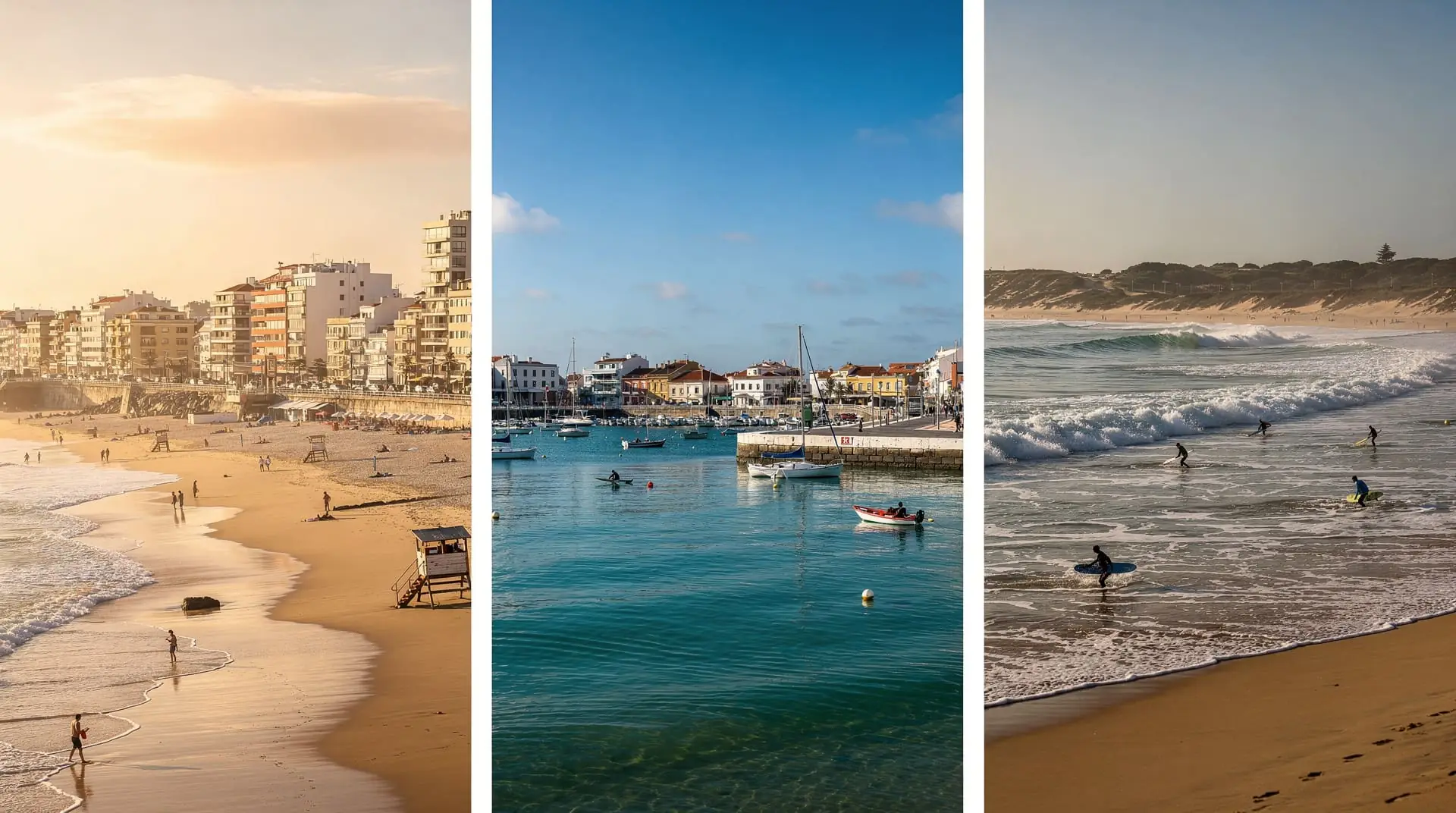
Best beaches near Lisbon — ranked by type and access
The 6 best beaches near Lisbon ranked: Caparica, Carcavelos, Cascais, Guincho, Arrábida, Comporta. By train, bus, and car with honest tips.
Ready to book? Top tours for this guide
We earn a small commission if you book through GetYourGuide — at no extra cost to you. Every tour is hand-picked and verified.

Lisbon: 48-Hour Hop-On-Hop-Off Bus Tour and Oceanarium Entry
Lisbon: MAAT Entry Ticket & Dolphin Watching Boat Tour
Lisbon: Alfama, Mouraria Walking Tour with Fado Night, Tapas
Lisbon: Hop-On Hop-Off Bus Tour
Lisbon: 1-or 2-Day Hop-On Hop-Off Bus Tour