Mafra
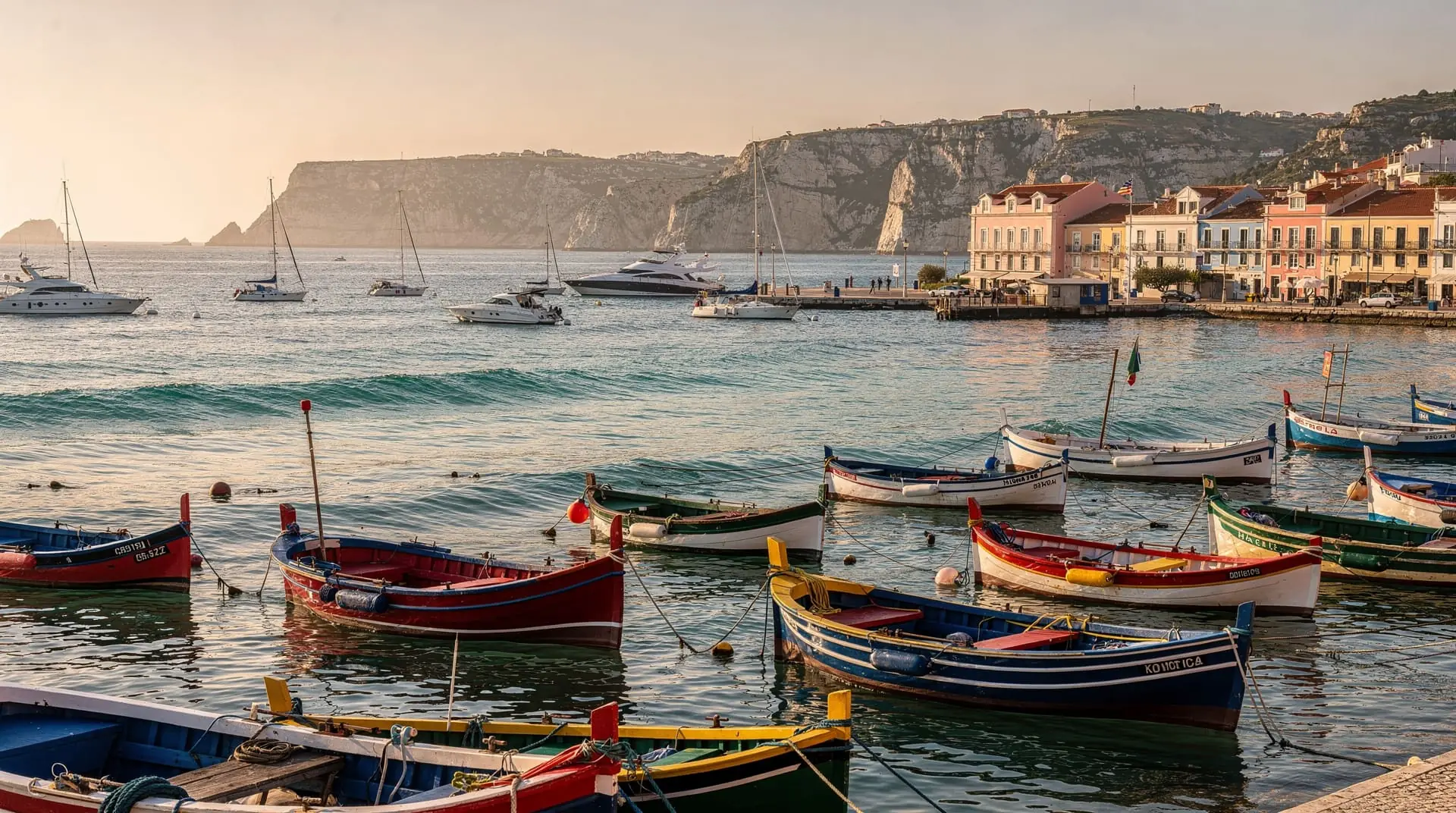
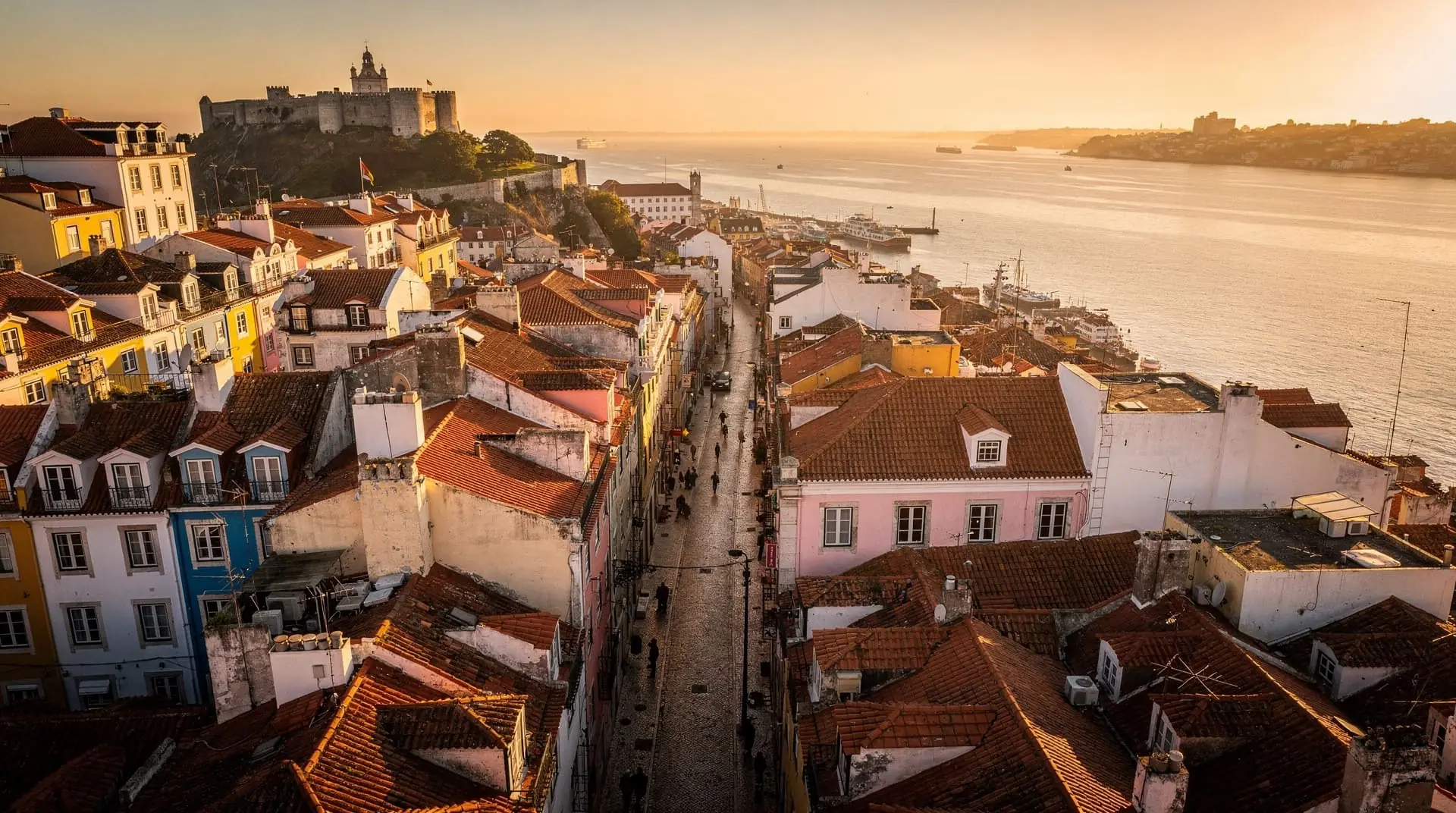
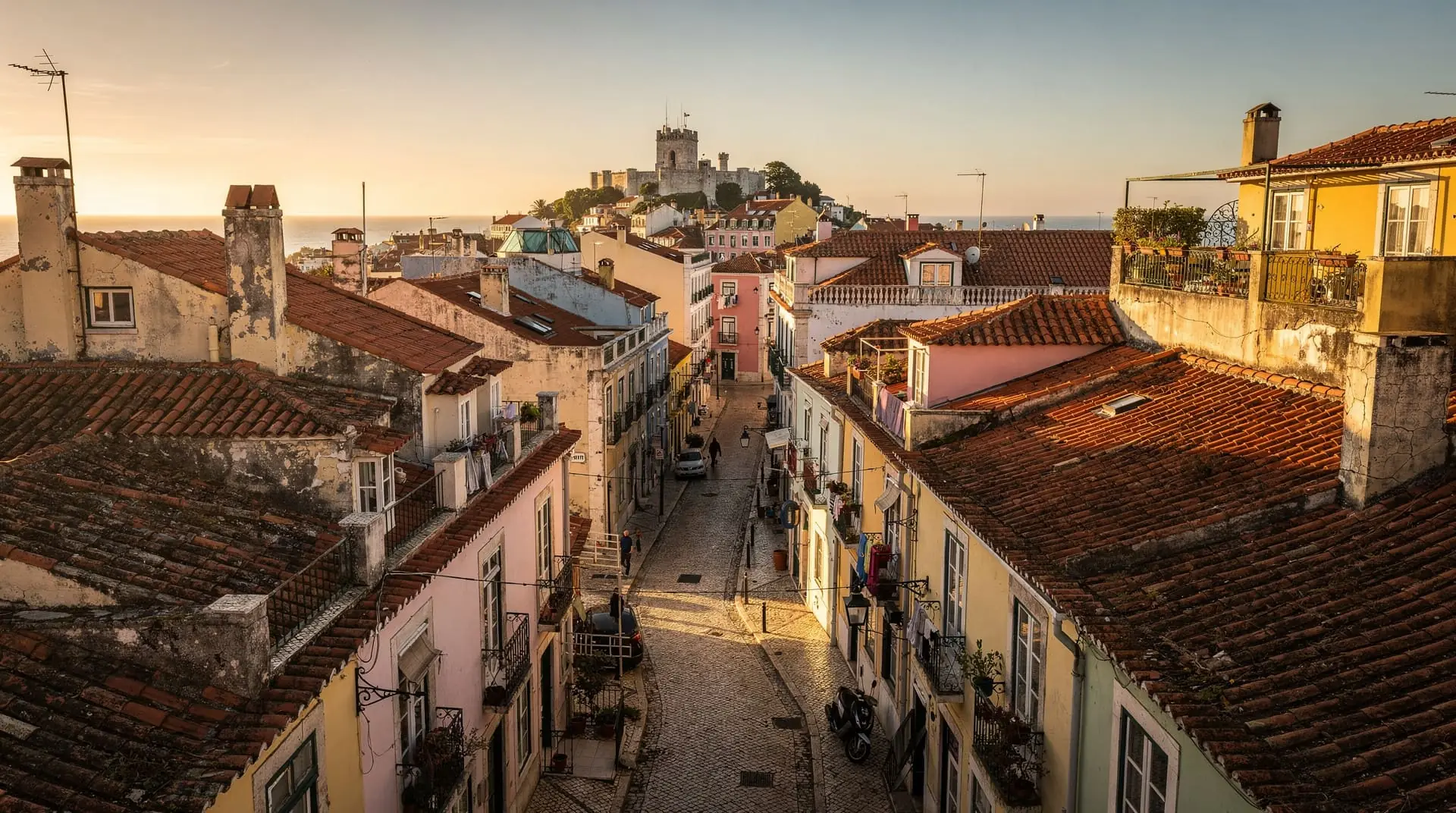
Mafra's 18th-century palace-convent is one of Europe's largest buildings. Often paired with Ericeira, 12 km away on the Atlantic coast.
Quick facts
Top tours and experiences
We earn a small commission if you book through GetYourGuide — at no extra cost to you. Every tour is hand-picked and verified.
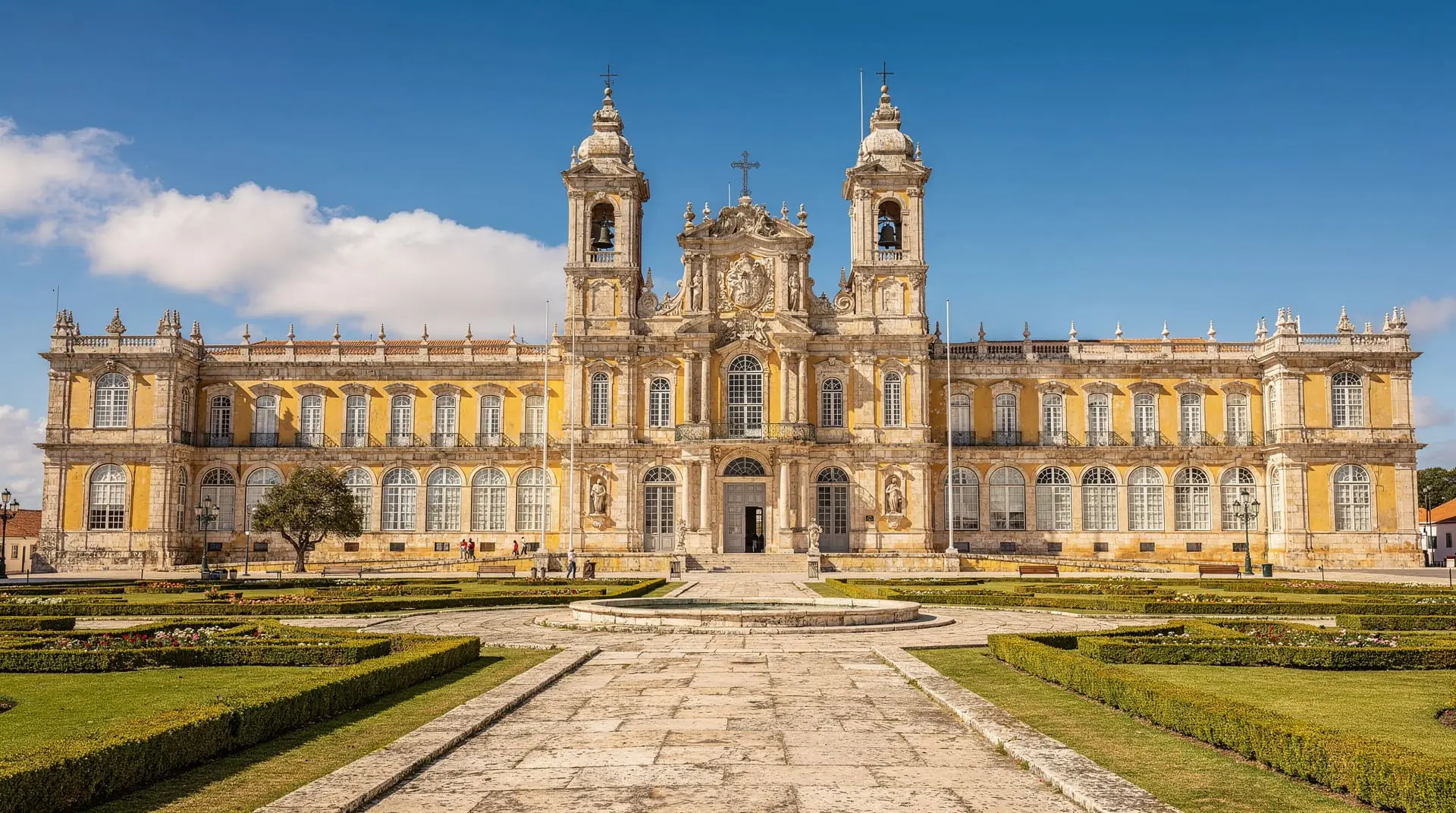
The Mafra National Palace and Convent is one of the most extraordinary buildings in Portugal and one of the largest Baroque building complexes in Europe. Commissioned by King João V in 1717 as a fulfilment of a vow he made after the birth of his first child, it took 45,000 workers — many of them conscripted — over 13 years to build. The final complex covers 37,790 square metres. It contains a royal palace, a Franciscan convent, a basilica (designed with reference to St. Peter’s in Rome and consecrated before the Vatican’s blessing arrived), and the finest Rococo library in Portugal, holding 36,000 volumes between ceiling-to-floor shelves and painted barrel vaults.
| Where | 40 km northwest of Lisbon |
| Cost | Palace entry €6; Tapada guided tours €8–15 |
| Time needed | 2.5–3 hours for the palace; full day paired with Ericeira |
| Getting there | Bus from Campo Grande (~60 min) or car (35 min) |
| Best time | Year-round; October–June avoids the summer heat |
What most visitors don’t know before they arrive: the library has bats. Real bats — kept alive by the convent since the 18th century, released each evening to eat the insects that would otherwise destroy the manuscripts. The leather bindings bear tooth marks. This is either charming or alarming depending on your relationship with small nocturnal mammals.
The scale of João V’s ambition
João V came to the throne in 1706 with an empire that included Brazil, whose gold mines were producing extraordinary wealth at exactly the moment he decided to build a monument to rival the great Baroque complexes of Rome and Vienna. He was not shy about it. He employed 52 Italian sculptors alongside Portuguese masters. He ordered marble from Carrara. He imported Belgian carillons — the two bell towers at Mafra contain 92 bells, the largest collection in the world, still played for special occasions.
The project became a national trauma as much as a national monument. Conscripted labourers from across Portugal — a country of 2 million at the time — were dragooned into the construction. José Saramago’s Nobel Prize-winning novel Baltasar and Blimunda (1982), set largely in Mafra, gives an unflinching account of the human cost. A UNESCO World Heritage Site since 2019 (as part of a portfolio of royal Baroque architecture), the palace-convent now draws enough visitors to sustain the town’s economy, though it still operates as a functioning military school in one wing.
Getting to Mafra from Lisbon
By bus
Mafrense buses from Campo Grande metro terminal (yellow line in Lisbon) serve Mafra village. Journey time approximately 55–65 minutes; fare around €5 single. Buses run every 30–60 minutes. The bus stop in Mafra is a short walk from the palace main entrance. Our getting around Lisbon guide covers how to reach Campo Grande from central Lisbon by metro.
Return: the same Mafrense service back to Campo Grande. Last buses in the evening vary by season; check mafrense.pt. This is also the service that continues to Ericeira (30 more minutes).
By car
The A8 motorway from Lisbon, then the A21 toward Torres Vedras, with an exit for Mafra: 35–40 minutes from central Lisbon. Parking is straightforward — a large free car park sits directly in front of the palace façade. No parking problems here, unlike Sintra. See our driving and parking guide for general advice on day trips by car from Lisbon.
Having a car gives you the flexibility to combine Mafra with Ericeira (12 km, 15 min), which is a natural pairing and by far the most popular day-trip structure in this area.
Mafra Palace and Ericeira day trip from Lisbon — heritage and the Atlantic coastOn an organised day trip
Several operators combine Mafra with Ericeira, Queluz Palace, or the Sintra–Cascais area.
Mafra Convent, Queluz Palace and Ericeira tour from LisbonWhat to see at Mafra
The basilica
The centrepiece of the façade and the first thing you enter. The marble floors and the proportions of the nave — deliberately scaled to match St. Peter’s in Rome — are impressive even to visitors who know their Baroque churches. Six organs from 1807 remain playable; concerts are occasionally held. The twin bell towers flank the central dome; the carillons are audible across the surrounding countryside on ceremonial days.
The royal apartments
The palace wing occupies the northern section of the complex. The formal state rooms — the Games Room, the Audience Chamber, the dining rooms — contain original 18th- and early 19th-century furniture and paintings. The scale is more modest than Versailles or Schönbrunn, but specific rooms (particularly the queen’s apartments) have preserved their period character well. English-language audio guide included in the entry price; allow 90 minutes.
The Rococo library
Widely considered one of the most beautiful 18th-century libraries in the world, and the most compelling room in the palace. Approximately 36,000 books line the 83-metre gallery under painted vaults. The shelving was designed with the books in mind, which was unusual — most royal libraries of the period were decorative rather than functional. The bats are genuine: Egyptian fruit bats have been the library’s pest control since the 1700s. They sleep behind the shelves by day; evidence of their nocturnal activities is visible in white marks on the leather covers of books on lower shelves.
The Franciscan convent
The working convent that once housed 300 monks forms the southern section of the complex. Many of the monastic cells are now integrated into the military school. The pharmacy and the infirmary, preserved largely intact, are sobering: the 18th-century surgical instruments on display in the infirmary are not for the faint of heart.
Tapada de Mafra
The 819-hectare walled hunting reserve that King João V also commissioned, 3 km north of the palace. Now a protected natural area with hiking trails, cycling routes, and guided wildlife tours. Deer, wild boar, foxes and over 200 bird species inhabit the reserve. Guided tours by 4x4 jeep are available (book at the Tapada’s own website). Entry to the Tapada is separate from the palace (€8–15 for guided visits) and requires advance reservation for the jeep tours.
Where to eat in Mafra
Mafra town has a handful of solid cafes and restaurants around the palace square and the main pedestrian streets.
O Conventual — a short walk from the palace, honest Portuguese daily specials (prato do dia) at €9–12. Popular with local workers at lunchtime, reliably good for the price.
Restaurante Solar — slightly more polished, on the main square, good grilled fish and lamb. Mid-range, appropriate for a sit-down lunch rather than a quick stop.
Café Martins — on the pedestrian strip, best for coffee and a pastel de nata before or after the palace. Locals rather than tourists.
Most people doing Mafra + Ericeira eat lunch in Ericeira (40 min by car), where the seafood options are significantly better. The Mafra stop is the morning; Ericeira is where you eat.
Where to stay in Mafra
Most visitors treat Mafra as a day trip from Lisbon or as part of a Mafra + Ericeira day. Staying overnight is not necessary unless you want an early start at the Tapada for wildlife (deer are most active at dawn).
Casas do Monte — farmhouse accommodation in the hills above Mafra, quiet, good for families, pool in summer. 3 km from the palace.
Ericeira as a base: If you’re staying in the area, Ericeira (12 km from Mafra) has better restaurants and more evening options, and is a natural base for exploring both the palace and the surf coast.
How long to spend in Mafra
Palace only: 2–2.5 hours. Library + basilica + one wing of the royal apartments is a full visit without feeling rushed.
Palace + Tapada: Full day (the jeep tour runs 3 hours).
Palace + Ericeira: The standard day-trip combination. Leave Lisbon at 9 AM, arrive Mafra at 9:45–10 AM, finish the palace by 12:30 PM, drive to Ericeira for lunch (12 km, 15 min), spend the afternoon at the beach or village. Return to Lisbon by 7–8 PM.
For more detail on structuring this day, see our day trips from Lisbon guide. You can also use our day-trip matcher tool to see how Mafra compares to other options based on your interests and travel pace. For visitors combining cultural day trips with beach and palace visits, the Lisbon 5-day itinerary with day trips maps out a full sequence.
Honest tips
The palace is genuinely impressive, but the library is the reason to come. If you’re short on time, prioritise the library and the basilica over the royal apartments. The apartments are well-preserved but don’t add dramatically to what you’ve already seen.
Audio guide is worth having. The rooms are large and the explanatory panels in English are sparse. The audio guide (included in ticket price) fills in the history that the rooms alone don’t convey.
The Tapada requires advance booking. Walk-in entry to the Tapada is possible, but the guided jeep tours (the most rewarding way to see the wildlife) must be reserved. Book at least a week ahead for the October–March season when deer rut activity makes the wildlife spectacular.
Mafra is not Sintra. Visitors who arrive expecting the Romantic palace aesthetic of Sintra (colourful, fantastical, forested) can find Mafra’s Baroque monumentalism oppressive rather than beautiful. It’s a different kind of architectural ambition — the point is scale, discipline and religious authority, not fairy-tale escapism. Worth knowing before you go.
Book the palace entry online if visiting in peak summer. The palace does sell out at entry on some summer weekends. Online booking at patrimoniocultural.gov.pt is free and ensures access.
For a broader picture of what’s worth seeing beyond Lisbon, our guide to day trips from Lisbon compares all the main options with realistic timings and honest verdicts.
How Mafra fits into a Lisbon trip
Mafra works well on days 3–5 of a Lisbon trip, combined with Ericeira. It’s a cultural counterweight to the beach-focused Cascais day trip — substantial history in the morning, Atlantic coast in the afternoon. The two destinations are also easily combined with a drive through the Sintra Natural Park’s western edge (Azenhas do Mar, Praia das Maçãs) if you have a car and the time.
The Lisbon Sintra Cascais coast itinerary places Mafra + Ericeira as a day-3 option alongside the Sintra–Cascais route for visitors who want variety. Our which day trip from Lisbon guide compares Mafra honestly against Sintra, Évora and the Arrábida coast to help you decide what matches your priorities.
Mafra vs Sintra: two very different palaces
Both are UNESCO-recognised royal architecture within an hour of Lisbon, but the comparison is instructive precisely because they’re so different:
| Mafra | Sintra | |
|---|---|---|
| Style | Baroque, monumental, disciplined | Romantic, colourful, fantastical |
| Scale | One vast single complex | Multiple palaces across a hillside |
| Crowds | Low to moderate | Very high, especially peak season |
| Parking | Free, ample, no problems | Notoriously difficult and expensive |
| Time needed | 2.5–3 hours | Full day for 2+ palaces |
| Best for | History depth, architecture fans, easier logistics | First-time visitors, photography, fairy-tale atmosphere |
If you’ve already done Sintra on a previous trip, or if you specifically want a less crowded, more historically substantial half-day, Mafra is the better choice. If this is your first and only palace day near Lisbon, Sintra’s visual impact usually wins out — see the which day trip from Lisbon guide for the fuller comparison.
Visiting with the bats in mind
The library’s resident Egyptian fruit bats are a genuine talking point, not a marketing gimmick — they’ve lived in the roof space and behind the shelving since the 18th century and are let loose each evening to control the insects that would otherwise damage the manuscripts. Visitors touring during the day won’t see the bats themselves (they’re asleep, tucked away out of sight), but the guides point out the tooth marks on lower-shelf leather bindings, and it’s one of the details that makes the library memorable beyond its visual beauty. If bats interest (or concern) you specifically, ask the ticket desk about any current evening or special-access tours, which occasionally run outside standard opening hours.
Frequently asked questions about Mafra
Is Mafra National Palace worth visiting?
Yes, particularly if you’re interested in Baroque architecture and 18th-century Portugal. The library alone justifies the trip. For purely scenic or romantic experiences, Sintra is more immediately striking; Mafra rewards visitors who want historical depth alongside visual impact.
How do I book tickets for Mafra Palace?
Tickets are available at the palace entrance on most days, but online booking (patrimoniocultural.gov.pt) is recommended June–September, when the palace can sell out on weekends. Entry: €6 adult, €3 reduced (seniors, students). Under 12: free. The audio guide is included in the price.
Can I visit Mafra and Ericeira in one day?
Yes — this is the most popular day-trip combination from Lisbon. Mafra Palace in the morning (2.5 hours), drive or bus to Ericeira (12 km), lunch and the afternoon at the beach or in the village. By car the logistics are simple. By public transport, check the Mafrense bus connection between Mafra and Ericeira (the service does connect both towns). See our Ericeira guide for what to do there.
What is the Tapada de Mafra?
An 819-hectare walled hunting reserve commissioned alongside the palace in the 18th century. Now a protected natural area run by the Portuguese Army. The reserve holds red deer, fallow deer, wild boar, foxes and rich birdlife. Guided 4x4 tours are the main visitor experience; book in advance at tapadadamafra.pt. Entry: €8–15 depending on the tour type.
What novel is set in Mafra?
Baltasar and Blimunda (1982) by José Saramago, winner of the Nobel Prize for Literature in 1998. The novel follows a crippled soldier and a clairvoyant woman living through the construction of the Mafra palace-convent. One of the defining works of 20th-century Portuguese literature, and a useful companion read for a visit — Saramago’s description of the building work’s scale and human cost gives the monument a dimension no guided tour quite manages.
Should I visit Mafra or Sintra if I can only choose one?
Sintra, for most first-time visitors — the romantic palace architecture and hilltop setting are more visually striking and better known. Choose Mafra instead if you’ve already seen Sintra, prefer Baroque history to fairy-tale aesthetics, or want to avoid Sintra’s notorious parking and crowds.
Are the bats at Mafra Palace real?
Yes. Egyptian fruit bats have lived in the library’s roof space since the 18th century and are released each evening to eat insects that would otherwise damage the books. Visitors on standard daytime tours won’t see them directly, but guides point out the physical evidence — tooth marks on the leather bindings of lower-shelf books.
Is there parking at Mafra Palace?
Yes — a large free car park directly in front of the palace main façade. No parking problems; this is refreshingly unlike Sintra. The town centre has additional street parking on surrounding streets if the main lot is full (rare outside peak summer weekends).