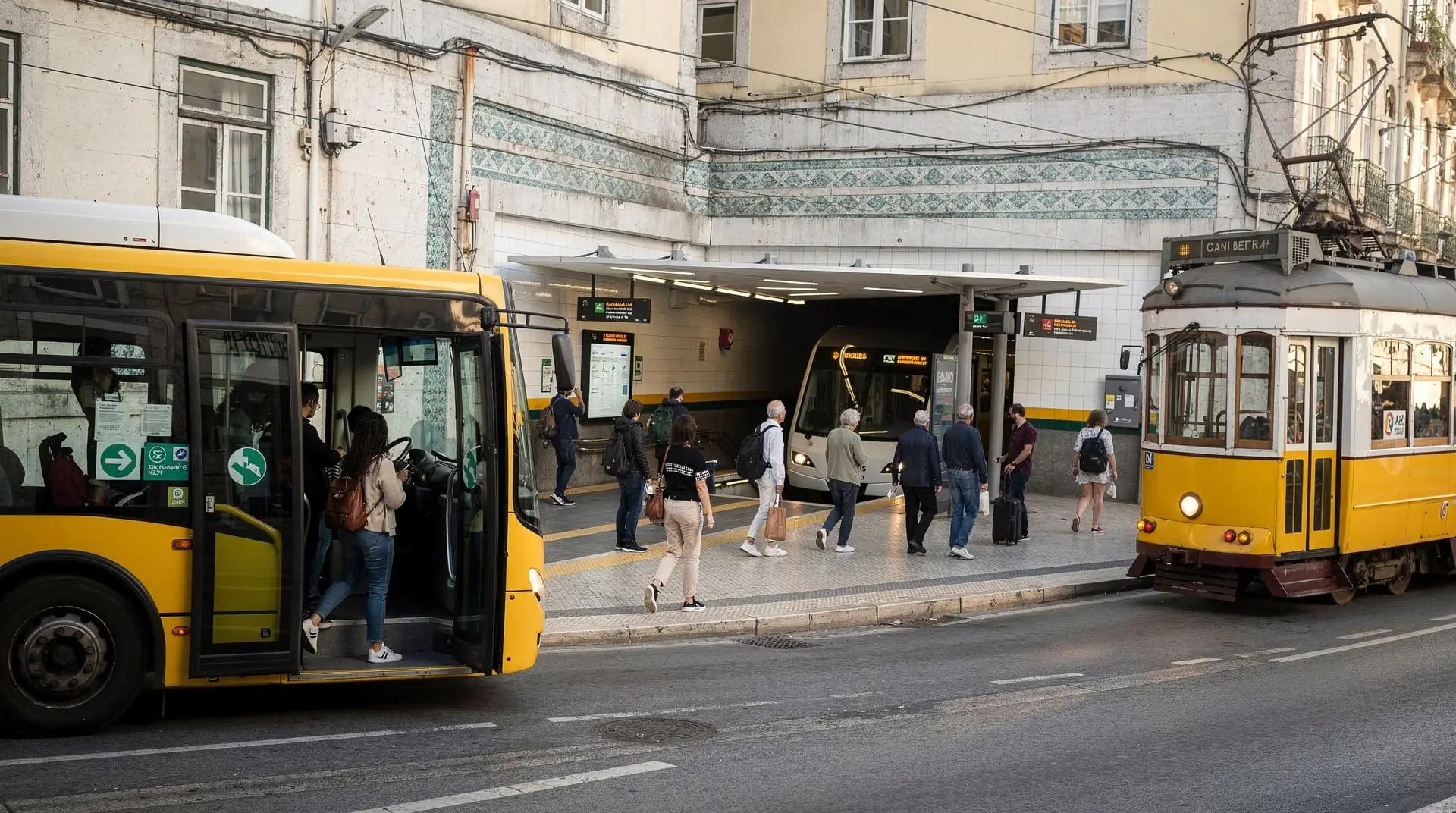
Getting around Lisbon — the complete transport guide
Last reviewed
What is the best way to get around Lisbon?
Walk where you can — Lisbon rewards it. Use the metro for longer crosstown journeys, trams for atmosphere and specific routes, and buses to fill the gaps. The Viva Viagem card covers all modes. Uber and Bolt are cheap and useful for hills and late nights. Don't bother with a car in the centre.
| Best all-round pass | Viva Viagem card (€0.50 + top-up) |
| Metro single | €1.85 with Viva Viagem |
| Tram 28 / funiculars | €1.85-3.80, cash more if paid on board |
| Ferries | ~€1.50 each way, Cais do Sodré → Cacilhas |
| Not needed | A rental car in the city centre |
Lisbon is a walking city — until it isn’t
Lisbon’s seven hills are beautiful and brutal. The city rewards walking, but on a hot August afternoon you will quickly discover that “a short walk” to Alfama or Graça means a steep 15-minute climb. The transport network exists precisely to solve this problem: funiculars, ancient trams, a modern metro, a comprehensive bus grid, and rideshare apps fill the gaps that legs cannot.
This guide covers every mode of transport in Lisbon, with honest advice on when each one makes sense.
The metro — fast, cheap, well-connected
Lisbon’s metro (Metropolitano de Lisboa) has four lines, 56 stations, and covers most of the city’s useful destinations for tourists.
The four lines:
- Red (Linha Vermelha): Airport → Oriente → Alameda → São Sebastião → Pontinha. Crucial for airport connections.
- Blue (Linha Azul): Reboleira → Santa Apolónia, running roughly east-west through the city. Stops: Colégio Militar, El Corte Inglés, Marquês de Pombal, Avenida, Restauradores, Rossio, Baixa-Chiado, Terreiro do Paço (waterfront).
- Green (Linha Verde): Telheiras → Cais do Sodré, running roughly north-south. Stops: Campo Pequeno, Marquês de Pombal, Rato, Largo do Rato, Estrela, Santos, Cais do Sodré (for trains to Cascais and Setúbal ferries).
- Yellow (Linha Amarela): Rato → Odivelas, running north from central Lisbon. Stops: Rato, Marquês de Pombal, Picoas, Saldanha, Campo Pequeno.
Key interchanges:
- Marquês de Pombal: blue + yellow
- Alameda: red + green
- Baixa-Chiado: blue + green (the most central interchange; Chiado is above ground, Baixa below)
Cost: €1.85 per single journey using a Viva Viagem card. The €0.50 card itself is reusable. Do not buy single-use tickets — the surcharge is significant.
Frequency: Every 6-10 minutes on all lines during the day. Every 10-15 minutes in the evenings. First trains around 06:30, last around 01:00.
Not served by metro: Alfama, Belém, Bairro Alto, LX Factory, most of the hills. The metro is great for corridors, not destinations on the slopes.
Trams — iconic, practical, and often overcrowded
Lisbon’s trams are part of the city’s identity. Five lines currently operate. Understand what each does before you queue.
Tram 28E (Martim Moniz → Prazeres)
The famous one. It climbs through Alfama, passes through Graça, descends via Mouraria and Baixa, then climbs again through Estrela to Campo de Ourique. The route is spectacular and genuinely useful — but it is also extremely overcrowded, slow, and a well-known pickpocket ground.
Read the tram 28 guide before boarding. Key points: stand near the driver, hold your belongings, avoid peak hours if you have luggage. It is worth riding once for the experience; use Uber or bus 737 for the same route if you are in a hurry.
Cost: €2.00 on board (cash), €1.85 with Viva Viagem. Frequency: every 10-15 minutes.
Tram 15E (Praça da Figueira → Algés)
The most useful tram for tourists heading to Belém. A modern articulated tram, not the vintage yellow type, running along the riverside. Stops: Praça da Figueira, Praça do Comércio, Cais do Sodré, Santos, Calvário, Belém, and beyond.
From Cais do Sodré to Belém takes around 20 minutes. Cost and card system identical to tram 28E.
Trams 12E, 18E, 24E
Shorter routes serving specific neighbourhoods. Tram 12E runs in the Alfama area. Tram 18E connects Cais do Sodré to Ajuda via Belém (useful for Ajuda Palace). Tram 24E serves Praça Luís de Camões to Campolide.
Funiculars — character and practicality combined
Three funiculars (elevadores) operate in Lisbon. They are not tourist gimmicks — they solve the problem of the steep hills and are used daily by residents.
Elevador da Glória (Restauradores → São Pedro de Alcântara): The most useful for tourists. Rises from near Restauradores metro (blue line) to the São Pedro de Alcântara miradouro in Bairro Alto. Cost: €3.80 single. Runs daily, approximately 07:30-23:55 on weekdays.
Elevador da Bica (Rua de São Paulo → Rua Marechal Saldanha): The most photographed — the yellow cars descending a narrow street in Bica is a classic Lisbon image. Connects Cais do Sodré area with upper Chiado. Cost: €3.80 single. Runs until around 21:00.
Elevador da Lavra (Largo da Anunciada → Rua Câmara Pestana): The oldest funicular in Lisbon (1884), least touristy, running from near Avenida metro station up towards São Jorge Castle. Cost: €3.80 single.
Tip: All three are covered by the Lisboa Card and by 24-hour tourist tickets, though not by standard Viva Viagem top-ups. The Lisboa Card frequently makes financial sense just for the funicular savings if you use them several times. See the Lisboa Card calculator to check your specific itinerary.
Elevador de Santa Justa — skip the queue, use the alternative
The Santa Justa Elevator (Elevador de Santa Justa) is a wrought-iron lift connecting Baixa with the Carmo ruins above. It is photogenic, historically interesting, and practically always has a queue of 20-40 minutes at peak times.
The view from the top is good but not exceptional. For a similar or better Baixa-to-Chiado connection without the wait, use the Largo do Carmo stairs from Chiado, or walk up the Calçada do Carmo. The lift costs €5.50 return (free with Lisboa Card).
If you do want to visit, go at 09:00 when it opens or after 20:00 when queues subside.
Buses — comprehensive, cheaper, and often overlooked
The CARRIS bus network covers everything the metro and trams miss. For tourists, the most useful routes are:
- 737: Rossio → Alfama → Castelo → Graça → Martim Moniz. A useful alternative to tram 28E — same route, less romantic, less crowded, more reliable.
- 759: Praça da Figueira → Belém. Alternative to tram 15E on the riverside route.
- 794: Connects Oriente station with Parque das Nações.
- 734: Runs from Restauradores to Graça via Alfama — useful for reaching Senhora do Monte.
- 706: Blue-hour shuttle connecting Parque das Nações.
Cost: €2.00 cash on board, €1.85 with Viva Viagem, €1.85 with Lisboa Card. The Viva Viagem card is essentially mandatory — paying cash on every bus adds up fast.
Night buses (Madrugada): Several night bus lines run between 01:00 and 06:00 when the metro is closed. Check the Carris website or ask your hotel for routes serving your area.
Ferries — cheap, practical, and genuinely beautiful
Transtejo and Soflusa operate ferry services across the Tagus. These are not tourist cruises — they are commuter services, and they are cheap and reliable.
Main routes from Cais do Sodré:
- Cais do Sodré → Cacilhas (Almada, for Cristo Rei and the southern shore): 10-minute crossing, every 15-30 minutes, ~€1.50 each way. One of the best-value views in Lisbon.
- Cais do Sodré → Montijo and Seixal: longer routes, less frequent.
From Belém: Seasonal Belém–Trafaria–Porto Brandão ferry, useful for Arrábida access by bus.
From Terreiro do Paço (Praça do Comércio): Services to Barreiro, including a connection to the south of Portugal by rail. Also tourist boat departures from this pier.
Full details in the ferries and Tagus crossings guide.
Rideshare apps — Uber, Bolt, Free Now
All three operate throughout Lisbon and are generally cheaper and more transparent than hailing street taxis. Use them:
- At night (after metro closes)
- For hilly destinations (Alfama, Graça, Príncipe Real) with luggage
- When the tram queue is too long
- For short hops to specific addresses
A typical central-Lisbon trip (Baixa to Alfama, for example) costs €5-8. Rossio to Belém costs €12-18. Surge pricing on Friday and Saturday evenings from about 22:00 can push prices 30-50% higher.
See taxis, Uber, and Bolt in Lisbon for full detail on pricing, tips, and avoiding scams.
Hop-on-hop-off bus — when it makes sense
The hop-on-hop-off bus is not the most efficient way to see Lisbon, but it has its uses. Multiple operators run similar routes (the main circuits cover Belém, Alfama, Baixa, Marquês de Pombal, and Parque das Nações). Tickets run €20-30 for 24 hours.
Lisbon city sightseeing hop-on-hop-off bus — the classic loop with commentary, useful on day 1 for orientation before you explore on foot.
It makes most sense on arrival day, or if you are travelling with children or mobility issues. For anyone comfortable on metro and foot, it is unnecessary after the first day.
The Lisboa Card — does it save money on transport?
The Lisboa Card (24h €22 / 48h €37 / 72h €46) covers unlimited metro, bus, tram, funicular, and the train to Sintra and Cascais. If you plan to ride multiple times per day and visit 2-3 paid museums, it usually breaks even or saves money.
Use the Lisboa Card calculator to run your specific itinerary. The full analysis is in the Lisboa Card guide.
Tuk-tuks — tourist experience, not transport
The orange tuk-tuks you see everywhere in Alfama and Baixa are tourist vehicles, not part of the public transport network. They are expensive for what they are (€15-25 per person for a short loop), but can be enjoyable for an introduction to the hills. They are not a practical way to get around.
Lisbon city tour by tuk-tuk — a curated route through the historic neighbourhoods, including viewpoints inaccessible by car.
The Lisboa Card vs Viva Viagem — quick decision guide
- Just transport, short stay (1-2 days): Viva Viagem, load €10-15. Cheaper if you won’t visit many museums.
- 2-3 museums + transport, 2-3 days: Lisboa Card likely breaks even or saves money.
- Day trip to Sintra or Cascais included: Lisboa Card saves the train fare alone (€4.80 return).
- Mostly day trips by tour, few museum visits: Viva Viagem.
The Lisboa Card worth-it guide has the full break-even math. The best time to visit Lisbon covers seasonal factors that affect transport crowding.
Practical tips for navigating Lisbon’s transport
Keep your Viva Viagem card in an easy-access pocket — you need to tap it at the beginning and end of each journey on most modes. The metro requires tap-in only; some bus and tram journeys require tap-in and tap-out.
Download the Carris/Metropolitana app for real-time bus arrival times. Google Maps is reliable for journey planning in Lisbon, including walking, tram, metro, and bus directions.
Avoid standing near the doors of tram 28E with your phone or camera out. Pickpocketing is concentrated on this route — particularly in the Alfama section. The Lisbon safety guide covers this honestly.
For day trips beyond the city, see the day trip transport guide and the trains to Sintra and Cascais guide.
Transport by neighbourhood — what actually works where
Understanding which transport mode suits which part of the city saves significant time and frustration.
Getting around Baixa and Chiado
Baixa is the flat grid — the easiest part of Lisbon to walk. North-south streets (Rua do Ouro, Rua da Prata, Rua Augusta) are pedestrianised or low-traffic. The metro (Baixa-Chiado station, blue and green lines) drops you directly into the neighbourhood. For moving between Baixa and Chiado, the options are: walk up the steep Calçada do Sacramento, take the Elevador de Santa Justa (€5.50, or included in Lisboa Card, always queued), or walk the longer but flatter route via Praça Luís de Camões. The elevator is romantic but the queue is real — factor 20-30 minutes wait in peak season.
Getting around Alfama
Alfama has no metro station. The options: walk uphill from Baixa-Chiado (15-20 minutes of steep cobblestones), take tram 28E from Praça da Figueira or Largo Martim Moniz, take bus 737 from Rossio, or use Uber/Bolt for a direct ride to your specific address. With luggage, Uber is strongly recommended. On foot, note that most shortcuts through Alfama involve stairs — if you need a step-free route, plan it in advance using Google Maps with the “avoid stairs” setting, though this does not work perfectly in Alfama.
Getting around Belém
Belém has no metro station. From Cais do Sodré (green line terminus), tram 15E runs westward along the riverside to Belém in approximately 20 minutes — a pleasant ride along the waterfront. From Praça da Figueira, the journey is 25-30 minutes. Alternatively, bus 727 and bus 728 serve Belém from the city centre. Uber from central Lisbon to Belém costs €14-20 depending on traffic. The Aerobus 2 (airport to Cascais) also stops in Belém — useful if you are coming from the airport directly.
Within Belém, everything is walkable: the tower, monastery, Coach Museum, MAAT, and Pastéis de Belém are all within 1.5 km of each other along the riverside promenade.
Getting around Bairro Alto and Príncipe Real
The Glória funicular from Restauradores metro takes you straight to São Pedro de Alcântara miradouro at the edge of Bairro Alto. From there, Bairro Alto is walkable (though hilly). Príncipe Real is slightly further — 10-15 minutes on foot from Chiado metro station, or a short Uber. Bus 758 runs from Marquês de Pombal to Santos via Príncipe Real.
Getting around Graça and Mouraria
Graça is one of the more transport-challenged neighbourhoods for visitors. The closest metro is Intendente (green line, opened 2020) or Martim Moniz — each about 15 minutes on foot from the main Graça viewpoints. Tram 28E passes through Graça but is slow. Bus 734 runs from Restauradores to Graça. Uber to a specific address in Graça is the most practical option. The effort rewards with fewer crowds than other hilltop neighbourhoods.
Buying and reloading transport cards — where and how
At metro stations: Ticket machines at every metro station accept contactless cards and some accept cash. They sell Viva Viagem cards (€0.50), load credit, load 24h passes, and sell return tickets to Sintra and Cascais. The interface is multilingual.
At staffed booths: Open approximately 08:00-21:00 at major stations. Useful for complex queries or when the machines have queues.
At ferry terminals: The Cais do Sodré ferry terminal sells Viva Viagem cards and loads transport credit.
At the Lisboa Welcome Centre: Praça do Comércio, open daily. Sells Lisboa Cards, Viva Viagem, and provides transport information. Often has a queue — if you only need a Viva Viagem card, use the metro machines.
Airport to city — the first transport decision
The transport decision begins the moment you land at Humberto Delgado Airport. The metro red line (Linha Vermelha) from Aeroporto station takes 20 minutes to Alameda interchange, making it the default best option for most arrivals. A full breakdown of all airport transport options (metro, Aerobus, Uber, taxi, and the scams to avoid) is in the airport to city centre guide.
Seasonal transport considerations
Summer (July-August): Tram 28E queues to board can be 20-30 minutes at peak times. Metro carriages at rush hour fill beyond comfort. The hop-on-hop-off buses are very popular — book online to guarantee space. The Belém tram (15E) can be packed at midday.
Spring and autumn (April-June, September-October): Transport runs normally and comfortably. These are the best months to use public transport without the summer frustrations.
Winter (December-February): Metro and buses run on normal schedules. Fewer tourists means more comfortable carriages. Tram 28E runs less frequently and with older rolling stock that can be cold. Funiculars close slightly earlier. Check schedules for holiday periods (Christmas Day, New Year’s Day) when reduced services operate.
Transport apps worth downloading
Carris Metropolitana app: Real-time bus arrival times for all CARRIS routes. More reliable than the paper timetable at bus stops.
Uber and Bolt: Both required — prices differ and availability varies by time. Having both installed means you can compare and get the first available car.
Google Maps: Fully integrated with Lisbon’s public transport, including real-time delays (usually). The walking directions are accurate and account for Lisbon’s hills with time estimates that are realistic.
Comboios de Portugal (CP) app: For checking and booking train times to Sintra and Cascais. The website (comboios.pt) also works well.
Free Now: Calls licensed taxis with app-based pricing transparency. A useful alternative when Uber surge pricing is high.
Lisbon: boat tour ticket and hop-on-hop-off 48-hour bus — combines river access with the city sightseeing bus, useful for visitors who want to cover a lot of ground on day one without navigating multiple transport modes independently.
Getting around with luggage or mobility considerations
Lisbon’s hills and cobblestones make transport choices with luggage genuinely different from a flat city. A rolling suitcase on calçada portuguesa cobblestones is noisy, slow, and occasionally impossible on the steepest lanes of Alfama and Graça — plan Uber or Bolt for any hotel arrival or departure rather than relying on the tram or a long walk.
Metro: Most central stations have lifts, though a few older stations (particularly some Blue Line stops) have escalators only or limited step-free access. Check accessible station status on the Metropolitano de Lisboa website if this matters to your trip.
Trams and funiculars: None of the vintage trams (28E) or the three funiculars are step-free — they involve a step up from street level and narrow interiors. Tram 15E to Belém, being a modern articulated tram, is more accommodating.
Buses: The CARRIS fleet is largely low-floor and step-free, making buses often the most practical accessible option for routes the metro does not cover.
Ferries: The Cais do Sodré terminal has a ramped, level approach and the boats accommodate wheelchairs and buggies without difficulty — one of the more accessible transport experiences in the city.
See the accessibility in Lisbon guide for the complete picture across sights and transport.
Cost comparison: a realistic transport week
For a visitor doing a mix of city exploration and one day trip over five or six days, here is a realistic breakdown of what transport actually costs beyond the headline single-fare prices:
| Approach | Approx. cost (5-6 days) | Best for |
|---|---|---|
| Viva Viagem, pay-as-you-go | €25-40 | Visitors who walk a lot, use transport occasionally |
| Viva Viagem, daily 24h passes (€6.60/day) | €35-45 | Heavy transport users without museum visits |
| Lisboa Card (mix of 24h/48h) | €40-60 | Visitors combining transport with 2-3+ paid museums |
| Uber/Bolt for most trips | €60-100+ | Convenience-focused visitors, small groups splitting fares |
Most visitors land somewhere between the first two options, topping up the Viva Viagem card as needed rather than committing to daily passes or the Lisboa Card unless museum visits justify it. See the Lisboa Card worth-it guide for the detailed break-even calculation.
Related guides
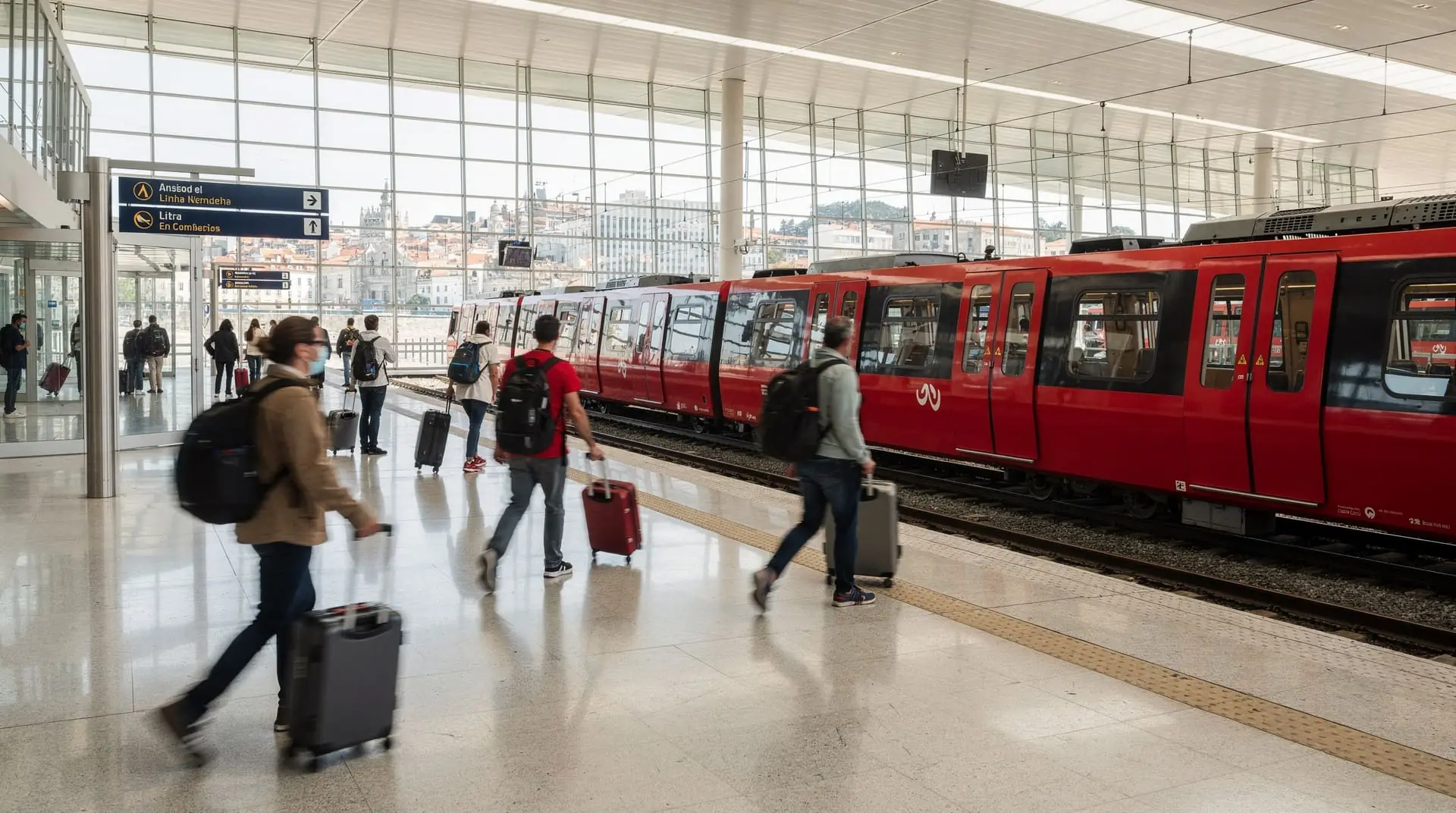
Getting from Lisbon airport to the city centre — all options compared
Metro, Aerobus, Uber, taxi: how to get from Humberto Delgado airport to central Lisbon. Real prices 2026, journey times, and scam warnings.

Ferries across the Tagus — routes, prices, and the Cacilhas crossing
Lisbon's Tagus ferries: Cais do Sodré to Cacilhas and beyond. Prices around €1.50, 10-minute crossings, and some of the best views in the city.
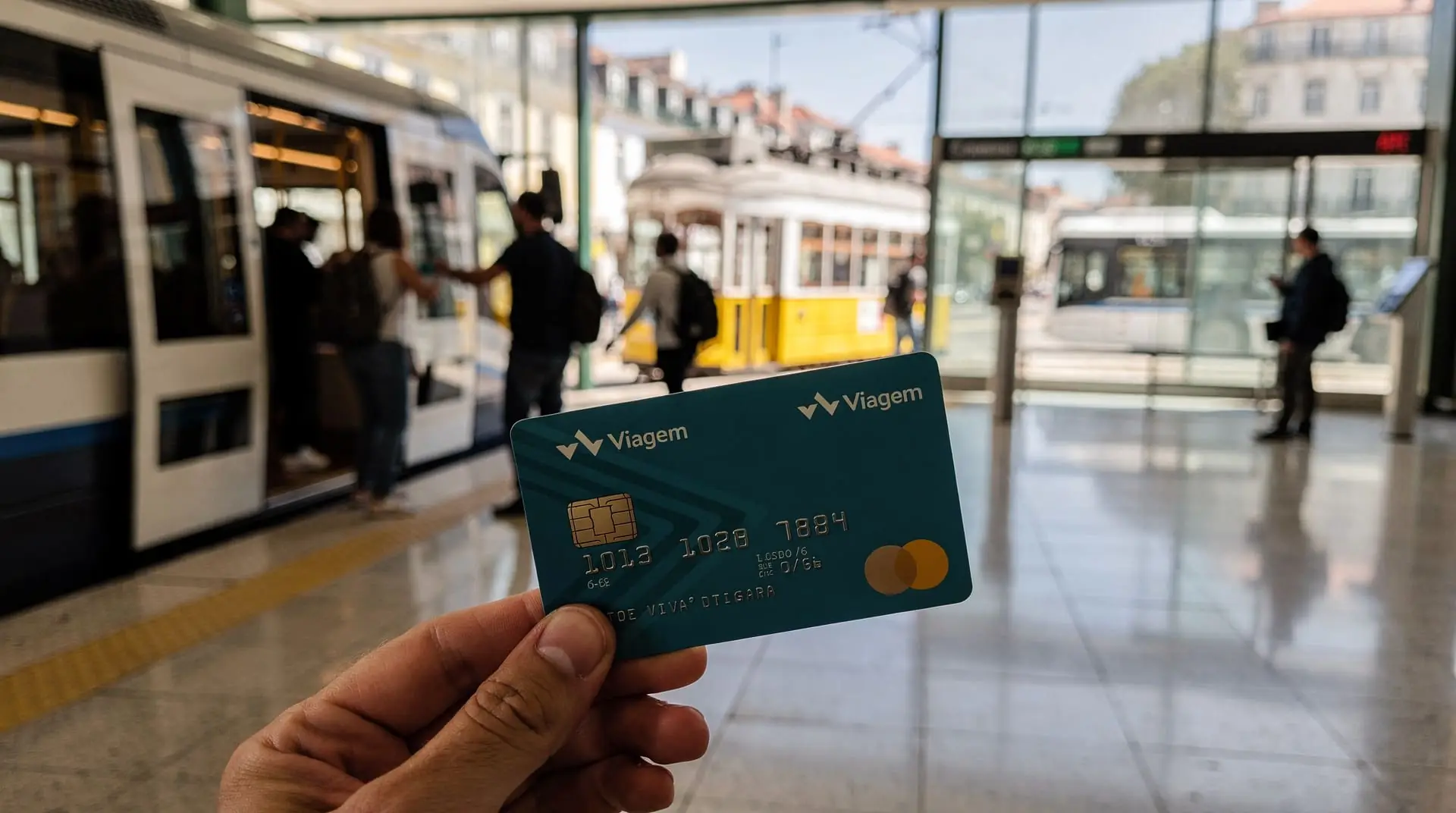
Viva Viagem card — how it works and when to use it
Everything about the reusable Viva Viagem card for Lisbon's metro, buses, trams, and funiculars. Prices, top-up options, and when it beats a day pass.

How to get to each day trip from Lisbon — transport guide 2026
Bus, train, or guided tour: how to reach Évora, Óbidos, Nazaré, Fátima, Sintra, Cascais, Arrábida, and more from Lisbon. Real prices and journey times.
Ready to book? Top tours for this guide
We earn a small commission if you book through GetYourGuide — at no extra cost to you. Every tour is hand-picked and verified.

Lisbon: 48-Hour Hop-On-Hop-Off Bus Tour and Oceanarium Entry
Lisbon: MAAT Entry Ticket & Dolphin Watching Boat Tour
Lisbon: Alfama, Mouraria Walking Tour with Fado Night, Tapas
Lisbon: Hop-On Hop-Off Bus Tour
Lisbon: 1-or 2-Day Hop-On Hop-Off Bus Tour