
Driving and parking in Lisbon — why you probably shouldn't
Last reviewed
Should I rent a car to get around Lisbon?
For central Lisbon, no. The streets are narrow, one-way, and frequently cobbled. Parking is expensive and limited. The metro, trams, and rideshare apps cover the city well without the stress. Consider a car only for day trips beyond what public transport serves — Comporta, southern Arrábida, or the Alentejo interior.
The honest case against driving in central Lisbon
| Where it matters | Central Lisbon (ZER zone); day trips beyond public transport |
| Cost | Rental €35–100/day; EMEL parking €1.20–2/hour; underground parks €1.50–3/hour |
| When you need it | Arrábida, Comporta, Alentejo interior day trips |
| When you don’t | Central Lisbon, Sintra, Cascais — public transport is faster and cheaper |
| Key rule | Confirm ZER compliance (Euro 6 / 2015+) before booking a rental |
Lisbon is one of the more challenging European capitals for driving. The reasons stack up:
The street layout: Much of historic Lisbon (Alfama, Mouraria, Bairro Alto, Chiado) was built before the car existed. Streets are frequently 3-4 metres wide, one-directional, and shared with pedestrians, delivery vans, trams (which have right-of-way), and tuk-tuks. The GPS will route you down a calçada (stone-paved alley) and seem surprised when you get stuck behind a tram.
The hills: Grades of 15-20% are normal in Alfama and Graça. Reversing back down a one-way hill because the road ahead is blocked by a parked delivery van is a real scenario.
The ZER (Zona de Emissões Reduzidas): Lisbon’s Low Emission Zone covers the historic centre, including Alfama, Chiado, Bairro Alto, and Baixa. Diesel vehicles registered before 2005 and petrol vehicles registered before 2001 cannot enter. Fines are automatic via cameras. If your rental car is recent (2015 or newer), it is likely compliant, but check the rental terms.
Parking: Inside the ZER, on-street parking is limited and controlled by the EMEL system. Outside the ZER, EMEL blue zones require a purchased ticket from a machine (displayed on dashboard). Underground car parks exist but cost €2-4 per hour. There is no cheap, convenient parking near Alfama or the historic centre.
The ZER low-emission zone — what you need to know
The ZER (Zona de Emissões Reduzidas) was expanded in 2021 and updated in 2024. It covers roughly the area bounded by Almirante Reis to the east, the river to the south, Santos to the west, and Marquês de Pombal to the north — including all of the areas tourists typically want to visit.
Who can enter:
- Euro 6 petrol or diesel vehicles (generally 2015 or newer)
- Hybrid vehicles
- Electric vehicles
- Motorcycles meeting Euro 4 or newer standards
Who cannot enter:
- Diesel vehicles registered before January 2005
- Petrol vehicles registered before January 2001
Enforcement: Automatic camera system at zone entry points. Fines of €120 (reduced to €60 if paid within 20 days). Rental companies typically add a surcharge for any fines incurred during your rental.
Practical implication: If you rent a standard modern car (2018 or newer), you will almost certainly be ZER-compliant. The restriction mainly affects older private vehicles. Still, confirm the vehicle’s euro standard with the rental agent.
Parking options in Lisbon
EMEL on-street parking (blue zones)
Blue lines on the kerb indicate EMEL-controlled parking. Pay at the nearest blue-and-white meter machine: insert coins or card, take the printed ticket, display on dashboard. Prices typically €1.20-2.00 per hour depending on zone.
Maximum stay limits apply — often 1-2 hours in the centre. Check the machine for time restrictions. Do not rely on phone apps for EMEL payment unless you have set up an account in advance (the process is in Portuguese).
EMEL wardens enforce strictly in the centre. A fine for overstay is €60-120. A clamp adds towing costs.
Underground car parks (parques)
The most reliable parking for tourists. Key central options:
- Parque do Marquês de Pombal: Near the Marquês de Pombal roundabout, central location for Avenida da Liberdade access. Around €2-3/hour.
- Parque do Almirante Reis: In the Mouraria/Intendente area. Less central but useful for accessing Alfama on foot.
- Parque de Belém (underground): Directly beneath the Belém cultural centre. €1.50-2/hour. Very convenient for Belém day visits — drive directly from the motorway to the park without entering the ZER.
- Parque de Saldanha: Useful if you are staying in the northern hotel district around Saldanha and Picoas.
- Parque do Campo Grande: Northern Lisbon, near the airport. Used as a park-and-ride for the metro (yellow line runs from Campo Grande into the centre).
Park-and-ride
The most sensible option if you arrive by car and plan to explore on foot: drive to a metro-connected park-and-ride, pay the lower parking fee, and use the metro for central exploration.
Recommended: Parque Oriente (next to Oriente station, red metro line), Parque do Campo Grande (yellow line), Parque do Odivelas (yellow line terminus). Prices at these sites are significantly lower than central parks, and the metro connects to all main tourist areas.
Driving to specific destinations near Lisbon
Sintra — don’t do it
Sintra parking is genuinely awful, and the situation has worsened as visitor numbers have grown. From Rossio by train it is 40 minutes. By car from central Lisbon it is 45-90 minutes depending on traffic, plus 20-60 minutes to find parking at the palace (a single car park near the top, often full by 09:30 on summer weekends).
The Sintra without a car guide is emphatically titled for a reason. Unless you are staying in the Sintra area, come by train. See trains to Sintra and Cascais and the Sintra crowds and parking guide.
Cascais — train is easier, but driving is manageable
Cascais has more parking than Sintra and a more visitor-oriented layout. The journey by car from central Lisbon is 45-60 minutes via the A5 motorway (€2.50 toll). Parking near the marina is available but fills up in summer. Free parking exists on the periphery of the town with a short walk. The train from Cais do Sodré (€2.40 return, 40 minutes) is still usually easier.
Belém — drive if you must, park underground
The easiest of the central historic areas to visit by car. The A2 motorway connects easily to Belém, and the underground car park is directly below the Belém Cultural Centre. Drive in from the A2 before reaching the ZER boundary, park underground, and walk to the monastery, tower, and other sights.
Évora — car is recommended
Évora is 1.5 hours by car from Lisbon (A6 motorway, €3-4 in tolls) and considerably less convenient by bus (Rede Expressos from Sete Rios, 1.5-2 hours, but not flexible for exploring the region). If you plan to visit megalithic sites, wineries, and Monsaraz in a single day trip, a car makes genuine sense for Évora.
Arrábida and Comporta — car is often the best option
The Arrábida Natural Park’s most beautiful beaches (Portinho da Arrábida, Praia de Galapinhos) require either a car or an organised tour. Buses reach Setúbal from Lisbon, and some beaches are accessible from Sesimbra by taxi, but the flexibility of your own transport is genuinely useful here. See day trip transport for comparison of guided vs self-drive options.
Arrábida Natural Park and Sesimbra day trip from Lisbon — a guided day trip that handles transport and access to the otherwise-tricky park roads.
Évora private day trip from Lisbon with wine tasting — private car and guide from Lisbon to Évora and an Alentejo winery, removing the need to self-drive.
Renting a car — when it makes sense
Car hire in Lisbon is available at the airport (all major providers) and from city offices near Marquês de Pombal and Oriente. 2026 prices for a small car range from €35-60/day including insurance for weekly rentals, rising to €60-100/day for short-term daily hire.
Rent a car if:
- You plan 3+ days of independent day trips to Arrábida, Comporta, or the Alentejo interior
- You want maximum flexibility for early starts and late returns to remote beaches
- You are a group of 4-5 splitting costs (car hire per person then approaches tour pricing)
Do not rent a car if:
- You are staying in central Lisbon and doing 1-2 day trips
- You plan to visit Sintra (train is faster, parking is a nightmare)
- You are uncomfortable with narrow streets, roundabouts, and aggressive city driving
Portugal drives on the right. Speed limits are 50 km/h in towns, 90 km/h outside, 120 km/h on motorways. Motorways charge tolls electronically (most rental cars have Via Verde transponders included or available for a daily fee — get this, as cash toll lanes are being phased out). Mobile phone use while driving is illegal and fines are high.
Practicalities if you do drive in Lisbon
- Never drive into Alfama or Mouraria — these are not accessible to standard vehicles and signs will route you out.
- The 25 de Abril bridge (south bank access) charges a toll southbound only (northbound is free). Approximately €1.85 for a standard car.
- Vasco da Gama bridge (eastern Lisbon to Montijo area) charges both ways, approximately €3.
For most visitors to Lisbon, the combination of metro, tram, and occasional Uber covers the city without ever needing a car. The getting around Lisbon guide gives the complete picture.
GPS and navigation quirks: Google Maps and Waze both operate well in Portugal, but neither reliably distinguishes between a genuine road and a calçada too narrow for a car — this is the single most common cause of visitors getting stuck in Alfama. If a suggested route looks implausibly narrow on the map, it probably is; reroute via a main avenue rather than trusting the shortest path. Downloading offline maps before a day trip beyond mobile signal (parts of the Alentejo interior, rural Arrábida) is worth the five minutes it takes.
Roundabouts: Portuguese roundabouts give priority to traffic already on the roundabout, as in most of Europe, but Lisbon’s larger roundabouts (Marquês de Pombal, Praça de Espanha) have multiple lanes and merging traffic that can be intimidating for visitors used to smaller junctions. Stay in the outer lane unless you specifically need to exit from an inner one, and signal early.
Car rental logistics — what to know before you book
Where to pick up and drop off
Airport (Humberto Delgado): The most convenient pickup location. All major rental companies have desks in the arrivals hall (Hertz, Avis, Enterprise, Europcar, Sixt) and a shared return lot. Prices are competitive at the airport because companies compete directly.
City offices: Marquês de Pombal area has several rental company offices. Useful if you are picking up mid-trip (after several days of public transport in the city, then heading to Arrábida or the Alentejo).
One-way rentals: Available but with a significant fee. Picking up in Lisbon and dropping in Porto (or vice versa) costs €40-80 extra typically. Faro (Algarve) one-ways can be cheaper because demand is balanced.
Insurance — what you actually need
Rental companies aggressively sell additional insurance at the desk. The basic reality:
Collision Damage Waiver (CDW): Almost all rentals include basic CDW. This covers the car for accidents but usually comes with an excess (€500-2,000 that you would pay if the car is damaged before the insurer covers the rest). You can purchase “zero excess” coverage at €15-25/day to eliminate this.
Credit card CDW: Many premium credit cards (Visa Signature, Mastercard Gold) include rental car CDW if you pay the full rental with that card. Check your specific card’s terms before travel — this can save €20+/day in excess waivers.
Third-party liability: Usually included in Portuguese rental packages.
Personal accident insurance: Usually unnecessary if you have travel insurance.
Via Verde (electronic toll) — get it
Portuguese motorways use electronic tolling on what is called Via Verde. Many rental cars now include a Via Verde transponder at no daily charge, but some add it as a daily fee (€1-3/day). If your car does not have it, you must use either: a) the manual toll lanes (fewer and slower, requires coins or card), or b) pay online within 72 hours at the e-toll website.
Driving on an electronic-only section without payment results in a €25+ fine, plus the missed toll. Get the transponder or check the toll payment rules at rental.
Fuel and returning the car
Most rentals in Portugal use a full-to-full policy: collect with a full tank, return with a full tank, or pay a refuelling surcharge that is almost always more expensive than filling up yourself. The nearest fuel station to the airport return area can have a queue in peak season — build in 15–20 minutes before your return slot. Diesel (“gasóleo”) and petrol (“gasolina”) pumps are clearly separated at Portuguese stations, but double-check the fuel type printed on the key fob or dashboard before filling, particularly with hybrid or unfamiliar rental models.
Road trip alternatives to a rental car
For visitors who want flexibility without the responsibility of driving in unfamiliar territory, private drivers offer a practical middle ground.
Private driver for a day: Several Lisbon-based operators offer day trip transfers in a private car with a driver — you get picked up at your hotel, driven to Sintra or Évora or Arrábida, and returned in the evening. Cost ranges from €100-200 for the day (for 1-4 people), comparable to car rental plus fuel plus parking when split across a group.
Guided private tours: The most common approach. A tour includes transport and a guide — you are driven in a vehicle, guided through sites, and brought back. The cost is higher per person than self-drive but the logistics, parking, and ticketing are all handled.
Évora private day trip from Lisbon with wine tasting — private car from Lisbon to Évora with guide and winery visit included. Comparable cost to car hire but with a guide’s expertise.
Sintra magic and coastal wonders: private day trip from Lisbon — private vehicle for the Sintra circuit, with palace entry tickets included and no parking nightmare.
Parking in the Lisbon region — specific advice
Belém parking
The underground Parque de Belém (below the Centro Cultural de Belém) is the best parking option for visiting Belém’s monuments. Enter from Av. Brasília on the riverside road. Approximately €1.50-2/hour, maximum €8-10/day. Direct lift access to the cultural centre and a short walk to the monastery and tower. This is genuinely convenient and avoids the ZER.
Sintra parking
As stated above, do not attempt to drive to the palace area. If you insist on arriving by car, the Sintra train station car park has spaces (free for limited periods, then charged), and from there you take bus 434 like the train arrivals. This is slower than taking the train from Rossio and gains you nothing except the ability to carry luggage.
Cascais parking
More feasible than Sintra. Free parking exists at the Cascais Sports Complex on the periphery (15-minute walk to the centre). Paid parking near the marina at Praça 25 de Abril is underground and costs €1.50-2/hour. The town itself is small enough that even peripheral free parking means a manageable walk.
Évora parking
Évora has plentiful free parking on the streets outside the city walls (Avenida de São Sebastião and surrounding streets). The historic walled centre is accessible on foot from there in 10 minutes. No parking stress whatsoever — this is one of the arguments for driving rather than busing to Évora.
Setúbal and Arrábida parking
Setúbal has ample street and underground parking near the marina and town centre, generally under €1.50/hour. Inside the Arrábida Natural Park itself, summer access (mid-June to September) is restricted to a capped number of vehicles per day at the main beach car parks — arriving before 9am is the practical way to guarantee entry; arriving later often means being turned back to use the shuttle system instead.
Road trip suggestions that justify renting a car
If you are going to rent, make it worth the effort by planning a proper road trip that public transport cannot replicate.
The Arrábida Circuit (2 days): Day 1: Lisbon → Setúbal (40 min via A2) → Arrábida Natural Park beaches (Portinho da Arrábida, Praia de Galapinhos) → Sesimbra for dinner and overnight. Day 2: Sesimbra → Azeitão wine estate visit (Quinta de Bacalhôa or José Maria da Fonseca winery) → Palmela castle (views over the Setúbal Peninsula) → Lisbon. Total driving: approximately 150 km.
The Comporta-Alentejo Coastal Route (2-3 days): Lisbon → Setúbal (via Arrábida) → Tróia/Comporta ferry or via A2/IC1 → Comporta → Melides → Grândola → Évora → Lisbon. A slower, quieter route that reveals the Alentejo coast before it becomes (even more) famous.
The Silver Coast (3 days): Lisbon → Óbidos → Nazaré → Fátima → Tomar → Constância → Lisbon. All 90-130 minutes from Lisbon, connected by good roads, bus connections work but a car allows multiple stops in a single day.
See the day trip transport guide for the public transport version of these same destinations.
FAQ
Is it worth renting a car for just one day trip? Usually not, unless that day trip is to Arrábida, Comporta or another destination with no useful public transport. For a single trip to Sintra, Évora or Cascais, the day trip transport guide covers cheaper and less stressful alternatives.
Can I drive from the airport straight to a day trip without entering central Lisbon? Yes, in many cases. The A1/A2 motorway network largely bypasses the ZER zone, so a route from Humberto Delgado Airport directly to Arrábida, Évora or Sintra avoids the low-emission zone entirely — useful if your rental car’s compliance is uncertain.
Related guides
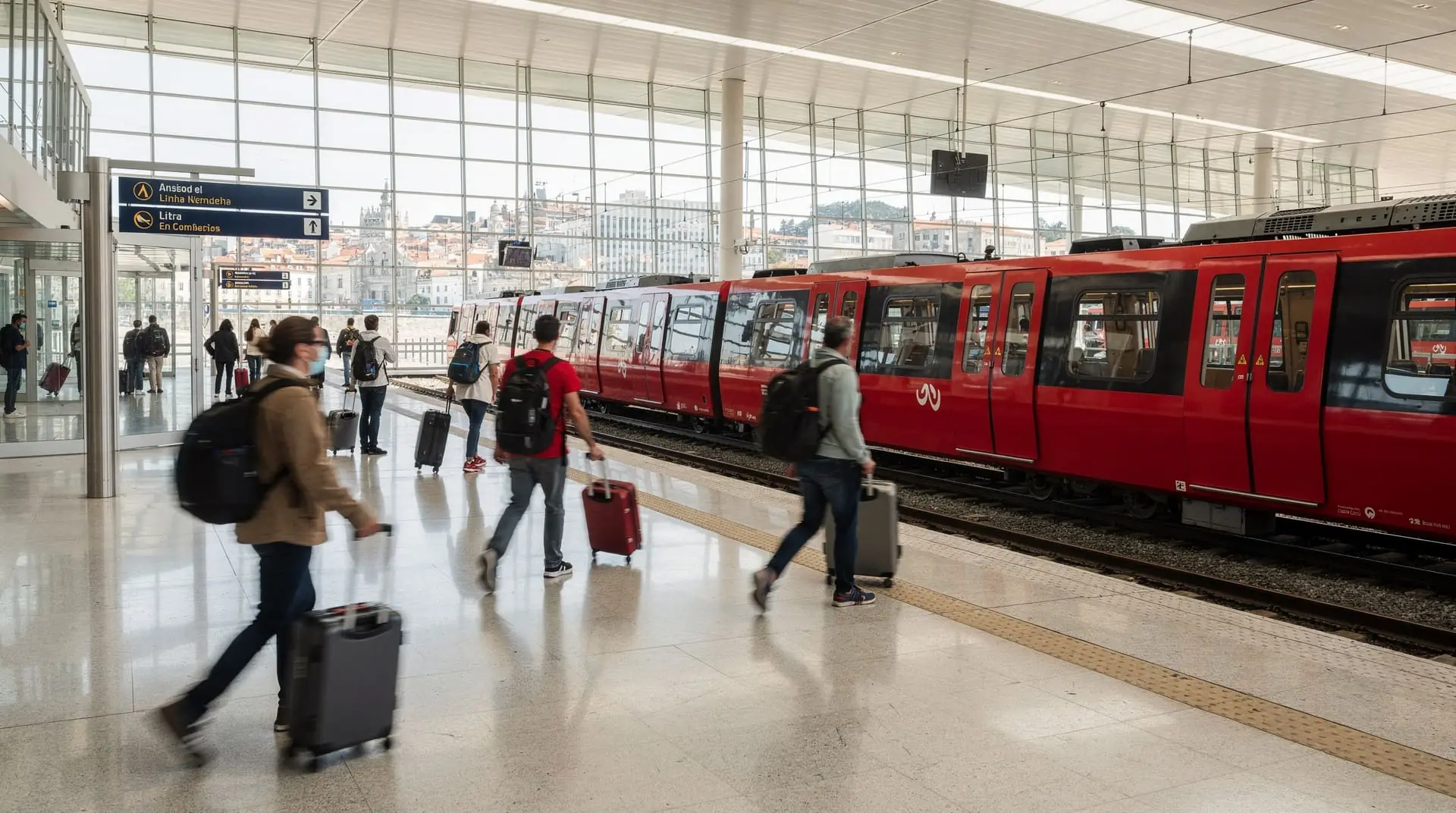
Getting from Lisbon airport to the city centre — all options compared
Metro, Aerobus, Uber, taxi: how to get from Humberto Delgado airport to central Lisbon. Real prices 2026, journey times, and scam warnings.
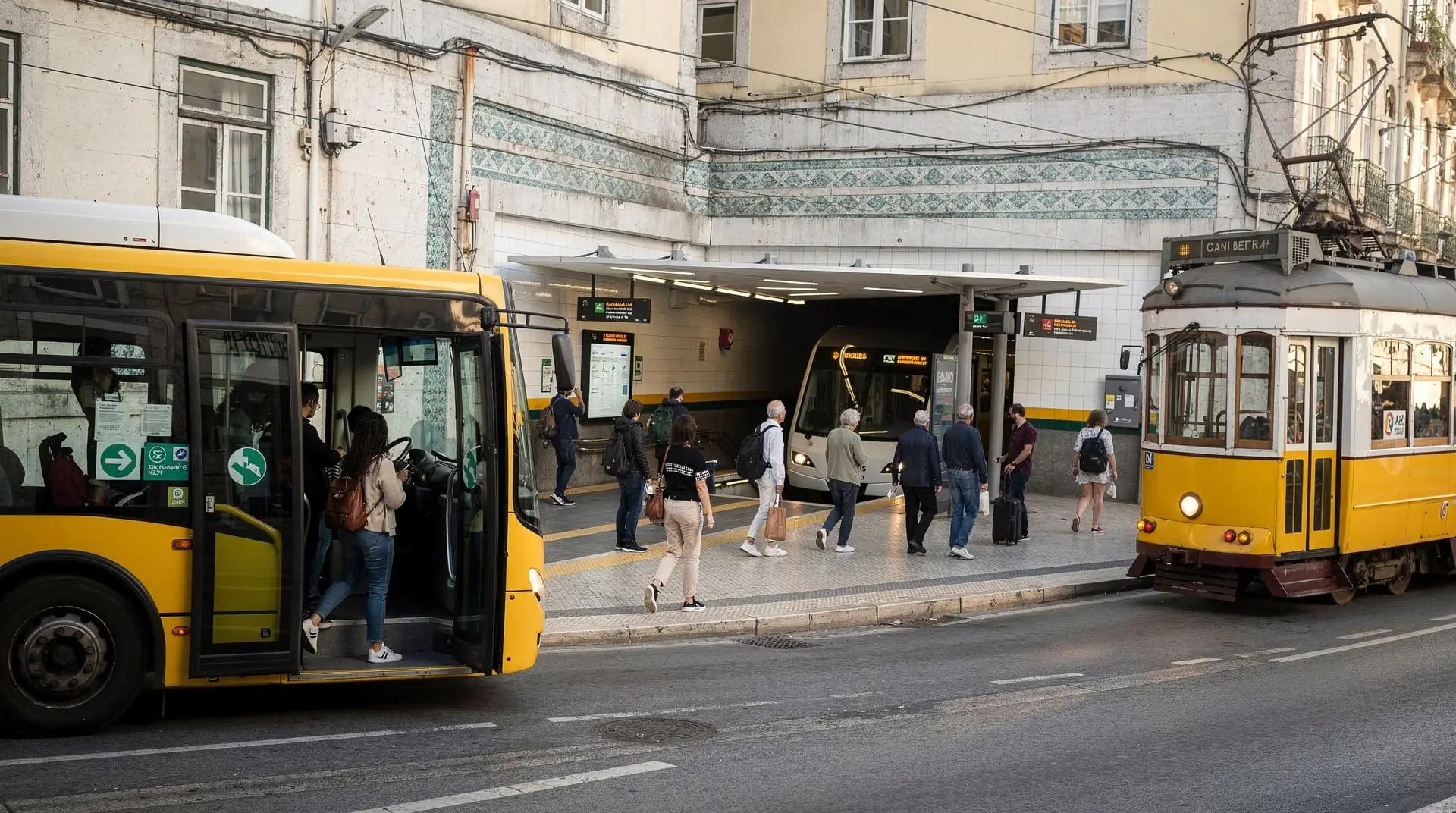
Getting around Lisbon — the complete transport guide
Metro, trams, funiculars, ferries, buses: everything you need to navigate Lisbon in 2026. Real prices, routes, and honest tips.
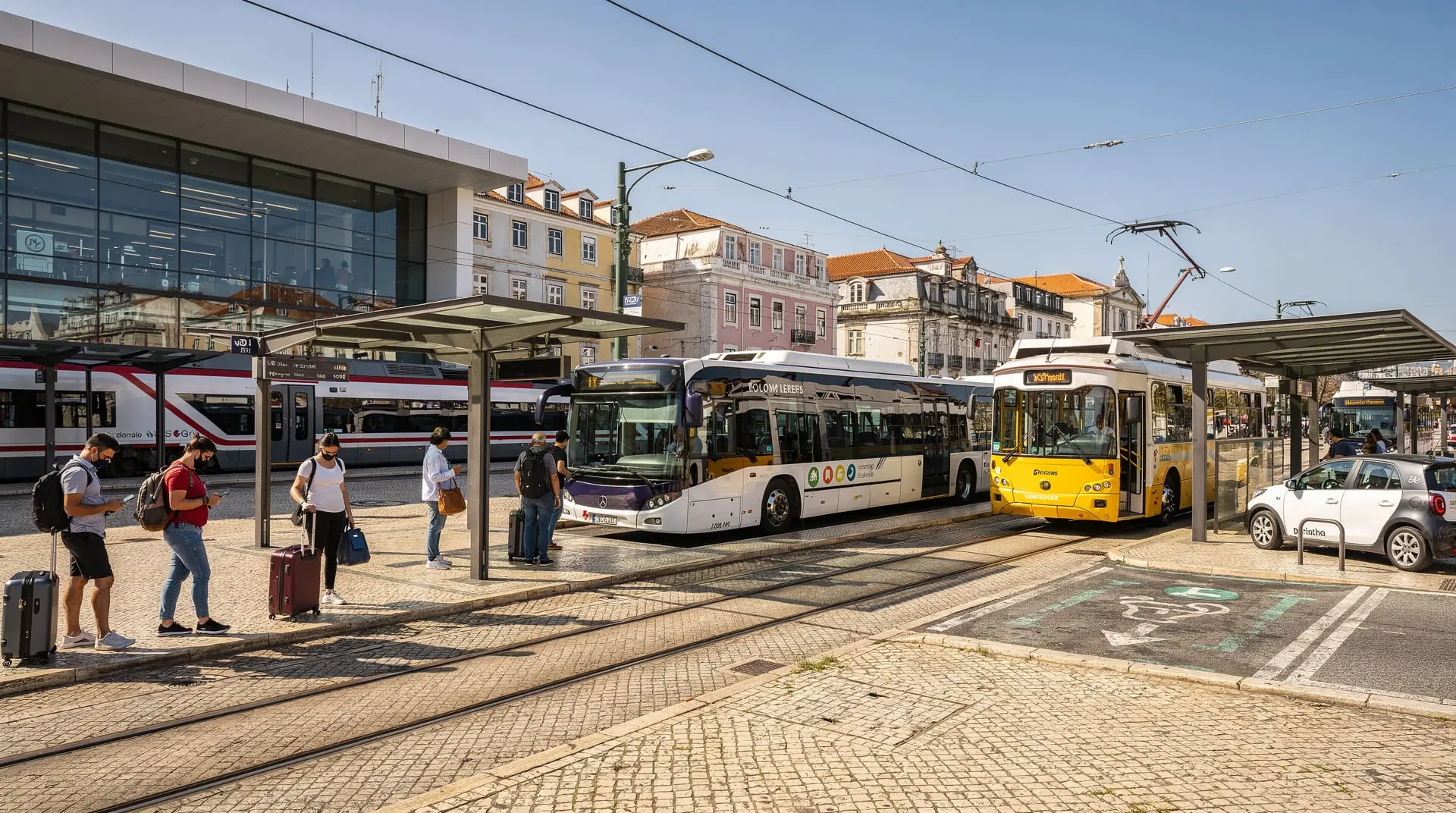
How to get to each day trip from Lisbon — transport guide 2026
Bus, train, or guided tour: how to reach Évora, Óbidos, Nazaré, Fátima, Sintra, Cascais, Arrábida, and more from Lisbon. Real prices and journey times.
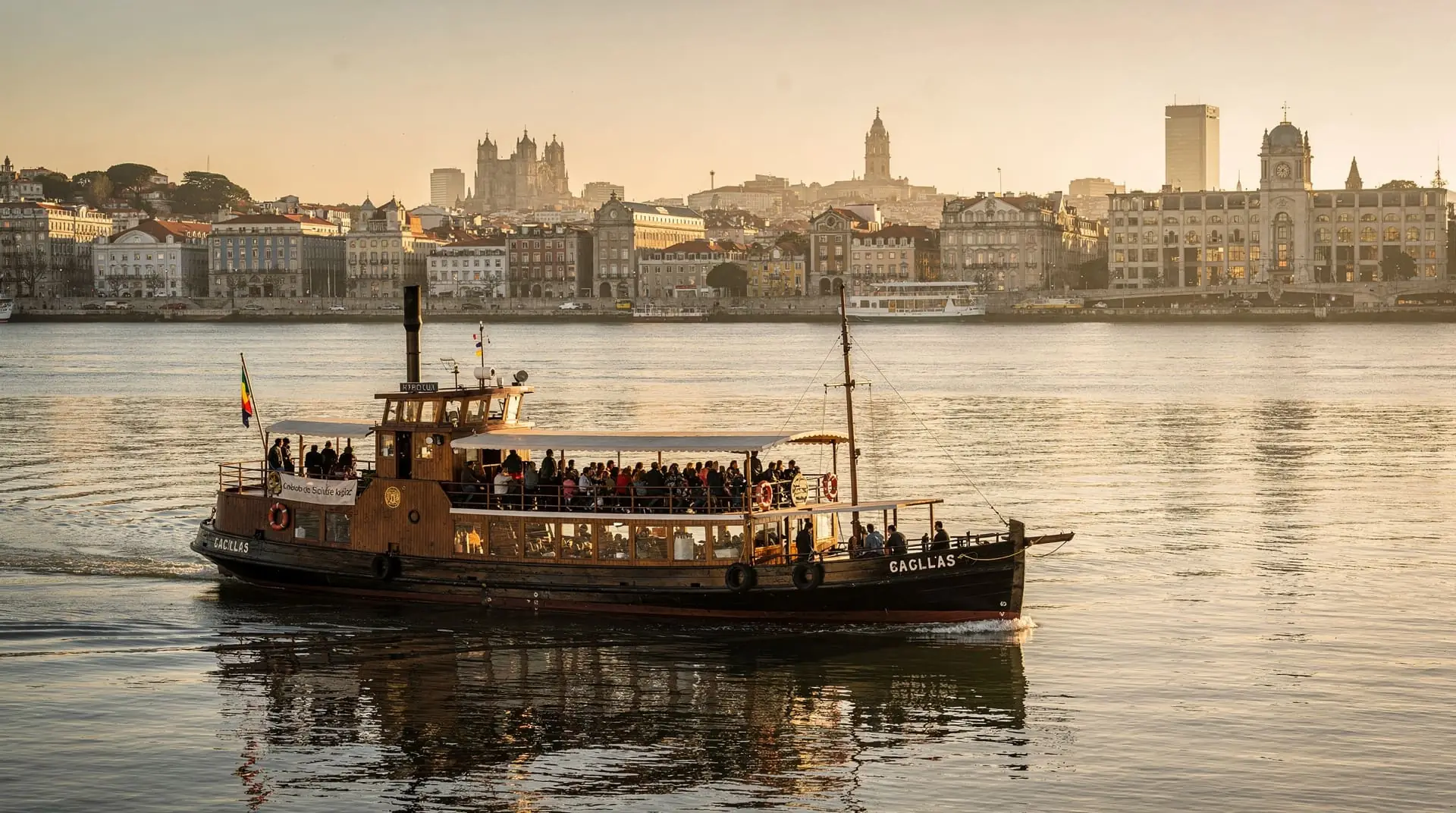
Ferries across the Tagus — routes, prices, and the Cacilhas crossing
Lisbon's Tagus ferries: Cais do Sodré to Cacilhas and beyond. Prices around €1.50, 10-minute crossings, and some of the best views in the city.
Ready to book? Top tours for this guide
We earn a small commission if you book through GetYourGuide — at no extra cost to you. Every tour is hand-picked and verified.

Lisbon: 48-Hour Hop-On-Hop-Off Bus Tour and Oceanarium Entry
Lisbon: MAAT Entry Ticket & Dolphin Watching Boat Tour
Lisbon: Alfama, Mouraria Walking Tour with Fado Night, Tapas
Lisbon: Hop-On Hop-Off Bus Tour
Lisbon: 1-or 2-Day Hop-On Hop-Off Bus Tour