Alfama
Alfama is Lisbon's oldest district — Moorish alleys, fado birthplace, São Jorge Castle, and miradouros with Tagus views. What to do, see and avoid.
Quick facts
Top tours and experiences
We earn a small commission if you book through GetYourGuide — at no extra cost to you. Every tour is hand-picked and verified.
Lisbon: 48-Hour Hop-On-Hop-Off Bus Tour and Oceanarium Entry
Lisbon: MAAT Entry Ticket & Dolphin Watching Boat Tour
Lisbon: Alfama, Mouraria Walking Tour with Fado Night, Tapas
Lisbon: Hop-On Hop-Off Bus Tour
Lisbon: 1-or 2-Day Hop-On Hop-Off Bus Tour
Lisbon: Boat Tour Ticket and Hop-on Hop-off 48-Hour Bus
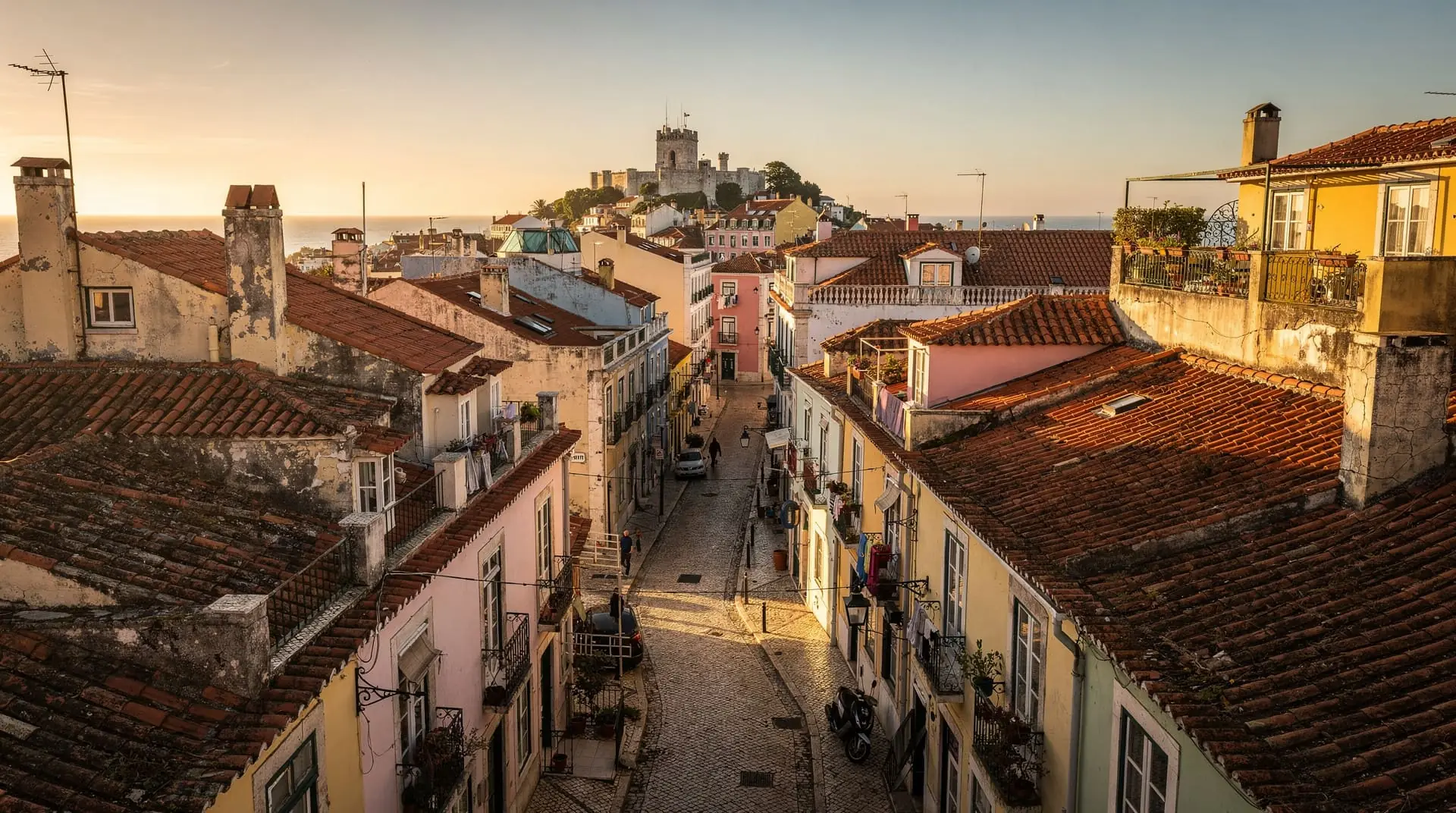
Alfama is the neighbourhood that survived. When the 1755 earthquake levelled the Pombaline lower city in minutes, the Moorish quarter on the eastern hillside held together — its irregular street plan, built on rock rather than the liquefaction-prone alluvial flats of Baixa, simply absorbed the shock better. What visitors walk through today is substantially the same urban fabric that existed under the Moors: steep lanes that dead-end without warning, courtyards hidden behind iron gates, staircases that double as streets.
This is also the neighbourhood where fado — Lisbon’s peculiar urban blues — was born and where it still sounds most authentic. Not the dinner-theatre fado of the tourist streets, but the vadio (wandering, informal) fado of a tavern where someone simply picks up a Portuguese guitar because they feel like it.
Alfama rewards patience and comfortable shoes. It punishes anyone in a hurry with wrong turns and hills that seem to get steeper after lunch.
| Where | Eastern hillside below São Jorge Castle, between the Sé cathedral and the Tagus |
| Time needed | Half a day for monuments; a full day with a fado evening |
| Getting there | Tram 28 or a 15–20 minute uphill walk from Baixa |
| Cost | Free to wander; São Jorge Castle €15, cathedral cloister €4–7 |
| Best time | Before 09:30 for quiet miradouros, or after 19:00 for fado |
How to get there
Tram 28 — the most atmospheric option. Board at Martim Moniz or Graça, or pick it up at the Rua da Conceição stop in Baixa. The tram grinds through narrow Alfama streets before reaching the Sé cathedral and continuing west to Chiado. Journey time from Baixa is 10–15 minutes, depending on traffic. See the tram 28 guide for the route map and stops.
One practical note: tram 28 is heavily targeted by pickpockets, particularly at the Alfama stops and when the carriage is crowded. Keep your phone and wallet in a secure front pocket. Do not carry a camera bag loosely over one shoulder.
On foot from Baixa — 15–20 minutes uphill from Rossio, 25 from Cais do Sodré. Head east along Rua dos Bacalhoeiros to Praça do Comércio, then follow the waterfront to Santa Apolónia direction. The Sé cathedral appears on your left; alleys lead up into Alfama from there.
Bus 737 — runs from Praça do Figueira in Baixa to Castelo and through central Alfama. Less crowded than tram 28 and less photogenic, but more reliable.
Taxi or rideshare — convenient if you are arriving from another part of the city. Ask to be dropped at Portas do Sol square; walk from there.
What to see and do
Miradouros (viewpoints)
Alfama has two outstanding miradouros and several minor terraces.
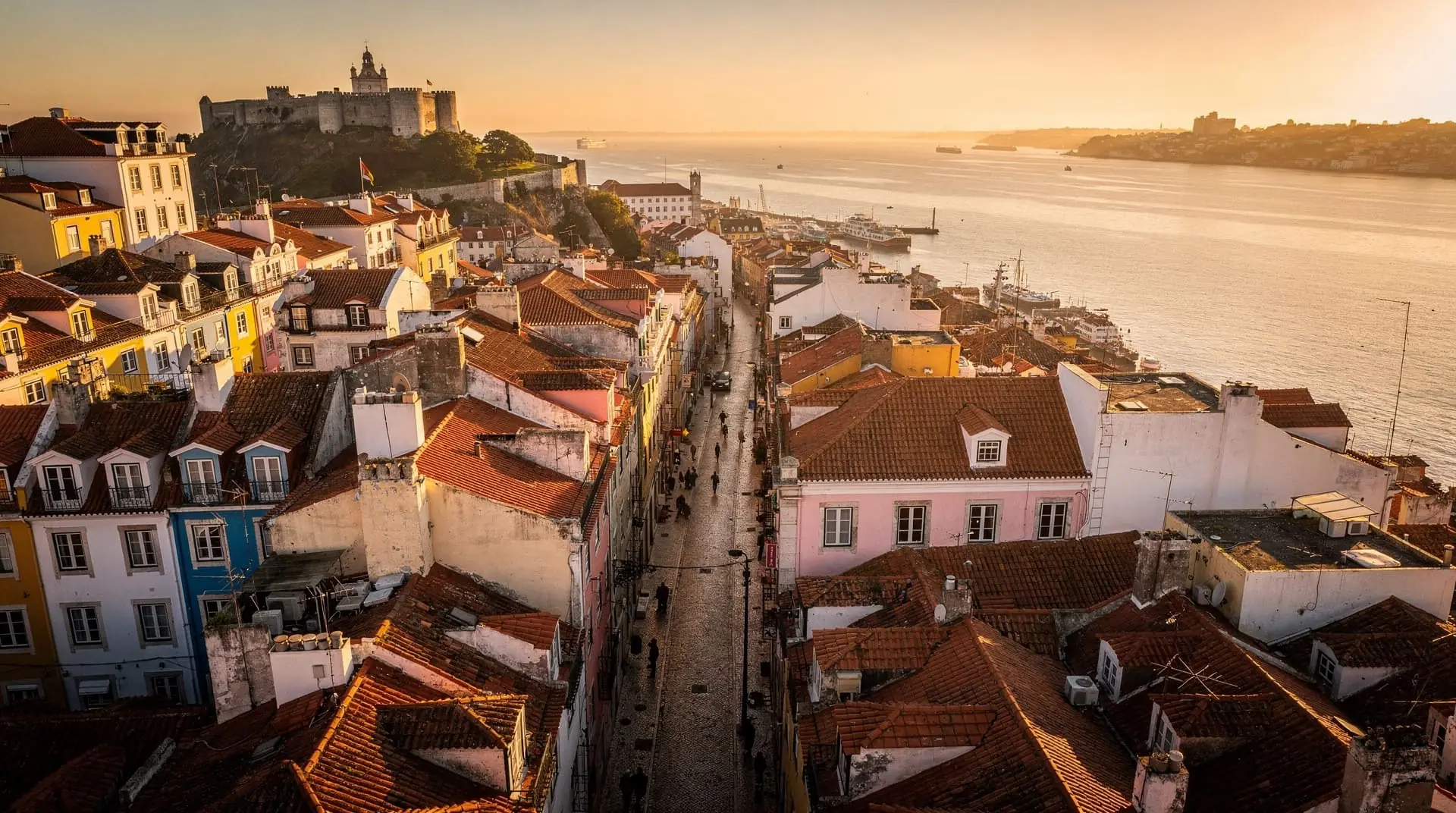
Portas do Sol is the main terrace below São Jorge Castle with a direct view over the Alfama roofscape and the Tagus. It is reached easily on foot from the Sé cathedral and gets very busy by mid-morning. Go early or wait until early evening when the light turns.
Santa Luzia is 200 m east of Portas do Sol, slightly lower, with a tile-decorated wall depicting Lisbon before 1755. Quieter, more intimate. The pergola is a good rest stop.
Senhora do Monte — technically in Graça rather than Alfama, but visible from it and worth the extra 15-minute walk. The highest and best 360-degree view in eastern Lisbon.
Sé de Lisboa (Cathedral)
Lisbon’s cathedral is one of the oldest buildings in the city, begun in 1147 following the Christian reconquest from the Moors. The Romanesque exterior is fortress-like and deliberately plain. Inside, the Gothic cloister contains ongoing archaeological excavations of Roman and Moorish layers. Entry to the main nave is free; cloister and treasury require a small fee (€4–7). Arrive before 11:00 to avoid tour groups.
São Jorge Castle
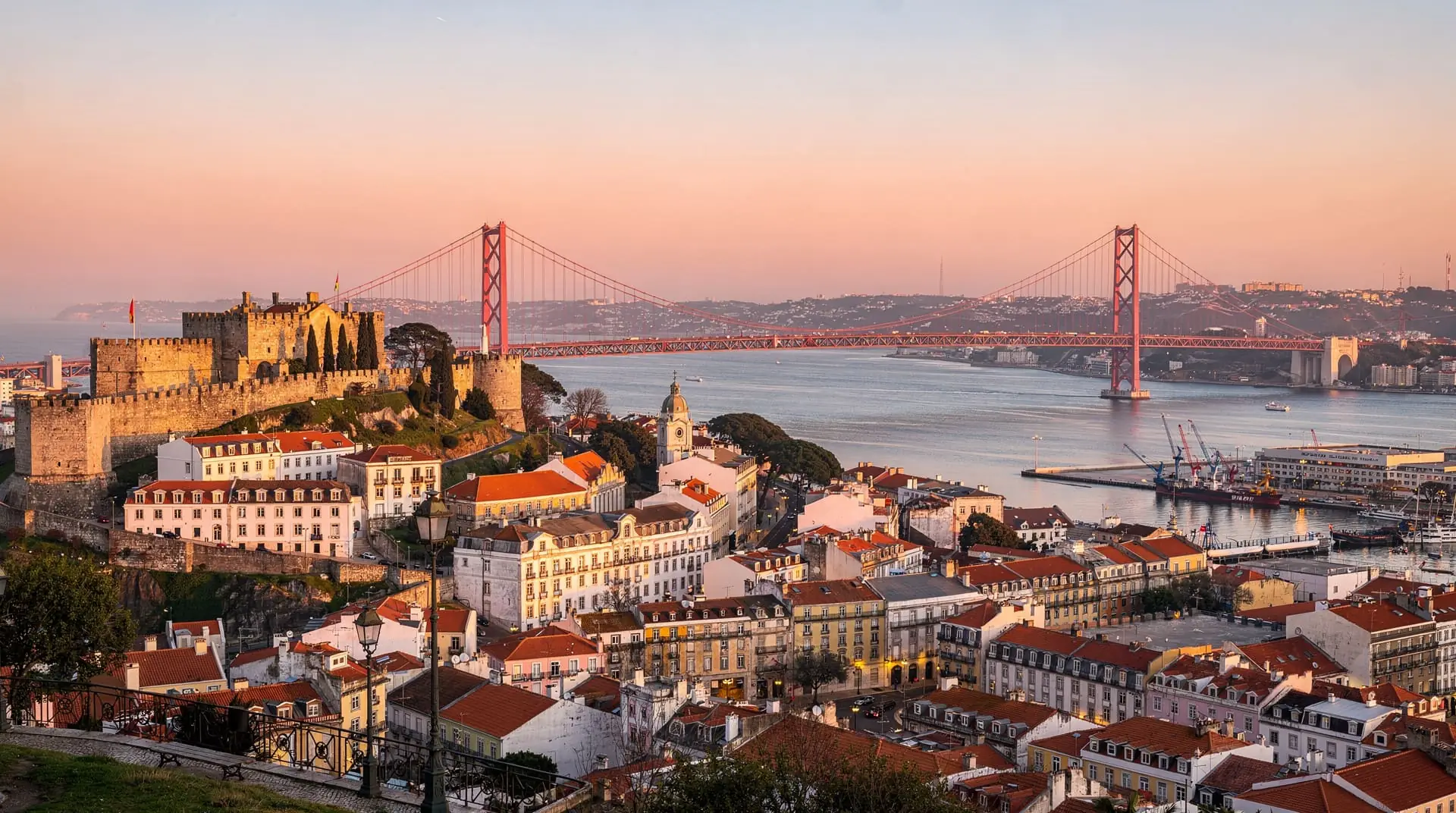
The Moorish castle on the ridge above Alfama is one of Lisbon’s most visited monuments. The ramparts give 360-degree views over the city and the Tagus. The medieval village inside the walls is atmospheric. Entry is €15 (under-25 €7.50); book online to avoid the queue at the gate. Allow 1.5–2 hours.
The view from the outside walls (the free viewpoint beside the entrance) is almost as good as from inside — worth knowing if you want to skip the ticket.
National Pantheon
On the Campo de Santa Clara, 10 minutes east of Alfama: the baroque national pantheon (Santa Engrácia church) where Amália Rodrigues — the greatest fado voice — is buried alongside presidents, navigators, and writers. Rooftop terrace with views (€8). Quiet, rarely crowded.
Fado in Alfama
The neighbourhood has a cluster of legitimate, small fado venues. The best are informal: Tasca do Chico (Rua dos Remédios 83), Zé da Viola (Campo de Santa Clara), and the slightly larger Sr. Fado (Rua dos Remédios 176). Expect to spend €15–25 on food and drink; there is no entry fee at most vadio houses — the music is part of the restaurant experience.
Pre-booked dinner shows are also available. They are more formal, English-explanation provided, and suit visitors who want guaranteed seating. The quality varies but the best are genuine:
Alfama tour and live fado with traditional dinner — a respected house combining a neighbourhood walk with a seated fado dinner. A solid choice for first-timers who want context as well as music.
Live fado show in historic Alfama with Port wine — shorter format (no full dinner), lower price, a good option if you have already eaten.
For the full picture of what to book and what to avoid, see the fado in Alfama guide and best fado houses comparison.
Where to eat
Alfama has a mix of excellent local tascas and overpriced tourist traps. The distinction is usually clear from the menu format: a handwritten blackboard in Portuguese suggests the former; laminated photos of bacalhau suggest the latter.
Tasca do Chico — The fado venue also serves food worth eating: petiscos, decent wine, honest prices. Small; no reservations for food.
Zé da Mouraria (Rua João do Outeiro) — daily specials on a chalkboard, packed with locals at lunch. Caldo verde, grilled fish, and arroz de pato (duck rice) are reliably good. Around €10–12 for a full lunch.
Sacramento do Chiado — technically on the Alfama–Chiado border but close enough. More polished, good wine list, excellent cataplana.
Chapitô à Mesa — restaurant inside the circus school and arts centre on the castle hill. Terrace views, creative Portuguese cooking, moderately priced (€20–30/head). Often hosts live music.
Avoid the tourist restaurants immediately below the castle gates — they charge €20+ for mediocre grilled fish and count on foot traffic rather than repeat business.
Where to stay
Alfama has a growing collection of small boutique guesthouses and aparthotels. Being based here means early access to the castle and viewpoints before the crowds, but it is not the most convenient base for day trips — the train stations are 20–30 minutes on foot.
Memmo Alfama (Travessa Merceeiras) — small design hotel with a rooftop pool overlooking the Tagus. The best mid-luxury option in the district (~€250–300/night).
Solar dos Mouros (Rua do Milagre de Santo António) — 13 rooms in a renovated townhouse, right on the castle slope. Art-focused; unpretentious (~€150–200).
Castelo de Santa Catarina — a guesthouse rather than a hotel; homely and well-run, about 15 minutes walk from the castle (€90–130).
How long to spend
A half-day covers the Sé, Portas do Sol, and São Jorge Castle. Add the fado evening and you need the full day. If you want to combine Alfama with Graça and Mouraria — which makes logical sense as they connect geographically — plan for a full day comfortably or a rushed day-and-a-half.
Alfama is not the place to rush. The neighbourhood reveals itself slowly: you will find a courtyard that is not on any map, a tile-decorated doorway, an old man playing guitar on a step. Build in drift time.
Honest tips
The pickpocket situation is documented, not exaggerated. Tram 28, the miradouros at busy times, and the lanes immediately below the castle gate are the three main spots. A money belt is not necessary, but front pockets or a zipped bag compartment is. Do not photograph the view with your phone extended beyond a parapet — phone-snatching from walls happens.
The fado “shows” near Rossio — street promoters near Praça do Comércio and Rua Augusta offer “authentic fado dinners” at €50–80/head. These are not Alfama fado. The food is mediocre, the music is pre-recorded or background, and the venue has no connection to fado tradition. Go to Alfama itself. Read the fake fado warning.
Logistics on the hill — Alfama has almost no flat ground. Wear shoes with grip (cobblestones get slippery in rain or after cleaning). Older visitors and anyone with mobility issues should note that the wheelchair-accessible route to Portas do Sol requires a taxi or rideshare to the top.
Santo António in June — Alfama is the epicentre of Lisbon’s June festivals, particularly the feast of Santo António (12–13 June). The neighbourhood fills with sardinhada (grilled sardine) stalls, decorated streets, and locals dancing until late. Wonderful to experience, but accommodation books out months ahead and the streets are impassable at peak times.
How it fits your itinerary
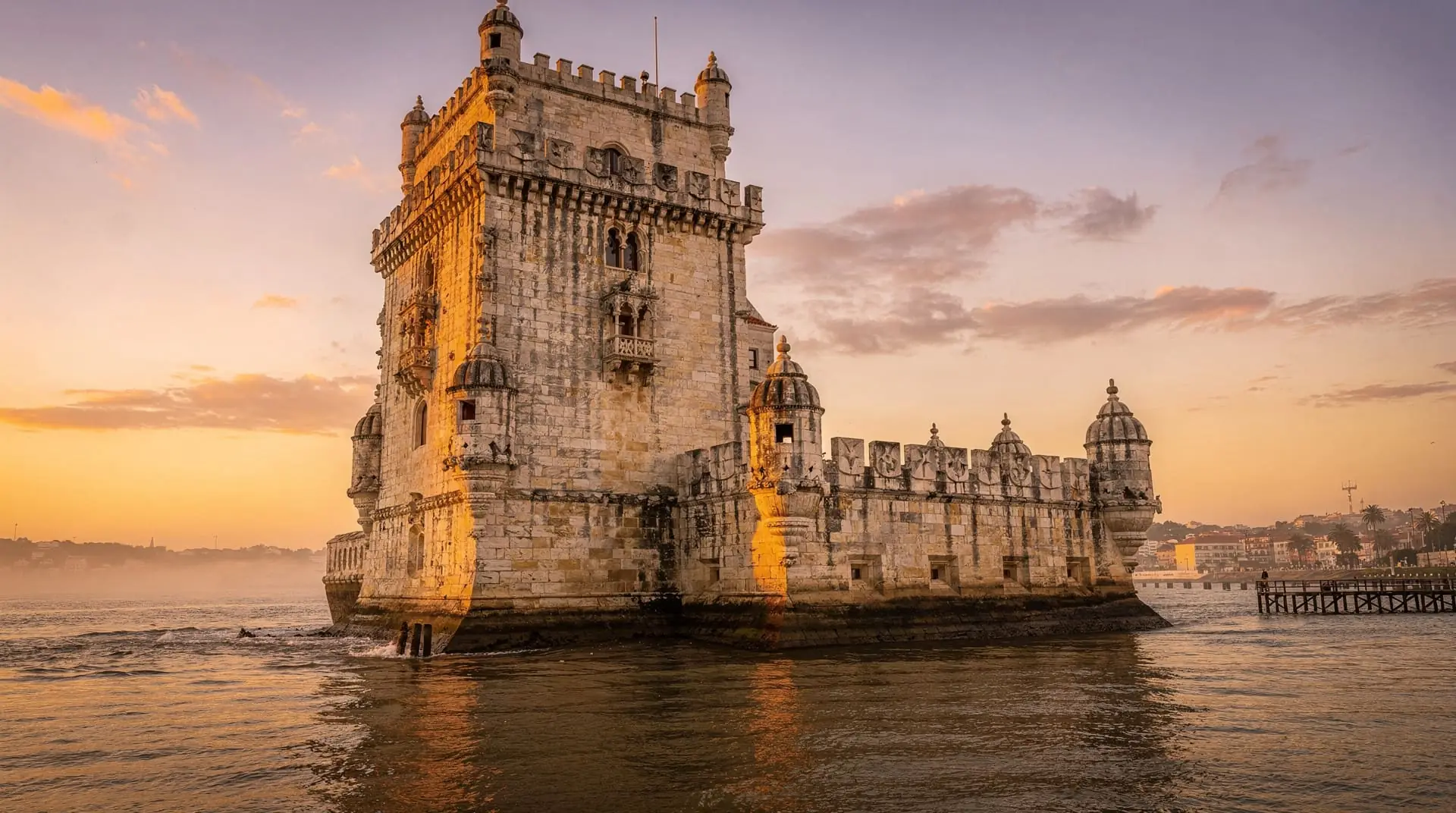
Alfama is most visitors’ first morning in Lisbon — the combination of the castle, miradouros, and the Sé gives an immediate sense of the city’s layers. If you have three days, the 3-day Lisbon itinerary puts Alfama on day one, Belém on day two, and a day trip (usually Sintra) on day three.
Alfama also rewards an evening visit. The fado houses come alive from 21:00; the lanes are cooler and quieter than midday; the castle is lit from below. Coming twice — morning for the monuments, evening for fado — is possible in a 3-day stay and gives you a genuinely different experience each time.
Pairing Alfama with Graça and Mouraria makes the strongest half-day in eastern Lisbon. Start at the Sé, work through Alfama, continue uphill to the Senhora do Monte viewpoint in Graça, descend through Mouraria to Martim Moniz for lunch. Total: 4–5 hours without rushing.
For the fado focus, the best fado houses guide and the fado house comparison help choose between a walk-in tasca evening and a pre-booked dinner show. The Alfama neighbourhood guide covers the walking logistics in more detail.
Markets and azulejo shopping
Alfama is one of the better places in Lisbon to buy something genuinely made in Portugal rather than a printed reproduction. Feira da Ladra, the flea market on Campo de Santa Clara beside the National Pantheon, runs Tuesday and Saturday mornings from around 09:00 to 17:00: secondhand books, vintage azulejos pulled from demolished buildings, coins, vinyl, furniture, and a fair amount of genuine junk mixed in with real finds. Arrive early for the best tiles — dealers who specialise in salvaged azulejos sell out of the good pieces by mid-morning, and prices are negotiable if you’re buying more than one item.
For new, hand-painted work rather than salvage, small ceramic workshops around Rua de São Pedro and Rua dos Remédios sell tiles and plates painted on-site — a more honest souvenir than the machine-printed panels on Rua Augusta. The Portuguese souvenirs and crafts guide explains how to tell hand-painted azulejos from printed copies, which matters here more than almost anywhere else in the city given how many stalls blur the line.
If tiles interest you beyond a souvenir, the tile museum and azulejo guide covers the National Tile Museum (Museu Nacional do Azulejo), a 15-minute taxi ride east of Alfama in a former convent, tracing the art form from 15th-century Moorish origins to contemporary work. It is not walkable from the neighbourhood but pairs naturally with a morning in Alfama if you have a car or don’t mind the fare. For a broader sense of Lisbon’s market culture beyond Feira da Ladra, see the Lisbon markets guide.
Timing the market matters more than most visitors expect. Arriving right at opening means picking through crates that dealers haven’t fully laid out yet; arriving at closing means the good pieces are long gone. The sweet spot is roughly 10:00–12:00, when stalls are fully set up but the midday rush of tour groups hasn’t yet thinned the selection. Cash is the norm — few Feira da Ladra dealers take cards — and haggling politely over anything above €20 is expected rather than awkward.
A walking route through Alfama
Start at the Sé cathedral (metro Terreiro do Paço + 10-minute walk, or tram 28 to Sé stop). Walk up Rua Augusto Rosa to Largo das Portas do Sol. Continue east to Santa Luzia terrace. Double back through the lanes above Rua dos Remédios — this is the densest part of the Moorish street pattern. Climb to São Jorge Castle via Rua do Chão da Feira. After the castle, descend north toward Campo de Santa Clara and the flea market (Feira da Ladra, Tuesdays and Saturdays). Return by tram 28 toward Chiado or walk 15 minutes to Graça.
Full neighbourhood guide with a printable map: what to do in Alfama.
Frequently asked questions about Alfama
Is Alfama safe to visit?
Broadly yes. Petty theft (pickpocketing on tram 28, at miradouros) is the risk, not violent crime. The neighbourhood is busy with tourists and locals until well after midnight during summer. Stick to populated streets after dark.
Can I walk to Alfama from Baixa?
Yes, in 15–20 minutes. Head east from Rossio or Praça do Comércio and follow the waterfront. The Sé cathedral marks the edge of Alfama; the lanes rise steeply from there. Comfortable walking shoes are essential — heels are impractical.
Where is the best viewpoint in Alfama?
Portas do Sol is the classic and most photographed. For a better, less crowded view, walk 15 minutes further north to Senhora do Monte in Graça. Miradouro da Graça is also excellent. See the best Lisbon viewpoints guide.
What is the best fado experience in Alfama?
For a seated, pre-booked experience: Tasca do Chico or a reputable dinner show. For something more spontaneous: walk into any small tasca in the Rua dos Remédios area on a Thursday–Saturday evening and listen for a guitar. The best fado houses guide compares the main venues honestly.
How do I get to Alfama without the crowds?
Go before 09:30 in the morning — the miradouros are nearly empty, the light is soft, and the coffee shops are open. Alternatively, after 19:00 on weekdays. Weekends from 11:00–17:00 are the most crowded.
Is the São Jorge Castle worth the entry fee?
The ramparts and views are excellent. The interior exhibits are thin. If the €15 entry is a constraint, the free viewpoint just outside the gate captures most of the view. If budget is not an issue, go in — the ramparts themselves and the medieval village are worth an hour and a half.