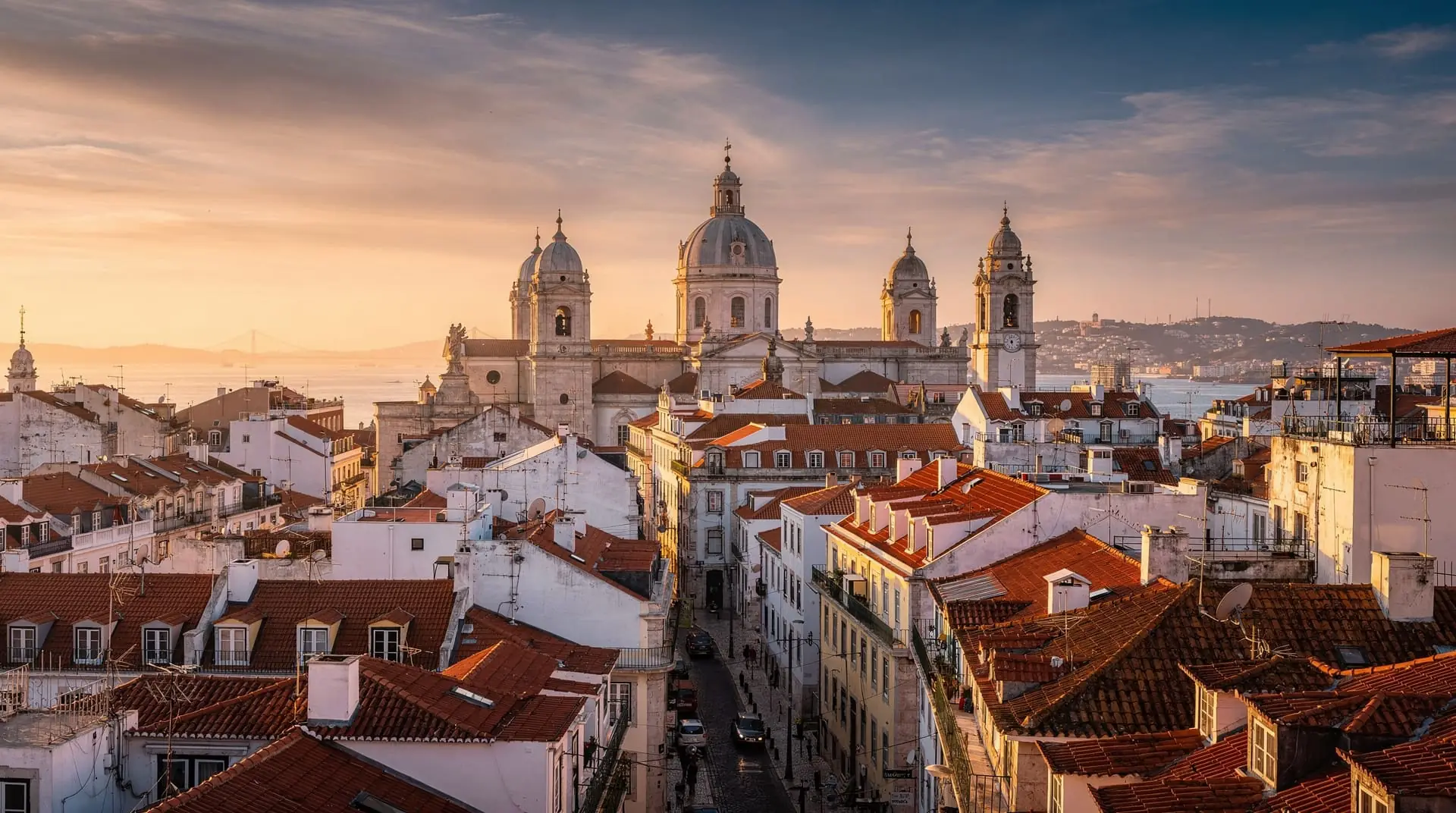
Best viewpoints in Lisbon — ranked and honest
Last reviewed
What is the best viewpoint in Lisbon?
Senhora do Monte in Graça gives the highest and widest panorama in central Lisbon — 360-degree views including the castle, the Alfama rooftops, and the Tagus. For sunset, São Pedro de Alcântara (Bairro Alto) faces east towards the castle and is less crowded than the riverfront spots. Portas do Sol is the most iconic Alfama view but gets very busy.
| Cost | Free (São Jorge Castle ramparts require entry, around €15) |
| Best time | Sunset, 30-45 min before scheduled time |
| Getting around | Walk, tram 28, or funiculars (Glória, Bica) |
| Busiest | Portas do Sol, Santa Luzia — arrive early |
| Quietest | Miradouro da Graça, São Pedro’s lower level |
Why Lisbon has so many viewpoints
Lisbon is built on seven hills — at least, that is the traditional count, though the actual topography is more complex. The consequence is a city where climbs are rewarded with sudden, sweeping views across rooftops, the Tagus, and the distant hills of the Arrábida or the Serra de Sintra on clear days. The miradouro (viewpoint) is a Lisbon institution: a terraced platform, sometimes with a café, sometimes just a railing and a bench, perched at the edge of a hill to collect the view.
There are dozens of miradouros in Lisbon. This guide covers the eight that genuinely justify the walk, ranked by what they offer rather than by fame or Instagram frequency.
The 8 best viewpoints ranked
1. Miradouro da Senhora do Monte (Graça)
Why it is the best: The highest of the central miradouros, with the widest unobstructed panorama available in Lisbon without using a paid elevator or observation deck. From here you see the São Jorge Castle at roughly eye level, the entire tiled roofscape of Alfama falling away towards the Tagus, the Ponte 25 de Abril bridge in the distance, the Cristo Rei statue on the south bank, and — on clear winter days — the Serra de Sintra visible 30 kilometres to the northwest.
Best time: Sunset on a clear day, particularly in autumn and spring when the light is warm and the air is clear. Summer sunsets are beautiful but the terrace fills up. Winter mornings after rain can produce exceptional visibility.
Getting there: Walk 30 minutes uphill from Martim Moniz metro station, or take bus 734 to Graça and walk 10 minutes. Tram 28 passes through Graça (stop: Graça) — read the tram 28 guide for practical advice.
Café: A small café (seasonal hours) sells beer, wine, and snacks. It is not a destination for food but functional for a drink with the view.
Crowds: Busy at sunset but noticeably less crowded than Portas do Sol or Santa Luzia. The uphill walk deters some visitors. Worth it.
Full guide: Senhora do Monte viewpoint.
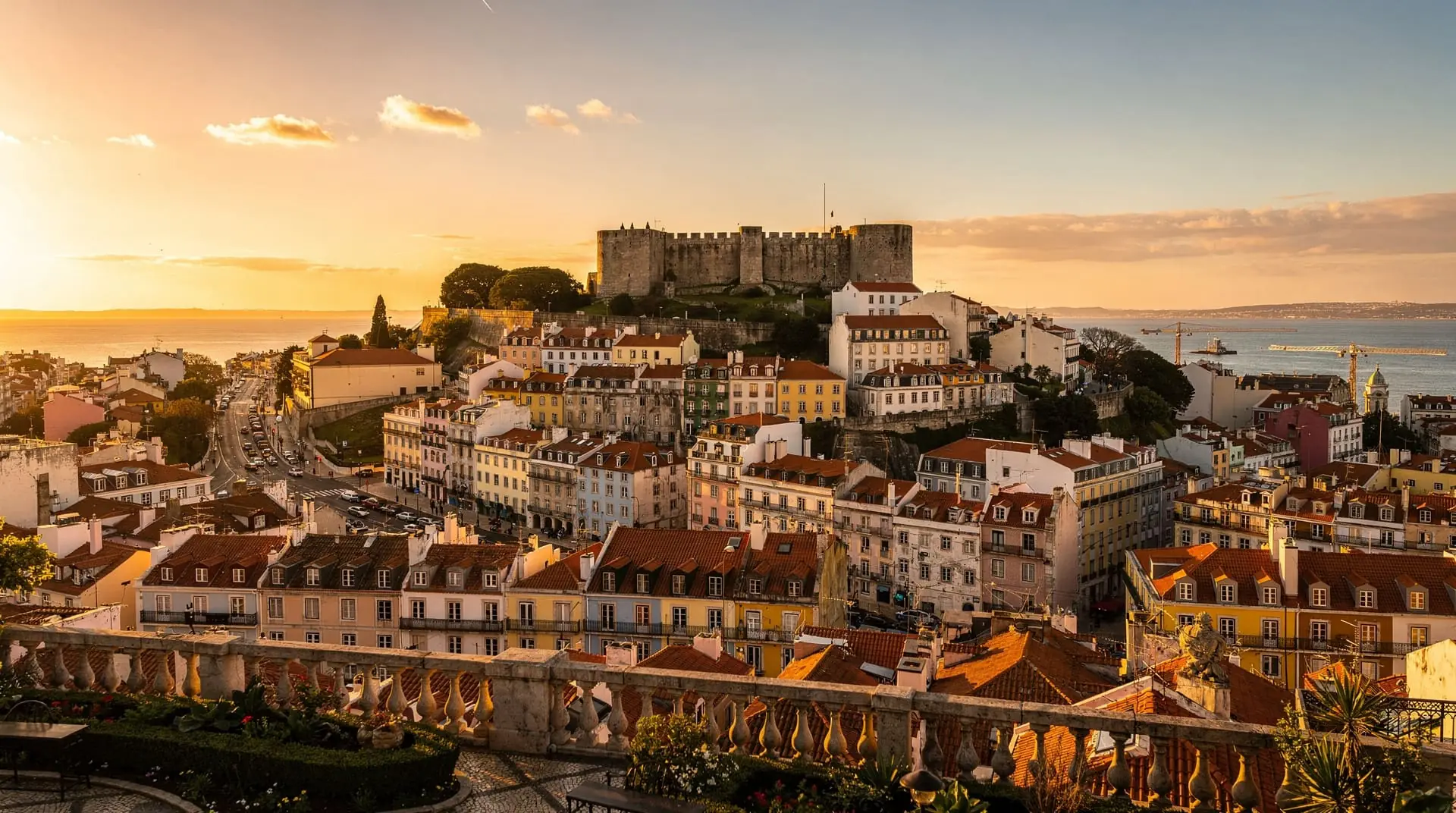
2. Miradouro de São Pedro de Alcântara (Bairro Alto)
Why it is excellent: Two terraced levels overlooking a narrow garden, facing east across Baixa to the castle hill. The upper level has a painted tile panel identifying the landmarks in view — a useful orientation tool. The Glória funicular (Elevador da Glória) arrives at this miradouro from Restauradores, making it one of the most accessible viewpoints in Lisbon.
Best time: Early evening — the castle is lit from 20:00 onwards, and the view is spectacular after dark. Also good at golden hour when the light catches the castle’s towers.
Getting there: Take the Glória funicular from Calçada da Glória (near Restauradores metro, Blue line) — about €3.80 single, runs regularly. Or walk uphill from Chiado.
Café: Kiosque do Miradouro on the upper level serves coffee, drinks, and light snacks. Busy at weekends.
Crowds: Busy but the garden layout distributes visitors well. The lower level (facing a different direction) is often empty. Go on a weekday morning for a quieter experience.
Full guide: São Pedro de Alcântara viewpoint.
3. Miradouro das Portas do Sol (Alfama)
Why it is famous: Directly overlooking the Igreja de Santo Estêvão and the Alfama roofscape, with the Tagus visible beyond. Tram 28 has a stop directly at the miradouro, which makes it simultaneously the most accessible Alfama viewpoint and the most crowded. The statue of São Vicente (Lisbon’s patron saint) with his ravens marks the terrace.
Best time: Morning (10:00–11:00) before tour groups arrive, or late afternoon. Avoid summer weekend afternoons — genuinely unpleasant crowds.
Getting there: Tram 28 (stop: Portas do Sol) or walk 25 minutes uphill from Baixa. See pickpocket warning before taking tram 28.
Ginjinha vendors: Small bars at the foot of the terrace sell ginjinha (cherry liqueur) in chocolate cups — a Lisbon tradition, good value, and not a tourist trap at this location (the one on Largo de São Domingos in Baixa is equally authentic).
Full guide: Portas do Sol viewpoint.
4. Miradouro de Santa Catarina (Bica/Cais do Sodré)
Why it works: The Adamastor sculpture — a stone giant from Camões’s Lusiadas epic — marks this terrace overlooking the Tagus and the Ponte 25 de Abril bridge. The crowd here is noticeably different from the Alfama miradouros: younger, more local, students and young professionals rather than tour groups. Excellent at sunset.
Best time: Late afternoon to sunset — the bridge and river face west and catch the low light directly.
Getting there: Walk uphill from Cais do Sodré (10 minutes, steep), or take the Bica funicular (Elevador da Bica, around €3.80 single) from Rua de São Paulo uphill to the top, then walk two minutes.
Crowds: Popular but rarely as packed as Portas do Sol. The terrace is wide and the vibe is relaxed.
Full guide: Santa Catarina viewpoint.
5. Miradouro da Graça
Why it is underrated: 200 metres below and west of Senhora do Monte, this is the less-visited option in the same neighbourhood with a similarly strong view of the castle and Alfama. The difference is the sight line — Graça looks slightly more towards the castle and slightly less towards the Tagus than Senhora do Monte. The café (Esplanada da Igreja da Graça) is genuinely good and locally popular.
Best time: Morning, when the castle is in full light. Also excellent at dusk.
Getting there: Same approach as Senhora do Monte — tram 28 to Graça stop or bus 734. Graça miradouro is on the way downhill from Senhora do Monte; combine them as a circuit.
6. Miradouro de Santa Luzia (Alfama)
Why it is pleasant: A terraced garden with bougainvillea and tile panels on the belvedere walls depicting historical Lisbon scenes. Very near Portas do Sol — most visitors walk between the two. Santa Luzia faces the Tagus and Alfama directly.
What to know: The two tile panels on the church wall opposite the garden depict pre-earthquake Lisbon and the siege of the Moorish castle in 1147 — worth studying for three minutes even if you are passing through.
Best time: Any time before the afternoon crowds. Good for a shaded rest on hot days.
7. São Jorge Castle ramparts
Why it has the clearest 360-degree view: The castle provides the only raised viewpoint in central Lisbon with completely unobstructed 360-degree panoramic access — including views west towards Belém (visible on clear days) and north across the Bairro Alto to the Serra de Sintra. You are paying for the castle entry (around €15), not purely for the view.
Best time: Opening time (09:00) to beat tour groups.
Full guide: São Jorge Castle.
8. Cristo Rei (Almada, south bank)
Why it is different: The Christ the King statue above Almada offers the only elevated view of Lisbon from the south bank — the city on its hills across the water, the Tagus, and the Ponte 25 de Abril in front of you. It takes the better part of an afternoon to combine with the ferry crossing and the climb.
Getting there: Ferry from Cais do Sodré or Praça do Comércio to Cacilhas (around €1.50 each way, runs every 30 minutes), then bus or taxi to the base. Lift to the top of the statue. The ferries and Tagus crossing guide has full transport details.
Honest note: The view is different from the city miradouros, not necessarily better. Worth doing if you want a half-day across the Tagus and are combining it with the Almada destination.
Tours that cover multiple viewpoints
For visitors who want to cover several miradouros in a single efficient session, this Old City e-bike tour past viewpoints and monuments is another option worth comparing against the tours below:
The 2-hour tuk-tuk belvederes tour is designed specifically to reach the viewpoints that are hardest to access on foot — Senhora do Monte, Graça, and Santa Luzia in the upper Alfama. The tuk-tuk handles the steep climbs that deter many visitors. Good for those who want the views without the 40-minute uphill walks.
The city highlights and viewpoints e-bike tour covers a broader circuit including riverside Belém and central Lisbon, with several miradouro stops. Suits active visitors who want more ground covered.
The tram 28 ride and walking tour combines the scenic tram route (which passes below several viewpoints) with a walking component — a guide helps navigate the stops and provides historical context for what you see.
Practical viewpoint tips
Sunset timing: In June–July, sunset in Lisbon is around 21:15. In May and August, around 20:45. In spring and autumn (April/September), around 20:00–20:30. In winter, it can be as early as 17:30. Arrive at your chosen viewpoint 30–45 minutes before the scheduled sunset for the best position and light.
Weather and visibility: The clearest views occur in winter and early spring, when Atlantic rains wash the air. Summer haze (and occasional smoke in drought years) can reduce visibility noticeably. The seasonal guide to Lisbon covers weather patterns in detail.
Water: Carry water if you are walking between viewpoints in summer. The uphill sections are demanding.
Pickpocket awareness: Tram 28 is targeted by pickpockets — keep phones and wallets in front pockets. Most viewpoints themselves are safe. See the Lisbon safety guide for context.
For a planned viewpoint circuit, the getting around Lisbon guide covers funiculars, trams, and the Viva Viagem card that gives access to most public transport including the historic elevators.
Photographing the miradouros well
Golden hour (the hour before sunset) gives the warmest light on the tiled rooftops, but it is also when every viewpoint is at its busiest. For photography without the crowd in your frame, arrive at blue hour the following morning instead — 30 minutes before sunrise gives a similar quality of light with almost nobody else there, particularly at Senhora do Monte and Graça. If you’d rather have a photographer lead the outing at those hours, this sunrise or sunset street photography tour is built around exactly that timing. A wide-angle lens or phone panorama mode captures the sweep of rooftops better than a standard framing; a longer lens is useful at São Jorge Castle for picking out the Ponte 25 de Abril or the Cristo Rei statue across the water.
Tripods are technically fine at the public miradouros (there is no ranger enforcement), though space is limited at the busier terraces in the final 20 minutes before sunset. A monopod or simply bracing against the railing works better in practice for anything beyond a phone shot.
Which viewpoint suits which interest
History and orientation: São Pedro de Alcântara has the tile panel identifying landmarks — genuinely useful on a first visit to understand the city’s layout before exploring further.
A quiet moment away from tour groups: Miradouro da Graça, 200 metres from Senhora do Monte, gets a fraction of the visitors with a comparable view.
Combining with a meal or drink: Santa Catarina and São Pedro de Alcântara both have on-site cafés with reasonable food; Senhora do Monte’s café is more limited but functional for a drink.
A different perspective on the city as a whole: Cristo Rei, across the Tagus, is the only vantage point that shows Lisbon’s hills as a single silhouette rather than from within them.
The eight viewpoints compared
| Viewpoint | Neighbourhood | Crowds | Best for |
|---|---|---|---|
| Senhora do Monte | Graça | Moderate | Widest panorama, best overall |
| São Pedro de Alcântara | Bairro Alto | Busy | Easy access via funicular, night view of castle |
| Portas do Sol | Alfama | Very busy | Iconic, tram 28 stop |
| Santa Catarina | Bica/Cais do Sodré | Popular, spacious | Sunset over the bridge, younger crowd |
| Graça | Graça | Light | Underrated, good café |
| Santa Luzia | Alfama | Busy | Tile panels, garden setting |
| São Jorge Castle | Alfama/Castelo | Busy | Only 360° view, paid entry |
| Cristo Rei | Almada | Light | South-bank perspective, half-day trip |
Combine this with the sunset-timing note above: for a compact, walkable evening circuit, Graça and Senhora do Monte pair naturally, while Santa Luzia and Portas do Sol are close enough to do both in 20 minutes.
Honest verdict
Frequently asked questions about Lisbon viewpoints
Which miradouro is best for sunset?
For sunsets looking over the Tagus, Santa Catarina and the MAAT rooftop in Belém face west and catch the light directly. For sunsets over the castle, São Pedro de Alcântara and Graça face east — the castle turns golden as the sun drops behind you. Sunset at Portas do Sol on the Alfama is beautiful but very crowded.
Are the miradouros free?
Yes — all public miradouros are free to access at any time. The castle ramparts require entry to São Jorge Castle (around €15). The MAAT rooftop in Belém is free even without museum entry.
Can I walk between viewpoints?
Some are walkable in sequence: Portas do Sol and Santa Luzia are 200 metres apart. Graça and Senhora do Monte are 300 metres apart. São Pedro de Alcântara and Santa Catarina are linked by a 20-minute walk via the Chiado hills. Walking between all eight in a single day is possible but demanding — the hills are steep.
When is the best time of year to visit Lisbon for clear views?
October to March gives the clearest air — after autumn rains, visibility from the upper miradouros can extend to the Serra de Sintra and the Serra da Arrábida simultaneously. Summer haze (July–August) often softens the more distant views. See Lisbon in winter for more on the cooler months.
Is the funicular worth taking to reach viewpoints?
The Glória funicular (to São Pedro de Alcântara) and Bica funicular (to Santa Catarina) are both short and cheap (around €3.80 single, covered by the Viva Viagem card with a top-up fare or by the Lisboa Card). They save a stiff 10-minute uphill walk and are worth taking at least once as an experience in themselves.
Related guides
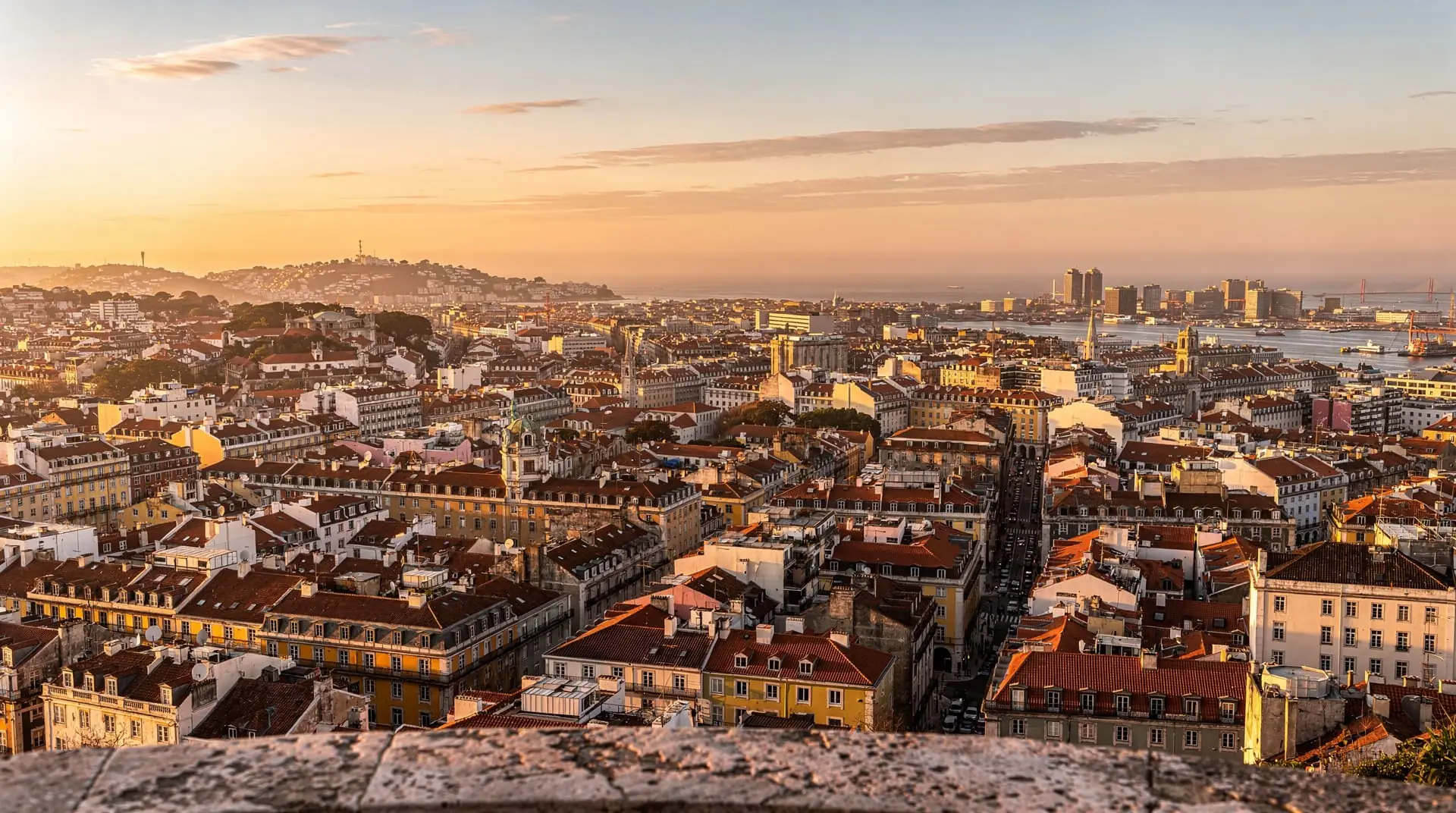
Miradouro da Senhora do Monte — the highest viewpoint in Lisbon
Guide to Miradouro da Senhora do Monte in Graça: the best panoramic viewpoint in Lisbon, how to get there from Martim Moniz, sunset tips, and what to see.
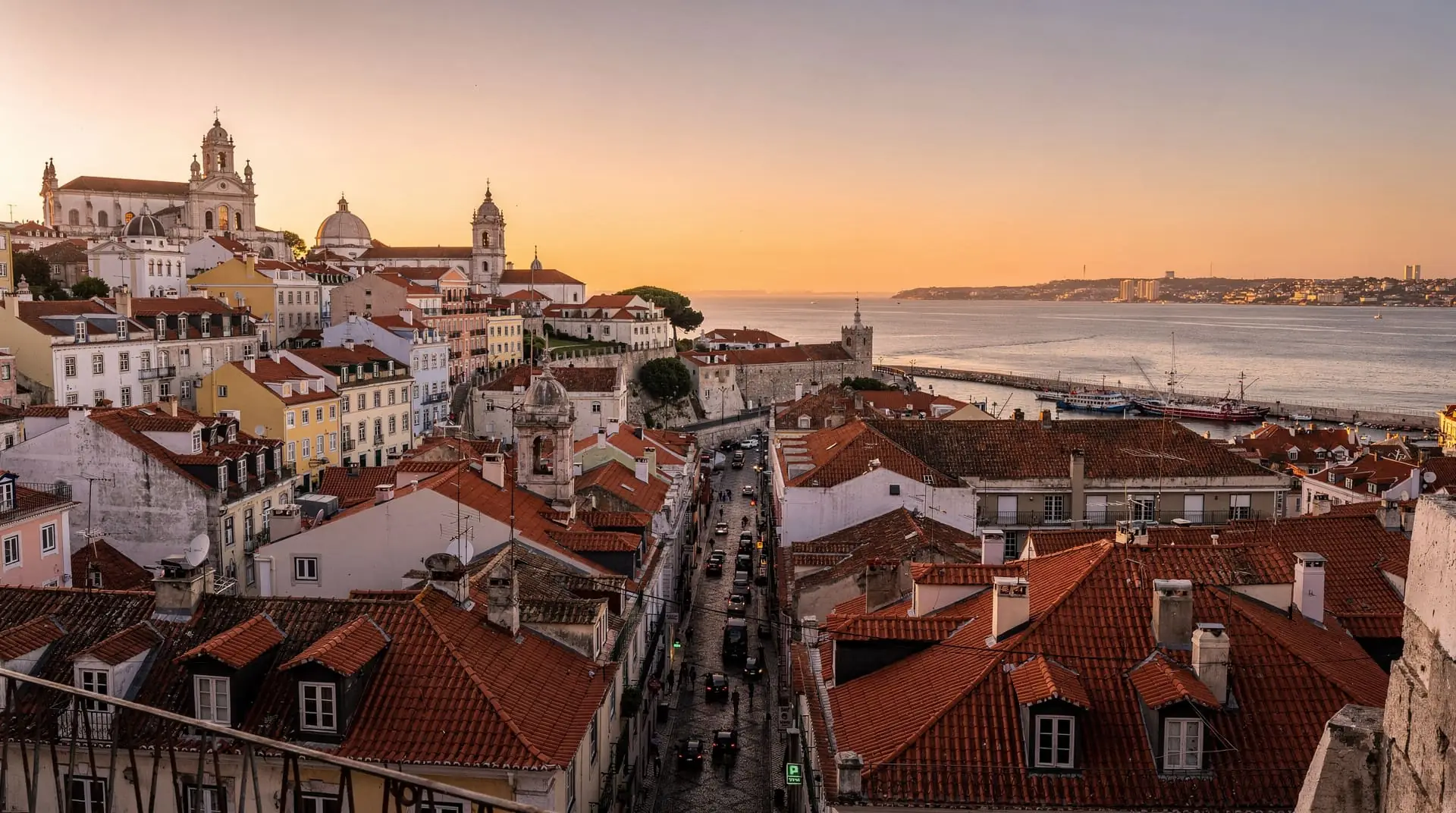
Miradouro das Portas do Sol — the iconic Alfama viewpoint
Guide to Portas do Sol viewpoint in Lisbon: tram 28 stop, Alfama rooftop views, ginjinha bars, best times to avoid crowds, and what to see nearby.
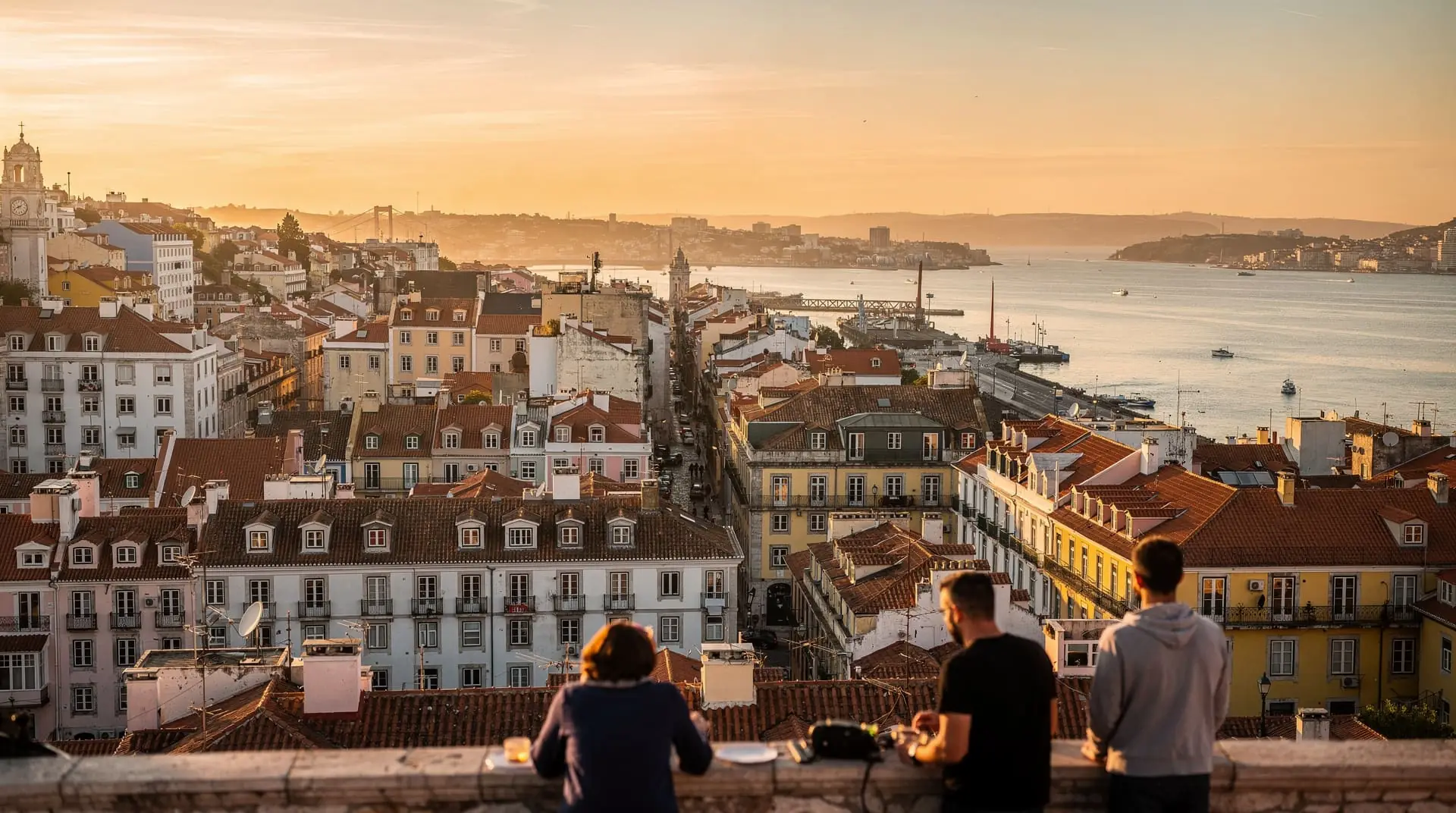
Miradouro de Santa Catarina — the Adamastor viewpoint
Guide to Miradouro de Santa Catarina in Lisbon: the Adamastor sculpture, Tagus and bridge views, Bica funicular, sunset crowds, and the Cais do Sodré area.
Miradouro de São Pedro de Alcântara — Bairro Alto's castle view
Miradouro de São Pedro de Alcântara, Bairro Alto: Glória funicular, garden viewpoint, castle panorama, best times, and what to do nearby.
Ready to book? Top tours for this guide
We earn a small commission if you book through GetYourGuide — at no extra cost to you. Every tour is hand-picked and verified.
Lisbon: 48-Hour Hop-On-Hop-Off Bus Tour and Oceanarium Entry
Lisbon: MAAT Entry Ticket & Dolphin Watching Boat Tour
Lisbon: Alfama, Mouraria Walking Tour with Fado Night, Tapas
Lisbon: Hop-On Hop-Off Bus Tour
Lisbon: 1-or 2-Day Hop-On Hop-Off Bus Tour