Miradouro de São Pedro de Alcântara — Bairro Alto's castle view
Last reviewed
What does Miradouro de São Pedro de Alcântara look out over?
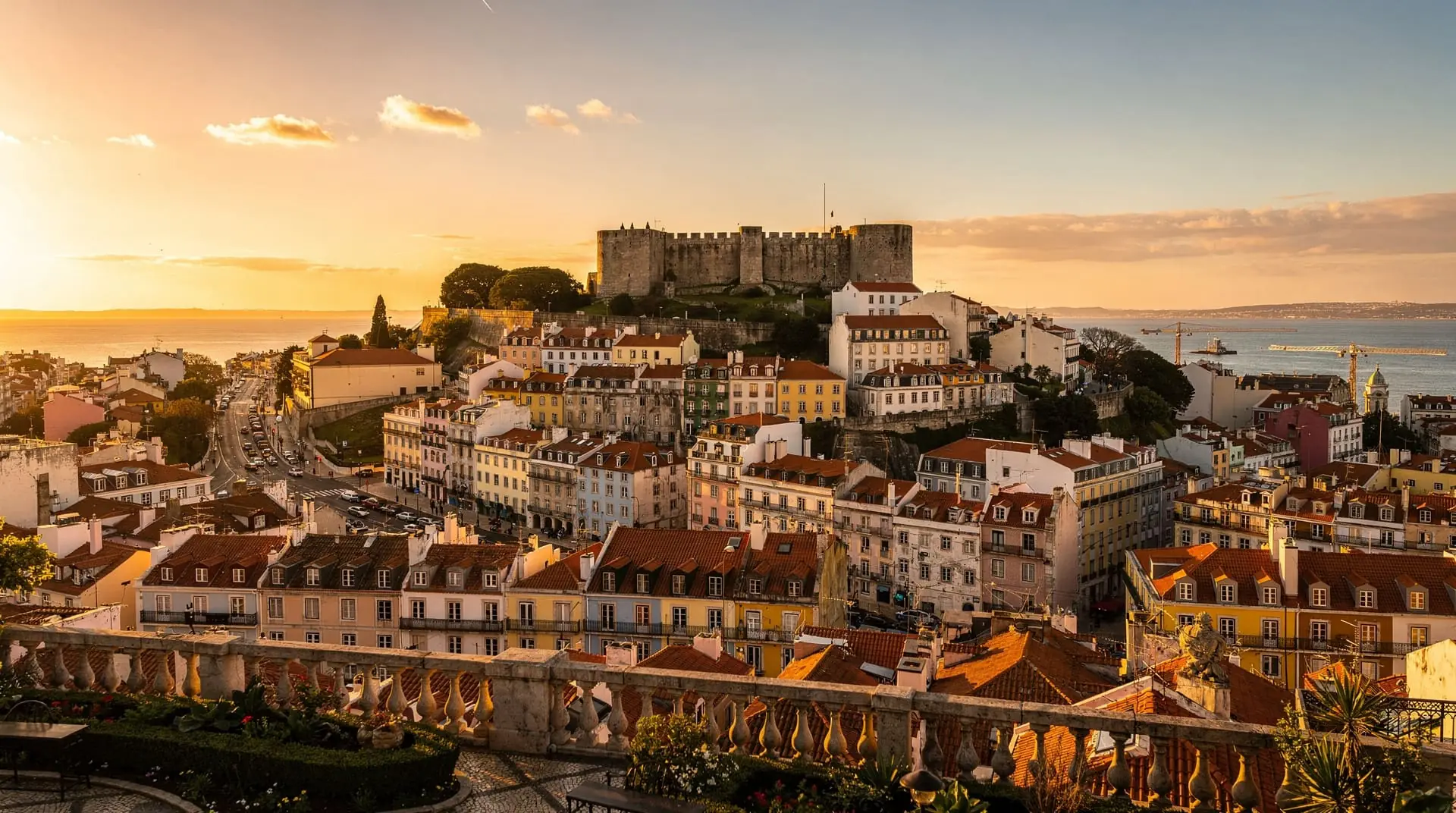
São Pedro de Alcântara faces east across the Baixa district towards São Jorge Castle, which sits on the opposing hill and appears directly in the centre of the view. A painted tile panel on the upper terrace identifies all visible landmarks. The Glória funicular from Restauradores drops you at the foot of the miradouro — one of the easiest viewpoints to reach in Lisbon.
The viewpoint with a map
Most miradouros in Lisbon present you with a panorama and leave you to identify what you are looking at from memory or smartphone. São Pedro de Alcântara does something more useful: a large decorative tile panel on the upper terrace wall labels every landmark in view — castle towers, church domes, hill names, and distances. It is both an art object (the panel is 18th-century in style, though a 20th-century reproduction) and an orientation tool that makes this viewpoint particularly good for first-time Lisbon visitors trying to understand the city’s geography.
The view itself is one of the best in central Lisbon: the city’s wide eastern valley, the Baixa grid below, and the São Jorge Castle on the opposing hill, directly in your sightline, close enough that you can make out individual towers and the walls of the ramparts. At dusk the castle illuminates, and in clear weather the view extends to the Tagus. The terrace garden — two descending levels with a fountain, stone benches, and a kiosque café — makes this one of the more pleasant places to sit in Bairro Alto.
| Where | Edge of Bairro Alto, top of Calçada da Glória |
| Cost | Free entry; Glória funicular around €3.80 single |
| Time needed | 20–30 minutes, longer at golden hour |
| Getting there | Glória funicular from Restauradores, or 8–10 min walk uphill |
| Best time | Late afternoon into dusk, when the castle is lit |
The Glória funicular
The Elevador da Glória is the most important practical fact about São Pedro de Alcântara. It is one of Lisbon’s three surviving cable-hauled funiculars — the others are the Bica (below Santa Catarina) and the Lavra (near Av. da Liberdade) — and it deposits you almost at the entrance to the miradouro garden.
The Glória runs along Calçada da Glória, a steep cobbled street parallel to Av. da Liberdade, departing from a stop on the street between the Palácio Foz and the National Theatre. The funicular car (a traditional double-ended yellow vehicle with wooden benches) takes about 2 minutes to climb. Cost: around €3.80 single, paid on board or deducted from a Viva Viagem card. A Lisboa Card also covers funicular journeys.
If the funicular has a queue — it is a single-car service so queueing is possible at busy times — the walk up Calçada da Glória takes 8–10 minutes on foot. Steep but manageable.
The funicular runs daily from approximately 07:15 to 23:55 (weekdays) and 09:00 to 23:55 (weekends). Check current schedules on the Carris website, as the service occasionally has interruptions for maintenance.
The terrace
The miradouro divides into two levels connected by a short stairway:
Upper terrace: The main viewpoint platform with the landmark tile panel, stone balustrade, and the best angle on the castle. The kiosque café occupies a corner of the upper terrace — coffee, beer, wine, sandwiches, and pastéis de nata, outdoor seating, operational most days from morning to late evening.
Lower terrace: A more garden-like space with a central fountain and stone benches shaded by trees. The view from the lower level is partially obstructed by the trees but the atmosphere is quieter. Local residents use the lower level more than tourists do — it functions as a genuine neighbourhood garden.
Between the two levels: a short flight of steps and a path. The entire area is wheelchair-accessible via a slightly longer route around the garden perimeter — ask at the kiosque for directions.
Best times
Golden hour (late afternoon/sunset): This is the prime viewing time. The castle faces roughly west, so the towers catch the late afternoon sun directly and glow before the light fails. The illuminated castle after dark is visible from the terrace and the surrounding streets.
After dark: The castle is lit after 20:00 and the terrace takes on a different character — quieter, more local, with the café filling with Bairro Alto residents having a pre-dinner drink. São Pedro de Alcântara at 21:00 on a warm evening, with the illuminated castle floating above the dark city below, is one of Lisbon’s better free experiences.
Morning: Less visited, good photography light on the castle from the east.
Avoid: Weekend midday in summer, when tour groups cluster on the upper terrace around the tile panel.
The Bairro Alto context
São Pedro de Alcântara sits at the edge of Bairro Alto, the hilltop neighbourhood that functions as central Lisbon’s nightlife district from around 23:00 onwards but in daylight hours is a residential area of 17th and 18th-century buildings, independent bookshops, small galleries, and lunch restaurants.
The Bairro Alto guide covers the neighbourhood in full. For the viewpoint circuit, a natural Bairro Alto walk: arrive at São Pedro de Alcântara via the Glória funicular, spend 30 minutes at the terrace, then walk south through Bairro Alto (Rua do Norte, Rua do Diário de Notícias) toward Chiado, passing shops and street art. Continue downhill to the Santa Catarina viewpoint — 15–20 minutes on foot, with a descent to Cais do Sodré at the end.
This circuit covers two contrasting viewpoints (castle-facing vs. river-facing), two distinct neighbourhoods (Bairro Alto’s residential quiet vs. Cais do Sodré’s waterfront bustle), and ends near transport connections (Cais do Sodré metro, train station, and ferry terminal).
Guided options
The Bairro Alto and downtown guided walking tour includes São Pedro de Alcântara as a key stop and provides context on the relationship between the hilltop quarter and the Baixa below — the social geography that shaped the view. Typically a 2–3 hour small-group tour.
The Chiado and Bairro Alto walking tour covers the cultural context of the neighbourhood in more depth — the literary cafés (A Brasileira), the theatres, the bookshops — with the miradouro as a natural culmination. Good for visitors interested in Lisbon’s urban cultural history.
The 2-hour belvederes tuk-tuk tour visits São Pedro de Alcântara alongside the upper Alfama viewpoints in a single circuit — efficient if your time is limited or the hills are a deterrent.
What to do nearby
Cervejaria da Trindade: On Rua Nova da Trindade (3-minute walk south), one of Lisbon’s oldest beer halls, occupying a 13th-century convent with extraordinary azulejo panels covering the walls. Worth a beer or a late afternoon snack even if you are not hungry. See the Baixa-Chiado guide for context.
Príncipe Real market: On weekends, the Jardim do Príncipe Real (15 minutes on foot north through Bairro Alto) has an organic produce and design market. Good for local food, ceramics, and textile finds. The Príncipe Real neighbourhood itself is one of the more pleasant parts of Lisbon for aimless walking.
Bairro Alto nightlife: If you are here for evening drinks, Bairro Alto becomes a different place after 22:00 — dozens of bars spill onto the streets, particularly on Rua do Diário de Notícias and Rua do Norte. The atmosphere is relaxed and affordable compared to the rooftop bar scene elsewhere. See the Lisbon nightlife guide for details.
For a broader sense of the wider Bairro Alto-Príncipe Real area beyond the miradouro itself, see the Bairro Alto and Príncipe Real destination guide.
Comparing São Pedro de Alcântara with Lisbon’s other miradouros
São Pedro de Alcântara is one of several viewpoints clustered around central Lisbon, each with a different character:
| Viewpoint | View | Getting there |
|---|---|---|
| São Pedro de Alcântara | Castle-facing, tile landmark panel | Glória funicular |
| Santa Catarina | River and bridge-facing | Bica funicular |
| Senhora do Monte | Widest 360° panorama, highest point | 25-min walk, no funicular |
If you only have time for one, São Pedro de Alcântara is the easiest to reach and the best for orienting yourself early in a trip; Senhora do Monte rewards more effort with a wider view. Use a Viva Viagem card to cover the funicular fares along with trams and metro on the same ticket, and see the tram 28 guide if you’re combining this viewpoint with a ride through Alfama afterwards. For the fuller Alfama circuit on the other side of the city, see what to do in Alfama.
Honest tips
The kiosque café at São Pedro de Alcântara is priced fairly and the quality is decent by kiosque standards. A coffee and a pastel de nata sitting in the garden with the castle view is a legitimate Lisbon experience rather than a tourist concession.
The tile panel identifying landmarks is worth spending 10 minutes with, especially before visiting other viewpoints. Understanding that the domed building to the right of the castle is the National Pantheon, that the needle to the south is the Rua Augusta Arch, and that the wide silver band beyond is the Tagus reorients everything you see from every other viewpoint in the city.
The funicular is worth taking on your first visit even if the walk is not intimidating. It is a functioning piece of 19th-century urban transport infrastructure, still in daily use, and still operating on essentially the same system as it did in 1885.
For full transport planning across all Lisbon viewpoints, see getting around Lisbon. For the best overall viewpoint ranking, see the best Lisbon viewpoints guide.
Related guides
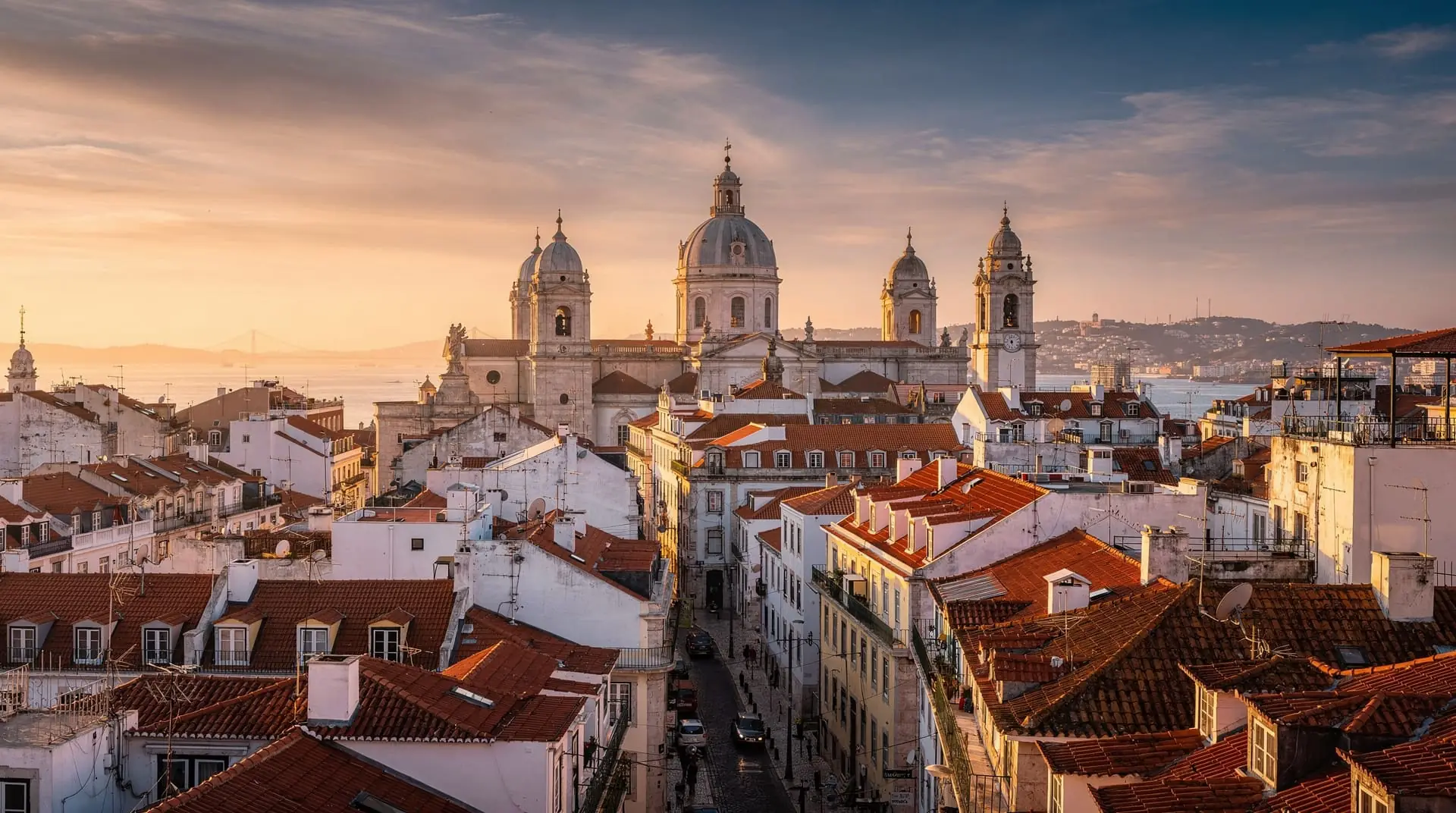
Best viewpoints in Lisbon — ranked and honest
The 8 best miradouros in Lisbon ranked: Senhora do Monte, Portas do Sol, São Pedro de Alcântara, Santa Catarina, Graça, Santa Luzia, Castelo, Cristo Rei.
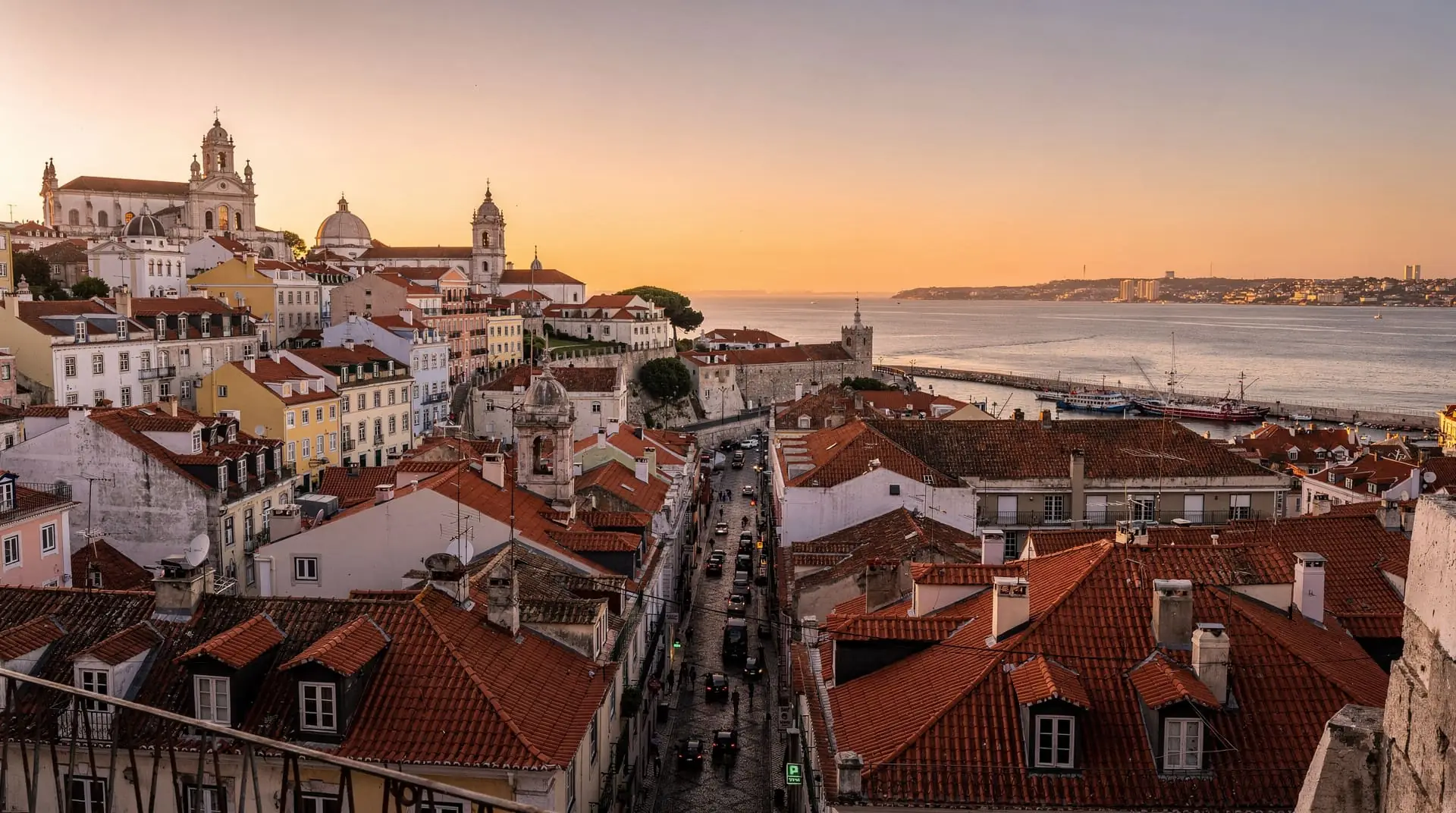
Miradouro das Portas do Sol — the iconic Alfama viewpoint
Guide to Portas do Sol viewpoint in Lisbon: tram 28 stop, Alfama rooftop views, ginjinha bars, best times to avoid crowds, and what to see nearby.
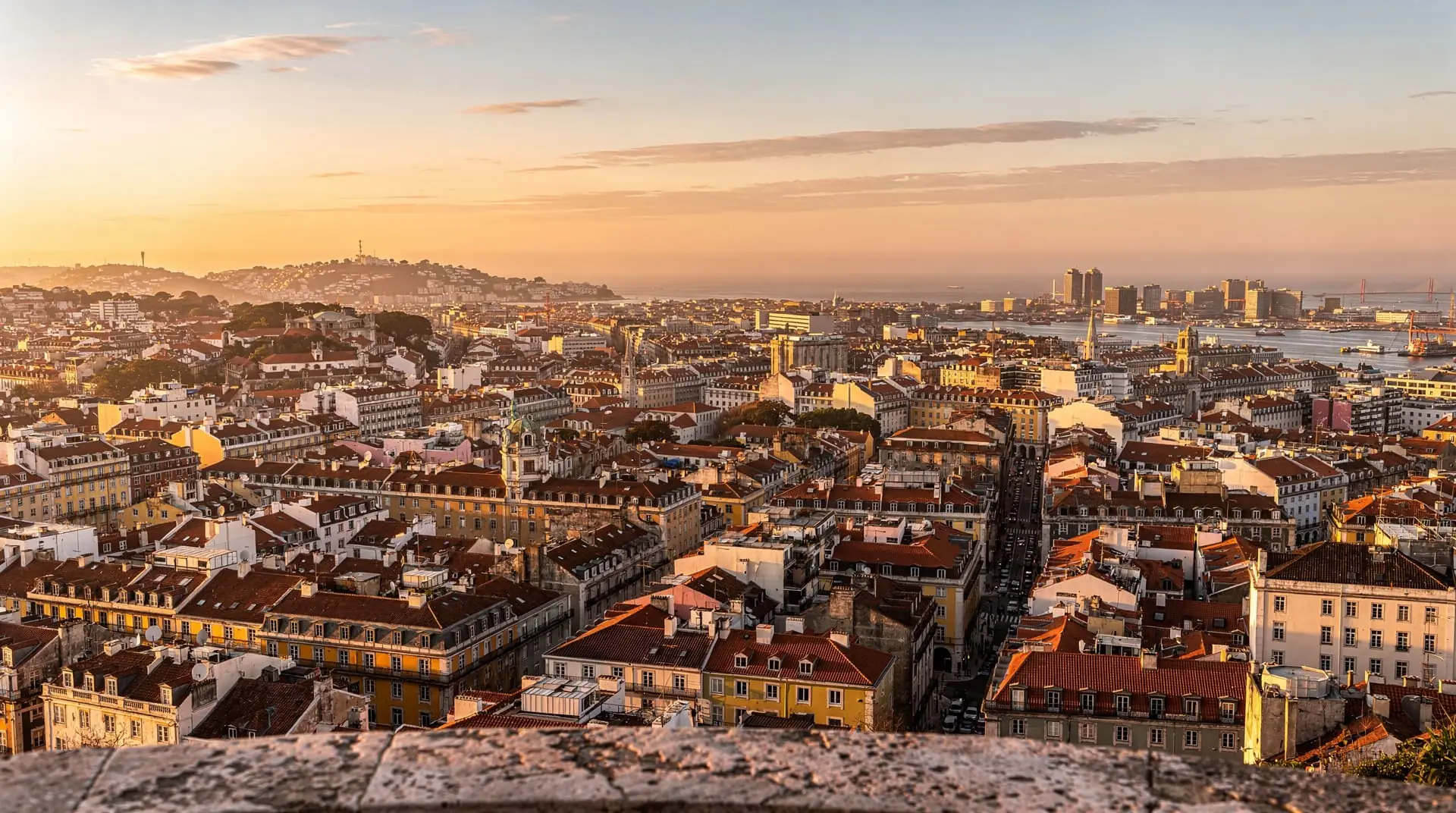
Miradouro da Senhora do Monte — the highest viewpoint in Lisbon
Guide to Miradouro da Senhora do Monte in Graça: the best panoramic viewpoint in Lisbon, how to get there from Martim Moniz, sunset tips, and what to see.
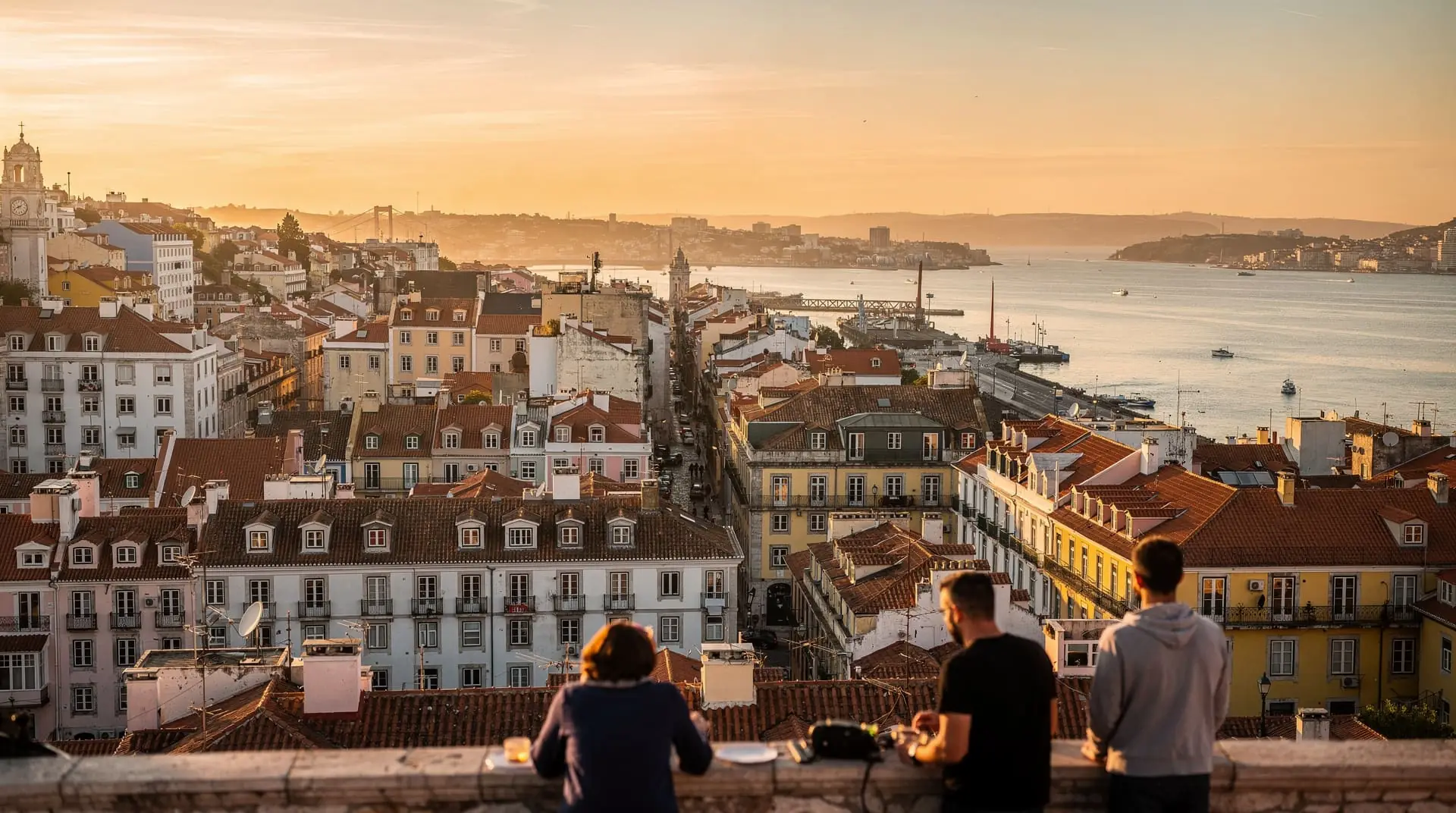
Miradouro de Santa Catarina — the Adamastor viewpoint
Guide to Miradouro de Santa Catarina in Lisbon: the Adamastor sculpture, Tagus and bridge views, Bica funicular, sunset crowds, and the Cais do Sodré area.
Ready to book? Top tours for this guide
We earn a small commission if you book through GetYourGuide — at no extra cost to you. Every tour is hand-picked and verified.
Lisbon: 48-Hour Hop-On-Hop-Off Bus Tour and Oceanarium Entry
Lisbon: MAAT Entry Ticket & Dolphin Watching Boat Tour
Lisbon: Alfama, Mouraria Walking Tour with Fado Night, Tapas
Lisbon: Hop-On Hop-Off Bus Tour
Lisbon: 1-or 2-Day Hop-On Hop-Off Bus Tour