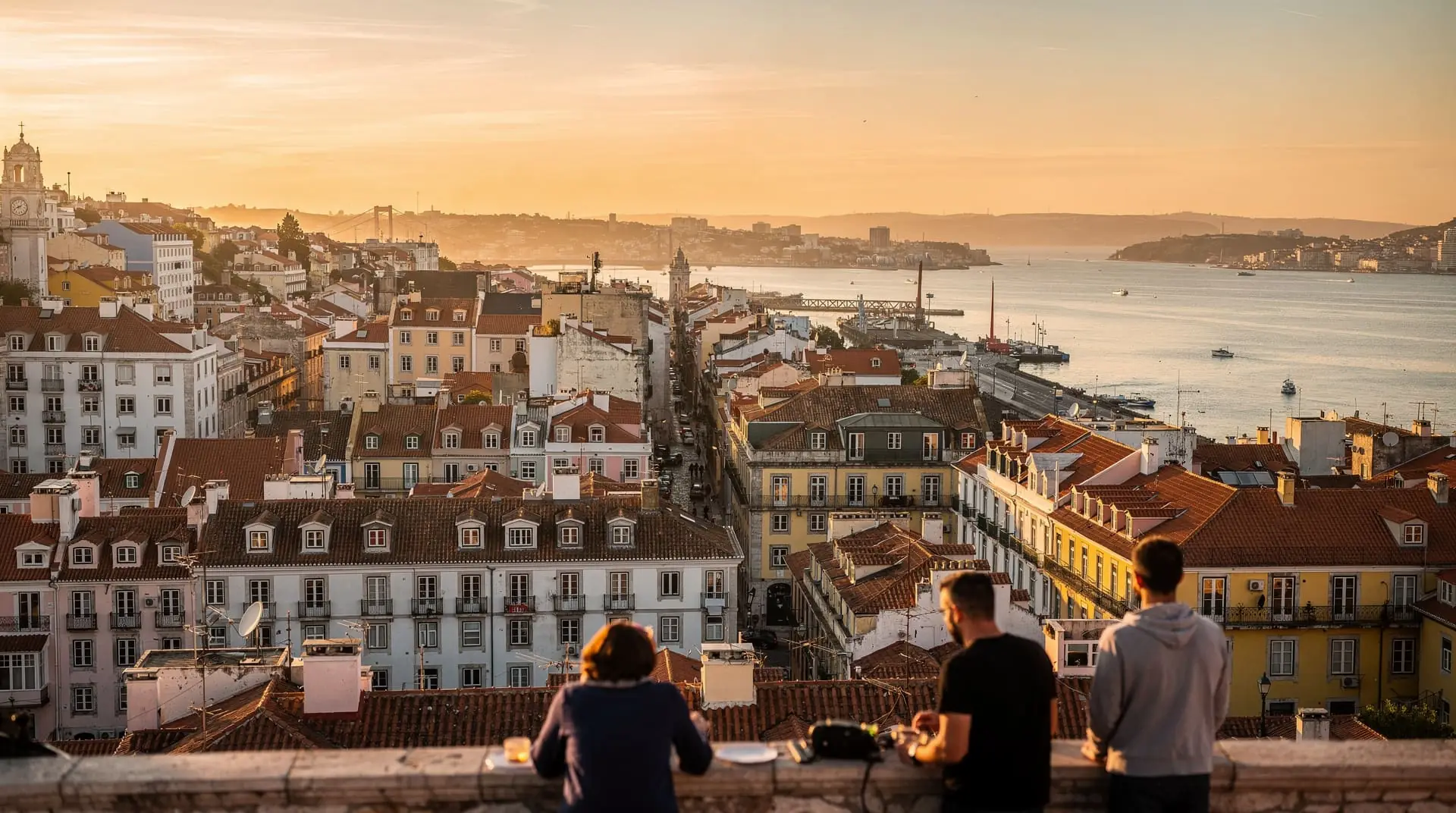
Miradouro de Santa Catarina — the Adamastor viewpoint
Last reviewed
What is Miradouro de Santa Catarina known for in Lisbon?
Santa Catarina is known for the Adamastor sculpture — a stone giant from Camões's epic Os Lusíadas — and for its unobstructed westward view over the Tagus river and the Ponte 25 de Abril bridge. The crowd here tends to be younger and more local than at Alfama viewpoints. The Bica funicular drops you nearby, and Cais do Sodré nightlife is a 10-minute walk downhill.
The giant at the edge of the city
The stone figure at the centre of Miradouro de Santa Catarina is Adamastor — the giant of the Cape of Storms from Camões’s 16th-century epic Os Lusíadas, the foundational poem of Portuguese literature. In Camões’s narrative, Adamastor is the spirit of the Cape of Good Hope, encountered by Vasco da Gama’s fleet as it rounds the southern tip of Africa: a monstrous figure who prophesies disaster for the Portuguese sailors who dare to cross into unknown seas. He is both a warning and a monument to the audacity of the Age of Discovery.
The statue is 20th century and the symbolism is retrospective — no original monument stood here — but the location is right. Miradouro de Santa Catarina sits on the western edge of the old city, above the riverfront quarter of Cais do Sodré, facing the Tagus directly. On the horizon: the Ponte 25 de Abril bridge (opened 1966, the year the Portuguese revolution almost happened — almost; it took another eight years), and beyond it the Cristo Rei statue on the south bank hill. The view is resolutely westward, which means it catches the full force of Atlantic light in the afternoon and turns extraordinary at sunset.
| Where | Bica hillside, above Cais do Sodré |
| Cost | Free entry; Bica funicular around €3.80 single |
| Time needed | 30–45 minutes, longer at sunset |
| Getting there | Bica funicular, or a 10-minute walk from Chiado or Cais do Sodré |
| Best time | 30–40 minutes before sunset |
The view
Unlike the Alfama viewpoints, which look over a dense historic roofscape towards the water, Santa Catarina looks primarily at water. The Tagus at this point is wide — roughly two kilometres across — and the Ponte 25 de Abril spans it in a single sweep of orange-red steel that many visitors compare to San Francisco’s Golden Gate (the structural similarity is not accidental; the same engineering company was involved).
The Cristo Rei statue on the far bank (visible on the hill above Almada) is approximately 10 kilometres distant. The industrial port facilities to the west and the Belém waterfront 5 kilometres downriver complete the panorama. On very clear days, the Arrábida hills on the south bank are visible beyond the bridge.
The terrace itself is a generous space: a long parapet with the Adamastor figure at its centre, flanked by stone benches and surrounded by large trees (mostly maritime pines) that provide shade in summer. A kiosque operates from the northern end of the terrace — drinks, light snacks, and a socially relaxed atmosphere.
The crowd
Santa Catarina has a different social character from the Alfama miradouros. The regular population at Portas do Sol is predominantly tourist; at Santa Catarina the mix is more varied, and on weekday evenings the terrace functions as a genuine gathering point for Lisbon residents — students from the nearby Escola de Belas-Artes (Fine Arts School), young professionals from the Chiado and Bairro Alto, local families, and a few musicians who occasionally set up on the terraced steps below the Adamastor statue and play for the crowd without any formal arrangement.
This character is not marketed by anyone — it is simply how the space is used. Do not expect it to be consistent; some evenings the terrace is quiet and mainly tourists, other evenings there is an informal party atmosphere. In the summer months the social energy peaks between 20:00 and 21:30 as the sun sets and groups gather with wine bottles.
Getting there
Bica funicular (Elevador da Bica)
The most interesting route. The Elevador da Bica departs from Rua de São Paulo (near Cais do Sodré, accessible from the metro station) and climbs the steep Rua da Bica de Duarte Belo to the top of the hill. The funicular is a yellow double-ended car on tracks — it runs on a counterweight system using the descending car to help pull up the ascending one. Journey time: about 3 minutes. Cost: around €3.80 single, covered by Viva Viagem card (stored-value) or Lisboa Card.
At the top of the funicular, exit and walk left along Rua de Santa Catarina for 3–4 minutes to reach the miradouro entrance on Rua do Olival.
The Bica funicular runs daily (check Carris website for current hours) and is one of Lisbon’s three remaining cable funiculars — a piece of 19th-century urban infrastructure still in active daily use.
On foot from Chiado
From Praça do Chiado (Largo do Chiado), walk south along Rua do Loreto and then south-west along Rua de Santa Catarina — about 10 minutes on relatively flat ground (gently downhill). This is a pleasant urban walk through the intermediate neighbourhood between Chiado and the Bica hillside.
On foot from Cais do Sodré
Walk uphill from the Cais do Sodré metro station (exit on Rua do Alecrim) for about 10 minutes. This is the steepest approach but direct.
Sunset at Santa Catarina
The westward orientation makes Santa Catarina Lisbon’s best viewpoint for watching the sun drop over the Tagus. In summer (June–July) this happens around 21:15; in May and August around 20:45; in spring and autumn around 20:00–20:30. Arrive 30–40 minutes before sunset for a position on the parapet.
The bridge turns from grey to orange-gold in the late afternoon light. The Cristo Rei statue catches direct sun for the last 45 minutes before sunset and appears as a white silhouette against the orange sky — an effect that no photograph quite captures because the simultaneous darkness of the water and brightness of the sky are beyond most camera exposures. Arrive and stay through the 20 minutes after sunset, when the sky is still lit but the bridge lights come on and the Cristo Rei statue is floodlit.
Sunset arrival guide by season:
| Season | Approx. sunset | Arrive by |
|---|---|---|
| Summer (Jun–Jul) | around 21:15 | 20:35–20:45 |
| Late spring / August | around 20:45 | 20:05–20:15 |
| Spring / autumn | around 20:00–20:30 | 19:30–19:50 |
| Winter | around 17:30–18:00 | 17:00 |
After the viewpoint: Cais do Sodré
Santa Catarina sits directly above one of Lisbon’s most concentrated entertainment areas. Walk downhill (10 minutes) from the miradouro on any of the steep lanes heading south and you arrive in the Cais do Sodré neighbourhood — the Pink Street bar district, the ferry terminals, the Time Out Market, and the train station.
Pink Street (Rua Nova do Carvalho): A 200-metre stretch of bars painted in pink road surface paint, notorious for its late-night atmosphere. Louder and more tourist-oriented than the Bairro Alto bars; starts from around 22:00 and runs until 04:00 or later. See the Cais do Sodré guide for detail.
Time Out Market: On Av. 24 de Julho (Mercado da Ribeira), a 5-minute walk west from the Cais do Sodré station. A large covered market with stalls from Lisbon’s best-known restaurants and chefs. Crowded in summer but the quality of food is genuine. See the Time Out Market guide.
Ferry to Almada/Cacilhas: Depart from the Cais do Sodré ferry terminal for the Cacilhas crossing — around €1.50 each way, excellent views of Lisbon from the river, and access to the Cristo Rei on the south bank.
Nearby viewpoints and a hilltop circuit
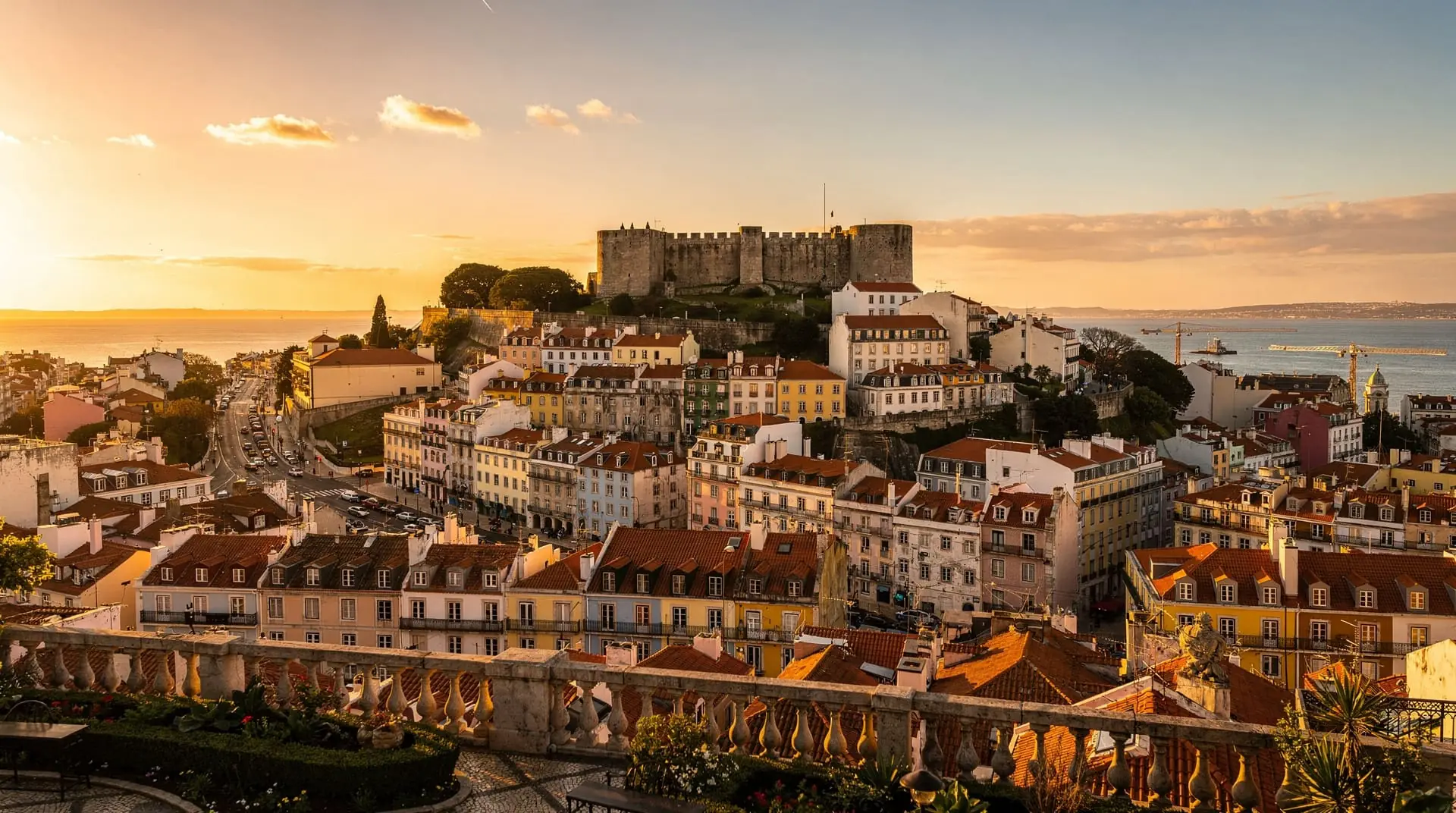
Santa Catarina pairs naturally with the other Bairro Alto-area miradouros. The São Pedro de Alcântara viewpoint faces the opposite direction — east towards São Jorge Castle rather than west over the water — and is a 15–20 minute walk uphill through Bairro Alto. Combining the two gives you both a river sunset and a castle-facing panorama in a single outing.
For visitors chasing Lisbon’s full-city panorama rather than a river view, the Senhora do Monte viewpoint in Graça is the highest in the city, though it is on the opposite side of the historic centre and better tackled on a different day. See the best Lisbon viewpoints guide for how all the miradouros fit together.
Getting between these points and back to your accommodation is straightforward with a Viva Viagem card, which covers the funiculars, trams, and metro on a single stored-value ticket — see the getting around Lisbon guide for the full transport picture.
For the neighbourhood context below the viewpoint, the Baixa-Chiado guide covers the streets between Chiado and Cais do Sodré, and the Bairro Alto nightlife guide covers what happens uphill after dark if Santa Catarina is your starting point for the evening rather than your last stop.
Guided options
The Chiado and Bairro Alto walking tour typically includes a Santa Catarina stop as part of the circuit through the Bairro Alto and Chiado neighbourhoods — gives the view its literary and historical context (Camões, the miradouro’s relationship to maritime history).
The Bairro Alto to Alfama walking tour starts from this part of the city and walks east, combining Santa Catarina with the Alfama viewpoints in a cross-city route.
For a river perspective on the view from Santa Catarina: the Tagus sunset cruises pass in front of the Cais do Sodré waterfront. The electric bike tour by the river to Belém covers the waterfront in the opposite direction — Cais do Sodré to Belém along the riverside cyclepath, which gives a moving view of the hills above, including Santa Catarina’s position on the ridge.
Honest tips
Santa Catarina is a genuine local viewpoint, not a managed tourist attraction. This means there is no entrance fee, no organised facilities, and no guarantee of a clean terrace or a functioning café. On some visits everything is ideal; on others the kiosque is closed and the terrace has the usual urban litter of empty bottles and cigarette ends from the previous evening. This is part of its character.
The atmosphere at Santa Catarina on a Friday or Saturday evening between 20:00 and 22:00 in summer is one of the best free experiences in Lisbon: a crowd of all ages, the sun going down, the bridge going gold, someone playing guitar on the steps. There is no entry fee and no programme — it just happens.
The Bica funicular is worth taking at least one way (up or down). Going up, you arrive at the viewpoint having experienced an authentic piece of Lisbon’s operating heritage. Going down, you glide back to the Cais do Sodré riverfront ready for dinner.
For full viewpoint comparisons and circuit planning, see the best Lisbon viewpoints guide. For broader Lisbon planning, the 3-day Lisbon itinerary includes Santa Catarina as an evening stop on the Bairro Alto circuit.
Related guides
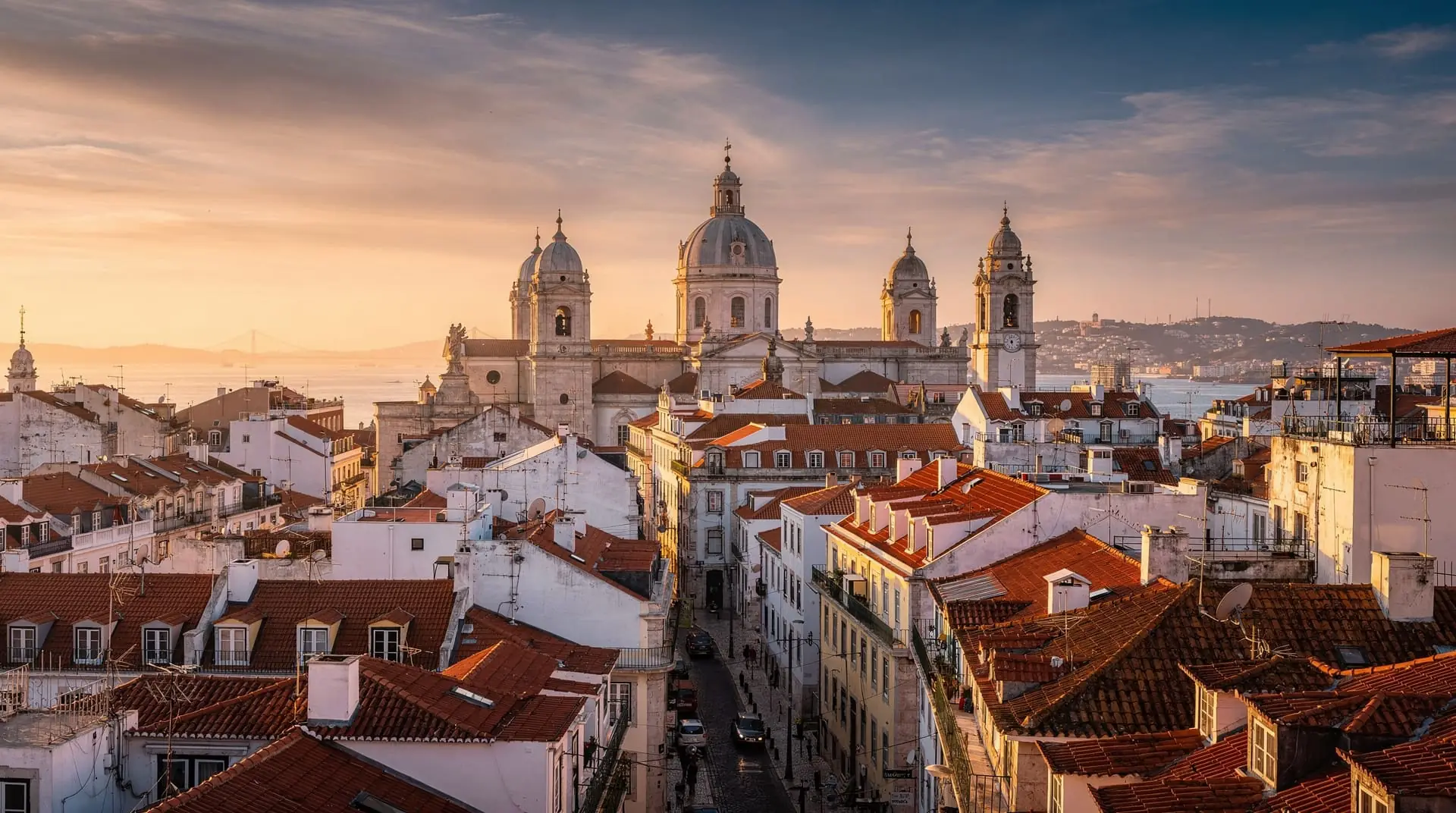
Best viewpoints in Lisbon — ranked and honest
The 8 best miradouros in Lisbon ranked: Senhora do Monte, Portas do Sol, São Pedro de Alcântara, Santa Catarina, Graça, Santa Luzia, Castelo, Cristo Rei.
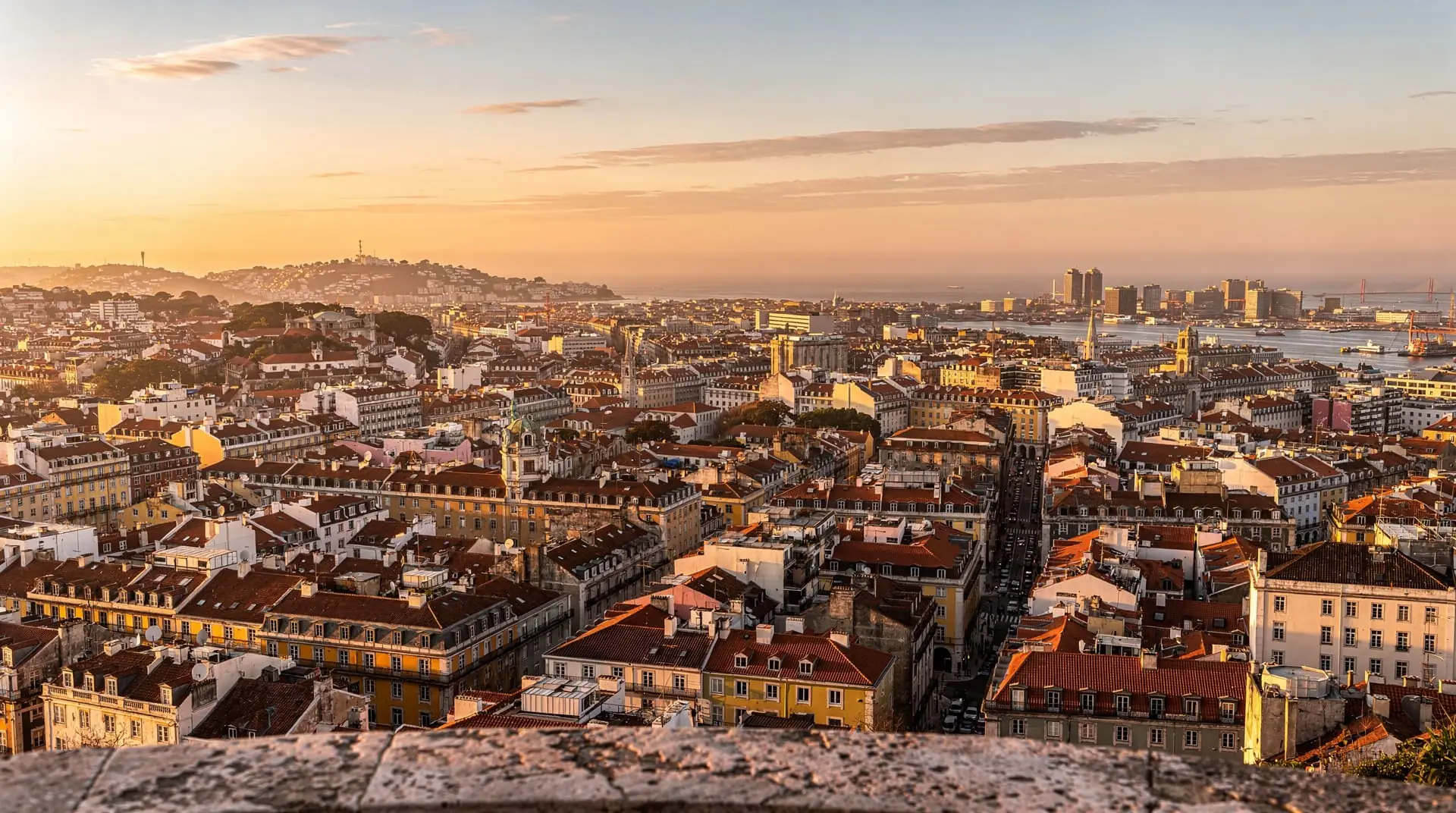
Miradouro da Senhora do Monte — the highest viewpoint in Lisbon
Guide to Miradouro da Senhora do Monte in Graça: the best panoramic viewpoint in Lisbon, how to get there from Martim Moniz, sunset tips, and what to see.
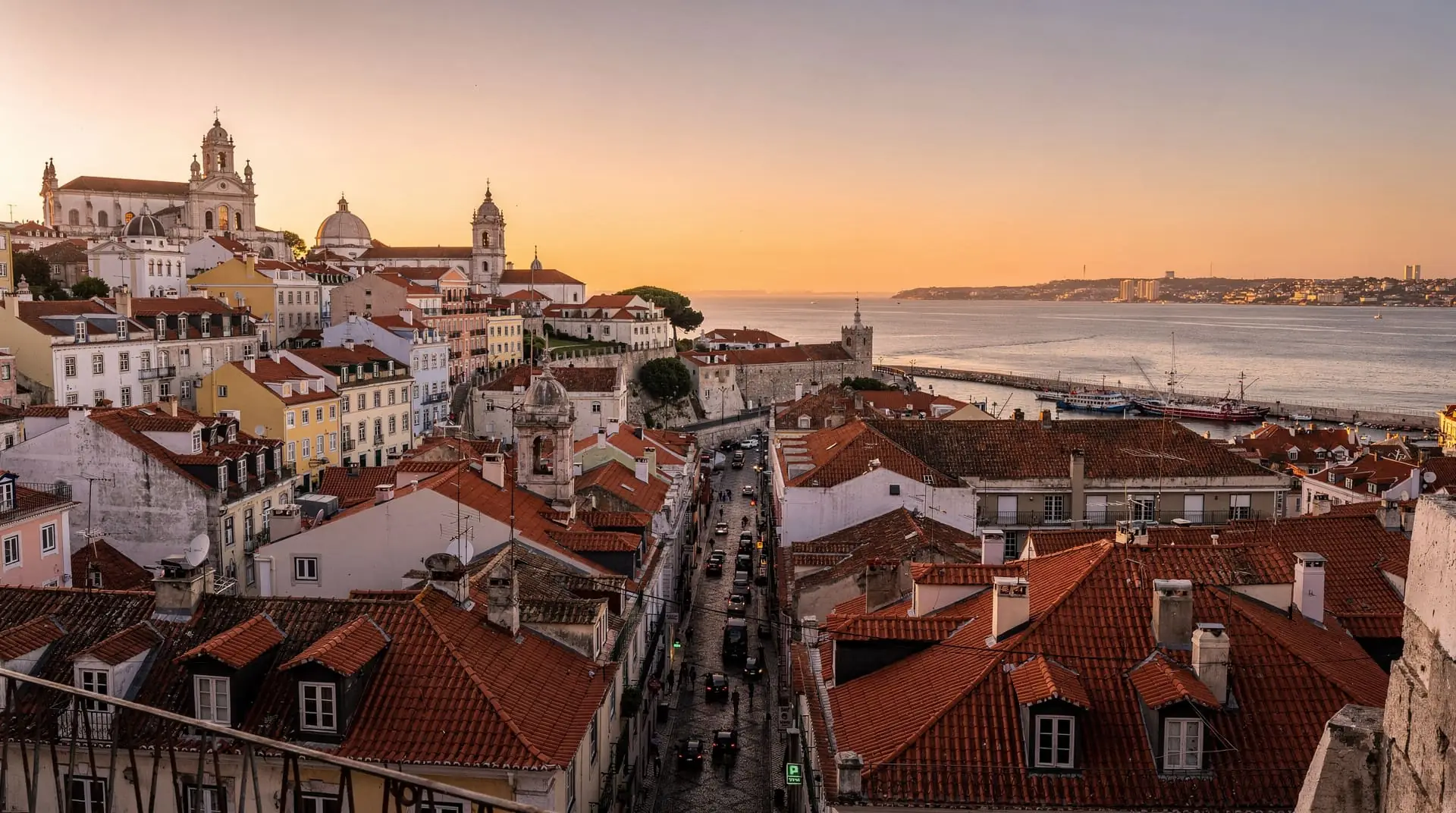
Miradouro das Portas do Sol — the iconic Alfama viewpoint
Guide to Portas do Sol viewpoint in Lisbon: tram 28 stop, Alfama rooftop views, ginjinha bars, best times to avoid crowds, and what to see nearby.
Miradouro de São Pedro de Alcântara — Bairro Alto's castle view
Miradouro de São Pedro de Alcântara, Bairro Alto: Glória funicular, garden viewpoint, castle panorama, best times, and what to do nearby.
Ready to book? Top tours for this guide
We earn a small commission if you book through GetYourGuide — at no extra cost to you. Every tour is hand-picked and verified.
Lisbon: 48-Hour Hop-On-Hop-Off Bus Tour and Oceanarium Entry
Lisbon: MAAT Entry Ticket & Dolphin Watching Boat Tour
Lisbon: Alfama, Mouraria Walking Tour with Fado Night, Tapas
Lisbon: Hop-On Hop-Off Bus Tour
Lisbon: 1-or 2-Day Hop-On Hop-Off Bus Tour