Pink Street and Cais do Sodré: Lisbon's riverside nightlife strip
Last reviewed
What is Pink Street in Lisbon, and is it worth going to?
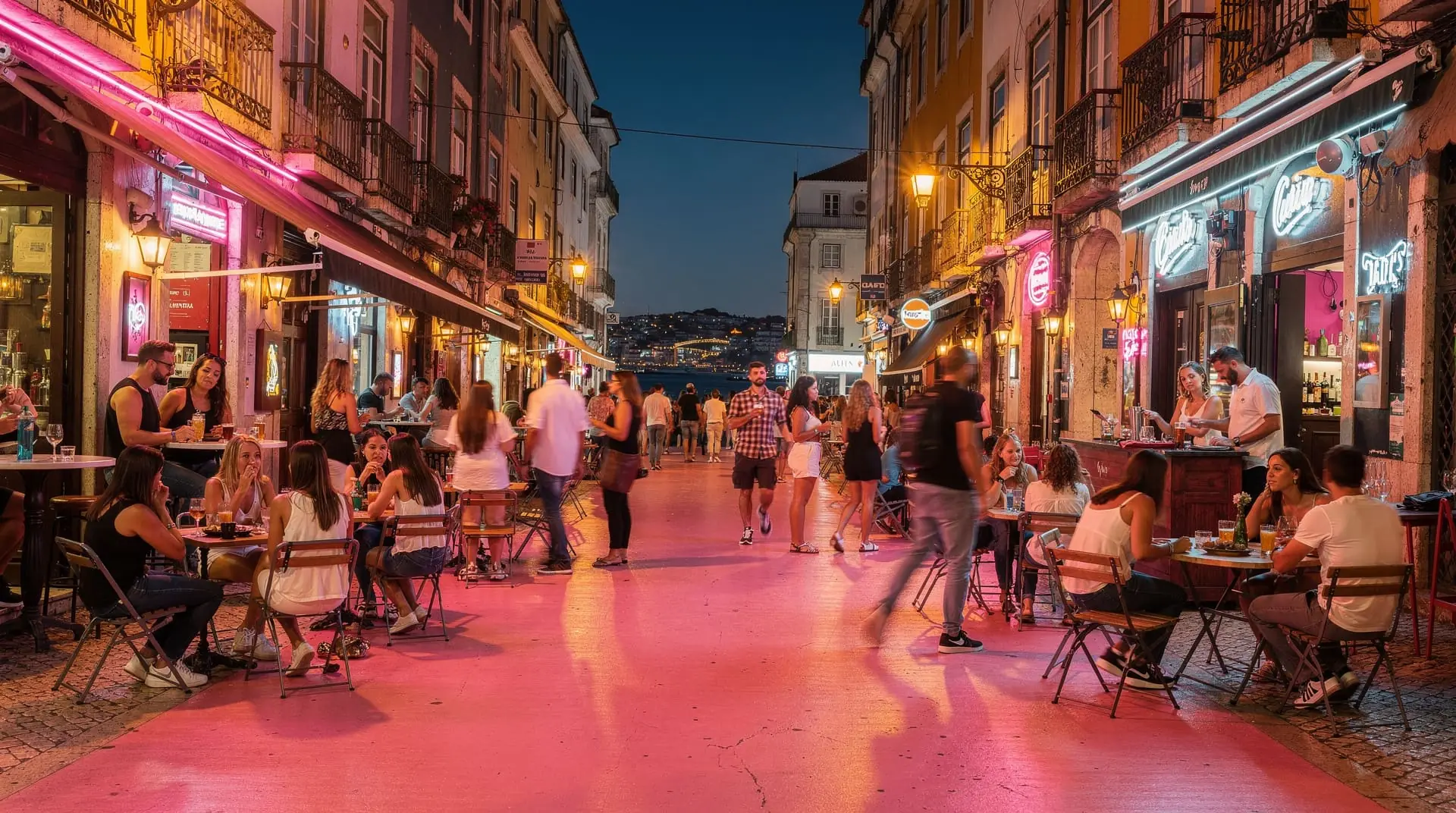
Pink Street (Rua Nova do Carvalho) is a short pedestrianised street in Cais do Sodré painted entirely in pink, once a red-light district now converted into a bar strip. It's worth one evening — the most atmospheric bars (Pensão Amor, Sol e Pesca) are genuinely unusual, and the location near the river is pleasant. Avoid the tourist-trap shots bars in the middle of the street and go for the character venues at the ends.
Rua Nova do Carvalho has been painted pink since 2011, when the Lisbon city council cleaned up what was then one of the city’s oldest red-light districts. The project worked — the street went from semi-derelict to one of the most photographed in Lisbon within a few years — but it also transformed what was a genuinely seedy but authentic place into something more complicated: part tourist attraction, part real bar strip, with the best and worst of Lisbon’s nightlife scene existing within 200 metres of each other.
This guide separates the genuine from the gimmick.
| Where | Rua Nova do Carvalho, Cais do Sodré |
| Cost | around €4–12 per drink; free to walk |
| Time needed | 1.5–3 hours for a proper visit |
| Getting there | Metro or train to Cais do Sodré |
| Best time | 8pm–10pm before peak crowds |
The history: sailor bars and working girls
The history is worth understanding because it shapes the character of the surviving bars. Cais do Sodré was Lisbon’s main maritime terminal for centuries — the ferries to Cacilhas (south bank) and the river passenger traffic generated a specific economy around the waterfront. By the early 20th century, Rua Nova do Carvalho had a well-established strip of bars catering to sailors on leave: cheap wine, music, rooms available upstairs. The street ran this way through most of the 20th century.
The two bars that survived and adapted most intelligently — Pensão Amor and Sol e Pesca — kept the aesthetic and the history while transforming the function. Sol e Pesca was literally a fishing tackle shop; it kept the hooks and lures on the wall and added wine. Pensão Amor kept the decorative spirit of a 19th-century brothel and turned it into a bar and concept space.
The street itself
Pink Street runs about 150 metres from Rua do Alecrim in the east to Rua Nova do Almada in the west. It’s fully pedestrianised and the surface — the pink — extends up the walls of the buildings at each end.
What you’ll see:
At peak hours (11pm Friday/Saturday), the street is crowded. People stand in the street with drinks from the bars, music bleeds from half a dozen establishments simultaneously, and the street has the chaotic energy of a place that’s become a victim of its own popularity.
What works: The bookend bars (Pensão Amor at the east end, Sol e Pesca in the middle) and the general atmosphere of a pedestrianised bar strip near the river. The buildings’ history is visible in their architecture — narrow facades, tall shuttered windows, the ghost of what they were.
What doesn’t work: The mid-street bars are indistinguishable tourist-trap operations with inflated drink prices, English-language signs, and the same bait-and-switch shot economics described in the Bairro Alto nightlife guide. Walk past these.
The bars worth going to
Pensão Amor
Rua do Alecrim 19 (at the eastern entrance of Pink Street). The most distinctive bar in the area, and one of the most unusual in Lisbon.
The building was a genuine pensão (guesthouse) in the old sense — rooms available by the hour, ground floor bar for the workers and clients. The current owners kept the pink and red velvet aesthetic, the suggestive paintings, the mirrored bar back, and installed a small stage (live shows and DJ nights). The result is a bar that looks like a surrealist’s fever dream of a 1930s brothel, which is more or less accurate.
The drinks: Not cheap (€8-12 for a cocktail, €4 for a beer), but the space justifies the premium. The cocktail list is creative and Portuguese — there’s a good selection using Ginjinha, Licor Beirão, and local brandies as bases.
Vibe: 9pm-midnight is pleasant — early enough to find a seat, late enough for atmosphere. After midnight it fills to capacity. There’s a small shop in the back selling illustrated books, lingerie, and art objects related to the space.
Note: Pensão Amor also hosts events — burlesque shows, fado nights (different from Alfama fado — more theatrical). Check their Instagram for the week’s programme. These require advance booking and tend to sell out.
Sol e Pesca
Rua Nova do Carvalho 44. Formerly a fishing tackle shop that sold hooks, weights, lures, and lines to Tagus fishermen. The current owners kept everything — the equipment is still on the walls, sorted into original glass drawers and hanging displays — and added wine, tins of Portuguese conservas (canned fish and seafood), and a small kitchen making simple snacks.
What to order: The conservas. Portugal’s tinned fish industry produces quality far above what the format suggests — sardines from Conservas Portugal Norte, octopus in olive oil from Briosa, mackerel with lemon from Comur. Order a selection with bread, butter, and a bottle of Vinho Verde. €15-25 for two people including wine.
Atmosphere: Quieter than Pensão Amor, slightly older crowd, genuinely unusual setting. Good for a drink and food at the start of the evening rather than as a peak-hour destination.
Hours: Tuesday to Saturday, 6pm-2am.
Music Box
Rua Nova do Carvalho 24. The concert venue in the basement beneath Pink Street — live music most nights (indie, electronic, jazz, hip-hop, depending on the evening), DJ sets after the live set. The capacity is 400-600, making it a proper mid-sized venue rather than a bar stage.
Pre-check their website or the GYG listings for what’s on — some nights are €5 entry, big DJ nights can be €15-20. The venue itself (industrial basement, exposed brick, good sound system) is one of the better concert spaces in Lisbon for discovering Portuguese artists.
The rest of Cais do Sodré
The area around the Pink Street entrance opens up into the wider Cais do Sodré neighbourhood, which has developed significantly in the last decade.
Cais do Sodré station area: The ferry terminals (to Cacilhas, Almada) and the Cascais/Sintra train lines. The station building is 1920s, worth a look for the azulejo panels. Around the station, several standard café-restaurants good for breakfast before a beach day (Carcavelos train right here).
Time Out Market (Mercado da Ribeira, Avenida 24 de Julho): Lisbon’s food hall — 35 vendors, good quality across the range. See our Time Out Market guide. Better for dinner than as a nightlife destination (closes midnight-ish).
Bairro do Avillez (Rua Nova à Trinidade 18): José Avillez’s multi-concept restaurant complex — Tasca (petiscos), Taberna (bistro), Mini Bar (cocktails and theatre experience). The most ambitious restaurant group in Lisbon’s centre, with prices to match (€30-50+/person for dinner, Mini Bar at €25+ for cocktails and snacks).
The waterfront bars: The Tagus-facing bars and restaurant terraces along Rua do Arsenal (east from Cais do Sodré towards Praça do Comércio) are pleasant in summer. Less notable for nightlife than for early-evening drinks.
Getting there
Métro: Linha Verde to Cais do Sodré. Exit towards Rua Nova do Carvalho — Pink Street is immediately visible on your left as you walk north from the waterfront.
Train: Cascais/Sintra line arrives at Cais do Sodré station, same location.
From Bairro Alto: Walk south down Rua do Alecrim (steep, about 10 minutes, or take the Bica funicular two stops).
Taxi/Uber: Very quick from anywhere in central Lisbon (€5-7). The street itself is pedestrianised so drop-off is at either end.
Combining Pink Street with other areas
Before Pink Street: Start with a sunset cocktail at the Park rooftop bar (above a car park in Bairro Alto, spectacular view). Then descend to Pink Street for 9pm drinks at Sol e Pesca.
After Pink Street: Walk north into Bairro Alto (up Rua do Alecrim, 10 minutes) for the bar-hop scene on Rua do Norte. The streets connect naturally. See our Bairro Alto nightlife guide.
Full night sequence: Sol e Pesca (6:30-8pm, dinner-ish), Pensão Amor (8:30-10pm), Bairro Alto bars (10:30pm-1am), Music Box if there’s a good act (midnight-2am).
Safety and practical notes
Pink Street is well-policed and busy enough at night that petty crime is less of an issue than pickpocketing elsewhere in central Lisbon, but the same common sense applies: watch your bag in the crush near the mid-street bars, agree drink prices before ordering at unfamiliar venues (some tourist-trap bars quote one price and charge another), and be wary of promoters handing out shot vouchers — these usually lead to the overpriced mid-street operations rather than anywhere worth going. See the Lisbon safety guide for the wider picture. Getting home is easy: taxis and rideshares queue near the station end of the street until the early hours, and the metro runs until 1am on weekends.
Pink Street vs Bairro Alto
Both are central Lisbon’s main nightlife strips, but they have different characters and it’s worth knowing which suits your evening before you commit to one.
| Pink Street | Bairro Alto | |
|---|---|---|
| Vibe | Compact, photogenic, tourist-heavy | Sprawling, local-mixed, grittier |
| Best for | A couple of distinctive bars, photos | Bar-hopping, longer nights |
| Peak crowd | 11pm–1am, very dense | Midnight–2am, spread over more streets |
| Price level | Higher at mid-street bars | More variable, easier to find cheap |
| Getting between | 10-minute walk via Rua do Alecrim | — |
Most visitors do both in the same night — see the Bairro Alto nightlife guide for the full picture on the other side of the hill.
The honest verdict
Pink Street is worth seeing — the buildings, the history, Pensão Amor, Sol e Pesca, and the river location make it one of the more interesting nightlife corridors in Europe. But it’s significantly more touristy than Bairro Alto and significantly less authentic than it was five years ago. The best strategy: visit in the early evening (8-10pm) when it’s less crowded, focus on the two genuinely interesting bars, and move on to Bairro Alto or Music Box for the rest of the night.
If you want someone to navigate the area with you, the Pink Street pub crawl options are legitimate:
Pink Street pub crawl — 1 hour open bar, shots, and VIP club entryRead our pub crawls guide for an honest comparison of the organised crawl options, including which ones have had recent safety issues.
For the full Lisbon nightlife picture, see the rooftop bars guide and the Bairro Alto nightlife guide.
Related guides
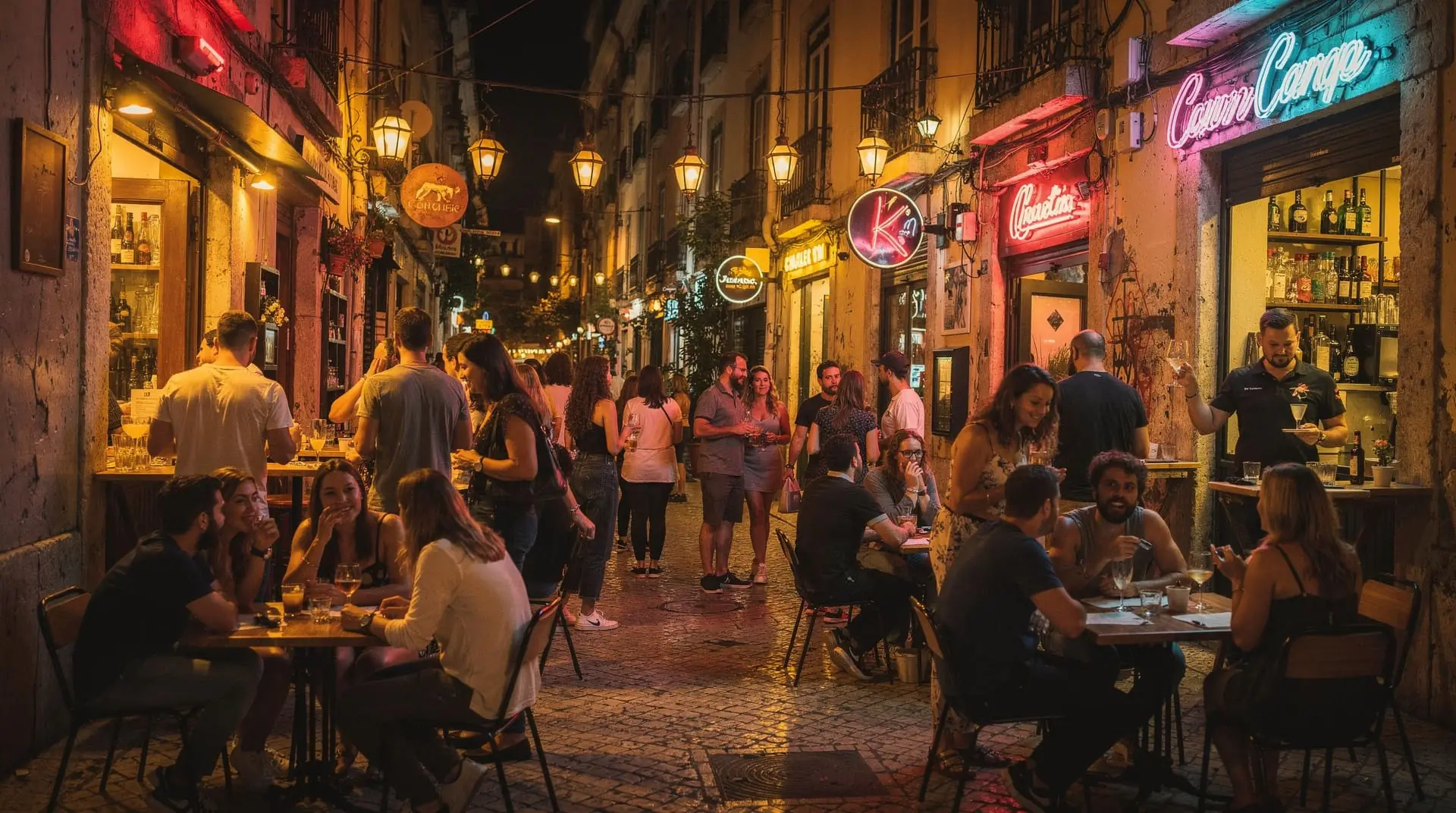
Bairro Alto nightlife: the complete bar-hop guide
Honest guide to Bairro Alto's bar scene. Best streets, what to drink, which bars to avoid, timing, and how to do the neighbourhood without getting scammed.
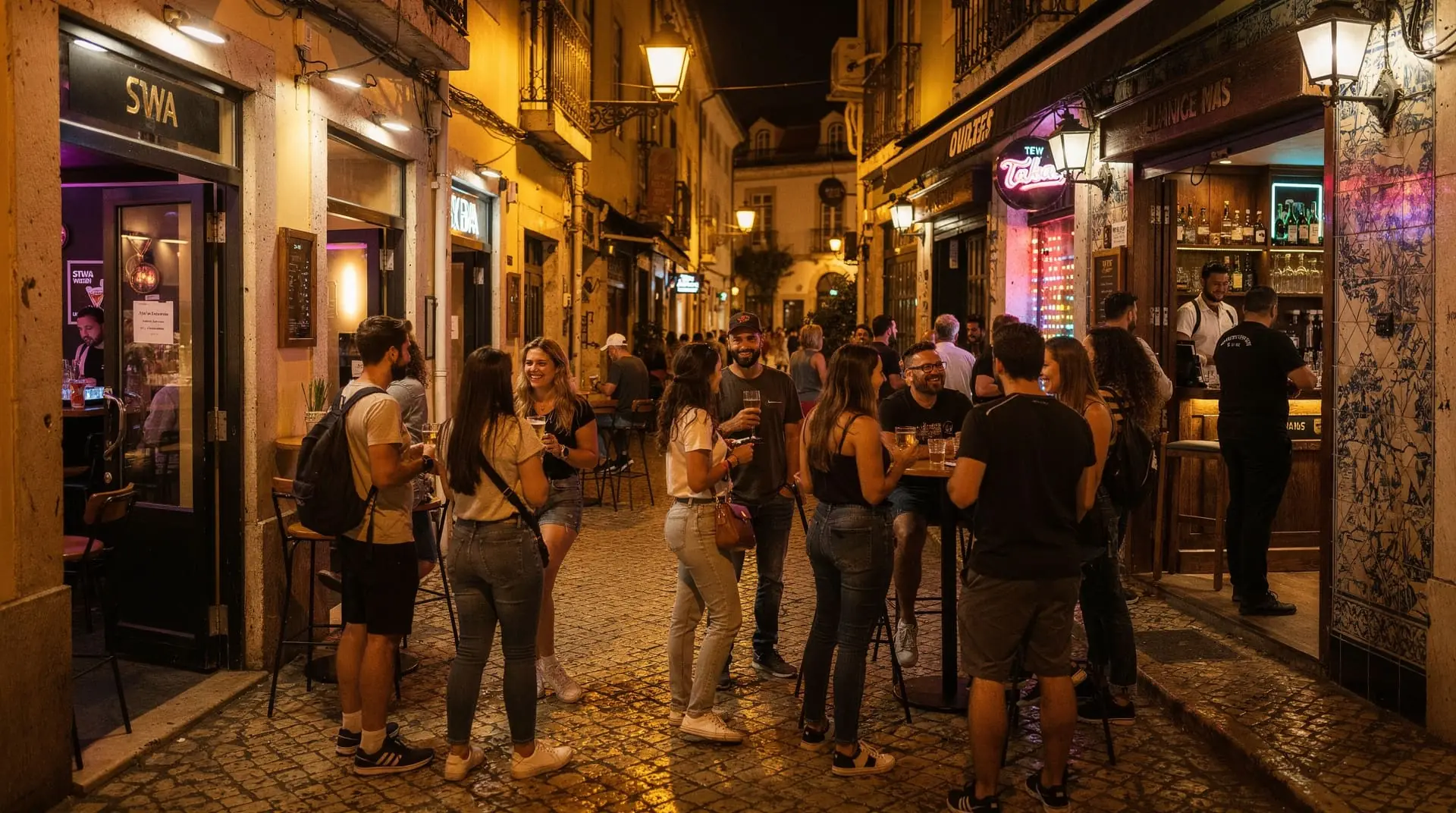
Pub crawls in Lisbon: organised vs DIY, safety, and what to watch out for
Honest 2026 guide to Lisbon pub crawls: how organised crawls work, legit operators, drink-spiking risks, DIY alternatives, and what to expect.
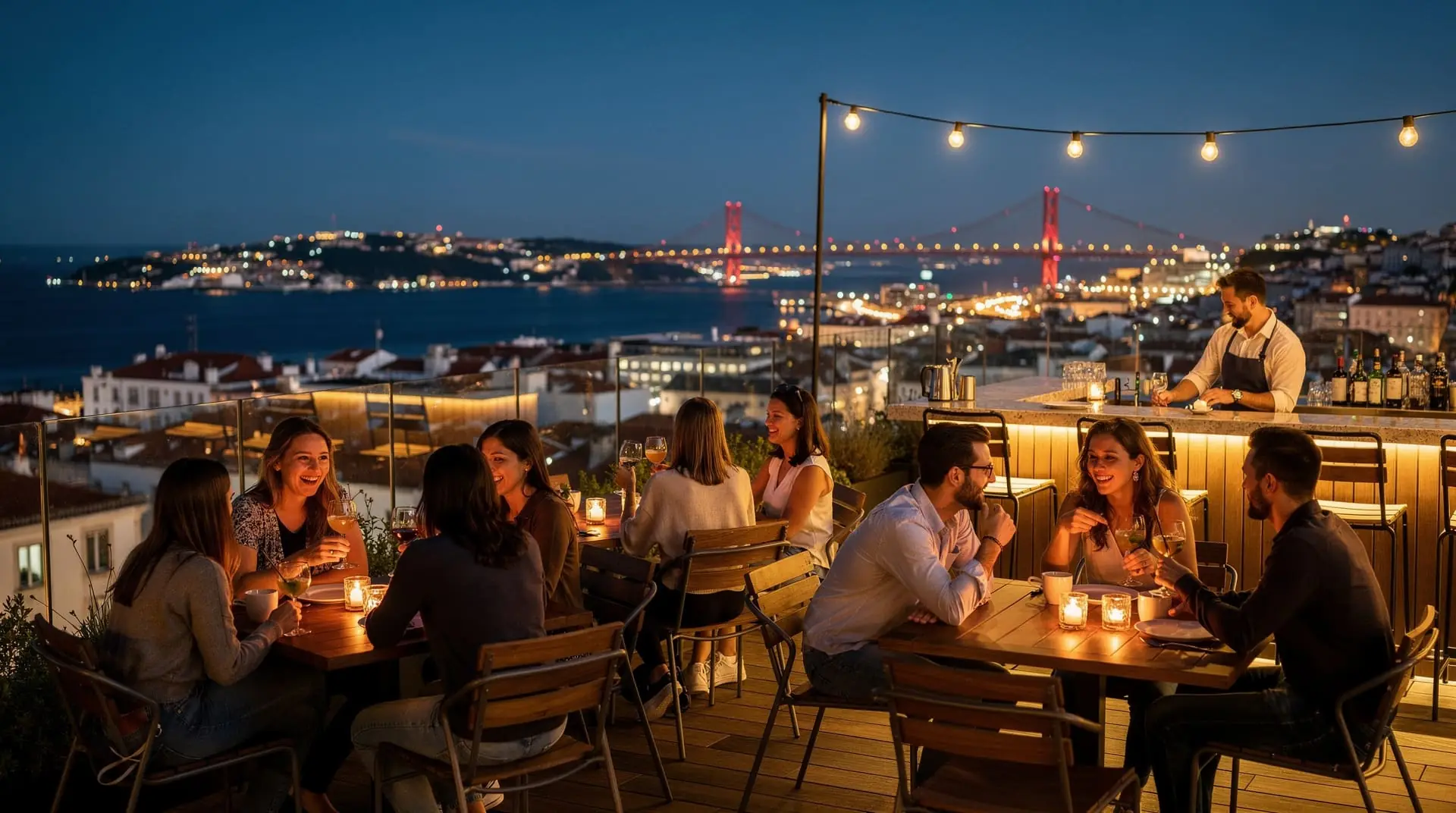
Best rooftop bars in Lisbon: views, prices, and honest picks
Lisbon's best rooftop bars in 2026: Park, Topo Martim Moniz, LUMI, Lost In, Memmo Alfama, and the Bairro Alto Hotel terrace. Prices, access, and honest tips.
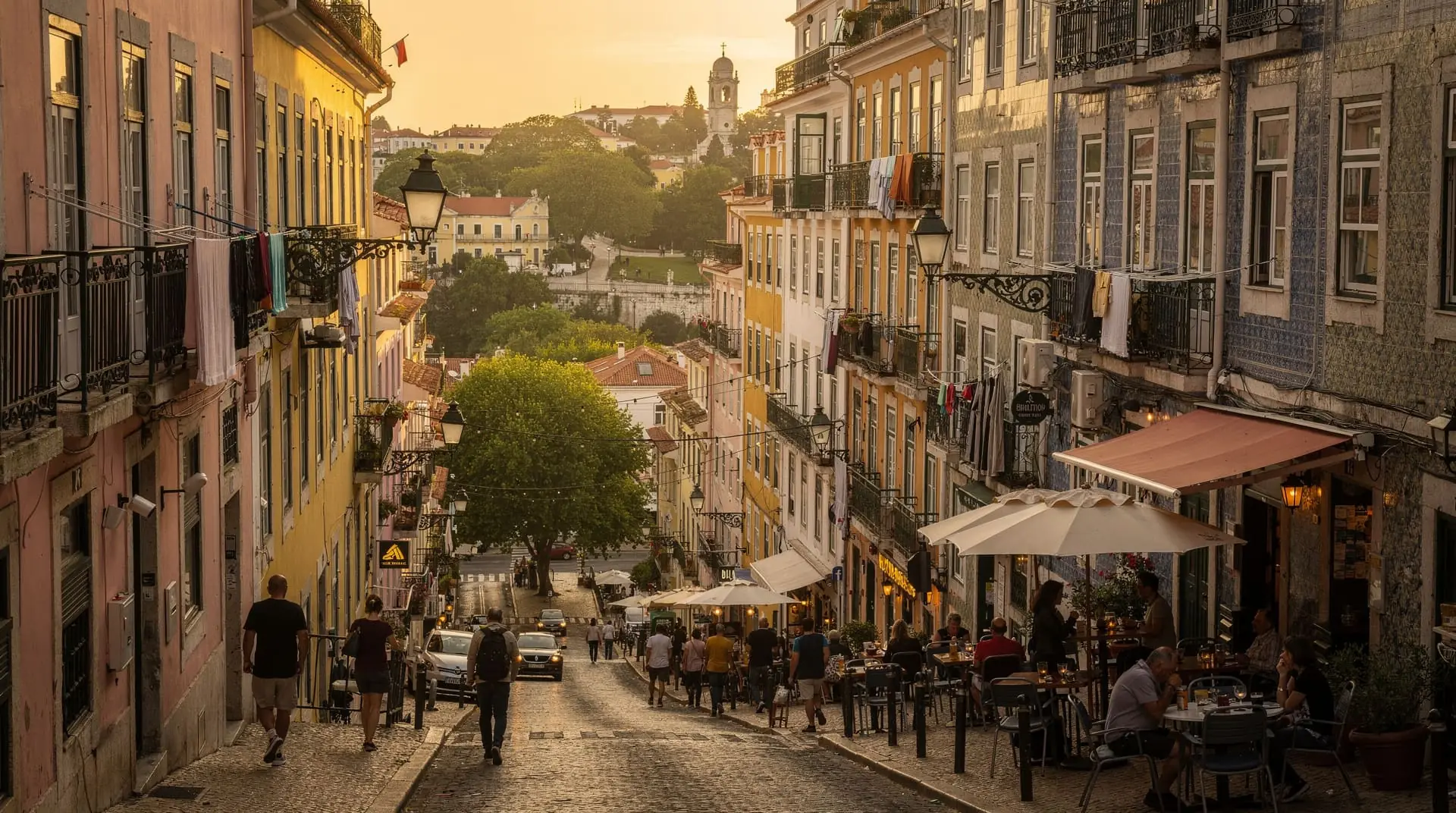
Bairro Alto: day life, nightlife, and the Príncipe Real transition
Bairro Alto by day: vintage shops, fado houses, and Chiado walks. By night: Lisbon's densest bar strip. Honest guide with no tourist-trap bars.
Ready to book? Top tours for this guide
We earn a small commission if you book through GetYourGuide — at no extra cost to you. Every tour is hand-picked and verified.
Lisbon: 48-Hour Hop-On-Hop-Off Bus Tour and Oceanarium Entry
Lisbon: MAAT Entry Ticket & Dolphin Watching Boat Tour
Lisbon: Alfama, Mouraria Walking Tour with Fado Night, Tapas
Lisbon: Hop-On Hop-Off Bus Tour
Lisbon: 1-or 2-Day Hop-On Hop-Off Bus Tour