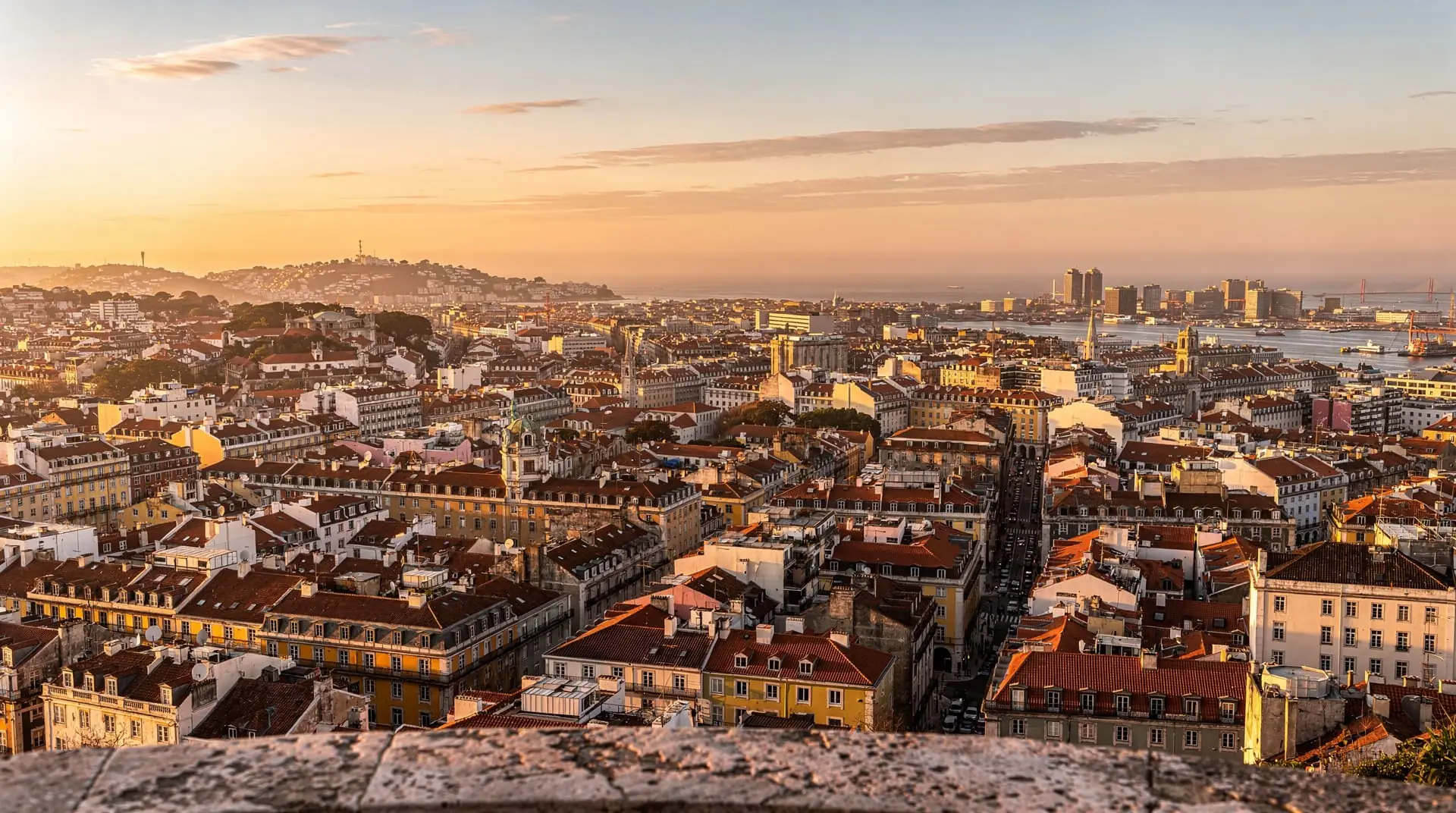
Miradouro da Senhora do Monte — the highest viewpoint in Lisbon
Last reviewed
What can you see from Miradouro da Senhora do Monte?
From Lisbon's highest miradouro you see São Jorge Castle nearly at eye level, the full Alfama roofscape falling to the Tagus, the Ponte 25 de Abril bridge, the Cristo Rei statue on the south bank, and on clear days the Serra de Sintra 30 km northwest. It is the widest 360-degree panorama available from a public viewpoint in central Lisbon.
The view that earns its approach
Getting to Miradouro da Senhora do Monte requires effort. The terrace sits on the highest point of the Graça hill — the tallest of Lisbon’s traditional seven hills — and reaching it involves climbing a series of steep cobbled lanes from Graça church, or a longer but gentler approach from Martim Moniz metro station. There are no funiculars, no elevators, no shortcuts.
This is partly what makes it excellent. The tourists who cannot face a 25-minute uphill walk do not make it here. The atmosphere at Senhora do Monte — particularly at sunset on a warm evening — is a mix of Lisbon residents, photography enthusiasts, and the subset of visitors willing to earn their panorama. The terrace is not empty (it has its own quiet fame, and a small café), but it is not the packaged spectacle of Portas do Sol.
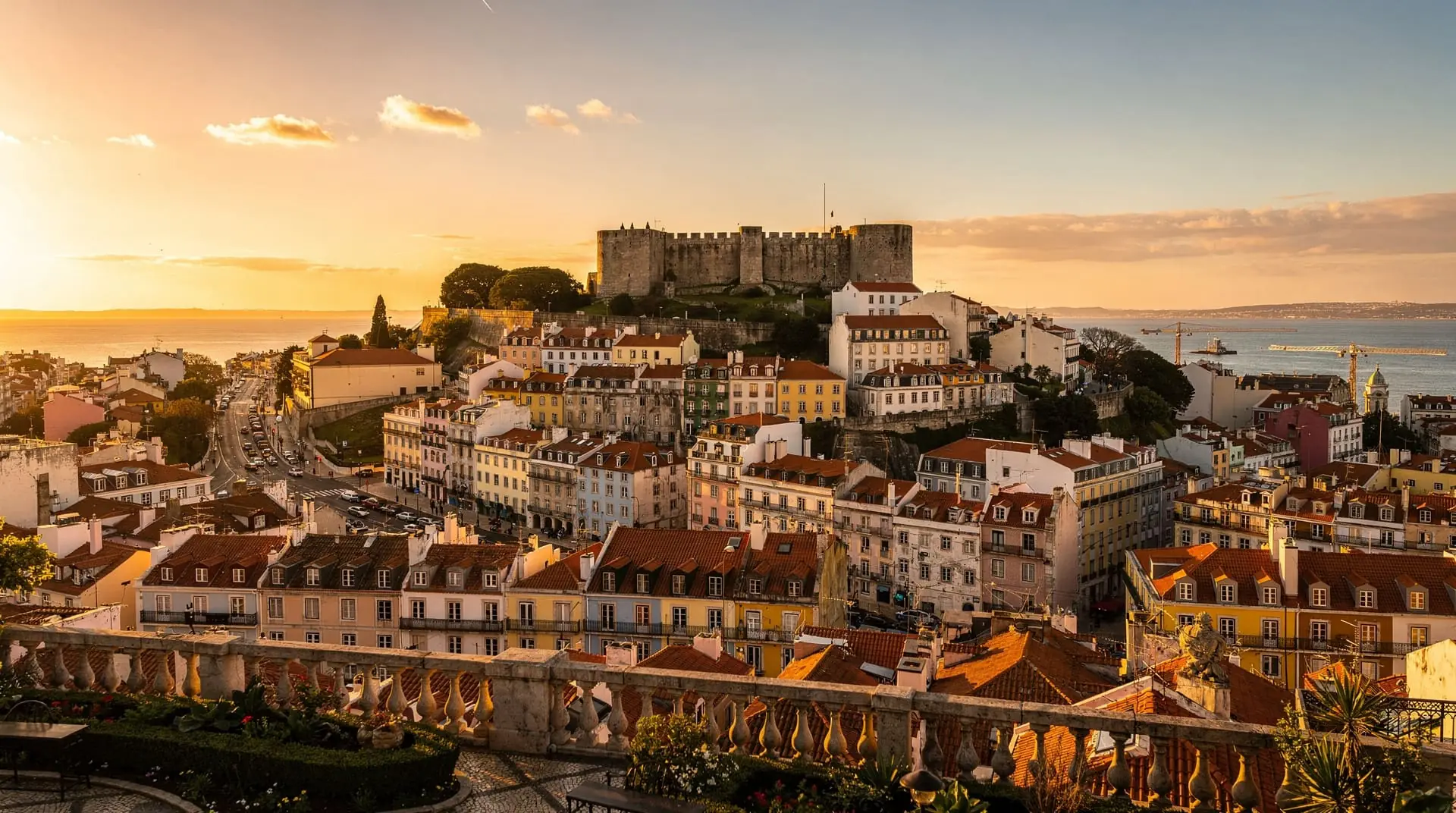
The view, when you arrive, is the widest and most satisfying in central Lisbon. São Jorge Castle sits almost at eye level across the valley — you are looking at it from the opposing hill, the castle at the same altitude as you, the white buildings of Mouraria filling the gap between. The Alfama spreads below and to the right in a cascade of orange rooftiles, chimneys, and television aerials, dropping to the Tagus which on clear days reflects the sky with a metallic gleam. To the west, the Ponte 25 de Abril and the Cristo Rei statue on the Almada hillside are visible. On winter mornings after overnight rain, the Serra de Sintra appears on the horizon to the northwest, and the industrial flatlands of the Tejo estuary stretch south.
| Where | Top of Graça hill, Lisbon’s highest point |
| Cost | Free entry |
| Time needed | 30–45 minutes, longer at sunset |
| Getting there | 20–30 min walk from Martim Moniz or Alfama; no funicular |
| Best time | Sunset, or early morning for a quiet, clear view |
The chapel and the terrace
The miradouro takes its name from the small white chapel of Nossa Senhora do Monte (Our Lady of the Mountain) that sits at the back of the terrace. The chapel is 17th-century and is occasionally open — inside there is a baroque interior with azulejo panels and a stone chair that local tradition associates with Queen Leonor, though the historical connection is uncertain. The chapel is primarily a neighbourhood church, not a tourist attraction, and should be treated as such if it is open during a religious service.
The terrace in front of the chapel is the viewpoint proper: a long parapet with benches at intervals, planted with oleander and stone pines that frame the view without blocking it. The café (Esplanada da Senhora do Monte) is a low structure against the chapel wall, open on warm evenings and weekends, serving wine, beer, coffee, and simple snacks. Prices are honest — this is not a tourist-gouging café but a neighbourhood bar that happens to have a spectacular terrace.
Getting there: four options
On foot from Martim Moniz (25–30 minutes)
The most reliable approach for first-time visitors. Take the Green or Yellow metro line to Martim Moniz station. Exit onto the square and walk east along Rua da Palma for 5 minutes, then turn right (south) onto Calçada do Monte. This steep lane climbs directly to the Graça neighbourhood and eventually to the miradouro. The climb is steady — save energy on hot days by going in the morning.
On foot from Alfama (20 minutes from Portas do Sol)
If you are already at Portas do Sol or the São Jorge Castle, continue uphill through the narrow Alfama streets towards the Graça church. The route is signposted (look for miradouro signs) and takes you through some of the most picturesque parts of Alfama — steep lanes, laundry strung between windows, elderly residents sitting in doorways.
Tram 28 to Graça (stop: Graça)
The historic tram 28 passes through Graça and has a stop near the church. From the tram stop it is a 10-minute walk uphill to the miradouro. Note that tram 28 is heavily targeted by pickpockets — be careful with belongings, especially phones. The tram is scenic and genuine but requires vigilance.
Bus 734
Bus 734 from Intendente (near Martim Moniz) serves Graça directly. A quieter option than tram 28 for reaching this part of the city.
Best times to visit
Sunset: The classic visit. Sunset at Senhora do Monte faces roughly west, meaning the sky behind you (over the castle and Alfama) turns orange and pink while the Tagus in front catches the light. The castle is illuminated from around 20:00, which means the post-sunset period — when the castle glows against a darkening sky — is equally worth experiencing. In summer (June–July) sunset is around 21:15 and the terrace stays lively until 22:00 or later.
Sunrise: The sunrise miradouro — the sun rises over the Tagus and the south bank, so the view is at its most dramatic in the early morning. Almost no other visitors at 07:00.
Clear winter mornings: After overnight rain clears the air, winter mornings offer visibility that summer haze obscures. The Serra de Sintra appears on the horizon, the castle tiles catch winter light at a lower angle, and the rooftops steam slightly as the sun hits them. Fewer visitors, better photography conditions.
Avoid: Saturday and Sunday summer evenings from 18:30 onwards if you want space and quiet. The terrace fills quickly.
Combining with other Graça sites
Graça is a coherent half-day neighbourhood walk combined with its miradouros. From the Graça-Mouraria destination:
Start at the Graça market (Mercado de Graça, weekday mornings, fresh produce) on Largo da Graça. Walk past the Igreja da Graça (17th-century church with painted tile panels inside — worth 10 minutes). The Miradouro da Graça is immediately opposite the church — a lower, slightly less dramatic viewpoint than Senhora do Monte but with an excellent café (Esplanada da Igreja da Graça) and a good view of the castle.
From Graça miradouro, walk uphill 10 minutes to Senhora do Monte (the highest point). Then descend via the opposite side of the hill through the Intendente neighbourhood — a working-class area undergoing slow gentrification, with tile-fronted houses, local cafés, and the large Praça do Intendente square that has several good restaurants and bars.
This whole circuit takes 2–3 hours at a leisurely pace and covers two miradouros, a church, a market, and a neighbourhood not on most tourist itineraries.
Senhora do Monte vs the nearby alternatives:
| Viewpoint | Elevation/panorama | Effort to reach |
|---|---|---|
| Senhora do Monte | Widest, 360° | 20–30 min uphill walk |
| Miradouro da Graça | Lower, castle-facing | 15 min uphill walk, good café |
| Portas do Sol | Alfama roofscape, closer to castle | Tram 28 stop, minimal walk |
| São Jorge Castle | From within the walls, paid | 20 min walk from Sé, entry fee |
For the river-facing alternative on the opposite side of the historic centre, see Santa Catarina — a very different, westward view reached by funicular rather than a climb.
Guided options
For visitors who prefer a guided approach to the Graça area and its viewpoints: the tuk-tuk city tour covers the upper Alfama and Graça viewpoints including Senhora do Monte, handling the steep sections that deter some visitors. The tuk-tuk format means you stop at each viewpoint for photographs without needing to navigate the lanes independently.
The 2-hour belvederes eco-tuk-tuk tour is specifically designed around Lisbon’s viewpoints and typically includes Senhora do Monte as the primary stop. Recommended for visitors who want to see multiple miradouros efficiently rather than choosing one.
For the adventurous: the 7 hills electric bike tour covers the major hilltops including Graça, with an electric assist that makes the climbs manageable for most fitness levels.
Honest tips
The approach lanes to Senhora do Monte (Calçada do Monte and Travessa da Verónica) are narrow, cobbled, and steep. They are fine for walking but not navigable by pushchairs or wheelchairs. Visitors with mobility limitations should consider the tuk-tuk option.
The café occasionally closes early on weekdays and in winter — do not rely on it being open. Bring water if visiting in summer.
Sunset photography here is genuine, not performative. The view is wide enough that most photographers can find a section of parapet without crowds in the frame. The telephone tower visible to the north can intrude in some compositions — stand at the western end of the terrace for the cleanest castle view.
For a full comparison of all Lisbon viewpoints, see the best Lisbon viewpoints ranked guide. For how to plan a full Alfama and Graça day, the Alfama neighbourhood guide has a worked schedule including transport and lunch options.
If you are fitting this into a broader Lisbon itinerary, the 3-day Lisbon itinerary includes an Alfama morning with a Senhora do Monte sunset visit built into day two. The Lisbon without a car guide covers transport specifics for reaching all the miradouros by public transport, and getting around Lisbon covers the metro and tram network more broadly.
If you’re planning to end the evening with dinner and music, several genuine fado venues sit within walking distance downhill in Alfama — see the fado in Alfama guide for how to combine a sunset here with a fado dinner afterwards.
Related guides
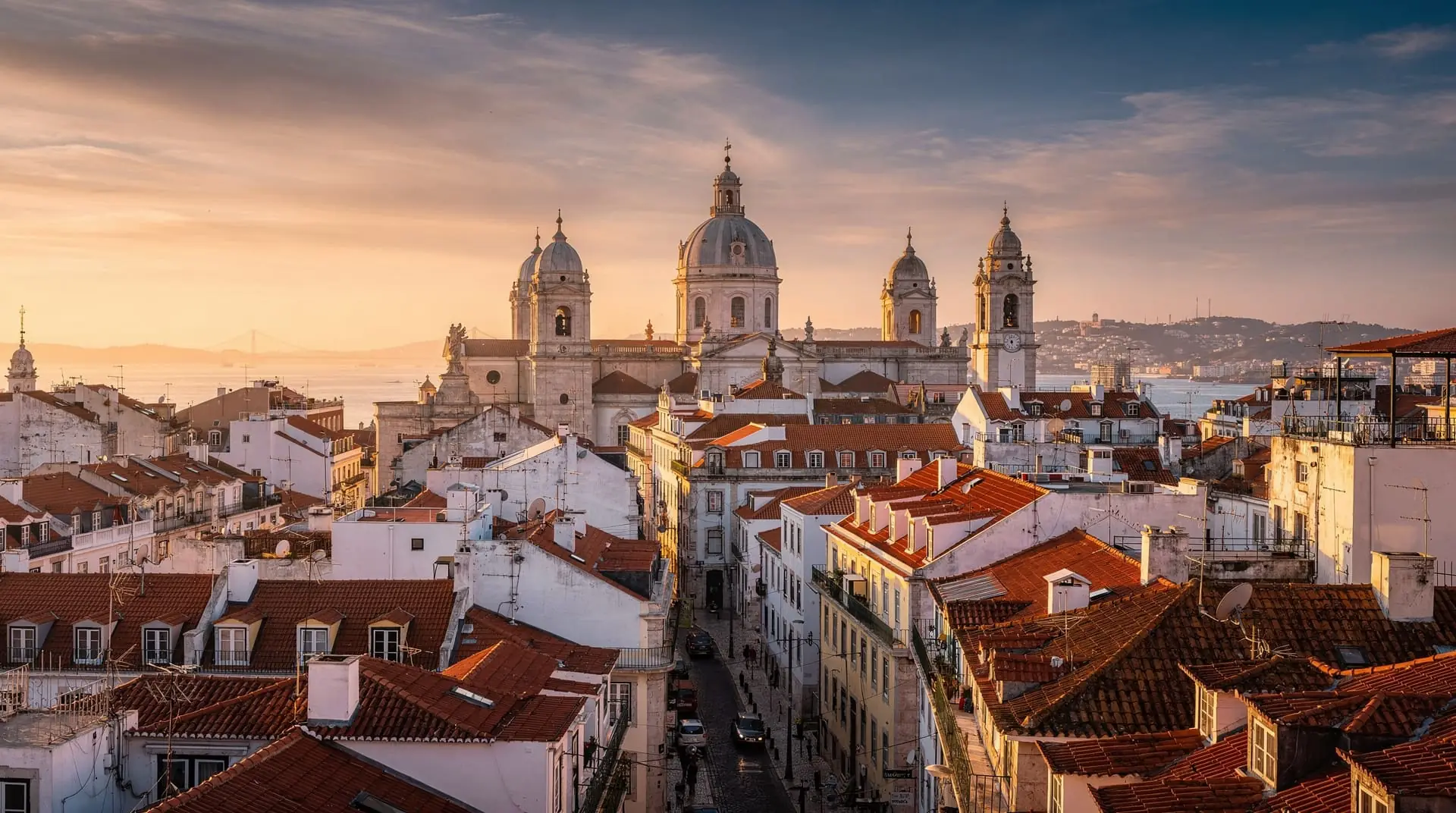
Best viewpoints in Lisbon — ranked and honest
The 8 best miradouros in Lisbon ranked: Senhora do Monte, Portas do Sol, São Pedro de Alcântara, Santa Catarina, Graça, Santa Luzia, Castelo, Cristo Rei.
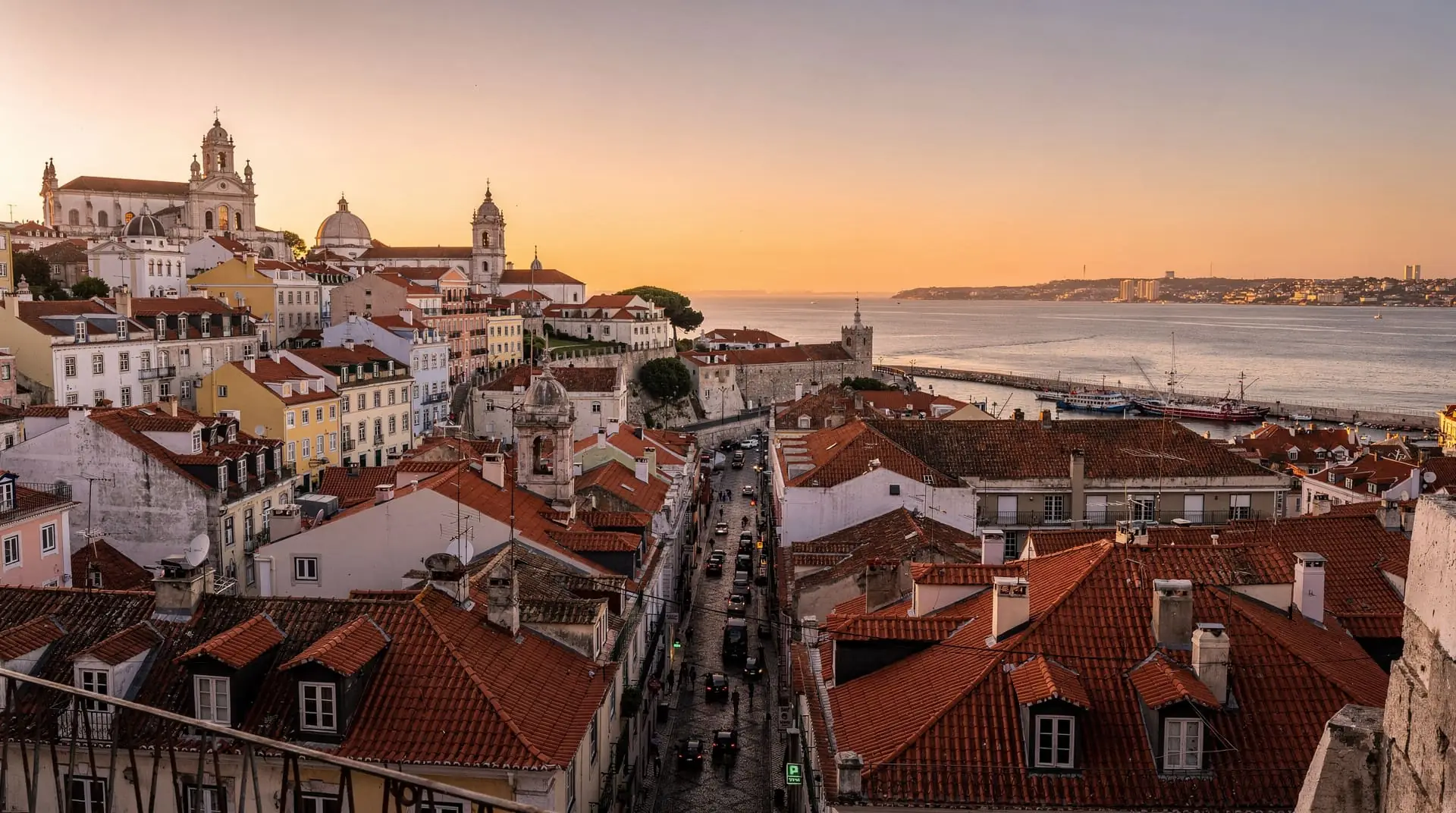
Miradouro das Portas do Sol — the iconic Alfama viewpoint
Guide to Portas do Sol viewpoint in Lisbon: tram 28 stop, Alfama rooftop views, ginjinha bars, best times to avoid crowds, and what to see nearby.
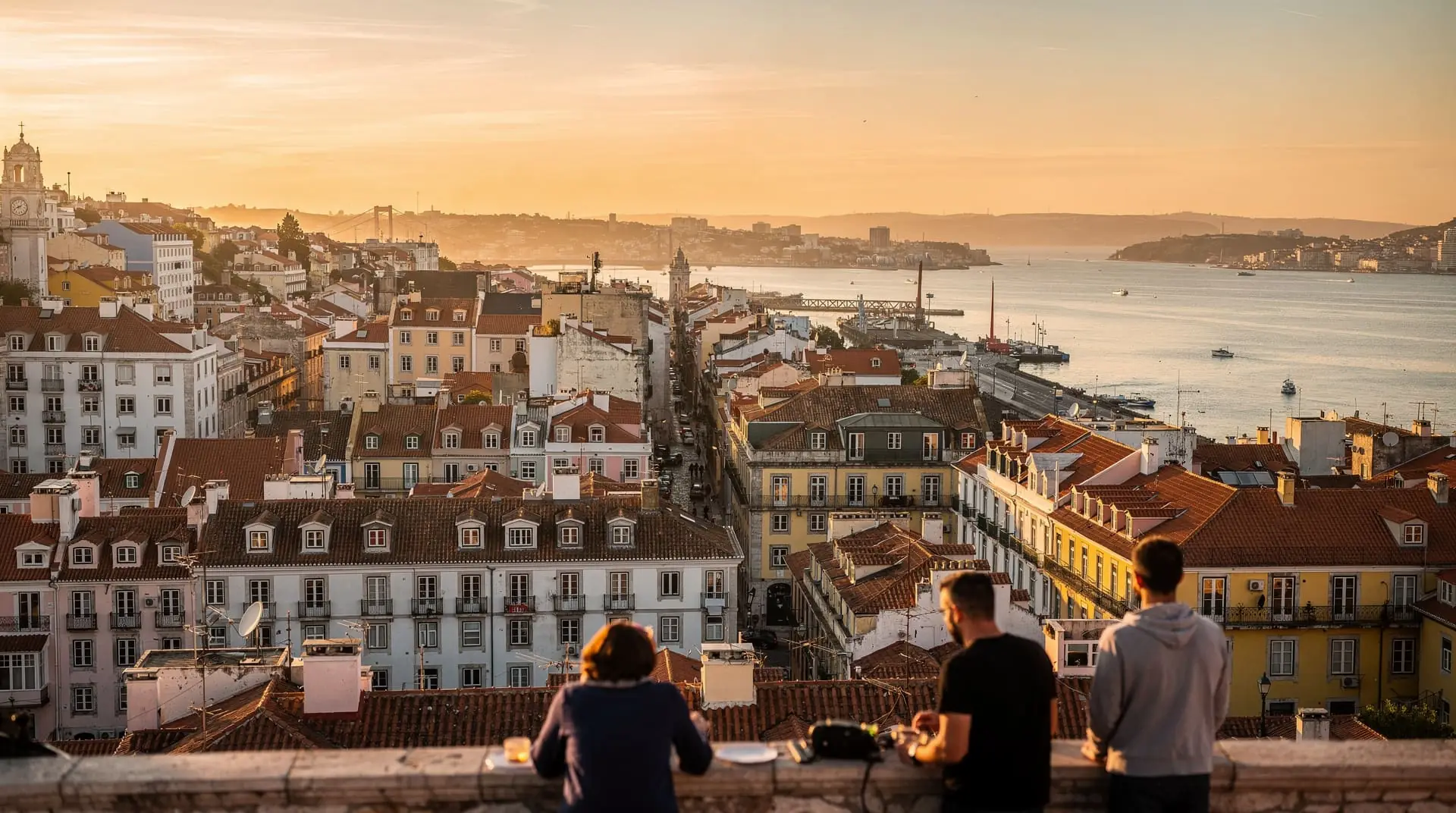
Miradouro de Santa Catarina — the Adamastor viewpoint
Guide to Miradouro de Santa Catarina in Lisbon: the Adamastor sculpture, Tagus and bridge views, Bica funicular, sunset crowds, and the Cais do Sodré area.
Miradouro de São Pedro de Alcântara — Bairro Alto's castle view
Miradouro de São Pedro de Alcântara, Bairro Alto: Glória funicular, garden viewpoint, castle panorama, best times, and what to do nearby.
Ready to book? Top tours for this guide
We earn a small commission if you book through GetYourGuide — at no extra cost to you. Every tour is hand-picked and verified.
Lisbon: 48-Hour Hop-On-Hop-Off Bus Tour and Oceanarium Entry
Lisbon: MAAT Entry Ticket & Dolphin Watching Boat Tour
Lisbon: Alfama, Mouraria Walking Tour with Fado Night, Tapas
Lisbon: Hop-On Hop-Off Bus Tour
Lisbon: 1-or 2-Day Hop-On Hop-Off Bus Tour