
Lisbon without a car: 5-day public transport itinerary
Last reviewed
The good news about Lisbon without a car: the city’s public transport is genuinely excellent, and most of the places worth going are reachable by train, bus or ferry. Sintra (40 min by train), Cascais (40 min), Setúbal (50 min by Fertagus), and the Tagus ferry crossings — all accessible without a car, some of them more enjoyably so because you can look out the window.
The honest caveat: Arrábida beach requires a car or a guided tour. The Setúbal day trip in this itinerary reaches Setúbal city and the Sado estuary (dolphin watching, the best market in the region) but not the deep park beaches. If Arrábida’s turquoise bays are a priority, join a guided day tour from Lisbon.
This itinerary covers every leg by public transport, with specific line numbers, journey times and real costs.
| Where | Lisbon, Cacilhas/Almada, Sintra, Setúbal (and optionally Cascais) |
| Cost | around €55–75 per person for 5 days of transport |
| Time needed | 5 days, one day trip most days |
| Getting around | Train, tram, bus and ferry — no car at any point |
| Best time | Year-round; check Fertagus and ferry timetables for reduced winter frequency |
Transport setup: cards and tickets
Viva Viagem card (essential)
Pick up the Viva Viagem card at the airport or any metro station (€0.50 card fee). Load it with Zapping credit (a cash balance, charged per trip) or specific product tickets:
- Metro/tram/bus in Lisbon: €1.55 per trip (Zapping)
- Suburban train to Sintra from Rossio: €2.25 each way (Zapping, Zonal)
- Suburban train to Cascais from Cais do Sodré: €2.25 each way (Zapping)
- Fertagus train to Setúbal from Entrecampos: €3.40 each way
- Tagus ferry (Cais do Sodré → Cacilhas): €1.45 each way
The Lisboa Card (24h €22, 48h €35, 72h €43) covers unlimited metro/tram/bus and some suburban train zones. For this itinerary’s heavy first two days, the 48-hour Lisboa Card (€35) is likely cost-effective. For Days 3–5, loading Zapping on the same Viva Viagem card works out cheaper. See the Viva Viagem card guide and Lisboa Card analysis.
Estimated transport cost for 5 days: €55–75 total (including Lisboa Card 48h + remaining Zapping credit).
Key transport hubs
- Rossio station: suburban trains to Sintra (40 min)
- Cais do Sodré station: suburban trains to Cascais (40 min); Tagus ferry to Cacilhas/Almada
- Entrecampos station (metro to Entrecampos or Marquês de Pombal): Fertagus trains to Setúbal (50 min)
- Terreiro do Paço (Praça do Comércio): Tagus ferries to Montijo, Seixal, Barreiro, Cacilhas
- Oriente station: long-distance trains; suburban connections east
Use the getting around Lisbon guide and day trip transport guide for real-time timetables and route planning.
Lisboa Card vs Viva Viagem for this itinerary
| Lisboa Card 48h (€35) | Viva Viagem Zapping | |
|---|---|---|
| Best for | Days 1–2 (city monuments + transport) | Days 3–5 (ferry, Sintra, Setúbal) |
| Covers | Unlimited city transport + free monument entry | Pay-per-trip, no monument discount |
| This itinerary | Use for Alfama and Belém days | Load separately for the day trips |
Full comparison in the Lisboa Card vs individual tickets guide.
Swapping in a Cascais day
This itinerary prioritises Cacilhas, Sintra and Setúbal, but Cascais is just as easy without a car — a suburban train from Cais do Sodré, 40 minutes, €2.25 each way, the same line used for Belém on Day 2. If you’d rather do Cascais than the Cacilhas/Almada day, swap it in directly using the same transport pattern; see the Cascais day trip guide for a full plan.
Day 1: Alfama and the centre by foot and tram
Lisbon’s historic centre is best explored on foot and by tram. No car was ever helpful here.
Morning — Baixa, Sé and Alfama (9:00–13:00)
Start at Praça do Comércio. Walk through the Baixa grid (flat, pedestrian-friendly). The Sé de Lisboa is 10 minutes walk; São Jorge Castle is another 15 minutes uphill from the Sé, or one stop on tram 28 from the Sé stop.
Tram 28: buy a single ticket at the stop (€2) or use the Viva Viagem card (€1.55). The tram runs from Martim Moniz in the east through Alfama, up to the Sé, on to Chiado and then down to the Estrela basilica. It’s slow (up to 30 minutes for the full route) but scenic. Keep bags in front. See tram 28 guide.
São Jorge Castle (€15, free with Lisboa Card): 60–75 minutes.
Descend into Alfama on foot.
Afternoon — viewpoints (13:00–18:00)
Lunch in Alfama or Mouraria (mains €10–14). Walk the free miradouros: Portas do Sol, Santa Luzia, Graça (15-minute walk up from central Alfama). All free.
Return by tram 28 or on foot.
Evening — Chiado dinner and Bairro Alto (from 19:00)
Metro (Baixa-Chiado station) or walk. Dinner in Chiado, drinks in Bairro Alto. Transport home: taxi or walk if accommodation is central.
Lisbon: free walking tourDay 2: Belém by train and tram
Transport today: train from Cais do Sodré to Belém (10 min, €1.55, runs every 15 min), then tram 15E back (€1.55) or the same train.
Morning — Jerónimos and Belém Tower (8:30–13:00)
Train from Cais do Sodré to Belém. Tram 15E also covers this route (from Praça da Figueira or Praça do Comércio, 25 min) if you prefer the tram experience.
Jerónimos Monastery (pre-booked, €15 or free with Lisboa Card). Belém Tower (€8, free with Lisboa Card). Pastéis de Belém (€1.55/pastel).
Afternoon — LX Factory and a Tagus cruise (13:00–18:30)
Tram 15E from Belém to LX Factory (15 min). Lunch at LX Factory. At 17:00, tram 15E or walk to Cais do Sodré for the sunset cruise.
Tagus sunset cruise: departs from Cais do Sodré or Terreiro do Paço (Praça do Comércio ferry terminal). Book in advance.
Lisbon: Tagus River cruise — morning, day, sunset or nightDay 3: Tagus ferry and Almada/Cacilhas
This is the day trip most Lisbon visitors miss — and it costs €2.90 return.
Getting there
Ferry from Cais do Sodré to Cacilhas: runs every 10–15 minutes, 24/7, €1.45 each way (Viva Viagem). Journey: 10 minutes. The view of Lisbon from the Tagus is superb — better than any viewpoint in the city. See Tagus ferries guide.
Morning — Cacilhas and Almada (9:30–13:00)
Cacilhas is a former fishing village now absorbed into Almada, the city on the south bank. From the ferry pier:
- Walk to the Rua do Ginjal seafront — a row of traditional restaurants on stilts over the river, looking back at Lisbon. The view is the best in the region. Restaurants open from noon.
- Walk up to the Cristo Rei statue (take the free Carris bus 175 from the ferry terminal, 15 minutes, or a taxi €5–8 one-way). The statue’s viewing platform (€8 entry) gives a 360-degree view: Lisbon across the Tagus, the 25 de Abril Bridge, and the Serra da Arrábida in the distance.
Alternatively, explore the Almada old town (Museu da Cidade de Almada, free on Sundays).
Midday — Cacilhas lunch (12:30–14:00)
The restaurants on Rua do Ginjal and near the ferry terminal serve the freshest fried fish in the Lisbon region — most of it caught in the Tagus. Costa Nova and Ponto Final are the most atmospheric (arrive early; booking recommended for Ponto Final which fills up fast). Mains €14–22. The view of Lisbon from your table is the bonus.
Afternoon — Setúbal Fertagus preview (14:30–18:00)
Option A (Setúbal preview): from Almada/Cacilhas, local buses connect to Setúbal (60 min, €2.50, limited services — check schedule at Transportes Sul do Tejo). Not recommended unless you’re comfortable with regional bus timetables.
Option B (return to Lisbon + Tile Museum): ferry back to Cais do Sodré, metro to Santa Apolónia, walk to the Tile Museum (€8, closes at 18:00) for 90 minutes. Return by metro.
Evening
Dinner in Chiado or Bairro Alto. By now you have a neighbourhood.
Day 4: Sintra by train
Getting there (depart 8:15)
Rossio station → Sintra: trains every 20–30 minutes from about 6:30 am. Journey: 40 minutes. Ticket: €2.25 each way (Viva Viagem Zapping). Platform at Rossio is underground — look for the departures board and the “Sintra” route. Buy tickets at the automated machines (faster) or ticket windows.
Book Sintra palace tickets online before this day. Pena Palace (€22), Quinta da Regaleira (€15), Moorish Castle (€13). Both Pena and Regaleira sell out completely in summer. See Sintra day trip guide.
Morning — bus 434 to Pena Palace (9:30–12:30)
From Sintra station, bus 434 runs every 20 minutes to Pena Palace (via Moorish Castle). Ticket: €5 return. Cash or contactless card accepted. The bus is frequent enough that you don’t need to pre-book — but in July–August, it’s very crowded.
Hop off at the Moorish Castle stop (optional, €13 entry). Then the next 434 to Pena Palace.
Pena Palace (pre-booked, €22): 90 minutes.
From Lisbon: Sintra full-day tripAfternoon — Quinta da Regaleira and village (12:30–17:30)
Bus 434 back down to Sintra village. Lunch in the village. Quinta da Regaleira (pre-booked, €15): 90 minutes.
Return train to Rossio by 17:30. Trains run every 20–30 minutes; last train is around 23:00.
Day 5: Setúbal by Fertagus train
Getting there (depart 8:45)
Entrecampos station → Setúbal (Fertagus): Fertagus is a rail service that crosses the Tagus on the road deck of the 25 de Abril Bridge (the train runs on a lower level). From Entrecampos (metro: Entrecampos on the yellow line), trains to Setúbal run approximately every 30–60 minutes. Journey: 50 minutes. Ticket: €3.40 each way (Fertagus uses a separate integrated ticket system — buy at the station). See day trip transport guide.
Morning — Setúbal market and waterfront (10:00–13:00)
Setúbal is a working port city of 90,000 people — not a tourist destination, which is precisely what makes it interesting. The Mercado do Livramento (Monday–Saturday, 7:00–14:00) is the finest covered market in the Setúbal region: Art Deco tiled hall, fresh fish counter with morning catch from the Sado estuary and the Atlantic coast beyond Arrábida, local cheese, charcuterie and produce.
Walk the waterfront promenade along the Sado estuary with views of the Tróia Peninsula and the distant Arrábida hills — the park’s turquoise bays are the one thing on this trip genuinely out of reach without a car or a guided tour.
The Igreja de Jesus (Church of Jesus, 1491): the earliest known example of the Manueline style, with distinctive limestone columns — historically important and almost entirely overlooked by the tourist circuit. Free entry.
Midday — Setúbal seafood lunch (13:00–15:00)
Setúbal’s main speciality: choco frito (fried cuttlefish, caught in the Sado). Any restaurant on Rua Luísa Todi (the main waterfront street) serves it — typically €12–16 for a full plate with salad and house wine. The local white wine (Setúbal Moscatel) is available everywhere as a dessert wine at €3–5/glass.
Budget option: the market’s snack counters serve fish sandwiches and soup for €3–6.
If you’d rather skip the market
Setúbal’s appeal is quiet and unhurried rather than sight-heavy, which suits some travellers better than others. If a working port city sounds less appealing than a beach, skip straight to the Tróia ferry after lunch and spend the afternoon on the sand instead of the waterfront walk — the whole day still works without visiting the market or the church.
Afternoon — dolphin watching or Tróia ferry (15:00–18:00)
Option A — dolphin watching (book in advance): bottlenose dolphins are resident year-round in the Sado estuary. Most trips depart from Setúbal harbour and last 2–3 hours. Sighting rate is high (around 80–90% year-round). Cost: €35–45 per person. See dolphin watching guide.
Setúbal and Tróia: dolphin watching and Arrábida baysOption B — Tróia ferry: the ferry from Setúbal to Tróia (a sand spit with Atlantic beaches, €3.80 return) runs frequently. The beach at Tróia is excellent in summer and largely unknown to non-Portuguese visitors. Fertagus + Tróia ferry is one of the most cost-effective beach days from Lisbon.
Return to Lisbon (from 17:30)
Fertagus train from Setúbal to Entrecampos: 50 minutes. Last trains run around 22:00–23:00.
Evening — final dinner in Lisbon
Final evening dinner: try whatever you haven’t yet had. Cervejaria Ramiro in Intendente for the full Portuguese seafood experience (shared mains €25–40, book in advance). Or simply return to your favourite neighbourhood.
Public transport summary (5 days)
| Day | Main transport | Cost per person |
|---|---|---|
| 1 | Walk + tram 28 | €3–6 |
| 2 | Train Cais do Sodré–Belém + tram 15E | €3–5 |
| 3 | Ferry Cais do Sodré–Cacilhas | €2.90 |
| 4 | Train Rossio–Sintra + bus 434 | €9.50 |
| 5 | Fertagus Entrecampos–Setúbal | €6.80 |
| Lisboa Card 48h (Days 1–2) | €35 | |
| Viva Viagem Zapping (Days 3–5) | €20 | |
| Total transport | ~€55–65 |
Frequently asked questions
Is a car necessary to get around Lisbon and the region?
No — and in central Lisbon, a car is an active disadvantage. The hills, one-way streets and expensive parking make driving stressful. The only genuinely car-dependent day trip is Arrábida Natural Park (the beaches require a car or a guided tour). Everything in this itinerary — Sintra, Cascais, Setúbal, Tróia, Cacilhas — is accessible by train, bus or ferry. See driving and parking in Lisbon.
What’s the easiest way to get to Sintra from Lisbon?
Train from Rossio station to Sintra: 40 minutes, every 20–30 minutes, €2.25 each way. No reservation needed for the train itself, but you need pre-booked palace tickets. See Sintra day trip guide.
Can I reach Setúbal easily by public transport?
Yes — Fertagus from Entrecampos, 50 minutes, €3.40 each way. Setúbal city is easy by train. The Arrábida Natural Park beaches are the part that requires a car. See Setúbal and Arrábida day trip.
Is the Tagus ferry worth taking?
The Cais do Sodré to Cacilhas ferry (€1.45 each way) is a genuine Lisbon experience — commuters and visitors mixed together, 10 minutes on the Tagus with the city spread behind you. The view of Lisbon from the river is better than any land-based viewpoint. Yes, it’s worth it. See ferries across the Tagus.
Can I swap Cacilhas for Cascais instead?
Yes, easily — Cascais uses the same Cais do Sodré suburban line as Belém, just a different platform, 40 minutes each way. If the Sado estuary and Cristo Rei interest you less than a seafront resort town, take Cascais instead. See the Cascais day trip guide.
Do I need to book train or ferry tickets in advance?
No — trains, the Tagus ferry and Fertagus all run frequently enough that you buy on the day at the station. Only the attractions (Pena Palace, Quinta da Regaleira, dolphin watching) need advance booking, not the transport itself.
Related guides

Sintra vs Cascais: which day-trip should you pick?
Sintra offers palaces and hills but costs time and crowds. Cascais offers beaches and a marina and half the effort. Pick the right one for your trip.

Best family day trips from Lisbon: Sintra, Cascais, Óbidos, and more
Top family day trips from Lisbon in 2026: Sintra by train, Cascais beach, Óbidos chocolate, transport logistics, real age recommendations.
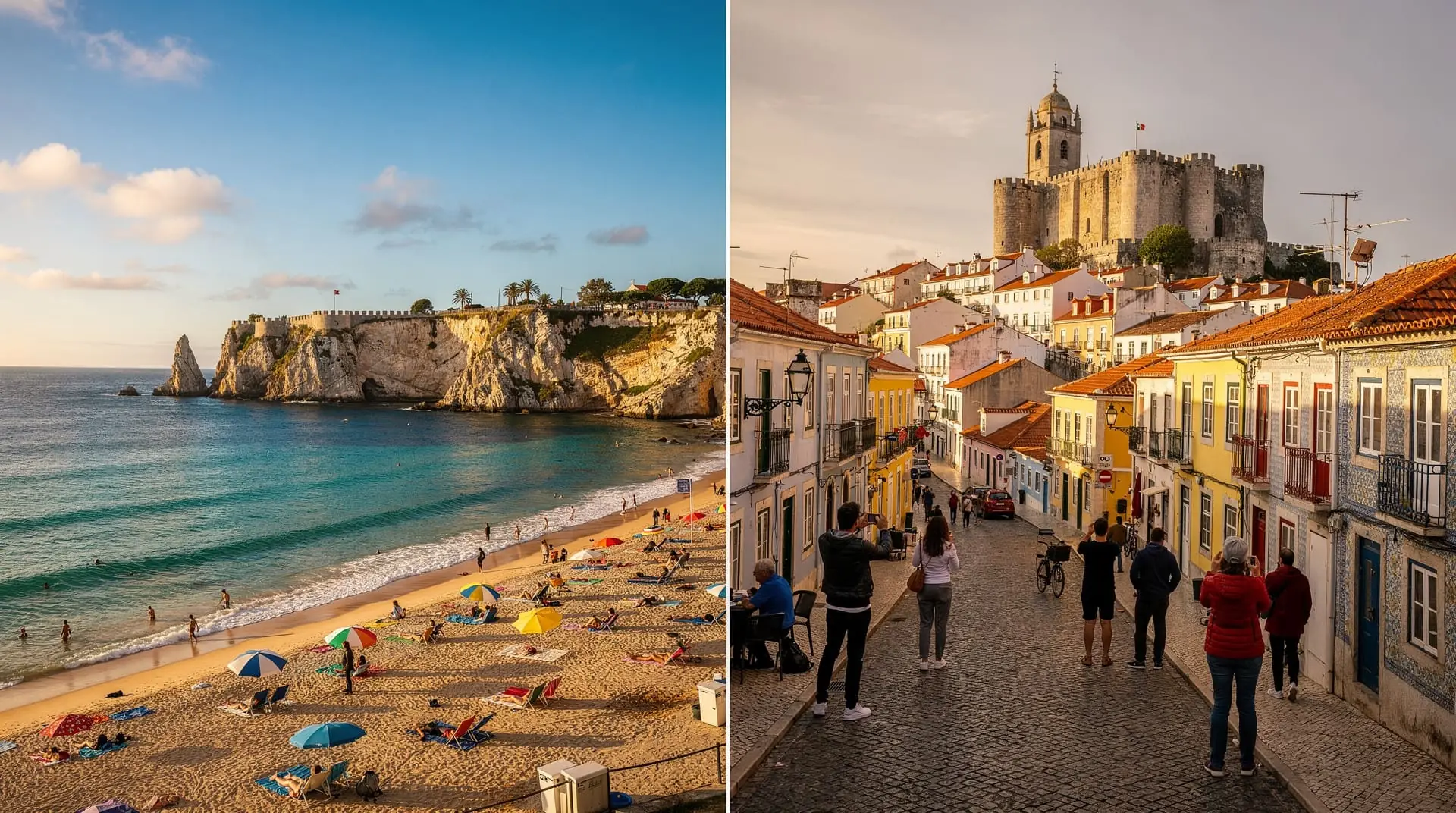
Which day-trip from Lisbon is right for you?
Decision guide: first-timer, foodie, family, pilgrim, beach lover or second visit. Pick the right Lisbon day-trip without guessing.
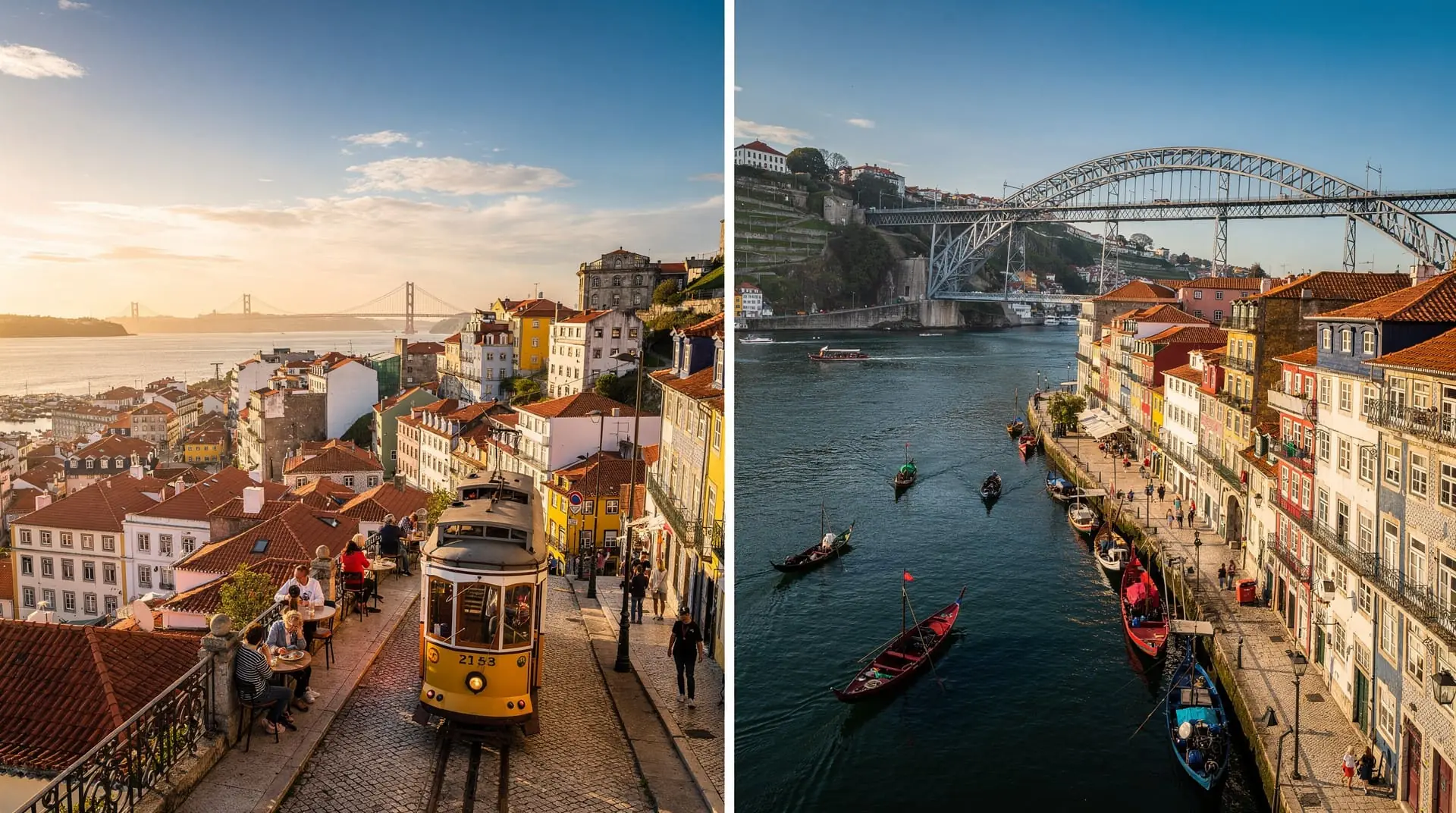
Lisbon vs Porto: which Portuguese city should you visit?
Honest head-to-head: vibe, weather, food, wine, day-trips and budget. Which city wins for your trip — and when to visit both.
Ready to book? Top tours for this guide
We earn a small commission if you book through GetYourGuide — at no extra cost to you. Every tour is hand-picked and verified.

Lisbon: 48-Hour Hop-On-Hop-Off Bus Tour and Oceanarium Entry
Lisbon: MAAT Entry Ticket & Dolphin Watching Boat Tour
Lisbon: Alfama, Mouraria Walking Tour with Fado Night, Tapas
Lisbon: Hop-On Hop-Off Bus Tour
Lisbon: 1-or 2-Day Hop-On Hop-Off Bus Tour