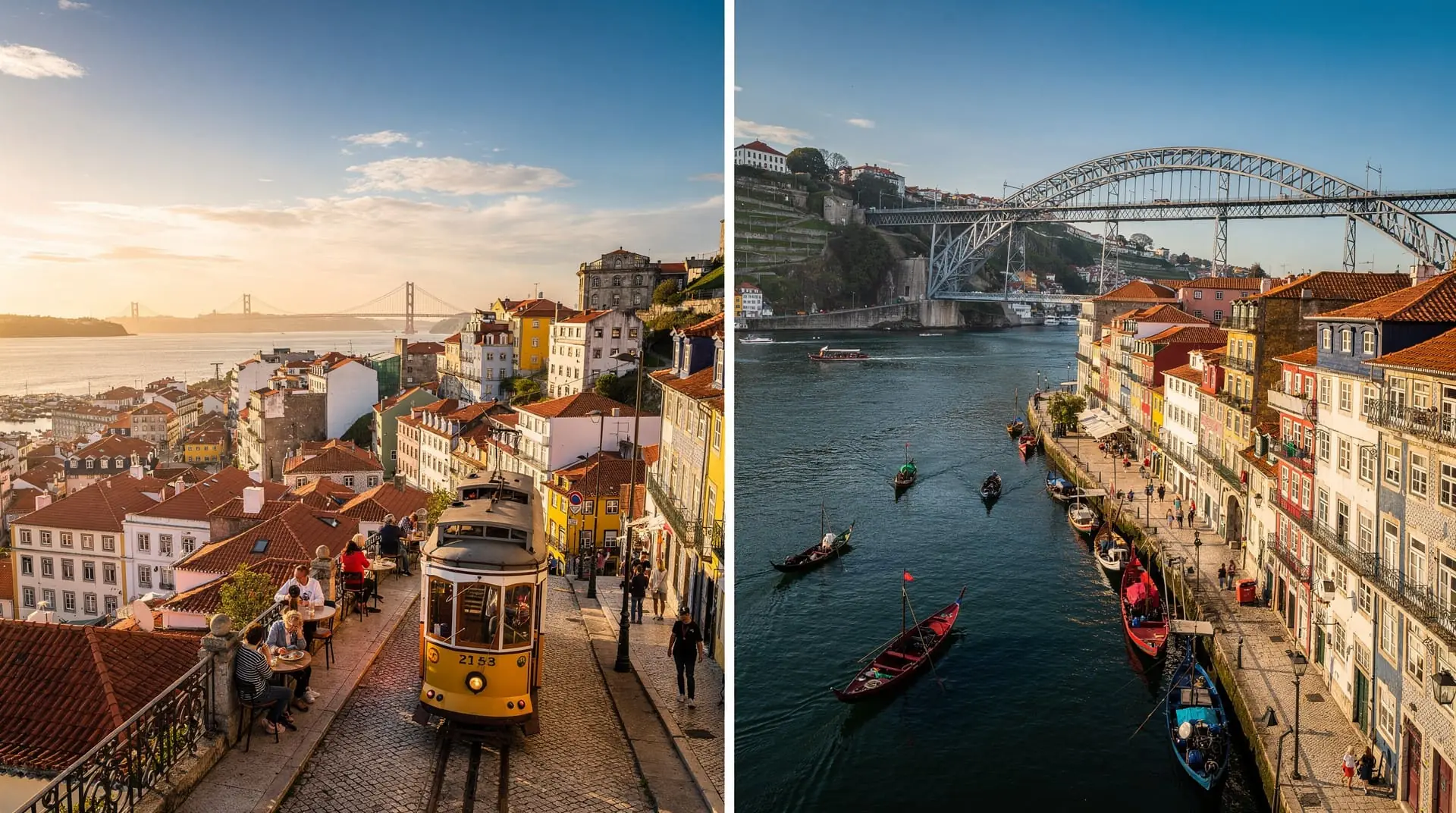
Lisbon vs Porto: which Portuguese city should you visit?
Last reviewed
Is Lisbon or Porto better to visit?
Lisbon wins for first-timers, beach access, warmer weather and day-trips. Porto wins for authentic atmosphere, port wine culture, lower prices and a more compact city. Most visitors who do both prefer whichever they visited second — so go to Lisbon first if you can only pick one.
Two cities, one budget, one choice — where to start
Portugal’s two major cities are 310 km apart and feel like different countries. Lisbon is southern, hilly, sun-baked and cosmopolitan — the capital of an empire that once stretched to Brazil and Macau. Porto is northern, rainy, gritty and proudly provincial — the city that gave Portugal its name, its flag’s blue stripe and its most famous wine.
Neither is better. They are different. This guide gives you the honest comparison so you can decide where to spend your limited days — and tells you when to visit both.
| Distance apart | Around 310 km, 2h45 train or 55 min flight |
| Cheaper city | Porto, by roughly €15-25/day |
| More day trips | Lisbon (Sintra, Cascais, Évora, Arrábida) |
| Better weather | Lisbon, most of the year |
| First-timer pick | Lisbon |
Vibe and atmosphere
Lisbon feels like a Mediterranean capital that missed the memo on Mediterranean blandness. The seven hills, the light bouncing off the Tagus, the trams grinding past azulejo-tiled facades — it is photogenic without trying. It has become genuinely international in the last decade: digital nomads, tech conferences, expensive brunch spots in Príncipe Real. Tourists are concentrated but manageable outside July and August. The city moves at a pace between Madrid and Lisbon’s own stereotyped “saudade” — which is to say, relaxed but not sleepy.
Porto still feels like a real city in a way that Lisbon is slowly losing. The Ribeira waterfront and the port-wine lodges across the river in Vila Nova de Gaia are stacked and dramatic. The markets are less curated, the restaurants less Instagrammed, the wine poured more generously. There is genuine shabbiness alongside the renovation — and that friction is part of Porto’s appeal. If you prefer a place with rough edges to one that has been polished for tourism, Porto wins.
Verdict: Lisbon for scale and spectacle; Porto for authenticity and atmosphere.
For a sense of how Lisbon’s individual neighbourhoods differ from each other before you even get to the Porto comparison, what to do in Alfama and the Bairro Alto guide show two very different sides of the same city — Alfama’s old-town density against Bairro Alto’s grid of bars and boutiques.
Weather and when to go
Lisbon averages 300 days of sunshine per year. Winters (Dec-Feb) are mild — 15°C daytime — but rainy. Spring (March-May) is ideal: flowers, comfortable 18-22°C, low crowds. Summer (June-Aug) is hot (30-35°C), busy and expensive. September and October are the best months overall: still warm, crowds thinning.
Porto has Atlantic weather. Summers peak at 25-28°C and are pleasantly warm, but shorter — the good weather runs June to September. The rest of the year involves more cloud and rain than Lisbon, particularly November to March. The famous Porto grey light is beautiful for photography; it is less pleasant if you were hoping for a beach.
Verdict: Lisbon wins on weather for most of the year. Porto’s summer is lovely but shorter.
Food and eating out
Both cities share the backbone of Portuguese cuisine: bacalhau (salt cod) in dozens of preparations, petiscos (tapas-like snacks), grilled sardines in summer, pork-based comfort food. But the emphases differ.
Lisbon leans toward Alentejo and coastal influences — razor clams, percebes (barnacles), açorda (bread soup), fresh-catch seafood. The Time Out Market in Cais do Sodré is the most curated food hall in Iberia. The cheap lunch deal (prato do dia, €8-12 including wine and coffee) is everywhere and usually excellent. The tourist-trap markup near the big monuments is also real — see our guide to restaurant couvert scam before you sit down anywhere.
Porto’s signature is the Francesinha — a heart-stopping layered sandwich of cured meats drowned in a spicy beer-tomato sauce. The tasting menus at restaurants like Antiqvvm or The Yeatman are world-class; casual spots in Bonfim and Cedofeita are genuinely cheap. Tripas à moda do Porto (tripe with white beans) is an acquired taste but eaten proudly by locals.
Verdict: Lisbon for variety and seafood; Porto for regional character and budget meals.
Wine
This is Porto’s unqualified territory. The port wine lodges in Vila Nova de Gaia — Graham’s, Taylor’s, Ramos Pinto, Sandeman — are 10 minutes across the river by cable car or bridge, open daily, and offer tastings from €5. The Douro Valley, producing the country’s finest reds, is 90 minutes by train or tour.
Lisbon has a strong wine scene — the wine bars in Lisbon are excellent, and you can taste Alentejo, Setúbal and Colares wines without leaving the city. But it does not have port wine lodges on its doorstep.
Verdict: Porto for wine, and it is not close.
Day-trips
This is Lisbon’s decisive advantage. From Rossio station: Sintra in 40 minutes, palaces and Moorish castles and Atlantic fog. From Cais do Sodré: Cascais in 40 minutes, resort beaches and a working fishing harbour. Évora is 90 minutes by bus — Roman temple, medieval walled city, bone chapel. Arrábida Natural Park has turquoise coves and zero crowds by Lisbon standards. Óbidos and Fátima are straightforward day-trips by bus or organised tour.
Porto’s day-trips are fewer but not weak: the Douro Valley is spectacular (though best done as a tour or train to Pinhão), Guimarães is the cradle of the Portuguese nation, Viana do Castelo has a hilltop basilica and Roman-era dolmens nearby.
Sintra full-day tour from Lisbon with entry tickets Évora and Megaliths full-day tour from LisbonVerdict: Lisbon, clearly. Six strong day-trips vs Porto’s two or three.
Beaches
Lisbon: 25 minutes by Fertagus train to Costa da Caparica (30+ km of Atlantic beach). 40 minutes by train to Cascais beaches — Praia de Cascais, Praia da Rainha, Guincho surf beach. On the Arrábida peninsula: turquoise water and limestone cliffs, 45-60 minutes by car.
Porto: decent surf beaches north of the city (Matosinhos, Leça da Palmeira) accessible by metro. Good, but not in the same league as what Lisbon offers, particularly for warm-water swimming.
Verdict: Lisbon.
Budget breakdown (2026)
| Category | Lisbon | Porto |
|---|---|---|
| Budget hostel dorm | €18-28/night | €15-22/night |
| Mid-range double room | €90-140/night | €75-110/night |
| Prato do dia lunch | €8-12 | €7-10 |
| Restaurant dinner (mid) | €25-40/person | €20-32/person |
| Museum entry (Jerónimos) | €10 | N/A |
| Port wine lodge tasting | N/A | €5-18 |
| Metro single | €1.61 | €1.25 |
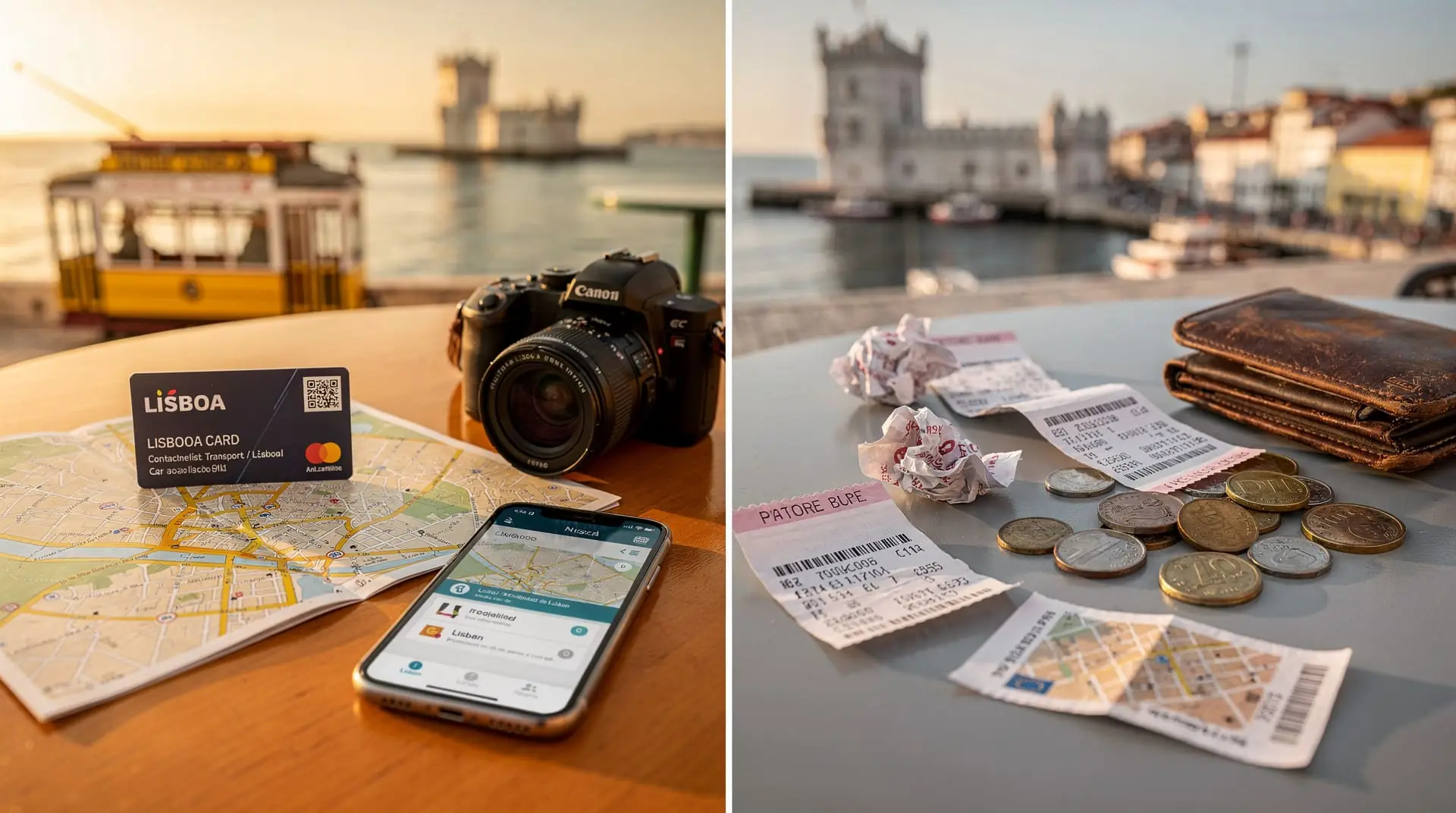
Porto is cheaper, but the gap is smaller than people expect — roughly €15-25/day for a typical mid-range traveller. Lisbon’s Lisboa Card (24h €22, 48h €37, 72h €47) bundles transport and museum entry, narrowing the cost gap. See our Lisboa Card vs paying separately breakdown.
Lisboa Card: 24, 48, or 72-hour pass — compare optionsGetting around
Both cities have excellent public transport. Lisbon’s metro is larger (four lines, 56 stations) and connects the airport. Porto’s metro has six lines including a line to the airport and one to the coast. Both use contactless payment on local buses and trams; both have app-based taxis (Uber, Bolt) that undercut traditional cabs significantly.
Neither city is flat. Lisbon’s seven hills mean trams, funiculars and a lot of uphill walking. Porto’s Ribeira and Vitória neighbourhoods are similarly steep. If mobility is a concern, both require planning — see our accessibility guide.
Museums and culture
Lisbon’s museum scene is broader: the Gulbenkian Museum is one of Europe’s best private collections, the Tile Museum is unique to Portugal, and MAAT covers contemporary art and architecture on the Tagus waterfront. Porto counters with the Serralves Museum and its extraordinary modernist gardens, plus the Casa da Música concert hall — fewer venues overall, but each with real ambition. For a first-timer prioritising breadth, Lisbon’s museum offering is stronger; for a design- or architecture-focused traveller, Porto’s smaller list punches above its weight.
Solo travel and nightlife pace
Both cities work well for solo travellers, but the texture differs. Lisbon’s solo travel scene is larger and more geared toward meeting other travellers — hostels with organised pub crawls, a bigger backpacker circuit, and rooftop bars that are easy to turn up to alone. Porto is quieter and more intimate; solo dinners at a Ribeira tasca counter feel natural, but the after-dark scene is smaller and winds down earlier outside a few streets in Galerias de Paris.
When Lisbon wins
- First visit to Portugal (bigger, more to see)
- You want beach days built into your trip
- Day-trips are a priority (Sintra, Évora, Arrábida)
- Warmer weather matters (spring, autumn, winter)
- You are travelling with kids (Oceanário, flatter areas, better transport)
- Nightlife, rooftop bars, international food scene
When Porto wins
- Second visit to Portugal (Lisbon already done)
- Wine tourism is the priority
- You prefer a city that feels unpolished and lived-in
- Travelling in summer (Porto’s summer is excellent)
- Budget is tighter (10-15% cheaper overall)
- You want to base yourself for Douro Valley
The honest recommendation
Visit both. If you have 7 days, do 4 in Lisbon and 3 in Porto — or the reverse. The train connection is comfortable and the contrast makes both cities sharper.
If you genuinely can only do one: choose Lisbon for a first trip. It has more to offer a visitor who does not know Portugal, better transport, easier airport access and the advantage of world-class day-trips. Porto rewards return visitors and those who already know what they are looking for.
For more on planning the Lisbon side of your trip, see how many days in Lisbon and our first-timer tips.
Building a combined itinerary
If you’re doing both cities, sequencing matters more than most guides admit. Landing in Lisbon first gives you the gentler introduction — better English proficiency in tourist areas, a larger transport network, and an easier airport transfer — before Porto’s smaller scale and slightly more local rhythm. Spend your Lisbon days covering Alfama, Belém and one day trip such as Sintra, then take the mid-morning train north, arriving into Porto with the afternoon free for the Ribeira. See Lisbon 4-day itinerary for how to structure the Lisbon portion so it doesn’t run long and eat into Porto time.
Frequently asked questions about Lisbon vs Porto
Is Lisbon or Porto better for a long weekend?
Lisbon: three days is enough to cover Alfama, Belém, Bairro Alto and one day-trip. Porto’s compact centre means you can cover the main sights in two days plus the Douro Valley on day three. Both work for a long weekend; Lisbon offers slightly more variety.
Which city is more crowded with tourists?
Lisbon is more crowded overall — it has roughly 5 million visitors per year vs Porto’s 3 million. The peak crush is July-August in both cities; Sintra is the worst single spot near Lisbon (see Sintra crowds). Porto’s Ribeira is very busy in summer but rarely as overwhelming as Belém or Alfama in peak season.
Is Porto safer than Lisbon?
Both are among the safest major cities in Europe. Lisbon has a higher pickpocket rate on tram 28 and in Alfama — see our tram 28 pickpockets guide. Porto has fewer tourist-density pickpocket zones. Neither city has serious violent crime against tourists.
Can I do Lisbon and Porto in 5 days?
Tightly. Two days Lisbon, one train day (or half-day), two days Porto. You will not do justice to either but you will see the core. Better to spend 3 days in Lisbon and 2 in Porto and skip the day-trips.
Which city has better fado?
Lisbon, without question. Fado is Lisbon’s music — born in Alfama, preserved in Mouraria. Porto has fadistas but authentic fado is harder to find. See our fado house comparison for the best venues in Lisbon.
Where should I fly into if I’m visiting both?
Fly into Lisbon, out of Porto (or the reverse). Both airports have good international connections. Porto’s Francisco Sá Carneiro airport is particularly well connected to northern Europe. Doing a loop saves backtracking.
Which city has better architecture?
Porto’s azulejo-clad facades, the São Bento railway station interior and the medieval Ribeira are extraordinary. Lisbon’s Jerónimos Monastery, Belém Tower, the Alfama skyline and the Pombaline grid are equally impressive. Call it a draw — the architectural styles are genuinely different.
Related guides
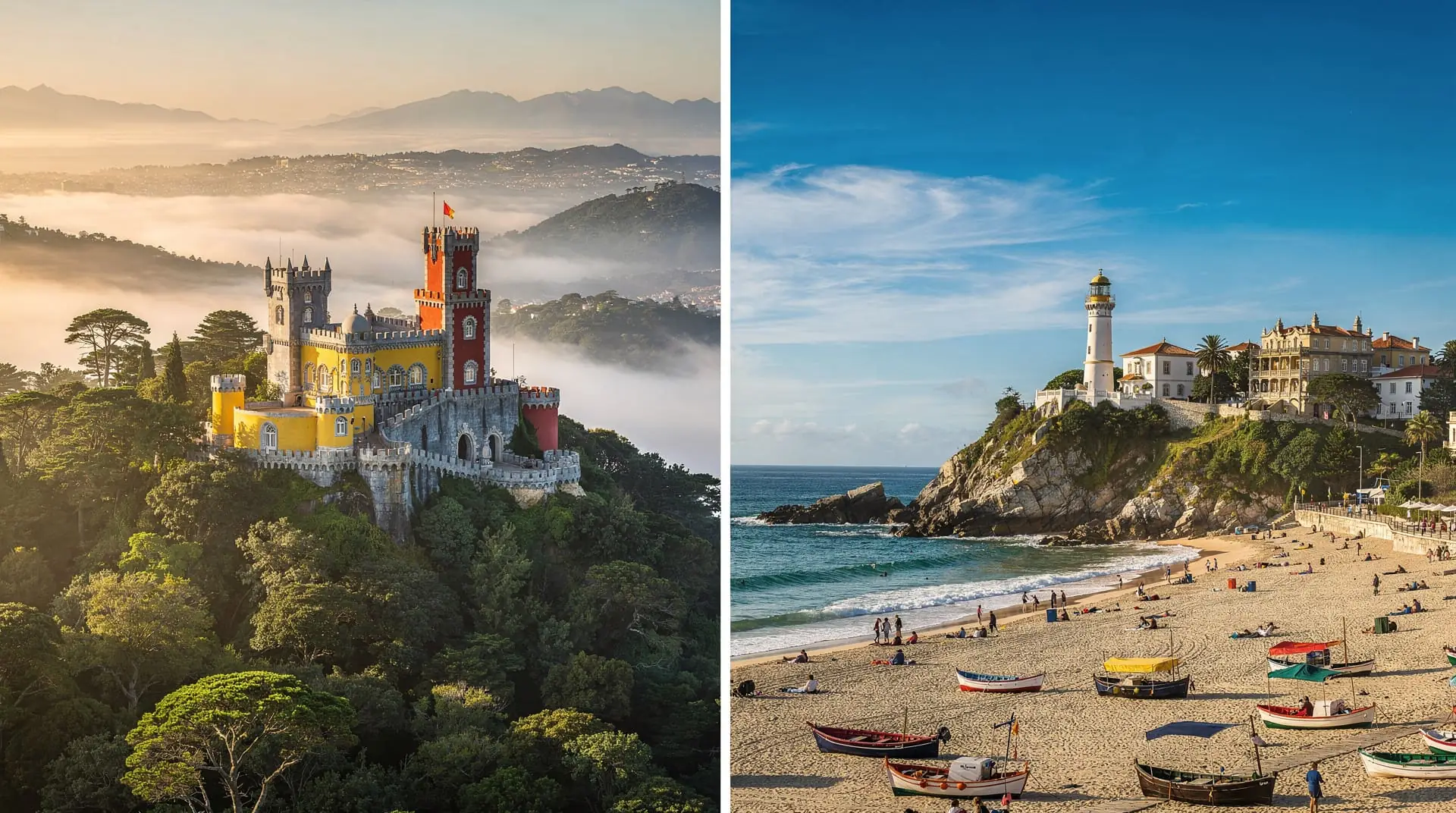
Sintra vs Cascais: which day-trip should you pick?
Sintra offers palaces and hills but costs time and crowds. Cascais offers beaches and a marina and half the effort. Pick the right one for your trip.
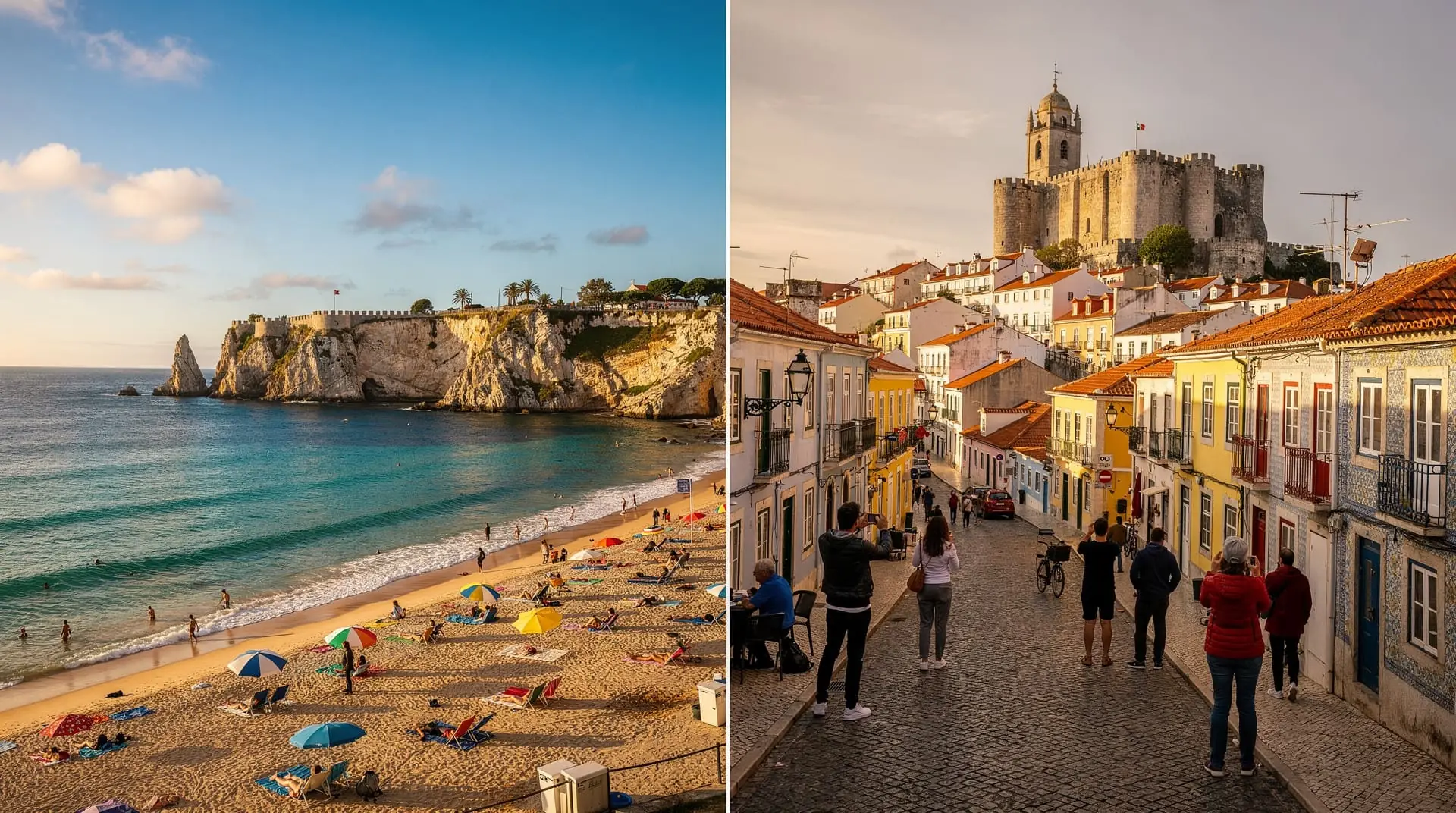
Which day-trip from Lisbon is right for you?
Decision guide: first-timer, foodie, family, pilgrim, beach lover or second visit. Pick the right Lisbon day-trip without guessing.
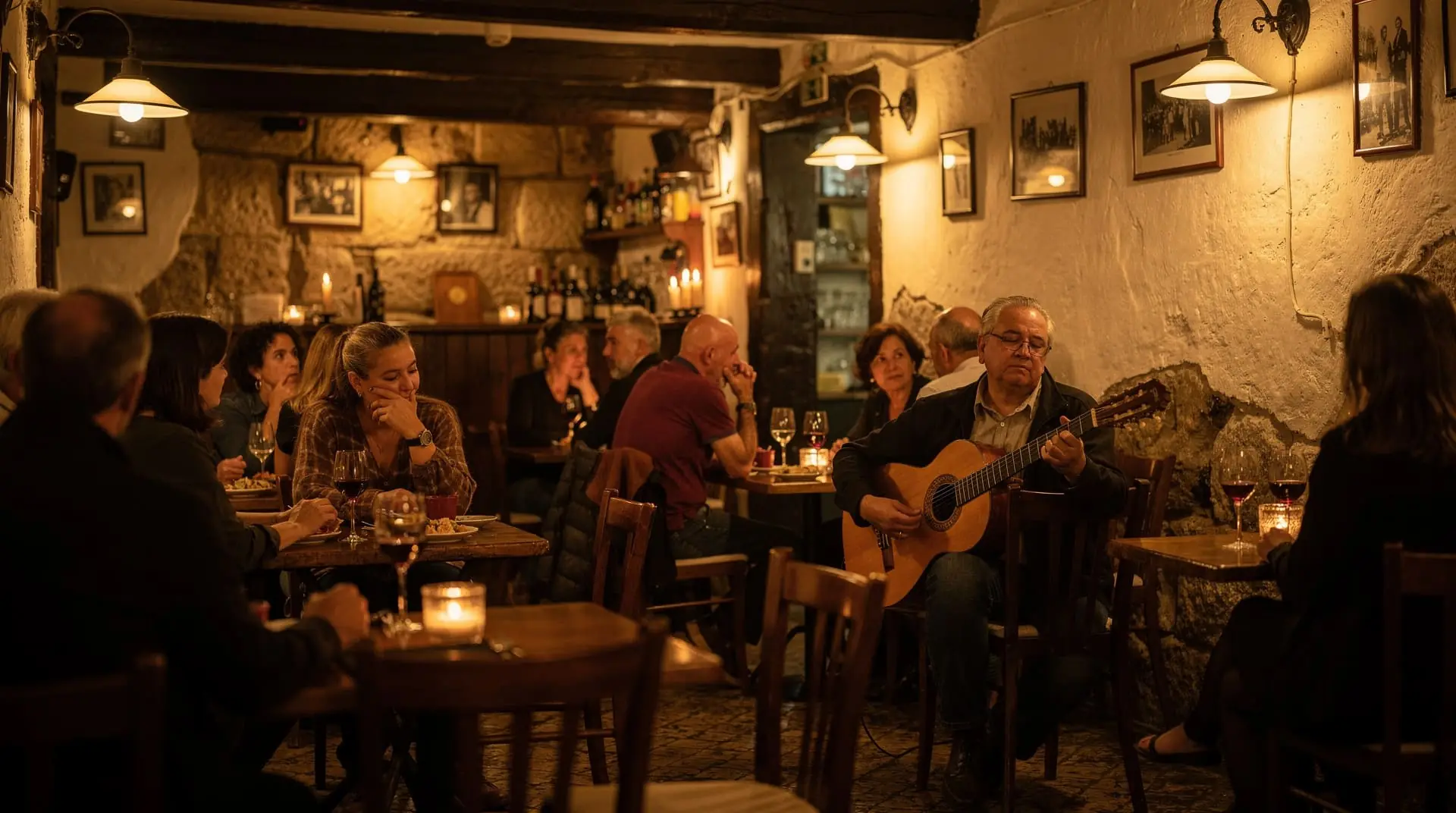
Fado houses compared: which one should you book?
Side-by-side comparison of Lisbon's main fado venues: atmosphere, price, quality and tourist-trap risk. Honest picks for every budget.
Lisboa Card vs paying separately: is it worth it?
Worked break-even examples for 1, 2 and 3-day Lisboa Cards. Honest verdict: who saves money and who pays more.
Ready to book? Top tours for this guide
We earn a small commission if you book through GetYourGuide — at no extra cost to you. Every tour is hand-picked and verified.

Lisbon: 48-Hour Hop-On-Hop-Off Bus Tour and Oceanarium Entry
Lisbon: MAAT Entry Ticket & Dolphin Watching Boat Tour
Lisbon: Alfama, Mouraria Walking Tour with Fado Night, Tapas
Lisbon: Hop-On Hop-Off Bus Tour
Lisbon: 1-or 2-Day Hop-On Hop-Off Bus Tour