Arrábida
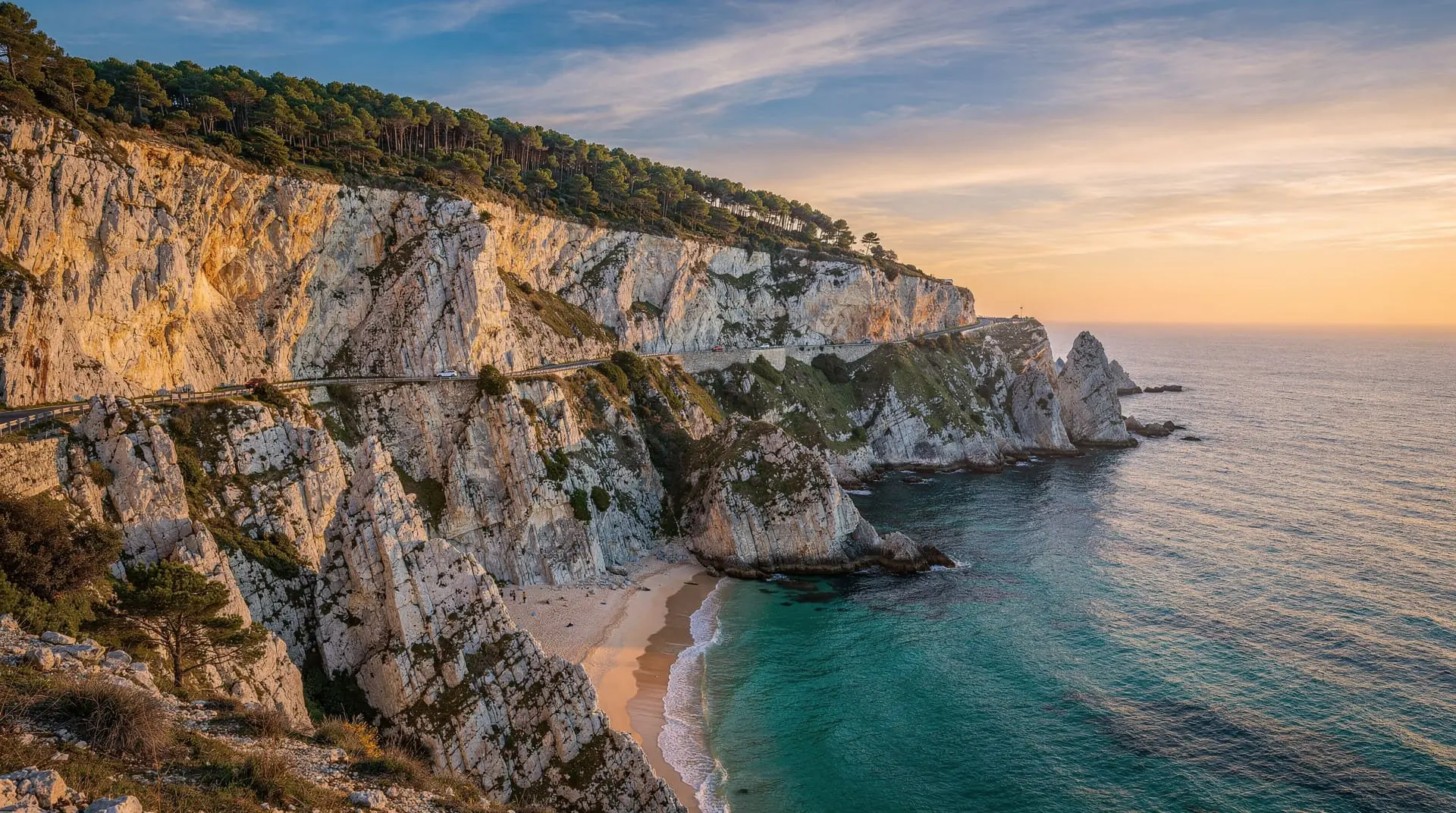
Limestone cliffs, turquoise water, and protected beaches between Setúbal and Sesimbra. Portugal's most scenic natural park within 50 km of Lisbon.
Quick facts
Top tours and experiences
We earn a small commission if you book through GetYourGuide — at no extra cost to you. Every tour is hand-picked and verified.
Setubal & Tróia: Sado Estuary Dolphin Watching Boat Trip
Sesimbra: Arrábida Beaches & Caves Boat Tour with Snorkeling
Sesimbra: Secret Bays and Beaches Boat Tour with Snorkeling
Sesimbra: Private Boat Tour-Wild beaches, secret bays, Caves
Sesimbra: Scenic Boat Tour & Snorkeling/Paddle Boarding
Sesimbra: Boat Tour with Lunch at Portinho da Arrabida
Arrábida is the short answer to the question “where are Portugal’s best beaches near Lisbon?” The limestone ridge of the Serra da Arrábida rises 500 metres above the Atlantic, its southern face tumbling into sheltered coves of water that is genuinely turquoise — the kind that photographs as implausibly bright and still looks that way when you arrive in person. The natural park stretches 35 kilometres between Setúbal in the east and Sesimbra in the west, protecting one of the most biodiverse coastal ecosystems in western Europe.
What makes Arrábida unusual among European beach destinations is the combination: protected status keeps development off the cliffs, the north-facing aspect of the Serra creates a microclimate warm enough for Mediterranean scrubland vegetation (rosemary, strawberry trees, lavender), and the water clarity — filtered through limestone — allows visibility of 15–20 metres. The Portinho da Arrábida marine reserve has banned fishing since 1998; the fish populations inside it are visibly denser than anywhere else along this coast.
| Where | 50 km south of Lisbon, between Setúbal and Sesimbra |
| Cost | Free access; shuttle bus ~€5 return, boat tours from ~€30 |
| Time needed | Full day minimum; 2 days for beaches plus hiking |
| Getting there | Car, TST summer shuttle from Setúbal, or guided tour |
| Best time | May–June and September for warm water and open roads |
The beaches: what to expect at each
Portinho da Arrábida
The most famous beach, at the bottom of the Serra da Arrábida’s main road. A small car park (fills by 10am in July–August), a cluster of seafood restaurants, and water that stays calm most days because of the cliff shelter. The beach is sandy but small — 200 metres at most. The underwater rock formations begin almost immediately from shore, making this the best spot for snorkelling without a boat.
Facilities: toilets, restaurants, limited parking. In summer (roughly mid-June to mid-September), access by private car is restricted on the N379-1 — see the access section below.
Galapinhos and Galapos
Galapinhos is widely considered the finest beach in the park: larger than Portinho, more sheltered, and accessible only on foot (a 10–15 minute descent from the car park above, or by boat). Galapos is adjacent and accessible by car when restrictions are not in force. Both beaches are within the marine reserve. The water colour here is exceptional — pale aquamarine in the shallows, deep turquoise further out.
Praia do Creiro (Setúbal side)
A longer beach on the eastern end of the park, closer to Setúbal. Less sheltered than Portinho and Galapinhos, with a stronger Atlantic swell — better for swimming when the western beaches are choppy. Generally less crowded on summer weekdays.
Praia de Galapinhos access
To reach Galapinhos without a car restriction issue, the best option is a boat tour from Sesimbra. Operators run boats to Galapinhos, Portinho, and the sea caves along the cliff face — with snorkelling stops included. This bypasses the road access question entirely and gives you views of the cliff face that are impossible from the road.
Kayak tour through Arrábida Natural Park with beach picnicGetting to Arrábida
By car (outside summer restrictions)
From Lisbon, take the A2 south, exit at Coina or Palmela, and follow the N10 towards Setúbal. From Setúbal, the N379-1 heads west along the ridge — this is the scenic cliff road, and it is genuinely spectacular. Drive slowly; there are viewpoints (miradouros) every few kilometres with panoramic views down to the coves.
Journey time from Lisbon: 1 hour to 1 hour 15 minutes to Portinho da Arrábida.
Summer car restrictions on N379-1
Between approximately mid-June and mid-September (exact dates vary by year — check the Arrábida Natural Park website or TST before your visit), private car access is restricted on sections of the N379-1. A daily quota of vehicles is permitted; once the limit is reached, the road closes until cars leave. In practice, spaces fill before 10am on hot summer weekends.
The alternative is the TST shuttle bus from Setúbal bus station (Rua do Bonfim). It runs every 20–30 minutes to Portinho, costs around €5 return, and operates throughout the restricted period. You can combine this with the train from Lisbon to Setúbal — a train-shuttle combination that works well and avoids all parking stress.
By tour from Lisbon
The most low-effort option. Several operators run guided day trips from Lisbon to Arrábida, usually combining beaches, a wine stop in Azeitão, and sometimes Sesimbra. These handle the transport question entirely.
Arrábida Natural Park and Sesimbra day trip from LisbonBy boat from Sesimbra
Sesimbra’s harbour is 12 km west of Portinho and offers boat tours along the Arrábida coast. For pure beach access, this is a strong option — the boats land at beaches inaccessible by road and the sea caves (Lapa do Santa Margarida) are only approachable from the water.
What to see and do beyond the beaches
Convento da Arrábida
The sixteenth-century Franciscan convent clings to the cliff face above Portinho, visible from the beach. Founded in 1542, it is one of the most dramatically sited buildings in Portugal. Visits are possible but limited — the convent is partly private — so check opening times before planning around it. The views from the approach road are the main draw.
Hiking the Serra da Arrábida
The park maintains marked trails along the ridge. The most rewarding starts at the miradouro above Galapinhos and follows the crest westward with views of both the coast and the Sado Estuary. Allow 2–3 hours for the main ridge route. The terrain is rocky and exposed in places; proper footwear and water are essential. The Arrábida Natural Park guide covers routes in detail.
Snorkelling and diving
The marine reserve means fish populations that are genuinely shocking after Portuguese Atlantic standards — grouper, sea bream, octopus, and moray eels are common at snorkel depth. Dive operators based in Sesimbra and Setúbal offer guided dives inside the reserve. Snorkelling directly from the beach at Portinho is free and productive, especially in the rockier sections at either end.
Jeep tours
If access roads and parking are a problem, jeep tours offer a practical alternative with added context. They typically combine beach stops with the inland Arrábida scrubland and viewpoints inaccessible on foot.
Arrábida jeep tour to the most beautiful beachesWhere to eat near Arrábida
Restaurante Ribamar in Sesimbra (see Sesimbra guide) is 20 minutes west and the most praised seafood restaurant in the wider area.
Portinho da Arrábida restaurants — the cluster at the beach (A Cabana, Quinta da Arrábida) are convenient but expensive for what they are. Expect €15–20 for a main; the location premium is real. The food is reliable rather than exceptional.
Setúbal offers far better value — drive or shuttle back to the city for lunch at Casa Mateus (chocos fritos, see Setúbal guide) rather than eating at the beach restaurants.
For a picnic approach: buy bread, cheese, presunto, and fruit at the Mercado do Livramento in Setúbal before heading to the beach. There are no supermarkets on the park road.
Where to stay
Arrábida has no hotels within the park boundaries. The nearest bases are:
Setúbal (10–20 min by car) — the practical base with the most accommodation options at reasonable prices. See the Setúbal guide.
Sesimbra (20–30 min) — a better choice if you want to be in a beach town with restaurants and nightlife. See the Sesimbra guide.
Quinta do Pacheco (near Azeitão) — a rural quinta option in wine country, about 25 minutes from both Portinho and Sesimbra. Suitable for travellers with a car who want a quieter base.
How long to spend
One full day is the minimum to appreciate Arrábida — it takes time to reach, and the beach experience requires at least 3–4 hours in the water or on the sand. A day-trip-from-Lisbon approach works if you take the early train to Setúbal and catch the shuttle to Portinho by 10am.
Two days allows you to combine the park’s beaches, a jeep or hiking excursion, Sesimbra, and a wine stop in Azeitão. This is the ideal pace for the area without feeling rushed.
See the Setúbal and Arrábida day trip guide for hour-by-hour logistics.
Honest tips and traps
Arrive early or take the shuttle. In summer, Portinho’s car park fills before 10am. The summer restriction on N379-1 is enforced with vehicle counts at checkpoints, not just advisory signs. The TST shuttle is reliable and not crowded — use it.
The water is cold in May and October. The Arrábida microclimate warms the air but the Atlantic water temperature ranges from 16°C in winter to around 22°C in August. If you are sensitive to cold water, June–September is the reliable window.
Galapinhos requires walking. The car park above the beach is not at the beach — there is a 15-minute descent on a rocky path. In summer heat, this is not dramatic, but bring shoes you can actually walk in, not flip-flops.
Mobile signal is poor on the N379-1. Download the TST bus schedule and park maps before leaving Setúbal. Google Maps works intermittently on the cliff road.
The convent is not always open. Check before making it the centrepiece of your visit. It operates on limited hours and advance booking may be required.
How Arrábida fits an itinerary
Arrábida is most naturally combined with Setúbal and Sesimbra in a southern peninsula day or overnight trip. It also pairs well with Azeitão wine country — spend the morning on the beach and the afternoon tasting Moscatel wines.
See day trips from Lisbon and best beaches near Lisbon for how this fits a wider Lisbon itinerary. For planning tools, the day trip matcher helps you compare Arrábida against Sintra and Cascais.
Arrábida across the seasons: quick reference
| Season | Water temp | Crowds | Road access |
|---|---|---|---|
| Spring (Apr–May) | 15–17°C | Low | Open, no restrictions |
| Early summer (Jun) | 18–19°C | Moderate | Restrictions may begin mid-June |
| Peak summer (Jul–Aug) | 21–22°C | High | Shuttle recommended, quotas enforced |
| September | 20–21°C | Low–moderate | Restrictions lifting or light |
| Winter (Oct–Mar) | 14–16°C | Very low | Fully open to cars |
Spring (April–May): The park is at its botanical best — the Mediterranean scrubland (maquis) blooms with rockrose, lavender, and strawberry tree flowers. Water temperature is 15–17°C, cold for swimming but fine for snorkelling with a short wetsuit. Beaches are largely empty; parking is not an issue; the summer restrictions are not yet in force.
Early summer (June): The best moment for beach-going visitors who want manageable crowds and open roads. Water temperature reaches 18–19°C. The car restrictions on N379-1 may begin in mid-June (check TST that year); if so, use the shuttle from Setúbal.
Peak summer (July–August): Hottest, most crowded, most restricted. The beaches are magnificent but managing access requires planning — early arrival or shuttle bus. Water temperature peaks at 21–22°C. Book any tours well in advance.
September: Often the best month. Crowds thin substantially after mid-August; the water stays warm from the summer; the car restrictions are either lifted or lighter. The Serra vegetation is at its most sun-bleached and aromatic.
Winter (October–March): The park is open; the beaches are deserted; the water is cold but the walking is excellent. The N379-1 road is open to cars year-round outside the summer restrictions. Birdwatching in the Serra (Bonelli’s eagle, peregrine falcon, black stork) is productive in autumn and winter.
Arrábida and wine: the Azeitão connection
The Serra da Arrábida does not produce wine itself, but the northern face of the ridge — the warmer, more sheltered side facing Setúbal and the Sado Estuary — is the heart of the Setúbal DOC wine region. The town of Azeitão, 15 km north of Portinho, is where the main producers are based.
José Maria da Fonseca has been producing Moscatel de Setúbal in Azeitão since 1834. The visits combine well with an Arrábida beach day: beach in the morning, wine tasting in the afternoon. See the Azeitão guide for cellar visit details.
Several guided day tours from Lisbon combine Arrábida beaches and Azeitão wine in a single day. The Setúbal and Arrábida day trip guide covers the combined logistics.
Arrábida National Park, Azeitão and winery tour from LisbonMarine reserve rules and beach etiquette
The Portinho da Arrábida marine reserve is a protected area, not an ordinary beach, and a few rules follow from that. Fishing has been banned inside the reserve since 1998, so bringing a rod or spear gun is not an option regardless of what you see on beaches further along the coast. Anchoring is restricted in the most sensitive zones — private boats and kayaks should stick to marked areas, and tour operators running kayak or snorkelling trips already know the boundaries. Litter left on the sand or in the water is a genuine problem in peak season; there are no bins at Galapinhos, so pack out what you bring in.
Dogs are prohibited on the main protected beaches (Portinho, Galapinhos, Galapos) during the bathing season, a rule enforced more strictly here than at most Portuguese beaches given the park’s conservation status. Drones require prior authorisation from the natural park authority — do not assume you can fly one over the cliffs without checking first. None of this makes Arrábida less enjoyable; if anything, the enforcement is part of why the water and fish life have stayed as good as they are. For the wider set of natural park rules and how they interact with a beach day, the Arrábida Natural Park guide has the fuller picture, and the Arrábida beaches guide breaks down facilities at each cove.
Sun protection deserves a specific mention because the risk is easy to underestimate: the limestone cliffs reflect glare upward as well as down, and the sea breeze that keeps the air feeling comfortable does nothing to reduce UV exposure. Reef-safe sunscreen is worth prioritising given the marine reserve status — some snorkel-focused visitors bring their own rather than rely on whatever the beach kiosks stock. Reapply after any swim; the reflected glare off both water and pale limestone burns faster than a typical Atlantic beach further from the cliffs.
Frequently asked questions about Arrábida
How do I get to Arrábida beaches without a car?
Train from Lisbon to Setúbal (50 min, ~€5), then the TST summer shuttle bus from Setúbal bus station to Portinho da Arrábida (~30 min, ~€5 return). The shuttle runs on peak summer weekends (mid-June to mid-September) and replaces car access on the restricted road. Outside this period, local taxis or guided day tours from Lisbon are the practical alternatives.
When is the best time to visit Arrábida?
May, June, and September offer the best balance: the water is warm enough for swimming (17–20°C), the roads are not yet restricted or restrictions have lifted, and the beaches are noticeably less crowded than July–August. Late July and August are busiest; go very early or take the shuttle.
Which beach is best in Arrábida?
For swimming and snorkelling, Portinho da Arrábida is the classic choice (sheltered, clear water, easy facilities). For a less crowded experience, Galapinhos is the most beautiful but requires a short walk or boat access. Praia de Galapinhos and Galapos are adjacent and together form the most spectacular beach stretch in the park.
Is there a shuttle bus to Arrábida beaches?
Yes. TST operates route 764 from Setúbal to Portinho da Arrábida during the summer restricted period (approximately mid-June to mid-September). It departs from the bus station on Rua do Bonfim in Setúbal and costs around €5 return. Frequency is every 20–30 minutes during peak hours.
Can I snorkel at Arrábida?
Yes, and it is highly recommended. The Portinho da Arrábida marine reserve has excellent visibility (10–20 metres on calm days) and high fish density. You can snorkel directly from the beach at Portinho — bring your own mask and fins, or rent from operators at the beach. Guided snorkelling tours from Sesimbra cover more ground and include sea cave visits.
Are dogs allowed on Arrábida beaches?
Arrábida is a protected natural park and the main beaches (Portinho, Galapinhos, Galapos) prohibit dogs in summer. Some less busy beaches outside the protected coves allow dogs outside the bathing season. Check the Arrábida Natural Park website for current rules before bringing pets.