Setúbal
Working port city, gateway to Arrábida, famous for chocos fritos and Sado dolphins. Day trip from Lisbon or base for the peninsula.
Quick facts
Top tours and experiences
We earn a small commission if you book through GetYourGuide — at no extra cost to you. Every tour is hand-picked and verified.
Setubal & Tróia: Sado Estuary Dolphin Watching Boat Trip
Sesimbra: Arrábida Beaches & Caves Boat Tour with Snorkeling
Sesimbra: Secret Bays and Beaches Boat Tour with Snorkeling
Sesimbra: Private Boat Tour-Wild beaches, secret bays, Caves
Sesimbra: Scenic Boat Tour & Snorkeling/Paddle Boarding
Sesimbra: Boat Tour with Lunch at Portinho da Arrabida
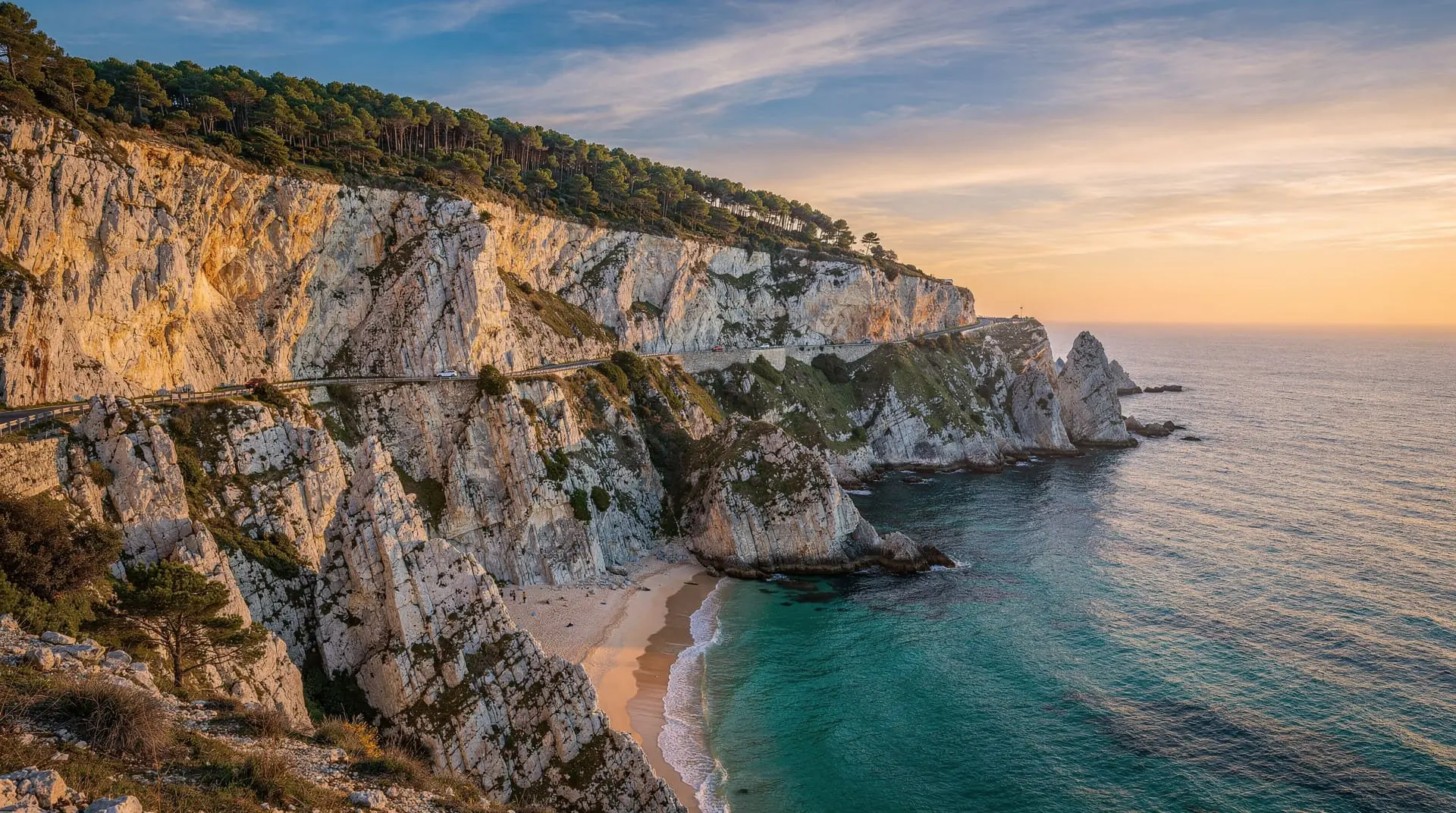
Setúbal surprises visitors who expect a sleepy coastal town. This is a working port city of 120,000 people with a genuine old quarter, one of Portugal’s best daily markets, and a fleet of dolphin-watching boats that operate from the harbour directly into the Sado Estuary. It is also the practical jumping-off point for Arrábida Natural Park’s famous turquoise beaches, which lie just 10–15 km west along a cliff-top road that should not be rushed.
Most visitors treat Setúbal as a transit stop on the way to Arrábida, which is understandable but a mistake. The covered Mercado do Livramento is worth an hour on its own — it is one of the finest azulejo-decorated markets in Portugal and the place where locals buy their fish at 7am. The old city grid between the market and the Igreja de Jesus (the first example of Manueline architecture in Portugal, predating Belém) is quiet, navigable on foot, and lined with pastelarias that have been here for decades.
Why Setúbal belongs on your itinerary
The city pulls off a rare combination: authentic Portuguese urban life (no souvenir shops selling custard-tart magnets), direct access to world-class natural scenery, and food that justifies the train ticket alone. Chocos fritos — battered and fried cuttlefish — are the local obsession. Every restaurant on Avenida Luísa Todi serves them; the debate is about whose batter is crispier.
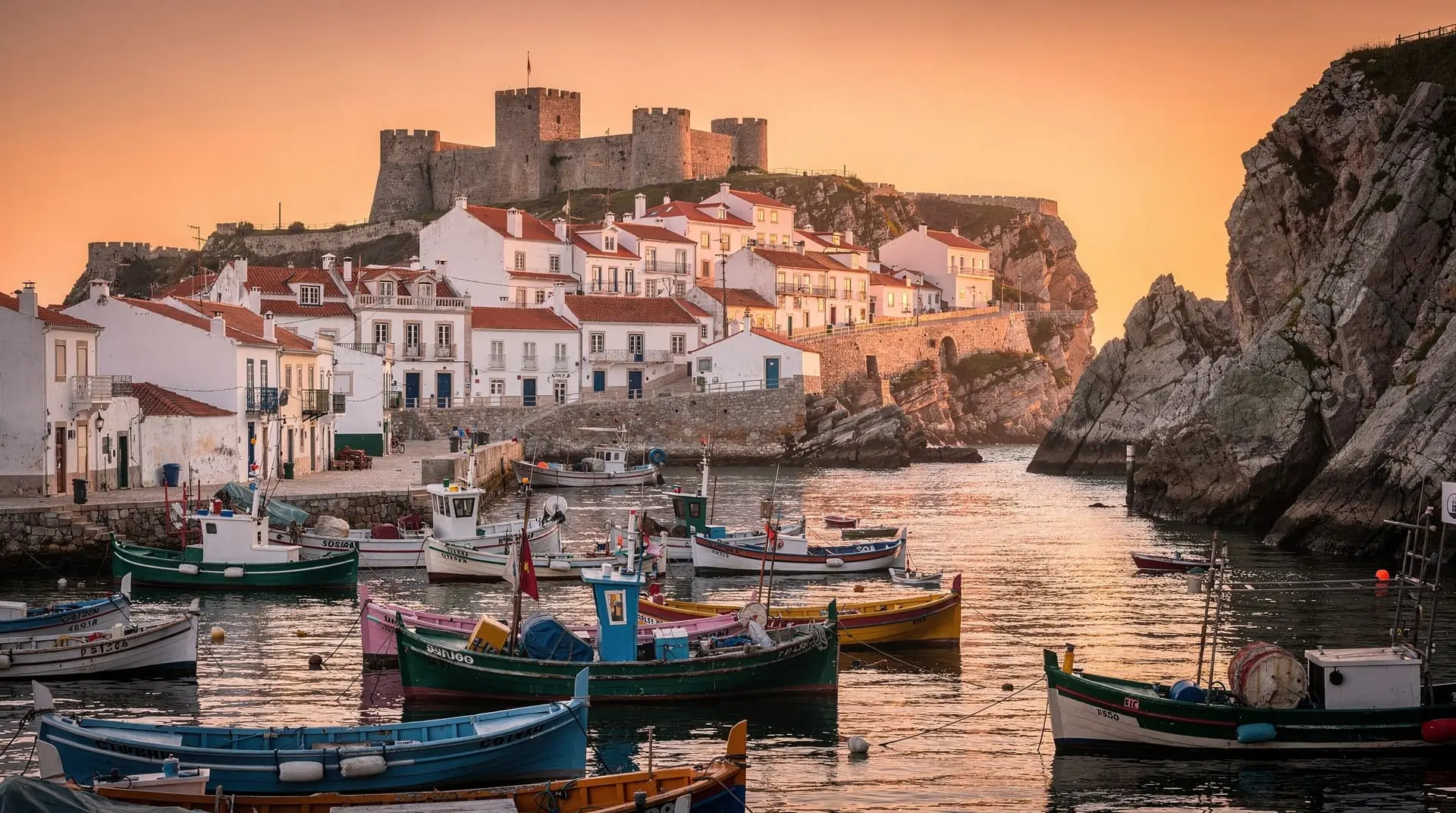
The dolphins are common bottlenose, resident in the Sado Estuary year-round. Unlike the pelagic whale-watching trips from the Azores or Algarve, these are estuarine animals that live alongside the ferry traffic and fishing boats. Tours run every morning from the municipal marina on Doca de Recreio, and encounters are extremely reliable — most operators quote sightings on more than 90% of departures.
Book a dolphin-watching tour from Setúbal harbourGetting to Setúbal from Lisbon
By train — the most straightforward option. Fertagus trains run from Roma-Areeiro or Entrecampos (crossing the 25 de Abril Bridge) to Setúbal in roughly 50 minutes. Tickets cost around €5 one-way; buy at the station or via the Fertagus app. Trains run every 30 minutes during the day. Note: some trains require a change at Setúbal Junction (Praias do Sado) — check the board. The station is a 10-minute walk from the city centre and the marina.
By bus — TST buses connect Setúbal with Lisbon’s Praça de Espanha (about 90 minutes, cheaper than the train but slower and less comfortable). Practical if you are starting from the western side of Lisbon.
By car — the A2 motorway from Lisbon takes around 45 minutes without traffic, but summer weekends mean congestion on the approach to Arrábida. Parking in central Setúbal is straightforward; paid surface parking along Avenida Luísa Todi.
If you plan to continue on to Arrábida’s beaches from Setúbal, note that the summer shuttle bus from Setúbal to Portinho da Arrábida (route 764 operated by TST) replaces private car access on the N379-1 on summer weekends. Check the TST website for exact dates (usually mid-June to mid-September). Outside those periods, you can drive to Portinho.
What to see and do in Setúbal
Mercado do Livramento
Built in the 1870s and renovated repeatedly without losing its character, the covered market on Praça do Bocage runs every day from 7am to 3pm (Sundays until 1pm). The interior walls are covered in azulejo panels depicting local fishing scenes — easily 20 minutes of looking on their own. The fish stalls are extraordinary: fresh swordfish, raia, linguado, and the cuttlefish that will end up as chocos fritos by lunchtime. The fruit and vegetable section is smaller but worth it for strawberries in April–May and figs in August.
Igreja de Jesus and the municipal museum
The Igreja de Jesus on Praça Miguel Bombarda dates from 1491 and is generally considered the first Manueline building in Portugal, predating Jerónimos Monastery in Belém by a decade. The twisted columns inside are extraordinary. Adjoining the church, the Museu de Setúbal occupies a former convent and holds a collection of sixteenth-century paintings by masters of the Setúbal school, including Jorge Afonso. Admission is around €2, and it is often quiet enough to have the rooms to yourself.
The marina and Sado Estuary
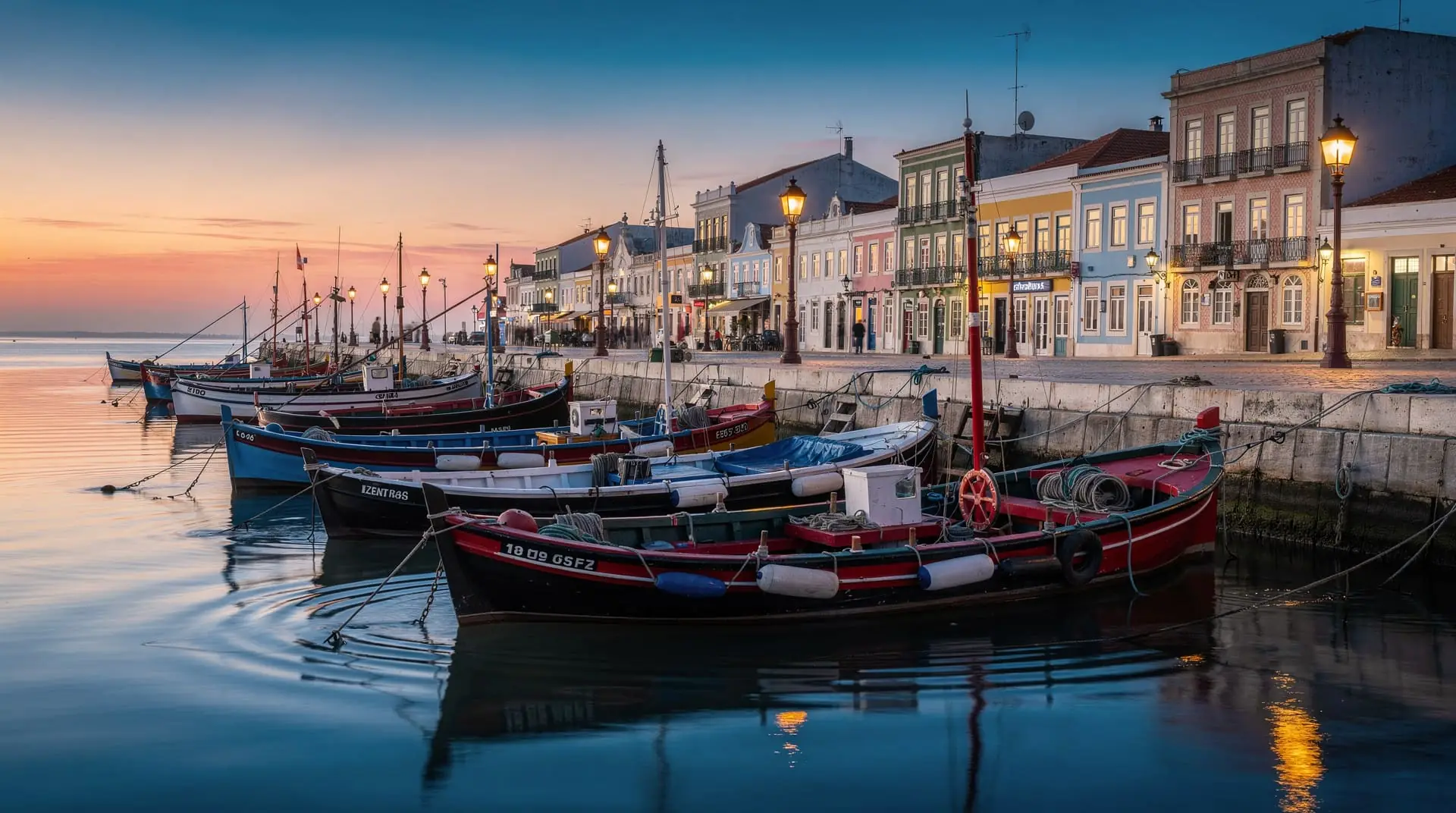
Doca de Recreio is the departure point for dolphin tours, Tróia ferry, and recreational sailing. Even without a boat, the waterfront promenade along Avenida Luísa Todi is pleasant in the evening, when families walk from the old town to the marina and back. The estuary views are particularly good from here — you can see the Tróia peninsula’s long sand spit across the water.
Dolphin watching and Arrábida bays from Setúbal (catamaran)Arrábida access
Setúbal is the most practical base for Arrábida. The N379-1 cliff road heads west from the city and reaches Portinho da Arrábida in about 20 minutes by car. In summer, the TST shuttle replaces car access on some sections — pick it up from the bus station on Rua do Bonfim. See the Arrábida destination guide for beach details and the access rules.
Day trip extension to Tróia
The car ferry and passenger ferry to Tróia depart from the marina (Sadoport terminal) roughly every 30–45 minutes. The passenger-only crossing takes about 15 minutes and costs around €3.50 one-way. Tróia makes an easy half-day addition — Roman ruins at Cetóbriga, long Atlantic beach, and good seafood restaurants at the marina.
Where to eat in Setúbal
Casa Mateus on Rua Marquês de Pombal is the restaurant Setúbal locals recommend first for chocos fritos. The battered cuttlefish come with chips and a small salad; lunch for two costs €25–35 with local wine. Arrive by 12:30pm in summer or expect a queue.
Restaurante O Beco on Travessa Bocage is smaller and slightly cheaper, with the same menu of local seafood and an outdoor terrace in summer.
Peixe na Praça at the Mercado do Livramento (upstairs level) uses the market’s own fish, which is a reliable indicator of freshness. Good value set lunch (€12–15 including wine or beer).
For pastries, Pastelaria Cristal on Avenida Luísa Todi has been doing pastel de nata and queijadas since the 1980s. Coffee and two pastries costs under €5.
Avoid the tourist-facing restaurants around the ferry terminal — they are convenient but overpriced relative to what you find two blocks inland.
Where to stay in Setúbal
Most visitors day-trip from Lisbon, which is perfectly sensible. If you want to stay overnight:
Bocage Hotel (central, 3-star, from around €80/night in shoulder season) is the most convenient option, within walking distance of the market and old town.
Casa Filipe Guest House is a B&B option near the waterfront with friendlier prices (€60–70/night) and a landlord who will tell you where to eat.
Alternatively, base yourself at one of the rural quintas in the Arrábida foothills — this makes most sense if you have a car and plan to spend two or more days exploring the park.
How long to spend
Half a day is enough if your main goal is lunch and the Mercado do Livramento before heading to Arrábida beaches.
A full day lets you add dolphins in the morning, a wander through the old town and Igreja de Jesus, lunch, and then the market or a late-afternoon drive toward Portinho.
Overnight makes sense if you want to combine Setúbal with Tróia (morning ferry), Arrábida (beaches and the convent), and Azeitão wine country — this is the Setúbal and Arrábida day trip at its most comfortable.
Honest tips and traps
The summer shuttle is mandatory, not optional. On peak summer weekends, the section of N379-1 approaching Portinho da Arrábida is closed to private cars. The shuttle runs from Setúbal bus station and from the roundabout near Portinho. It costs €5 return and runs every 20–30 minutes. If you ignore this and try to drive, you will be turned back at the checkpoint. Plan around it.
The market closes by 3pm. If you arrive in Setúbal after a morning in Lisbon, the market fish and vegetable stalls will be finishing up. Aim to arrive by noon at the latest if the market is a priority.
Train frequency drops in the evening. The last Fertagus train back to Lisbon from Setúbal runs around 11pm, but services thin out after 9pm. Check the schedule before a long dinner.
Parking at Portinho da Arrábida fills by 10am in July–August. If you are driving and the summer shuttle is not yet operating, leave Setúbal before 9:30am to stand a chance of finding a space.
How Setúbal fits an itinerary
Setúbal works best as a standalone day trip from Lisbon (taking the train) or as the anchor for a 2–3 day southern peninsula circuit combining Arrábida beaches, Sesimbra castle and fish, Tróia Roman ruins, and Azeitão wine. For the circuit, a rental car makes a significant difference in flexibility.
For day trip ideas and logistics, see day trips from Lisbon and Setúbal and Arrábida day trip guide. The day trip matcher tool can help you choose between Setúbal, Sintra, Cascais, and Évora based on your priorities.
Setúbal also appears in the 5-day Lisbon itinerary with day trips and the 7-day Lisbon and around itinerary. For those combining Setúbal with a broader southern circuit, the Sesimbra guide, Tróia guide, and Azeitão guide each cover their respective corners of the peninsula. The dolphin watching guide details the Sado Estuary dolphin experience and what to expect from the different operators.
Setúbal as a base for the Arrábida peninsula
Most Lisbon guides treat Setúbal as a day trip. That framing undersells it. As a two-night base, Setúbal lets you properly explore the Arrábida peninsula without the commute pressure: Portinho da Arrábida on the first morning (before the shuttle fills), Sesimbra and Cabo Espichel in the afternoon, Tróia and its Roman ruins on day two, Azeitão wine country on the way back to Lisbon.
With a car based in Setúbal, the daily driving times are short — Portinho is 20 minutes, Sesimbra 35 minutes, Azeitão 20 minutes, Tróia 15 minutes plus the ferry. Without a car, Setúbal’s train connection to Lisbon (50 minutes, running until late evening) means it is one of the few south-of-Lisbon destinations where car-free travel is genuinely practical for multiple days.
The accommodation in Setúbal is also significantly cheaper than equivalent quality in Lisbon. A 3-star room that costs €100 in Lisbon is €60–70 in Setúbal; the saving funds several beach lunches or a dolphin tour.
Setúbal’s cultural calendar
Feira do Pescado (Fish Fair) — held in May, celebrating the local fishing industry with grilled fish, live music, and artisan stands on the waterfront. Dates vary; check the Câmara Municipal de Setúbal website.
Festa de Santiago — midsummer festival in July celebrating the city’s patron saint, with concerts and fireworks over the estuary. The waterfront fills with locals from both sides of the Sado.
Feira de São Sebastião — late January fair that has been running since medieval times. Agricultural products, livestock, artisan crafts. Quieter and more authentic than the summer events.
Mercado do Livramento on Saturdays is busier than weekdays — more stalls, more produce, more atmosphere. Sunday mornings are quiet (stalls close by noon). If you can choose, aim for a weekday between 8am and noon for the best market experience without the weekend crowds.
The wine connection: Setúbal DOC and Azeitão
Setúbal is the administrative centre of the Setúbal DOC wine region, which produces Moscatel de Setúbal — one of Portugal’s most distinctive wines and one of its least well-known internationally. The main producers (José Maria da Fonseca, Bacalhôa, Quinta do Piloto) are clustered in the Azeitão area, about 20 km northwest.
Several wine tour operators run half-day excursions from Setúbal to the Azeitão quintas, combining cellar visits with the city’s market or waterfront. The Setúbal Moscatel and Azeitão guide covers the producers and how to visit them.
If you are eating at a restaurant in Setúbal, order the local Moscatel as a digestivo — it is significantly cheaper than in Lisbon restaurants and better matched to the local seafood than Port wine.
Frequently asked questions about Setúbal
How do I get from Lisbon to Setúbal by train?
Take the Fertagus line from Roma-Areeiro or Entrecampos station. Journey time is approximately 50 minutes and tickets cost around €5 one-way. Trains run every 30 minutes during the day. Some services require a change at Setúbal Junction — the platform staff can confirm. The station is a 10-minute walk from the city centre.
Is dolphin watching in Setúbal reliable?
Yes, more so than many destinations. The common bottlenose dolphins in the Sado Estuary are resident year-round and are encountered on the vast majority of tours. Sightings are typically close — the dolphins often approach the boats. Most tours run 2–3 hours and depart in the morning. Book at least a day in advance in July–August.
Can I visit Arrábida beaches without a car?
Yes. From Setúbal, the summer shuttle bus (TST route 764) runs to Portinho da Arrábida on peak summer weekends. It costs around €5 return and runs from the bus station. Outside the shuttle season, local taxis and tour minibuses are the alternative — or join a guided tour from Lisbon that includes beach access.
What is chocos fritos and where should I eat it?
Chocos fritos are battered, deep-fried cuttlefish — Setúbal’s signature dish. The cuttlefish is caught locally in the Sado Estuary and Arrábida waters. The batter should be thin and crisp, not thick and greasy. Casa Mateus on Rua Marquês de Pombal is the most recommended option by locals; arrive early to avoid waiting.
Is the Mercado do Livramento worth visiting?
Absolutely, and not just for the food. The market’s interior is lined with painted azulejo panels depicting fishing and maritime scenes — it is one of the best-decorated covered markets in Portugal. Even if you do not buy anything, allow 30–45 minutes to walk through it. It opens at 7am and the fish stalls are most active before noon.
Can I combine Setúbal with a Tróia visit in one day?
Yes, comfortably. Take the morning train from Lisbon, walk to the marina in Setúbal, and take the passenger ferry to Tróia (about 15 minutes, €3.50 one-way). Explore the Roman ruins at Cetóbriga, have lunch at the Tróia marina, and take the afternoon ferry back. Then wander the old town and catch a train back to Lisbon in the evening. This is a full but manageable day.