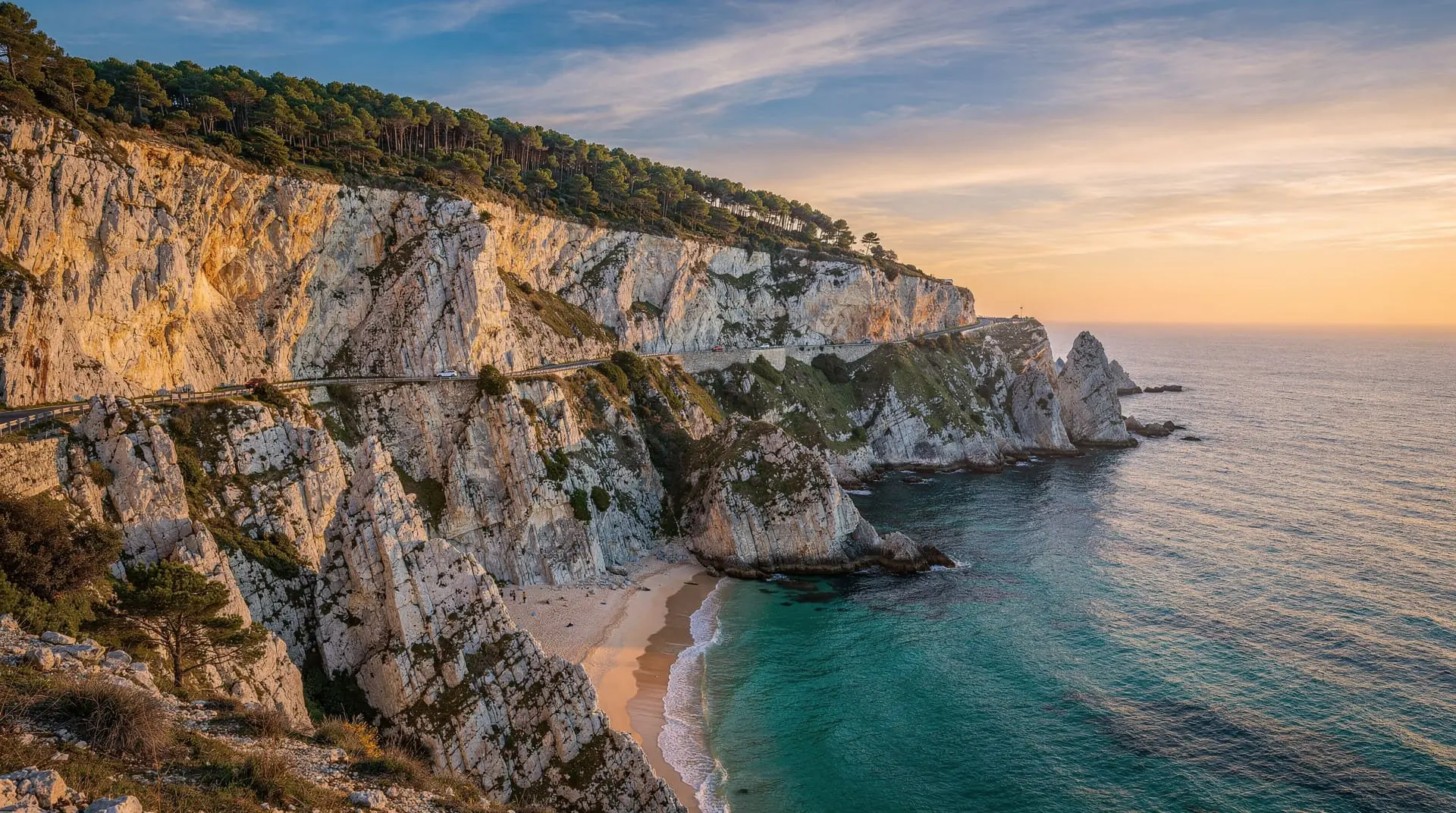
Sesimbra
Sesimbra is a working fishing village turned beach resort at the western edge of Arrábida, with a Moorish castle, fresh fish, and boat tours to sea caves.
Quick facts
Top tours and experiences
We earn a small commission if you book through GetYourGuide — at no extra cost to you. Every tour is hand-picked and verified.
Setubal & Tróia: Sado Estuary Dolphin Watching Boat Trip
Sesimbra: Arrábida Beaches & Caves Boat Tour with Snorkeling
Sesimbra: Secret Bays and Beaches Boat Tour with Snorkeling
Sesimbra: Private Boat Tour-Wild beaches, secret bays, Caves
Sesimbra: Scenic Boat Tour & Snorkeling/Paddle Boarding
Sesimbra: Boat Tour with Lunch at Portinho da Arrabida
Sesimbra occupies a natural amphitheatre at the foot of the Serra da Arrábida’s western end, sheltered from Atlantic winds by a ridge that catches the worst of what comes in off the ocean. The bay is wide and sandy, the fishing harbour still active, and the Moorish castle sits on a hilltop above the village with views that make the 20-minute uphill walk entirely worth it.
The town runs on two parallel economies that have coexisted for decades: the fishing fleet that lands its catch in the early mornings, and the summer tourist trade that fills the beachfront cafés by 10am. Both give Sesimbra more character than a purpose-built beach resort — there are trawlers docked alongside pleasure craft, and the fish at Restaurante Ribamar comes off those trawlers the same morning.
Sesimbra is also the most practical launch point for boat tours along the Arrábida coast. From the harbour, operators run daily trips to sea caves (Lapa do Santa Margarida), the Portinho da Arrábida beaches, and snorkelling spots inside the marine reserve — giving you access to Arrábida’s best underwater terrain without the summer road restrictions.
Getting to Sesimbra
By bus — TST buses from Lisbon’s Praça de Espanha (Metro Jardim Zoológico) run to Sesimbra in approximately 60 minutes. There are also services from Setúbal (around 40 minutes). The bus stop in Sesimbra is at the main square near the harbour. Services run roughly hourly; the schedule thins on Sundays, so check before you go.
By car — take the A2 south from Lisbon toward Setúbal, exit at Coina, and follow the N378 to Sesimbra. Journey time is around 45 minutes without traffic. Parking in the centre is pay-and-display; arrive before 10am in summer or park at the upper car park near the castle road.
From Setúbal — TST buses make the run in 40–45 minutes. A taxi costs €30–40 one-way, useful if you are combining Arrábida and Sesimbra in a single day.
There is no direct train to Sesimbra; the nearest station is Setúbal or Coina on the Fertagus line.
What to see and do in Sesimbra
The castle (Castelo de Sesimbra)
The hilltop castle dates from Moorish times and was rebuilt extensively after the Reconquista. It is free to enter and open most days; walk up the steep road from the village (20 minutes) or drive and park just below the walls. Inside the outer walls is a small parish church, the Ermida de Nossa Senhora do Castelo, and a military command post that is occasionally open. The main draw is the panorama: the bay curves below, the Arrábida ridge stretches east, and on clear days you can see the Serra de Sintra to the north.
In summer evenings, locals walk up for the sunset. It is one of the better viewpoint experiences in the region and costs nothing.
The harbour and fish market
The harbour wakes up early — by 6:30–7am the fishing boats are landing catches and the wholesale market begins. As a visitor you can watch from the quayside; the fish market itself is not public, but the unloading is visible. The species mix varies by season: swordfish (espadarte), bream, bass, and in autumn, choco (cuttlefish). Later in the morning the harbour becomes the departure point for boat tours.
Boat tours along the Arrábida coast
The key advantage of basing a day in Sesimbra is the boat access. Tours run to sea caves along the cliff face — the Lapa do Santa Margarida and adjoining caves are only reachable by water and contain stalactites and nesting seabirds. Most operators stop at Portinho da Arrábida and Galapinhos beaches for swimming and snorkelling. A half-day tour costs €35–55 per person.
Sesimbra: Arrábida beaches and caves boat tour with snorkelling Sesimbra: secret bays and beaches boat tour with snorkellingCabo Espichel
Twenty kilometres west of Sesimbra, Cabo Espichel is an Atlantic cape with a lighthouse and an extraordinary baroque sanctuary — the Santuário da Nossa Senhora do Cabo — whose arcaded pilgrim lodgings frame the clifftop chapel on three sides. The site is remote and mostly visited by pilgrims and people who know about it. There are also fossilised dinosaur footprints in the cliffs (sauropod tracks, documented and signposted). You need a car to reach Cabo Espichel from Sesimbra — there is no regular bus service.
Where to eat in Sesimbra
Restaurante Ribamar on Avenida dos Náufragos is Sesimbra’s most recommended seafood restaurant and has been for decades. The espadarte (swordfish) is the dish to order — it is landed in Sesimbra and served simply grilled with olive oil, garlic, and lemon. A fish main costs €16–22; the petiscos (small plates) of percebes and amêijoas are excellent starters. Book ahead in summer.
Tasca do Isaías near the harbour is a smaller, older restaurant with no website and a chalkboard menu depending on what came in that morning. Lunch only. Expect to share tables and pay €15–20 for a complete meal with house wine.
Casa do Peixe on Rua Jorge Nunes is reliable for lunch if Ribamar is full — similar fish menu, slightly more tourist-facing but still fresh.
For breakfast: the cafés on Largo do Município (the main square by the harbour) do a decent breakfast from 8am — coffee, toast, pasteis de nata.
Where to stay in Sesimbra
Hotel do Mar is a 4-star property above the village with sea views, a pool, and a terrace that justifies the rates (from €120–160/night in summer). The walk to the village is 15 minutes downhill.
Sana Sesimbra Hotel is more central, 4-star, walking distance to the harbour, from €100–140/night in peak season.
Casas de Sesimbra (various guesthouses in the village) offer a more local experience at €60–90/night. Booking.com lists several family-run B&Bs in the old village streets above the harbour.
For budget travellers, Setúbal (40 minutes east) has cheaper accommodation and makes an equally convenient base.
How long to spend
One full day from Lisbon is the standard approach: morning boat tour, lunch at Ribamar, afternoon on the beach or up to the castle. The bus journey each way is an hour, so aim to leave Lisbon by 8:30am.
Overnight in Sesimbra suits travellers combining it with Arrábida beaches and Setúbal — you can take a boat tour in the morning, drive the N379-1 toward Portinho in the afternoon, and eat well in the evening.
Honest tips and traps
Ribamar gets very busy in summer. Walk-ins at lunch in July–August face a 30–45 minute wait. Book by phone or go early (before 12:30pm).
The castle road is steep. It is paved and drivable, but walking it on a hot August afternoon is tiring. Go up in the morning or at sunset when the temperature drops.
Cabo Espichel is off-limits without a car. The fossilised dinosaur tracks and the baroque sanctuary are genuinely unusual, but there is no bus service and it is too far to walk or cycle from Sesimbra in a day trip context.
Boat tour weather dependency. If the wind picks up, tours to the sea caves may be cancelled or curtailed. Operators will generally offer a refund or reschedule if sea conditions are poor. Check the morning forecast and communicate with your operator the night before in September–October when weather is less predictable.
Sesimbra is not on the train network. Visitors who plan to take the Fertagus train to Setúbal and then add Sesimbra need to factor in an extra 40 minutes by bus or taxi each way.
How Sesimbra fits an itinerary
Sesimbra works well as a standalone day trip from Lisbon or as a second stop on a southern peninsula circuit that includes Setúbal and Arrábida. If you have a car, the Sesimbra day trip guide covers a logical route combining the village, boat tour, Portinho da Arrábida, and Setúbal in a single day.
For a broader view of southern day trips, see day trips from Lisbon and best beaches near Lisbon. The Setúbal and Arrábida day trip guide covers the eastern half of the peninsula in detail. Sesimbra also appears in the Lisbon 5-day itinerary and in the beach day trips comparison. For the food side, the seafood in Lisbon guide puts Sesimbra’s fish in the wider context of Portuguese coastal eating.
Planning your Sesimbra day: practical logistics
Leaving Lisbon: The first TST bus from Praça de Espanha toward Sesimbra runs around 7am; the most convenient morning departure for a day trip is the 8am or 9am bus, putting you in Sesimbra by 9–10am. This gives you time for a coffee at the harbour before the boat tour departs at 10am (most operators’ standard morning departure).
In summer: Pre-book your boat tour at least 24–48 hours in advance — the operators (Seacalma and Mar Sesimbra are two established names) fill quickly in July–August. Bring a rash guard or wetsuit top if you plan to snorkel; the water temperature is 19–21°C in peak summer but the underwater time adds up quickly.
Returning to Lisbon: Buses from Sesimbra to Praça de Espanha run until around 9–10pm. If you want to stay for a sunset dinner at Ribamar and catch a late bus, it is feasible — check the last TST departure before committing to a late table.
Money: Sesimbra is cash-friendly but most restaurants take cards. The harbour ATM can have queues on summer weekends; use an ATM in Setúbal or Lisbon before you go if possible.
Parking: If driving, the main car parks below the castle road and near the harbour fill by 10am on July–August weekends. An upper car park (signed from the N378) is larger but requires a walk downhill.
Beyond the town: the Arrábida western shore
Sesimbra’s position at the western end of Arrábida Natural Park gives it access to some of the less-visited western beaches that are technically outside the park’s core but share its water clarity. Praia da Califórnia and Praia de Galapinhos (accessed by boat from Sesimbra) are among the quieter options.
The Serra da Arrábida rises immediately north of Sesimbra to around 500 metres at its highest point — the forested ridge is visible from the harbour and worth a quick drive or organised jeep tour if time allows. The N379-1 from Sesimbra toward Setúbal is one of the most dramatic coastal roads in Portugal; even driving 5 km up it and pulling over at a miradouro gives you the essential Arrábida view.
4x4 Jeep Tour from Sesimbra to Serra da ArrábidaThe Arrábida Natural Park guide covers hiking trails and the park’s ecology in detail. The best beaches near Lisbon guide puts Sesimbra’s beaches in the context of all southern peninsula options.
Frequently asked questions about Sesimbra
How do I get from Lisbon to Sesimbra by bus?
Take TST buses from Praça de Espanha (Metro Jardim Zoológico, Line 2 — Blue) toward Sesimbra. Journey time is approximately 60 minutes and buses run roughly hourly. On Sundays services are reduced — check the TST schedule before you go. The bus stops at the main harbour square in the centre of Sesimbra.
Are boat tours from Sesimbra worth it?
Yes, if seeing the sea caves and Galapinhos beach from the water appeals to you. The sea caves along the Arrábida cliffline are only accessible by boat, and reaching the protected marine beaches this way bypasses the summer road restrictions entirely. Tours run 3–4 hours, include snorkelling stops, and cost €35–55 per person. Booking ahead is advisable in July–August.
What is the best fish dish to eat in Sesimbra?
Espadarte (swordfish) is the local speciality and is typically served grilled with olive oil, garlic, and lemon. Sesimbra’s fishing fleet catches swordfish in the deep Atlantic waters beyond the cape; you will find it on every menu. Restaurante Ribamar is the most consistently praised venue for it.
Can I visit the Castelo de Sesimbra for free?
Yes. The castle is free to enter and open most days. It sits on a hilltop above the village — a steep 20-minute walk or short drive. The views over the bay and Serra da Arrábida are the main reward; the castle interior has a small church and some military structures but is not a major museum.
Is Sesimbra good for families with children?
Yes. The main beach is sheltered and has gently shelving sand with calm water on most days. The boat tours are suitable for children (most operators accept children from age 5 or 6). The castle walk gives older children a goal. The fishing harbour is interesting for kids in the early morning.
How does Sesimbra compare to Cascais as a beach day trip?
Sesimbra is less polished than Cascais — smaller, more genuinely local, with fewer restaurants and less infrastructure. The beaches are calmer and the water clearer than Cascais’s Atlantic-facing beaches. Cascais has better train connections (40 minutes direct from Cais do Sodré) and more to do after the beach. Sesimbra requires a bus or car. For comparison, the Sintra vs Cascais guide and the which day trip from Lisbon guide cover this trade-off.