Arrábida Natural Park: beaches, hiking trails and the summer road permit
Last reviewed
How do you visit Arrábida Natural Park from Lisbon?
Arrábida is 50 km south of Lisbon (50–60 min by car via the A2 motorway). The main coastal road N379-1 requires a vehicle access permit in summer (June 15–September 15), limited to 1,000 vehicles per day. Book the permit online at icnf.pt before your visit. Without a permit, park on the N10 and take the shuttle bus down to the beaches.
| Where | Setúbal peninsula, 50-60 min south of Lisbon |
| Size | 10,800 hectares, 35 km of coastline |
| Permit needed | Yes, June 15-Sept 15, for the N379-1 coastal road |
| Cost | Permit ~€5-10/vehicle; hiking and beaches free |
| Best months | May-June and September-October |
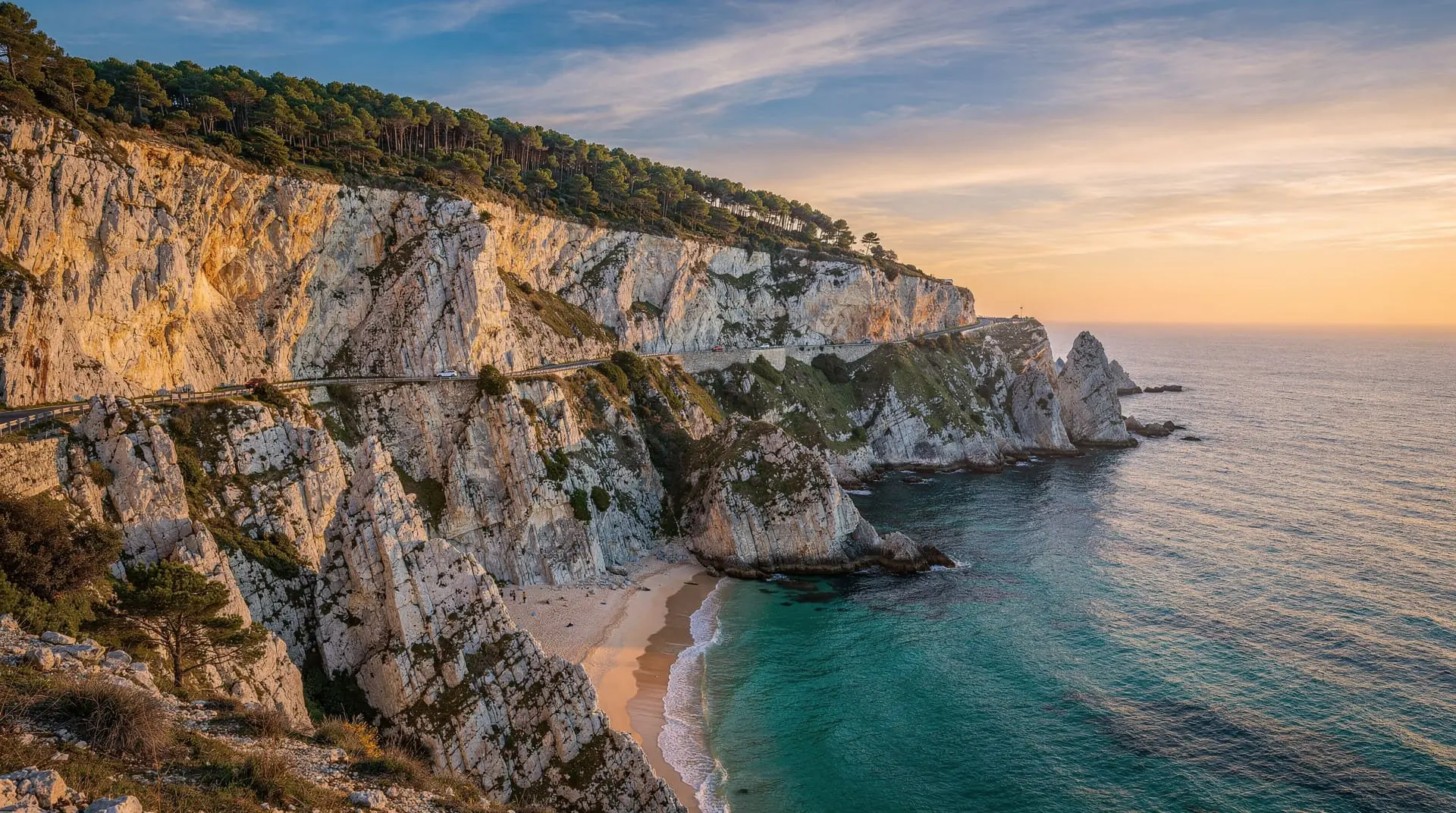
The Serra da Arrábida is the limestone ridge that falls directly into the Atlantic along the southern coast of the Setúbal peninsula, creating the most dramatic and most photogenic coastline within reach of Lisbon. The cliffs are white. The water is turquoise — genuinely turquoise, not the steel-grey Atlantic you get further north. The beaches inside the park are among the best in mainland Portugal. And the natural park protecting all of this is also one of the most visited and, consequently, most regulated.
Understanding the access system before you go will save your day.
Park structure and what’s inside
Parque Natural da Arrábida covers 10,800 hectares and runs along 35 km of coastline on the south side of the Setúbal peninsula. The park has two distinct zones:
The terrestrial park: The Serra da Arrábida ridge, covered in Mediterranean macchia — a dense, aromatic scrubland of cistus, rosemary, lavender and wild carob. The ridge rises to around 500 metres and runs east–west, blocking the Atlantic winds from the north and creating a sheltered microclimate on the south face where the temperature runs 3–5°C warmer than Lisbon.
The marine park: The 5,300-hectare marine protected area extends 2 km offshore. The water clarity is exceptional — up to 20 metres visibility — due to the Atlantic circulation patterns and the absence of river runoff along this section of coast. The marine park protects deepwater gorgonian reefs, sea grass beds and the rocky coastal habitats.
Access point from Setúbal: The main access road is the N10 from Setúbal toward Sesimbra. The coastal road N379-1 branches south off the N10 and runs along the park’s northern edge before descending to the coast. This is the route to the main beaches and the Convento da Arrábida.
Book the Arrábida Natural Park and Sesimbra day trip from LisbonThe summer road permit: everything you need to know
This is the most important practical detail for independent visitors.
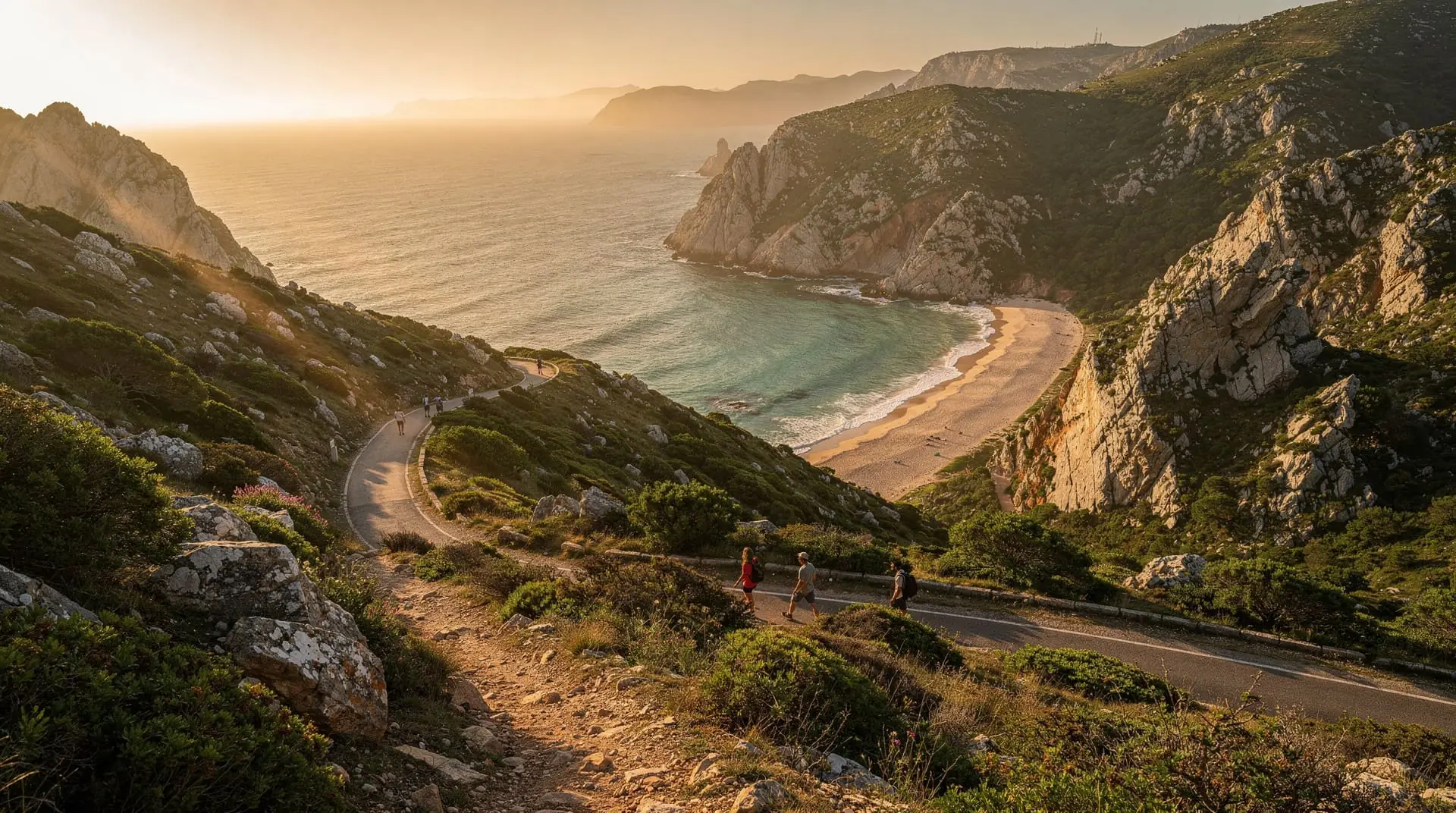
The rule: Between June 15 and September 15, the N379-1 coastal road through the park is subject to a vehicle access permit system. The road is limited to 1,000 vehicles per day (total across the day, not simultaneously). To drive this road in summer, you need a permit booked in advance.
How to get a permit: Online at icnf.pt (Instituto da Conservação da Natureza e das Florestas) or through the park management. A small fee applies (around €5–10 per vehicle in 2026 — confirm current rates at icnf.pt). Permits are time-slotted.
What happens without a permit: If you arrive at the junction without a permit, rangers at the entrance point will turn you around. The system is actively enforced. Parking on the N10 and walking down the steep track is theoretically possible but the distance (2–4 km descent) makes it impractical for most visitors.
The shuttle alternative: When the permit quota fills (often by 9 am for busy summer days), there is a shuttle bus from the N10 parking area down to the main beaches. The shuttle is the official backup system and works well.
Outside the permit season: Before June 15 and after September 15, the road is open to all vehicles without restriction. This is a strong argument for visiting in late May or October — park at any viewpoint or beach access point freely and you have the coast at a fraction of summer crowding.
Organised tours: Day trips and guided tours booked through operators have their own access arrangements and are not subject to the individual permit quota in the same way. This is one practical advantage of booking an organised tour over driving independently.
Book the Arrábida Natural Park full-day private tour from LisbonThe Convento da Arrábida
The Convento da Arrábida sits on the cliff face partway between the ridge and the sea — a white-walled monastery complex built in 1542 by the Dukes of Aveiro. It is one of the most strikingly positioned buildings in Portugal.
The convent was used by Franciscan friars for over three centuries. It has been restored and is now used for private functions and small events, but the exterior and grounds are visible from the coastal road and from the sea (if you’re on a boat tour). Guided visits to the interior can sometimes be arranged by prior appointment with the Fundação Oriente, which manages the property.
From the road viewpoint near the Convento, you see the entire bay of Portinho da Arrábida spread below — the turquoise water, the white beach, the cliff dropping to the sea. This is the iconic Arrábida photo.
Beaches inside the park
The park contains several beaches accessible only via the N379-1 coastal road or by boat. All have limited or no facilities (no hotels, few services) which is part of their appeal.
Portinho da Arrábida: The main beach and the most accessible. A small sheltered bay with a white sand and pebble beach, crystal water, and a tiny fish restaurant (Restaurante Portinho) with excellent grilled fish. Gets crowded in summer — arrive before 10 am. There is a small car park (20–30 spaces) and a larger parking area up the road.
Galapinhos: Consistently rated among the best beaches in mainland Portugal. A small bay backed by limestone cliffs with extremely clear water. No facilities whatsoever — no restaurant, no toilets, no rentals. Bring everything you need. The access path is a 15-minute walk from the nearest road park. Worth every minute.
Galapos: Adjacent to Galapinhos. Similarly wild, slightly easier access from the road. Also no facilities.
Portinho do Coelho: Smaller, rocky-edged bay to the east, less visited. Good snorkelling directly off the rocks.
Praia de Setúbal: Not technically inside the park but at the park’s eastern edge, accessible from Setúbal itself. Larger, more developed, less dramatic.
Hiking in Arrábida
The park has a network of marked trails ranging from gentle coastal walks to steep ridge hikes. The terrain is serious in places — limestone, often slippery when wet, with significant elevation changes.
Rota dos Medronheiros (Trail 1): The gentlest option, running through the western section of the park with views north across the Setúbal plain. 8 km, relatively flat. Good introduction to the vegetation without the cliff exposure.
Trilho da Serra (Ridge Trail): The main east–west ridge traverse. From the N10 trailhead near Vila Nogueira de Azeitão you can walk the ridge to various viewpoints before descending to the coast. Total: 12–18 km depending on route. Bring 2 litres of water minimum — there are no water sources on the ridge.
Coastal path: Parts of the coast can be traversed on foot along informal paths. These are not waymarked trails and some sections require scrambling on limestone. For experienced walkers and explorers only.
Guided hiking: Several operators run guided hiking tours in the park, including ICNF-certified guides.
Book a hiking tour in Arrábida Natural ParkWhat to wear: Proper walking shoes (not sandals) for any trail beyond the beach. Trekking poles are useful on steep sections. Sun protection is essential — the macchia is low and provides almost no shade.
Camping and picnicking rules
Wild camping is not permitted anywhere inside the park, and open fires are banned year-round given the fire risk in the dry macchia vegetation. Picnicking is allowed at the designated beach and viewpoint areas, but visitors are expected to carry out everything they bring in — bins are scarce and the park’s low-impact reputation depends on this. If you want an overnight stay near the park, Setúbal and Sesimbra both have conventional accommodation within a short drive of the entrance.
The Jeep tour option
The Arrábida jeep tour accesses viewpoints and tracks that are not accessible by standard vehicles.
Book the Arrábida jeep tour to the most beautiful beach in EuropeJeep tours typically include viewpoints from the ridge, access to multiple beaches and caves, and often a wine tasting at one of the Azeitão wineries in the park’s terrestrial zone. For travellers who want to see the full park without hiking, the jeep tour is the most comprehensive option.
Comparing the hiking trails
| Trail | Distance | Difficulty | Best for |
|---|---|---|---|
| Rota dos Medronheiros | 8 km | Easy | First-time visitors, gentle introduction |
| Trilho da Serra (Ridge Trail) | 12-18 km | Hard | Experienced hikers, full ridge views |
| Coastal path | Varies | Hard, unmarked | Experienced walkers only |
Bring more water than you think you need — the macchia offers almost no shade on any of these routes, and there are no refill points once you leave the trailhead.
Wildlife in the park
Flora: The macchia (maquis) shrubland is dominated by cistus (rock rose), wild rosemary, lavender, and the arbutus tree (medronheiro) whose berries make medronho, Portugal’s traditional grape-style spirit. Spring (March–May) is when the wildflowers peak.
Birds: Imperial eagles (rare), peregrine falcons, and red kites nest on the limestone cliffs. Seabirds include Caspian terns and several gull species. The coastal areas have regular sightings of kingfishers and little egrets.
Marine life: Grey mullet, sea bass, gilt-head bream and octopus in the shallow coastal zone. Dolphins (Sado pod uses the waters around Tróia just north of the park — see dolphin watching guide). The deeper offshore sections have occasional sightings of sunfish and bluefin tuna.
Reptiles: The Montpellier snake is common in the macchia — harmless unless handled. Hermann’s tortoise is present in the park (rarely seen, declining population).
Wine near Arrábida: the Setúbal connection
The terrestrial section of the Arrábida park overlaps with one of Portugal’s lesser-known wine regions — the Setúbal appellation, known particularly for its Moscatel de Setúbal (a fortified dessert wine) and fresh white wines from Fernão Pires and Antão Vaz grapes. The Azeitão village at the park’s northern edge has several wine estates open for visits.
For Arrábida combined with wine tasting, see Setúbal Moscatel and Azeitão and the various wine day trips listed in the Alentejo wine day trip guide.
Visiting outside the permit season
If your dates are flexible, visiting in late May, early June, or October removes the biggest planning headache entirely — no permit, no shuttle queue, and the road is open to any vehicle at any time. Water is still swimmable (17-21°C depending on the exact week), the wildflowers on the ridge are at their best in spring, and the beaches, while cooler and quieter, are far more pleasant to actually reach. This is consistently the advice locals give visitors who ask when to come: skip the permit season if you can.
Practical summary
Getting there: Car via A2 to Setúbal, then N10 toward Sesimbra (50–60 min from Lisbon). No direct public transport to the coastal road — nearest bus access is Setúbal, from where a taxi or organised transport is needed to reach the park beaches.
Summer permit: Book at icnf.pt before June 15 if visiting June 15–September 15. Allow for the fact that slots fill weeks ahead for the peak August dates.
Best months: May–June and September–October. Beautiful conditions, no permit pressure, fewer people, lower prices.
Avoid: Visiting the main beaches (Portinho, Galapinhos) after 11 am in July–August without advance planning — parking fills, shuttles queue, and the beaches are at capacity.
Combine with: Setúbal and Arrábida day trip, dolphin watching in Setúbal, Sesimbra day trip, and for the beaches themselves in more detail, the dedicated Arrábida beaches guide.
Related guides
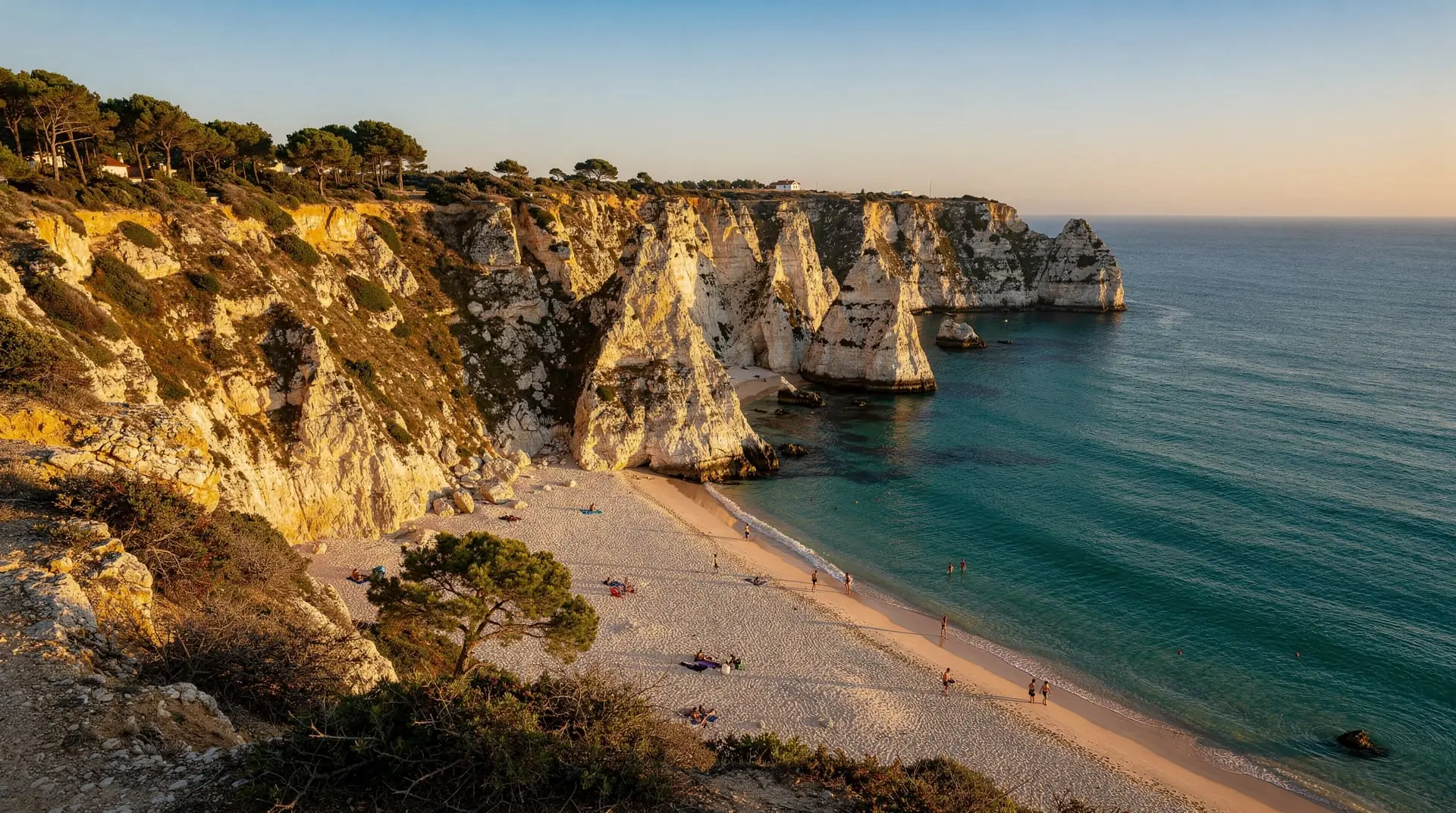
Arrábida beaches — turquoise water, limestone cliffs, summer access rules
Complete guide to Arrábida beaches: Galapinhos, Galapos, Portinho, Figueirinha. Turquoise water, access restrictions June-Sept, and how to get there.
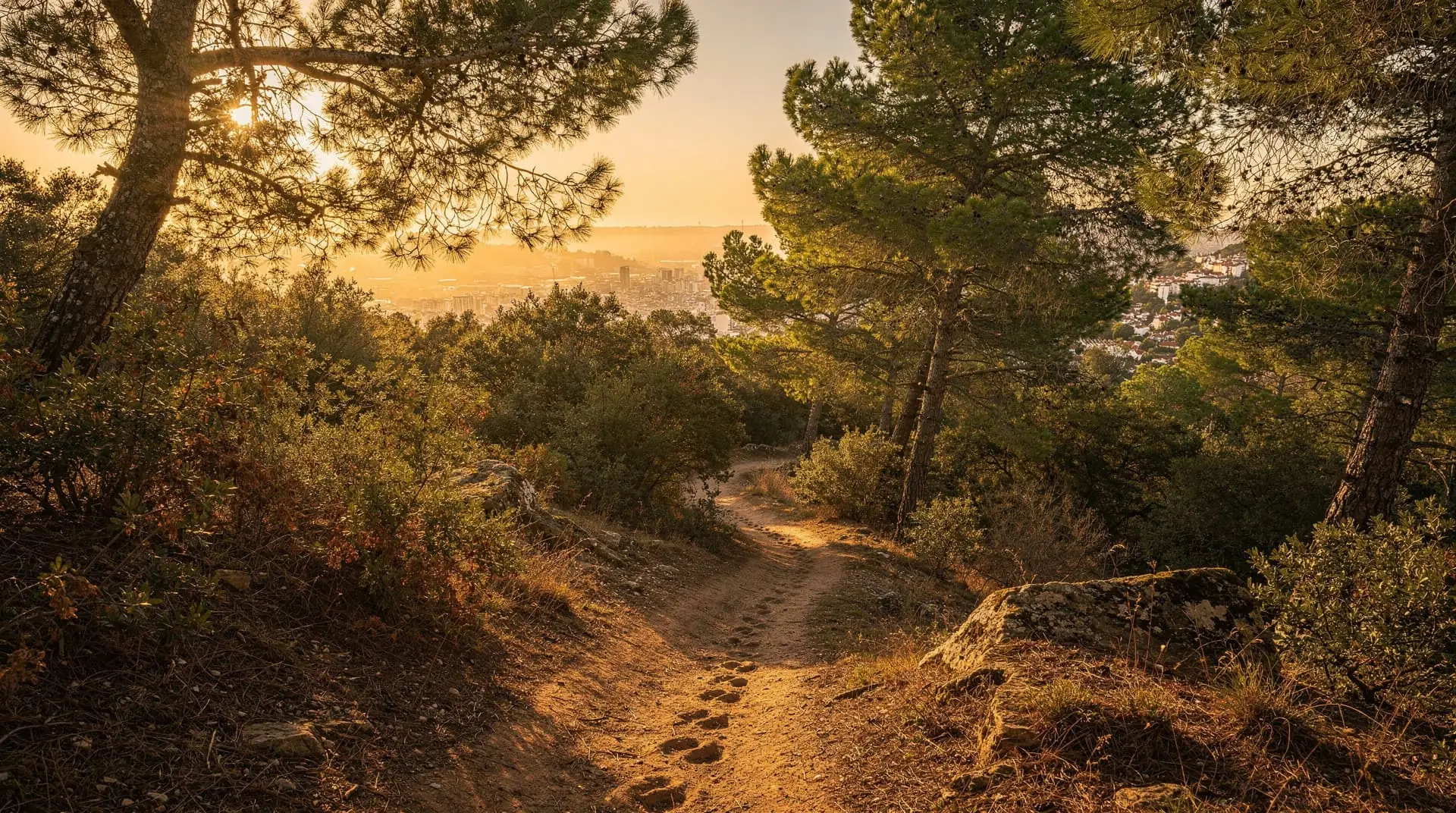
Monsanto Park: Lisbon's urban forest, trails, mountain biking and Panorâmico
Parque Florestal de Monsanto: Lisbon's massive urban forest, the abandoned Panorâmico restaurant, hiking and MTB trails, safety tips.
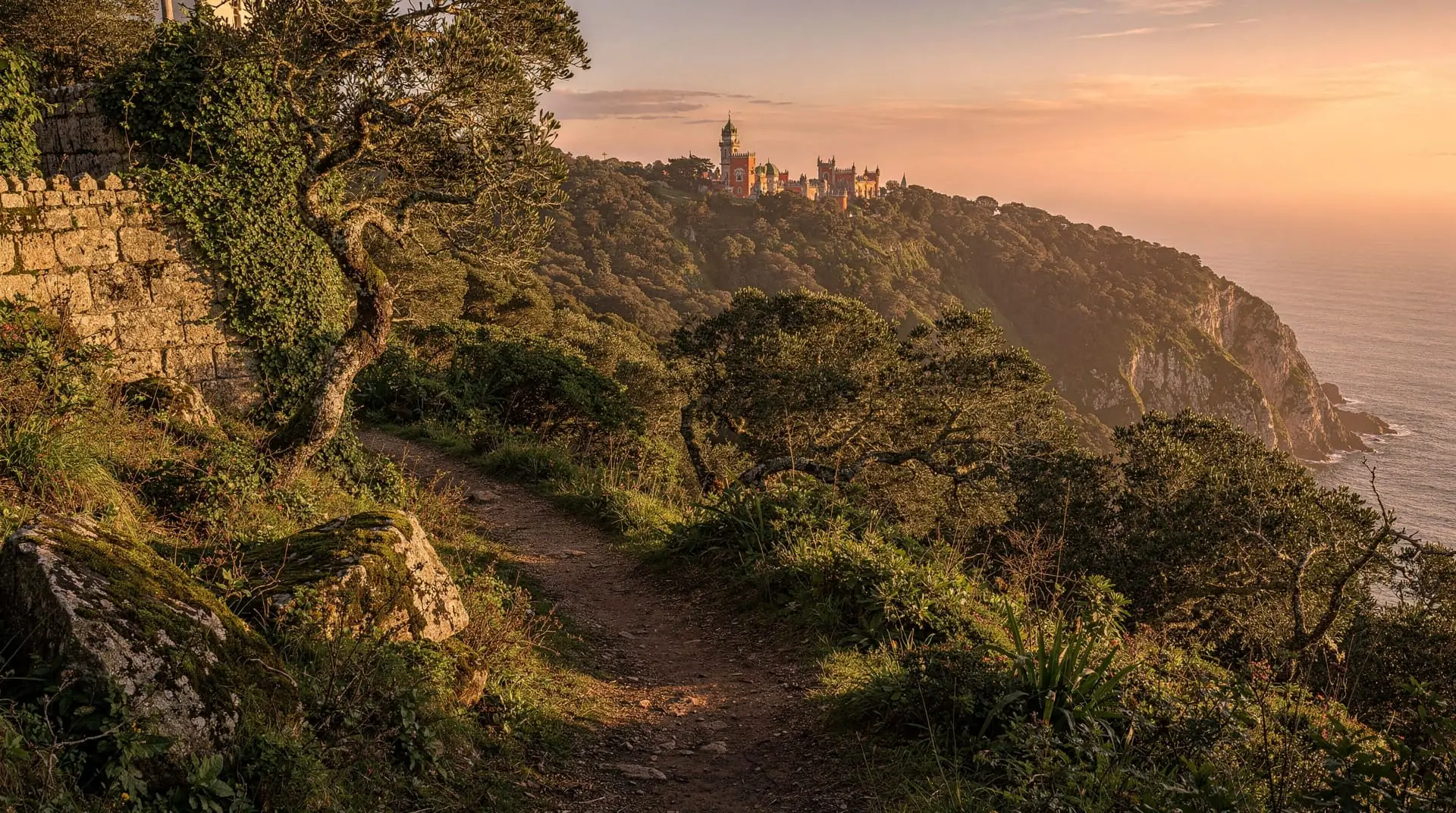
Sintra-Cascais Natural Park: Pena gardens, Capuchos convent and Cabo da Roca
Sintra-Cascais Natural Park: Pena gardens, Capuchos convent, coastal dunes, Cabo da Roca cliffs, and how to explore beyond the monuments.
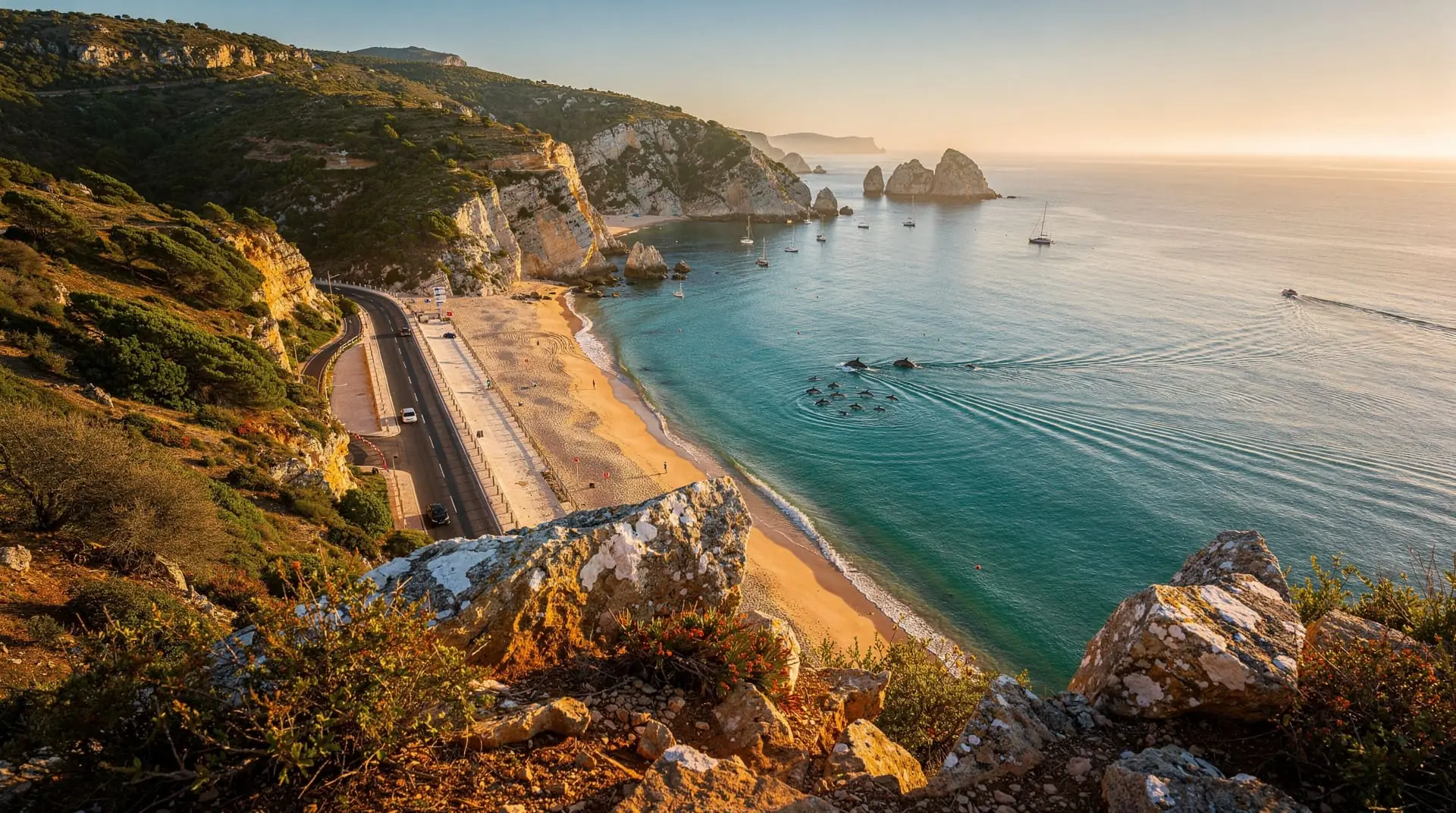
Setúbal and Arrábida day trip: beaches, dolphins and the summer road restrictions
Setúbal and Arrábida day trip — Galapinhos beach, Portinho da Arrábida, dolphin watching, summer road restrictions explained, and carless options.
Ready to book? Top tours for this guide
We earn a small commission if you book through GetYourGuide — at no extra cost to you. Every tour is hand-picked and verified.