Dolphin watching in Setúbal: Sado estuary pods, tours and best season
Last reviewed
Can you reliably see dolphins near Lisbon?
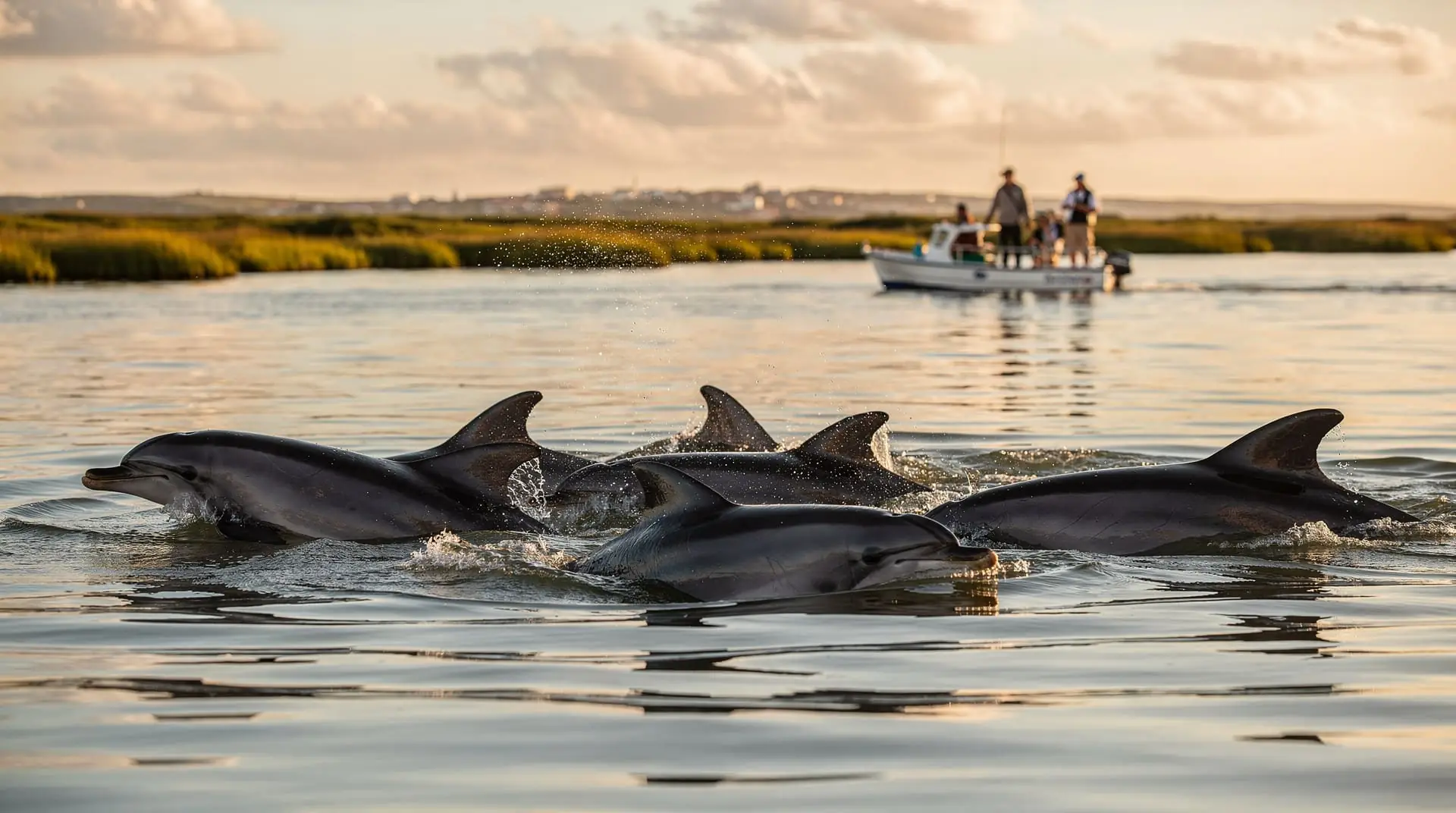
Yes. The Sado estuary near Setúbal has a resident pod of around 25–30 bottlenose dolphins — one of the few resident dolphin populations in Europe, meaning they live here year-round and don't migrate. Sightings on organized tours run at 85–95% in the April–October peak season. Setúbal is 50 km from Lisbon (50–60 min by car or bus).
The Sado estuary dolphin pod is one of the genuinely special wildlife encounters in Portugal. Not because it is unusual to see dolphins on a tour (there are dolphin watching operations all over the coast), but because this pod is resident — they live here, they don’t migrate, and they have specific areas within the estuary where they reliably feed and socialise. A responsible tour operator knows where these areas are, and sightings on reputable tours run exceptionally high for a wild animal encounter.
This is not a theme park. The dolphins are wild and the sea is the sea.
| Where | Sado estuary, Setúbal — 50km / 50–60min south of Lisbon |
| Cost | €35–55/adult, €20–30/child; +€15–25 for Lisbon pickup |
| Time needed | 2–3 hours on the water, half a day including transport |
| Getting there | Bus from Praça de Espanha, car via A2, or a tour with Lisbon pickup |
| Best time | Morning departures, April–October, before the afternoon Nortada wind builds |
The Sado dolphin pod: what makes it different
The resident bottlenose dolphin population in the Sado estuary numbers around 25–30 individuals. Research by the Instituto Português do Mar e da Atmosfera (IPMA) has tracked this population since the 1980s — individual dolphins have been identified by their dorsal fin markings and photographed across three decades.
Why resident matters: Most dolphin watching operations rely on dolphins that are passing through — offshore pelagic pods following fish, seasonally present. The Sado pod does not leave. They know the estuary. Calves are born here. Older individuals have been documented here for 30+ years. This gives tour operators — and scientists — a much deeper understanding of their typical locations and behaviours.
Their range in the estuary: The pod typically uses the middle section of the Sado estuary between Setúbal and Tróia, with feeding grounds along the channel edges and socialising in the more open water toward the estuary mouth. Tours from Setúbal navigate this range in 2–3 hours.
Their behaviour on a good day: Bottlenose dolphins are curious animals. When a boat approaches slowly without engine revving, individuals — especially younger ones — often approach the vessel bow to ride the pressure wave. This is voluntary behaviour; the dolphins choose to interact. On a bad day they are feeding or resting and the tour maintains legal minimum distance to observe without disturbance.
Tour options from Setúbal
Standard dolphin watching catamaran (most common, most stable)
Book the Setúbal dolphin watching catamaran tourThe catamaran option carries 20–40 passengers on a stable, wide vessel. Better for families, anyone prone to motion sickness, and children who might be nervous on a smaller boat. Slower, but the deck space allows better group viewing. Duration: 2–3 hours. Price: €35–45 adult.
Rigid inflatable boat (RIB) dolphin watching
Book the Setúbal dolphin watching boat tourA RIB is a faster, lower, more agile vessel. The ride is more exciting — you feel the water, you cover more ground. The boat can be positioned more precisely relative to the dolphins. Fewer passengers (8–12 typical). The trade-off: it is bumpy when the sea has any chop, and the minimum age is usually higher (6–8 years). Duration: 2–2.5 hours. Price: €40–55 adult.
Sado estuary combined tour (dolphins + Tróia)
Book the Setúbal and Tróia dolphin watching and Arrábida bays tourSome operators combine the dolphin watching with a stop at Tróia — the narrow sandy peninsula that closes off the estuary mouth. Tróia has Roman ruins (first century AD), long sandy beaches and no traffic. This makes for a longer day (4–5 hours) but gives you more than just the boat trip.
Half-day wild dolphin watching tour Book the wild dolphin watching half-day tour
A focused half-day tour for those who want the dolphin experience without the day-trip structure. Can be combined with a morning or afternoon in Setúbal town or the Arrábida beaches.
When trips are cancelled
This is the most important practical question for trip planning.
Wind: Tours are cancelled when sea conditions are unsafe — typically winds above 20–25 knots and/or wave heights above 1–1.5 metres at the estuary mouth. The Sado is a protected estuary so conditions inside are usually gentler than the open coast, but strong winds still create uncomfortable or unsafe conditions.
The reality: In June–September cancellations are infrequent (maybe 5–10% of departures). In April–May and October, slightly more common (10–20%) as Atlantic weather systems are more active. November–March: fewer departures run, higher cancellation rate.
Notice: Most operators cancel 2–3 hours before departure when conditions become clear. You will receive a message (confirm the operator has your phone number). Most offer full refund or free reschedule.
Plan B: If your dolphin tour is cancelled and you’re already in Setúbal, the Arrábida beaches are 15–20 minutes by car or taxi and the sea inside the Arrábida bays is sheltered enough to swim even on moderate wind days. The Arrábida Natural Park has hiking trails requiring no sea access.
Getting from Lisbon to Setúbal
By bus: TST buses run from Praça de Espanha (metro) or the Praça do Comércio area to Setúbal. Journey: 50–70 minutes. Frequency: roughly hourly. Cost: around €4–6. Check current Setúbal bus schedules as routes change seasonally.
By car: Via the A2 motorway (25 de Abril bridge, then A2 south toward Setúbal). 50–55 minutes in normal traffic. Avoid Friday afternoon and Sunday evening (Lisbon–Algarve traffic). Parking at the Setúbal waterfront is generally available (€1–2/hour).
Organised transport from Lisbon: Some GYG operators include a minibus pickup from Lisbon. This adds cost (€15–25) but removes the planning burden entirely. For a solo traveller or a couple without a car, this is often the best value option when you factor in bus schedules and connection time.
What to bring
Essential: Motion sickness medication if you’re prone (take 1 hour before departure). A light jacket — the estuary feels colder than the land temperature once you’re moving on the water. Sunscreen.
Recommended: Binoculars (7x35 minimum) — significantly improve the experience when dolphins are at distance. Camera with zoom capability. Polarised sunglasses (reduce water-surface glare, make the dolphins easier to spot underwater).
Not needed: Specialist equipment. The tours provide life jackets. Your phone camera will capture dolphins at close range perfectly.
What to wear: Layers are more useful than a single warm item — the estuary is noticeably cooler and breezier than Setúbal town, but the sun can still be strong once the boat is moving. Closed-toe shoes with grip are more practical than sandals on a moving RIB deck; a catamaran’s flatter deck is more forgiving of flip-flops.
Responsible dolphin watching: what to look for in an operator
The Sado resident pod’s long-term health depends on how tours are run. A responsible operator will:
- Approach dolphins at slow, constant speed (no engine acceleration near pods)
- Maintain minimum 50-metre distance unless dolphins approach voluntarily
- Limit time spent with any single group to 30–60 minutes maximum
- Not feed dolphins or throw items in the water near them
- Hold a valid authorisation from the Instituto da Conservação da Natureza e das Florestas (ICNF)
Signs of a poor operator: aggressive engine revving near dolphins, getting closer than the minimum distance (dolphins will avoid the boat if pushed), allowing passengers to lean over the side and splash.
When booking, look for “dolphin safe” or “eco-certified” designations and check that the operator mentions the ICNF authorisation.
Responsible operators also tend to be more transparent about sighting rates and cancellation policies rather than promising guaranteed encounters — treat vague marketing language as a small warning sign, and favour operators who explain their approach protocol on their own listing.
Combining with the Arrábida coast
The Setúbal–Arrábida area deserves more than just the dolphin watching. In a full day from Lisbon:
Morning: Drive or bus to Setúbal. Dolphin watching tour (departing 9–10 am, back by noon–1 pm).
Afternoon: Drive to Portinho da Arrábida (15–20 min from Setúbal), swim in turquoise water, lunch at the small café, hike one of the Arrábida trails.
Evening: Return to Lisbon for dinner.
This full-day structure is covered in the Setúbal and Arrábida day trip guide. For the natural park detail including hiking routes, see Arrábida Natural Park.
Frequently asked questions about dolphin watching near Lisbon
How many dolphins will I see?
The Sado pod numbers 25–30 individuals but you are unlikely to see the entire pod at once. A typical sighting involves 5–15 dolphins together in a feeding or socialising group. On an excellent day the whole pod might be visible in the same general area. On a quiet day you might spot 3–5 individuals at distance before they move off.
Is the Sado the only place to see dolphins near Lisbon?
It is the most reliable. The Tagus river cruise operator MAAT lists “dolphin watching” as an option on some tours (the MAAT entry ticket and dolphin watching boat tour) — this refers to a Sado-based dolphin trip rather than Tagus dolphins, which are very rare. Offshore from Cascais and Sesimbra, common dolphins (Delphinus delphis) are occasionally seen on open-sea boat trips, but sightings are not guaranteed.
Should I book in the morning or afternoon?
Morning departures (9–10 am) are generally preferable for calmer sea conditions (especially June–September before the Nortada builds) and better light for photography. Afternoon tours (2–4 pm) may have choppier conditions in summer but are sometimes the only option depending on your schedule.
Is there a MAAT tour that combines with dolphin watching?
Yes — the Lisbon MAAT museum entry ticket combined with a dolphin watching boat tour is listed on booking platforms. This bundles MAAT museum access (Belém waterfront museum) with transport to Setúbal for the dolphin watching. Worth considering if you want to do both in the same day without separate bookings.
Setúbal town beyond the dolphins
Most dolphin tours depart directly from the Setúbal waterfront, and it’s worth arriving early or staying afterward to see the town itself rather than treating it purely as a boat departure point. The Setúbal and Arrábida day trip guide covers the wider area, but Setúbal alone has a genuinely good fresh fish market (best before 1pm), the Jesuit-era Igreja de Jesus (one of Portugal’s earliest Manueline buildings, predating even Belém), and a promenade with views across to Tróia. Kayaking in the Lisbon area also operates out of Setúbal and the Sado estuary for a slower, self-paced alternative to the motorised dolphin tours, though it does not reach the dolphins’ typical range as reliably.
For visitors who want a full beach day alongside the dolphin trip, Sesimbra is a 20–30 minute drive south of Setúbal and works well as an afternoon add-on, as does Tróia directly across the estuary — some combined tours already include a Tróia stop, as noted above.
Related guides
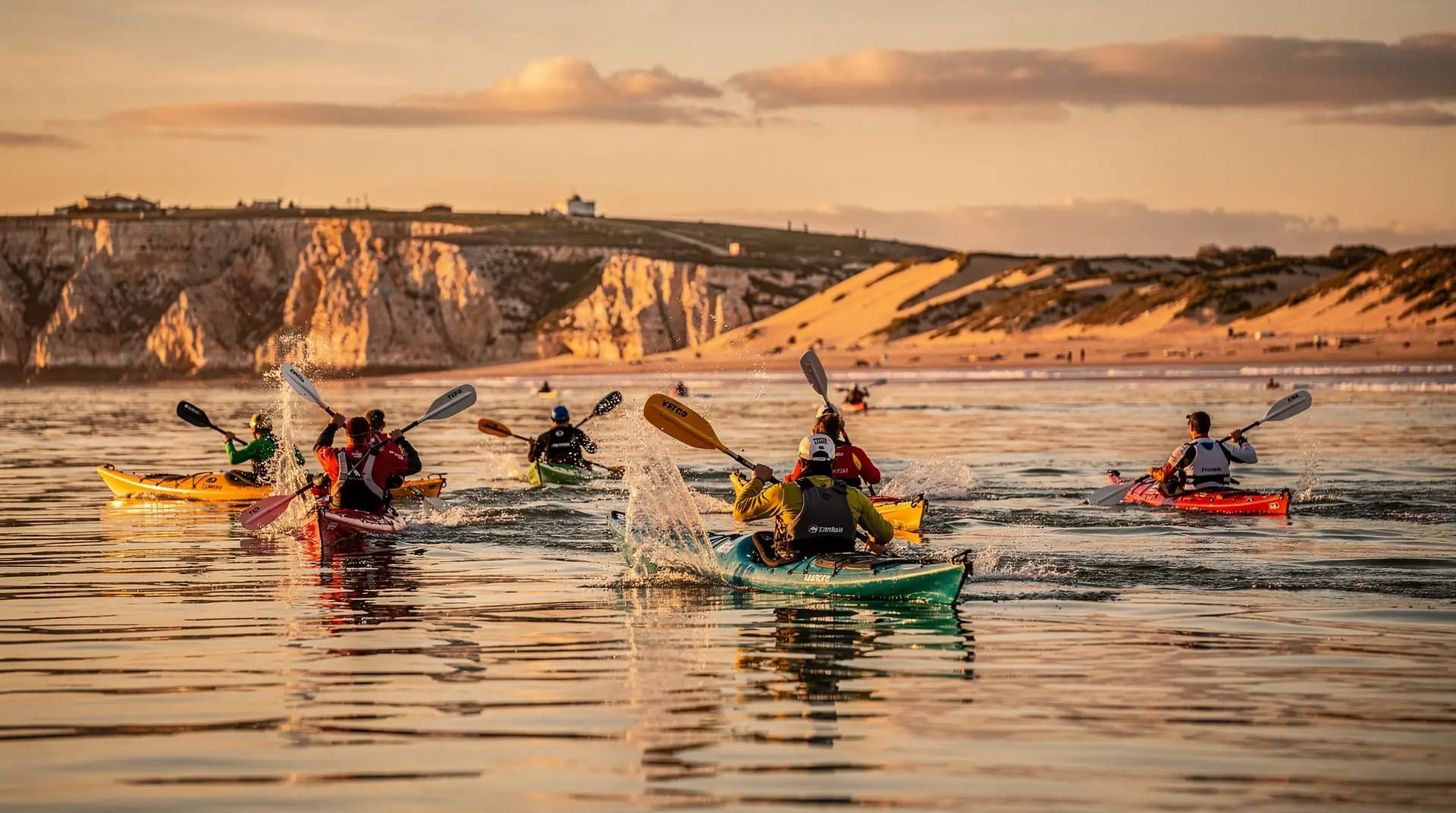
Kayaking near Lisbon: Tagus, Arrábida sea cliffs, Caparica coast and Tróia
Best kayaking near Lisbon: Tagus tours from Belém, Arrábida sea cliffs, Caparica coast, Tróia. Prices, logistics, and conditions.
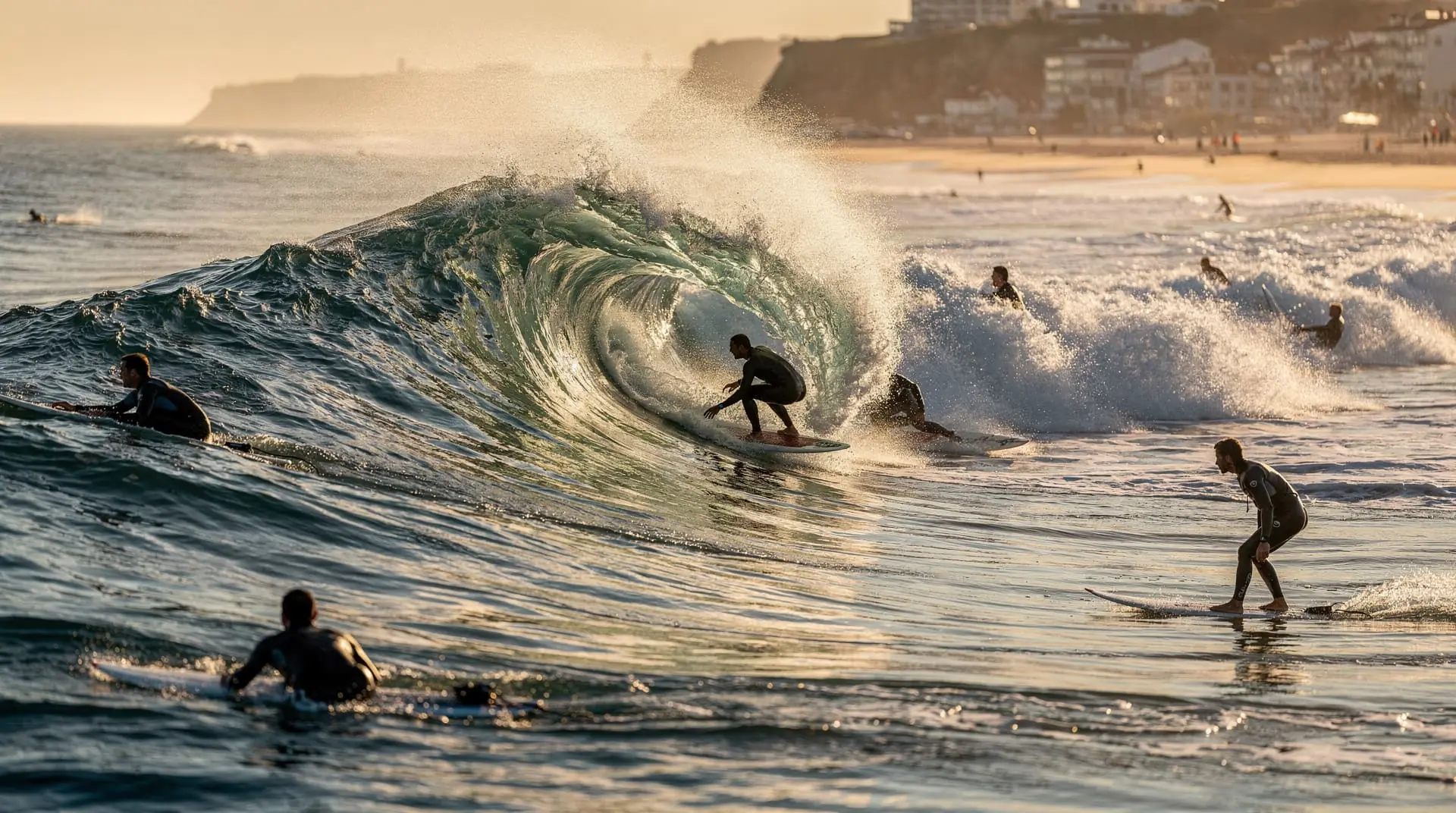
Surfing near Lisbon: Carcavelos, Caparica, Guincho and Ericeira
Best surf near Lisbon: beginner Carcavelos, consistent Caparica, advanced Guincho wind, and the Ericeira World Surfing Reserve.
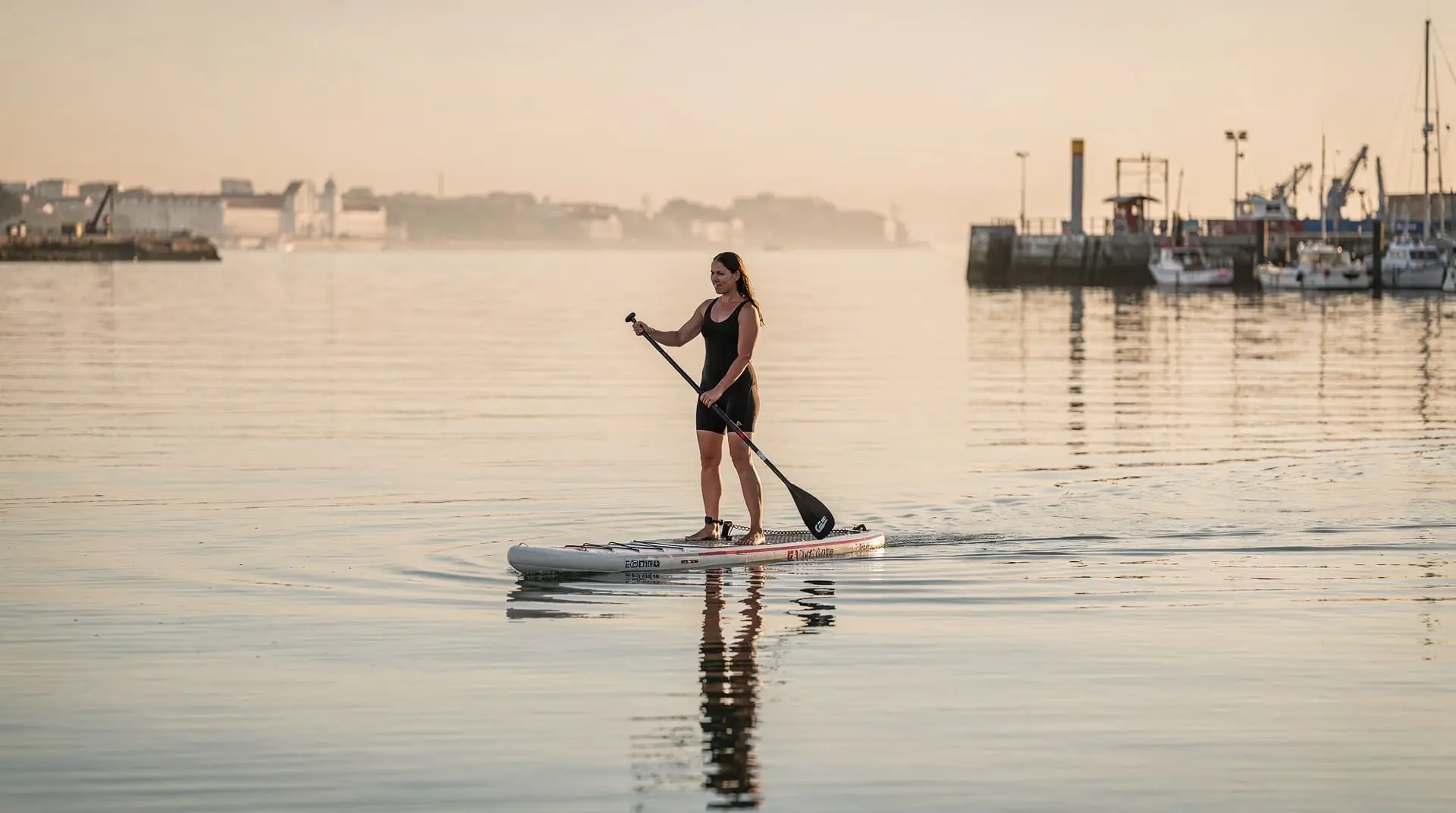
Stand-up paddleboarding in Lisbon: Belém, Tagus spots and calm-water options
Stand-up paddleboard hotspots near Lisbon — Belém Doca, calm marina spots, when to go to avoid the Nortada wind, and where to rent or join a guided SUP session.
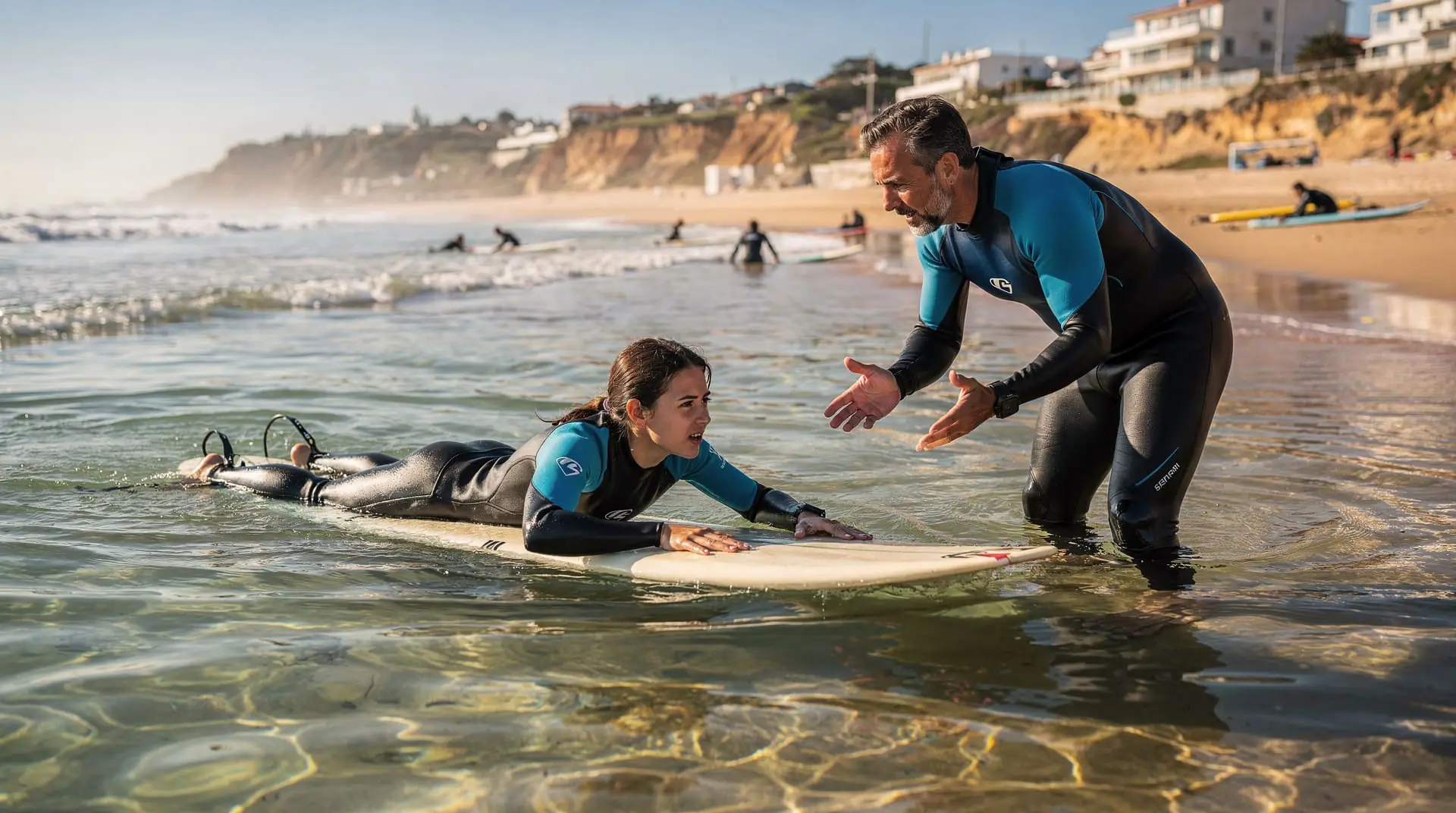
Surf lessons near Lisbon: schools, prices and what to expect
Best surf schools near Lisbon: Carcavelos, Caparica, Ericeira. Group lessons €40–60, transport-included options, what to expect.
Ready to book? Top tours for this guide
We earn a small commission if you book through GetYourGuide — at no extra cost to you. Every tour is hand-picked and verified.
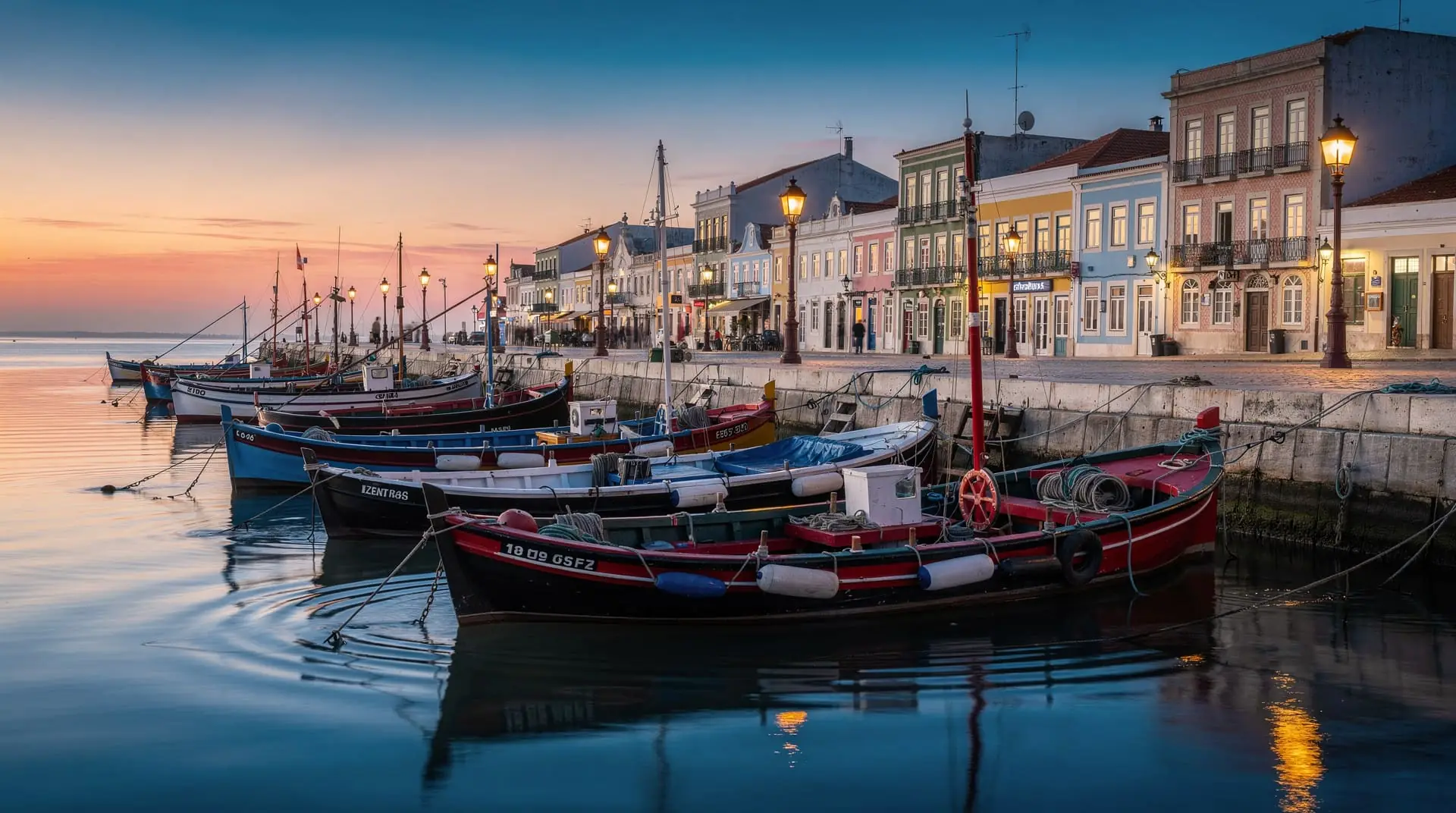
Setúbal: Dolphin Watching Boat Tour
Setúbal: Dolphin Watching Tour (Catamaran)
Setúbal and Tróia: Dolphin Watching and Arrábida Bays
Dolphin Watching in the Wild - Half Day Tour
Setubal: Tróia and Roman Ruins Boat Transfer