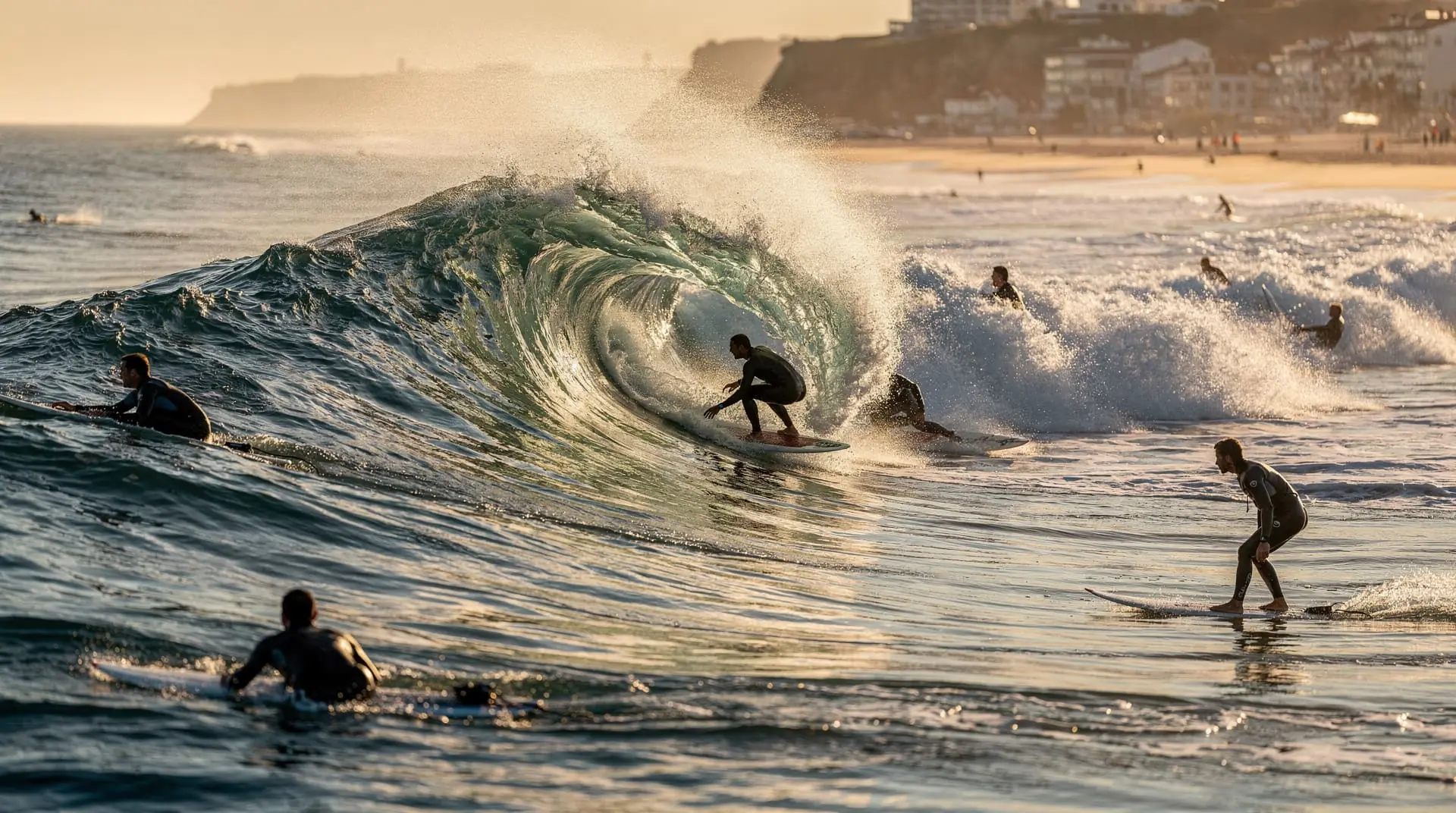
Surfing near Lisbon: Carcavelos, Caparica, Guincho and Ericeira
Last reviewed
Where are the best surf spots near Lisbon?
Carcavelos is the closest beginner-friendly beach (35 min by train from Cais do Sodré). Costa da Caparica offers 30 km of consistent beach breaks for all levels. Praia do Guincho is spectacular but advanced-only due to persistent strong wind. Ericeira (1 hour north) is a UNESCO World Surfing Reserve with 6 different breaks including beginner-suitable spots.
Portugal has one of the best coastlines in Europe for surfing, and Lisbon sits at the intersection of four completely distinct surf environments — each suited to different skill levels, wave preferences and time constraints. You can be in the water at Carcavelos 40 minutes after leaving your hotel in central Lisbon. You can drive 90 minutes to Ericeira and surf one of the world’s most celebrated reef breaks. The trick is matching the right beach to your level and your day.
| Where | Carcavelos, Costa da Caparica, Guincho or Ericeira |
| Cost | Around €35–60 for a group lesson, board rental €15–20/day |
| Time needed | Half day for Carcavelos; a full day for Ericeira |
| Getting there | Train (Carcavelos), ferry+bus (Caparica), bus (Ericeira) |
| Best time | October–March for swell, June–September for warmth and ease |
Carcavelos: the beginner’s beach (35 min from Lisbon)
Carcavelos is the go-to introduction to surfing near Lisbon and for good reason. It is the most accessible ocean surf beach on the Cascais Line — train directly from Cais do Sodré, 35–40 minutes, €2.35.
The break: A wide, south-facing beach with a sandy bottom and consistent beach break. Waves are typically 0.5–1.5 metres in summer, 1–2 metres in autumn and winter. The sandbar shifts seasonally so peak sections move around, but the beach is forgiving enough that it almost always offers somewhere suitable for beginners.
Why it works for beginners: Sandy bottom (no reef consequences from falls), good lifeguard coverage (June–September), surf schools within walking distance of the water, relatively sheltered from the Nortada compared to more exposed Atlantic-facing beaches. No paddle-out through crashing shore dump on most days.
Schools at Carcavelos: Several established schools operate here — Surfershouse, Carcavelos Surf School, and others have been running beginner lessons for more than a decade. Group lessons (2 hours, all equipment) cost €35–55. This Cascais-area local surf experience runs out of Carcavelos on the same stretch of coast. See the surf lessons guide for full school details and how to book.
Honest limitation: In summer (July–August) Carcavelos gets crowded in the water. Lesson groups can number 10–15 students with 2–3 instructors. The beach is large enough that it rarely feels dangerous, but the shared-wave ethic can frustrate beginners expecting a personal experience. Shoulder season (April–June, September–October) is significantly better.
Access without a car: Cascais Line from Cais do Sodré to Carcavelos station (every 20–30 min). 10 minutes’ walk to the beach from the station. If you have a Viva Viagem card loaded with Zapping credit, the fare is €2.35 each way.
Costa da Caparica: 30 km of beach breaks for all levels
Costa da Caparica is the largest surf destination near Lisbon — a 30-kilometre stretch of Atlantic-facing beach that produces different conditions at different points along its length, making it useful for everyone from beginners to intermediate surfers.
Getting there without a car: Ferry from Praça do Comércio to Cacilhas (10 min, €1.35 on Viva Viagem), then bus 124 or 135 (30–40 min). From Praça de Espanha metro station, bus 161 runs directly to Costa da Caparica (40–50 min). Total journey: 60–75 minutes. With a car via the 25 de Abril bridge: 25–35 minutes (avoid 7–9 am and 5–8 pm rush hours).
The waves: The northern end of the beach (closest to the ferry landing) has a long, consistent beach break with relatively gentle waves — good for beginners. The further south you go (accessible by the summer beach train that runs the length of the beach), the heavier and more powerful the surf becomes. The southern sections produce excellent barrel opportunities in autumn for intermediate and advanced surfers.
Surf schools: Multiple schools operate along the beach. Costa da Caparica: Surf Experience is one of the established options on GetYourGuide, with group lessons starting at €40 including all equipment and wetsuit.
Book a surf experience at Costa da CaparicaHonest assessment: The Caparica coast is excellent but the sheer length of it and the lack of distinct landmarks can make navigating it confusing without local knowledge. If you go independently, ask your surf school or hostel which numbered beach post (poste) to aim for. The posts are numbered 1–27 going south, with beginners best between posts 1–5.
Praia do Guincho: spectacular but not for beginners
Praia do Guincho sits at the edge of the Sintra-Cascais Natural Park, backed by dunes, facing the Atlantic directly, and exposed to the full force of the Nortada wind. It is one of Europe’s most photographed surf beaches and consistently rates among the continent’s top windsurfing and kitesurfing spots.
The conditions: Guincho faces northwest into the Atlantic. The Nortada blows here almost daily from April to October, typically reaching 20–35 knots by early afternoon. This produces powerful, often confused surf with a strong side-shore current. The waves are heavy, the shore dump is punishing, and the rip currents are real.
For experienced surfers: Excellent. The point break at the south end of the beach (Guincho Sul) works in smaller swells. The main beach break fires in bigger Atlantic swell (1.5–3 metres) with offshore wind in the morning before the Nortada kicks in. If you arrive before 10 am in summer you can score genuinely great surf.
For beginners: Do not go. This is not overcaution — Guincho is regularly the site of lifeguard rescues. There is no surf school on the beach. If you are a beginner who has heard that Guincho is beautiful (it is) and wants to learn to surf there, redirect to Carcavelos.
For kitesurfers and windsurfers: Guincho is world-class. The wind is reliable, the beach is wide, and several operators run kitesurfing lessons from here. This is genuinely one of the best kitesurfing venues in Europe.
Getting there: No direct public transport from Lisbon. Bus 403 from Cascais runs to Guincho (20 min from Cascais station, 40 min from Lisbon by Cascais Line then bus). Car: 35 min from central Lisbon via the Marginal coastal road.
See Guincho surf beach for the full breakdown of conditions by season.
Ericeira: World Surfing Reserve (1 hour from Lisbon)
Ericeira is in a different category from the other spots on this list. The Ericeira World Surfing Reserve — declared in 2011, only the second in the world after Malibu — protects 4 km of coastline and six distinct breaks, from beginner-accessible beach breaks to one of Europe’s most powerful reef waves.
The reserve and its breaks (south to north):
- Pedra Branca: Rocky reef, advanced, works in big swell
- Ribeira d’Ilhas: The iconic point break, works best at 1–2+ metres, intermediate to advanced, accessible from the road and frequently used by schools
- São Sebastião: Short, fast beach break, intermediate
- Coxos: One of the best right-hand point breaks in Europe, for experienced surfers only — heavy, fast, consequence if you fall
- Cave/Pontinha: Powerful beach and reef break, intermediate to advanced
- Foz do Lizandro: The beginner-accessible river mouth break, gentler wave, sandy bottom, where most schools teach
Access from Lisbon: Bus from Sete Rios bus station (Mafrense, every 1–2 hours, 75–90 min, around €6 each way). Car: A8 motorway north from Lisbon, 45–60 minutes. Ericeira village is a 10-minute walk from most surf spots. There is accommodation in the village for anyone staying multiple days.
Surf lessons at Ericeira: Several GYG-listed schools run beginner-appropriate lessons at Foz do Lizandro and Ribeira d’Ilhas. Group lessons €40–60 for 2 hours.
Book surf lessons in Ericeira — a World Surfing Reserve Book the Ericeira surf school experience with equipment rentalHonest assessment: Ericeira requires a full day from Lisbon. Commit to it properly — surf in the morning, explore the village (good restaurants, good coffee, a lively surf culture), perhaps stay overnight. Going just for a 2-hour lesson and coming back on the same bus is technically possible but leaves little breathing room.
Comparing the four options
| Beach | Travel time | Best for | Waves | Access (no car) |
|---|---|---|---|---|
| Carcavelos | 35–40 min | Beginners, easy access | Gentle–moderate | Train (Cascais Line) |
| Costa da Caparica | 60–75 min | All levels (varies by section) | Gentle to heavy | Ferry + bus |
| Guincho | 45–60 min | Advanced surfers, kitesurfers | Heavy, windy | Bus (limited) |
| Ericeira | 75–90 min | All levels (6 breaks) | Varies, excellent | Bus from Sete Rios |
When to surf near Lisbon
October–March: Best swells. Water temperature 14–16°C (5/4mm wetsuit). Consistent 1–2+ metre Atlantic swell at all breaks. Fewer tourists. The peak surf window at Ericeira is November–February.
April–May: Excellent. Water warming (16–18°C), spring swells, crowds thin. A 3/2mm wetsuit or shorty depending on cold tolerance.
June–August: Small to moderate surf, warm water (19–21°C), crowded lineups. Best for beginners (gentle conditions) but experienced surfers often find summer waves disappointing. Exception: any Atlantic storm swell reaching the coast in summer can light up Ericeira and Guincho.
September: Often the best single month — summer crowds gone, water still warm (20°C+), first autumn swells arriving. This is when to book if you can choose your timing.
What to know before you go
Wetsuit: Mandatory October–April (5/4mm). Optional but recommended June–September unless you run hot. All surf schools provide wetsuits in their lesson fee.
Sun protection: Year-round. The water and sand reflect UV significantly. Rash guard or boardshorts with built-in UPF are worth investing in if you plan multiple sessions.
Surf etiquette: Priority goes to the surfer deepest in the water (closest to the peak). Don’t paddle for waves others are already on. Don’t drop in on right-of-way surfers. In lesson groups you’re typically in your own zone, but be aware of these rules for free surfing. Locals at Ericeira in particular take etiquette seriously given the reserve’s crowded peak breaks — watch a set or two before paddling out anywhere unfamiliar.
Insurance: Standard travel insurance usually covers surf lessons. Confirm your policy covers “water sports” before you go.
Bringing your own board: If you’re travelling with your own equipment, most airlines charge a board bag fee (€60–100 return on the major carriers) and Portugal’s domestic transport (trains, the Sete Rios bus to Ericeira) accommodates board bags but check with the operator first — some buses have limited luggage space during peak summer weekends. Renting locally at €15–20/day is often cheaper than the airline fee unless you’re staying more than a week.
Combining surf with other water sports: A week in Lisbon with good surf on some days and flat, windy conditions on others is common, especially outside the reliable October–March window. Having a backup plan — SUP in a sheltered marina, a kayak trip to Arrábida — means a windy or flat morning doesn’t become a wasted one. See kayaking near Lisbon for the calmer-water alternatives.
For surf school bookings and detailed school reviews, see surf lessons near Lisbon. For the SUP and kayak alternatives if surf isn’t your scene, see kayaking in Lisbon and SUP in Lisbon.
Matching skill level to beach, honestly
The single most common mistake visiting surfers make near Lisbon is picking a beach on reputation rather than skill level. Guincho’s photographs are irresistible, but a first-time surfer who shows up there instead of Carcavelos is choosing a genuinely harder and more dangerous session for no real benefit — the wave quality doesn’t compensate for the wind and rip current risk at beginner level. Similarly, an intermediate surfer who spends their whole trip at Carcavelos because it’s the easiest to reach is leaving Ericeira’s genuinely world-class breaks unexplored. Be honest about your level before you pick a beach, not after.
For visitors combining a beach day with sightseeing rather than a dedicated surf trip, Carcavelos is also the natural pick logistically — it sits on the same train line as Cascais, so a morning surf session and an afternoon in Cascais or Estoril fit into one day without doubling back through central Lisbon. The best beaches near Lisbon guide covers the wider beach options if surfing isn’t the priority for everyone in your group.
Related guides
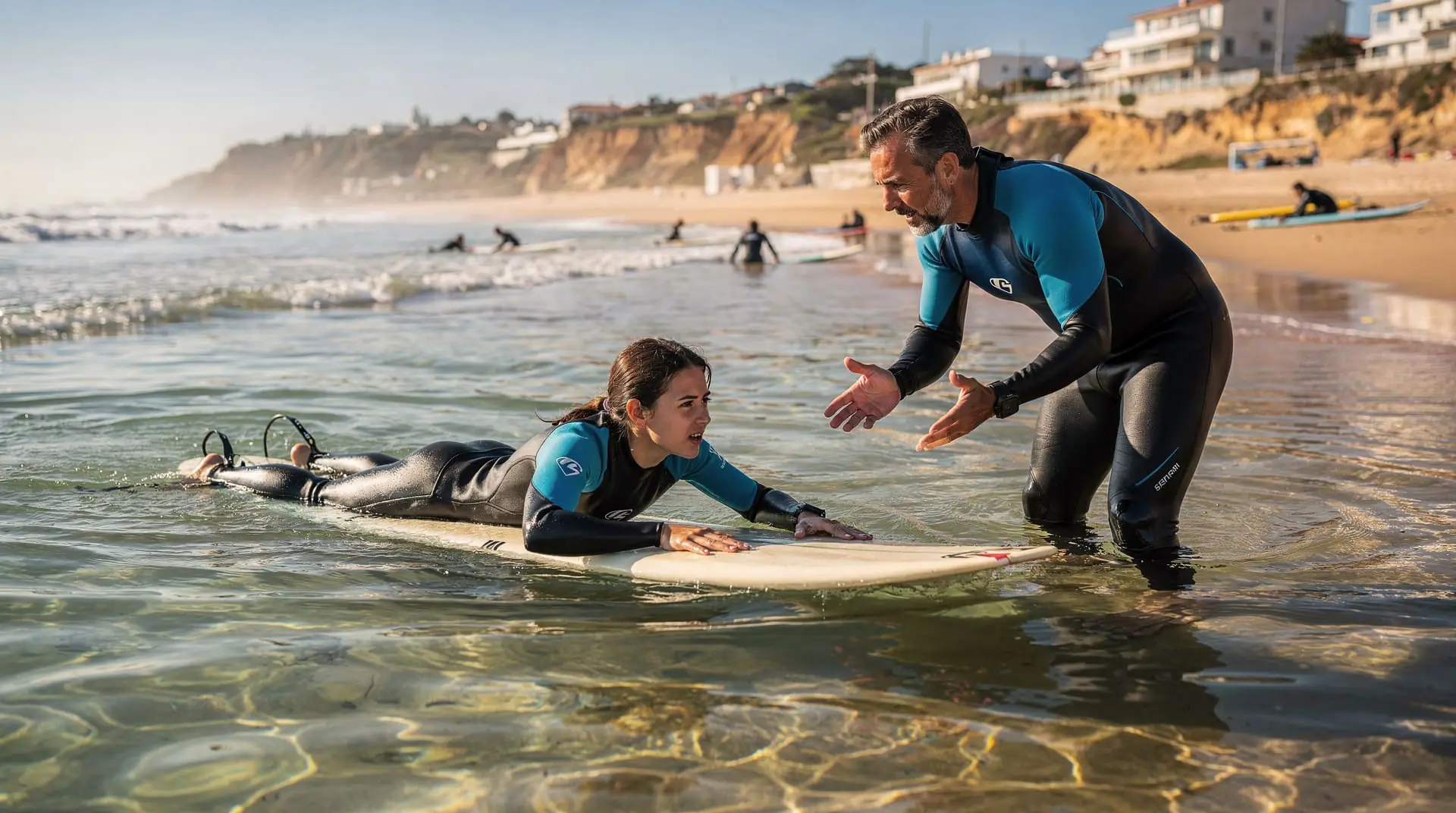
Surf lessons near Lisbon: schools, prices and what to expect
Best surf schools near Lisbon: Carcavelos, Caparica, Ericeira. Group lessons €40–60, transport-included options, what to expect.
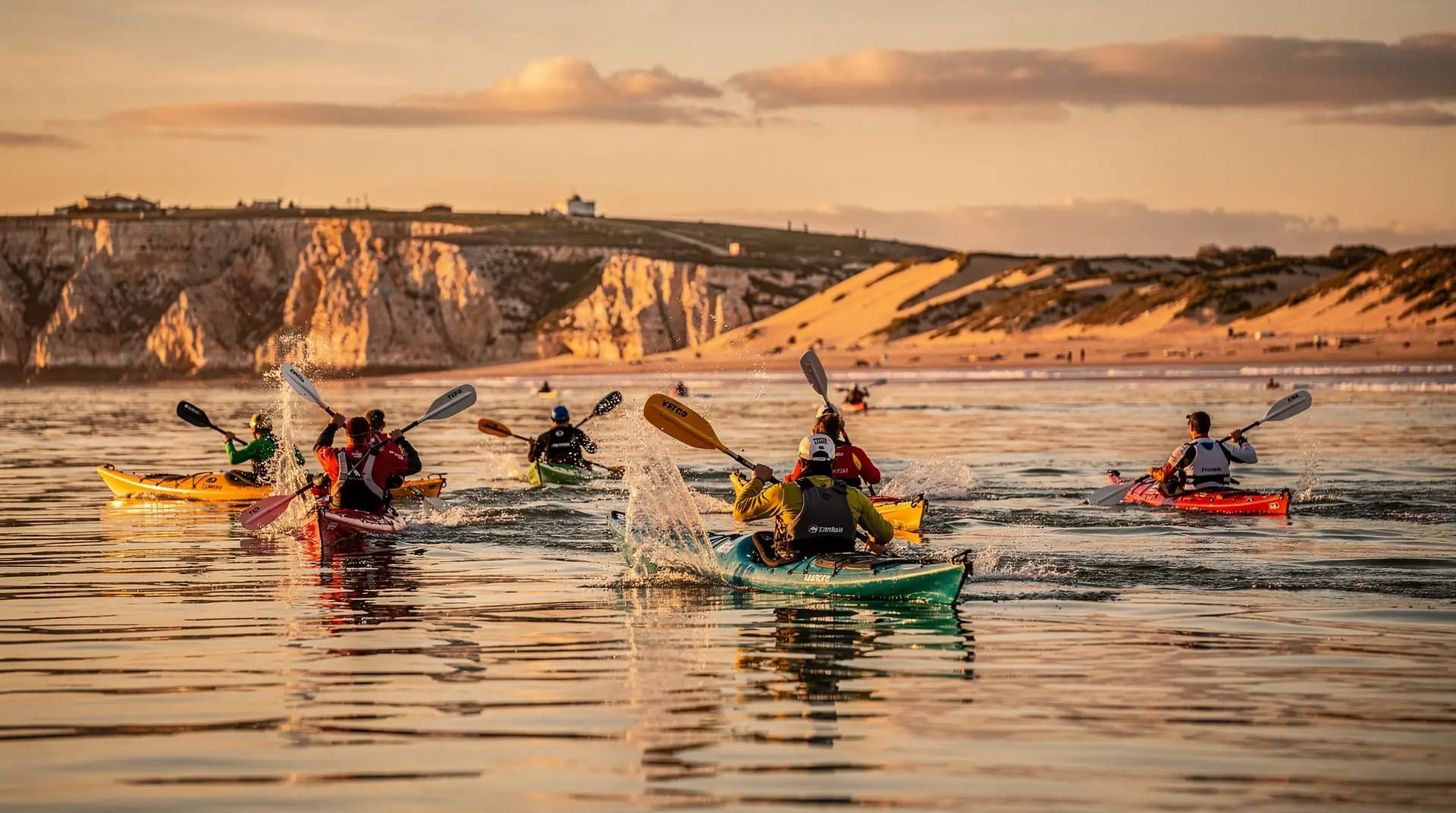
Kayaking near Lisbon: Tagus, Arrábida sea cliffs, Caparica coast and Tróia
Best kayaking near Lisbon: Tagus tours from Belém, Arrábida sea cliffs, Caparica coast, Tróia. Prices, logistics, and conditions.
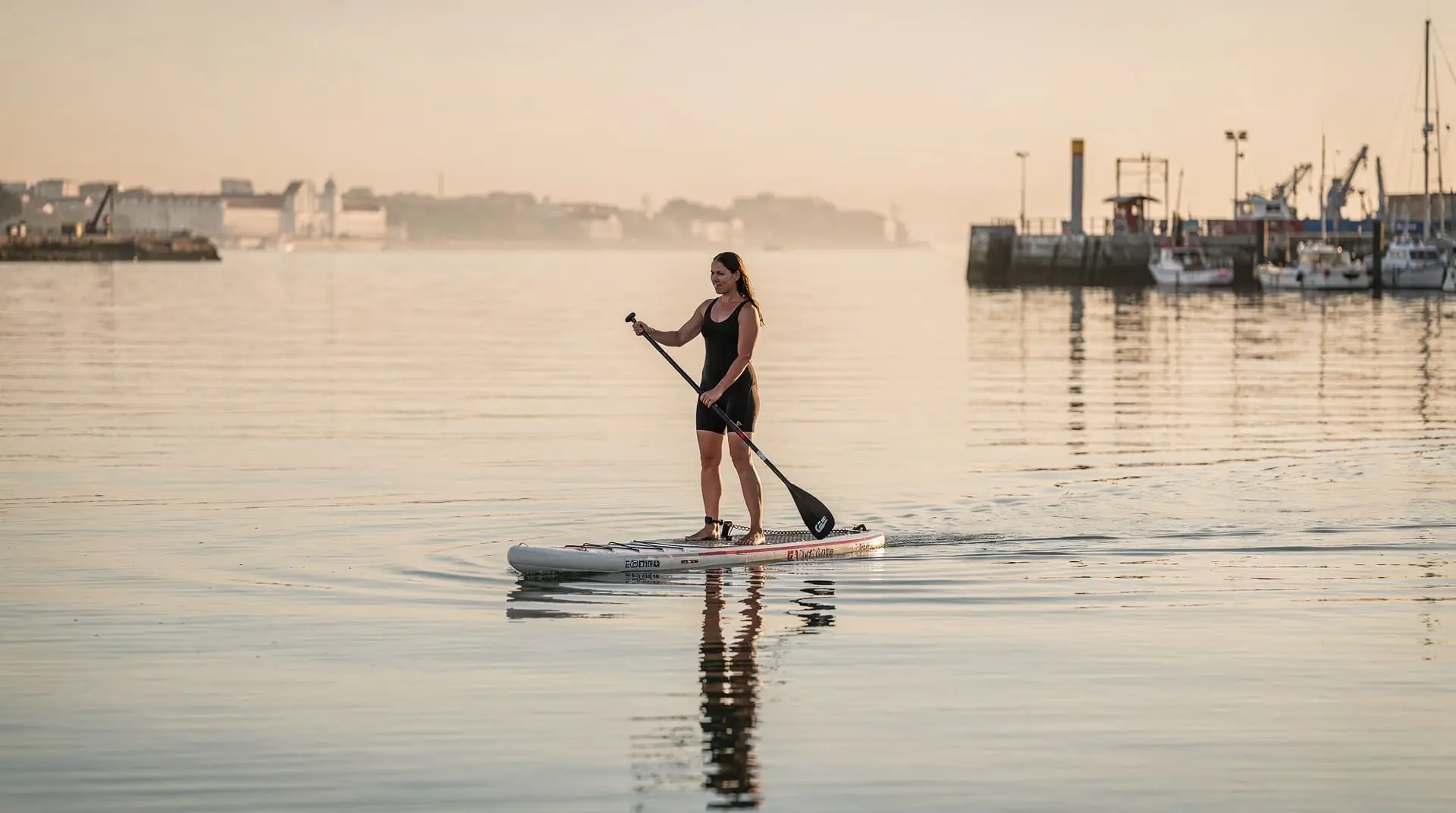
Stand-up paddleboarding in Lisbon: Belém, Tagus spots and calm-water options
Stand-up paddleboard hotspots near Lisbon — Belém Doca, calm marina spots, when to go to avoid the Nortada wind, and where to rent or join a guided SUP session.
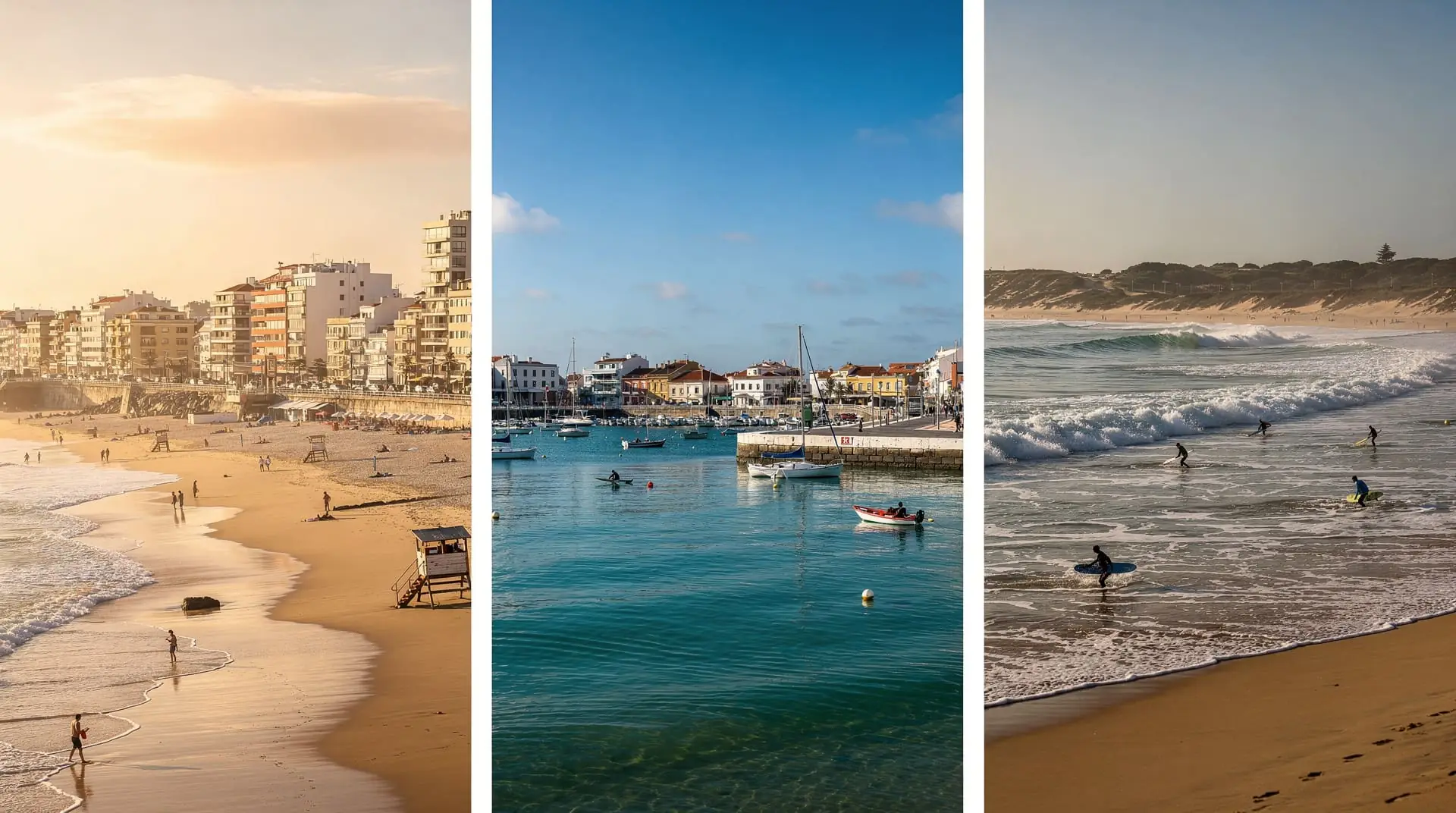
Best beaches near Lisbon — ranked by type and access
The 6 best beaches near Lisbon ranked: Caparica, Carcavelos, Cascais, Guincho, Arrábida, Comporta. By train, bus, and car with honest tips.
Ready to book? Top tours for this guide
We earn a small commission if you book through GetYourGuide — at no extra cost to you. Every tour is hand-picked and verified.

Lisbon: 48-Hour Hop-On-Hop-Off Bus Tour and Oceanarium Entry
Lisbon: MAAT Entry Ticket & Dolphin Watching Boat Tour
Lisbon: Alfama, Mouraria Walking Tour with Fado Night, Tapas
Lisbon: Hop-On Hop-Off Bus Tour
Lisbon: 1-or 2-Day Hop-On Hop-Off Bus Tour