Surf lessons near Lisbon: schools, prices and what to expect
Last reviewed
How much do surf lessons near Lisbon cost?
Group surf lessons cost €40–60 per person for a 2-hour session at Carcavelos, Costa da Caparica or Ericeira, with all equipment and a wetsuit included. Some operators include return transport from central Lisbon (+€15–20). Private lessons are €70–100 per person for the same duration.
Learning to surf near Lisbon is genuinely straightforward compared to many surf destinations. Three beach locations within 90 minutes of the city centre offer beginner-appropriate conditions, English-speaking instructors, and good safety infrastructure. What matters is choosing the right option for your time and transport situation.
| Where | Carcavelos, Costa da Caparica or Ericeira |
| Cost | Around €40–60 group, €70–100 private |
| Time needed | 2–3 hours including the beach briefing |
| Getting there | Train (Carcavelos) or transport-included lesson |
| Best time | Morning, before the afternoon Nortada wind builds |
The three main lesson locations
Carcavelos (35–40 min from central Lisbon by train) The easiest no-car option. Sandy beach, consistent beach break, multiple schools. Best for beginners who want to keep the day simple: train, surf, train back.
Costa da Caparica (60–75 min from central Lisbon) More varied beach, longer coast, multiple school options spread along the beach. The northern sections where beginner lessons run are gentler and less crowded than Carcavelos in peak season.
Ericeira (75–90 min from central Lisbon) Worth the travel time if you want to learn in a genuine surf village with a proper surf culture. Beginner lessons run at Foz do Lizandro, which has softer conditions than the famous reef breaks. Some operators offer transport-included lessons from Lisbon for groups.
Transport-included surf lessons: the easiest option
For travellers without a car, the transport-included surf lesson is the simplest way to get in the water without navigating local buses and ferries. Several operators pick up from central Lisbon hotels or a central meeting point, drive to the beach, teach the lesson, and bring you back.
Book a surf lesson with transfer from Lisbon to Costa da CaparicaThe transport-included option typically adds €15–25 to the base lesson price but saves 60–90 minutes of transit time each way, simplifies the logistics and means you’re not carrying board bags on public transport.
Operators using this model:
- Pickup from a central Lisbon point (usually Cais do Sodré or Rossio area)
- Drive to Costa da Caparica or Carcavelos
- 2-hour lesson in the water
- Return to Lisbon drop-off
The Carcavelos schools: established names
Carcavelos Surf School / Surfershouse: One of the longest-running operations on the beach. Group lessons at €40–50, private at €70–90. Equipment and wetsuit included. Located in a surf house with showers and lockers — you don’t need to carry valuables onto the beach. Lessons run in groups of 8–12 students maximum.
Boardculture / Linecheckers: Two schools operating from the same stretch of beach, catering to slightly different demographics. Boardculture skews slightly younger (teens, surf camp groups). Linecheckers has been running multi-day intensive courses for adults for many years. Both offer solid instruction.
What to look for in any Carcavelos school:
- Maximum student-to-instructor ratio of 6:1 (ask when booking)
- Board and wetsuit included (standard but confirm)
- CPR-trained instructor on site
The Costa da Caparica surf experience
Costa da Caparica has a different feel from Carcavelos — less organised, more surf-culture organic. The wave at the northern end is generally gentler and longer-rolling than Carcavelos, making it excellent for the standing-up moment that beginners aim for in a first lesson.
Book a Costa da Caparica surf experienceThe downside: reaching Caparica without a car takes longer and the beach is enormous — navigating to the right section and the right school requires a small amount of orientation that Carcavelos (smaller beach, clearer layout) doesn’t. If you book transport-included, this is a non-issue.
Lisbon Surf Connection: An established school operating at Costa da Caparica with English-speaking instructors and pick-up from Lisbon. Group lessons €55–65 (including transport). 5-day courses available for €180–220 — good value for anyone in Lisbon for a week who wants proper progression.
Ericeira surf lessons
Book surf lessons in Ericeira — a World Surfing ReserveEriceira’s beginner spot is Foz do Lizandro — a river-mouth break at the south end of the reserve, with softer waves and a sandy bottom. Schools here tend to be smaller and more instructor-personal than the Lisbon-adjacent operations, partly because Ericeira attracts committed surf travellers rather than casual day-trippers. A straightforward option here is a 2-hour surfing lesson in Ericeira, covering the same beginner fundamentals as the group sessions below.
Ericeira Surf and Bodyboard School: One of the main operators, runs beginner through to intermediate instruction. Group lessons at €40–60. Five-day beginner packages from €160.
Ribeira d’Ilhas Surf School: Teaches beginners at Foz do Lizandro but also runs intermediate and advanced coaching at Ribeira d’Ilhas itself. The chance to watch (and eventually surf) one of the most famous breaks in Europe as part of a lesson experience is unique.
Getting to Ericeira: bus from Sete Rios terminal (Mafrense line, every 1–2 hours, 75–90 min, around €6 each way). Some operators offer Lisbon pickup — worth the premium for the convenience.
Cascais surf lessons: another option
Cascais itself has small waves that work only in specific swell windows — it’s not a reliable surf spot. However, several Cascais-based surf schools run lessons at Guincho (advanced) or transport students along the coast to better breaks.
Book a surf lesson based in Lisbon and Cascais areaCascais is a good base if you’re already doing the Cascais day trip and want to add a surf lesson without a separate Carcavelos trip.
What actually happens in a beginner surf lesson
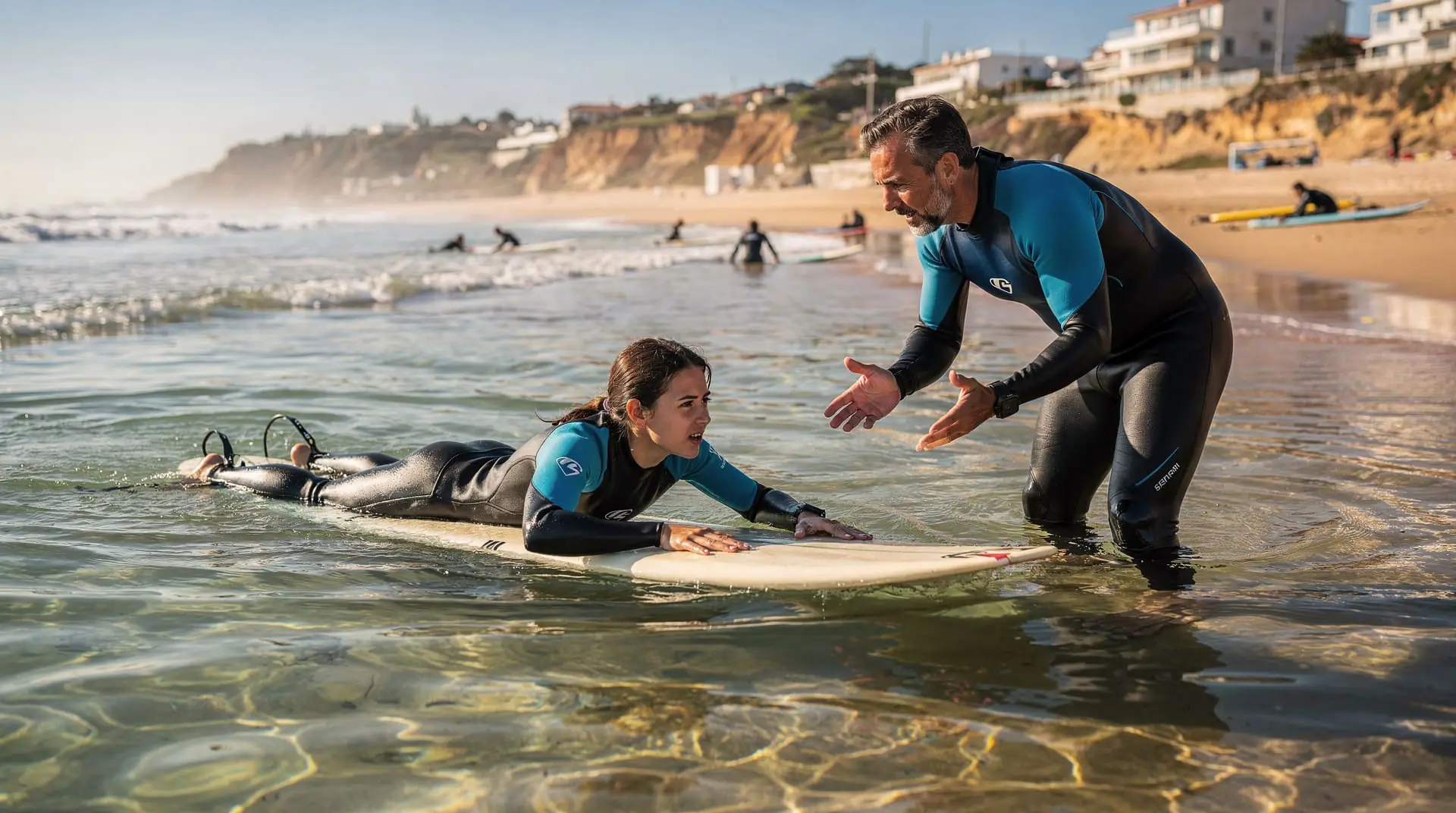
On the beach (30–45 min) The lesson starts on dry sand. Your instructor teaches:
- How to position yourself on the board (lying, then the pop-up motion)
- Paddle technique
- Reading waves — where to sit in the water, when to paddle
- Safety: how to fall, how to deal with a breaking wave over you, what to do with the board in whitewater
- Basic water safety and local hazard briefing
This phase looks basic but it is where you either succeed or fail in the water. Pay attention here.
In the water (60–75 min) You enter the water in the whitewater zone (broken waves, not the open ocean). The instructor positions you on the board, reads the incoming wave, tells you when to paddle, and you attempt the pop-up. On a good day with good instruction, most beginners stand on their third to sixth attempt.
The instructor often physically pushes the board into the wave for the first few attempts, which gives you the sensation of the wave catching you before you have to judge it yourself.
What “surfing” looks like at the end of lesson 1: Standing for 2–4 seconds on a wide, foamy beginner board, riding a broken wave to shore. Not the same as seeing pros carve turns, but it is the starting point and it is addictive.
Group vs private lessons: which is better for beginners
Group lessons (8–12 students, 2–3 instructors):
- Lower cost (€40–60)
- Social — you’re learning alongside others at the same stage
- Instructors divide attention, so you get less one-on-one feedback per session
- Fine for lesson 1 and 2
Private lessons (just you, 1 instructor):
- Higher cost (€70–100)
- Instructor focused entirely on you — faster progression
- Worth it from lesson 3 onward when specific technique corrections matter
- Essential if you have a specific goal (standing on right-hand waves, duck diving, etc.)
Recommendation: start with a group lesson to see if surfing resonates, then switch to private if you want to progress properly.
Multi-day courses and surf camps
Several operators run 5-day beginner-to-intermediate surf courses from Lisbon for €180–280. These typically include:
- 2-hour lesson each morning for 5 days
- Same instructor group for continuity
- Video coaching from lesson 3 onward (watching yourself is remarkably useful)
- Gear provided each day
Surf camps with accommodation (hostel + surf + breakfast) exist in Ericeira and Costa da Caparica for €350–600 per week. These are a different category of trip — aimed at travellers coming specifically to surf — but if Lisbon is your base and you want to do a day-and-a-half of dedicated surf, the surf camp model makes logistical sense.
Practical preparation
Physical condition: Basic swim competence is required (all operators insist on this). You don’t need to be a strong swimmer for beginner lessons in the protected whitewater zone, but you must be comfortable in water above your head. No surfboard or wetsuit experience needed.
What to bring: Swimwear under the wetsuit (the school provides the wetsuit). Sunscreen (apply before arriving). Towel. Change of clothes. Leave valuables in a locker at the surf school — don’t bring them to the beach.
Best time of day: Morning sessions (9 am–12 pm) have calmer conditions at all beaches — the Nortada wind typically builds in the afternoon. Afternoon sessions are fine in autumn and winter when the wind is less consistent, but in summer the afternoon whitewater is choppier and harder for beginners.
For the full breakdown of surf spots by location and skill level, see surfing near Lisbon. To plan the logistics of getting to the beaches without a car, see getting around Lisbon.
Choosing between the three locations
| Location | Distance | Best for | Downside |
|---|---|---|---|
| Carcavelos | 35–40 min by train | No-car simplicity, first lesson | Busiest of the three in peak season |
| Costa da Caparica | 60–75 min | Gentler, longer-rolling waves | Large beach, needs orientation without a school pickup |
| Ericeira | 75–90 min | Genuine surf-village culture, progression | Longest travel time from central Lisbon |
If this is a one-off lesson to try surfing during a Lisbon city trip, Carcavelos is the pragmatic choice — closest, simplest, no car needed. If surfing is the actual point of your trip, or you want more than one session, Ericeira’s surf-town atmosphere and stronger instructor continuity make the extra travel time worthwhile. Costa da Caparica sits between the two: better waves for the standing-up moment than Carcavelos, without Ericeira’s full commitment.
Combining a surf lesson with other coastal plans
A surf lesson works well as one element of a longer beach day rather than the entire day — Carcavelos and Costa da Caparica both have decent beach time and food options either side of a 2-hour lesson slot, and both are covered in more depth in the beaches near Lisbon guide. If you’re staying near Cascais already, a surf lesson can be added without a separate trip, as noted above. For travellers weighing surf lessons against other water activities on the same stretch of coast, SUP in Lisbon and kayaking near Lisbon are gentler alternatives on days when the swell isn’t cooperating.
Frequently asked questions about surf lessons near Lisbon
Do I need to know how to swim to take a surf lesson near Lisbon?
You need basic water competence and confidence in water above your head, but you don’t need to be a strong swimmer. Beginner lessons take place in the shallow, protected whitewater zone rather than open water, and all reputable schools ask about swimming ability before booking.
What age can children start surf lessons near Lisbon?
Most schools accept children from around age 6–8 for beginner group lessons, though this varies by operator and sea conditions on the day. Foz do Lizandro in Ericeira and the northern Costa da Caparica sections tend to have gentler waves suited to younger beginners than Carcavelos on a busy day.
Related guides
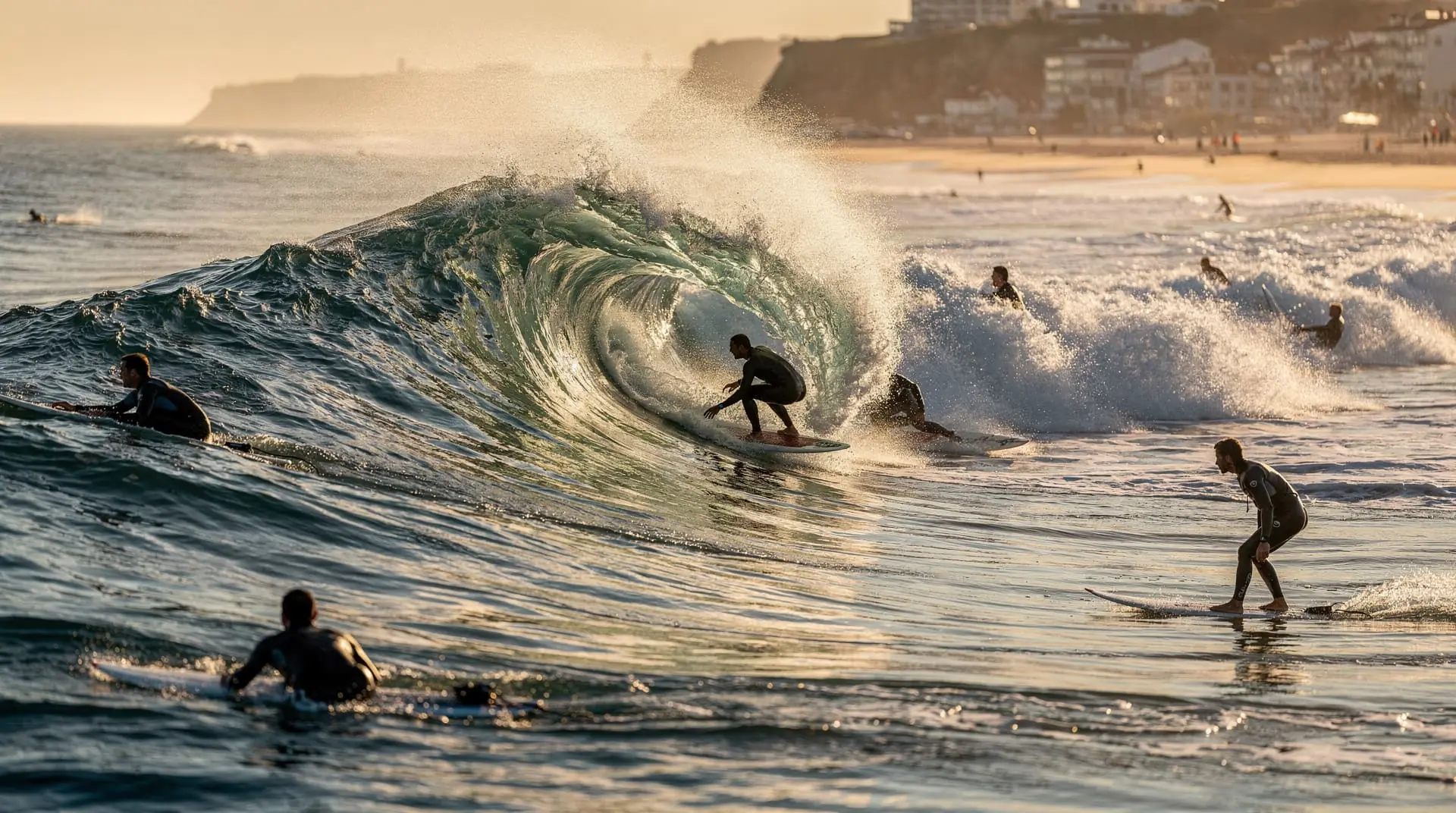
Surfing near Lisbon: Carcavelos, Caparica, Guincho and Ericeira
Best surf near Lisbon: beginner Carcavelos, consistent Caparica, advanced Guincho wind, and the Ericeira World Surfing Reserve.

Dolphin watching in Setúbal: Sado estuary pods, tours and best season
Dolphin watching in Setúbal Sado estuary: resident bottlenose pod, eco-tour operators, best season Apr–Oct, what to expect, cancellations.
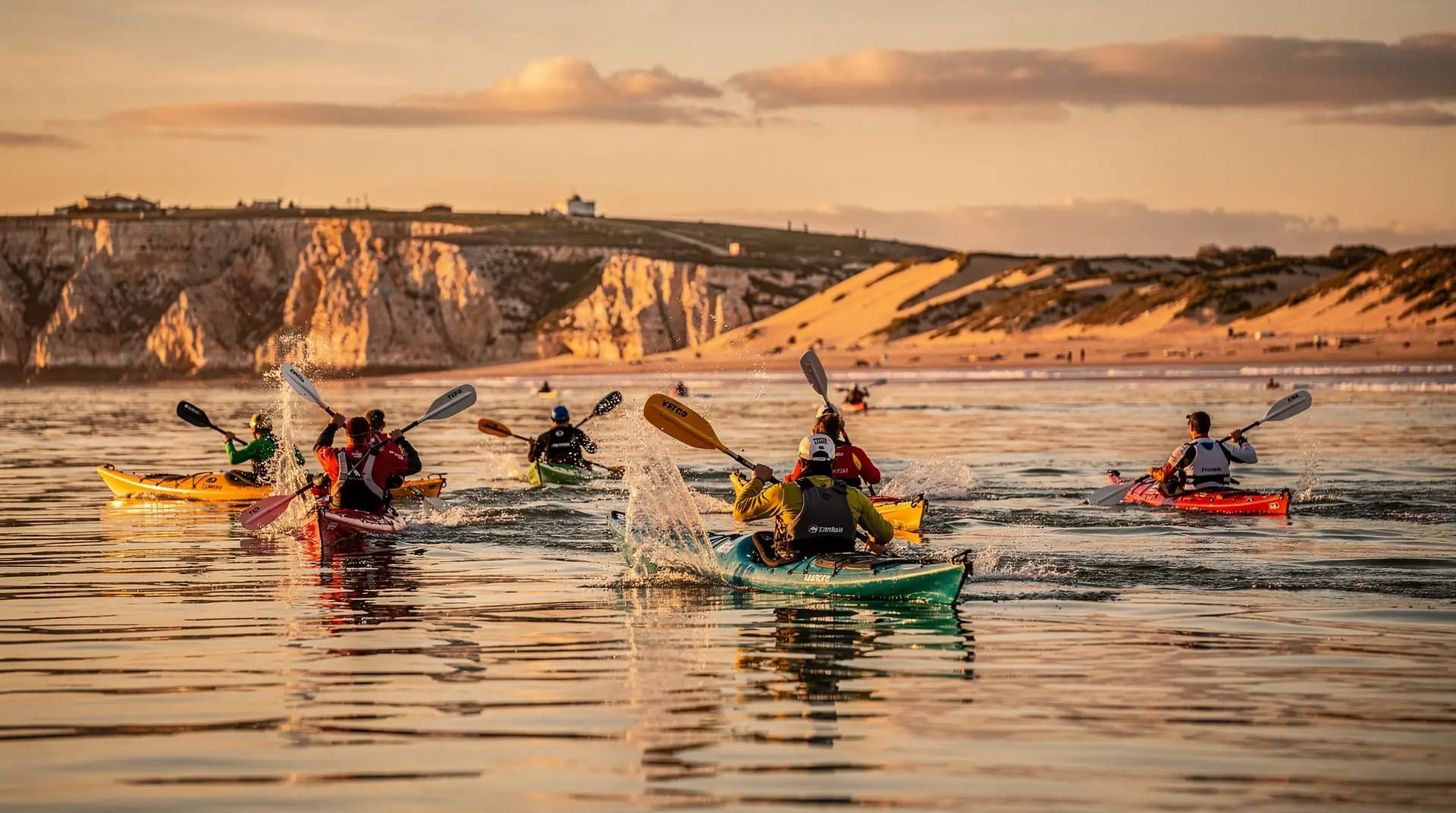
Kayaking near Lisbon: Tagus, Arrábida sea cliffs, Caparica coast and Tróia
Best kayaking near Lisbon: Tagus tours from Belém, Arrábida sea cliffs, Caparica coast, Tróia. Prices, logistics, and conditions.
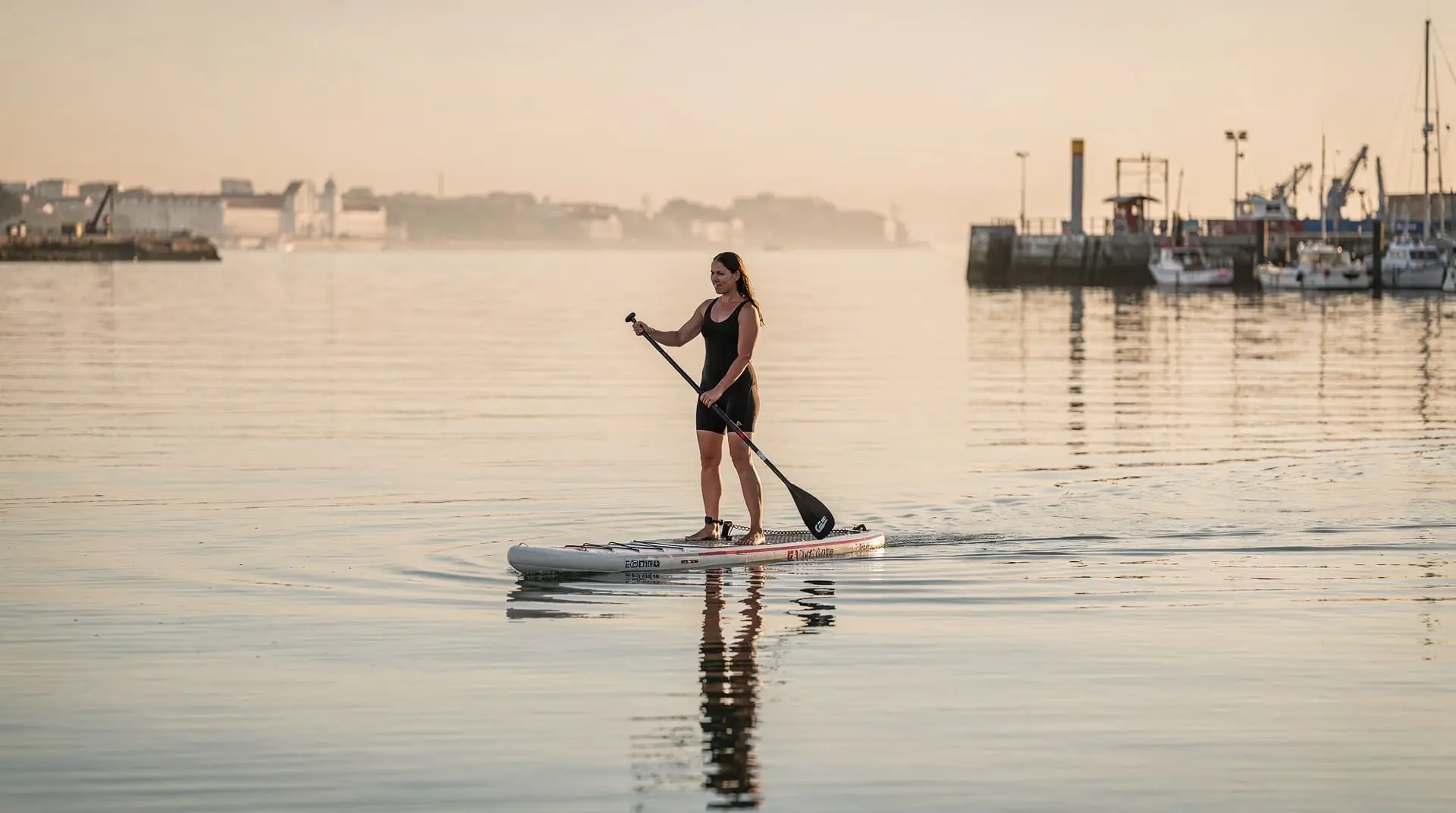
Stand-up paddleboarding in Lisbon: Belém, Tagus spots and calm-water options
Stand-up paddleboard hotspots near Lisbon — Belém Doca, calm marina spots, when to go to avoid the Nortada wind, and where to rent or join a guided SUP session.
Ready to book? Top tours for this guide
We earn a small commission if you book through GetYourGuide — at no extra cost to you. Every tour is hand-picked and verified.

Lisbon: 48-Hour Hop-On-Hop-Off Bus Tour and Oceanarium Entry
Lisbon: MAAT Entry Ticket & Dolphin Watching Boat Tour
Lisbon: Alfama, Mouraria Walking Tour with Fado Night, Tapas
Lisbon: Hop-On Hop-Off Bus Tour
Lisbon: 1-or 2-Day Hop-On Hop-Off Bus Tour