Azeitão
Wine country at the foot of Serra da Arrábida: José Maria da Fonseca cellars, Bacalhôa estate, moscatel tastings, and artisan azulejo workshops.
Quick facts
Top tours and experiences
We earn a small commission if you book through GetYourGuide — at no extra cost to you. Every tour is hand-picked and verified.
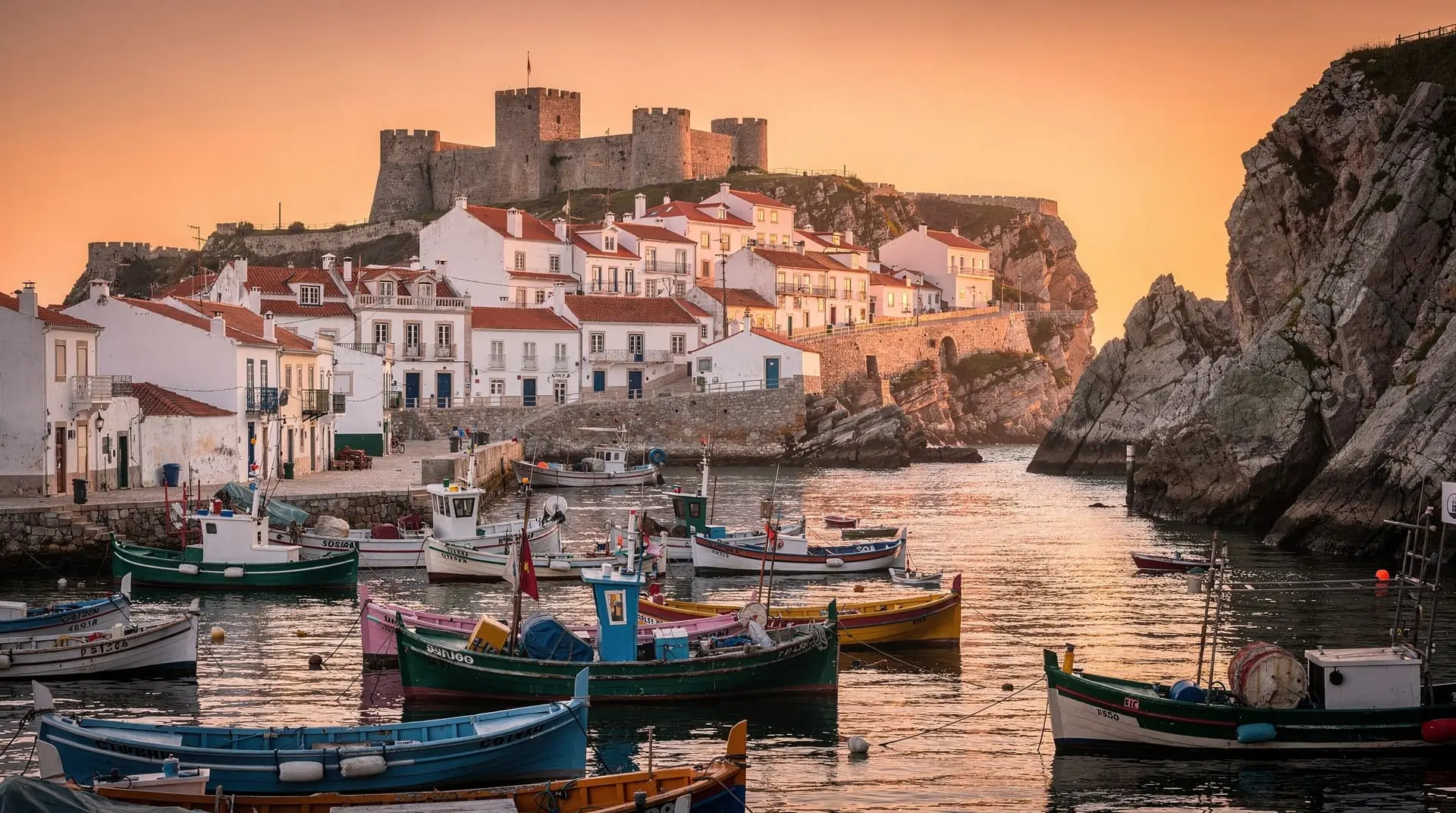
Setubal & Tróia: Sado Estuary Dolphin Watching Boat Trip
Sesimbra: Arrábida Beaches & Caves Boat Tour with Snorkeling
Sesimbra: Secret Bays and Beaches Boat Tour with Snorkeling
Sesimbra: Private Boat Tour-Wild beaches, secret bays, Caves
Sesimbra: Scenic Boat Tour & Snorkeling/Paddle Boarding
Sesimbra: Boat Tour with Lunch at Portinho da Arrabida
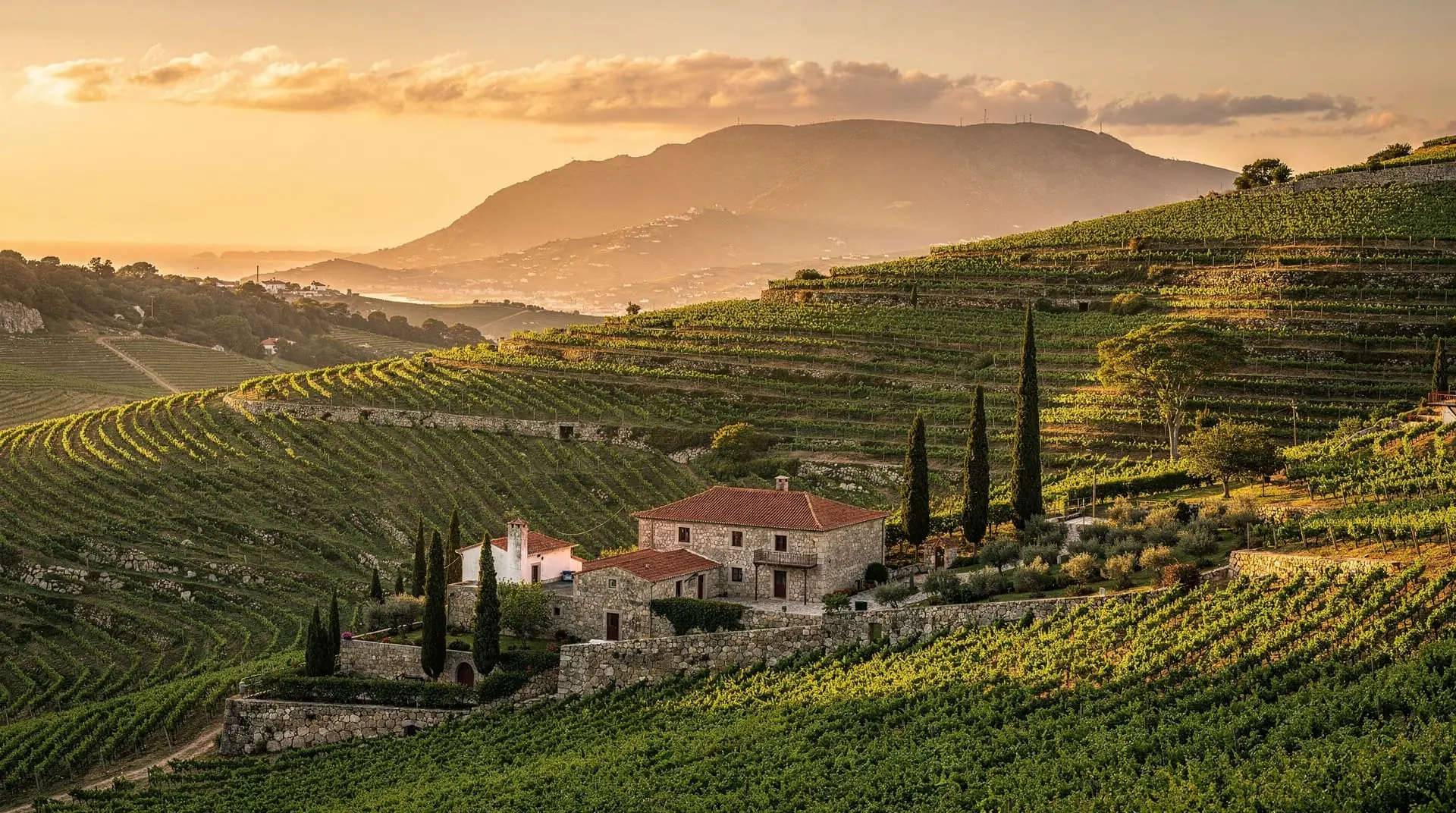
Azeitão is two small villages — Vila Nogueira de Azeitão and Vila Fresca de Azeitão — sitting at the base of the Serra da Arrábida in a fold of gentle hills planted with vines, orange trees, and eucalyptus. The name most wine drinkers recognise is José Maria da Fonseca, whose family cellars have been producing Moscatel de Setúbal here since 1834 and whose Periquita red wine (still one of the most drunk table wines in Portugal) was first made in this valley.
The Setúbal wine region is a designated DOC producing Moscatel de Setúbal — a fortified wine made from Alexandria muscat grapes that is the equal of any liqueur Muscat you will find in France or Italy, and significantly cheaper. It comes in golden (old) and bronze (very old) versions, with the complexity of a wine that has spent years in large wooden pipes absorbing the warm microclimate of this protected valley.
| Where | 35 km south of Lisbon, at the foot of the Serra da Arrábida |
| Cost | Cellar tour with tasting around €15/person |
| Time needed | Half a day |
| Getting there | Car (40–45 min from Lisbon) or TST bus via Setúbal |
| Best time | Year-round; first Sunday of the month for the market |
Why come to Azeitão
The honest answer: Azeitão is not scenic in the conventional Portuguese village sense. It does not have a dramatic hilltop castle or a beautiful waterfront. What it has is a functioning wine culture, accessible cellars, genuine artisan workshops, and a good market on the first Sunday of each month — which is one of the better rural markets within easy reach of Lisbon.
It also makes a logical stop on a southern peninsula circuit combining Arrábida beaches with wine country. The drive from Setúbal to Azeitão takes 20 minutes; from Sesimbra, 25 minutes. An afternoon in Azeitão follows naturally from a morning at the beach.
Getting to Azeitão
By car — the most practical option. From Lisbon, take the A2 south, exit at Coina, and follow the N10 toward Setúbal; Azeitão is signposted off the N10 before you reach the city. Journey time from Lisbon is around 40–45 minutes.
By bus from Setúbal — TST buses connect Setúbal with Azeitão in approximately 25–30 minutes. The service runs several times daily but is not frequent — check the TST schedule and plan your return time before you go.
From Sesimbra — TST buses connect Sesimbra and Azeitão via Santana, taking around 40 minutes. Again, not frequent; a taxi from Sesimbra costs around €20–25.
There is no direct bus from Lisbon to Azeitão; the connection through Setúbal is the standard public transport route.
What to see and do in Azeitão
José Maria da Fonseca cellars
The family winery on Rua José Augusto Coelho in Vila Nogueira de Azeitão is the main visitor attraction. Founded in 1834, it is one of the oldest family wine businesses in Portugal. Cellar tours run daily (10am–5pm roughly; book online or by phone to be safe) and take around 90 minutes, including tasting. The tour covers the old pipes where Moscatel ages, the private collection of antique wine bottles, and the bottling facility.
Standard tour with tasting costs around €15 per person. The shop sells the full Fonseca range — Lancers rosé (one of the world’s best-selling rosé wines), Periquita, and the various Moscatel vintages. The Moscatel 20 Anos (20-year-old) is worth trying; a bottle costs around €25–30 in the cellar shop.
Setúbal wine tour: discover the Moscatel wineQuinta da Bacalhôa
Three kilometres east of the village, the Bacalhôa estate is one of the most impressive Renaissance-period manor houses in Portugal. The gardens were designed in the early sixteenth century with azulejo-decorated pavilions and water features; the interior contains an important collection of Flemish tapestries and seventeenth-century azulejos. The estate also produces wine under the Bacalhôa label.
Visits to the gardens and palace are available (around €12 per person); wine tasting can be arranged separately. The estate is best reached by car.
Artisan azulejo workshops
Azeitão has a tradition of hand-painted ceramic production. Several workshops in the village sell hand-painted plates, tiles, and azulejo panels — some oriented toward tourists, others genuinely artisan. The most established is Azulejo de Azeitão (also called Fábrica de Azulejos de Azeitão) on Rua General Humberto Delgado, where you can sometimes watch painters at work. Prices range from €8 for a small decorative tile to €100+ for a complete panel.
This is a good place to buy a genuinely made-in-Portugal souvenir rather than a machine-printed copy from a Lisbon tourist shop.
Lisboa: Setúbal, Arrábida and Azeitão tour with wine tastingThe Sunday market
On the first Sunday of each month, Azeitão hosts a large outdoor market around the Praça Luís de Camões. Local producers sell queijo fresco (fresh sheep’s milk cheese), honey, presunto, wine, fruit, and vegetables alongside artisan pottery and clothing. It draws a mix of locals and Lisbon day-trippers. If your visit coincides with this Sunday, plan around it — the market runs from around 8am to 2pm.
Queijo fresco de Azeitão is the local cheese: a creamy, slightly sour fresh cheese made from raw sheep’s milk and eaten with bread. It does not travel well (eat it the day you buy it), but it is one of the best fresh cheeses in Portugal.
Wine tasting beyond Fonseca
Several other quintas in the Azeitão and wider Setúbal DOC area offer tastings:
Quinta de Alcube produces mostly reds; less tourist-focused than Fonseca, with rustic visits available by appointment.
Adega José de Sousa (in Reguengos, in the Alentejo — slightly further) is sometimes included in tours that combine Azeitão and Évora.
For guided wine tours that cover multiple producers and include transport from Lisbon, the Setúbal Moscatel and Azeitão guide has details.
Lisbon: full-day wine tasting tour in Setúbal, all inclusiveWhere to eat in Azeitão
Restaurante Quinta das Torres in a converted manor house on the road between the two Azeitão villages is the most characterful restaurant in the area. Traditional Portuguese cooking — caldo verde, bacalhau, roasted meats. Expect €25–35 per person with wine. Closed Mondays.
Tasca da Portinha in Vila Nogueira de Azeitão is smaller and cheaper — good for a lunch of peixe grelhado or arroz de marisco after a cellar tour. Around €15–20 per person.
Casa da Fontinha is a café-restaurant near the José Maria da Fonseca cellars that does a good set lunch (€11–14) and is popular with locals.
Azeitão is also the place to buy queijo fresco for a picnic — take it to an Arrábida beach if you are combining the two.
Where to stay in Azeitão
Azeitão has no large hotels. Accommodation is limited to rural guesthouses and quintas:
Quinta do Juncal — a rural quinta with rooms and a wine cellar, about 5 km from Azeitão. B&B rates from €85–110/night. Suitable for wine-focused travellers with a car.
Casa do Torrejão — a guesthouse in Vila Nogueira de Azeitão, rooms from €70–90/night, walking distance to the Fonseca cellars.
Most visitors to Azeitão base themselves in Setúbal or Lisbon and make it a half-day excursion. This is entirely reasonable given the limited accommodation.
How long to spend
Half a day is the standard approach and is enough for a cellar tour, the village square, and the azulejo workshops. Combine with Arrábida beaches or Sesimbra for a full day out.
A full day in Azeitão is only warranted if you are visiting on a first-Sunday market day, covering multiple quintas for wine tasting, or combining with Quinta da Bacalhôa and a long rural lunch.
Honest tips and traps
Book the Fonseca tour in advance in summer. The cellar tours are popular and capacity is limited. Online pre-booking (on the José Maria da Fonseca website) is the safest approach.
Azeitão is not walkable from Setúbal. The two are 15 km apart. A car or bus is essential — there is no cycling infrastructure and the roads between are fast and not bicycle-friendly.
Queijo fresco needs to be eaten immediately. If you buy cheese at the market or a local shop, eat it the same day. It is a fresh product with no salt preservation and will not survive overnight at room temperature.
The village is quiet on weekday afternoons. If you arrive expecting a lively town centre, you will find quiet streets and possibly shuttered shops. The action is at the cellar, the workshop, and the Sunday market.
How Azeitão fits an itinerary
Azeitão is best positioned as a half-day stop on a southern circuit combining Arrábida beaches (morning) with wine and cheese in the afternoon. The 20-minute drive from Sesimbra or Portinho da Arrábida makes this transition easy.
It also combines naturally with Setúbal — train from Lisbon, visit the market and old town in the morning, drive to Azeitão for a cellar tour and lunch, continue to Sesimbra for an evening walk and dinner. The Setúbal and Arrábida day trip guide covers this circuit with timings.
For wine lovers, see also the wine tasting near Lisbon guide and the vineyards near Lisbon guide. Azeitão features in the 7-day Lisbon and around itinerary.
Understanding the Setúbal DOC wine region
Azeitão sits within the Setúbal DOC, one of Portugal’s oldest demarcated wine regions. The DOC produces two main styles: Moscatel de Setúbal (the fortified wine that defines the region) and dry reds from the Periquita grape variety (also known as Castelão).
Moscatel de Setúbal undergoes a specific production process: fermentation is halted by the addition of grape spirit when the wine is still sweet, and the result is then aged in large wooden pipes called tonéis. The standard Moscatel is aged 5 years; premium versions (20 Anos, Superior) age much longer, developing extraordinary complexity. All versions are amber-coloured (the very old ones are almost brown) with aromas of dried apricot, orange blossom, honey, and nuts.
Periquita (the grape and the wine) is a completely different style — a dry, unoaked or lightly oaked red made from the Castelão grape that ripens well in the warm, limestone-influenced soils of the Setúbal peninsula. The José Maria da Fonseca Periquita has been made continuously since 1850 and is a good entry point if you are new to Portuguese red wine.
Other producers worth knowing:
- Bacalhôa Wines (produces from the Azeitão and Arrábida areas, including Quinta da Bacalhôa)
- Quinta do Piloto (smaller, more artisanal, sometimes does private visits)
- Herdade do Esporão (better known from Alentejo but also has Setúbal region wines)
For a deeper dive, the Setúbal Moscatel and Azeitão wine guide covers the region’s wines and producers in full detail.
Azeitão in a one-week Lisbon itinerary
If you are spending a week in Lisbon and want to visit Azeitão: the most efficient approach is to combine it with either Arrábida beaches or Setúbal on the same day. A car is practically essential for getting the most from the combination.
Option A (with car, full day): Drive A2 south, exit Azeitão, morning cellar visit at José Maria da Fonseca, lunch at Quinta das Torres, afternoon drive to Portinho da Arrábida for a swim, return to Lisbon via A2. Total driving: ~3 hours spread through the day.
Option B (no car, half day): Train from Roma-Areeiro to Setúbal, TST bus to Azeitão (25 min), cellar visit, lunch, TST bus back to Setúbal, train to Lisbon. Tight but doable in 5–6 hours if you plan connections in advance.
The 7-day Lisbon and around itinerary places Azeitão within a southern peninsula day that also covers Sesimbra. The wine bars in Lisbon guide and the port vs Lisbon wine comparison give useful background on how Setúbal wines sit within the broader Portuguese wine landscape. For the food side of a Azeitão visit, the markets in Lisbon guide covers what to expect at Portuguese outdoor markets in general.
A half-day walking route through the village
Azeitão rewards a slow, on-foot approach more than a rushed cellar-and-drive visit. Start at the José Maria da Fonseca cellars in Vila Nogueira de Azeitão for the morning tour and tasting (book ahead, especially in summer). From the cellar entrance, it is a 10-minute walk to Praça Luís de Camões, the small village square that hosts the first-Sunday market — worth a look even outside market days for its ordinary, unpolished village character. Continue another 5 minutes to the azulejo workshops on Rua General Humberto Delgado, where you can often watch painters at work through the shop windows.
For lunch, Casa da Fontinha near the cellars or Tasca da Portinha in the village centre are both within a 10-minute walk of this loop, so there is no need for a car between the cellar tour and a sit-down meal. If you have a car and want to extend the afternoon, Quinta da Bacalhôa is a short drive east and pairs naturally with the walking route as a final stop before heading back toward Lisbon or onward to Arrábida. This whole sequence — cellar, square, workshops, lunch — takes 3–4 hours without feeling rushed, which is the honest minimum for getting a real sense of the village rather than just its wine.
If your visit doesn’t fall on cellar-tour hours (Fonseca closes Sundays), the walking route still works without that anchor: start instead at Praça Luís de Camões, browse the azulejo workshops, and spend the saved time on a longer lunch or a slow coffee at Casa da Fontinha. The village rewards this kind of unhurried pace far more than a checklist approach — there is genuinely little here that demands to be seen at a particular hour, which is part of what makes Azeitão a good antidote to a Lisbon itinerary that has otherwise been all queues and timed tickets.
Travellers arriving by public transport should plan the return bus before starting the walking route, not after. TST services between Azeitão and Setúbal are infrequent enough that missing one by ten minutes can mean a genuinely long wait, and there is no equivalent of a taxi rank in the village centre to fall back on — a pre-booked taxi number, saved before you arrive, is the sensible backup if the bus schedule and your lunch timing don’t line up neatly.
Frequently asked questions about Azeitão
What is Moscatel de Setúbal and why is it worth trying?
Moscatel de Setúbal is a fortified wine made from Muscat de Alexandria grapes in the Setúbal DOC. After fermentation, neutral grape spirit is added to stop the process, preserving natural grape sweetness; the wine is then aged in large wooden pipes for years. The result is amber or bronze-coloured, with intensely aromatic honey, orange peel, and dried fruit character. It is different from Port (less tannic, more purely fruity) and significantly underrated internationally. The 5-year version costs around €10–15 a bottle; the 20-year around €25–30.
How do I visit the José Maria da Fonseca cellars?
The cellars are in Vila Nogueira de Azeitão on Rua José Augusto Coelho. Tours run Monday to Saturday (approximately 10am–5pm) and must be booked in advance, especially in summer. A standard tour with tasting costs around €15 per person and lasts 90 minutes. Book on the José Maria da Fonseca website.
Is Azeitão worth visiting without a car?
It is possible but awkward. TST buses connect Setúbal and Azeitão in 25–30 minutes, with several services daily. From Lisbon there is no direct bus — you connect through Setúbal. The bus drops you in the village centre, within walking distance of the Fonseca cellars. Without a car, Quinta da Bacalhôa is difficult to reach. If public transport is your only option, a guided day tour from Lisbon that includes Azeitão is the most practical alternative.
What is the Azeitão Sunday market?
A large outdoor market held on the first Sunday of each month on Praça Luís de Camões. Local producers sell queijo fresco (Azeitão sheep’s cheese), wine, honey, presunto, and seasonal fruit; artisans sell pottery and tiles. It runs roughly 8am–2pm and draws both locals and Lisbon visitors. Aim to arrive before 10am for the best produce.
Can I combine Azeitão with Arrábida in one day?
Yes, easily by car. The standard order is: morning at an Arrábida beach (Portinho or Galapinhos), early afternoon drive to Azeitão for a cellar tour and lunch, late afternoon return to Lisbon. The drive between Portinho da Arrábida and Azeitão is about 25 minutes on the N379-1 and N379. Allow 5–6 hours between the beach and getting back on the A2 toward Lisbon.