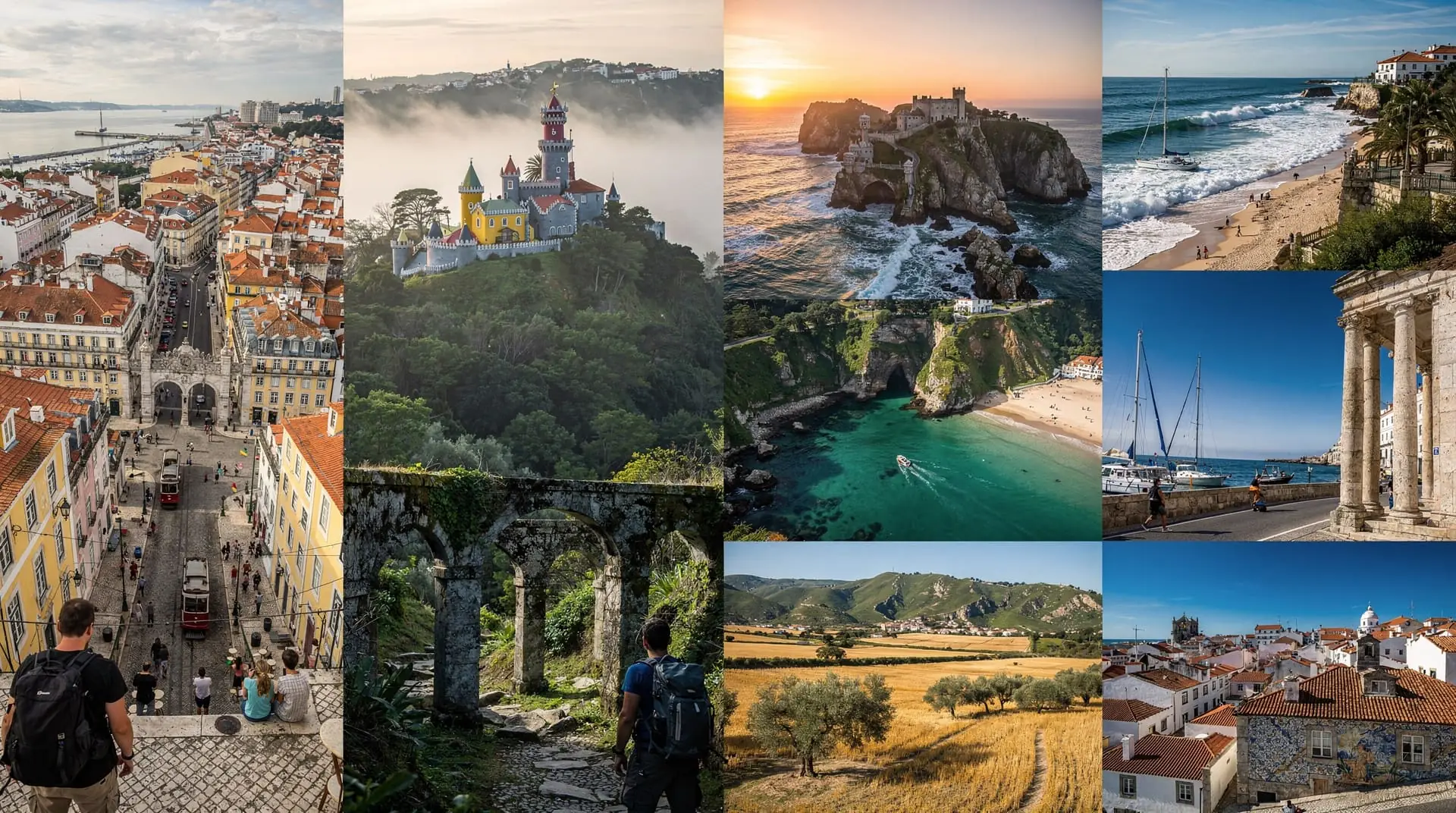
Lisbon in 7 days: the full week including Sintra, Cascais, Setúbal and Évora
Last reviewed
A week around Lisbon is one of the most rewarding short European trips you can plan. The city alone fills three full days; the region around it — Sintra’s romantic palaces, the Cascais coast, Arrábida’s turquoise bays, Évora’s Roman ruins and megalithic monuments — offers four days of day trips that are genuinely different from each other.
This itinerary is designed for public transport except for Day 6 (Setúbal/Arrábida — practically requires a car or a guided tour). Day 7 adds Évora via coach or guided tour. Everything else is train and bus.
| Where | Lisbon, Sintra, Cascais, Setúbal/Arrábida, Évora |
| Cost | around €430–560/person, excl. accommodation |
| Time needed | 7 full days |
| Getting there | tram, trains, guided tours for Day 6 and Day 7 |
| Best time | April–June or September–October for the best balance of weather and crowds |
What to book before you go
- Jerónimos Monastery (Day 2): pre-book; sold out in high season on-the-day
- Pena Palace + Quinta da Regaleira (Day 4): both sell out; no on-the-day sales
- Fado dinner (Day 1 or 3): 1–2 weeks ahead in summer
- Setúbal/Arrábida tour or car (Day 6): book a guided day tour or reserve a rental car (budget €60–80/day)
- Lisboa Card 72 hours (€43): use for Days 1–3; then Viva Viagem card for Day 4–5 trains, plus tour pre-payments for Days 6–7
Use the Lisboa Card calculator and day trip matcher to fine-tune.
Day 1: Alfama, the castle and fado
Morning — Baixa and Alfama (9:00–13:00)
Start at Praça do Comércio, walk through the Baixa grid, stop at the Sé de Lisboa (Romanesque cathedral, free nave), then climb to São Jorge Castle (€15, free with Lisboa Card). The battlements and the inner archaeological village take 60–75 minutes.
Descend into Alfama. Visit the Museu do Fado (€10, closed Mondays) for context on the music you’ll hear tonight.
Afternoon — Mouraria and Graça (13:00–18:00)
Lunch in Mouraria (mains €10–14). Walk up to Miradouro da Graça for the rooftop panorama. Explore the neighbourhood at your own pace — Alfama’s alleys reward unhurried wandering.
Evening — fado dinner (from 20:00)
Tasca do Chico or Mesa de Frades for an authentic Alfama fado dinner. Book weeks ahead in summer. Budget €40–60 per person. See fado in Alfama.
Alfama tour and live fado with traditional dinnerDay 2: Belém and a Tagus river cruise
Morning — Belém (8:30–13:00)
Train from Cais do Sodré to Belém (10 min, €1.55). Jerónimos Monastery (pre-booked, €15 or free with Lisboa Card) for 60 minutes. Belém Tower (€8, free) for 25 minutes. Coach Museum (€10) optional — 45 minutes if interested. Pastéis de Belém for the original pastéis de nata (€1.55 each, queue 5–15 min).
Afternoon — LX Factory and Tagus cruise (13:00–19:00)
Tram 15E to LX Factory for lunch and the Sunday market (if applicable). At 17:00, board a sunset Tagus cruise from Cais do Sodré.
Tagus River sunset cruise in a traditional vesselEvening — Chiado wine bars
Dinner and wine in Chiado or Príncipe Real. By the Wine on Rua das Flores for Portuguese wines by the glass (from €5). See Lisbon wine bars.
Day 3: Tile Museum, Parque das Nações and Bairro Alto
Morning — Tile Museum (9:30–12:00)
Uber or metro (Santa Apolónia) to the Museu Nacional do Azulejo (€8, free with Lisboa Card). The 23-metre pre-earthquake panorama and the 16th-century Manueline chapel inside the convent are the highlights. 90 minutes minimum. See Tile Museum guide.
Midday — Parque das Nações (12:30–16:30)
Metro to Oriente (20 min from downtown). Oceanário de Lisboa — one of Europe’s finest aquariums, €23 adult (€15 child). The central ocean tank with open-ocean species is stunning. Allow 90 minutes. See Oceanário guide.
Lunch near the Vasco da Gama tower or at the waterfront restaurant strip. Budget €12–18.
Afternoon — Príncipe Real and Bairro Alto (16:30–19:30)
Metro back to Rato or Chiado. Explore Príncipe Real — antique shops, the Jardim das Amoreiras, quiet cobblestone streets. Up to Miradouro de São Pedro de Alcântara (free) for sunset.
Dinner in Bairro Alto. If you skipped fado on Day 1, tonight is the night.
Day 4: Sintra
Getting there (depart 8:15)
Rossio station to Sintra: 40 minutes, every 20–30 minutes, €2.25 (Viva Viagem Zapping). Board early on weekends.
Must pre-book: Pena Palace and Park (€22), Quinta da Regaleira (€15), Moorish Castle (€13). See Sintra day trip guide and Sintra crowds and parking.
Morning — Pena and Moorish Castle (9:30–12:30)
Bus 434 from Sintra station (€5 return) to Pena Palace. Hop off at the Moorish Castle on the way up (or walk between them, about 30 minutes through forest). Moorish Castle (€13): the 10th-century ramparts give a completely different landscape perspective from Pena’s gardens. Pena Palace (pre-booked, €22): 90 minutes for palace and upper gardens.
Sintra: Pena Park and Palace skip-the-line ticketAfternoon — Quinta da Regaleira and village (12:30–17:30)
Bus 434 back to Sintra village. Lunch (mains €14–18). Quinta da Regaleira (€15, pre-booked): the neo-Masonic estate with underground initiation well. 90 minutes.
Return by 17:00–17:30 to avoid peak crush on the train back to Rossio.
Day 5: Cascais coast
Getting there (depart 9:00)
Train from Cais do Sodré to Cascais: 40 minutes, every 15–20 minutes, €2.25 each way.
Morning — Cascais town and Boca do Inferno (10:00–13:00)
Walk the old town, the harbour and 15 minutes west to Boca do Inferno (dramatic sea arch, free). Return along the coastal promenade.
Afternoon — beaches (13:00–17:00)
Lunch in Cascais old town (mains €14–20). Afternoon at Praia de Cascais or, if you want Atlantic drama, a taxi to Praia do Guincho (10 km west, €10–15 by taxi, stunning dunes and surf beach).
Optional: stop at Estoril (2 minutes by train) to see the Art Nouveau casino exterior and the beach.
Evening — return to Lisbon
Train back to Cais do Sodré by 18:00. Low-key dinner near accommodation.
Day 6: Setúbal and Arrábida
Setúbal and the Arrábida Natural Park are the most beautiful coastal landscape within 50 km of Lisbon — white limestone cliffs, turquoise bays, clear Atlantic water. Getting there without a car requires either a guided day tour or a combination of bus from Setúbal city (served by Fertagus train from Lisbon).
The practical truth: the Arrábida Natural Park itself (Portinho da Arrábida beach, the best beaches) is not reachable by public transport. You need either a car or a day tour from Lisbon. The guided tours are actually very good and often include wine tasting in Azeitão.
From Lisbon: Arrábida National Park, Azeitão and winery tourOption A: guided day tour (recommended for most visitors)
Book a Setúbal + Arrábida + Azeitão day tour from Lisbon (departs ~8:30, returns ~18:00, typically €70–90 per person). Most tours include a boat trip along the Arrábida cliffs, wine tasting at an Azeitão winery (Moscatel de Setúbal is one of Portugal’s great dessert wines), and a stop at Setúbal city. See Setúbal and Arrábida day trip.
Option B: Fertagus train + local bus (budget-conscious)
Fertagus train from Entrecampos (Lisbon) to Setúbal: 50 minutes, €3.40 each way. From Setúbal city, local bus to Portinho da Arrábida only runs in peak summer. Otherwise, taxi to the beach (€15–20 one-way). Setúbal city itself is pleasant — the Sado estuary waterfront, the market, a dolphin watching trip (dolphins are resident year-round in the Sado estuary). See dolphin watching in Setúbal.
Evening — wine tasting in Lisbon
If you didn’t do wine tasting in Azeitão on the day tour, By the Wine or a wine tasting session in Lisbon’s centre is a good evening activity (€15–25 per person for structured tastings).
Day 7: Évora
Getting there
Évora is 130 km from Lisbon. Options:
- Coach (Rede Expressos): Lisbon Sete Rios station to Évora, 90 minutes, around €13 each way. Multiple departures daily from 7:00.
- Guided day tour from Lisbon: typically includes Évora’s Roman Temple, Chapel of Bones, megalithic monuments (Almendres Cromlech, 15 km outside the city), and sometimes an Alentejo wine tasting. Budget €60–90 per person. See Évora day trip guide.
- Car rental: most flexible for fitting in both Évora and the megaliths.
Morning — Roman Temple, Cathedral and old town (10:00–13:00)
Évora’s historic centre is a UNESCO World Heritage Site. The 1st-century Roman Temple of Évora stands near the city centre — one of the best-preserved Roman structures in Iberia. Free to view from outside; the archaeological museum beside it costs €3.
Sé de Évora (Cathedral): the largest medieval cathedral in Portugal, entry €4. The Gothic cloister and the treasury (azulejo panels, medieval art) are the highlights.
Praça do Giraldo — the main square, flanked by 16th-century arcades and the Igreja de Santo Antão — is the heart of the city. Coffee at one of the street-level cafés.
Afternoon — Chapel of Bones and megaliths (13:00–17:00)
Igreja de São Francisco and the Chapel of Bones (Capela dos Ossos): built in the 16th century using the bones of 5,000 monks, the chapel is genuinely arresting — the inscription above the door reads “We bones that are here, await yours.” Entry €5. Allow 30 minutes.
The Almendres Cromlech (megalithic stone circle, 15 km outside Évora) is one of the finest prehistoric monuments in Europe — older than Stonehenge, less visited, and accessible by car or guided tour. Most day tours include this; if you’re independent, a taxi from Évora runs around €25 return. See Évora and Almendres day trip guide.
Return coach or car to Lisbon by 18:30–19:00.
Evening — final dinner in Lisbon
Last evening: either a favourite restaurant revisited or Cervejaria Ramiro (northern Portugal’s great seafood cervejaria, book in advance, shared mains €25–40) or a final wine-and-petiscos evening. See where to eat in Lisbon.
Seven-day budget overview (mid-range, 2026)
| Day | Main expense | Approx. cost |
|---|---|---|
| 1 | Fado dinner + castle | €60–80 |
| 2 | Belém monuments + sunset cruise | €55–70 |
| 3 | Oceanário + meals | €50–60 |
| 4 | Sintra palace tickets | €50–65 |
| 5 | Cascais (mainly meals and beaches) | €40–60 |
| 6 | Arrábida guided day tour | €75–95 |
| 7 | Évora guided day tour or coach + entries | €60–90 |
| Transport card (Lisboa Card 72h) | €43 | |
| Total (excl. accommodation) | €430–560 |
Use the Lisbon budget calculator for a personalised total.
Rearranging the two guided-tour days
Days 6 and 7 (Arrábida and Évora) are the two days most dependent on a car or a guided tour, and they’re the easiest to reorder or drop if your budget or energy runs short. If you only keep one, Évora’s UNESCO old town and Chapel of Bones offers more cultural depth per hour, while Setúbal and Arrábida offers better scenery and a real chance of dolphin sightings on the Sado. Doing both back to back (as laid out here) works fine energy-wise since both days are mostly sitting in a tour vehicle or boat rather than walking.
Évora, Almendres Cromlech and Alentejo wine full-day tour from LisbonWhat a full week buys you that shorter trips don’t
Compared with the 5-day itinerary, the extra two days add genuine variety rather than more of the same: Arrábida’s cliffs and beaches are a different landscape entirely from Sintra’s forested hills or Cascais’s resort coastline, and Évora is the only day trip in this list built around Roman and megalithic history rather than palaces or beaches. If seven days feels like too much time around one city, remember that four of the seven days are effectively spent outside Lisbon in four genuinely different landscapes — it reads more like a small regional trip than a week in one place.
Frequently asked questions
Is a car necessary for the 7-day itinerary?
Only for Arrábida (Day 6) unless you take a guided tour. Everything else — including Évora via coach — is reachable by public transport. If you prefer driving, renting a car for Days 6–7 only is the most efficient approach. See driving and parking in Lisbon.
Which day trip is most worth it from Lisbon?
Sintra is the most visually dramatic. Arrábida has the best beaches in the region. Évora offers the most archaeological depth. Cascais is the most relaxed. Use the day trip matcher to match your preferences. See also which day trip from Lisbon.
Can I do Sintra and Cascais on the same day?
Only with a car or guided tour. By public transport, the two trains (Rossio to Sintra, Cais do Sodré to Cascais) depart from different stations on different lines, requiring a return to Lisbon between. Half a day at each is rushed. They’re best as separate days.
What’s the best time of year for this itinerary?
April–June and September–October: mild weather (20–26°C), manageable crowds, all attractions open. July–August: hotter (30°C+), extremely crowded at Sintra, longer queues. Winter (Nov–Feb): quiet, occasional rain, some reduced hours, great hotel prices. See best time to visit Lisbon.
Can I skip a day and still keep the itinerary coherent?
Yes. The three city days (1–3) and Sintra (Day 4) are the core; Cascais, Arrábida and Évora (Days 5–7) can be treated as a flexible menu — pick two of the three rather than all three if a week feels too long. Dropping Cascais is the easiest cut since it’s the most similar in feel to parts of central Lisbon’s riverfront.
Do I need a different hotel for the day-trip days?
No — this itinerary is written to be based in central Lisbon the whole week, with Days 4–7 as out-and-back day trips. Staying in Sintra or Évora overnight is a valid alternative if you’d rather split the week, but it adds packing and check-in overhead that most visitors find isn’t worth it for single-day visits.
Related guides
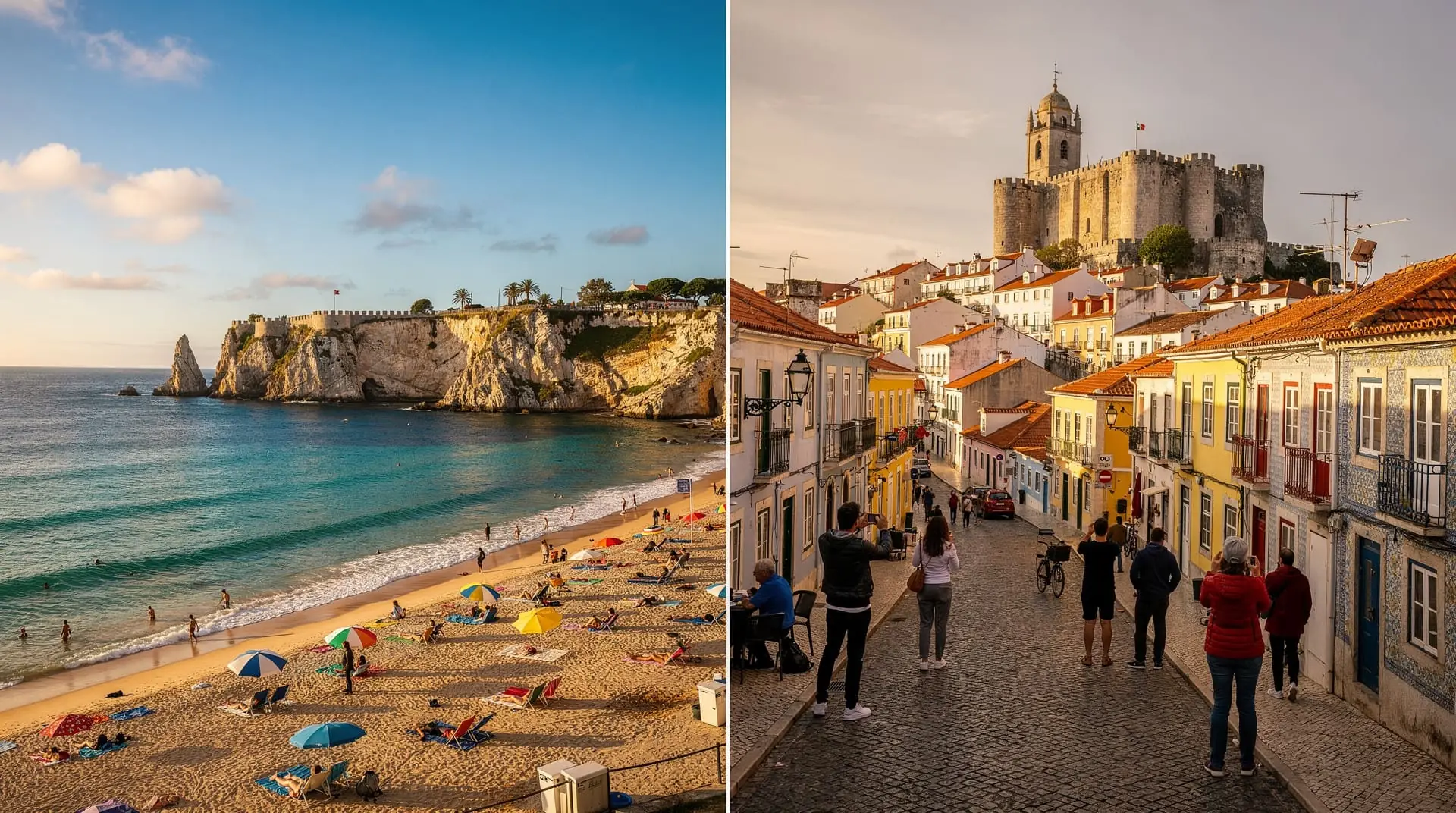
Which day-trip from Lisbon is right for you?
Decision guide: first-timer, foodie, family, pilgrim, beach lover or second visit. Pick the right Lisbon day-trip without guessing.
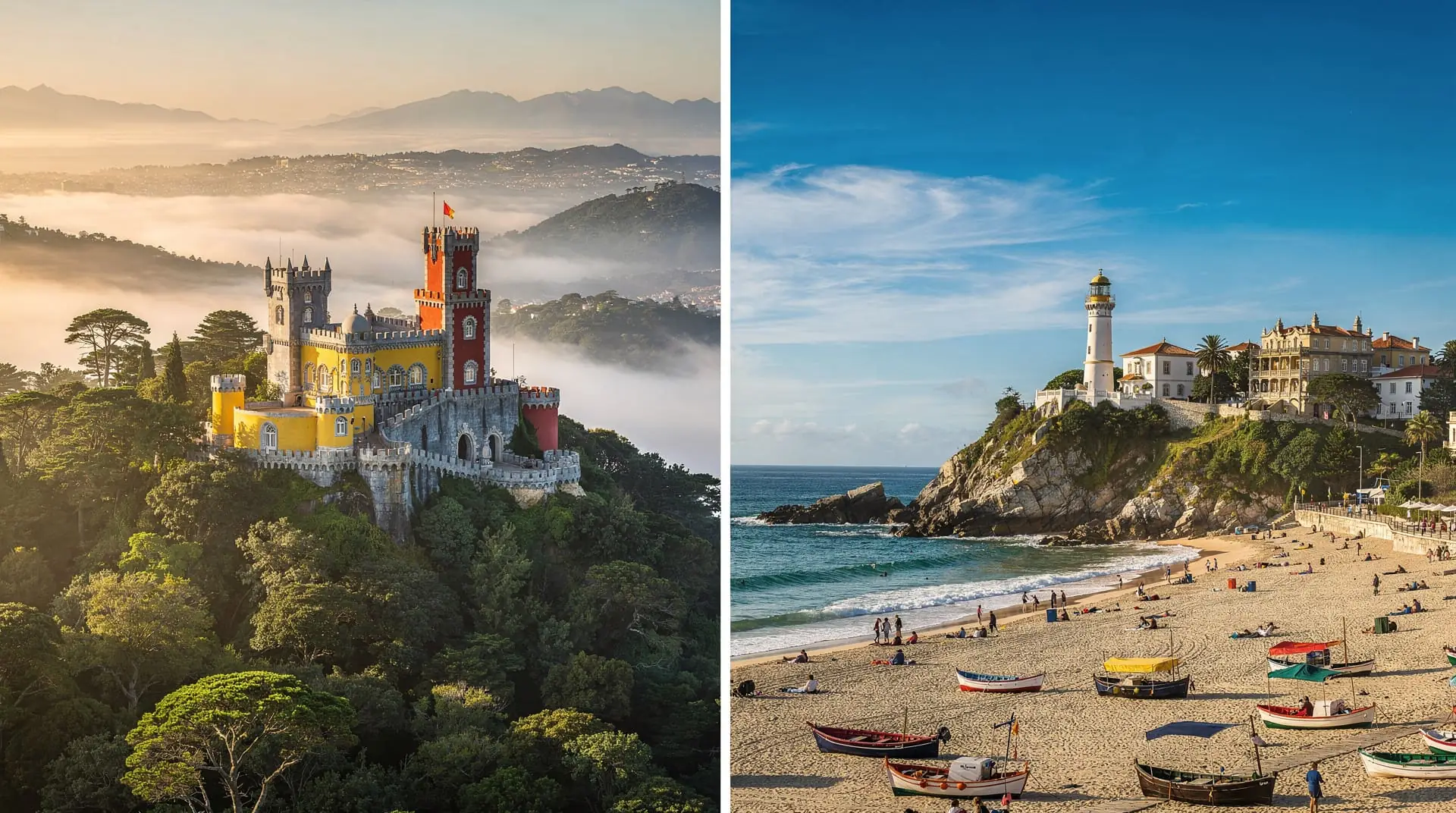
Sintra vs Cascais: which day-trip should you pick?
Sintra offers palaces and hills but costs time and crowds. Cascais offers beaches and a marina and half the effort. Pick the right one for your trip.

Best family day trips from Lisbon: Sintra, Cascais, Óbidos, and more
Top family day trips from Lisbon in 2026: Sintra by train, Cascais beach, Óbidos chocolate, transport logistics, real age recommendations.
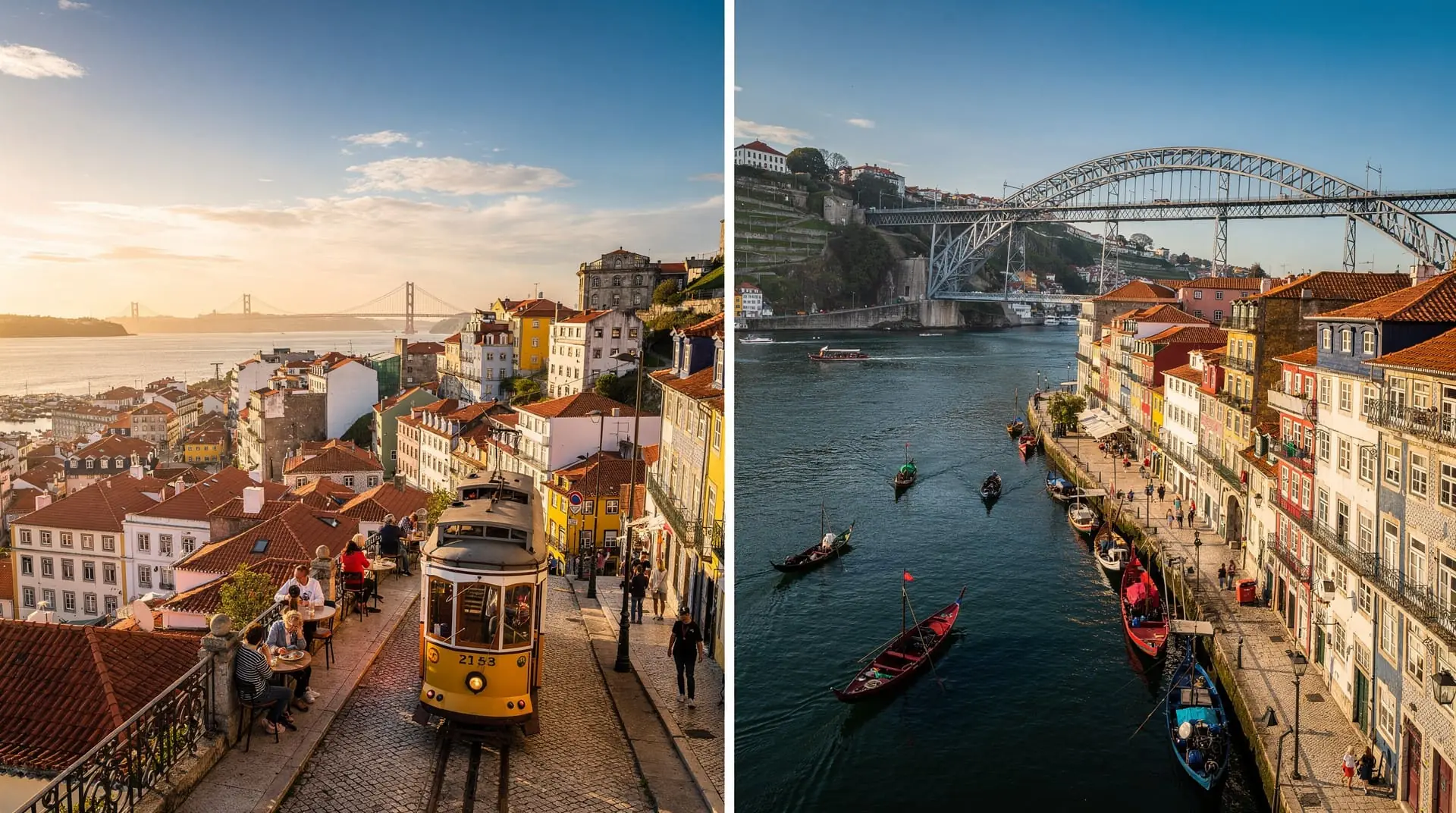
Lisbon vs Porto: which Portuguese city should you visit?
Honest head-to-head: vibe, weather, food, wine, day-trips and budget. Which city wins for your trip — and when to visit both.
Ready to book? Top tours for this guide
We earn a small commission if you book through GetYourGuide — at no extra cost to you. Every tour is hand-picked and verified.

Lisbon: 48-Hour Hop-On-Hop-Off Bus Tour and Oceanarium Entry
Lisbon: MAAT Entry Ticket & Dolphin Watching Boat Tour
Lisbon: Alfama, Mouraria Walking Tour with Fado Night, Tapas
Lisbon: Hop-On Hop-Off Bus Tour
Lisbon: 1-or 2-Day Hop-On Hop-Off Bus Tour