Oceanário de Lisboa: tickets, queues, and what to expect inside
Last reviewed
How much do Oceanário tickets cost and do you need to pre-book?
Adults €22, children 4-12 €15, under 4 free (2026 prices). Pre-booking online is strongly recommended for weekends and July-August — tickets cost the same online but guarantee entry without queuing at the box office. Saturday afternoons in summer have 30-45 minute door queues without pre-booked tickets.
| Where | Parque das Nações, Esplanada Dom Carlos I |
| Cost | Adults €22, children 4–12 €15 |
| Time needed | 90 minutes comfortable minimum |
| Getting there | Metro Red Line to Oriente, 12–15 min walk |
| Best time | Weekday mornings 10–11am |
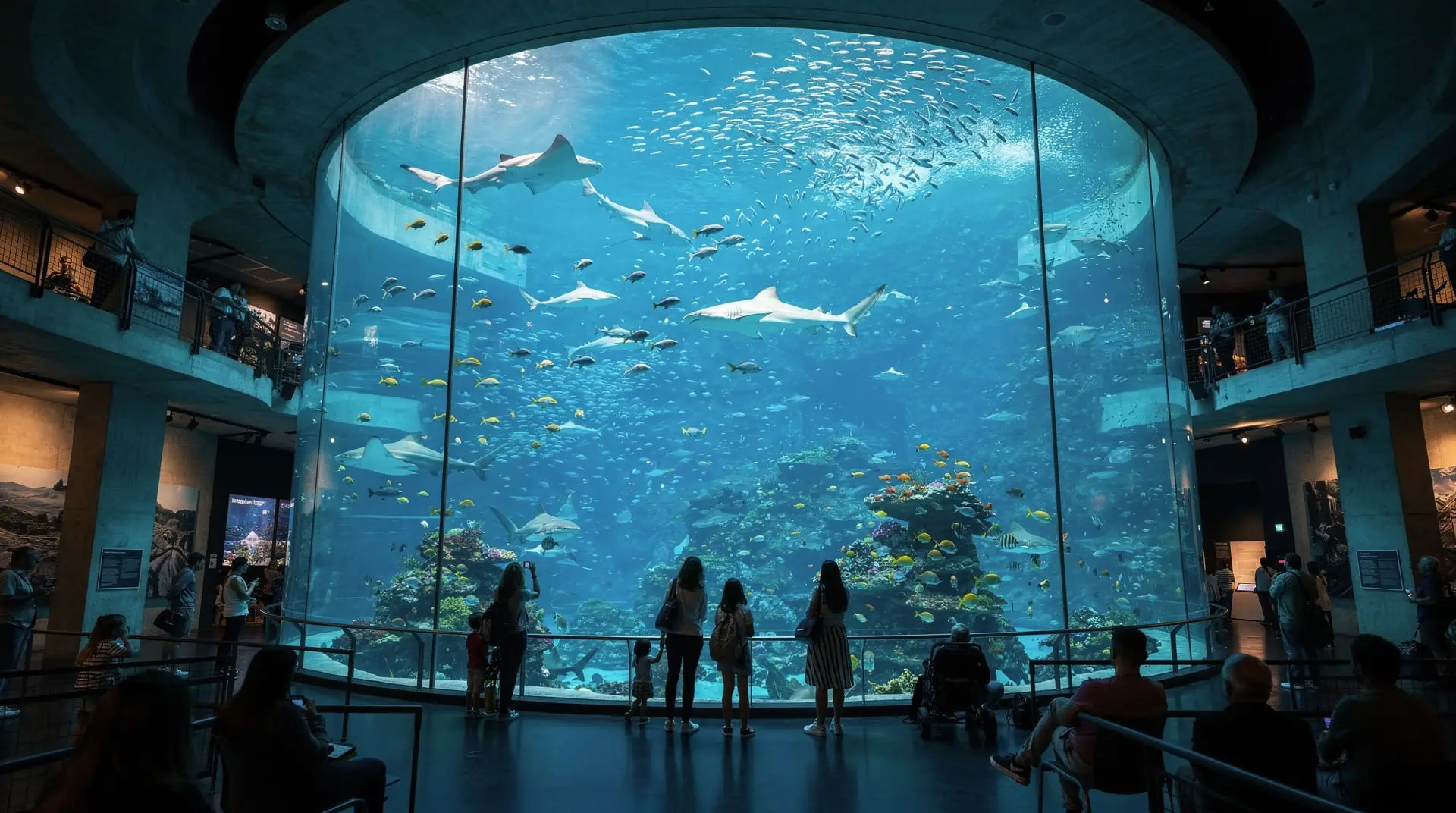
The Oceanário de Lisboa opened for Expo ‘98 and has operated continuously since. It regularly appears on lists of Europe’s best aquariums, and the reputation is deserved — not for its size alone (the central tank holds 5 million litres), but for the quality of the design and the coherence of the exhibits. The building sits in the Tagus at Parque das Nações, accessed by a walkway from the riverfront promenade, with the water visible through the ground-floor glass panels as you approach.
This guide covers everything you need to know before you go: tickets, timing, what’s actually worth your time inside, and where people waste theirs.
Getting there
Métro: Linha Vermelha (Red Line) to Oriente station. Walk south from the station through Parque das Nações towards the river — about 12-15 minutes on foot (flat, signposted). There is also a Tourist Train shuttle from Oriente station to the Oceanário (€2, runs hourly, reduces the walk to 2 minutes).
Address: Esplanada Dom Carlos I, s/n, Parque das Nações. GPS-friendly and clear on all mapping apps.
By car: There are paid car parks in Parque das Nações (€1.50-2/hour). The car parks near the Oceanário fill up on summer weekends from 10am.
Taxi/Uber from central Lisbon: €12-16, about 15-20 minutes without traffic.
Tickets: prices and buying options (2026)
| Category | Price |
|---|---|
| Adults (13+) | €22 |
| Children 4-12 | €15 |
| Under 4 | Free |
| Concessions (65+, students) | €15 |
| Family (2 adults + 2 children) | €68 |
Online vs door: Same price either way. Online booking through the official website (www.oceanario.pt) guarantees your slot — no additional booking fee. The advantage of pre-booking is practical: you skip the ticket-purchase queue and go straight to the entry line.
Lisboa Card: Not included. Pay separately regardless of which Lisboa Card variant you hold.
Combo tickets: The Oceanário sometimes offers combo deals with the hop-on hop-off bus. Worth checking the current offers on the GYG listings.
Oceanário de Lisboa tickets — pre-book online, same price, no box-office queueOpening hours
Daily: 10am-8pm (last entry 7pm).
Exceptions: The Oceanário occasionally closes early for private events. Check their website if you’re planning an evening visit.
Best arrival time: 10am (opening) or after 5pm. Midday and early afternoon (12-4pm) are consistently the most crowded, especially on weekends.
Queue reality: when to avoid and when to go
No queue or minimal wait: Weekday mornings (Tuesday-Friday, 10-11am). Monday is closed. Weekday afternoons in low season (November-March).
Moderate queues (20-30 minutes without pre-booking): Saturday and Sunday mornings in summer (June-September). Weekday afternoons in July and August.
Heavy queues (30-60 minutes without pre-booking): Saturday afternoons in July and August are the worst time to visit. By 2pm, the box office queue extends to the promenade. The entry queue, even with a pre-booked ticket, can run 15-20 minutes.
Portuguese school visits: Tuesday to Thursday, 9am-12pm in school term (October-June) brings large groups of children on organised visits. This doesn’t affect the entry queue much, but the interior is noisier and more crowded.
Honest tip: If you’re visiting on a Saturday in July or August, buy tickets online the night before and arrive at 10am. This removes the worst friction entirely. If you arrive after 1pm without pre-booked tickets on a summer Saturday, the experience will involve 45+ minutes of outdoor queuing in direct sun.
Inside the Oceanário: what to see
The Oceanário is arranged around a central concept: a single massive central ocean tank surrounded by four smaller habitat exhibits representing different ocean regions. You enter on the ground floor, circulate around the outer exhibits, then access the central tank from two viewing levels.
The central ocean tank
This is the heart of the building. The tank (25m x 15m, 8m deep) contains a cross-section of the open Atlantic: nurse sharks, barracuda, sun fish (mola mola), rays, schools of tuna, and thousands of smaller species. The glass panels that form the wall of the tank are 9cm thick acrylic — virtually invisible at close range.
What to linger for: The sharks circling close to the glass (they don’t seem particularly interested in humans, which is somehow both reassuring and slightly disappointing). The sun fish, which is enormous and moves with improbable slowness. The morning feeding (usually 11am — check at the entrance desk for that day’s schedule) when the fish behaviour changes completely.
Viewing levels: The main viewing panel is on the entry level (ground floor). The upper level (accessed by the ramp) gives a looking-down view through the surface of the water. Both perspectives are worth experiencing.
The four habitat exhibits (surrounding the central tank)
Antarctic: Penguin colony. African penguins (black-footed), not the dramatic emperor penguins of Antarctic documentaries, but enthusiastic swimmers. The feeding time (usually mid-morning) is when the tank becomes interesting — otherwise the penguins tend to stand around on the rocks.
Pacific: Rocky reef ecosystem, sea otters (a consistent crowd favourite — they float on their backs and groom themselves with implausible contentment), kelp forests. The sea otter feeding time is the single most child-friendly moment in the building. Check the schedule at entry.
Indian Ocean: Coral reef display — reef fish, coral formations, clownfish (inevitably popular with children who’ve seen Finding Nemo). Visually the brightest and most colourful exhibit.
Atlantic coastal: The Iberian Atlantic ecosystem — local fish species, seahorses, and the touch pool. The touch pool (starfish, sea cucumbers, horseshoe crabs) is supervised and allows physical contact. Best for children who want something tactile.
What’s overrated (honest)
The “Permanent Exhibitions” upstairs (educational panels about ocean conservation, climate change, fishing impacts) are thorough but dry. Adults interested in the science will find them useful; children will drift past within minutes. Don’t plan significant time here.
The aquarium shop (end of the circuit) is standard museum-shop fare — plush toys, keyrings, water bottles. Nothing you couldn’t find at any major aquarium. Budget €10-15 if you want to get a child something.
Making the most of a rainy day
The Oceanário is one of the best wet-weather options in Lisbon precisely because the whole visit is indoors and fully accessible with a pushchair. If a rain forecast is disrupting an outdoor day trip to Sintra or the beaches near Lisbon, swapping in an Oceanário morning is a reliable fallback — arrive at opening to avoid other families making the same call, since rainy days tend to push crowds indoors across the whole city.
With children: age-specific notes
Toddlers (1-3): The large colourful fish tanks and the penguin colony work well. The touch pool is the highlight. Walking distance from parking/metro is manageable. Don’t plan more than 60-75 minutes — attention spans have limits.
Children (4-8): The full circuit works well at this age. The feeding times (otters, penguins, sharks) are high points; plan around these. The central tank is the memorable experience.
Tweens (9-12): Full engagement possible with all exhibits, including the conservation panels. They can read the information themselves and form opinions. Allow 2 hours.
Teenagers: Variable. The design of the building and the central tank generally impress; some teenagers find the educational slant predictable. Works well as part of a day in Parque das Nações combined with the waterfront and casino area.
Oceanário vs other Lisbon family attractions
| Attraction | Cost | Time needed | Best age |
|---|---|---|---|
| Oceanário | €22 adult | 90–120 min | All ages |
| Parque das Nações waterfront | Free | 60 min | All ages |
| Monsanto Park picnic areas | Free | 2+ hrs | All ages, especially toddlers–8 |
| Sintra with kids day trip | Varies, €10+ per site | Full day | 5+ |
For families splitting a Lisbon trip between the Oceanário and other kid-friendly options, the family day trips guide and the family beaches near Lisbon guide round out a full itinerary.
The Oceanário café and eating nearby
Inside the building: There’s a café on the upper level (between the central tank and the exit circuit). Sandwiches €5-7, hot drinks €2.50-3.50. Overpriced for what it is — fine for a quick coffee, not a real meal.
Better options outside:
- The Parque das Nações waterfront has several café-restaurants a 5-minute walk from the exit.
- The Vasco da Gama shopping centre (5 minutes north, near Oriente station) has a food court if you need something fast and cheap with children.
- Cantina LX (LX Factory, if you’re going there next) is better value for a real meal, but 25 minutes away by taxi.
Practical tips
Feeding schedules: Sea otter feeding, penguin feeding, and shark tank feeding happen at different times each day. The schedule is posted at the main entrance desk. Build your visit around the feeding times for maximum child engagement — ask for the schedule when you pick up your tickets.
Accessibility: The building is fully accessible — lifts between levels, wide corridors, no steps between exhibits. Good for pushchairs.
Audio guide: Available at entry (€3). Reasonably informative but most of the information is also on the exhibit panels. Worth it if you’re visiting with curious older children or teenagers; skip it with toddlers.
Photography: The tanks are photographable with a standard smartphone — no flash (flash is unhelpful through thick acrylic and disturbs the fish anyway). The central tank in late morning light (sun through the roof panels) gives the best natural illumination.
Duration: Plan 90 minutes as a comfortable baseline. 60 minutes if you’re keeping to a tight schedule. 2+ hours if you have engaged children who want to read everything and watch each tank at length.
Frequently asked questions about the Oceanário
Is the Oceanário included in the Lisboa Card?
No. You pay separately regardless of which Lisboa Card you hold. The Lisboa Card covers the metro from the city to Oriente station, so the transit cost is covered, but not the entry itself.
What is the best day and time to visit the Oceanário?
Weekday mornings (Tuesday to Friday, 10-11am) are the least crowded. If visiting on a weekend, arrive when the doors open at 10am. Saturday afternoons in summer are the worst time — 30-60 minute queues without pre-booked tickets.
Is there anything for children who are afraid of large fish or sharks?
The sharks in the central tank are nurse sharks — bottom-dwelling, slow-moving, and visually less threatening than open-water sharks. The central tank’s glass creates a clear barrier, and most children who enter anxious leave fascinated. If a child is genuinely anxious, the outer exhibits (penguins, otters, coral reefs) can be visited without going near the central tank.
Can you see the whole Oceanário in one hour?
You can complete the circuit in 60 minutes at a walking pace. But you’ll miss the feeding times and the details that make individual tanks interesting. 90 minutes is the realistic comfortable minimum.
Is the Oceanário worth the price?
For families with children: unambiguously yes. Adults visiting without children: yes, if you have genuine interest in marine biology or outstanding aquarium design. It is not cheap, but it is among the top five aquariums in Europe by most specialist measures.
See the complete Parque das Nações guide for what else to do in the area, and our Lisbon with kids guide for the broader family itinerary. Getting to and from the Oceanário is straightforward on the metro — see the getting around Lisbon guide for how it connects to the rest of the city.
Related guides

Lisbon with kids: the complete family guide (2026)
Everything families need for Lisbon: best kid-friendly sights, safe beaches, restaurants, transport, parks, and how to avoid meltdown-inducing tourist traps.

Sintra with kids: Pena Palace, Regaleira tunnels, and Toy Museum
Plan Sintra for families: Pena Palace fairytale appeal, Regaleira's tunnels, the Toy Museum, bus 434 logistics, queues, and where to eat with children.
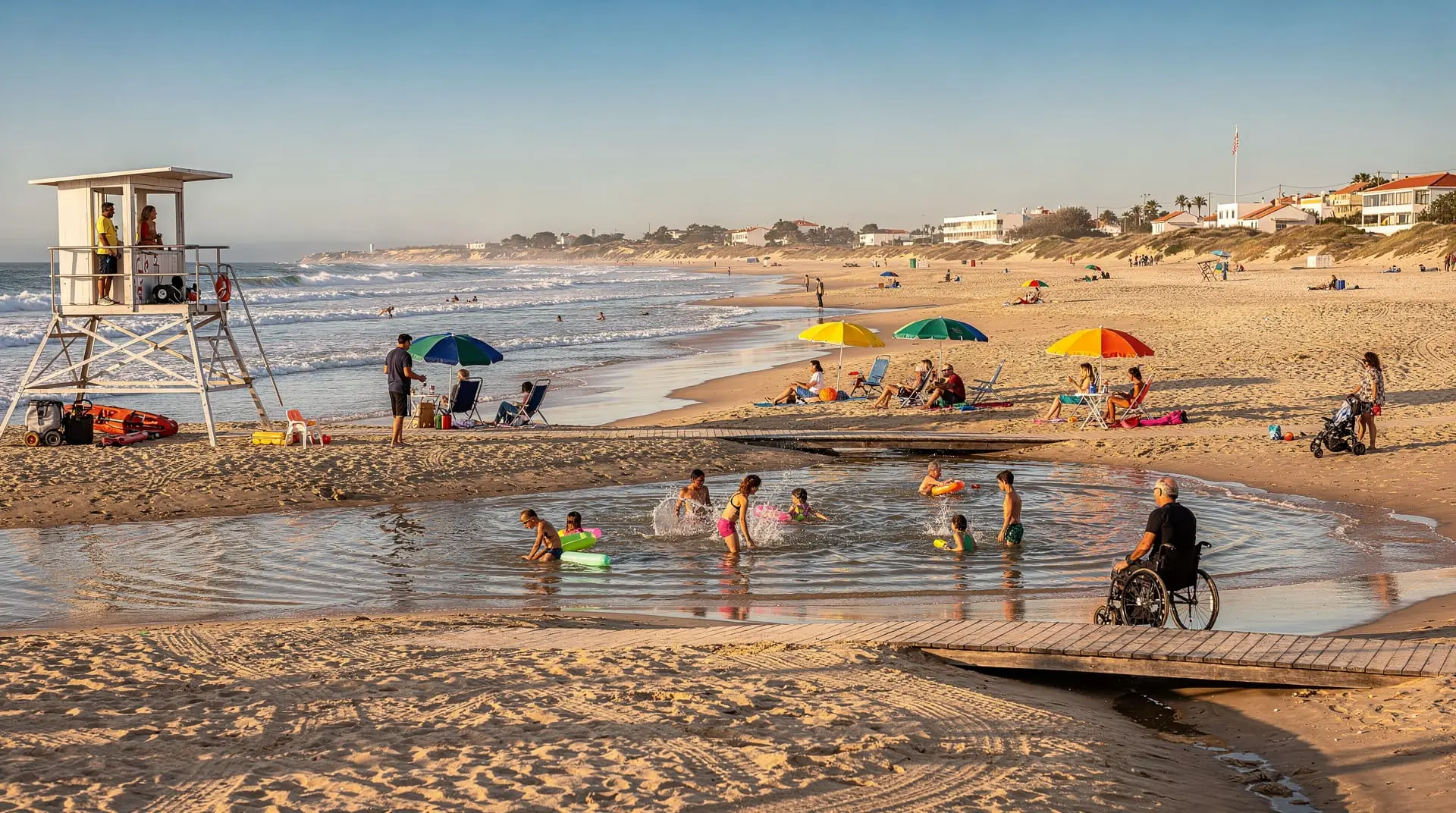
Best family beaches near Lisbon: Carcavelos, Cascais, and Arrábida
The safest, most family-friendly beaches near Lisbon in 2026. Calm water, lifeguards, easy transport — Carcavelos, Praia da Rainha, and Portinho da Arrábida.

Best family day trips from Lisbon: Sintra, Cascais, Óbidos, and more
Top family day trips from Lisbon in 2026: Sintra by train, Cascais beach, Óbidos chocolate, transport logistics, real age recommendations.
Ready to book? Top tours for this guide
We earn a small commission if you book through GetYourGuide — at no extra cost to you. Every tour is hand-picked and verified.

Lisbon: 48-Hour Hop-On-Hop-Off Bus Tour and Oceanarium Entry
Lisbon: MAAT Entry Ticket & Dolphin Watching Boat Tour
Lisbon: Alfama, Mouraria Walking Tour with Fado Night, Tapas
Lisbon: Hop-On Hop-Off Bus Tour
Lisbon: 1-or 2-Day Hop-On Hop-Off Bus Tour