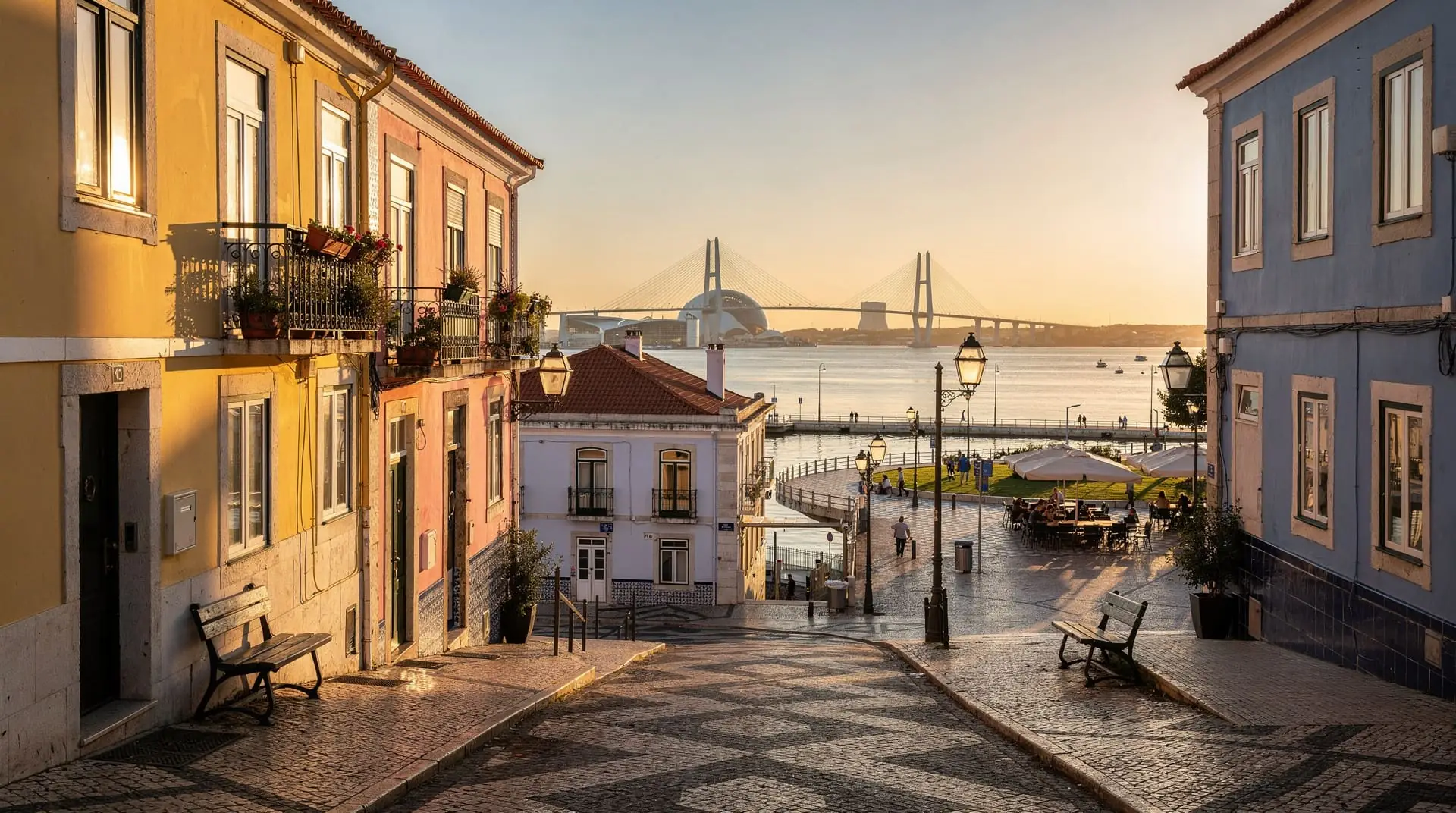
Parque das Nações: Expo '98 district, Oceanário, and the Vasco da Gama bridge
Last reviewed
Is Parque das Nações worth visiting, and how long do you need?
Yes, especially if you're visiting with children or staying more than two days. Half a day covers the Oceanário (2 hours) plus the waterfront walk, Telecabine, and lunch. A full day adds the casino evening or a concert. Take Métro Linha Vermelha (Red Line) to Oriente station — 25 minutes from central Lisbon.
| Where | Northern Tagus bank, Métro Red Line to Oriente |
| Cost | Free to walk; Oceanário €22, Telecabine €5.50–9 |
| Time needed | Half day minimum; full day with the casino evening |
| Getting there | Métro Red Line, ~10–25 min from central Lisbon |
| Best time | Weekday, or early weekend morning |
Parque das Nações is the proof that Lisbon’s urban ambition didn’t end in 1755. Built on a derelict industrial site along the Tagus’s northern bank for the 1998 World Exposition (theme: the oceans), it transformed 5km of contaminated dockyard into a neighbourhood of contemporary architecture, riverside promenades, and the only world-class aquarium in Portugal.
Most visitors see only the Oceanário and leave. The full district rewards more time: the Vasco da Gama bridge view at the far eastern end, the Telecabine cable car, the contemporary buildings by a roster of notable architects (including Álvaro Siza Vieira and Santiago Calatrava’s Oriente station), and the genuine neighbourhood feel that has grown since Expo closed.
Getting there
Métro: Linha Vermelha (Red Line) to Oriente station. Direct from Alameda (central Lisbon) in about 10 minutes; from Marquês de Pombal, about 20 minutes. Single ticket €1.99 with Viva Viagem card.
Train: Oriente station is a major rail hub — trains from Gare do Oriente connect to Porto, the Algarve, and Spanish border. The station building by Santiago Calatrava (1998) is worth 10 minutes of attention: white concrete vaulting above the platforms, natural light flooding through the structure.
Driving: Oriente is 8km from central Lisbon via the A1 or the riverside IC2. Parking in Parque das Nações is relatively easy (paid, about €1.50/hour in the lots behind the shopping centre).
Oriente station: Calatrava’s concrete forest
Before leaving the station area, look up. Santiago Calatrava’s Gare do Oriente uses the same organic-structural language as his other major works — white concrete tree trunks branching into vaulted canopies, glass roofing letting in Mediterranean light. It was built in 18 months for the 1998 Expo and remains one of the most architecturally distinguished train stations in Europe.
The Vasco da Gama shopping centre is attached to the station on the north side. Worth avoiding unless you need a chain restaurant or supermarket.
The Oceanário de Lisboa
The Oceanário is the reason most visitors come to Parque das Nações, and justifiably. It’s one of the world’s great aquariums — not primarily for its size (large, but not the largest), but for the central ocean tank design.
The central tank (5 million litres) puts you at eye-level with a cross-section of the open ocean: sharks, manta rays, sun fish, tuna, barracuda, and thousands of smaller species in a single tank that surrounds you on all sides and from above. Four surrounding tanks represent specific ocean ecosystems: Antarctic, Pacific, Indian Ocean, and Atlantic.
Entry: Adults €22, children 4-12 €15, under 4 free. Timed tickets available online (same price, strongly recommended on weekends). Lisboa Card: NOT included — pay separately.
Time needed: 90-120 minutes at a comfortable pace, 60 minutes if moving quickly. Budget 2 hours with children who want to read every panel.
Queue tips: Weekday mornings are uncrowded. Saturday afternoons in summer have a 30-45 minute entry queue without pre-booked tickets. Sunday mornings are often busy with Lisbon families.
What to linger at: The central ocean tank (the obvious one), but also the shallow touch pool near the entrance (starfish, sea cucumbers — good for children), and the top level where you look down into the central tank with the sharks below you.
Oceanário de Lisboa entrance ticket — book to skip the queueFor a deeper guide with all the exhibits, see our dedicated Oceanário guide.
The waterfront promenade
After the Oceanário, walk south along the Tagus waterfront promenade. This is where the Expo pavilions are concentrated:
Pavilhão de Portugal (Portugal Pavilion, Álvaro Siza Vieira, 1998): The suspended concrete canopy between two porticoes is the most architecturally praised building of the Expo. The thin concrete shell (65m span, unsupported) looks physically impossible. Now used for state functions and concerts.
Pavilhão Atlântico (now Altice Arena): The oval performance venue, still Lisbon’s largest indoor concert space. Hosts major international tours.
Torre Vasco da Gama: The white slender tower (145m) is now a luxury hotel. The shape is meant to evoke a ship’s sail; the views from the upper restaurant (Panoramic) are excellent but pricey.
Doca dos Olivais: The marina at the south end of the promenade — sailing boats, a few café-restaurants. Good for a slow coffee after the Oceanário.
Telecabine Lisboa (cable car)
The Telecabine connects the Doca dos Olivais at the south end to the Torre Vasco da Gama at the north end — 1.25km, about 10 minutes one way, running at 35m above the ground.
Cost: €5.50 single, €9 return. Children under 6 free.
View: Good, but not exceptional — the Tagus is on your right (west), the Parque das Nações residential towers on your left. On a clear day you can see across to the south bank (Almada). The Vasco da Gama bridge appears dramatically at the north end.
Honest verdict: Worth doing if you have children or if you want the bird’s-eye view of the district’s urban design. Skip if queues are long (weekends) or if you’ve already done the Belém Tower views and are sightseeing-fatigued.
Hours: Daily 11am-7pm (extended to 8pm in summer). Closed in strong wind.
Vasco da Gama bridge views
The Ponte Vasco da Gama (1998) at 17.2km is the longest bridge in Europe. It crosses the Tagus where it’s at its widest — the bridge appears to dissolve into the horizon. The best ground-level views are from the eastern waterfront near the Telecabine north terminal.
For a different perspective: the Miradouro do Tejo e Trancão lookout point is accessible on foot or by bike along the waterfront promenade north of the bridge — 20-minute walk from the Telecabine north terminal. Very few tourists come this far; the view back over the bridge with central Lisbon in the background is worth the extra effort.
Parque das Nações vs the historical centre
Visitors often ask whether Parque das Nações is worth the trip out from Alfama or Baixa. It’s a genuinely different Lisbon — contemporary architecture, wide riverside promenades, and none of the hills or crowds of the historical centre. It doesn’t replace Alfama or Belém, but as a half-day contrast, particularly with children or on a hot day when the shade-free flat promenade is more manageable than climbing Alfama’s steps, it earns its place. Combine it with Belém on the same trip only if you have a full day and don’t mind the cross-city transit — they are on opposite ends of the Tagus waterfront.
The Casino Lisboa
Casino Lisboa (Alameda dos Oceanos, open daily 3pm-3am) sits near the Pavilhão Atlântico. It’s one of Europe’s larger casinos — 1,000 slot machines, 26 gaming tables, two restaurants, and a theatre with regular shows.
For non-gamblers: The casino’s Auditório hosts concerts, comedy, and theatrical productions most weekends. Check the programme before your visit — ticket prices are reasonable (€20-40 for shows, dinner + show packages available).
Dress code: Smart casual — trainers are fine, beachwear is not. Minimum age 18.
Eating in Parque das Nações
The district has a better restaurant-to-tourist ratio than most of Lisbon’s historical centre. The waterfront restaurants charge for the view but less aggressively than the Belém or Alfama equivalents.
Restaurante Nariz de Vinho Tinto (Rua do Bojador 114): Portuguese meat and fish dishes, popular with locals, good house wine. €20-28/person.
McCafé / standard chains: The Vasco da Gama shopping centre has the full range if you need a quick meal with children.
Kiosk by the Oceanário: Light lunch option — sandwiches, soup, coffee. No tourist surcharge.
Practical tips
Combining with a Lisboa Card: The 72h Lisboa Card is good value if you’re visiting Parque das Nações on day three of a Lisbon trip — metro transit is included, which saves the cost. But the Oceanário is NOT included in the Lisboa Card. See our Lisboa Card guide and the Lisboa Card calculator.
Best day to visit: Weekday, or early weekend morning. The Oceanário on Saturday afternoon is significantly more crowded than Wednesday morning.
With children: See our Lisbon with kids guide and the family day trips guide for how to sequence Parque das Nações into a family itinerary.
Getting around the district: The park is large (5km of waterfront). Bike rental is available near Oriente station (€15/half day) and is the best way to cover the full length without getting tired. The Telecabine covers part of it, but walking the whole promenade takes 45-60 minutes one way.
Evening: The district gets a second life after 6pm when local workers return home. Restaurants fill up, the waterfront promenade is used by runners and dog walkers. A pleasant contrast to the tourist-heavy historical centre in the evening.
For more on the neighbourhood and what to do with children, see our Oceanário guide and Lisbon with kids guide. For the full Lisbon planning picture, start with how many days in Lisbon.
Frequently asked questions about Parque das Nações
Is Parque das Nações worth a special trip from central Lisbon?
Yes, particularly for families or anyone spending 3+ days in Lisbon. The Oceanário alone is a strong reason to make the trip, and the flat, modern waterfront is a useful contrast to the historical centre’s hills and crowds.
How do I get to Parque das Nações without a car?
Take the Métro Red Line (Linha Vermelha) to Oriente station — about 10 minutes from Alameda or 20–25 minutes from Marquês de Pombal. It’s the simplest and fastest option; driving adds parking costs with no real time saving.
Can I combine Parque das Nações with Belém in one day?
It’s possible but demanding — they sit at opposite ends of the Tagus waterfront and require a cross-city transfer. Most visitors do better treating them as separate half-days rather than cramming both into one.
Related guides
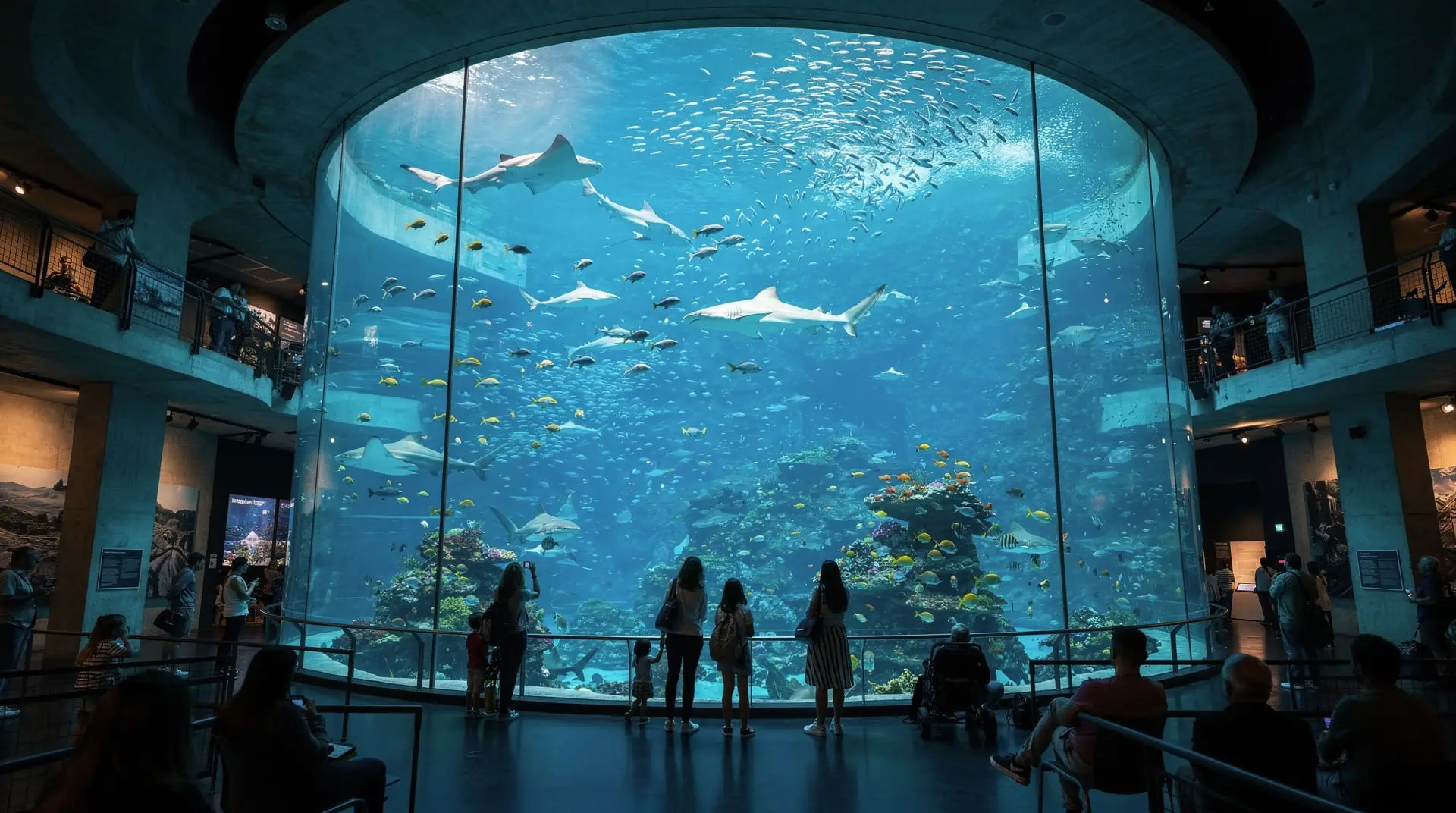
Oceanário de Lisboa: tickets, queues, and what to expect inside
Oceanário de Lisboa 2026: ticket prices, best visit times, exhibit-by-exhibit guide, and honest tips for avoiding Saturday-afternoon crowds.
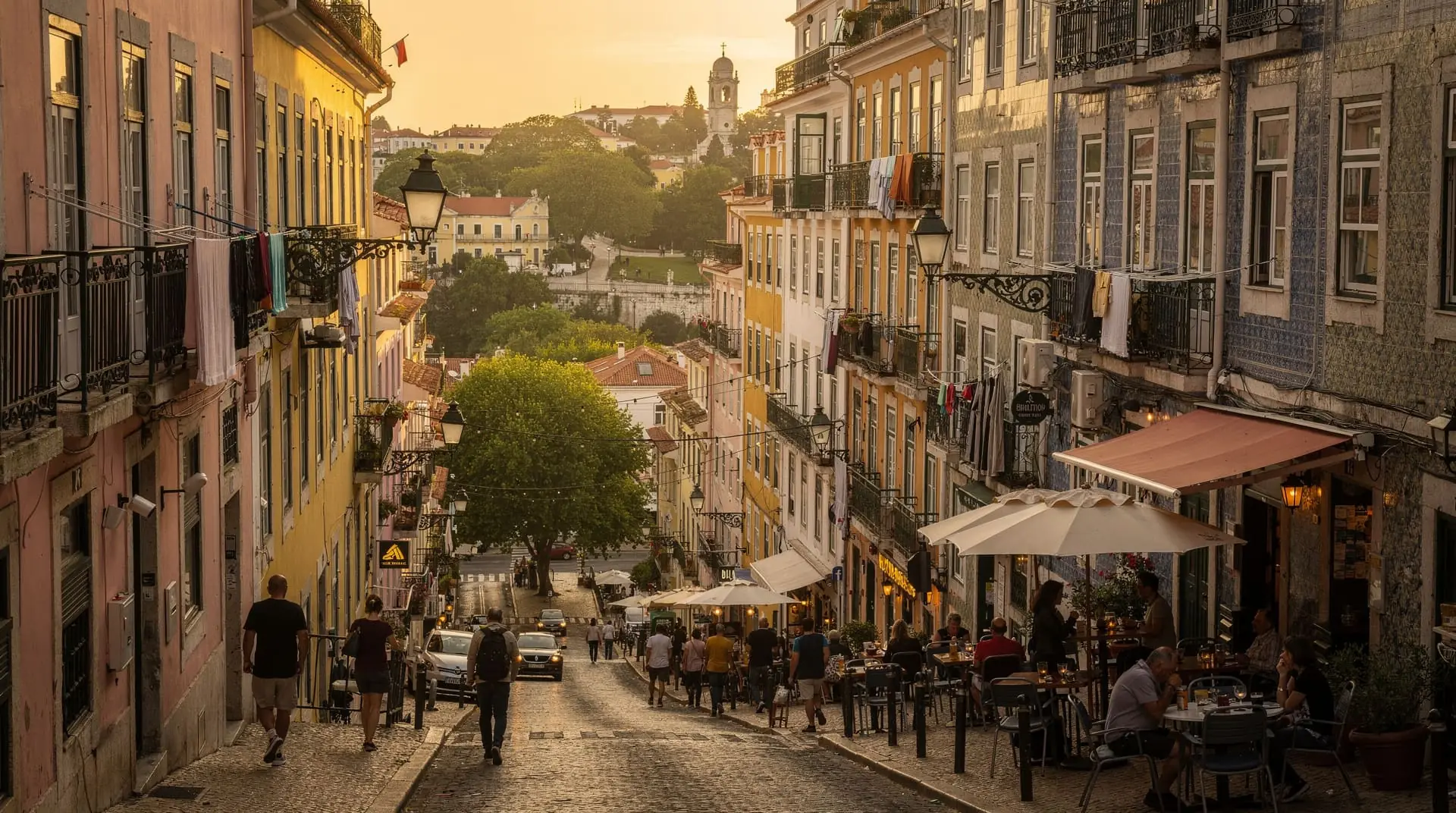
Bairro Alto: day life, nightlife, and the Príncipe Real transition
Bairro Alto by day: vintage shops, fado houses, and Chiado walks. By night: Lisbon's densest bar strip. Honest guide with no tourist-trap bars.
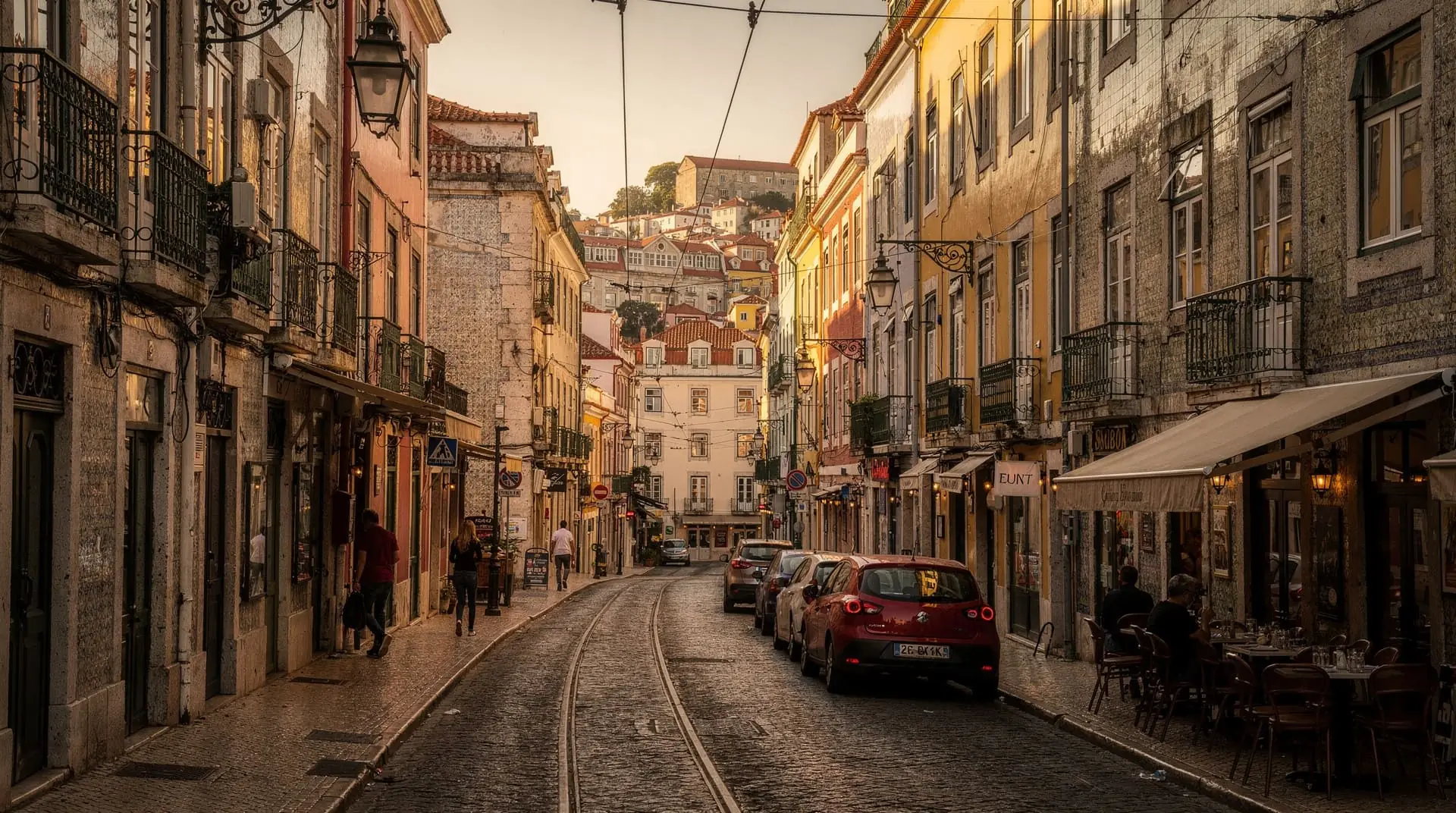
Baixa and Chiado: the complete neighbourhood guide
Navigate Lisbon's Pombaline grid, Rua Augusta, Santa Justa lift, Praça do Comércio, and Chiado's bookshops. Logistics, prices, and honest tips.
Belém half-day itinerary: Jerónimos, the Tower, MAAT, and pastéis
Plan the perfect half-day in Belém. Tram 15E logistics, Jerónimos Monastery, Belém Tower queues, MAAT gallery, Pastéis de Belém, and where to eat.
Ready to book? Top tours for this guide
We earn a small commission if you book through GetYourGuide — at no extra cost to you. Every tour is hand-picked and verified.

Lisbon: 48-Hour Hop-On-Hop-Off Bus Tour and Oceanarium Entry
Lisbon: MAAT Entry Ticket & Dolphin Watching Boat Tour
Lisbon: Alfama, Mouraria Walking Tour with Fado Night, Tapas
Lisbon: Hop-On Hop-Off Bus Tour
Lisbon: 1-or 2-Day Hop-On Hop-Off Bus Tour