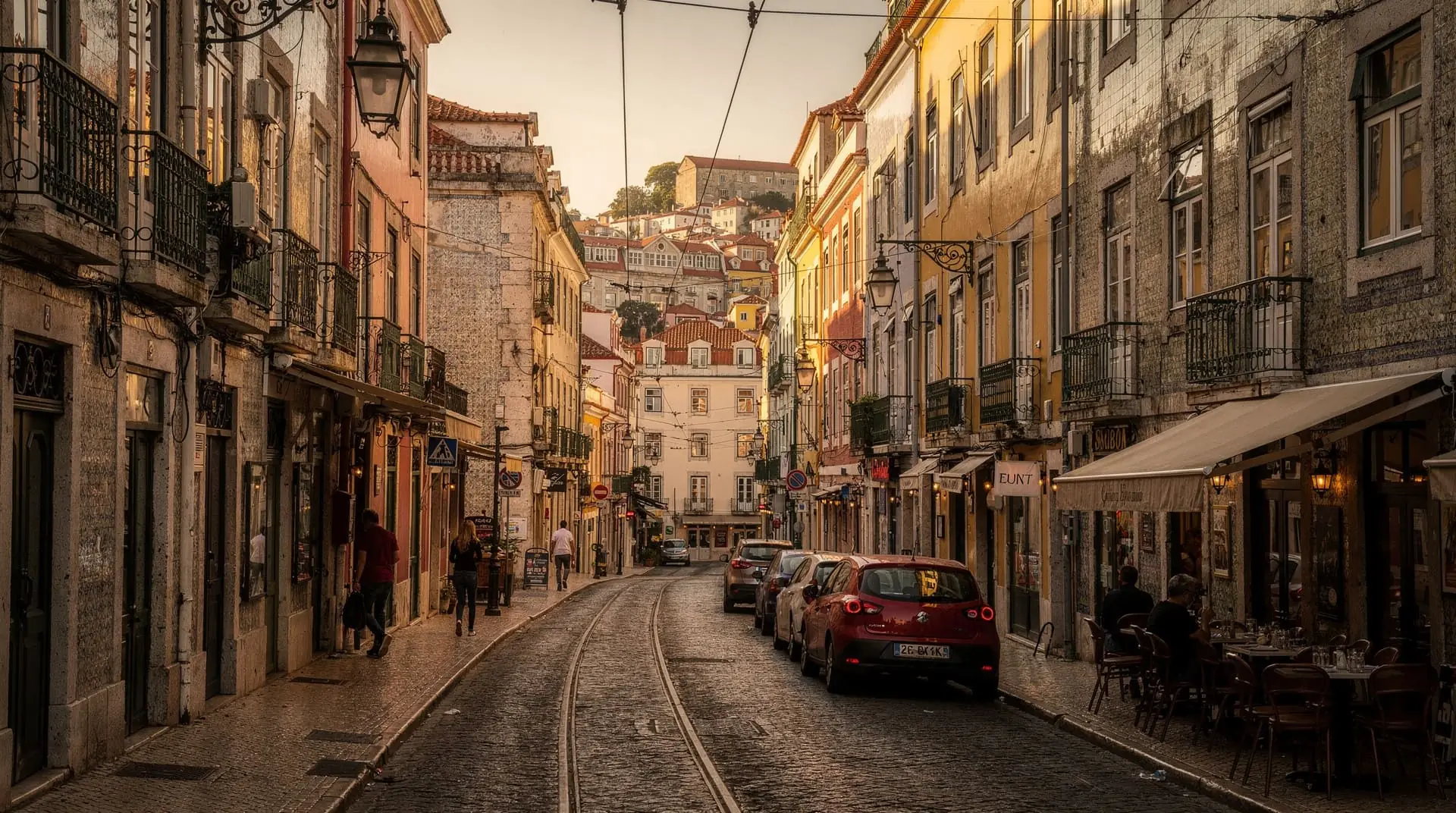
Baixa and Chiado: the complete neighbourhood guide
Last reviewed
How long do you need to explore Baixa and Chiado properly?
Two to three hours covers Baixa comfortably: Praça do Comércio, Rua Augusta, the arch, and Santa Justa lift. Add another hour for Chiado (A Brasileira, Livraria Bertrand, Praça do Camões, viewpoint at Miradouro de São Pedro de Alcântara). Half a day total if you include a long lunch.
| Where | Central Lisbon, between the Tagus and Bairro Alto/Alfama |
| Time needed | 2-3h Baixa, +1h Chiado, half a day with lunch |
| Cost | Free to walk; Rua Augusta Arch €3, Santa Justa lift €5.50 |
| Getting there | Baixa-Chiado metro station (blue/green lines) |
| Avoid | Eating on Rua Augusta itself — walk one block off it |
Baixa — literally “lower city” — is Lisbon’s flat commercial grid, rebuilt on a radical urban plan after the 1755 earthquake destroyed the medieval city. The Marquês de Pombal’s engineers built a rational checkerboard of streets, with each street named after the trade it housed: Rua dos Sapateiros (cobblers), Rua do Ouro (goldsmiths), Rua da Prata (silversmiths). Most of the artisans are gone, replaced by pharmacies, souvenir shops, and chain restaurants — but the architecture remains exceptional. If you’d rather have someone explain the Pombaline grid as you walk it, a 3-hour walking tour of Lisbon’s Baixa district covers the same ground with a guide.
Chiado, immediately uphill, was the literary and intellectual quarter of the 19th and 20th centuries. Fernando Pessoa wrote here; his favourite café still serves coffee. Today it blends genuine bookshops, good restaurants, independent boutiques, and a theatrically beautiful main square.
Getting here
Métro: Baixa-Chiado station (Línha Azul / Verde intersection) drops you directly beneath the border between the two neighbourhoods. The station itself is worth seeing — designed by Álvaro Siza Vieira, with its stark tiled passages and skylights.
From Alfama: Walk west along Rua da Conceição (flat, 10 minutes) from the Sé area, or take Tram 28 downhill (check current works — service can be suspended).
From Bairro Alto: Walk downhill on Rua do Carmo or use the Elevador da Glória (funicular, €3.80 one way) or the Elevador da Bica.
From the waterfront (Cais do Sodré): Walk east along Rua do Arsenal for 8 minutes, or take a taxi for €4.
Praça do Comércio
Start at the riverside. Praça do Comércio (also called Terreiro do Paço) is the city’s grandest square — a three-sided arcade in ochre-yellow stone opening onto the Tagus, with the triumphal arch of Rua Augusta closing the north side. The central equestrian statue is of Dom José I, Pombal’s king. The square functioned as the royal riverside landing for centuries and was destroyed in the 1755 tsunami; what you see is the 1770s rebuild.
What to do here:
- Stand by the river and look south: no bridge obscures the view, just the Tagus widening toward Almada.
- Walk through the arcades on the east side to reach the Lisbon Story Centre (entertaining 45-minute multimedia history of the city, €7, good for a rainy morning or to orient first-timers).
- The Rua Augusta Arch is climbable for €3 — the panorama from the top (terrace level) over the Baixa grid and back toward the Tagus is excellent and underrated. Skip the crowds at Portas do Sol if you’re short on time.
Honest tip: The square itself is free and worth 20 minutes. The cafés on the arcade charge tourist prices (€3.50 espresso). Walk 200m into Baixa for normal prices.
Rua Augusta: the main pedestrian street
Rua Augusta runs north from the arch to Rossio. It’s Lisbon’s answer to Las Ramblas: fully pedestrianised, lined with mosaic pavements in the classic Portuguese wave pattern, street performers, souvenir shops, and mid-range restaurants.
Don’t eat on Rua Augusta — most restaurants display menus outside, charge €18-28 for dishes that would cost €10-14 two streets away, and use couvert bread-and-olives automatically on the table (€2-3 per person, you can refuse it). See our restaurant couvert scam warning.
Do walk Rua Augusta for the architecture: the uniform Pombaline building facades, with their pilastered ground floors and sober upper windows, are impressive as an ensemble even if no single building stands out.
Side streets worth turning onto: Rua do Ouro (west, towards the gold shops), Rua da Prata (east), and Rua dos Correeiros (east, more local commerce).
Santa Justa lift
The Elevador de Santa Justa (1902, designed by Raoul Mesnier du Ponsard, a disciple of Gustave Eiffel) is the vertical connection between flat Baixa and elevated Chiado. Neo-Gothic ironwork, two wood-panelled passenger cabins, a terrace viewpoint at the top.
Cost: €5.50 one way, €8.50 return (includable in a 24h Viva Viagem public transport card at €6.80, which also covers all buses, trams, and metro). The Lisboa Card covers it too.
Queue reality: Saturdays and Sundays in summer, the queue for the lift runs 40-60 minutes. The terrace at the top is pleasantly uncrowded once you’re up, but the wait is hard to justify when the alternative is a 5-minute walk up Rua do Carmo or the Chiado escalators.
Honest take: Use it if there’s no queue (early morning weekdays) or if you have the Lisboa Card (included). Don’t queue an hour for a lift that goes 32 metres.
The viewpoint at the top does offer a fine overview of the Baixa grid directly below — you can see the Pombaline street pattern very clearly from here.
Rossio and Praça da Figueira
At the north end of Rua Augusta, Rossio (officially Praça Dom Pedro IV) has been Lisbon’s main square for 500 years. The undulating black-and-white mosaic pavement is famous; the column with Dom Pedro IV at the top was supposedly built with a statue of Mexican Emperor Maximilian (a mix-up still debated by historians). The two ornate fountains are 19th-century cast iron from Paris.
Café Nicola on the western arcade is the oldest café in the square, open since 1779. Coffee costs €2-2.50 inside, more at terrace tables.
The Rossio train station (north side) is worth a look: neo-Manueline facade with horseshoe arches, a dramatic contrast to the Pombaline grid around it. Trains to Sintra depart from here (40 minutes, €2.40 single, use Viva Viagem card).
Chiado: from the escalators to Praça do Camões
From the Santa Justa terrace walkway (there’s a bridge connecting the lift’s top to the Carmo Convent ruins), walk west into Chiado. Alternatively, use the escalators at the east end of Rua do Carmo.
Carmo Convent and Archaeological Museum
The Carmo Convent (Convento do Carmo) was destroyed in the 1755 earthquake — only the Gothic shell remains, roofless and atmospheric. The nave now houses a small archaeological museum with Egyptian and pre-Columbian collections alongside Portuguese artefacts. €5 entry. Worth 45 minutes if you’re interested in both the architecture and the collections.
Rua do Carmo and Rua Garrett
These are Chiado’s main shopping streets — Portuguese ceramics, leather goods, independent fashion, and the excellent Livraria Bertrand (Rua Garrett 73), listed in the Guinness World Records as the oldest bookshop in continuous operation in the world (founded 1732). The English-language travel section is small but well-curated. Even if you don’t buy, go in.
A Brasileira café
Rua Garrett 120. The legendary café where Fernando Pessoa (and his alter egos) wrote, argued, and drank bica (espresso). The bronze statue of Pessoa outside is one of the most photographed spots in Lisbon. The coffee (€1.60-2 inside, €4.50 at terrace tables) is good; the queues for the terrace seat next to the statue can be 15 minutes. Go inside — it’s quicker and the mahogany interior is the real thing.
Hours: Daily 8am-2am.
Praça do Camões
The small square dedicated to Luís de Camões (Portugal’s national poet, author of Os Lusíadas) is at the junction of Rua do Alecrim and Rua Garrett. Low-key, a few outdoor café tables, the Chiado theatre building on the east side. Quieter than Rossio; good for a coffee break.
Late evening in Baixa and Chiado
After the shops close and the day-trip crowds thin out, Baixa and Chiado shift into a quieter, more local register. Praça do Comércio at night — sparsely lit, the arcades in shadow, the river dark beyond the square — is genuinely atmospheric and worth a walk-through even if you’ve already seen it by day. Chiado’s restaurants stay lively through dinner, and the walk up to Bairro Alto for late drinks is short enough to make an evening loop of Baixa dinner, Chiado dessert, and Bairro Alto bars entirely walkable without transport.
From Chiado to Bairro Alto
Chiado and Bairro Alto are adjacent — the unofficial border is roughly Rua do Diário de Notícias. The transition is gradual: Chiado gets smarter and more boutique, Bairro Alto gets older buildings and more bars. At night, crowds migrate from the Chiado restaurants to the Bairro Alto bars.
The Miradouro de São Pedro de Alcântara is 10 minutes’ walk north from A Brasileira — an elevated garden terrace with a tiled panorama map orienting you to the Alfama hills opposite. Free, always open, far less crowded than Portas do Sol. See our best Lisbon viewpoints guide.
Chiado and Bairro Alto walking tour with a local guideBaixa vs Chiado, compared
| Baixa | Chiado | |
|---|---|---|
| Character | Flat commercial grid, Pombaline architecture | Literary, boutique, slightly elevated |
| Best for | Praça do Comércio, Rua Augusta, Rossio | Bookshops, cafés, viewpoint access |
| Crowds | Heavy 10am-6pm on Rua Augusta | Steadier, less concentrated |
| Price level | Tourist-priced on Rua Augusta, normal one block off | Moderate, A Brasileira terrace at a premium |
Eating and drinking
For coffee: A Brasileira (historic, worth the premium at the terrace), or any Padaria on the side streets of Baixa for €1-1.20.
Lunch: Baixa’s tascas and small dining rooms reward a slower, food-focused visit — a private Lisbon food tour through Baixa with wine and local delicacies strings several of these addresses together in one outing.
- Solar dos Presuntos (Rua das Portas de Santo Antão 150): old-school Portuguese cooking, dried cured ham hanging from the ceiling, generous portions. €20-30/person.
- Taberna da Rua das Flores (Rua das Flores 103, Chiado): petiscos, handwritten menu, excellent. Budget €20-25/person.
- Zé da Mouraria (Rua João do Outeiro 24): for something cheaper before or after Alfama.
Time Out Market: Cais do Sodré (10-minute walk from Praça do Comércio). Lisbon’s food hall — 35 vendors, Michelin-starred concepts at market prices. Read our Time Out Market guide before going (it gets very busy Saturday lunch and dinner).
Avoid: The restaurants with menus displayed in four languages on Rua Augusta and Rua dos Correeiros. Walk one block perpendicular to Rua Augusta and the prices drop significantly.
Rainy day in Baixa-Chiado
This is one of the better neighbourhoods in Lisbon for a wet day, since much of it can be done under cover or with short dashes between doorways. The Carmo Convent’s roofless nave is atmospheric even in rain, the Lisbon Story Centre and Carmo Archaeological Museum are fully indoor, Livraria Bertrand and the Chiado shopping streets offer extended browsing time, and A Brasileira’s interior tables are a comfortable place to wait out a shower. The Santa Justa lift queue also tends to shrink in poor weather, ironically making it a better time to ride it.
Practical tips
Lisboa Card: The 24h card (€22) includes the Santa Justa lift, Rua Augusta Arch, metro/buses/trams, and several museums. If you’re doing multiple attractions in a day, it pays off. Check the Lisboa Card calculator.
Crowds: Praça do Comércio and Rua Augusta peak between 10am and 6pm. The Baixa is pleasant in the evening — a different atmosphere when locals return and tourists thin out.
Safety: Lower Baixa around Cais do Sodré can get rowdy on Friday and Saturday nights. Pickpocketing is a risk on the main pedestrian streets during the day — keep bags in front, avoid flashy displays of phones.
Markets: The Feira da Ladra flea market runs Tuesdays and Saturdays at Campo de Santa Clara (near the National Pantheon in Alfama) — 15 minutes from Baixa by taxi or tram.
Combining Baixa-Chiado with other neighbourhoods
The location makes Baixa the natural hub for a Lisbon day:
- Morning: Praça do Comércio + Rua Augusta arch (9-10am, before the crowds)
- Late morning: Santa Justa lift + Chiado (10am-1pm)
- Lunch: Taberna da Rua das Flores or Time Out Market
- Afternoon: Walk east to Alfama, or take Tram 15E to Belém
- Evening: Bairro Alto for drinks, or fado in Alfama
See our full 3-day Lisbon itinerary and the first-time Lisbon tips guide for how Baixa fits the bigger picture.
For shopping specifics, read where to shop in Lisbon and Portuguese souvenirs and crafts.
Related guides
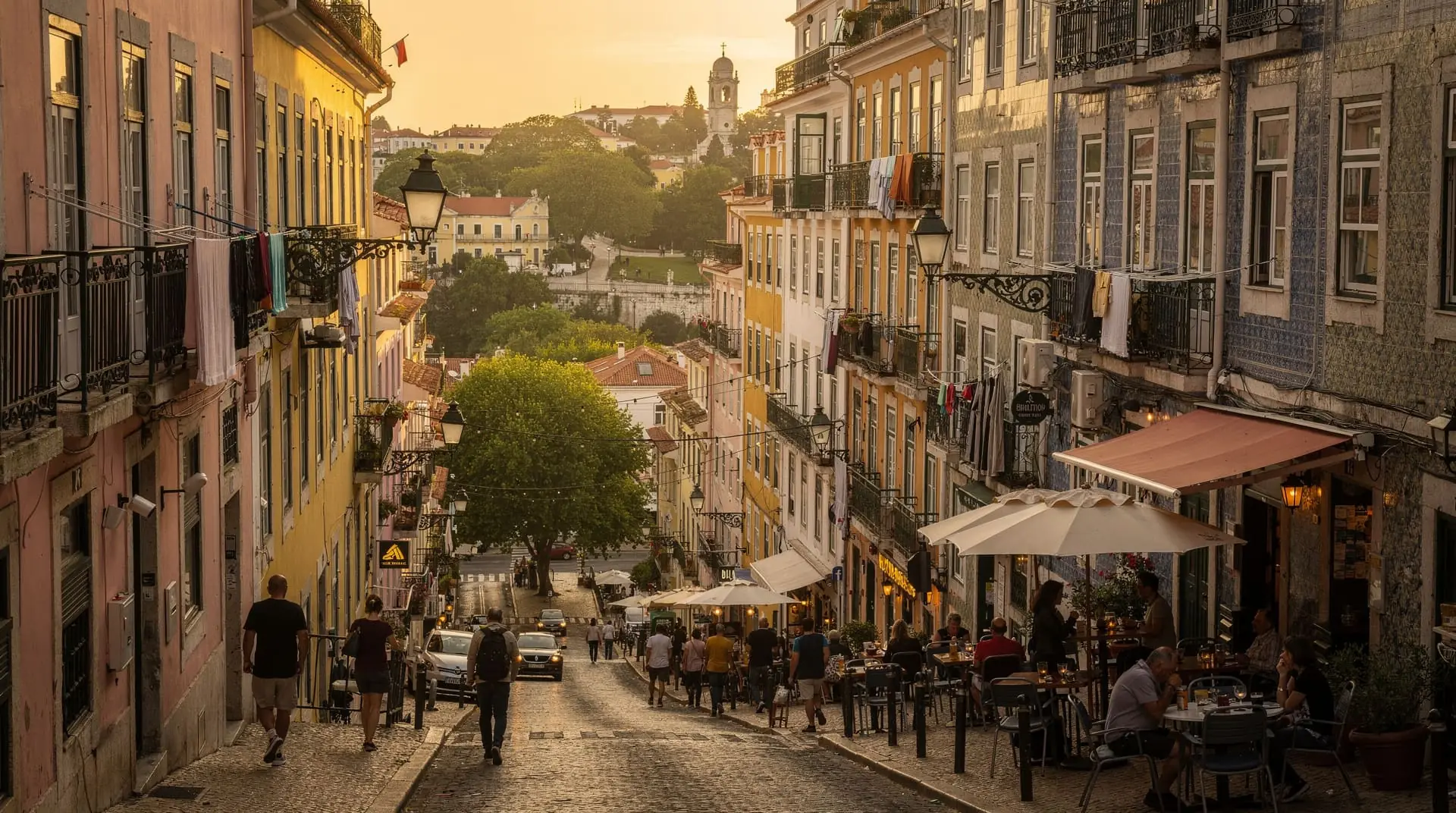
Bairro Alto: day life, nightlife, and the Príncipe Real transition
Bairro Alto by day: vintage shops, fado houses, and Chiado walks. By night: Lisbon's densest bar strip. Honest guide with no tourist-trap bars.
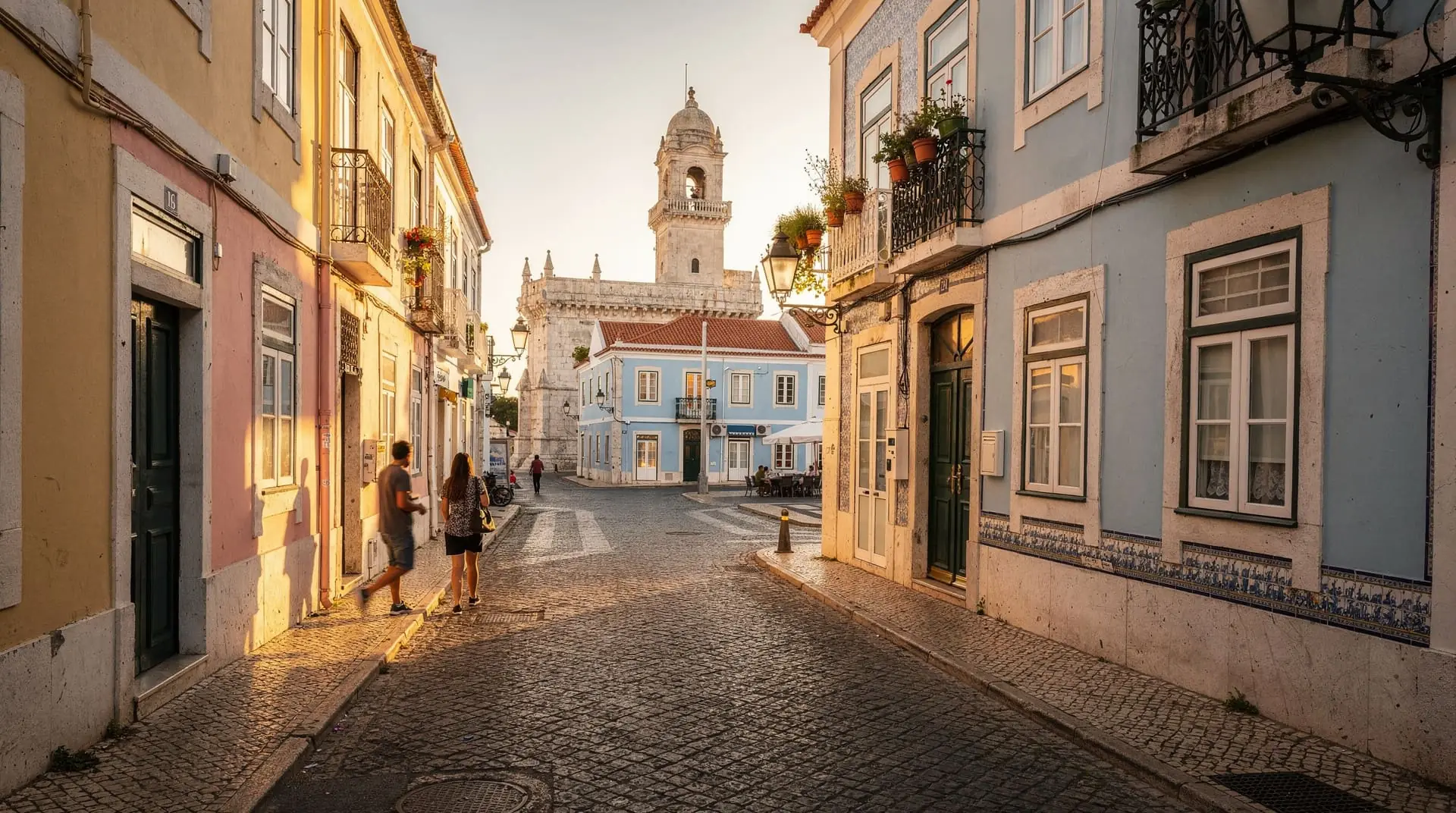
Belém half-day itinerary: Jerónimos, the Tower, MAAT, and pastéis
Plan the perfect half-day in Belém. Tram 15E logistics, Jerónimos Monastery, Belém Tower queues, MAAT gallery, Pastéis de Belém, and where to eat.
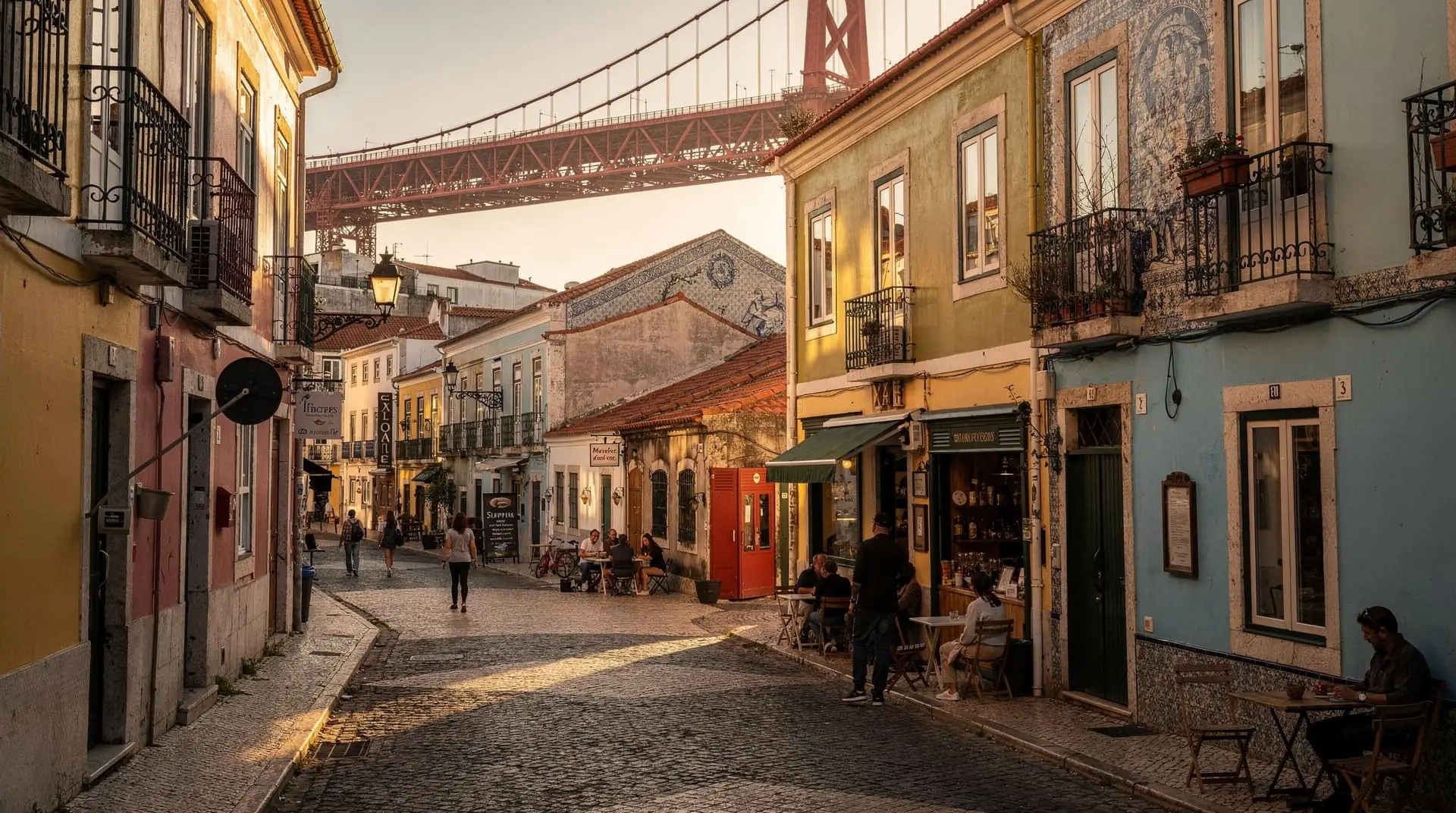
LX Factory: Alcântara's creative complex under the bridge
LX Factory in Alcântara: Ler Devagar bookshop, Sunday market, brunch spots, weekend nightlife, and the 25 de Abril bridge overhead. Everything to know.
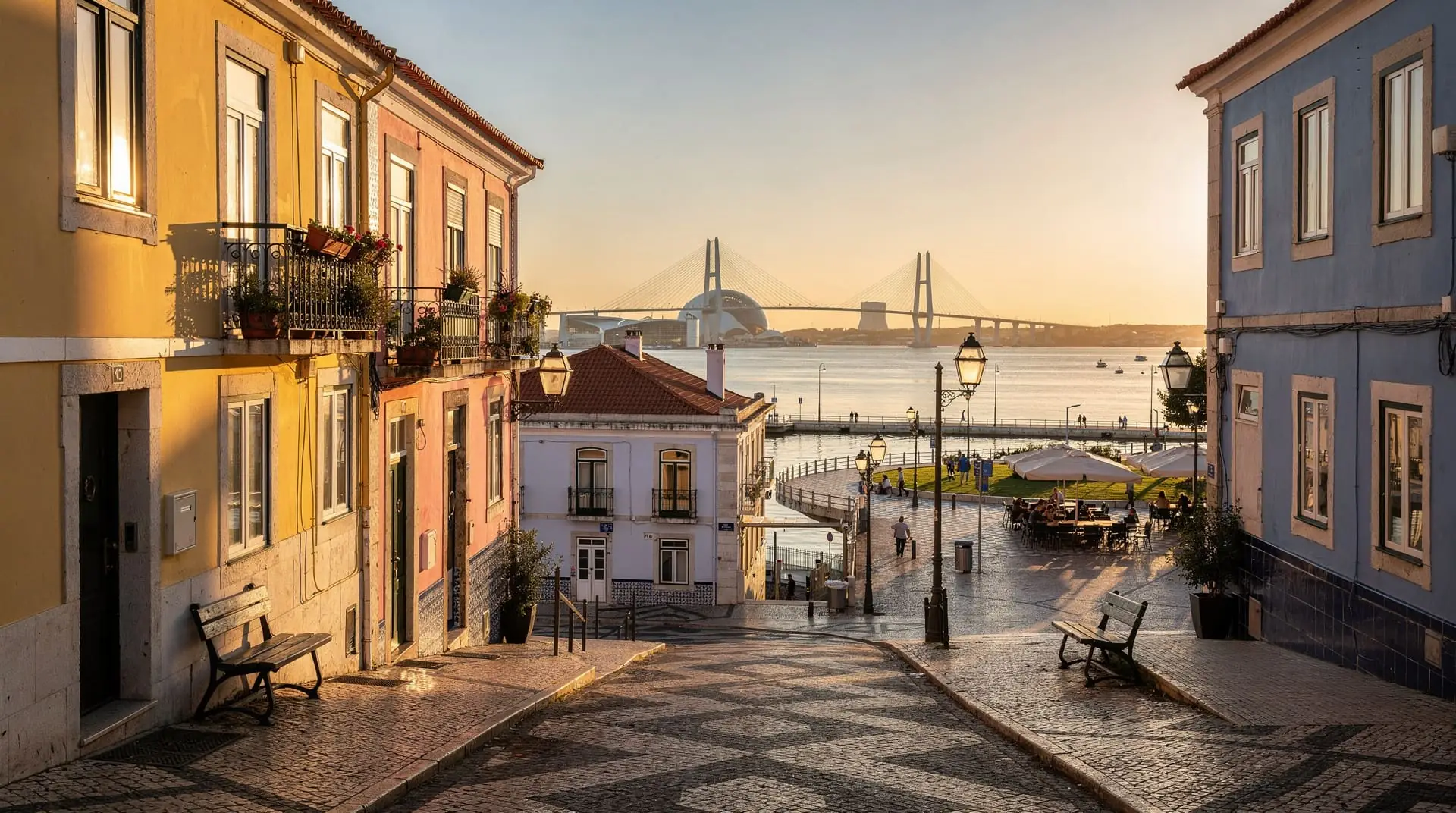
Parque das Nações: Expo '98 district, Oceanário, and the Vasco da Gama bridge
Parque das Nações was built for Expo '98 and remains Lisbon's most contemporary quarter. Oceanário, Telecabine, casino, Vasco da Gama bridge views.
Ready to book? Top tours for this guide
We earn a small commission if you book through GetYourGuide — at no extra cost to you. Every tour is hand-picked and verified.
Lisbon: 48-Hour Hop-On-Hop-Off Bus Tour and Oceanarium Entry
Lisbon: MAAT Entry Ticket & Dolphin Watching Boat Tour
Lisbon: Alfama, Mouraria Walking Tour with Fado Night, Tapas
Lisbon: Hop-On Hop-Off Bus Tour
Lisbon: 1-or 2-Day Hop-On Hop-Off Bus Tour