
The restaurant couvert charge in Lisbon: what it is and how to refuse it
Last reviewed
What is the couvert charge in Portuguese restaurants and can I refuse it?
The couvert is bread, butter, olives and sometimes cheese placed automatically on your table when you sit down. Each item is charged separately — typically €1.50-4 per person for bread, €2-5 for olives. You can legally refuse: say 'Não, obrigado, não vamos pedir o couvert' and the waiter will remove everything. You are legally entitled to refuse; the charge does not apply to items you declined.
| What it is | An automatic per-person charge for bread, olives and extras |
| Typical cost | around €2–6 per person, more in tourist areas |
| Is it legal | Yes — but you can refuse before eating |
| How to refuse | Say so as soon as items arrive, or when seated |
| Highest risk areas | Alfama, Belém, Rossio, Praça do Comércio waterfront |
What is actually happening at your table
You sit down at a Lisbon restaurant. Within 90 seconds, the waiter brings a basket of bread, a small dish of butter or olive oil, and a bowl of olives. Sometimes there is a small plate of tinned fish, or a wedge of cheese. Nobody says anything; nobody asks if you want these things. You eat some bread while you look at the menu.
The bill arrives. On it: “Couvert — €12.00.”
The four items on the table cost €3 per person. You are four people.
This is the couvert, and it happens to thousands of tourists in Lisbon every day.
How the couvert system works
The couvert (the word comes from French and originally referred to the complete table setting — cutlery, napkin, glassware) has in Portugal evolved into a pre-meal food charge. The key features:
It is placed without asking. The waiter does not say “would you like some bread?” They simply bring it. This removes the decision point and places the psychological burden on the customer to refuse a gift that is already on the table.
Each item is charged separately. A basket of bread is not free with the olives. Olives are not included with the bread. The bill itemises: “Pão €6.00 / Azeitonas €4.00” (Bread €6 / Olives €4, at a table of two where bread was €3/person). Some restaurants charge by the portion (one basket shared by the table); others charge per person.
The prices are not always visible. Portuguese law requires couvert prices to be listed on the menu. Not all restaurants comply — particularly tourist-facing restaurants near monuments where the menu is an iPad in 12 languages and the couvert price is buried in fine print.
The practice is legal. This is important: the couvert is not a scam in the legal sense. It is a restaurant practice that is transparent in the fine print and disclosed (eventually) on the bill. What makes it function like a trap is the automatic placement, the absence of verbal disclosure, and the asymmetry of information between the tourist who doesn’t know what they are looking at and the waiter who knows exactly.
The prices in detail (Lisbon, 2026)
| Couvert item | Typical range | High-tourist-area range |
|---|---|---|
| Bread and butter per person | €1.50-2.50 | €2.50-4.00 |
| Olives (per portion, 1 bowl) | €2.00-4.00 | €3.50-6.00 |
| Tinned sardines (plate) | €3.50-6.00 | €6.00-10.00 |
| Tinned tuna in olive oil | €3.00-5.00 | €5.00-8.00 |
| Cheese (portion) | €4.00-7.00 | €7.00-12.00 |
| Charcuterie (plate) | €5.00-9.00 | €8.00-15.00 |
A table of 4 at a tourist-area restaurant near Alfama who eat all items placed in front of them:
- Bread: €4 x 4 = €16
- Olives: €4 (one shared bowl)
- Tinned fish: €8 (one plate)
- Total: €28 before a single menu item is ordered
This is not exceptional. This is Tuesday afternoon in Alfama.
How to refuse: the exact script
The best moment to refuse: As soon as the waiter moves toward the table with the bread basket. Or proactively, when you are seated, before anything arrives.
What to say (choose one):
In Portuguese: “Não, obrigado, não vamos pedir o couvert.” (Nown, oh-bree-GAH-do, nown VAH-mohs peh-DEER oh coo-VAIR)
In English: “No thank you, we won’t be having the couvert.”
Either works. Most waiters at tourist-facing restaurants understand the English version. The Portuguese version is appreciated and sometimes triggers a warmer interaction for the rest of the meal.
What happens next: The waiter takes the bread back. Nothing arrives on the table that you did not order from the menu. No couvert line appears on the bill.
If items were already partially eaten: You are responsible for items you consumed. The dispute is only about items you explicitly refused and did not eat. If bread was placed on the table, you ate two pieces, and then said “actually we did not order the couvert” — you will still owe for the bread, and rightly so.
When the couvert is worth accepting
The couvert is not always a bad deal. At some restaurants, the items placed are genuinely high quality:
- Serra da Estrela cheese (a PDO-protected runny sheep’s milk cheese, extraordinary) as part of a €10 couvert at an upscale Lisbon restaurant: fair value
- Hand-sliced presunto (Portuguese cured ham) with good bread at an Alentejo restaurant in Intendente: worth the €4-6
- Premium olive oil and high-quality sourdough at a modern restaurant in Príncipe Real: a reasonable pre-meal
In these cases, asking the waiter “what does the couvert include and what does it cost?” before accepting gives you the information to decide. Most honest restaurants will tell you directly and clearly.
How to identify restaurants where this will be a problem
High risk:
- Near Alfama (on the main tourist circuit, not the side streets)
- Within 200 metres of Jerónimos Monastery, Belém Tower, São Jorge Castle
- Along the Praça do Comércio waterfront restaurants
- On Rua das Portas de Santo Antão (the “restaurant street” north of Rossio)
- Any restaurant where the menu is primarily presented via iPad with multiple language flags
Lower risk:
- Neighbourhood restaurants in Mouraria, Intendente, Mouraria, Arroios, Graça that are not on the tourist circuit
- Lunch spots with a handwritten prato do dia (daily special) on a chalkboard
- Cervejarias (beer halls) focused on local clientele
- Spots where the menu is in Portuguese only and does not translate prices into other currencies
The couvert and the bread: a philosophical note
Portugal has a genuine bread culture. The bread in most Lisbon restaurants — a sourdough roll or a corn bread (broa) — is legitimately good. The olive oil served alongside it at upscale restaurants is frequently excellent (Alentejo and Trás-os-Montes extra virgin). There is a genuine argument that good bread and good oil are worth paying for.
The problem is not the practice of charging for bread. The problem is the information asymmetry — the automatic placement without disclosure, the absence of verbal mention, and the menu placement that obscures the price. A restaurant that announces its couvert, describes what is included, and charges a fair price is operating legitimately. A restaurant that silently places items and hopes you will not check the bill is exploiting the knowledge gap.
The difference in behaviour is visible in the bill: one restaurant lists “couvert (optional, refused)” with a €0 charge; another lists “couvert €24” with no indication that the option to refuse existed.
Eating Lisbon: food and cultural walking tour — real restaurants with local guides The heart of Lisbon food tour: Baixa, Chiado and Bairro AltoOther automatic charges to watch for in Lisbon restaurants
Descartáveis (disposables): Some restaurants charge €0.20-0.50 for paper napkins or individually wrapped utensils — a COVID-era charge that has persisted in some places. Rarely more than €1/person; rarely disclosed proactively.
Água da torneira (tap water): You are entitled to free tap water in Portuguese restaurants if you ask for it. Saying “pode trazer água da torneira, se faz favor?” (Could you bring tap water, please?) is your legal right and saves €2-5/person on bottled water.
Taxa de serviço (service charge): Service is not automatically added to bills in Portugal (unlike the UK’s discretionary service charge). Tipping is genuine and optional — 10% at restaurants is appreciated, 5% acceptable for shorter meals, nothing for coffee.
Frequently asked questions about the couvert in Portuguese restaurants
What is the Portuguese word for “free” if I want to check?
“Grátis” or “gratuito” means free. Asking “isto é grátis?” (is this free?) about items placed on your table is completely appropriate.
Do supermarket restaurants and food courts have couperts?
No. Galp stations, Pingo Doce restaurants, Continente cafeterias and similar chain/self-service operations do not practice the couvert. Time Out Market vendors and market stalls similarly do not.
Is the couvert charged per table or per person?
Varies by restaurant. Some charge per table (one bowl of olives = one charge regardless of party size). Others charge per person (bread = €2/person x 4 = €8). The per-person model is more common at tourist-facing restaurants; the per-portion model at neighbourhood places.
My restaurant bill includes a couvert charge I was not told about. What do I do?
Ask to see the menu’s couvert price listing (it should be there by law). If the couvert was placed without your consent, point this out. In most cases the restaurant will reduce the charge. If they will not, you can pay under protest, note the restaurant name, and file a complaint with the Livro de Reclamações (Complaints Book) — every Portuguese business is legally required to have one and to provide it on request.
Does the couvert at fado houses work differently?
At fado restaurants, the couvert is sometimes included in the set menu price (most do fixed-price dinner-and-show packages). At informal fado venues like Tasca do Chico, no food service is offered — just drinks and petiscos that you order deliberately. See our fado house comparison for specific venue details.
Group dining and the couvert
The couvert becomes a bigger issue at larger tables, since the per-person charges multiply quickly and the social pressure to refuse politely gets harder with more people at the table. If you’re organising dinner for a group of six or more, it’s worth designating one person to speak to the waiter about the couvert before anything is placed — a single clear “não vamos pedir o couvert, obrigado” from one person covers the whole table, rather than leaving it ambiguous and hoping everyone declines individually as items arrive. This matters more at set-menu family-style restaurants common in Alfama, where couvert items are sometimes brought per table rather than counted per person, making the total harder to predict from the menu alone.
How this fits Lisbon’s wider tourist-trap landscape
The couvert is one of several small, legal-but-exploitative practices that concentrate around Lisbon’s most-visited sights, and it’s worth understanding it alongside the others rather than in isolation. Overpriced tuk-tuk quotes, restaurants with picture-menus and no locals inside, and inflated taxi fares from the airport share the same underlying pattern: transparency drops as tourist density rises. See the Lisbon tourist traps guide for the fuller list, and the taxi airport scam guide if you’re arriving by air and want to avoid the equivalent issue on your first ride into the city.
Budgeting around the couvert
If you’re tracking costs carefully — see Lisbon travel budget for the wider picture — the couvert is a genuine line item worth planning for even if you intend to refuse it most nights. Budget €0 if you plan to decline consistently, but expect the occasional evening where the bread and olive oil are good enough to be worth the €3–5 per person. Building “couvert: usually declined, occasionally €10–20 for the table” into a daily food budget is more realistic than assuming zero, since even confident refusers sometimes accept a well-made couvert at a sit-down dinner.
Where to eat without worrying about it
The most reliable way to sidestep couvert anxiety entirely is to eat where the practice is rare in the first place. Time Out Market vendors, the neighbourhood tascas covered in the cheap eats guide, and the bifana and petiscos spots in the bifana and petiscos guide all operate on order-what-you-want service with no automatic table charges. Pair this guide with the where to eat in Lisbon guide for a fuller restaurant strategy that avoids both the couvert and the wider tourist-trap pricing patterns.
Related guides
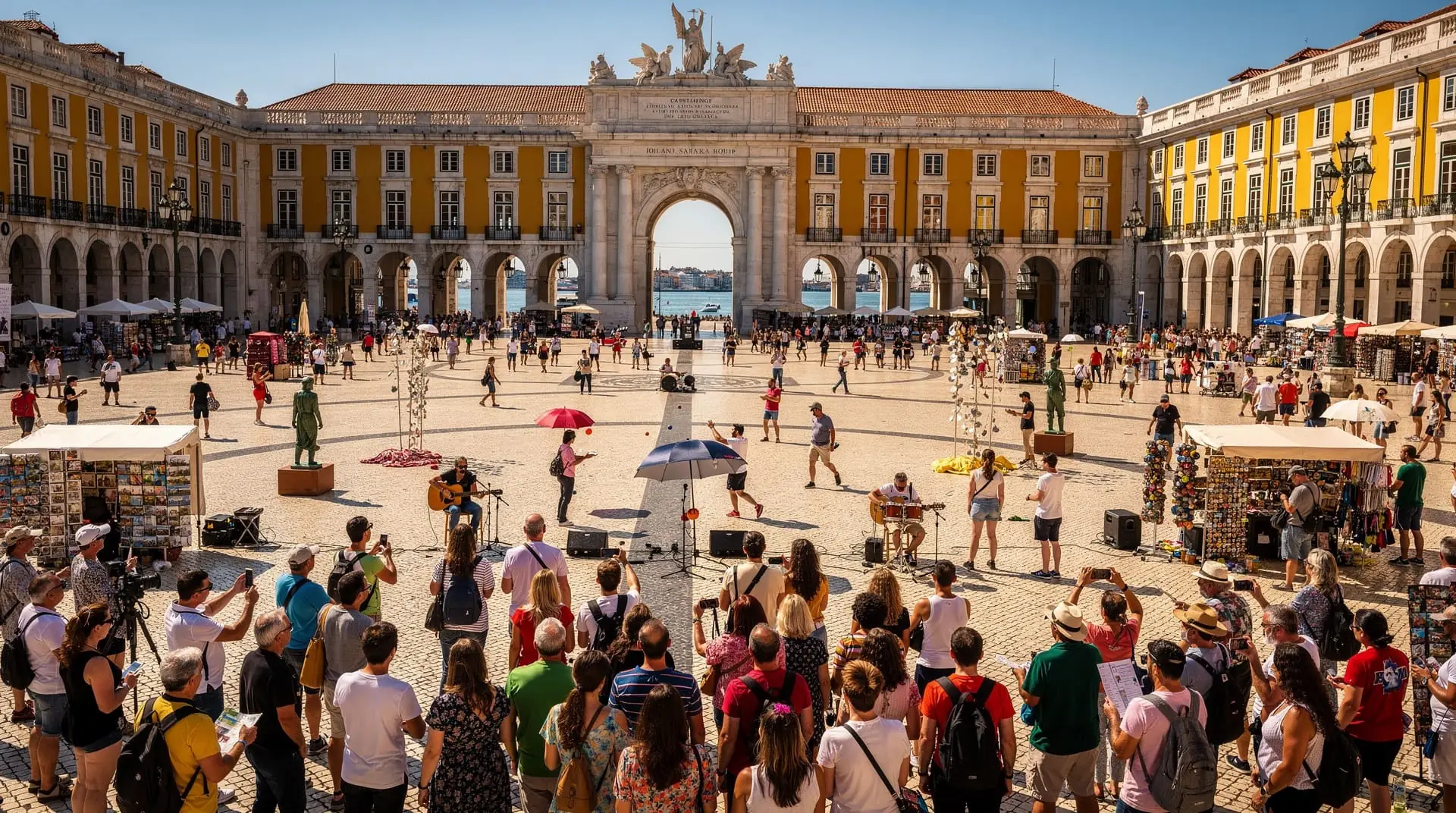
Lisbon tourist traps: the master list (and how to avoid each one)
The complete honest guide to Lisbon's tourist traps: couvert scam, fake fado, tram 28 pickpockets, airport taxis, Belém queues and more. Real advice.
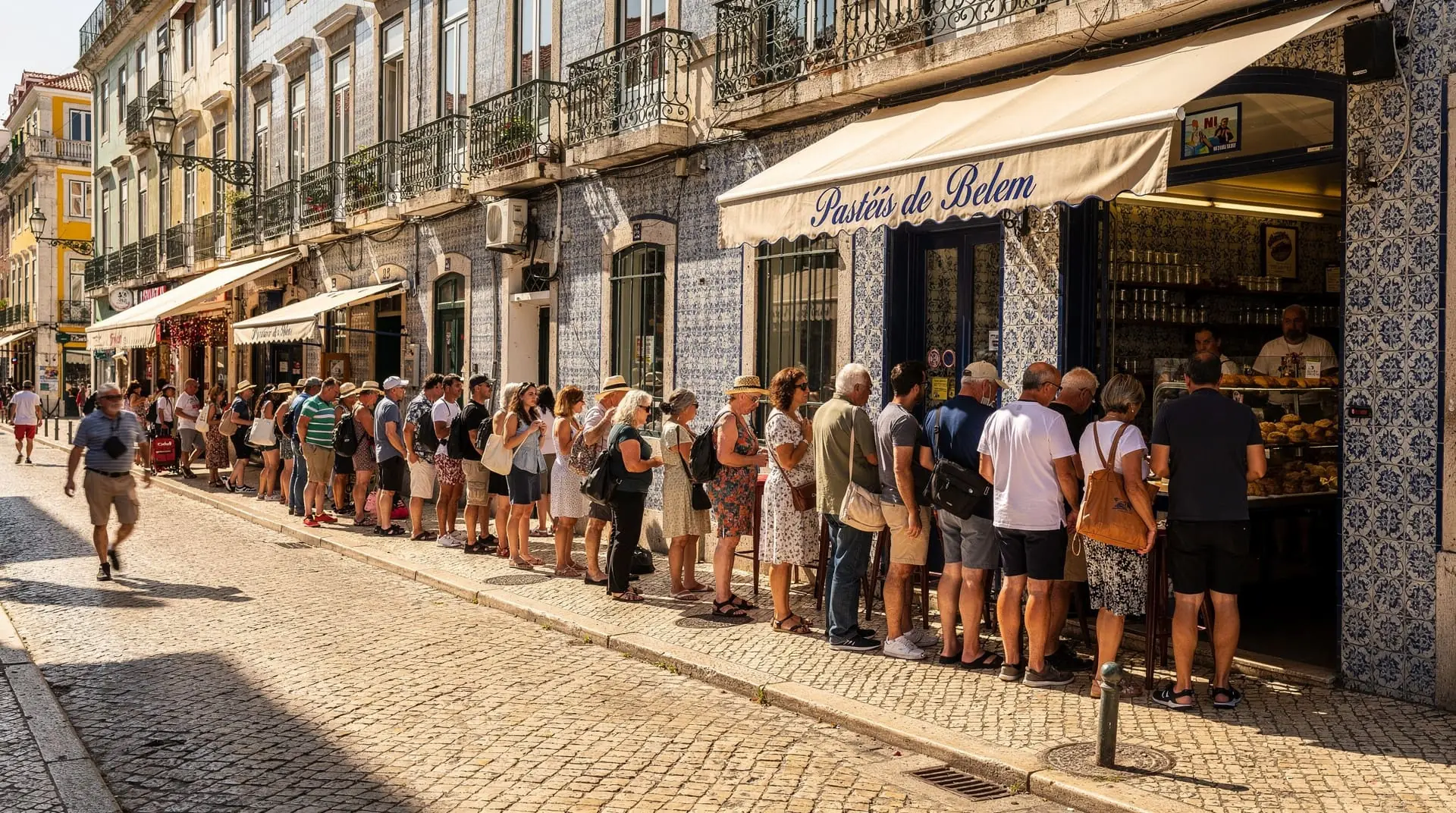
Pastéis de Belém queue: how to beat it and whether it's worth it
The real strategy for the famous Pastéis de Belém custard tart queue — which counter to use, when the wait is zero, and whether Manteigaria is actually better.
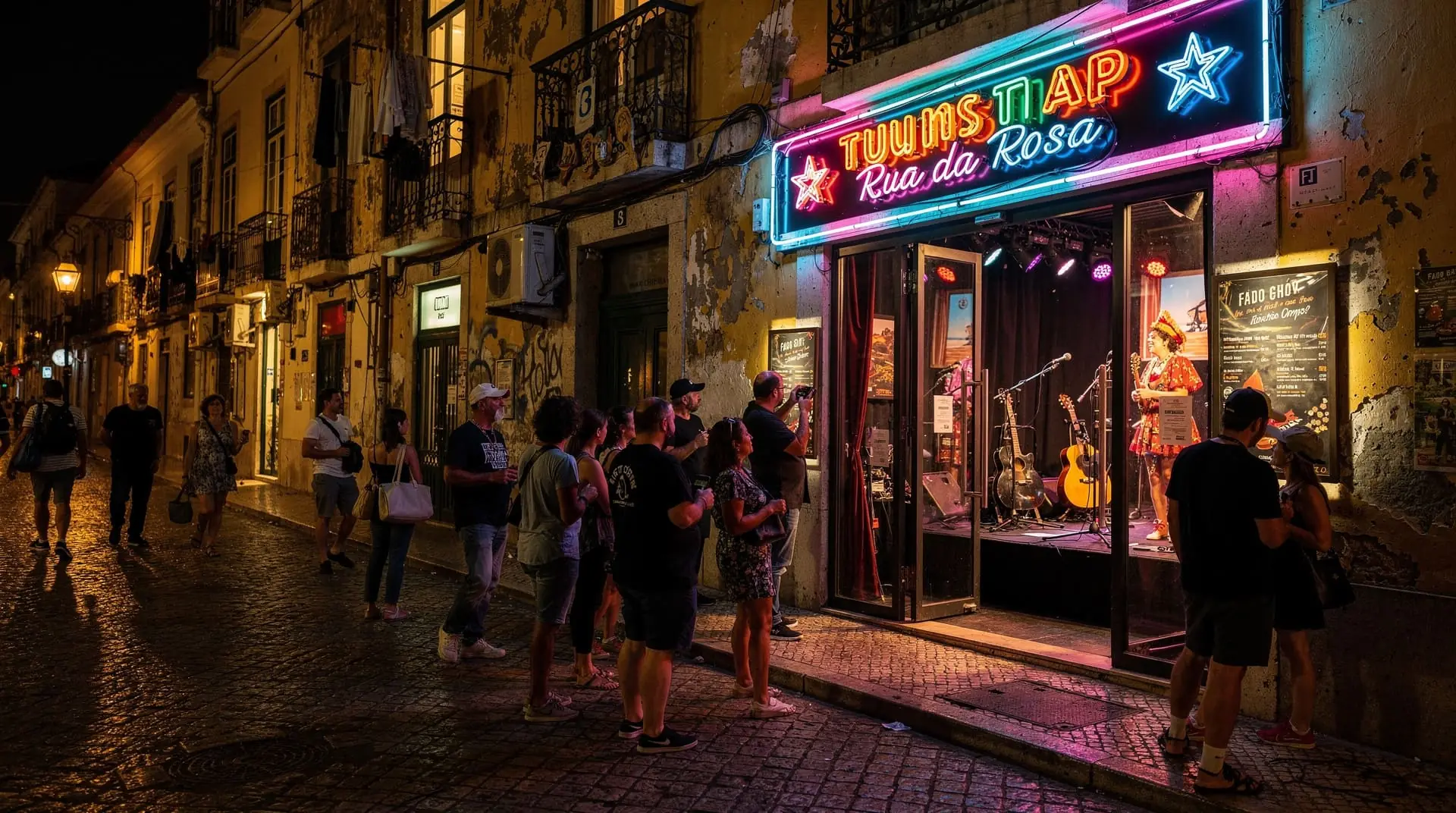
Fake fado in Lisbon: how to spot it and where the real thing is
How to identify tourist-trap fado near Rossio and Restauradores — location, pushy doormen, set menus. Where authentic fado actually happens in Lisbon.

Overrated attractions in Lisbon: honest skip-if-tight list
The Santa Justa lift, Elevador da Bica, tram 28 mid-day — honest takes on which Lisbon attractions disappoint relative to their effort and cost.
Ready to book? Top tours for this guide
We earn a small commission if you book through GetYourGuide — at no extra cost to you. Every tour is hand-picked and verified.

Lisbon: 48-Hour Hop-On-Hop-Off Bus Tour and Oceanarium Entry
Lisbon: MAAT Entry Ticket & Dolphin Watching Boat Tour
Lisbon: Alfama, Mouraria Walking Tour with Fado Night, Tapas
Lisbon: Hop-On Hop-Off Bus Tour
Lisbon: 1-or 2-Day Hop-On Hop-Off Bus Tour