Fake fado in Lisbon: how to spot it and where the real thing is
Last reviewed
How do I tell real fado from a tourist trap in Lisbon?
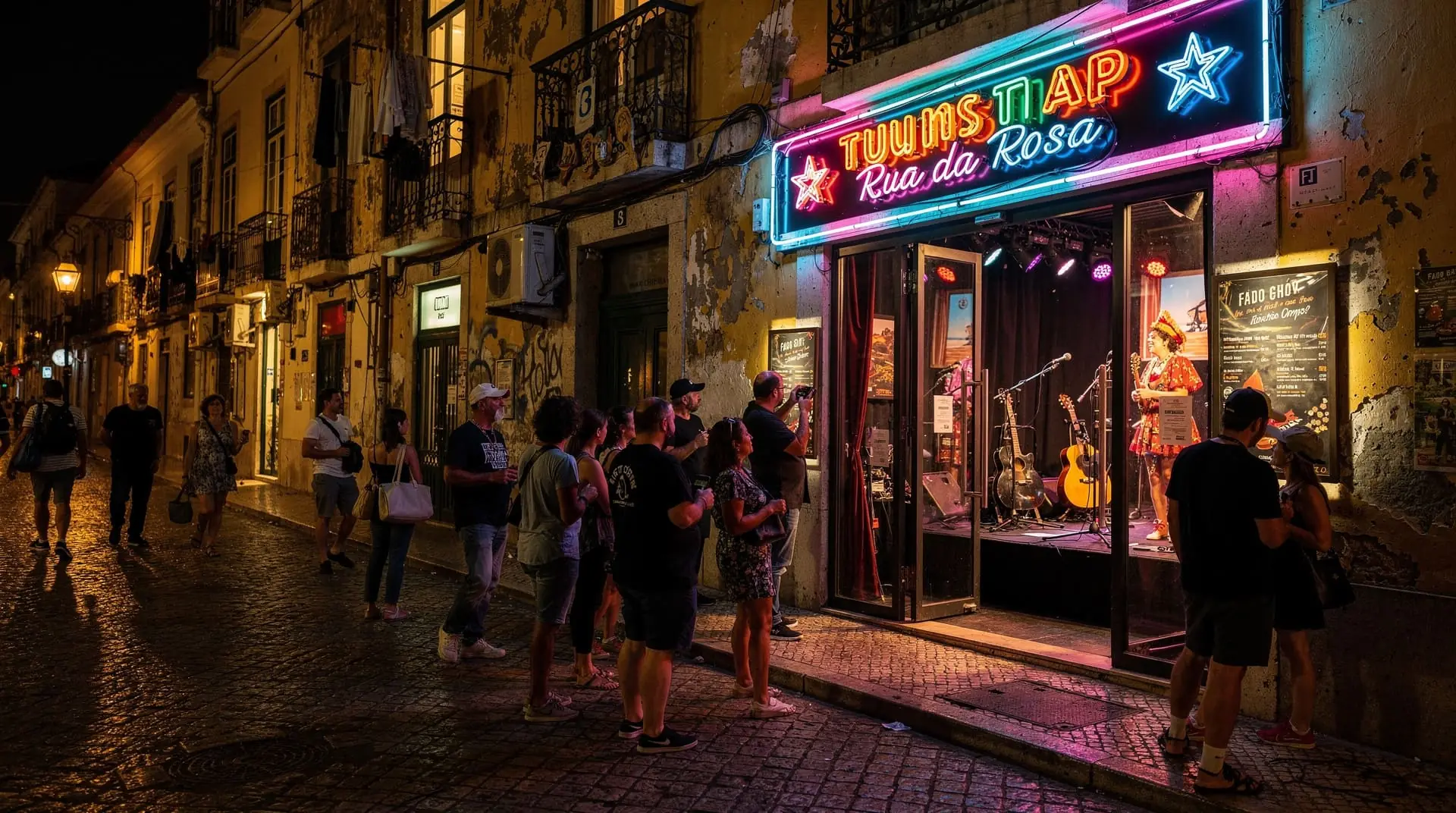
Location is the primary signal: real fado is in Alfama, Mouraria and Bairro Alto, not near Rossio or Restauradores. Real fado venues do not have doormen recruiting tourists on the pavement. Real fado requires advance reservations, not street-level walk-in. Set menus with fado included as a fixed 45-minute segment are almost always tourist operations.
Fado is Lisbon’s most copied export
Fado — the music of longing, technically demanding, emotionally precise — was born in Alfama and Mouraria in the early 19th century. It was designated UNESCO Intangible Cultural Heritage in 2011. It has also, in the decade since that designation, been reproduced in dozens of tourist-facing operations that have the visual elements of fado without the substance.
This guide tells you exactly how to identify the difference before you spend €80 on an experience that sounds Portuguese but is not really fado.
| Real fado is in | Alfama, Mouraria, Madragoa, Bairro Alto |
| Fake fado clusters in | Near Rossio, Restauradores, Rua das Portas de Santo Antão |
| Real fado price | €15-80 per person, itemised menu |
| Fake fado price | €60-90, set menu, no itemised pricing |
| Key tell | Doorman recruiting on the pavement = tourist trap |
Where fake fado concentrates
The geography is reliable. Fake fado (or tourist-facing fado of negligible authenticity) clusters in three areas:
Near Rossio station and Praça dos Restauradores: This is the busiest pedestrian area of central Lisbon and the location of the most visitor-facing restaurants in the city. The fado venues here have doormen positioned on the pavement, laminated menus in multiple languages, and walk-in availability for same-day bookings. None of these features exist in real fado houses.
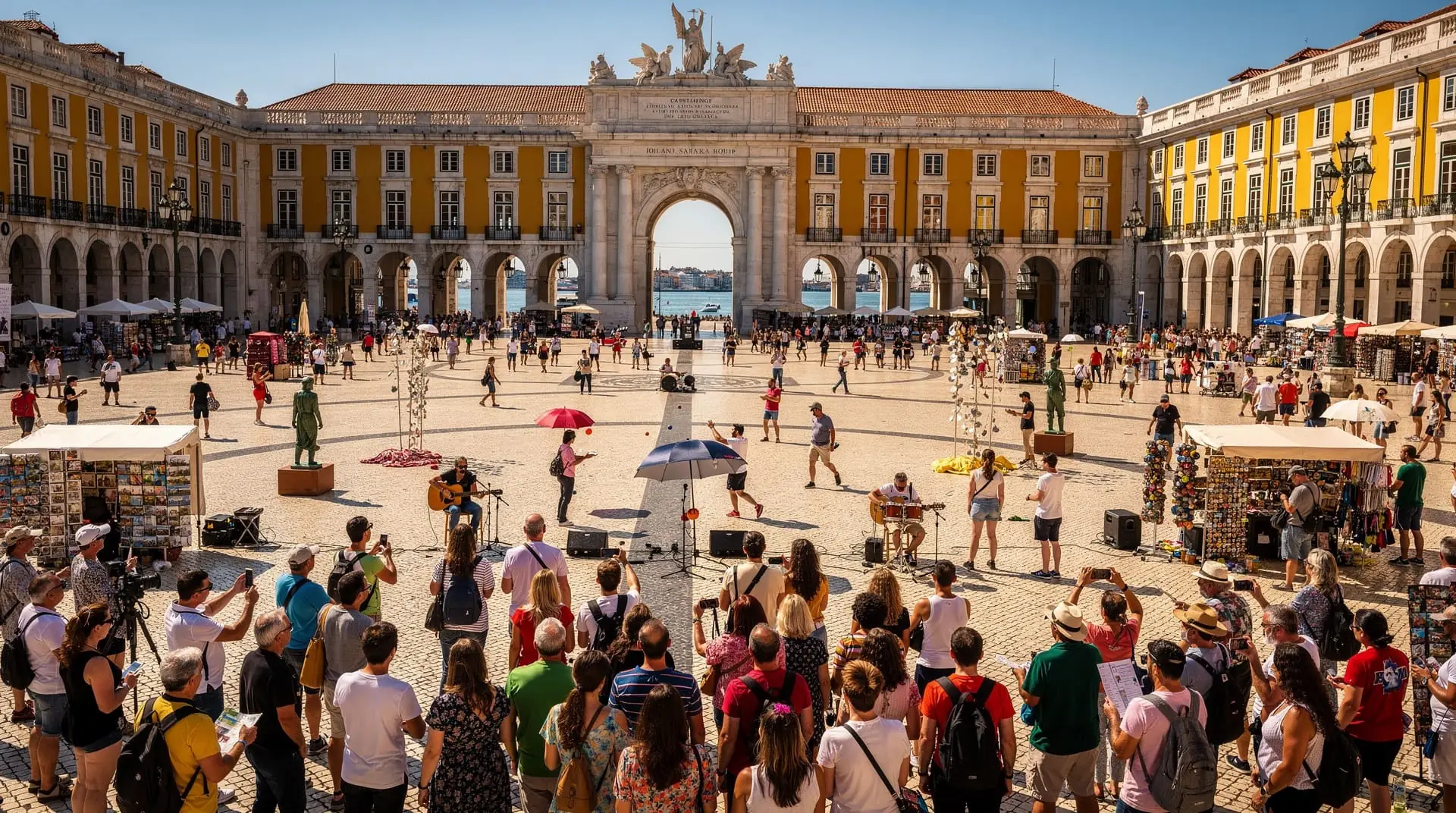
Near Praça do Comércio and the waterfront: Similar profile — high tourist traffic, walk-in bookings, set menus, English-dominant clientele.
On the Rua das Portas de Santo Antão (the “restaurant street” north of Rossio): This street is packed with tourist restaurants, some of which offer “fado nights.” The standard here is very low.
Real fado happens in: Alfama (the hilltop neighbourhood east of Baixa), Mouraria (directly below São Jorge Castle), Madragoa (southwest Lisbon, near the Estrela basilica), and Bairro Alto (though Bairro Alto venues trend more upscale and tourist-facing than Mouraria).
The six signals of a tourist-trap fado house
Signal 1: Street recruitment
If someone approaches you on the pavement outside a restaurant and describes the fado dinner experience, hands you a menu, or actively tries to bring you inside, this is the primary signal. Real fado venues do not need to recruit customers. They have waitlists. They take reservations by phone. The contrast with the Rossio doorman could not be more stark.
Signal 2: Walk-in availability during peak season
Authentic fado venues in Alfama (Mesa de Frades, Parreirinha de Alfama) book out weeks in advance in July and August. Any fado venue that offers walk-in seats during peak season in summer is running at tourist capacity, not capacity-for-authentic-experience. This is not an absolute rule — off-season and midweek, some real venues have availability — but in summer, a table for tonight is a red flag.
Signal 3: Fado listed as a fixed-duration entertainment segment
“Fado show — 8pm to 9pm” is not how fado works. Real fado continues as long as the audience and the fadista are engaged — the better the response, the longer a singer will stay in a song. Fado as a timed performance slot (with interval drinks sales) is a tourist-show model. Real fado is more like jazz — iterative, responsive, extended when the room is alive.
Signal 4: No Portuguese clientele
Walk past a restaurant at 9pm and look through the window. If you see 40 people and 40 of them are obviously tourists (behaviour, clothing, selfie frequency), this is not where Lisboetas come to hear their music. Authentic fado houses have some Portuguese customers even when they are primarily tourist-facing. The ratio matters.
Signal 5: Set menus only, no itemised ordering
Tourist fado operations typically sell a single package: dinner + show for €70 per person. There is no ordering, no menu browsing — you pay the fixed price and you get whatever the set menu is that night. This is a margin-maximising model, not a restaurant model. Real fado houses have individual menus and individual prices.
Signal 6: The price is much higher than necessary
€80-90 per person for dinner and fado near Rossio. Compare: Mesa de Frades in Alfama, €50-70, better food, real artists, intimate setting. Tasca do Chico in Mouraria, €20, authentic vadio. The tourist venue markup is not delivering a superior experience — it is capturing tourist price insensitivity.
Where real fado actually is in 2026
Tasca do Chico — Rua do Diário de Notícias 39, Mouraria. The most authentic budget option. 24 seats, phone reservations only (+351 965 059 670), €15-25 minimum spend, open Tuesday-Saturday from 8pm. Vadio format — singers take turns, quality varies, ceiling is very high.
Parreirinha de Alfama — Beco do Espírito Santo 1, Alfama. Old-school neighbourhood joint, professional fadistas, plain room, genuinely local atmosphere. Phone reservations (+351 218 868 209). €35-55 per person.
Mesa de Frades — Rua dos Remédios 139A, Alfama. Small, tiled chapel interior, professional artists, intimate and well-regarded. Best all-round option. Book online at mesadefrades.com, 1-2 weeks ahead in summer. €50-75 per person.
Clube de Fado — Rua de São João da Praça 92-94, Alfama. Larger, more restaurant-like, reliable professional quality. Book at clubedefado.com. €55-80 per person with dinner.
Zé da Mouraria — Rua João do Outeiro 24, Mouraria. Extremely local, inexpensive, unofficial vadio some nights. Go prepared for a neighbourhood bar experience rather than a curated event.
Lisbon: fado night with dinner in a real Alfama fado house Lisbon: Alfama tour and live fado with traditional dinnerThe music itself: what to listen for
If you are attending fado for the first time, knowing what to listen for helps distinguish the real from the rehearsed.
Real fado:
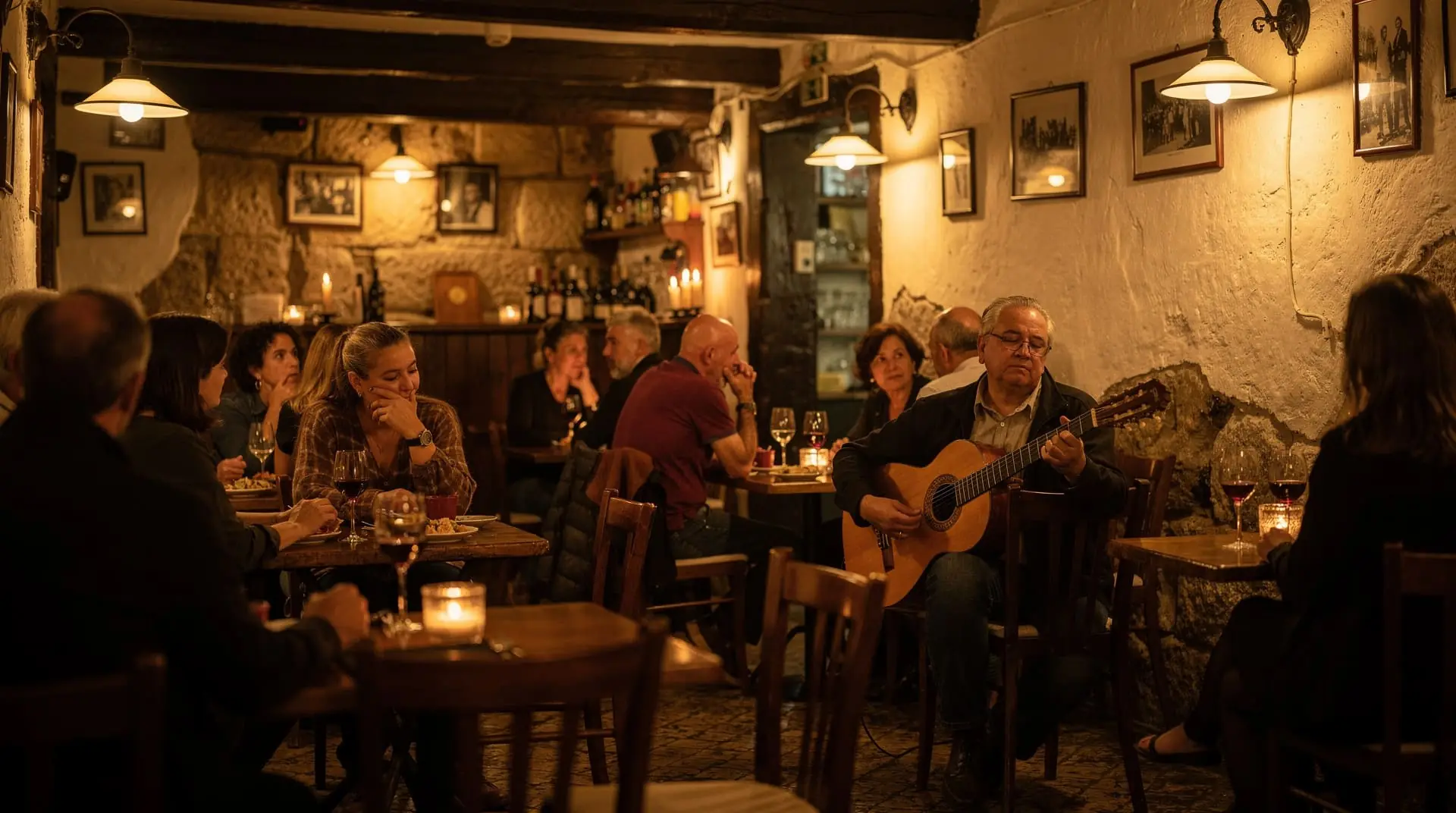
- The room goes genuinely silent when the fadista begins — no one is chatting over the music
- The fadista’s relationship with the guitarists is visible — they adjust to each other in real time
- A particularly good phrase from the singer draws audible sounds from the audience (a kind of “ooh” — sometimes “olha”)
- The length of each song varies — some are extended when the audience responds; others are cut short if the energy is wrong
- The emotion is visible in the singer’s body — eyes closed, hands tense, posture engaged
Tourist-show fado:
- Applause is programmed (the lighting cue, the bow, the next singer already in position)
- Background noise from the kitchen and waiter service continues during the music
- The set runs to an exact timeline
- Some audience members are filming on phones without concern for the singer’s reaction (in a real fado house, this is frowned upon)
Fado and the Santo António festival
Every June, Lisbon celebrates Santo António — the Lisbon patron saint’s day on the 13th, but the festivities run throughout the month. Sardinhada (grilled sardine street parties), marchas populares (traditional neighbourhood processions) and fado are all part of the festival. Alfama becomes the centre of it.
During Santo António, free outdoor fado performances happen on street corners, in courtyards and from windows throughout Alfama. This is the single best opportunity to hear genuine fado in an unscripted context. The singers are sometimes amateurs, sometimes professionals who come down from their apartments to join in. The atmosphere is unlike anything in a fado house.
See Santo António festival guide for dates, locations and practicalities.
Lisbon: devour the best of fado and food in AlfamaFrequently asked questions about fake fado in Lisbon
Is the fado at tourist restaurants completely fake?
Not technically — the singers are usually real humans performing live. “Fake” means: performers hired as entertainers rather than artists performing for love of the music; an audience that is 100% tourists who do not know what they are hearing; and an experience designed to capture tourist spending rather than to transmit fado culture. The music is live but the context is a costume.
Can I see fado on a budget without going to a tourist trap?
Yes. Tasca do Chico charges €15-25 minimum spend. Zé da Mouraria is a neighbourhood bar where fado sometimes happens for the price of a drink. The Santo António festival in June is free. Budget fado options exist; they require advance planning.
Is Amália Rodrigues’s influence visible in modern Lisbon fado?
Amália Rodrigues (1920-1999) is considered the defining fadista of the 20th century, credited with taking fado from neighbourhood taverns to international stages. Her influence on modern Lisbon fado is pervasive — the repertoire at most fado houses includes her signature songs. A casa where no one acknowledges Amália is operating in a bubble.
Are any fado houses near Rossio legitimate?
There are a small number of mid-range venues near Rossio that operate with professional standards rather than tourist-trap mechanics — but they are rare. The Rua das Portas de Santo Antão strip is almost entirely tourist-facing. If you are committed to eating near Rossio, check Google reviews specifically for mentions of authenticity from Portuguese reviewers (not only English-language tourists).
What is the difference between Lisbon fado and Coimbra fado?
Coimbra fado is a distinct tradition — traditionally performed by men, associated with university academic culture (Coimbra has one of Europe’s oldest universities), and more formally structured. Lisbon fado can be sung by men or women, is more rooted in working-class neighbourhoods, and has historically involved rawer emotional expression. Both are UNESCO-listed; Lisbon fado is what you will find in Alfama.
Should I tip the fadistas?
It is customary in informal vadio settings (like Tasca do Chico) to leave cash on the table or in a small tray that circulates — typically €5-10 per person if the singer was good. At formal fado restaurants (Mesa de Frades, Clube de Fado), the tip is included in the minimum spend or is left as part of the overall restaurant tip. A tip of 5-10% is appreciated and appropriate.
How to check a venue before you commit
Beyond the six signals above, a few quick checks before booking catch most tourist-trap operations:
Search the venue name plus “fado” on a review platform and filter for Portuguese-language reviews. A venue with dozens of glowing English reviews and almost no Portuguese ones is telling you who it is actually built for.
Look for a phone number rather than only an online booking widget. Genuine tascas like Tasca do Chico and Parreirinha de Alfama still take reservations by phone — a sign the operation is small enough to be personally run, not a volume tourism business.
Check whether the menu lists individual prices. A restaurant that only offers a single “dinner and fado” package price with no itemised food menu is optimised for margin, not for diners choosing what they actually want to eat.
Cross-reference the address against Alfama, Mouraria, Madragoa or Bairro Alto. If the venue is not in one of those four areas, treat the fado claim with real scepticism regardless of how it is marketed. The fado house comparison guide covers the specific venues worth booking in detail, fado in Alfama gives the wider neighbourhood context for why location is such a reliable signal, and fado dinner shows breaks down the dinner-and-music format specifically if that is what you are booking.
Related guides
Lisbon tourist traps: the master list (and how to avoid each one)
The complete honest guide to Lisbon's tourist traps: couvert scam, fake fado, tram 28 pickpockets, airport taxis, Belém queues and more. Real advice.
The restaurant couvert charge in Lisbon: what it is and how to refuse it
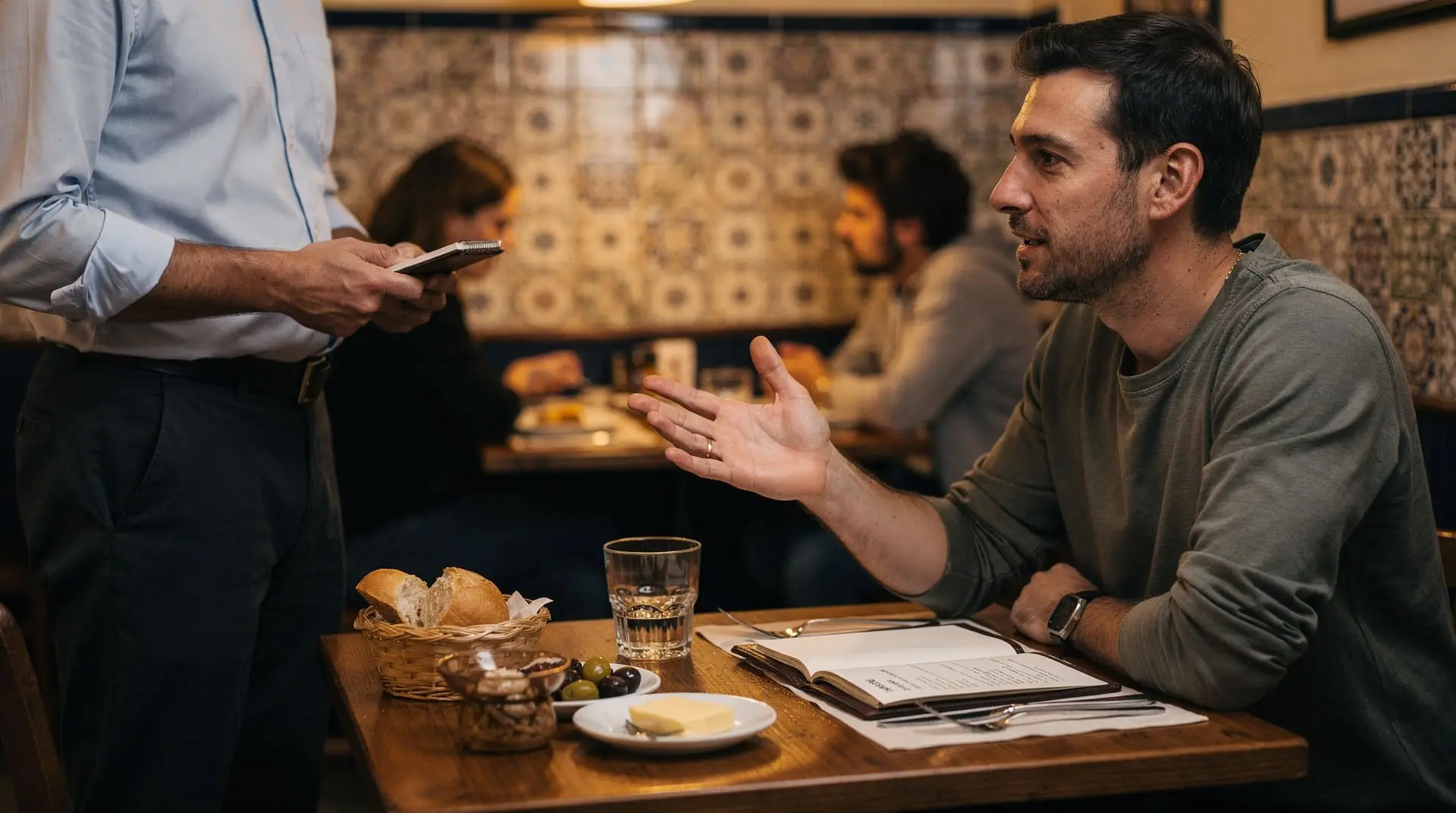
The bread and olives placed on your table at Lisbon restaurants are not free. They are the couvert charge — €3-8 per person. Here is exactly how to refuse it.

Lisbon airport taxi scams: what they are and how to avoid them
Lisbon airport taxi overcharging is real and preventable: broken meters, fixed flat fares, route padding. How to pay the right price.
Fado houses compared: which one should you book?
Side-by-side comparison of Lisbon's main fado venues: atmosphere, price, quality and tourist-trap risk. Honest picks for every budget.
Ready to book? Top tours for this guide
We earn a small commission if you book through GetYourGuide — at no extra cost to you. Every tour is hand-picked and verified.

Lisbon: 48-Hour Hop-On-Hop-Off Bus Tour and Oceanarium Entry
Lisbon: MAAT Entry Ticket & Dolphin Watching Boat Tour
Lisbon: Alfama, Mouraria Walking Tour with Fado Night, Tapas
Lisbon: Hop-On Hop-Off Bus Tour
Lisbon: 1-or 2-Day Hop-On Hop-Off Bus Tour