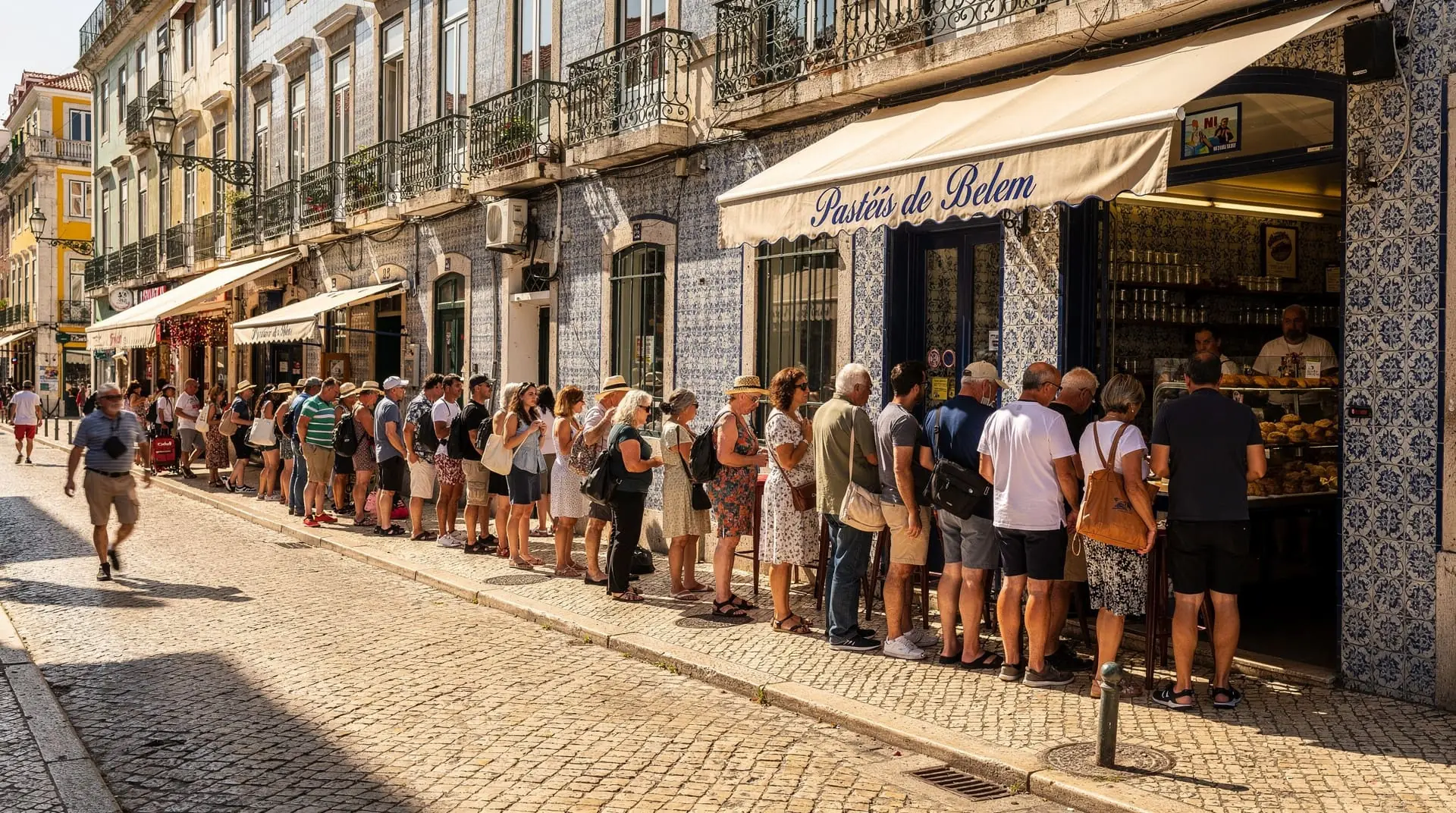
Pastéis de Belém queue: how to beat it and whether it's worth it
Last reviewed
How long is the queue at Pastéis de Belém and how do I skip it?
The eat-in queue can be 30-60 minutes in summer. The takeaway counter on the right side of the entrance (as you face the building) has a near-zero queue almost any time — you buy pre-boxed pastéis at the same price (€1.50 each) and eat outside. Arrive before 10am or after 4pm to avoid any wait. Manteigaria in Chiado is a tested alternative with no queue.
| Where | Rua de Belém 84-92, next to Jerónimos Monastery |
| Price | €1.50 each, €9 for 6, €18 for a dozen |
| Zero-queue trick | Use the takeaway counter on the right of the entrance |
| Worst times | Weekends 11am-3pm, July-August |
| Best times | Before 10am weekdays, or after 4pm |
The actual situation at Pastéis de Belém
Pastéis de Belém, at Rua de Belém 84-92 in the Belém neighbourhood, has been selling custard tarts since 1837. The recipe — a derivative of the egg-custard pastries made by monks at the adjacent Jerónimos Monastery — is proprietary. The bakery claims 20,000 pastéis per day at peak capacity. In July and August on a weekend, you will believe that number when you look at the queue.
The queue problem is structural: the restaurant is large (over 300 covers in multiple tiled rooms) but the service model is slow — waiters, menus, ordering, paying per table. The tourist volume in summer exceeds the restaurant’s throughput capacity, so the queue backs up outside.
The solution has been available since the beginning: the takeaway counter.
The takeaway counter strategy
Where it is: Standing on the pavement facing the main entrance of Pastéis de Belém, the takeaway counter is through the door on your right. There is a small sign; if in doubt, look for the counter with pastéis stacked in boxes rather than a host waiting to seat you.
What you get: Pre-boxed pastéis in quantities of 6 (€9), 12 (€18) or individually (€1.50 each). The pastéis are the same product — same recipe, same kitchen, same flaky cinnamon-dusted output. They come in a white and blue box. You can ask for them in a paper bag if you prefer.
Queue at the takeaway counter: Nearly zero in most conditions. Even on a Saturday in August when the eat-in queue is 40 people deep, the takeaway counter typically has 5-8 people in line, moving quickly.
Where to eat them: The esplanade in front of Jerónimos Monastery, 100 metres away, is a large open paved area with benches, pigeons, and the correct backdrop. The custard tart eaten warm at 10am, with a coffee bought from the café near the monastery entrance, is a very good breakfast. Cinnamon and powdered sugar sachets are included in the box.
What makes a pastel de Belém different from a pastel de nata
The distinction is real, though marketers exaggerate it.
Pastel de Belém: Made only at Fábrica de Pastéis de Belém, the specific bakery on Rua de Belém. Slightly larger than the standard de nata, with a notably flakier, more laminated pastry shell. The custard filling uses a proprietary spice blend (cinnamon, likely vanilla, possibly lemon zest — the exact formula is not disclosed). Served dusted with cinnamon and powdered sugar on request.
Pastel de nata: The generic term for the custard tart style made everywhere else in Portugal and, by now, the world. By law, only Fábrica de Pastéis de Belém can label its product “pastel de Belém.” Every other bakery sells “pastel de nata,” even when the recipe is nearly identical.
The practical difference: In a blind tasting, experienced tasters can often — but not always — identify the Belém version by the pastry texture. The custard at Manteigaria is arguably more consistent (Belém has high volume variability; rush periods lead to overtiming on some batches). Most first-time visitors find both excellent. Most experienced visitors have a slight preference for one or the other based on personal texture preference.
Pastéis de Belém vs. Manteigaria, compared
| Pastéis de Belém | Manteigaria | |
|---|---|---|
| Location | Belém only | Chiado, Time Out Market, Rua Augusta |
| Price | €1.50 each | €1.40-1.50 each |
| Queue | Long at peak times (eat-in) | Short in most conditions |
| Pastry style | Larger, flakier, secret spice blend | Thinner, crispier base |
| Best if | You’re already doing Belém sightseeing | You’re in central Lisbon and don’t want to travel |
When to go to avoid any queue at all
Before 10am on weekdays: The bakery opens at 8am. Tuesday to Friday before 10am, the eat-in queue is 5-15 minutes. The takeaway counter is near-instant.
After 4pm: Tourist flux drops as afternoon activities wind down and people begin thinking about dinner. The queue shortens considerably.
November to February: Off-season volumes are a fraction of summer. A midweek December visit may have no queue at all.
The worst times: Saturday and Sunday 11am-3pm in July-August. Any public holiday during tourist season. The queues on these occasions can reach 60-80 people for the eat-in section.
The Manteigaria alternative
Manteigaria was founded in 2014 in Chiado as a dedicated pastelaria focused on a single product: the pastel de nata. Its branches (Rua do Loreto 2 in Chiado, Mercado da Ribeira/Time Out Market, Rua Augusta) are open from 8am daily.
What it offers:
- Pastéis de nata served fresh from the oven in continuous batches (you can sometimes see them being pulled from the ovens through the bakery window)
- No queue in most conditions (Loreto branch occasionally has 5-10 people)
- Same price as Pastéis de Belém (€1.50 each)
- Stand at the counter or take a seat
- Quality is consistently excellent and arguably more consistent than Belém
The honest comparison: Manteigaria’s pastéis de nata have a slightly thinner, crispier pastry base. The custard is well-set and richly flavoured. Most tasters rate them as equal to Pastéis de Belém in blind comparison. Some prefer Manteigaria; some prefer Belém. The definitive answer is to try both.
If you are in Chiado rather than Belém, Manteigaria on Rua do Loreto is the obvious choice. No pilgrimage to Belém required.
Where this fits among Lisbon’s other food experiences
The Pastéis de Belém queue is one of the most-discussed examples of a genuine Lisbon highlight surrounded by avoidable friction — a pattern that shows up elsewhere in the city too. See our Lisbon tourist traps guide and overrated attractions guide for other places where the crowd-to-value ratio needs managing rather than avoiding entirely. For the pastel de nata more broadly across Portugal, our pastéis de nata guide covers the wider bakery landscape, and cheap eats in Lisbon and Lisbon food tours both cover complementary food experiences if pastries are only one part of your culinary trip.
Worth combining with the Belém visit
The queue situation does not mean you should skip Belém. The neighbourhood deserves 3-4 hours regardless of custard tarts. The pastéis issue is specifically about queue management, not about whether Belém is worth visiting.
Belém core itinerary:
- Pastéis de Belém (takeaway counter, before the crowds)
- Jerónimos Monastery (€10 entry, pre-book or arrive at opening at 10am)
- Belém Tower (€8, pre-book, best from outside if queue is long)
- Coach Museum (€8, underrated and usually queue-free)
- LX Factory, 15 minutes east (Sunday market, weekend brunch)
See the Belém half-day itinerary for how to sequence the pastéis stop against the monastery and tower, and the Jerónimos Monastery guide for the full history of the building whose monks originated the recipe.
Lisbon: Belém walking tour with Jerónimos Monastery ticket Lisbon: bike tour from Lisbon to Belém with liquor and pastryFreshness and how to tell a good batch
The single best indicator of quality at either bakery is temperature: a pastel de nata pulled from the oven in the last 10-15 minutes has a warm, slightly wobbly custard and a shatteringly crisp pastry edge, while one that has sat at room temperature for an hour is noticeably denser and less impressive. Both Pastéis de Belém and Manteigaria bake in continuous batches throughout the day, so if you have a choice, ask (or watch through the kitchen window at Manteigaria) rather than grabbing the first box handed to you. This single habit does more for your enjoyment than choosing between the two bakeries.
The baking class option
If your trip is about the process as much as the product, consider one of the pastel de nata baking classes. Several Lisbon cooking schools run 2-3 hour sessions where participants make the full recipe — laminated pastry, egg custard, baking and timing — and eat the results.
Quality varies significantly by operator. The best classes use real Portuguese ingredients (Flor de Sal, local eggs) and a chef who explains the history alongside the technique.
Lisbon: pastel de nata masterclass at a real bakeryFrequently asked questions about the Pastéis de Belém queue
Is the eat-in experience at Pastéis de Belém worth the queue?
In reasonable weather and off-peak timing, the eat-in experience is pleasant: tiled rooms, wooden tables, the option of cinnamon and powdered sugar, and a coffee. If the queue is under 15 minutes, it is worth it. If it is over 30 minutes, use the takeaway counter.
Do they serve anything other than custard tarts at Pastéis de Belém?
Yes — the café section serves coffee, fresh orange juice, and some savoury options. But the tarts are 98% of the reason to be there.
Can I buy pastéis de nata at Lisbon airport?
Yes, at multiple airport cafés. The quality ranges from mediocre to decent. Do not make your first taste of pastéis de nata an airport version — have one in the city first.
Are there pastéis de nata shops near my hotel?
Almost certainly, if your hotel is anywhere near the city centre. Padaria Portuguesa (a local bread-and-pastry chain) has good pastéis; local neighbourhood pastelarias usually have acceptable to good versions. Manteigaria’s Chiado branch is 10-15 minutes by tram or Uber from most Lisbon hotels.
What is the price of a pastel de nata in 2026?
Standard: €1.30-1.60 at most Lisbon cafés. Touristy areas near monuments may charge €2.00-2.50. Pastéis de Belém and Manteigaria charge €1.50, which is a fair price for their quality.
Is the Belém neighbourhood safe?
Yes. Belém is one of Lisbon’s safest and most pleasant neighbourhoods for tourists — riverside, flat, open spaces. The main risks are tram-28 adjacent (the 15E tram to Belém can be crowded) and basic tourist-area pickpocketing on busy days. The same precautions apply: bag in front, phone in front pocket.
Do they ship pastéis de Belém internationally?
The bakery does not ship internationally due to the product’s 3-day shelf life. You can bring them home in your hand luggage (they travel in their box for up to 3 days at room temperature). Several Lisbon online shops ship pastéis de nata in vacuum-sealed form — these are technically fine but not the same product.
Related guides

The restaurant couvert charge in Lisbon: what it is and how to refuse it
The bread and olives placed on your table at Lisbon restaurants are not free. They are the couvert charge — €3-8 per person. Here is exactly how to refuse it.
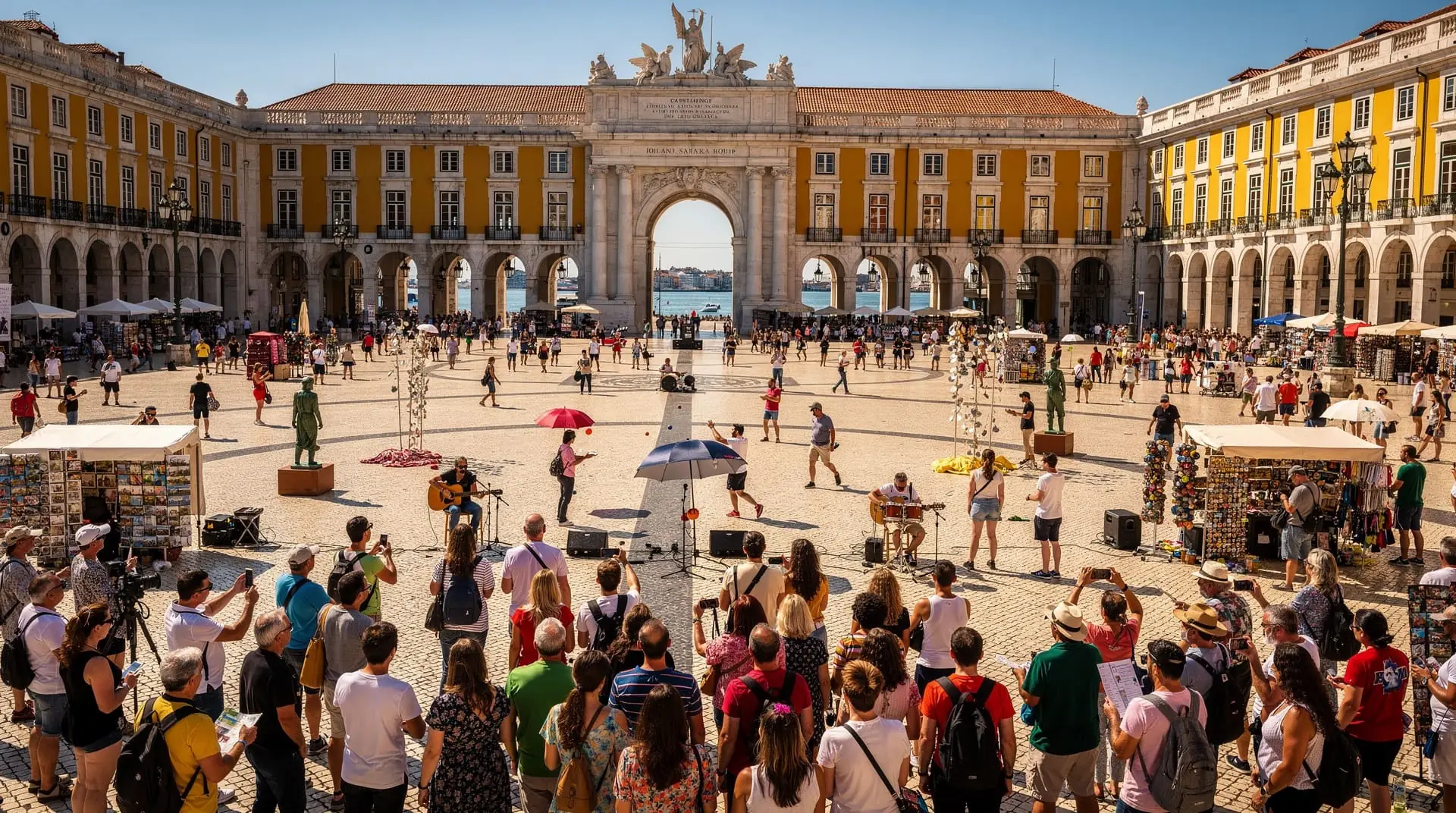
Lisbon tourist traps: the master list (and how to avoid each one)
The complete honest guide to Lisbon's tourist traps: couvert scam, fake fado, tram 28 pickpockets, airport taxis, Belém queues and more. Real advice.
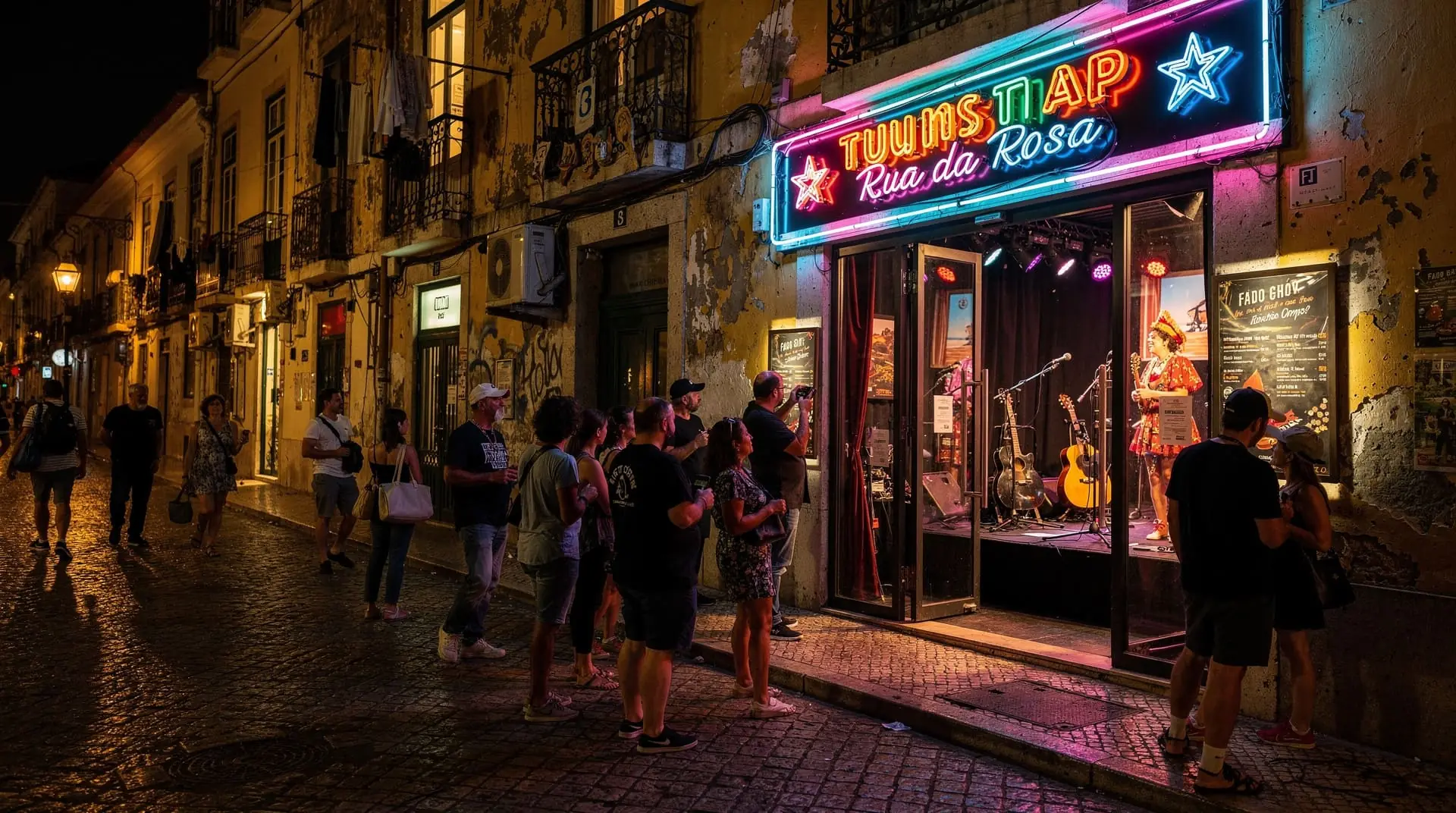
Fake fado in Lisbon: how to spot it and where the real thing is
How to identify tourist-trap fado near Rossio and Restauradores — location, pushy doormen, set menus. Where authentic fado actually happens in Lisbon.

Overrated attractions in Lisbon: honest skip-if-tight list
The Santa Justa lift, Elevador da Bica, tram 28 mid-day — honest takes on which Lisbon attractions disappoint relative to their effort and cost.
Ready to book? Top tours for this guide
We earn a small commission if you book through GetYourGuide — at no extra cost to you. Every tour is hand-picked and verified.

Lisbon: 48-Hour Hop-On-Hop-Off Bus Tour and Oceanarium Entry
Lisbon: MAAT Entry Ticket & Dolphin Watching Boat Tour
Lisbon: Alfama, Mouraria Walking Tour with Fado Night, Tapas
Lisbon: Hop-On Hop-Off Bus Tour
Lisbon: 1-or 2-Day Hop-On Hop-Off Bus Tour