
First-time Lisbon tips — 25 things worth knowing before you go
Last reviewed
What should I know before visiting Lisbon for the first time?
Pack comfortable shoes — the hills are relentless on any footwear with less than a centimetre of sole. Book Sintra tickets in advance if going in summer. Do not eat the bread and butter at restaurant tables unless you want it charged (the couvert rule). Tram 28 is a pickpocket hotspot — hold your phone. Book fado dinners in advance. The sun stays up until 21:00 in summer, so plan evenings outdoors.
| Ideal trip length | 3-5 days |
| Must book ahead | Sintra palace tickets, fado houses |
| Cost level | Moderate — cheaper than Paris/Rome, pricier than a decade ago |
| Getting around | Metro + Viva Viagem card, Uber/Bolt for hills |
| Biggest first-timer mistake | Overscheduling and underestimating the hills |
Before you go
1. Book Sintra tickets in advance — seriously
Pena Palace tickets sell out on summer weekends and busy weekdays. Quinta da Regaleira sells out. Do not assume you can buy on arrival. Book online at sintra.pt at least 3 days ahead in shoulder season, 1-2 weeks ahead in July and August. There is no workaround.
2. Download Uber or Bolt before you fly
Having the app installed and payment set up before you land removes stress at the airport and throughout the trip. Lisbon airport Wi-Fi is slow; downloading an app in arrivals takes longer than it should.
3. Wear proper shoes — every day
The calçada portuguesa (Portuguese cobblestones) look beautiful in photos and are brutal on feet. The hills have gradients of 15-20%. On a hot day, walking from Baixa to Alfama and back via viewpoints involves the equivalent of climbing a medium mountain. Soft-soled trainers or good walking sandals. Not ballet flats. Not brand-new smart shoes. Not flip-flops.
4. Pack a light layer even in summer
The Tagus breeze makes Lisbon evenings cooler than the daytime temperature suggests, especially on the waterfront and at hilltop miradouros. A light cardigan or compact windproof jacket earns its packing space every evening.
5. Book fado shows in advance
The best fado houses (Clube de Fado, Mesa de Frades, O Faia) book up days or weeks ahead. If fado is important to your visit, secure your reservation before you arrive. Walk-in fado shows near Rossio and the cruise ship terminal are often lower quality — see the best fado houses guide for what to avoid.
Lisbon fado night with dinner in a typical fado house — book online to guarantee your table at an authentic venue.
Transport tips
6. The Viva Viagem card is non-negotiable
Buy it at the metro station on arrival (€0.50 + top-up). It is the cheapest and most flexible way to use metro, bus, tram, and funicular. Paying cash on board every time costs significantly more. See the Viva Viagem guide.
7. Tram 28 is not public transport — treat it like a tourist experience
Tram 28E is iconic, picturesque, and a genuine pickpocket hotspot. If you want to ride it, do so with your phone in an inner pocket and your bag closed. Avoid standing near the doors in the Alfama section. For actual transport on the tram 28 route, bus 737 is faster, less crowded, and pickpocket-free. Read the tram 28 guide before boarding.
8. Uber is faster than walking most hills
The hills between Baixa and Alfama, or between Cais do Sodré and Bairro Alto, are steep enough that an €5-7 Uber is a legitimate alternative to a sweaty 15-minute climb with bags. Use it when it makes sense.
9. The metro does not go to Alfama or Belém
The two most popular tourist destinations lack metro stations. Alfama is 20 minutes on foot from the nearest metro, or a short Uber. Belém is reached by tram 15E (from Cais do Sodré, 20 minutes) or Uber. Plan accordingly.
10. The airport metro is genuinely good
From Aeroporto station (inside the terminal) to central Lisbon by metro red line: 20-28 minutes, €1.85. It is the honest best option for most arrivals. See the airport to city centre guide for the full options.
Food and restaurants
11. The couvert is not free — and you can decline it
When bread, butter, olives, or small starters appear on your table without being ordered, they are charged individually (typically €1.50-3 each). If you do not want them, send them back immediately. If you eat them, you will pay for them. The restaurant is required by law to remove them if you do not want them. This is not a scam — it is normal Portuguese restaurant practice — but tourists are frequently surprised by the bill.
See the restaurant couvert scam guide for full detail.
12. Lunch is the main meal — use it
Portuguese lunch culture is exceptional value. Workers’ tascas serve the prato do dia (dish of the day: soup, main, bread, sometimes dessert, water) for €8-12. This is often the best meal of the day. Plan a proper tasca lunch and a lighter dinner.
13. Pastéis de nata — Belém queue is optional
The Pastéis de Belém shop has a long queue from mid-morning. The pastéis are excellent — but nearly identical versions exist throughout Lisbon at the padaria on almost every street. There are also very good pastéis at Manteigaria in Chiado, at A Brasileira, and at dozens of neighbourhood bakeries. The queue in Belém is for authenticity; the pastéis on your corner are almost as good and queue-free. Full honesty on the pastéis de nata guide.
14. Ginjinha — drink it standing up
Ginja (cherry liqueur) is a Lisbon tradition drunk standing at the bar from a tiny glass, sometimes with a chocolate cup. A Ginjinha on Largo de São Domingos (near Rossio) is the classic experience: two tiny bars face each other, very cheap (€1.50-2), and very local. See the ginjinha guide.
15. Vegetarians are not well catered for everywhere
Portuguese cuisine is meat and seafood heavy. Vegetarian options improve in Chiado, Príncipe Real, and Santos. Mouraria has vegetarian Indian and South Asian restaurants. Dedicated vegetarian restaurants exist but are not on every street. See the vegetarian Lisbon guide if this matters to your trip.
Sights and experiences
16. Sintra without pre-booked tickets is a wasted day in summer
Arriving at Sintra on a summer Saturday without booked tickets for Pena Palace means either a 1-2 hour queue (sometimes longer) or no entry at all if it sells out. Book online, pick your timed entry slot, and arrive by 09:00 to beat the bus-434 queue too.
17. Miradouros are free and often better than paid viewpoints
Lisbon’s free viewpoints — Senhora do Monte, São Pedro de Alcântara, Portas do Sol, Santa Catarina — often exceed paid options for the panorama they offer. The Elevador de Santa Justa (€5.50) has a queue and a view that miradouros beat for free. Read the best viewpoints guide.
18. Give yourself unscheduled time in Alfama
The best part of Alfama is not any single monument — it is getting accidentally lost in the alleys, hearing fado drift from a doorway, finding a tiled staircase with nobody else there. If you pack every hour of your Alfama visit with sights, you miss the actual point of the neighbourhood.
19. The Time Out Market is fine, not special
The Time Out Market (Mercado da Ribeira) is a well-curated food hall with good vendors. It is also perpetually crowded with tourists, consistently more expensive than the same food elsewhere, and loud. Worth a visit to see what Lisbon’s food scene curates well, but not worth rearranging your day around.
Practical things
20. Don’t take an unmetered taxi from the airport
See the airport guide in full. The tl;dr: anyone who approaches you inside the terminal offering a fixed-price taxi is not a licensed driver. The cream taxis at the rank outside are. The fine for getting this wrong is paying €60 for a €15 journey.
21. The water is drinkable and free
Lisbon tap water is safe and of good quality. Carry a refillable bottle — the hills in summer are genuinely dehydrating. Miradouro cafés charge €2-3 for a small bottle of water. Your hotel tap is free.
22. Pick a neighbourhood to call home and walk it
Rather than ticking monuments on a list, choose one neighbourhood per day and walk it thoroughly: Alfama on day one, Belém-Santos on day two, Chiado-Príncipe Real on day three. You will notice more and feel less rushed.
23. Learn please and thank-you in Portuguese
“Por favor” (please), “obrigado/obrigada” (thank you, male/female speaker), “bom dia/boa tarde/boa noite” (good morning/afternoon/evening). Lisbon’s English level is high — you can navigate entirely in English. But a basic courtesy in Portuguese gets a noticeably warmer response. See the language and etiquette guide.
24. Museum free days exist but are rarely worth planning around
Most national museums offer free entry on the first Sunday of the month until 14:00. The crowds at Jerónimos Monastery on a free Sunday morning make it barely worthwhile. Better to pay the entry fee and go on a Tuesday morning when it is quiet.
25. Plan your day trips early in your trip, not late
Sintra and Cascais are best done on days 2-4 of a trip, not on your last day. Day trips are tiring and take the whole day. Arriving in Sintra and realising your legs are giving out after three days of hills is not ideal. Front-load day trips and use your last day in Lisbon for the neighbourhood wandering and café sitting you did not get to earlier.
The orientation that helps most
Spend an hour on your first afternoon on a walking tour. Not because you need a guide to tell you facts, but because a single 2-3 hour walk with someone who knows the city resets your mental map — you suddenly understand how Alfama relates to Baixa, why the waterfront is where the life is, and which streets to avoid and which to seek out.
Free walking tour of Lisbon — tip-based, departing from Praça do Comércio, daily. The best possible use of a first afternoon.
Best of Lisbon walking tour: Rossio, Chiado, and Alfama — small-group paid option covering all three main neighbourhoods in a single narrative arc.
If you’d rather have a guide entirely to yourself and go deeper into the historic quarters, there’s also a half-day private tour of Lisbon’s heritage and historical quarters.
What nobody tells you before your first Lisbon trip
The restaurant timing thing will catch you out
If you want dinner at 19:00, you will often be eating alone in an empty restaurant or told the kitchen does not open until 20:00. Portuguese dinner is genuinely a later affair. The workaround: either embrace it (19:30-20:00 is when many restaurants open for dinner), eat at tourist-facing restaurants which open earlier, or plan a later, longer dinner as the social event it is meant to be.
Lunch is the opposite. From 12:00-13:00, the tasca fills up completely. Arriving at 13:45 often means a 30-minute wait or no table at all. Aim for 12:00-12:30 at popular lunch spots.
The queue at Belém pastéis is real but optional
The Antiga Confeitaria de Belém (the original Pastéis de Belém) has queues from mid-morning that can run 30-45 minutes. The pastéis are genuinely excellent — the original recipe, secret custard, and a specific texture. But pastéis de nata at Manteigaria (Chiado, no queue), at A Brasileira, and at dozens of neighbourhood bakeries are near-identical in quality. The Belém pastel has historical claim to being the original; whether that is worth a 45-minute queue is a personal decision.
Sintra without a plan is a wasted day
Sintra requires: pre-booked tickets for whichever palaces you are visiting, knowledge of the bus 434 route and its quirks, comfortable shoes, and a rough schedule. Arriving in Sintra spontaneously on a summer weekend afternoon with no tickets and no plan typically results in a pleasant walk through the village and a lot of frustration at sold-out palaces. See the Sintra day trip guide for how to do it well.
Your hotel’s free breakfast is probably not a good use of time
Many mid-range hotels offer breakfast at an extra charge (€10-18 per person) or include it. Unless the hotel breakfast is particularly good, €4-6 at a padaria (bakery) — pastel de nata, coffee, fresh orange juice — is a better and more authentic way to start the day. The time saved can be used to get to the morning’s main sight before the crowd.
The 25 de Abril bridge and the Golden Gate
First-time visitors from North America frequently comment on the resemblance between Lisbon’s 25 de Abril bridge and San Francisco’s Golden Gate. This is not coincidence — both were engineered by the American Bridge Company (the Lisbon bridge was completed in 1966). The differences: the 25 de Abril also carries a railway on its lower deck, it spans the Tagus rather than the Pacific mouth, and it was built by an authoritarian government as a prestige project (named after the 1974 Carnation Revolution that ended that government).
The tiles are everywhere for a reason
The azulejo tiles that cover so many Lisbon buildings are not purely decorative. Before modern waterproofing, glazed tiles protected wall surfaces from the Atlantic humidity and rain while also reflecting heat. The practice of covering entire building facades in blue-and-white or polychrome tiles developed in the 17th-18th centuries and became a defining Portuguese aesthetic. The Tile Museum (Museu Nacional do Azulejo) tells this story properly — worth a half-day. See the azulejo tile museum guide.
Pre-trip checklist for first-time Lisbon visitors
Two weeks before:
- Book accommodation (essential in July-August, very recommended in spring and autumn)
- Book Sintra palace tickets if your trip includes a Sintra day
- Book fado shows if you want a specific venue
- Download Uber and Bolt with payment set up
One week before:
- Check weather forecast and pack accordingly
- Download Google Maps offline for Lisbon
- Notify your bank you will be using your card in Portugal (avoids blocks on overseas transactions)
- Check if your credit card includes rental car insurance (relevant only if you plan to hire a car)
The day before departure:
- Check current Sintra ticket availability if you haven’t booked
- Confirm any restaurant reservations
- Load the CP (train) app if you are going to Sintra or Cascais
On arrival:
- Buy Viva Viagem card at the airport metro station
- Take the metro red line to Alameda and change for your destination
- Check into your hotel, drop bags, and go for that first afternoon walk
For the complete transport picture from airport arrival onward, see the airport to city centre guide. For what to do in your first 24 hours, the Lisbon 1-day itinerary has a realistic single-day structure.
Resources for ongoing planning
- How many days in Lisbon — calibrate your trip length
- Where to stay in Lisbon — neighbourhood comparison
- Lisbon travel budget guide — 2026 cost expectations
- Best time to visit Lisbon — season-by-season breakdown
- Lisboa Card worth-it guide — should you buy it?
- Lisbon safety guide — honest risk assessment
- Day trips from Lisbon — which to prioritise
- Lisbon budget calculator — personalised cost estimate
Common first-timer worries, addressed honestly
“Is Lisbon safe?” Yes, by the standards of major European capitals. Petty theft (pickpocketing on tram 28, bag snatching in nightlife areas late at night) is the realistic risk, not violent crime. Standard precautions — phone in a pocket, bag closed and in front of you on crowded transport — cover almost all of it. See the Lisbon safety guide for the full honest breakdown.
“Will I get by without speaking Portuguese?” Comfortably. Lisbon’s English level is among the highest in southern Europe, especially in tourist-facing businesses, hotels, and restaurants. Learning a handful of courtesy phrases (see tip 23) improves the warmth of interactions but is not necessary for basic navigation.
“Is three days enough, or should I plan longer?” Three full days covers central Lisbon plus one day trip comfortably. If Sintra, Cascais and Belém all matter to you, five days removes the need to rush any of them. See how many days in Lisbon to calibrate against your specific interests.
“Do I need to rent a car?” No, and it is actively unhelpful in the centre — parking is scarce and expensive, and the historic streets were not built for modern cars. Public transport plus Uber/Bolt plus organised day trips cover everything most visitors need. See driving and parking in Lisbon if you are still considering it for trips beyond Sintra and Cascais.
“What should I skip if I only have three days?” The honest answer: pick one day trip, not two. Trying to fit Sintra and Cascais into the same three-day trip alongside central Lisbon usually means rushing all three. If forced to choose, Sintra has the higher ceiling for a memorable day; Cascais is the easier, lower-effort alternative. Within the city itself, the Elevador de Santa Justa queue is the most skippable item on most first-timer lists — the same Baixa-to-Chiado connection is available for free via the Carmo stairs a few streets over.
“Is Lisbon expensive compared to the rest of Western Europe?” It remains cheaper than Paris, London or Amsterdam for food and drink, though prices have risen noticeably since 2020, particularly for accommodation in Alfama, Chiado and Bairro Alto during peak summer months. A realistic daily budget for a mid-range visitor (breakfast at a padaria, a proper tasca lunch, a sit-down dinner, transport, one paid attraction) runs €60-90 per person outside accommodation. The Lisbon travel budget guide breaks this down by spending style.
Related guides
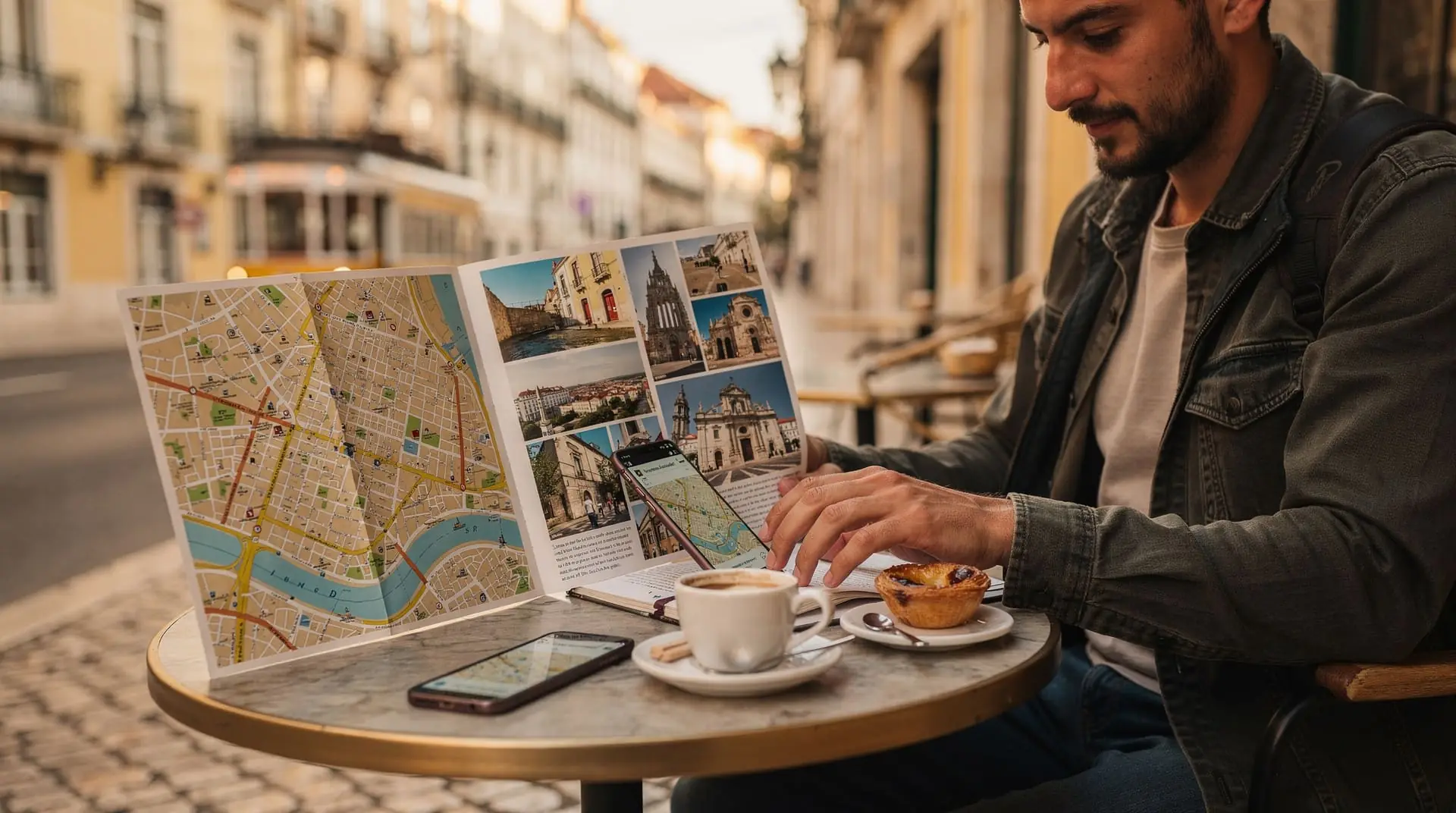
How many days do you need in Lisbon? An honest answer
2, 3, 4, 5, or 7 days in Lisbon: what you can realistically see and do at each length. Honest advice without filler itineraries.

Accessibility in Lisbon — an honest assessment for disabled visitors
Honest accessibility in Lisbon: cobblestones and hills are brutal for wheelchairs, but several great museums, lifts, and adapted routes work.

Best time to visit Lisbon — month-by-month breakdown
When to visit Lisbon: April-June and September-October are ideal. Summer is hot and crowded. Winter is cheap and mild. Month-by-month guide with real data.

Portuguese language basics and etiquette for Lisbon visitors
Essential Portuguese phrases, tipping norms, greetings, and etiquette for Lisbon 2026. English is widely spoken but a few words help.
Ready to book? Top tours for this guide
We earn a small commission if you book through GetYourGuide — at no extra cost to you. Every tour is hand-picked and verified.

Lisbon: 48-Hour Hop-On-Hop-Off Bus Tour and Oceanarium Entry
Lisbon: MAAT Entry Ticket & Dolphin Watching Boat Tour
Lisbon: Alfama, Mouraria Walking Tour with Fado Night, Tapas
Lisbon: Hop-On Hop-Off Bus Tour
Lisbon: 1-or 2-Day Hop-On Hop-Off Bus Tour