Portuguese language basics and etiquette for Lisbon visitors
Last reviewed
Do I need to speak Portuguese in Lisbon?
No. Lisbon has one of the highest rates of English proficiency in southern Europe — most people under 50 in tourist-facing roles speak it well. That said, a handful of Portuguese phrases (please, thank you, good morning) get a noticeably warmer reception and are easy to learn. Menus in tourist restaurants are routinely available in English.
Portuguese in Lisbon — the real situation
English proficiency in Lisbon is high. The 2025 EF English Proficiency Index placed Portugal 12th globally — ahead of France, Italy, and Spain. In practice, this means most people working in hotels, restaurants, tourism, and transportation in central Lisbon speak functional to fluent English. You can spend an entire trip in Lisbon without speaking a word of Portuguese and encounter no significant barrier.
However. Portuguese people respond visibly and warmly to visitors who make an effort with even basic phrases. A “bom dia” (good morning) to the padaria owner, a “muito obrigado” (thank you very much) to the waiter — these small gestures shift the interaction from transactional to human in a way that matters. They are also very easy to learn.
| Do you need Portuguese? | No — English proficiency is high in tourist areas |
| Worth learning | Bom dia, obrigado/a, por favor, a conta |
| Tipping norm | Round up cafés; 5-10% mid-range; 10-15% fine dining |
| Greeting | Two cheek kisses among women/mixed social groups; handshake in business |
| Emergency number | 112 (English-speaking operators) |
Essential phrases — the ones actually worth knowing
Greetings
| Portuguese | Pronunciation (rough) | When to use |
|---|---|---|
| Bom dia | bom JEE-a | Good morning (until about 13:00) |
| Boa tarde | BOA TAR-day | Good afternoon (13:00-19:00) |
| Boa noite | BOA NOY-chee | Good evening (19:00+) |
| Olá | OH-lah | Hello (casual, any time) |
| Como está? | KO-moh eh-STAH | How are you? (formal) |
| Bem, obrigado/a | bem, oh-bree-GAH-do/da | Fine, thank you (male/female) |
Gender note: Portuguese adjectives and thank-you phrases change by the speaker’s gender. A man says “obrigado,” a woman says “obrigada.” If in doubt, “obrigado” is understood universally.
Basic courtesies
| Portuguese | When to use |
|---|---|
| Por favor | Please (or “excuse me” to get attention) |
| Obrigado / Obrigada | Thank you |
| Desculpe | Excuse me / Sorry |
| De nada | You’re welcome |
| Com licença | Excuse me (passing someone) |
| Fala inglês? | Do you speak English? |
Tip: “Se faz favor” is a more complete way to say “if you please” — used to flag down a waiter or at a counter. Effective and polite.
At restaurants
| Portuguese | Use |
|---|---|
| A conta, por favor | The bill, please |
| Não quero o couvert | I don’t want the bread/starters |
| Sem aquele, por favor | Without that, please |
| Uma mesa para dois | A table for two |
| O que recomenda? | What do you recommend? |
| Está delicioso | It’s delicious |
| Muito bom | Very good |
Transport and directions
| Portuguese | Use |
|---|---|
| Onde é…? | Where is…? |
| Quanto custa? | How much does it cost? |
| Pode ajudar-me? | Can you help me? |
| Estação de metro | Metro station |
| Bilhete para… | Ticket to… |
| Esquerda / direita | Left / right |
| Em frente | Straight ahead |
Tipping in Lisbon — the honest norms
Tipping in Portugal is not mandatory and historically was not common practice. The culture is shifting as tourism increases and as workers become more aware of tip expectations, but it is still not at the level of the United States or UK.
Current 2026 norms:
Cafés and casual meals: Leave the change, round up to the nearest euro, or leave nothing. All are acceptable. Nobody will be offended by a zero tip at a café counter.
Tasca and mid-range restaurants: A tip of €1-3 for a good meal at a tasca is appreciated. At a mid-range restaurant (€20-30 per person for dinner), 5-10% is generous and will be remembered warmly. Not leaving a tip at these places is also unremarkable.
Fine dining: 10-15% for excellent service at a better restaurant is appropriate and increasingly expected. The line between “service was included” and “please tip” can be blurry — check the bill, and if in doubt, leave something for genuinely good service.
Bars: Round up, leave the change. A €0.50 tip on a €2 beer is perfectly normal.
Taxis and rideshare: Round up or leave exact fare — no expectation of a percentage tip. In-app tipping on Uber and Bolt is optional and appreciated.
Guides: A tip of €5-15 per person for a day tour guide (depending on quality and length) is the norm for group tours. For private guides, €20+ is appropriate for a full-day tour.
Hotel housekeeping: €1-2 per day, left in the room. Not mandatory but appreciated, particularly in smaller hotels.
The greeting culture — cheek kisses
Portuguese greeting culture involves cheek kissing (dois beijos — two kisses), but understanding when it applies saves embarrassment.
When it happens:
- Women greeting women: almost always two cheek kisses (right cheek first)
- Women greeting men: usually two cheek kisses in social situations, depending on formality
- Men greeting men: handshake in professional/business contexts, possible cheek kiss in social settings, particularly in Lisbon’s more cosmopolitan circles
With tourists: Portuguese people dealing with tourists frequently will follow the tourist’s cue — if you extend your hand for a handshake, they will shake hands. If you start to lean in, they will kiss cheeks. There is no rigid rule for tourist interactions.
Not touching: If you are uncomfortable with physical greetings, a nod and “olá” or “bom dia” is always appropriate and never rude.
Cultural notes worth knowing
Subdued public emotion
Portuguese culture (particularly in Lisbon) is less extroverted than Spanish or Italian culture. Loud behaviour in restaurants and public spaces is not appreciated. Conversations are modulated. Shouting, singing, or very loud groups stand out and are not received positively by locals.
Saudade — the untranslatable emotion
Saudade is the Portuguese emotional concept most discussed — a nostalgic longing, a bittersweet melancholy for something absent. It is the emotion at the heart of fado music. Understanding that this is a real cultural value (not just a tourist marketing phrase) helps you appreciate why fado is the music it is, and why the Portuguese emotional register tends toward the reflective rather than the celebratory. See the fado in Alfama guide.
Sunday rhythms
Many smaller shops, local restaurants, and family-run businesses are closed or have shorter hours on Sundays. Tourist-facing businesses operate normally, but the city has a different, quieter feel. Sunday mornings in Lisbon are particularly beautiful — the city belongs to its residents for a few hours.
Restaurant timing
Portuguese lunch runs from 12:00-14:30. Portuguese dinner runs from 20:00-22:30. Arriving at a restaurant at 18:30 “for early dinner” will often get you a puzzled look or an empty dining room. If you need to eat early, choose tourist-facing restaurants or hotel restaurants where they accommodate it.
Fado and cultural sensitivity
Fado performances deserve respect — treating them as background noise while checking your phone is noticed. The best fado venues ask for quiet during performances. See the best fado houses guide and the fado dinner shows guide for how to find and respect authentic fado experiences.
Lisbon fado vadio tour with Portuguese tapas — a small-group experience that introduces fado properly, with context and local food, rather than as a tourist spectacle.
Portuguese pronunciation — the basics
Portuguese is famously difficult to pronounce correctly — even speakers of other Romance languages struggle. A few sounds that catch people out:
- ão (as in pão — bread): sounds like “owng” in the back of your throat
- lh (as in Batalha): similar to “ly” in million
- nh (as in Vinho): like “ny” in canyon
- x in many words: sounds like “sh” (Lisbon itself = Lish-boa in Portuguese)
- r at the start of words: a guttural sound, not a rolling “r”
None of this matters for communication — English gets you everywhere. But attempting Portuguese pronunciation, even imperfectly, is received positively.
For a broader introduction to the city’s culture and what makes it distinct from other Iberian capitals, a walking tour with a local guide provides context that no guide book captures the same way:
Lisbon: history, stories, and lifestyle walking tour — a narrative-focused walk covering the city’s history, culture, and character, led by locals who know why the city feels the way it does.
Menu Portuguese — reading a restaurant menu
Most tourist-facing restaurants have English menus. At local tascas and neighbourhood restaurants, the menu (or blackboard) may be Portuguese only. Useful vocabulary:
Cooking methods:
- Grelhado: grilled
- Assado: roasted
- Cozido: boiled (Cozido à Portuguesa is the classic boiled meat and vegetables stew)
- Frito: fried
- Estufado: stewed
- No forno: oven-baked
Proteins:
- Bacalhau: salt cod (the Portuguese national ingredient, dozens of preparations)
- Frango: chicken
- Porco: pork
- Vitela: veal
- Borrego: lamb
- Atum: tuna
- Polvo: octopus
- Camarão: shrimp
- Amêijoas: clams
- Lulas: squid
Common dishes:
- Caldo verde: green soup (potato and kale)
- Francesinha: Porto-style toasted sandwich with meat, smothered in beer-tomato sauce and cheese (not typical in Lisbon, but found on tourist menus)
- Bifana: pork sandwich
- Prego: beef steak sandwich
- Arroz de…: rice cooked with… (arroz de tamboril = monkfish rice, rich and shared)
- Cataplana: traditional copper pot dish, usually seafood with clams
Desserts:
- Pastel de nata: custard tart
- Arroz doce: rice pudding with cinnamon
- Leite-creme: similar to crème brûlée
- Mousse de chocolate: chocolate mousse (ubiquitous and usually good)
Drinks:
- Vinho tinto/branco/rosé: red/white/rosé wine
- Cerveja: beer (imperial = small draught, caneca = large draught)
- Água com/sem gás: sparkling/still water
- Sumo: juice
- Café: espresso
- Galão: milky coffee (like a long latte)
- Meia de leite: coffee with milk (like a cappuccino)
Ordering a “café” in Portugal means a small strong espresso. If you want a larger coffee, order a “galão” (very milky, in a tall glass) or a “meia de leite” (larger with milk). Saying “um café, por favor” is universally understood and will not be misinterpreted.
Social etiquette beyond greetings
Time and punctuality
Portuguese culture operates on a slightly elastic relationship with time in social situations. Arriving 10-15 minutes late to a dinner invitation is normal and unremarkable. Arriving on time to a restaurant reservation is expected and respected. Arriving 10 minutes late for a museum or tour group is not appreciated.
For scheduled transport (trains, ferries) and guided tours, Portuguese operators are generally punctual. The cultural relaxation around time applies to social occasions, not services.
Queuing
Queuing is practiced but can be informal. At small bakeries and cafés, it is common to order at the counter without a formal queue. Watch what locals do. At ticket offices and transport terminals, the formal queue is observed. Jumping a queue is taken very poorly.
Volume in public
As noted, Portuguese public behaviour is modulated. On tram 28E, locals generally stand quietly or have quiet conversations. Loud tourist groups, shouting for photos, or playing music on speakers without headphones create visible discomfort. This is not a legal issue — just a cultural note that being a considerate guest goes a long way.
Photography etiquette
Asking before photographing individuals (especially at miradouros where you might be capturing someone in the background of their private moment) is appreciated. Photographing fado performers during a performance without permission is not acceptable at most venues. Some fado houses specifically prohibit photography; others allow it between performances. Follow the house rules.
Language in specific situations
At the pharmacy (farmácia)
Pharmacies in Lisbon are highly capable first-response health services. The green cross sign marks them. Pharmacists almost universally speak English and are trained to handle common tourist ailments: sunstroke, stomach issues, minor infections, blisters (Lisbon’s hills claim many). If you need medication, a Portuguese pharmacy is a good first stop.
At the post office (CTT — Correios)
Post offices in Portugal deal with queues via a ticket system. Take a number from the machine at the entrance, wait for your number to be called on the screen. Sending a postcard internationally costs approximately €1-1.50.
In an emergency
Dial 112 for police, fire, or ambulance — this works from any phone including a phone with no SIM or credit. Portuguese emergency services in Lisbon have English-speaking operators. The Tourism Police (with English-speaking staff specifically for tourist incidents) have an office near Praça dos Restauradores and are the right contact for theft, scam complaints, or questions about your rights as a tourist.
Common misunderstandings between Portuguese and English speakers
“Saudade” is not just nostalgia: Tourists sometimes use it as a cute word for missing something. For Portuguese speakers, it carries genuinely significant cultural and emotional weight — the longing for something that may never return, the melancholy beauty of the past. Use it with sincerity or not at all.
“Lisboa” vs “Lisbon”: Both are fine and both are understood. Portuguese speakers say Lisboa; English speakers say Lisbon. In Portuguese conversation, use Lisboa — it is a small gesture of linguistic respect.
“Está bem” (is fine) vs “Tudo bem” (everything is fine): These are used interchangeably for “fine/okay” as a response. If someone asks “Tudo bem?” the natural response is “Tudo bem, obrigado/a” — a warm exchange that costs nothing and immediately improves the interaction.
The first-time Lisbon tips guide covers the practical side of arriving well-prepared. For understanding Lisbon’s food culture in more depth, the Lisbon food tours guide provides both food recommendations and cultural context.
Regional language variations — Lisbonite Portuguese vs general Portuguese
Portuguese spoken in Lisbon has specific characteristics that differ from the language as taught in textbooks or spoken in Brazil:
Vowel reduction: Lisbon Portuguese “swallows” unstressed vowels. The word “obrigado” is often pronounced closer to “obrig’d” — the unstressed middle vowels are compressed. This makes European Portuguese harder for learners than Brazilian Portuguese, which preserves open vowel sounds.
Speed: Lisbon speech is fast by Portuguese standards. Southern Portuguese (Alentejo, Algarve) is slower and easier to follow for learners.
Lisbon accent vs Porto accent: The two cities have genuinely distinct accents, similar in some ways to the London/Manchester distinction in English. Porto’s accent is considered more conservative and clearer; Lisbon’s is more varied and fast-paced.
For visitors: None of this affects the practical reality that English is widely spoken in Lisbon’s tourist areas. But if you have studied Portuguese, you may find that Lisbonites speak faster and with more vowel elision than your course prepared you for. This is normal — they are not speaking carelessly, they are speaking Lisbonite.
Religious and cultural sensitivity
Churches and religious sites
Lisbon has extraordinary religious architecture (Jerónimos Monastery, the Sé Cathedral, the Basílica da Estrela, the Igreja de São Roque). These are active places of worship as well as tourist attractions. The basic expectations:
- Dress modestly for entry: covered shoulders, no short shorts or miniskirts. Some churches enforce this with provided coverings; others just request it.
- Lower your voice inside the church.
- Do not photograph worshippers during religious services.
- Mass times at major churches are posted outside — if mass is in progress, either wait or observe quietly and do not conduct a sightseeing tour during the service.
Fátima and religious pilgrimage
If visiting Fátima (pilgrimage site, 130 km north of Lisbon), the expectations are similar but intensified: it is an active, important Catholic pilgrimage destination. The site receives millions of visitors, many of them pilgrims for whom this is a deeply significant spiritual journey. Visiting as a tourist alongside pilgrims is fine and common; treating it as purely a curiosity stop rather than showing basic respect for the context is not. See the Fátima day trip guide.
Useful apps for language help in Lisbon
Google Translate: The camera translation feature works well on Portuguese menus and signs — point your phone at a menu and it overlays English translations in real time. Useful at local tascas with handwritten daily specials.
DeepL: Better at nuanced translation than Google Translate for full sentences. Useful for reading longer notices or documents.
Forvo: Pronunciation guide with recordings of native speakers. Useful for checking how to pronounce specific place names before you arrive (Marquês de Pombal, Praça do Rossio, Almada) — getting these close to correct is appreciated.
Duolingo: A week of Portuguese basics before your trip gives you the greetings, basic numbers, and restaurant vocabulary to make the interactions noticeably warmer. Five minutes a day.
Cultural conversations — what Portuguese people enjoy talking about
For visitors who want to have genuine conversations with Lisbon residents (in cafés, during tours, at hostels), a few topic areas that generally generate engagement:
Football: Portugal and Lisbon specifically are football-obsessed. Sporting CP (green-and-white, Estádio de Alvalade) and Benfica (red, Estádio da Luz) are the two dominant clubs, with an intense rivalry. Asking a Lisbon resident which team they support is a reliable conversation starter.
Food: Asking for a recommendation — “where do you eat?” — at a local café or from a resident guide is taken as a genuine compliment and generates enthusiastic responses. Portuguese people are proud of their food and happy to share specific recommendations.
The difference between Portugal and Spain: Portuguese people are proud of being distinctly not Spanish. Saying “it’s like Spain but…” is not a helpful opening. Acknowledging Portugal’s separate identity, history, and language is appreciated.
The Carnation Revolution (April 25, 1974): The peaceful revolution that ended 48 years of dictatorship is a moment of collective pride. The red carnations placed in soldiers’ rifles on the day of the revolution are an enduring national symbol. April 25 is a public holiday and a day of genuine remembrance and celebration.
What to avoid: Comparing Portugal unfavourably to Spain, commenting on the pace of life (“things are slow here”), or assuming Brazil is the reference point for Portuguese culture (Brazil and Portugal share a language with significant differences and very distinct identities).
Language on public transport
Lisbon’s metro, bus, and train announcements are in Portuguese with some key stops also announced in English (particularly on the red line, which serves the airport). The departure boards at major stations display in both Portuguese and sometimes English.
Stop names to know:
- “Atenção, próxima estação…” = “Attention, next station…”
- “Portas do lado esquerdo” = “Doors on the left side”
- “Portas do lado direito” = “Doors on the right side”
Bus drivers in Lisbon speak Portuguese and sometimes limited English. Having your destination written on your phone (the address or the stop name) removes any ambiguity.
Taxi drivers vary considerably in English proficiency. Younger drivers often speak functional English; older drivers may not. The rideshare apps (Uber, Bolt) remove this variable entirely — destination is in the app, no verbal communication needed.
Numbers, dates and money — small things that trip people up
Numbers: Portuguese uses a comma for decimals and a period for thousands, the reverse of English — a price written as “1.500,00€” means one thousand five hundred euros, not €1.5. Menu prices are usually written clearly enough to avoid confusion, but this matters more when reading receipts or informal handwritten price boards at markets.
Dates: Written day-month-year, so 03/07/2026 is 3 July, not March 7th. This occasionally causes confusion when checking tour or restaurant confirmation emails.
Cash vs card: Card payment (including contactless) is near-universal in Lisbon’s tourist areas, cafés, and even small tascas. Some very small, cash-only businesses persist, particularly older neighbourhood tascas and market stalls — carrying €20-30 in cash covers the exceptions. ATMs (Multibanco) are widespread; avoid the standalone Euronet-style machines with poor exchange rates near tourist sites in favour of bank-branded Multibanco machines.
Etiquette specific to common tourist situations
In markets and at market stalls: At Mercado da Ribeira’s traditional produce section or Mercado de Campo de Ourique, vendors appreciate a greeting before you start pointing at produce. “Bom dia, queria…” (good morning, I’d like…) is the natural opener. Haggling is not customary at Lisbon food markets, unlike some Mediterranean destinations.
On the tram 28 or any crowded transport: Give up seats for elderly passengers without being asked — this is a strong social norm, more so than in many northern European countries. Standing to let someone pass is expected without complaint even in a packed carriage.
At fado houses and small venues: Beyond the general silence-during-performance rule covered above, arriving on time matters more here than at a restaurant — many venues seat everyone before the first set begins and do not welcome latecomers being shown to tables mid-song.
When something goes wrong: Portuguese service culture leans toward quiet correction rather than dramatic apology. If a bill seems wrong or an order is mixed up, a calm “desculpe, acho que há um engano” (excuse me, I think there’s a mistake) resolves most issues without confrontation. See the restaurant couvert scam guide for the most common billing misunderstanding tourists encounter.
FAQ
Will I be judged for not speaking any Portuguese at all? No. English is widely spoken and expected in tourist-facing Lisbon, and nobody will treat you poorly for defaulting to English. The warmth boost from a few Portuguese words is a bonus, not a requirement — treat this guide as optional polish rather than a barrier to enjoying your trip.
Is service charge ever automatically added to the bill in Lisbon? Occasionally, particularly at larger restaurants or for big groups, a service charge may be included — check the bill before adding an additional tip on top. If it says “serviço incluído,” a further tip is a bonus for exceptional service rather than an expectation.
Do Portuguese people mind if I mix up “tu” and “você” forms of address? No, and most visitors never need to worry about this distinction at all since almost every tourist interaction happens in English. If you are studying Portuguese and want to know: “você” is the safer, more formal default for strangers and service staff; “tu” is reserved for friends, family, and increasingly casual younger-generation interactions. Getting it wrong is a minor and instantly forgiven mistake, not a real etiquette breach.
A short list of names and places worth practising
Portuguese place names appear constantly in any Lisbon itinerary, and mispronouncing them is completely normal — but a few come up so often that getting close to correct saves repeated confusion with taxi drivers, ticket agents and hotel staff:
- Rossio: hoh-SEE-oo (not “ross-ee-oh”)
- Chiado: shee-AH-doo
- Alfama: al-FAH-ma
- Belém: buh-LAYNG (the final syllable is nasal)
- Sintra: SEEN-tra
- Cascais: kash-KAYSH
- Marquês de Pombal: mar-KESH duh pom-BAL
- Praça do Comércio: PRA-sa doo koo-MER-see-oo
None of these need to be perfect — Portuguese speakers are used to visitors approximating place names, and a rough attempt is always better received than defaulting to an anglicised pronunciation without trying. Saved as notes on your phone, this short list solves most of the practical confusion that comes up when giving a taxi driver a destination or asking for directions at a metro counter.
Related guides
How many days do you need in Lisbon? An honest answer
2, 3, 4, 5, or 7 days in Lisbon: what you can realistically see and do at each length. Honest advice without filler itineraries.
Accessibility in Lisbon — an honest assessment for disabled visitors
Honest accessibility in Lisbon: cobblestones and hills are brutal for wheelchairs, but several great museums, lifts, and adapted routes work.
Best time to visit Lisbon — month-by-month breakdown
When to visit Lisbon: April-June and September-October are ideal. Summer is hot and crowded. Winter is cheap and mild. Month-by-month guide with real data.
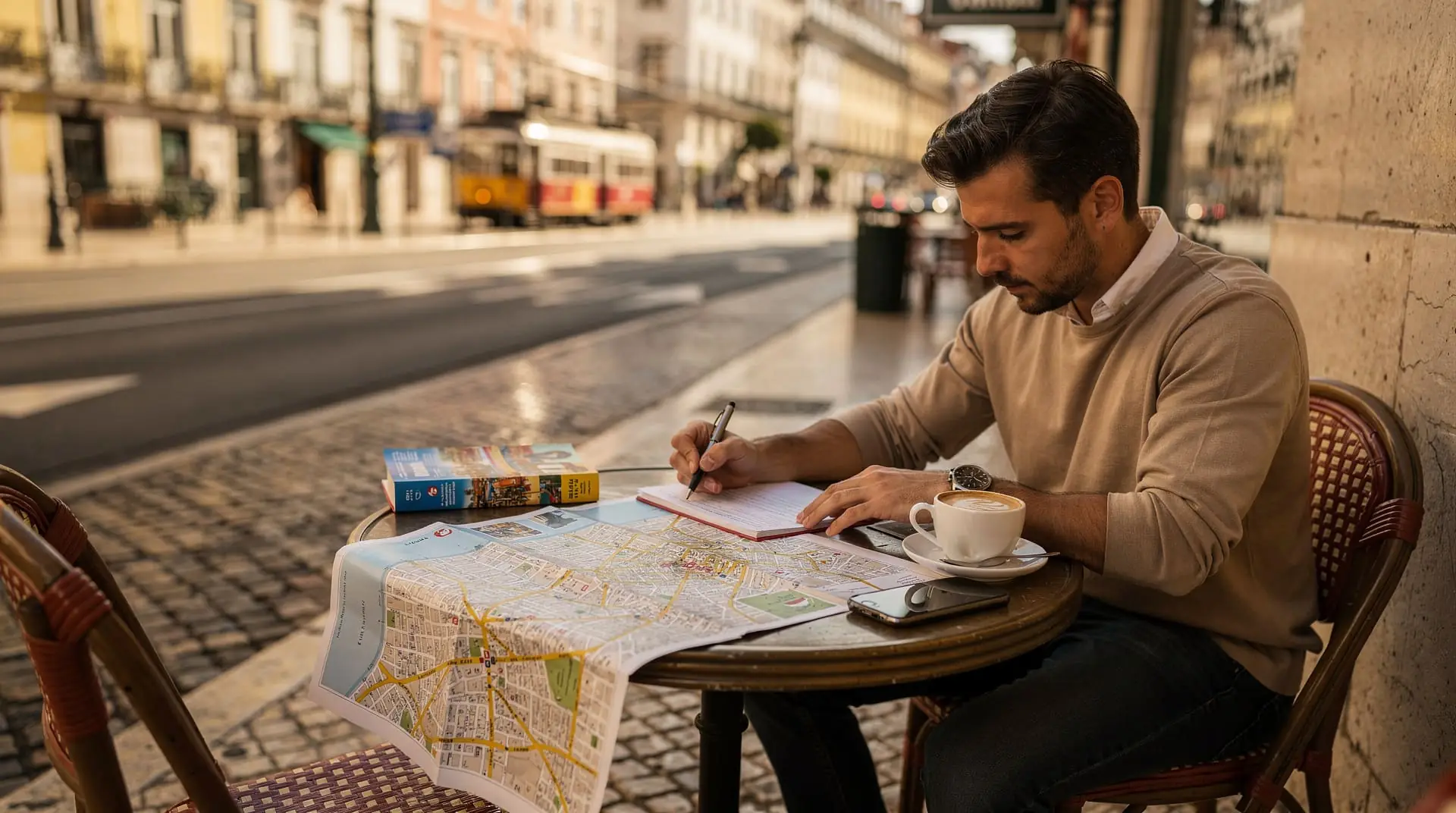
First-time Lisbon tips — 25 things worth knowing before you go
25 essential tips for first-time visitors to Lisbon: comfortable shoes for hills, booking Sintra in advance, the couvert rule, tram 28 realities, and more.
Ready to book? Top tours for this guide
We earn a small commission if you book through GetYourGuide — at no extra cost to you. Every tour is hand-picked and verified.
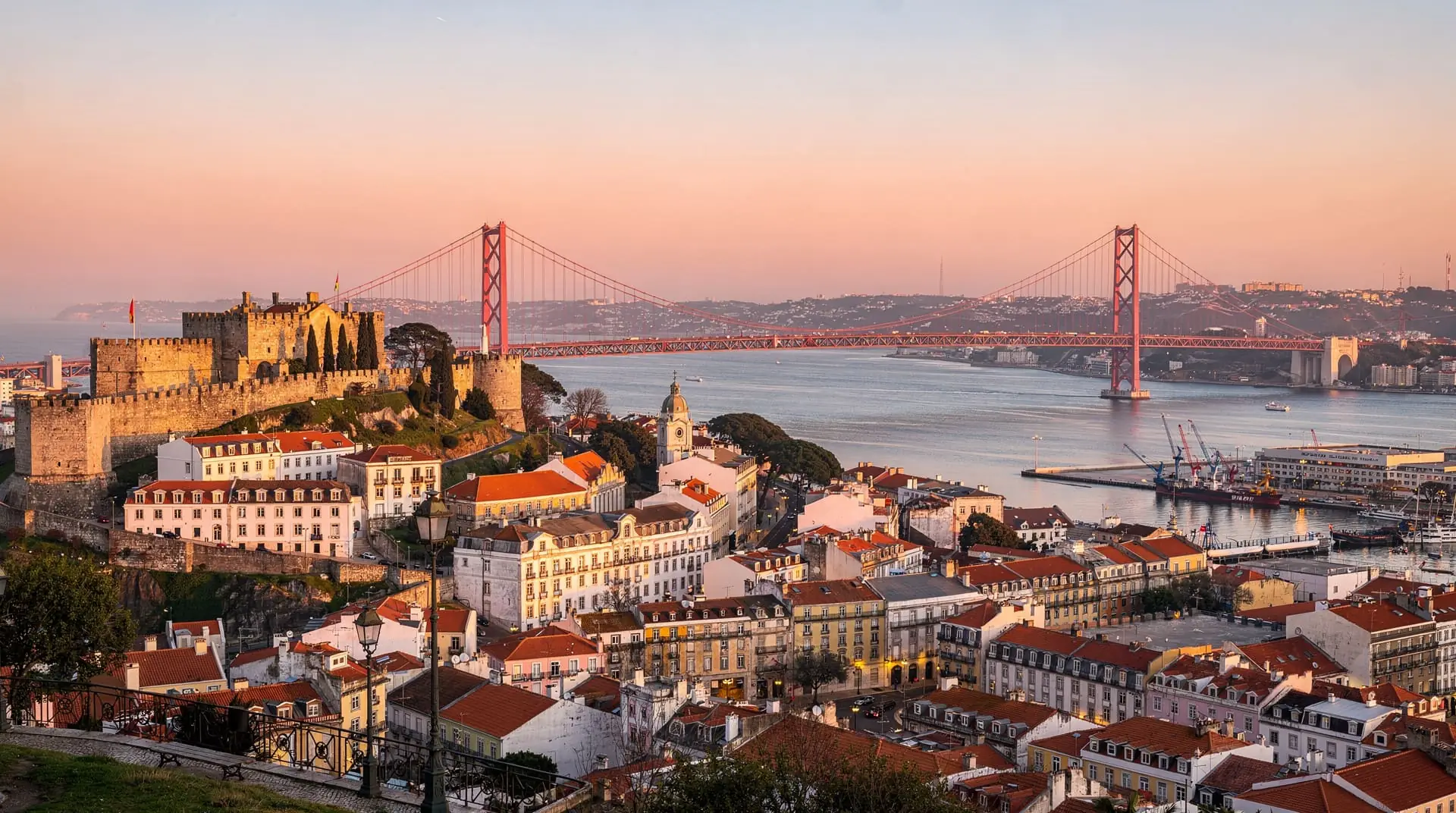
Lisbon: 48-Hour Hop-On-Hop-Off Bus Tour and Oceanarium Entry
Lisbon: MAAT Entry Ticket & Dolphin Watching Boat Tour
Lisbon: Alfama, Mouraria Walking Tour with Fado Night, Tapas
Lisbon: Hop-On Hop-Off Bus Tour
Lisbon: 1-or 2-Day Hop-On Hop-Off Bus Tour