Best guided food tours in Lisbon: what to expect, prices, and tips
Last reviewed
Are food tours worth it in Lisbon?
Yes, particularly on your first day — a good food tour orientates you to the city's neighbourhoods, teaches you what to order, and gets you into spots you would take a week to find alone. Expect 2.5–4 hours, 6–12 tastings, and €50–90 per person. Book 48 hours ahead in peak season.
A food tour in Lisbon does two things simultaneously: it feeds you and it teaches you to eat. The best operators take small groups through the city’s bakeries, tascas, market stalls, and wine bars in a sequence that reflects how Lisboans actually move through their day — espresso and pastel de nata at a neighbourhood pastelaria, petiscos at a taberna that has no sign outside, a glass of vinho verde at a counter bar no tourist map shows. By the end of three hours you know the difference between a bifana and a prego, you understand why the couvert is not a scam at good tascas (it usually is near Praça do Comércio), and you have a list of places to return to later in the week.
This guide covers the formats available, the best operators, and what separates a good food tour from a mediocre one.
| Duration | 2.5-4 hours |
| Tastings | 6-12 stops |
| Cost | €50-90 per person (up to €130 for cooking classes) |
| Best time to book | On day 1 of your trip, 2-7 days ahead in peak season |
| Group size | Best capped at 8-10 |
Walking food tours: the standard format
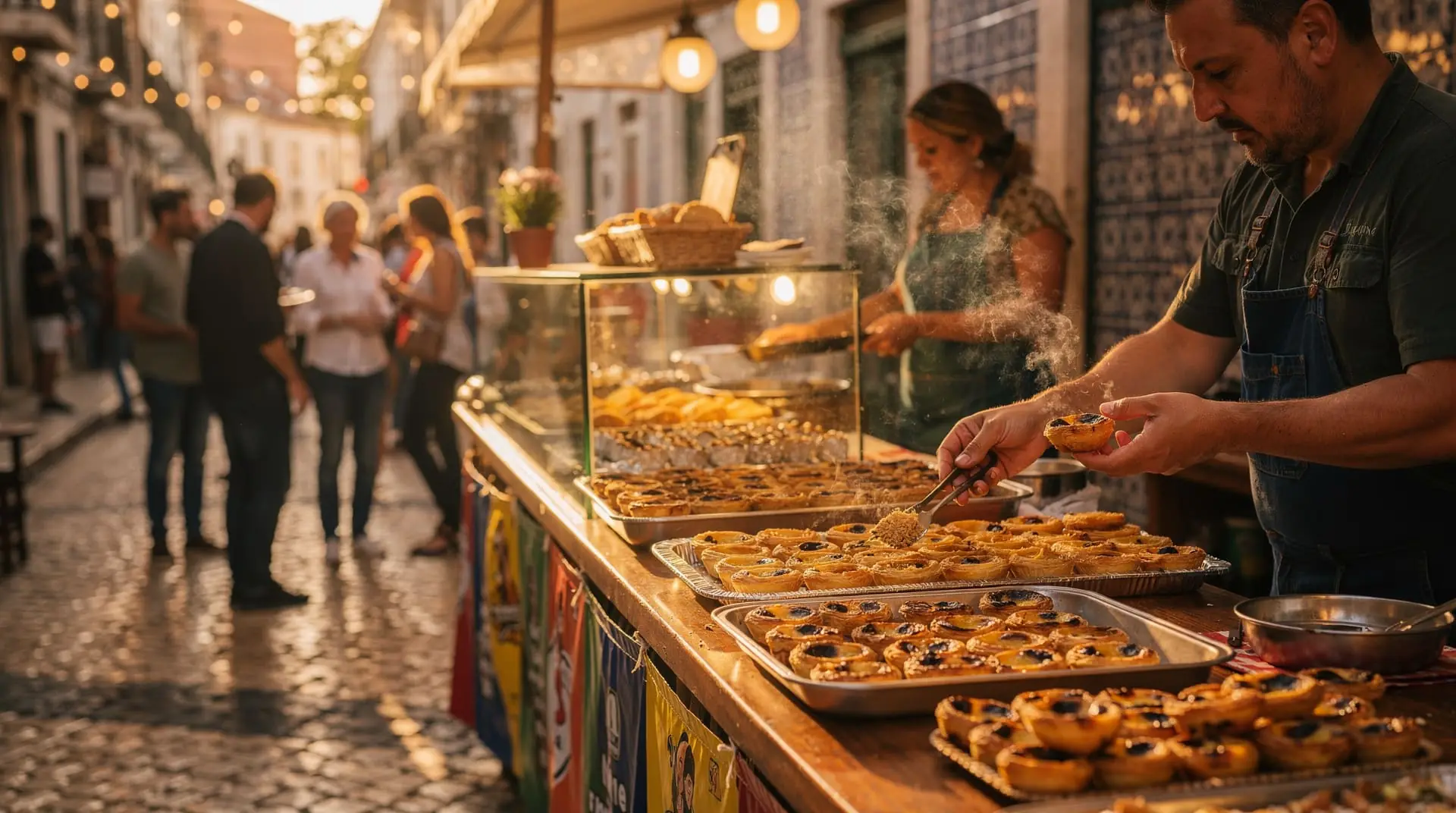
Walking tours cover 2–5 kilometres through one or two neighbourhoods, stopping at 8–12 venues for tastings. A good operator will take you away from Rua Augusta entirely. The stops will include at minimum: a pastelaria, a petiscos bar, a wine stop, a deli or market stall, and a ginjinha hit. The guide will explain the history behind the food as you walk.
Group sizes matter: tours with more than 12 people become unwieldy at small venues. The best operators cap at 8–10.
Lisbon food tour: 10+ tastings of local delicacies and winesThis tour runs through Baixa and Mouraria, covering the older eating culture of the city. Ten-plus tastings including bacalhau fritters, alheira, petiscos, pastéis de nata, and ginjinha. Groups of maximum 12. Duration: 3.5 hours. Price: approximately €75 per person.
Eating Lisbon: food and cultural walking tourFocused on the cultural context as much as the food itself — this tour explains the Moorish influence on Portuguese cuisine, the role of olive oil, and why codfish became a national staple. A thoughtful introduction for visitors who want to understand what they are eating. Duration: 3 hours. Price: approximately €70 per person.
Neighbourhood-specific food tours
Baixa and Chiado circuit
The area between Rossio and Chiado is the most food-dense part of the city — petiscos bars, traditional pastelarias, excellent delis on Rua do Arsenal, and the edge of Bairro Alto. A Chiado food tour will typically take in Time Out Market as one stop (useful for orientation, though the food there is upscale rather than traditional).
The Heart of Lisbon food tour: Baixa, Chiado and Bairro AltoGood for: first-timers staying in central Lisbon who want a coherent introduction to the eating landscape. Price: approximately €65 per person. Duration: 3 hours.
Alfama and Mouraria food walk
Alfama’s eating scene is a mix of fado-dinner-show restaurants (expensive, aimed at tourists) and genuine neighbourhood tascas that serve exactly the same customers they have served for 40 years. A good food tour separates the two and shows you the real Alfama kitchen. Expect sardines (June–September), grilled octopus, and at least one stop at a mercearia (grocery-deli) where the owner will hand you slices of presunto.
Food and tuk-tuk combination tours
Tuk-tuk food tours cover more ground than walking tours and are useful if you want to cross multiple neighbourhoods — Alfama, Baixa, and Belém, for instance — without walking 10 kilometres. The downside is that you spend some of the tour in a tuk-tuk rather than exploring on foot. Some operators combine 2 stops by tuk-tuk and 4–6 walking stops; this works better than a tuk-tuk-only format.
The food tuk-tuk format also works well in hilly Alfama, where the vehicle does the climbing and you hop off at venues. An electric bike is another way to cover the same ground under your own power without the hills wearing you out — the Go Taste electric bike food tour pairs tastings with an e-bike route across neighbourhoods.
Market and cooking class combinations
The most immersive food experiences in Lisbon combine a market visit with a cooking class: you select ingredients at the market, then cook them in a kitchen nearby. These run 3–4 hours and produce a full meal.
What you cook: depends on the operator, but typically includes one or two petiscos (often peixinhos da horta and pataniscas de bacalhau), a main course (bacalhau dish or arroz de pato), and a dessert (arroz doce or pastéis de nata). Wine included.
Market options: Most classes use the municipal markets (Mercado de Campo de Ourique or Mercado do Bairro do Rosário) rather than Time Out Market, which has no stalls selling raw produce. Campo de Ourique market is open Tuesday–Sunday until 14:00.
Pastéis de nata baking classes
These sit slightly outside the food tour category but belong in any discussion of Lisbon food experiences. A baking class focused specifically on pastéis de nata runs 1.5–2 hours and teaches you: the laminated pastry technique, the custard composition, the oven temperature, and the specific burnishing that creates the caramelised top. You eat what you make and leave with a box.
Prices: €45–65 per person. Book ahead — classes sell out a week or more in advance during high season.
Wine tastings and petiscos evenings
Several operators combine Portuguese wine education with petiscos — a format that works well as a post-sightseeing evening. Typically runs 2 hours in a wine bar or restaurant that a guide has chosen for quality. You try 4–6 wines (usually: vinho verde, two Alentejo reds, a Douro white, and optionally a Moscatel de Setúbal) alongside cheese, presunto, chouriço, and bread.
These are less educational about the city than walking food tours but more relaxing. Good for a quieter evening or a second/third day when you have already done the walking.
For more structured wine education, the wine bars guide and the Setúbal wine tour have dedicated content.
What makes a good food tour: things to check
Group size: Maximum 10–12. Larger groups cannot all fit into a neighbourhood tasca at once without disrupting the experience.
Neighbourhood selection: The best tours go off the tourist trail. If every stop is somewhere you could find on a map of “top-rated Lisbon restaurants”, it is not a local food tour.
Included wine: Most good tours include wine tastings as part of the package. Tours that charge extra for every glass add up quickly.
Guide qualification: A good guide cooks, or has a serious personal interest in food. Ask who teaches when you book — some operators use guides who rotate and do not specialise.
Early timing: Food tours that start at 10 am or 11 am allow you to shop at markets that close by 14:00. Evening tours work better for wine-focused experiences.
Practical details
Most food tours are designed so you do not need to eat beforehand — you will be full by the end. Wear comfortable shoes; walking tours cover 3–5 km.
Allergies and dietary restrictions: notify the operator when booking. Most can accommodate vegetarian and gluten-free needs with advance notice, though the experience varies (Portuguese food culture is heavily meat- and fish-based).
Meeting points are typically central — Rossio, Chiado, or a specific landmark. Confirm the day before and build in 10 minutes of margin.
For other food-related content: petiscos and bifanas, Time Out Market, Lisbon markets, and the full Lisbon restaurant guide.
Price overview (2026)
| Tour type | Duration | Price per person | Group size |
|---|---|---|---|
| Walking food tour | 3–3.5 h | €60–80 | Up to 12 |
| Tuk-tuk food tour | 2.5–3 h | €55–75 | Up to 6 |
| Market + cooking class | 3.5–4 h | €90–130 | Up to 10 |
| Pastéis de nata baking class | 1.5–2 h | €45–65 | Up to 12 |
| Wine and petiscos evening | 2 h | €50–70 | Up to 15 |
Booking food tours: when and how
Advance booking: High season (June–September) requires booking 3–7 days ahead for small-group tours; pastéis de nata classes sell out further ahead. Most operators accept bookings 24 hours before but popular time slots fill early.
GetYourGuide and direct booking: Many operators list on GetYourGuide alongside their own websites. Prices are often identical; GetYourGuide provides traveller reviews that are useful for quality comparison. Direct booking occasionally offers a small discount.
Cancellation policies: Most walking and tasting tours require 24-hour notice for cancellation without charge. Market and cooking class tours that involve ingredient pre-purchase may require 48 hours.
Meeting the guide: Every operator should send a confirmation with the exact meeting point, the guide’s name, and a contact number. If this does not arrive by the day before, contact the operator directly.
The self-guided food tour alternative
If budget or scheduling prevents a guided tour, the same experience is available at lower cost and lower structure. A self-guided food walk covering the main neighbourhood eating culture:
Morning (9–11 am): Start at a neighbourhood pastelaria with a bica and a pastel de nata. Walk to the Mercado de Campo de Ourique or the traditional wing of Mercado da Ribeira for a look at the morning’s produce and fish.
Late morning (11 am–1 pm): Counter bar for a bifana or a glass of vinho verde with petiscos. The counter bars around Intendente and Mouraria are best for this. Total cost: €4–8.
Lunch (1–3 pm): Prato do dia at a neighbourhood tasca. A good one in Mouraria or the Alfama backstreets costs €10–13.
Afternoon (3–5 pm): Ginjinha at Largo de São Domingos (€1.80). Walk through Bairro Alto to browse the food shops on Rua do Norte and Rua da Atalaia.
Late afternoon (5–7 pm): A glass of Alentejo red at a wine bar in Príncipe Real (€4–6). Optional visit to A Vida Portuguesa (Rua Anchieta 11) for well-curated Portuguese food products.
Total cost for the day: approximately €30–35 per person, compared with €60–80 for a guided tour. The guided version is more efficient, more educational, and takes you to places you might not find alone. The self-guided version is cheaper and more flexible.
What food tours reveal about Lisbon
The best thing about a good food tour is not the food itself — it is the neighbourhood reading. A guide who has lived in Alfama for 10 years does not just take you to good restaurants; they explain why the mercearia on that corner has been there since before they were born, who lives in the apartment above the tasca, why the neighbourhood bar closes at 6 pm even though it could do evening business. Food is the lens, but the city is what you are actually seeing.
This is why food tours work particularly well on the first day of a visit, before you have formed your own impression of the city. A three-hour walk that covers Mouraria, the Alfama backstreets, and Chiado, stopping at five or six places along the way, gives you a practical orientation that a map and a guidebook cannot replicate.
For follow-up exploration: the Alfama neighbourhood guide, Mouraria and Graça guide, and the Baixa-Chiado guide cover the areas where most food tours operate.
Cooking classes as an alternative format
The cooking class — 3–4 hours, market visit included, you cook and eat — is a different experience from the food tour. Less city-oriented, more kitchen-oriented. You leave with recipes and skills rather than neighbourhood knowledge. If you are a confident home cook who wants to understand Portuguese technique, the cooking class is the better investment. If you want to understand how the city eats, the walking food tour is more useful.
Many operators in Lisbon now combine both: a 30-minute market visit to buy ingredients, followed by 2 hours of cooking, followed by eating together. This hybrid works well and is the most efficient use of a morning.
The market and cooking experience covers the market side of this format in more detail.
Food tours for specific needs
Family with children: Most operators welcome children but group walking tours are not designed for under-10s. Look specifically for family food tours (some operators run these) or book private tours where the pace and content can be adjusted.
Solo travellers: Walking food tours are ideal for solo travel — you are in a small group and the social dynamic around shared food makes introductions easy. Several operators run weekend “social food tours” specifically designed for solo visitors.
Large groups (6+): Standard group tours cap at 10–12. For larger groups (corporate events, hen parties, bachelor groups), private tours are the only practical option. Expect 20–30% premium for private group tours.
The lisbon-foodie itinerary suggests how to sequence food experiences across a multi-day trip. The Lisbon on a budget guide shows which free and cheap food experiences can replace a paid tour if cost is a concern. For the complete eating overview, where to eat in Lisbon covers every price point and neighbourhood.
Vegetarian, vegan and dietary needs on a food tour
Portuguese food culture leans heavily on fish, pork and dairy, which makes food tours a genuine challenge for vegetarian and vegan travellers if not planned carefully. Notify the operator when booking rather than on the day — most can substitute a vegetable-based petisco (grilled vegetables, migas, or a cheese-based tasting) for the fish or meat stops, but this works far better with advance notice. Some operators run dedicated vegetarian-route tours that avoid bacalhau-heavy stops entirely and lean into Lisbon’s excellent produce and wine culture instead. See the vegetarian and vegan Lisbon guide for a fuller picture of what is realistically available outside a guided tour context.
Gluten-free travellers face a similar situation: pastéis de nata, bifanas and most bread-based petiscos are not naturally gluten-free, so a tour built around them needs real substitutions rather than just “skip the bread.” A good operator will have a plan; a mediocre one will hand you a plate of olives and call it done.
FAQ
Should I book a food tour on my first day or later in the trip? First day, if possible. A good food tour orientates you to neighbourhoods and gives you a list of places to return to independently later in your stay — booking it on day 3 or 4 means you have already been guessing at restaurants without that context.
Are food tours worth it if I am already a confident, well-travelled eater? Often yes, but for a different reason: the value shifts from “what to eat” to “where locals actually go,” which is harder to research independently even for experienced travellers. If you specifically want technique and recipes rather than neighbourhood knowledge, a cooking class delivers more of what you are looking for than a walking tour.
Can a food tour replace a proper sit-down dinner that day? Generally yes for lunch-time tours with 8+ tastings, less reliably for shorter 2-hour evening tastings that lean toward wine and petiscos rather than a full meal. Check the tasting count and format before booking if you are planning your day around not needing a separate dinner — a 10-12 tasting walking tour easily replaces a meal; a 4-6 wine tasting does not.
Related guides
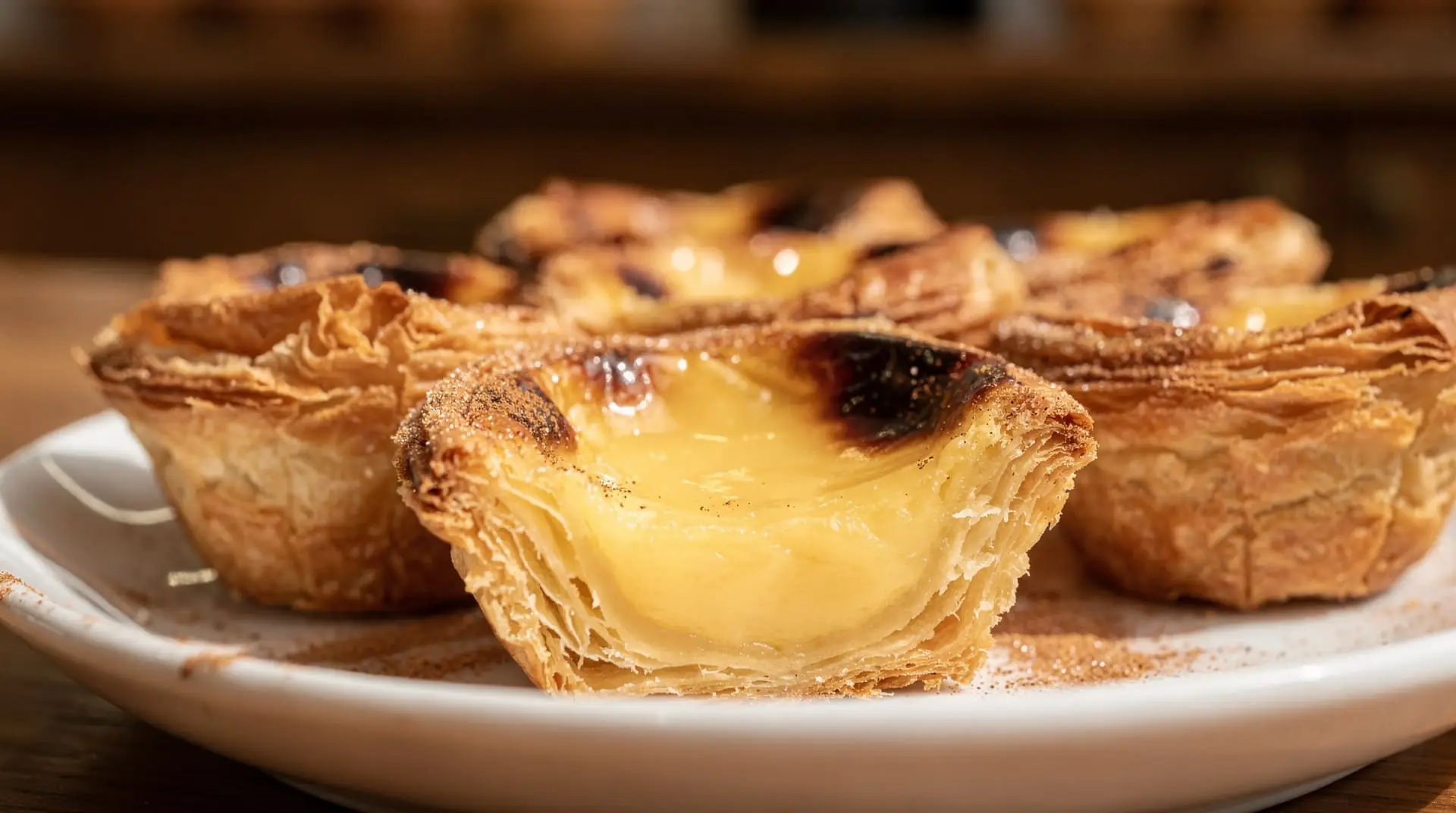
Pastéis de nata: where to eat the best in Lisbon
The honest guide to Lisbon's iconic custard tarts — Pastéis de Belém vs Manteigaria, Aloma, Castro and Fábrica da Nata, with queue strategies.
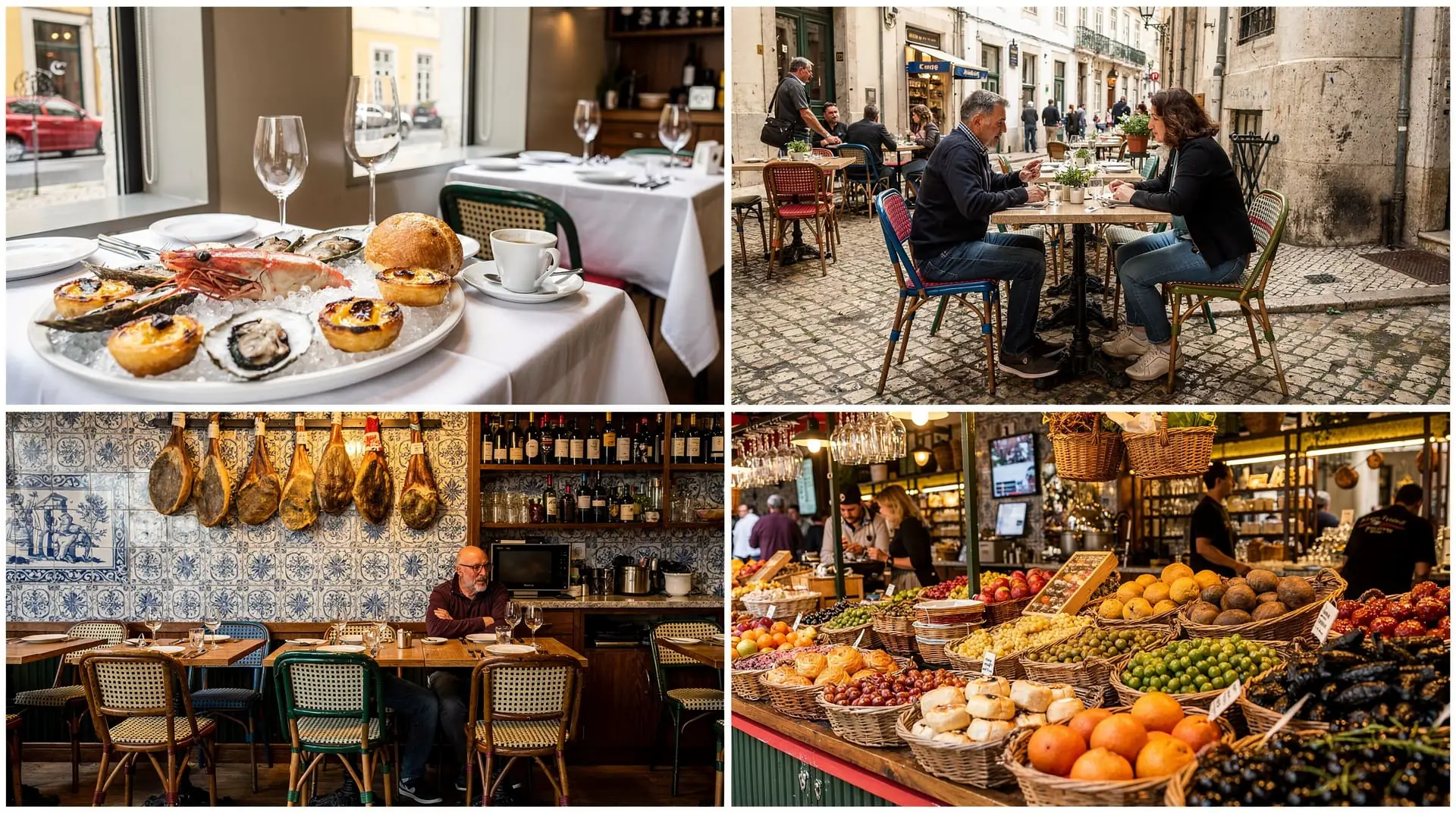
Where to eat in Lisbon: the honest restaurant guide
Tascas, marisqueiras, and Michelin stars — the best restaurants in Lisbon by neighbourhood, with honest tips on prices and what to avoid.
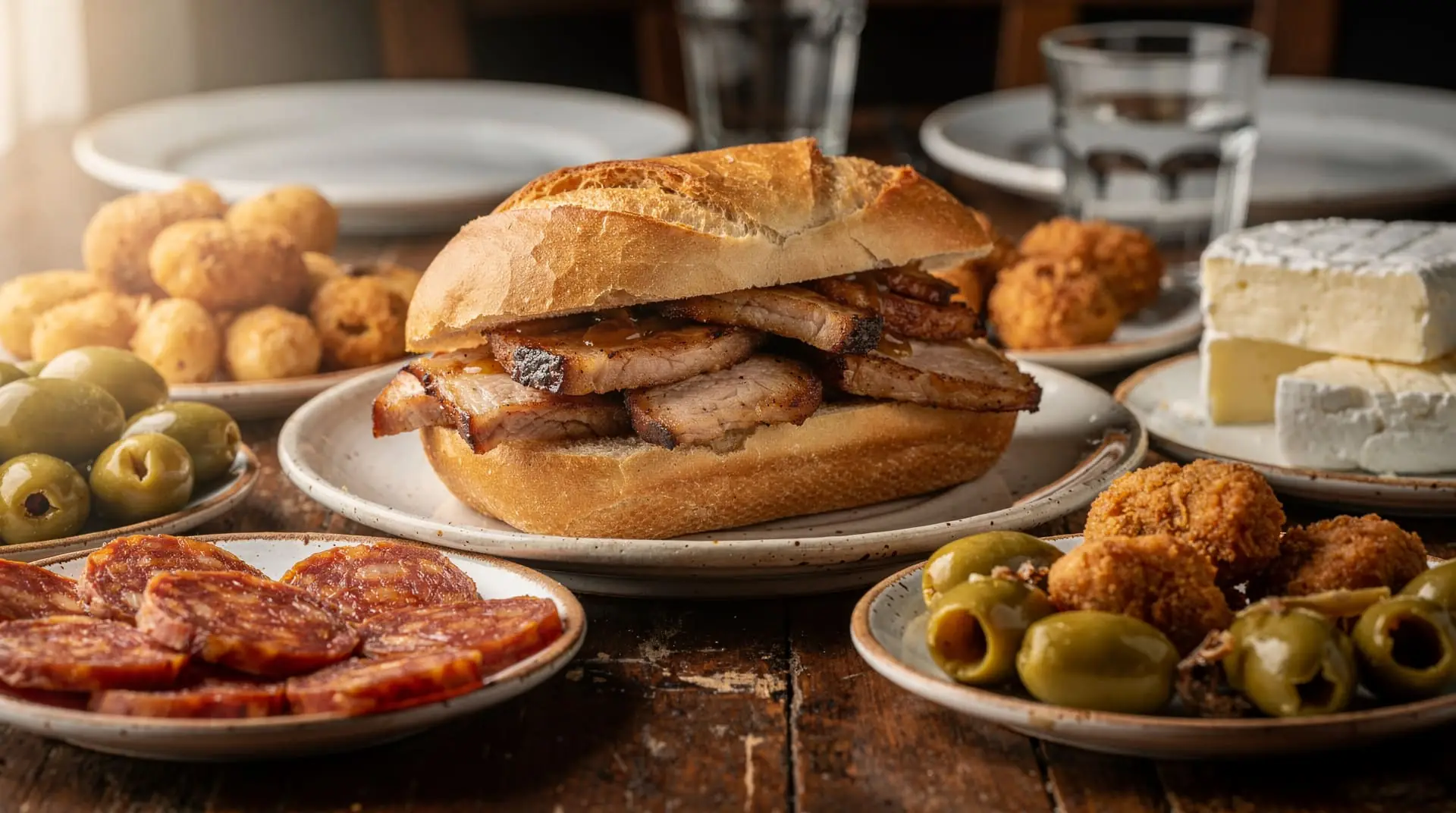
Bifana, petiscos, and Portugal's essential small plates
The best bifanas, peixinhos da horta, pataniscas, and petiscos in Lisbon — where to find them, what they cost, and why they matter.
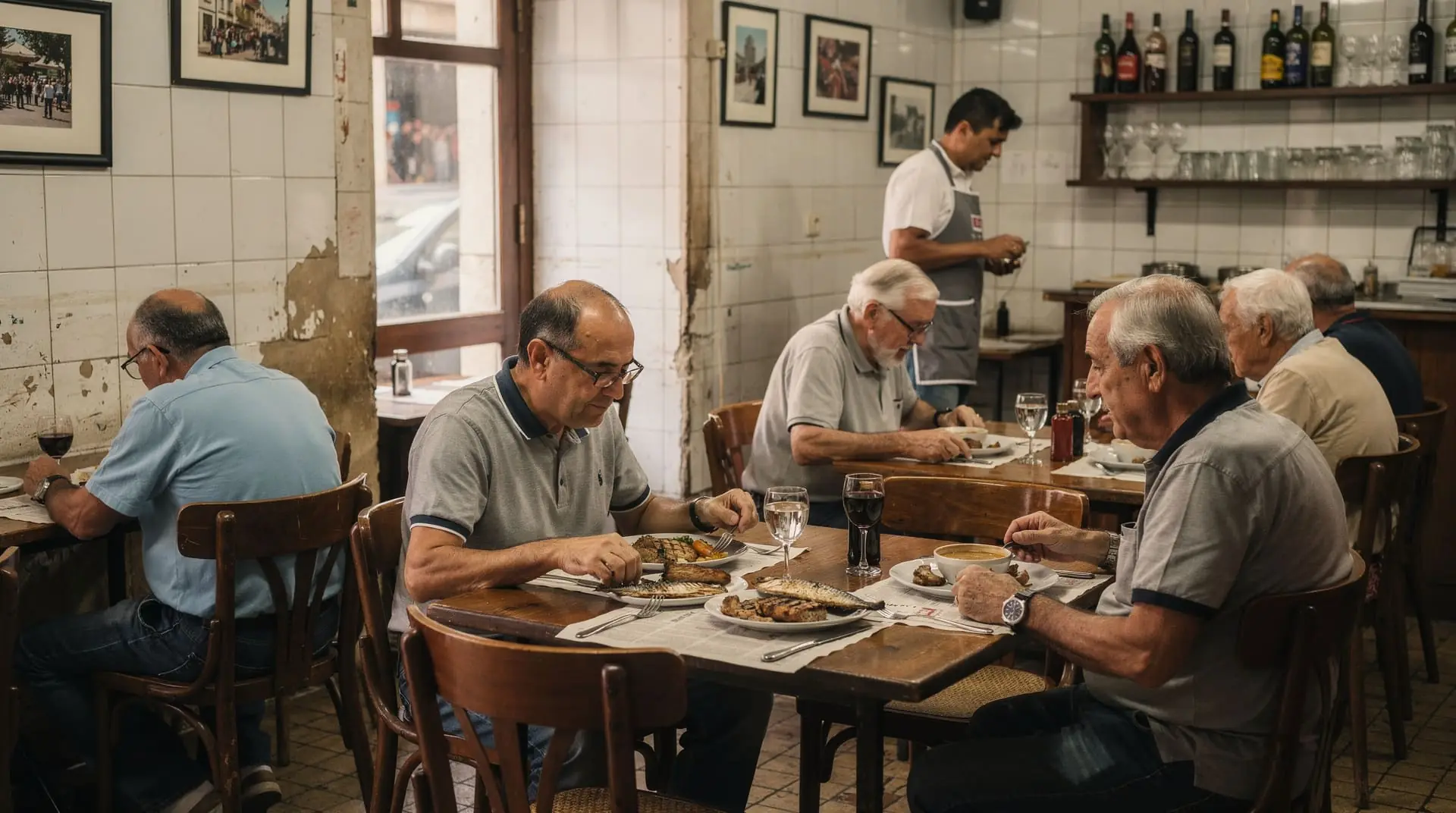
Cheap eats in Lisbon: tascas and lunch under 15 euros
Best cheap eats in Lisbon — tascas under €15 for lunch: Zé dos Cornos, Tasca do Chico, O Trevo bifanas, and Casa Independente. Real prices for 2026.
Ready to book? Top tours for this guide
We earn a small commission if you book through GetYourGuide — at no extra cost to you. Every tour is hand-picked and verified.

Lisbon: 48-Hour Hop-On-Hop-Off Bus Tour and Oceanarium Entry
Lisbon: MAAT Entry Ticket & Dolphin Watching Boat Tour
Lisbon: Alfama, Mouraria Walking Tour with Fado Night, Tapas
Lisbon: Hop-On Hop-Off Bus Tour
Lisbon: 1-or 2-Day Hop-On Hop-Off Bus Tour