Graça & Mouraria
Graça and Mouraria are Lisbon's most authentic hill districts — Senhora do Monte viewpoint, fado birthplace, local markets and real neighbourhood life.
Quick facts
Top tours and experiences
We earn a small commission if you book through GetYourGuide — at no extra cost to you. Every tour is hand-picked and verified.
Lisbon: 48-Hour Hop-On-Hop-Off Bus Tour and Oceanarium Entry
Lisbon: MAAT Entry Ticket & Dolphin Watching Boat Tour
Lisbon: Alfama, Mouraria Walking Tour with Fado Night, Tapas
Lisbon: Hop-On Hop-Off Bus Tour
Lisbon: 1-or 2-Day Hop-On Hop-Off Bus Tour
Lisbon: Boat Tour Ticket and Hop-on Hop-off 48-Hour Bus
Graça and Mouraria occupy the ridge and slopes north of Alfama — areas that tourists rarely reach in significant numbers, which is precisely what makes them worthwhile. They are working-class districts that have not been architecturally polished for visitors, and the result is something increasingly rare in central Lisbon: streets that feel occupied by people who actually live there.
| Where | Ridge and slopes north of Alfama, central Lisbon |
| Cost | Budget-friendly; lunch €5–15, church entry €0–8 |
| Time needed | Half a day |
| Getting there | Tram 28 or bus 737 from Baixa/Chiado, or 15–20 min walk from Alfama |
| Best time | April–October; mornings or evenings for the best viewpoint light |
Mouraria is historically the neighbourhood where Lisbon’s Moorish population was relocated following the 1147 Christian reconquest — hence the name. It is also, as far as anyone can trace, where fado originated: the story of Maria Severa, a 19th-century singer from Mouraria, is the founding myth of the genre. Today the neighbourhood is one of Lisbon’s most ethnically diverse — South Asian grocers, Bangladeshi restaurants, Chinese supermarkets alongside traditional tascas and a handful of good natural wine bars.
Graça, above Mouraria on the ridge, is quieter and more residential. The miradouro at Senhora do Monte is the highest and broadest viewpoint in eastern Lisbon, less visited than Portas do Sol but significantly better. The Largo da Graça square has a Sunday market and an old-fashioned weekly rhythm that the tourist-heavy districts have lost.
Both are most interesting as a half-day extension to an Alfama visit — the three areas connect without needing a vehicle.
Getting there
Tram 28 — the tram passes through both districts on its full route. Board in Baixa or Chiado; the Graça stop is near Largo da Graça in about 25 minutes from central Chiado. This is the scenic option and the most photographed. See the tram 28 guide for the full route and the standard pickpocket caution.
Bus 737 — runs from Praça do Figueira (next to Rossio) through Alfama to Castelo and continues to Graça. Less crowded than tram 28, more frequent, less photogenic. The practical choice if you are not doing the tram for the experience.
On foot from Alfama — 15–20 minutes. From Portas do Sol, walk north along Rua do Salvador and Rua da Voz do Operário, climbing to Largo da Graça. From the castle, descend the north side and cross through the Campo de Santa Clara.
Taxi or rideshare — straightforward, about €6–8 from Baixa. Ask for Largo da Graça or Miradouro da Senhora do Monte.
Graça: the high ridge
Miradouro da Senhora do Monte
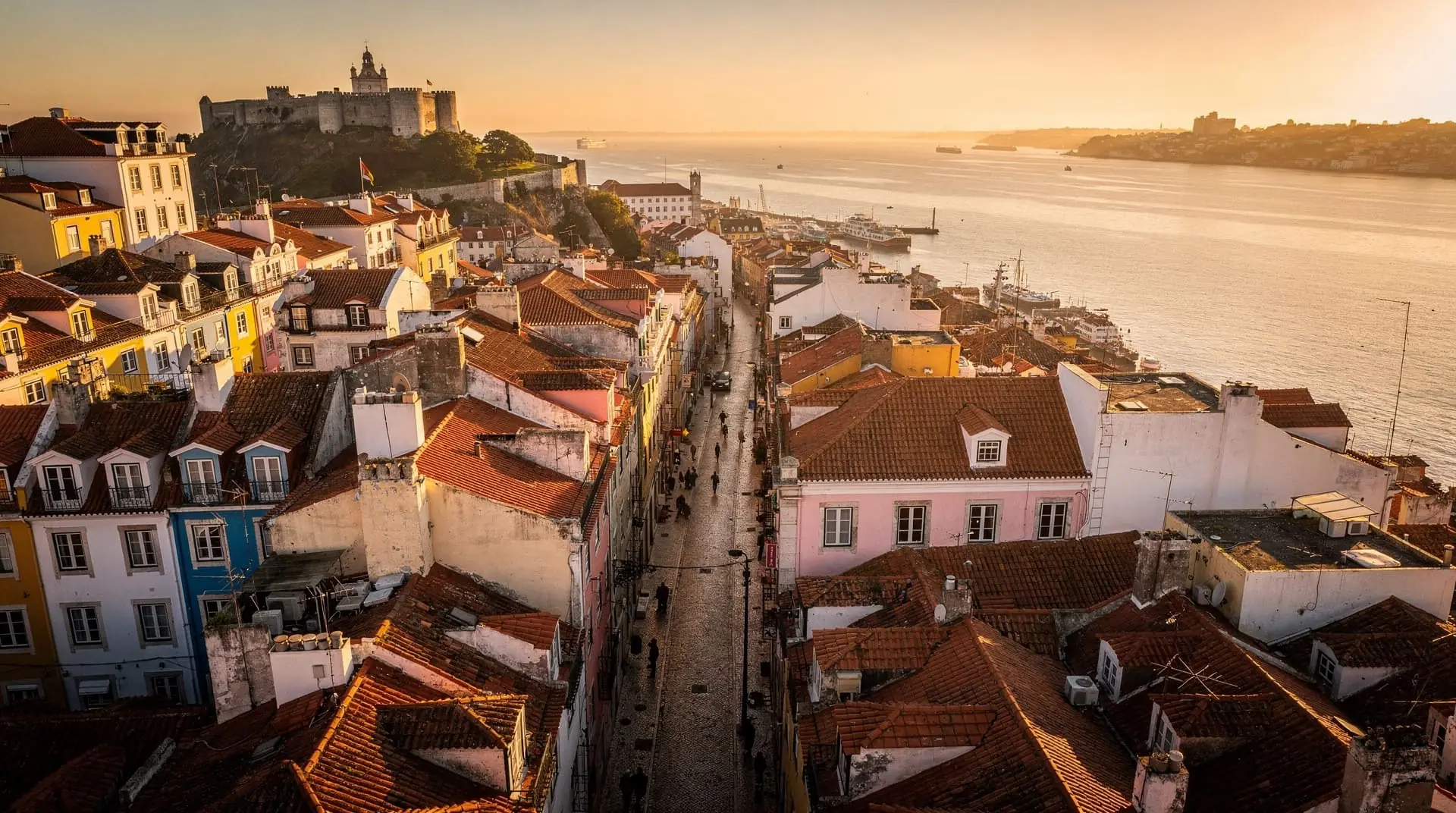
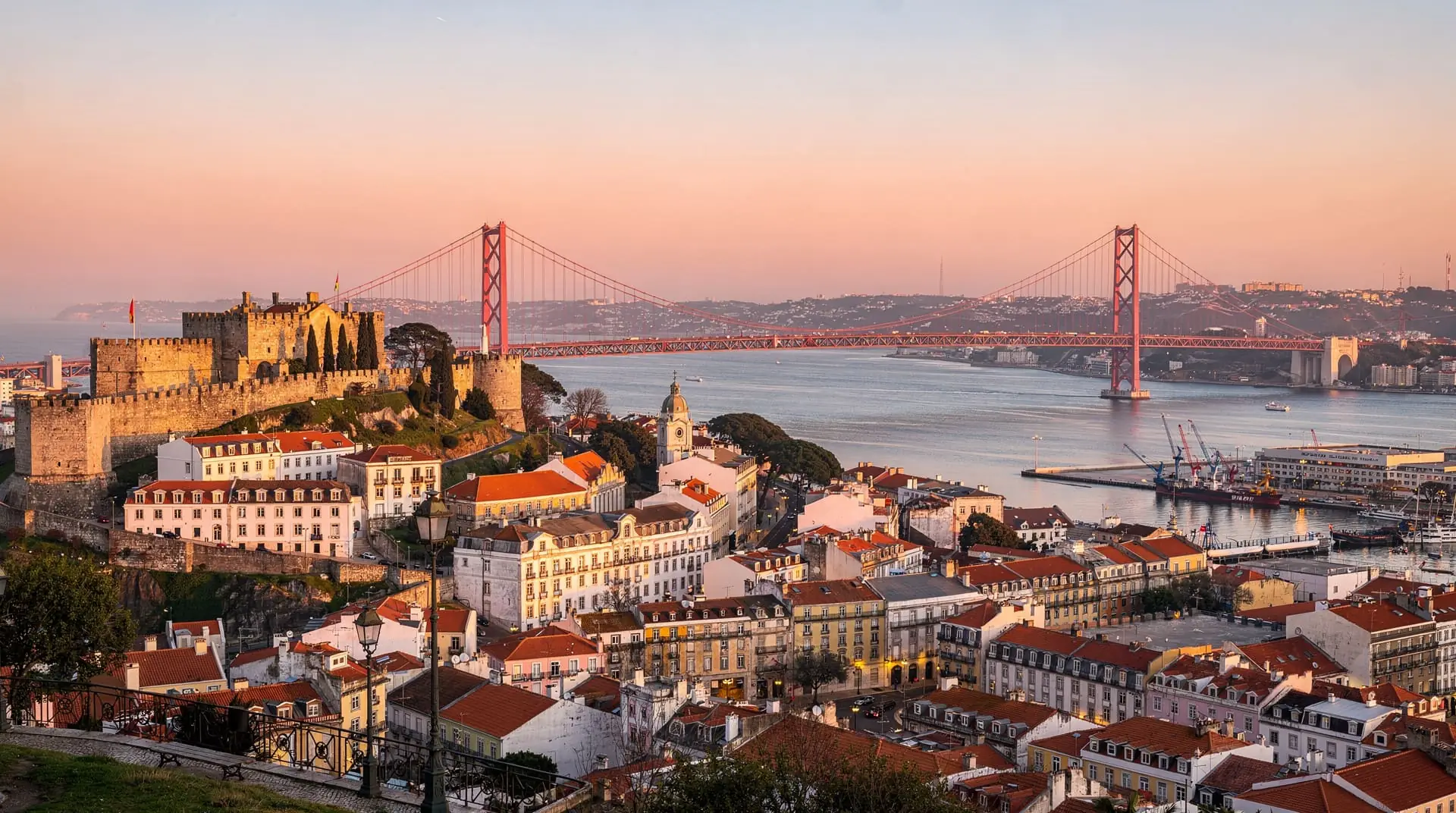
The best viewpoint in eastern Lisbon and one of the best in the city. The terrace in front of the Igreja da Nossa Senhora do Monte is smaller and less formal than Portas do Sol — a handful of benches, a small café, trees at the edges — but the panorama is extraordinary: São Jorge Castle at eye level to the south, the full Alfama roofscape below, the Tagus in the middle distance, and the 25 de Abril bridge visible on clear days to the west.
The viewpoint is a 15-minute walk uphill from Portas do Sol or a 5-minute walk from the Graça tram stop. It is particularly good at dawn (almost no one) and at dusk (golden light on the castle). The small café opens from around 09:00.
Miradouro da Graça
Slightly lower than Senhora do Monte and slightly more crowded, the Graça viewpoint is a square terrace with direct sight lines over Alfama and the river. A pergola covered in wisteria makes it photogenic in spring. The view differs from Portas do Sol mainly by elevation and angle — both are excellent.
Largo da Graça
The main square of the Graça neighbourhood has the unhurried rhythm of a Lisbon quarteirão (block) that has not been themed for tourism: a café with plastic chairs on the pavement, a newsagent, a pharmacy, a church, and an occasional market. On Sundays, a small antique and second-hand market sets up. Good for coffee and people-watching, nothing specific to tick off a list.
Igreja de São Vicente de Fora
At the edge of Graça and Alfama, on the Campo de Santa Clara: the 17th-century church and monastery. The tile-covered sacristy walkway has one of the finest collections of narrative azulejo panels in Portugal — 38 panels illustrating La Fontaine’s fables. Rooftop terrace with castle views (€8). Quiet and rarely crowded.
Mouraria: the fado neighbourhood
The birthplace of fado
Mouraria’s claim to fado’s origins rests on the story of Maria Severa (1820–1846) — a Mouraria tavern singer and prostitute whose performances with Count Vimioso brought fado into aristocratic notice. The mythology is partly constructed, but the neighbourhood’s role in early fado history is genuine.
A small public art installation near the Intendente square acknowledges Severa’s story with azulejo tiles. The fado scene in Mouraria today is lower-key than Alfama — fewer venues, more neighbourhood-focused.
Tasca da Mouraria (Rua dos Lagares) — informal fado on selected evenings, petiscos and wine, genuinely local audience. No pre-booking; arrive early.
For a guided exploration of the fado connection:
Alfama, Mouraria walking tour with fado night and tapas — covers both neighbourhoods in the context of fado’s history, ending with a live performance and dinner. A good way to understand the geography of fado across the two areas.
Intendente square
Praça do Intendente Pina Manique was for decades one of Lisbon’s rougher squares. Regeneration over the past 10 years has produced a mixed result: some gentrification (a small boutique hotel, coffee shops, a ceramics workshop), some authentic survival (the tile-fronted shop fronts, the Brazilian and South Asian community use). The square is atmospheric at any time of day and gives a real sense of a neighbourhood in transition.
Fábrica das Porcelanas da Vista Alegre has a retail outpost here: traditional Portuguese porcelain at retail prices.
Mouraria’s market and food
The Mouraria neighbourhood runs into the Martim Moniz square, which hosts a weekly multicultural market (weekdays from 10:00) with South Asian food stalls, South American grocers, and imported goods unavailable elsewhere in Lisbon. The food options around the square include some of the best and cheapest Indian and Bangladeshi cooking in Portugal.
Tasca da Esquina (Rua Domingos Sequeira — technically Campolide, but worth mentioning as a reference point for the neighbourhood tasca model): chef Vítor Sobral’s neighbourhood restaurant is the benchmark for petiscos done properly.
For Mouraria itself: Os Gazeteiros (Rua do Benformoso) is a neighbourhood tasca with excellent bacalhau com natas and a daily lunch special for under €10.
The Alfama–Graça–Mouraria walking circuit
The three districts connect naturally and reward an unhurried half-day walk:
Start at the Sé cathedral (tram 28 or walk from Baixa). Head through Alfama to Portas do Sol (45 minutes). Continue uphill to Largo da Graça and the Senhora do Monte viewpoint (20 minutes). Walk back south through Mouraria via Rua do Capelão to the Mouraria church and Martim Moniz square (25 minutes). From Martim Moniz, metro (green line) back to Baixa-Chiado or a 15-minute walk.
Total circuit: approximately 4–5 km, 2.5–3 hours of walking without stops. Add 1–2 hours for museums, lunch, and viewpoint time.
The Alfama and Graça neighbourhoods small group tour covers a similar circuit with a local guide — useful for visitors who want the history and storytelling without navigating independently.
Where to eat
The concentrated tourist-restaurant strip is largely absent here — which means more good value but more need to navigate.
Zé da Mouraria (Rua João do Outeiro) — the most reliable neighbourhood tasca: caldo verde soup, grilled fish, bacalhau à bras, cataplana on weekends. Daily specials board in Portuguese; staff will translate. €10–15 for a full lunch.
A Cevicheria (Rua Dom Pedro V, technically Príncipe Real but 10 min walk) — creative ceviches and modern Portuguese seafood. Worth the detour. ~€30/head; no reservations for the bar counter.
O Pitéu da Graça (Largo da Graça) — solid traditional cooking in the Graça square itself. Grilled meats, octopus rice, wine by the jug. €12–18/head.
India Gate and similar (Martim Moniz) — for cheap, good-quality South Asian cooking: the market stalls and small restaurants around Martim Moniz square offer thali, biryani, and street snacks at €5–8.
Honest tips
These are real neighbourhoods — not tourist districts. Locals live, shop, and work here. Be a considerate visitor: keep voices down in residential streets, do not photograph private courtyards without thought, support local businesses.
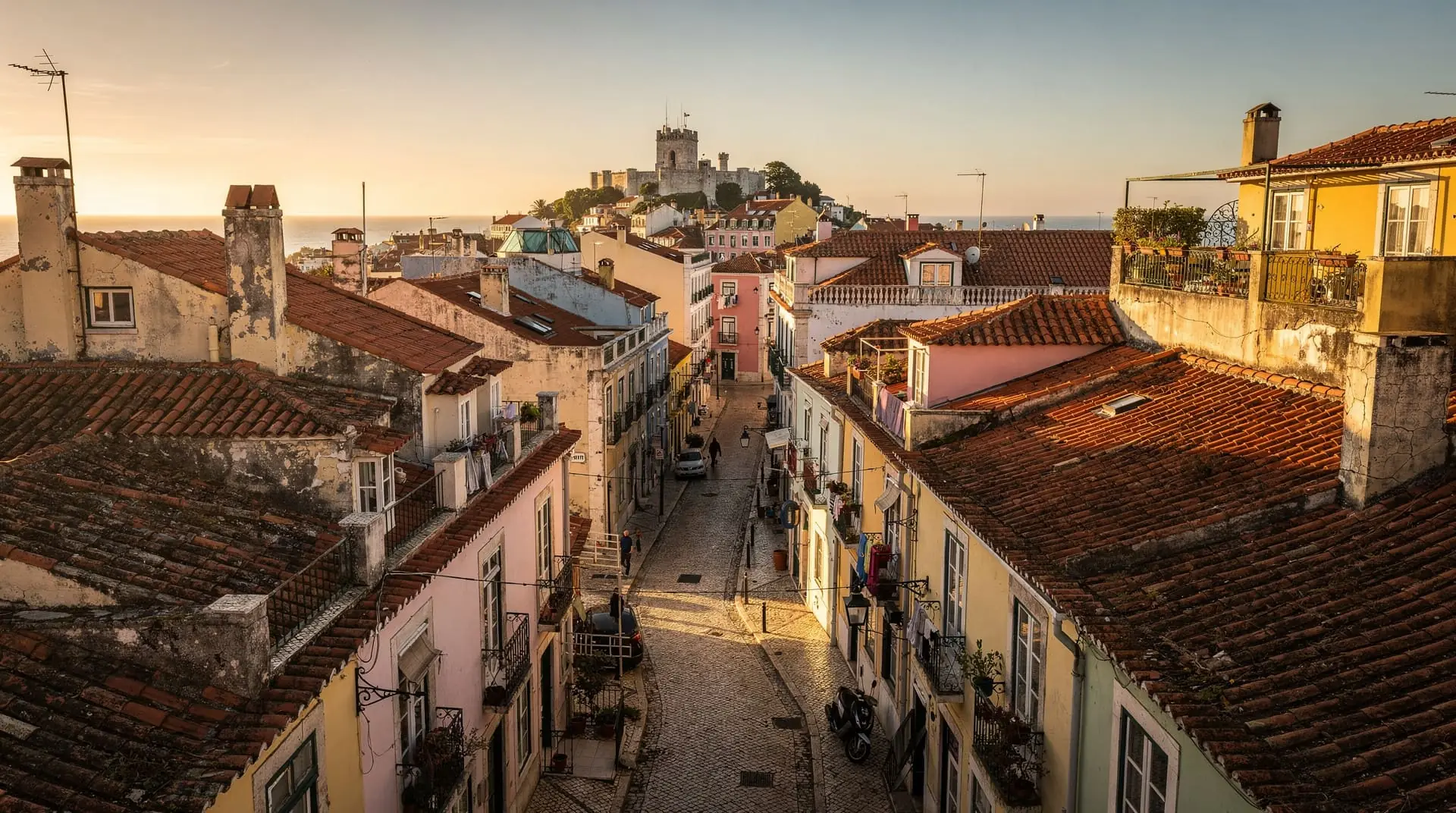
Less Instagram-groomed — Graça and Mouraria are not as photogenic as Alfama in the conventional sense. Fewer postcard-perfect tile facades, more lived-in streets with parked cars and laundry. For photographers willing to look harder, there is much more to find.
Getting lost is fine — the area is compact enough that getting lost for 20–30 minutes is pleasant rather than worrying. Carry a downloaded offline map (Google Maps offline or Maps.me).
Safety — both neighbourhoods are generally safe during the day. Mouraria around Intendente can feel edgy after midnight; stick to the main squares and lively streets.
In June — the Santo António festival (12–13 June) is most intensely celebrated in Alfama, but Graça and Mouraria participate. The neighbourhood street parties are smaller and more local — sardinhada stalls in every courtyard, music from windows. Wonderful if you can get accommodation in the area.
How it fits your Lisbon itinerary
Graça and Mouraria are most naturally visited as an extension of Alfama — they share a hillside, connect without a vehicle, and together form the most coherent walking half-day in eastern Lisbon.
The sequence that works: start at the Sé cathedral (morning), walk through Alfama to Portas do Sol, continue uphill to Graça and Senhora do Monte viewpoint, descend through Mouraria to Martim Moniz for lunch, metro back to Baixa or Chiado. Total: 4–5 hours of relaxed movement.
For a longer visit, add São Vicente de Fora church and the National Pantheon before reaching Portas do Sol. The full eastern-city day — Sé, Alfama, National Pantheon, Graça, Mouraria — takes from 09:00 to 16:00 with time for lunch.
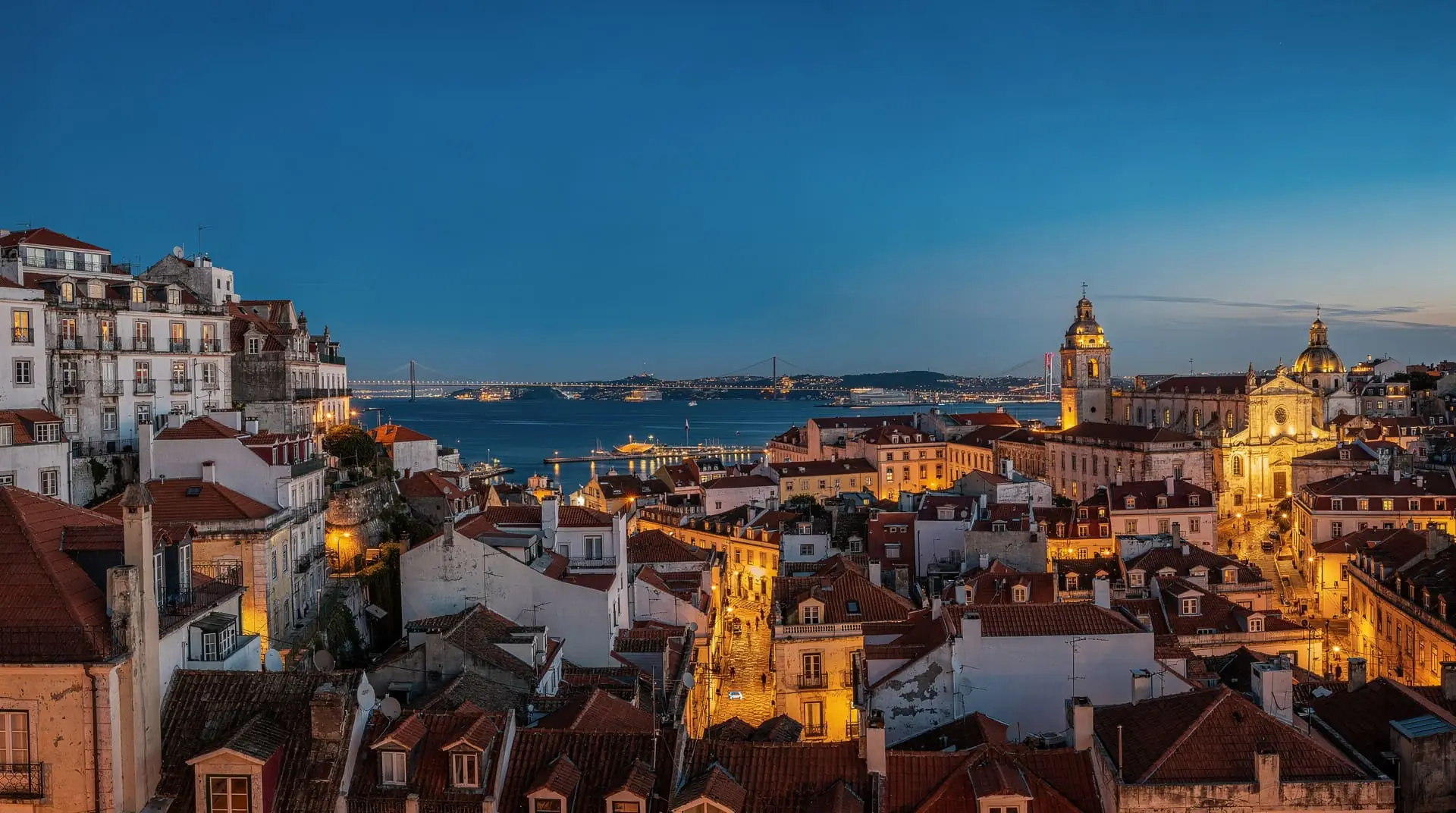
Evening is also interesting: a fado dinner in the Mouraria area, followed by a walk up to the Graça miradouro for the night panorama. Fewer crowds, softer light, and the city spread below lit up rather than bleached by midday sun.
Graça and Mouraria do not suit day-one visitors with limited time — Alfama and Belém come first. They suit the visitor on day three or four who has already done the main monuments and wants to understand what the city feels like for people who actually live in it. See first-time Lisbon tips for how to sequence everything.
The 4-day Lisbon itinerary allocates the third morning to this circuit. The Lisbon without a car itinerary uses it as a centrepiece of the urban walking days.
Graça/Mouraria vs Alfama: which viewpoint district first
Visitors often assume Alfama is the only hillside worth exploring — it isn’t, and the comparison helps decide where to spend limited time:
| Alfama | Graça & Mouraria | |
|---|---|---|
| Crowds | High, especially near Portas do Sol and the castle | Low — genuinely local |
| Best viewpoint | Portas do Sol, Santa Luzia | Senhora do Monte (wider, better light) |
| Food scene | Tourist-facing tascas, some good, some average | South Asian, Bangladeshi, and authentic Portuguese tascas |
| Photogenic factor | High — classic tile facades and tram shots | Lower — lived-in streets, less postcard-perfect |
| Suits | First-time visitors, day one or two | Repeat visitors, day three or later |
The honest sequence: do Alfama first for the monuments and the classic Lisbon photographs, then Graça and Mouraria on a later day once you want a slower, more local pace.
A local’s half-day, hour by hour
9:00 — Start at the Sé cathedral, coffee at a stall near Portas do Sol. 9:30–10:15 — Walk through Alfama’s lanes toward Graça, no fixed route. 10:15–11:00 — Miradouro da Senhora do Monte, quiet at this hour, best light. 11:00–11:45 — Largo da Graça, browse the Sunday antique market if it’s a Sunday, otherwise coffee at the square. 12:00–13:00 — Walk down through Mouraria, stop at the Maria Severa fado plaque near Intendente. 13:00–14:00 — Lunch at Martim Moniz market stalls or Zé da Mouraria. 14:00 — Metro (green line) from Martim Moniz back to Baixa-Chiado.
This sequence avoids backtracking and times the viewpoint for morning light, when Senhora do Monte is at its most rewarding and least crowded.
Frequently asked questions about Graça and Mouraria
Why should I visit Graça and Mouraria when Alfama is right there?
Alfama is more photogenic and has the major monuments. Graça and Mouraria offer something Alfama is losing: authenticity. The Senhora do Monte viewpoint is better than Portas do Sol. The food is cheaper. The streets are less crowded. If you have more than two days in Lisbon, the combination of all three is the best half-day in the eastern city.
Where is the best viewpoint in Graça?
Miradouro da Senhora do Monte, without question. Wider panorama than Portas do Sol, less crowded, better light at golden hour. See the best Lisbon viewpoints guide for a complete comparison.
Is Mouraria safe?
During the day: yes, completely. The neighbourhood is lively and used by many communities. Late at night, the streets around Intendente away from the main square can feel quiet and isolated — the standard urban caution applies. The market area around Martim Moniz is active until late evening.
What is the connection between Mouraria and fado?
Mouraria is considered the neighbourhood where Maria Severa — the founding figure of Lisbon fado — performed in the 1830s–40s. The neighbourhood’s role in fado history is documented in the history of fado guide. Today, a few small venues maintain vadio fado sessions, though Alfama has more options.
Can I walk to Graça from Alfama?
Yes, easily. From Portas do Sol in Alfama, it is a 15–20 minute uphill walk to Largo da Graça. The route through the lanes of upper Alfama and past the Campo de Santa Clara is pleasant. From there, Senhora do Monte is a further 5 minutes.
Should I visit Graça and Mouraria before or after Alfama?
After. Alfama has the major monuments (São Jorge Castle, the Sé) and is the natural first stop for understanding Lisbon’s layout. Graça and Mouraria reward a slower, more curious visit once you already have your bearings — ideally day three or later of a Lisbon trip.
Is there anything to book in advance for this area?
No. Graça and Mouraria are entirely a walk-and-wander experience — no timed tickets, no queues to plan around. The only exception is São Vicente de Fora’s rooftop terrace, which occasionally has limited hours worth checking ahead.