Baixa & Chiado
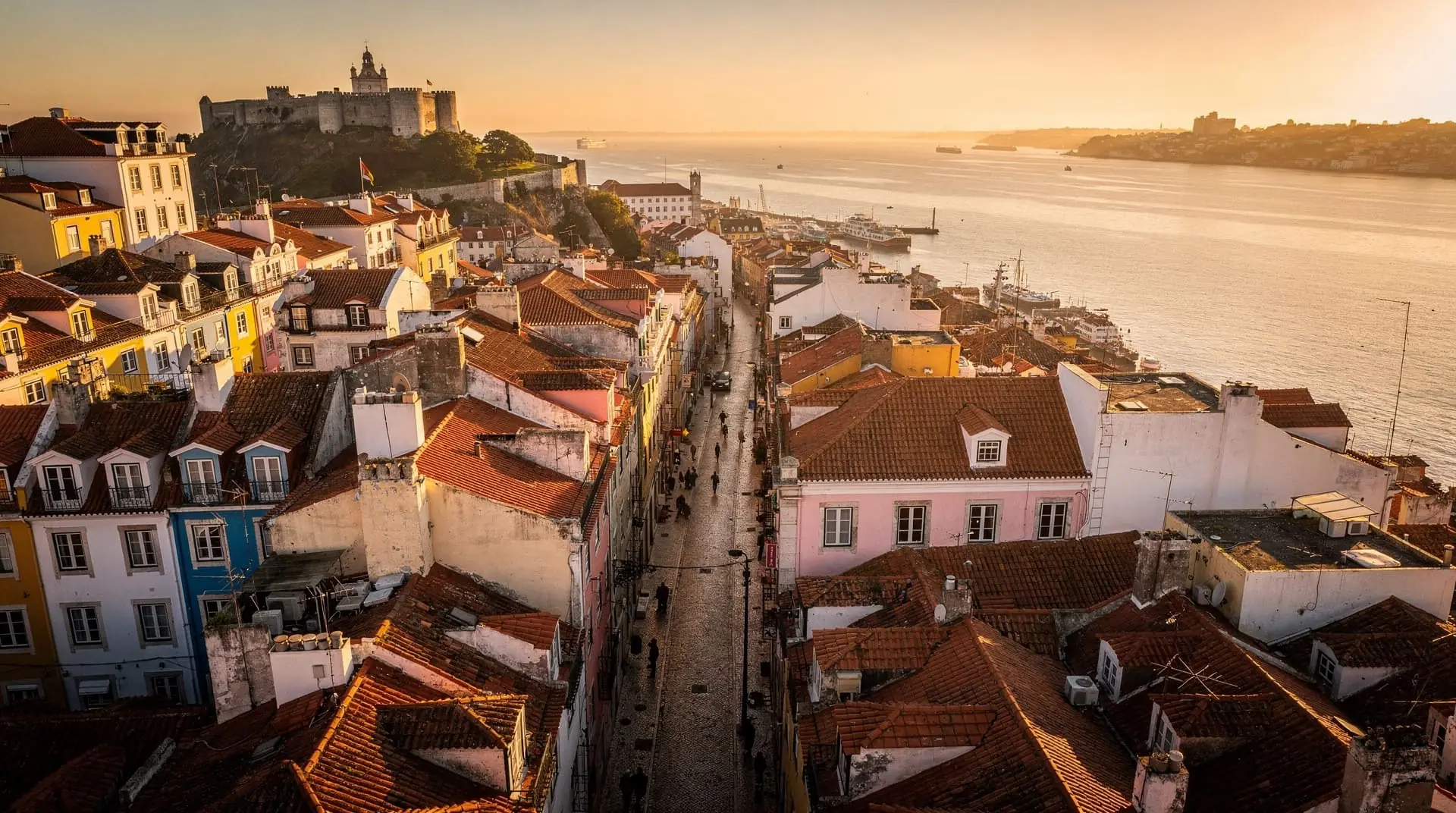
Baixa is Lisbon's Pombaline grid rebuilt after 1755. Chiado is its literary, shopping, café neighbour. What to see, eat, and skip in both districts.
Quick facts
Top tours and experiences
We earn a small commission if you book through GetYourGuide — at no extra cost to you. Every tour is hand-picked and verified.
Lisbon: 48-Hour Hop-On-Hop-Off Bus Tour and Oceanarium Entry
Lisbon: MAAT Entry Ticket & Dolphin Watching Boat Tour
Lisbon: Alfama, Mouraria Walking Tour with Fado Night, Tapas
Lisbon: Hop-On Hop-Off Bus Tour
Lisbon: 1-or 2-Day Hop-On Hop-Off Bus Tour
Lisbon: Boat Tour Ticket and Hop-on Hop-off 48-Hour Bus
The contrast between Baixa and Chiado makes them interesting together. Baixa — the lower town — is rational, grid-straight, and deliberately functional: it was rebuilt to a plan by the Marquis of Pombal after the 1755 earthquake destroyed the medieval city here. Wide pedestrian streets, uniform building heights, yellow stone facades. Efficient and slightly severe.
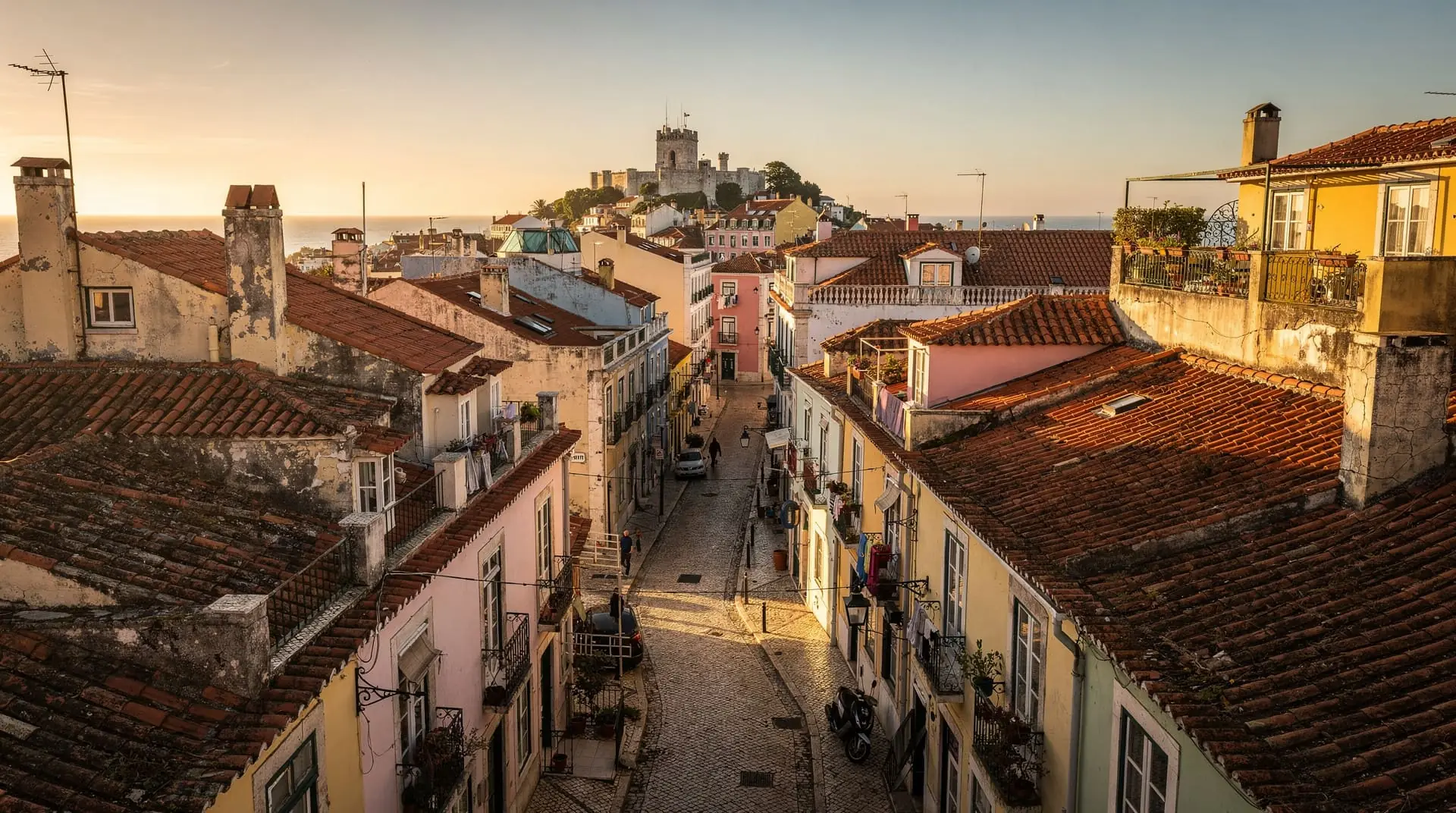
Chiado climbs the hill immediately west of Baixa and was always something different: literary cafés, theatres, the city’s better bookshops, a neighbourhood that attracted writers and intellectuals and still does. A 1988 fire destroyed much of it; the reconstruction was careful. Today it blends traditional pastry shops and century-old bookstores with international fashion brands and decent restaurants.
Together they form the walkable, flat (or manageable) centre of Lisbon — the part almost every visitor passes through, whether they mean to or not.
| Where | City centre, between the Tagus and the base of the Bairro Alto hill |
| Cost | Free to walk; Santa Justa lift €5.30, Story Centre €7.50 |
| Time needed | Half a day |
| Getting there | Metro Baixa-Chiado (blue/green lines) |
| Best time | Morning for monuments, evening for restaurants |
Getting there
Metro — Baixa-Chiado station sits on both the blue and green lines, directly beneath the hill boundary between the two districts. One of the busiest metro stations in the network; exits lead directly onto Rua do Carmo in Chiado (escalators to the top) or down to Rua do Ouro in Baixa.
From Rossio — Rossio station and square (Praça Dom Pedro IV) are at the north end of Baixa, a 3-minute walk from the central grid. The station has direct trains to Sintra (40 min, ~€2.35).
From Cais do Sodré — The ferry terminal and train station for Cascais are at the south-west edge of Baixa, 10 minutes on foot from Praça do Comércio. The green metro line connects both ends.
From Alfama — On foot east to west: 15 minutes from the Sé to Praça do Comércio, following the waterfront.
Tram 28 passes through Chiado on its way between Alfama and Prazeres. The Chiado stop is on Rua da Conceição.
Baixa: the Pombaline grid
Praça do Comércio
The great riverside square — 188 m wide — was the royal gateway to Lisbon before 1755, and even now arriving from the river by ferry produces a genuine sense of occasion. The central triumphal arch (Arco da Rua Augusta) frames the view north toward Rossio. The surrounding arcades house restaurants, the Lisbon Welcome Centre, and a handful of decent wine bars.
The square is large and mostly empty by design — it was built for royal processions. Today it hosts festivals, markets, and a permanent echo of tourists photographing the arch from the same angle. Worth a stop of 20 minutes; the ferry crossing from Cacilhas gives the best exterior view.
Rua Augusta and the arch
The main pedestrian axis runs from Praça do Comércio north to Rossio, about 600 m. Lined with a mix of international chain stores, souvenir stalls, street performers, and a few good cafés — it is the commercial spine. The Rua Augusta Arch (€3.50 to climb to the top terrace) gives a view over the square and the grid; pleasant but not essential if you are already doing the Santa Justa lift or the Belém tower.
Elevador de Santa Justa
The cast-iron lift designed by Raoul Mesnier du Ponsard (not Eiffel, contrary to what half the internet claims) connects Rua do Ouro in Baixa to Largo do Carmo in Chiado. A round-trip costs €5.30 (free with Lisboa Card). The top terrace has a café and 360-degree views. The queue is longest 11:00–16:00; consider arriving at opening (07:30 on weekdays) or late afternoon. Alternatively, walk up Rua do Carmo from the metro exit — it is a gentler climb than it appears.
Rossio square
Praça Dom Pedro IV, known universally as Rossio, is the living room of Baixa: wave-pattern cobblestones, two baroque fountains, and outdoor café terraces. The neo-Manueline Rossio train station facade on the north side is worth a look even if you are not catching a train. The square gets crowded but remains genuinely used by locals — not entirely colonised by tourism.
Chiado: literary quarter
A Brasileira
The 1905 coffee house on Rua Garrett is Chiado’s most photographed café. Fernando Pessoa’s bronze statue sits at the outside tables. The interior is all dark wood, Art Nouveau mirrors, and oil paintings. Coffee is standard (€1.50 espresso) and the food is unremarkable; go for 20 minutes of atmosphere, a bica, and a look at the Pessoa statue. Do not eat lunch here — there are better options nearby.
Bertrand bookshop
A few steps from A Brasileira on Rua Garrett: the world’s oldest operating bookshop (founded 1732, verified by Guinness). The ground floor has an excellent English-language Portugal travel and literature section. Worth 15 minutes even if you are not buying.
Livraria Aillaud e Lellos
Less famous than Porto’s Livraria Lello but worthwhile: a small art gallery bookshop on Rua Nova da Trindade with a good selection of art and design books.
Praça Luís de Camões
The small square at the heart of Chiado, named for Portugal’s national poet. Benches, pigeons, and a good vantage point for watching the neighbourhood. Five minutes from A Brasileira.
Manteigaria
The pastel de nata bakery on Rua do Loreto (and a second counter inside Mercado da Ribeira at Time Out Market). The best place in the city centre for pastéis de nata without the Belém queue. A tart costs €1.40; eat it warm at the counter with a bica. Open from 08:00.
Where to eat
Baixa and Chiado have a wide range — from excellent to overpriced. The worst value is usually in the Praça do Comércio arcades. The best is uphill in Chiado.
Taberna da Rua das Flores (Rua das Flores 103, Chiado border) — outstanding petiscos in a tiled room. Arrive at 12:30 or 19:30 for a seat; no reservations. Budget €20–30 a head.
Cantinho do Avillez (Rua dos Duques de Bragança) — chef José Avillez’s casual restaurant. Modern Portuguese cooking, consistently good. ~€30–40/head. Book ahead.
Cervejaria Trindade (Rua Nova da Trindade) — 19th-century beer hall in a converted monastery. Famous tiles, cold Sagres on draught, reliable petiscos and seafood. Touristy but genuine. €20–35/head.
Time Out Market (Cais do Sodré, 5 min from Chiado) — 35 restaurants under one roof. Not cheap (€12–20 per dish) but quality is curated and you can mix different cuisines at one table. Better at lunch than dinner.
O Corvo (Rua do Corvo, Intendente) — technically outside the Baixa core but 15 min on foot. Excellent informal wine bar with real petiscos and a thoughtful natural wine list.
For the full picture, see where to eat in Lisbon.
What to skip
The Praça do Comércio restaurants — overpriced, targeting foot traffic. The location is perfect; the food is not worth it. Walk 200 m uphill for better value.
The Santa Justa queue at peak hours — if you want the top view and the lift queue exceeds 30 minutes, skip and use the free Arco da Rua Augusta terrace or the Elevador do Chiado escalators for the uphill transfer instead.
Souvenir shops on Rua Augusta — azulejos (tiles) purchased here are usually printed reproductions. Real hand-painted tiles come from workshops in Alfama or Almada; see Portuguese souvenirs guide.
Walking tour options
The district is compact enough to explore independently, but a guided introduction helps with the 1755 history and urban planning logic that is not obvious from the outside.
Baixa-Chiado guided walking tour — covers the Pombaline grid, Praça do Comércio, and Chiado in about 2 hours. Good for context on the first morning.
For a self-guided option with audio, the Baixa and Chiado self-guided walking tour works via a phone app and can be paused and resumed at any point.
For a broader city introduction that uses Baixa as its starting point, see the best of Lisbon walking tour.
Where to stay in Baixa and Chiado
The area is convenient but noisy (particularly Rua Augusta until late). Good options:
Bairro Alto Hotel (Chiado, Praça Luís de Camões) — the address in central Lisbon. Rooftop bar with Tagus views, 87 rooms. ~€300–500/night.
Internacional Design Hotel (Rossio) — creative design hotel above Rossio station. Each floor has a different designer aesthetic. ~€150–200/night, good value for the location.
Hotel Lisboa Plaza (Avenida da Liberdade edge) — classic 4-star, quieter than the Rossio options, 10 minutes walk north of Baixa. ~€160–220/night.
Hotel do Chiado (Chiado) — smaller boutique hotel, good location, terrace bar. ~€180–250/night.
For a full comparison see where to stay in Lisbon.
Tagus river access from Baixa
Praça do Comércio is the main ferry terminal for crossings to Cacilhas and Almada on the south bank. The ferry (€1.40, runs every 10–30 minutes, 10 minutes crossing) is one of Lisbon’s better value experiences — the return view of the city from the water is the best you will get without a private boat. On the Almada side, the Cristo Rei statue and the lift up to the viewpoint (€6) are reasonable if you have time. Full logistics in the ferries guide.
Cais do Sodré, 10 minutes west of Praça do Comércio, is the main terminal for the Cascais line train and the departure point for evening sunset cruises on the Tagus. The Time Out Market is in the same building as the terminal. The Pink Street nightlife strip begins here.
For a sunset boat tour departing from this area, see the Tagus sunset cruises guide — multiple operators leave from Cais do Sodré and from the Terreiro do Paço pier.
Lisbon Story Centre
On Rua Augusta, in the lower Baixa grid: the Lisboa Story Centre is an interactive history museum covering the city from its founding to the 1755 earthquake and reconstruction. Multimedia displays, a dramatic earthquake simulation room, and good English throughout. Entry €7.50 (or covered by Lisboa Card). Takes about 75 minutes. Not a world-class museum, but a useful primer if this is your first time and you want historical context before walking the district.
Lisboa Story Centre admission ticket — book online for the timed entry and skip the occasional desk queue.
How this fits your itinerary
Baixa and Chiado are almost inescapable in any Lisbon itinerary — you will pass through constantly as they connect other districts. Dedicate the first half of your first day here for orientation (Rossio, Rua Augusta, Praça do Comércio, up to Chiado). Then use the area as a navigation hub for the rest of the trip.
The 1-day Lisbon itinerary passes through Baixa in the morning. The 3-day itinerary gives Baixa and Chiado their own half-day before branching to Alfama and Belém.
Opening hours and Sunday planning
Portuguese retail hours catch first-time visitors out more than almost anything else in Baixa and Chiado. Most independent shops open around 10:00 and close for an hour at lunch (roughly 13:00–14:00) — a habit that has faded in the chain stores on Rua Augusta but persists in Chiado’s smaller bookshops and boutiques. Sunday hours are shorter across the board: many independent shops close entirely, though the shopping centres and larger chains on Rua Augusta stay open. Cafés and restaurants keep normal hours seven days a week, so Sunday is actually a good day for the walking route above if shopping isn’t the priority.
Museums follow their own patterns worth knowing before you plan a morning around them: the Lisboa Story Centre and most paid attractions in the district are open daily, but several offer free or discounted entry on the first Sunday of the month, which draws bigger crowds in exchange for the saving. If a specific museum visit matters more to you than avoiding a queue, check whether your visit lands on that first Sunday before assuming it works in your favour. For a broader sense of how Portuguese working hours affect a day’s planning across the city, see the getting around Lisbon guide.
Public holidays add another layer worth checking before you build a tight schedule around Baixa and Chiado. Portugal observes a fuller calendar of national and municipal holidays than many visitors expect, and on these days shops close entirely while restaurants and cafés generally stay open, sometimes with reduced hours. None of this should deter a visit — it simply means checking the date against a Portuguese holiday calendar if a specific shop or museum is the reason for your trip, rather than discovering the closure on arrival.
Lisbon’s own municipal holiday, Santo António on 13 June, closes many Baixa and Chiado shops entirely and shifts the district’s energy toward the neighbouring street festivals rather than commerce — worth knowing if your trip happens to land on that date, since it changes the character of a Baixa visit more than most calendar holidays do.
Frequently asked questions about Baixa and Chiado
How long should I spend in Baixa and Chiado?
A half-day is enough to walk the main route (Praça do Comércio → Rua Augusta → Rossio → Chiado → back down via Santa Justa or the escalators). Add an extra hour if you want to visit the Lisboa Story Centre or explore the bookshops. Factor in lunch — Chiado has the better restaurants.
Is the Santa Justa lift worth it?
For the experience and photos, yes. For the view alone, the Arco da Rua Augusta terrace or the free viewpoints in Chiado (Largo do Carmo) are comparable and without the queue. With the Lisboa Card it is free; without it, €5.30 for a round trip.
What is the difference between Baixa and Chiado?
Baixa is the flat Pombaline grid rebuilt after 1755 — commercial streets, Rossio square, Praça do Comércio. Chiado is the uphill literary quarter west of Baixa, reached by the Santa Justa lift or escalators — bookshops, A Brasileira café, better restaurants. They connect at the top of the Baixa grid.
Where do I get the best pastel de nata near Chiado?
Manteigaria on Rua do Loreto, open from 08:00. Consistently excellent, usually a short queue but nothing like Belém. The original Pastéis de Belém is 20 minutes away by tram 15E — if you are going to Belém anyway, save the craving. See the pastéis de nata guide.
Is Baixa safe at night?
The main streets are busy and generally safe. Avoid the quieter side streets east of Rua da Prata very late at night; the Intendente area (north end of Baixa) has improved significantly but still feels rough at edges after midnight. As always, watch for pickpockets in crowded areas.