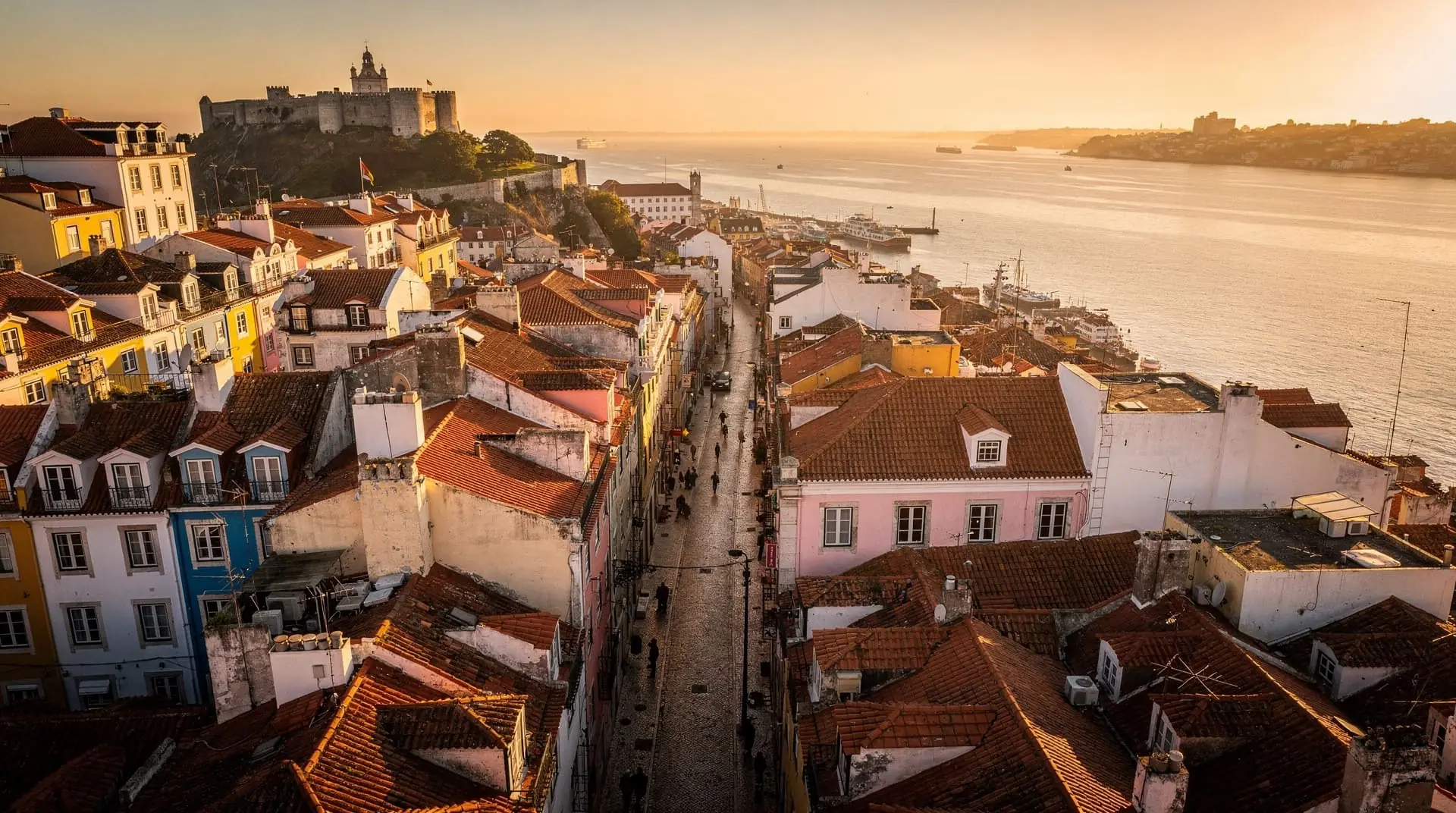
Bairro Alto & Príncipe Real
Bairro Alto is Lisbon's nightlife epicentre. Príncipe Real, just above, is the refined neighbour — botanical garden, design shops, weekend market.
Quick facts
Top tours and experiences
We earn a small commission if you book through GetYourGuide — at no extra cost to you. Every tour is hand-picked and verified.
Lisbon: 48-Hour Hop-On-Hop-Off Bus Tour and Oceanarium Entry
Lisbon: MAAT Entry Ticket & Dolphin Watching Boat Tour
Lisbon: Alfama, Mouraria Walking Tour with Fado Night, Tapas
Lisbon: Hop-On Hop-Off Bus Tour
Lisbon: 1-or 2-Day Hop-On Hop-Off Bus Tour
Lisbon: Boat Tour Ticket and Hop-on Hop-off 48-Hour Bus
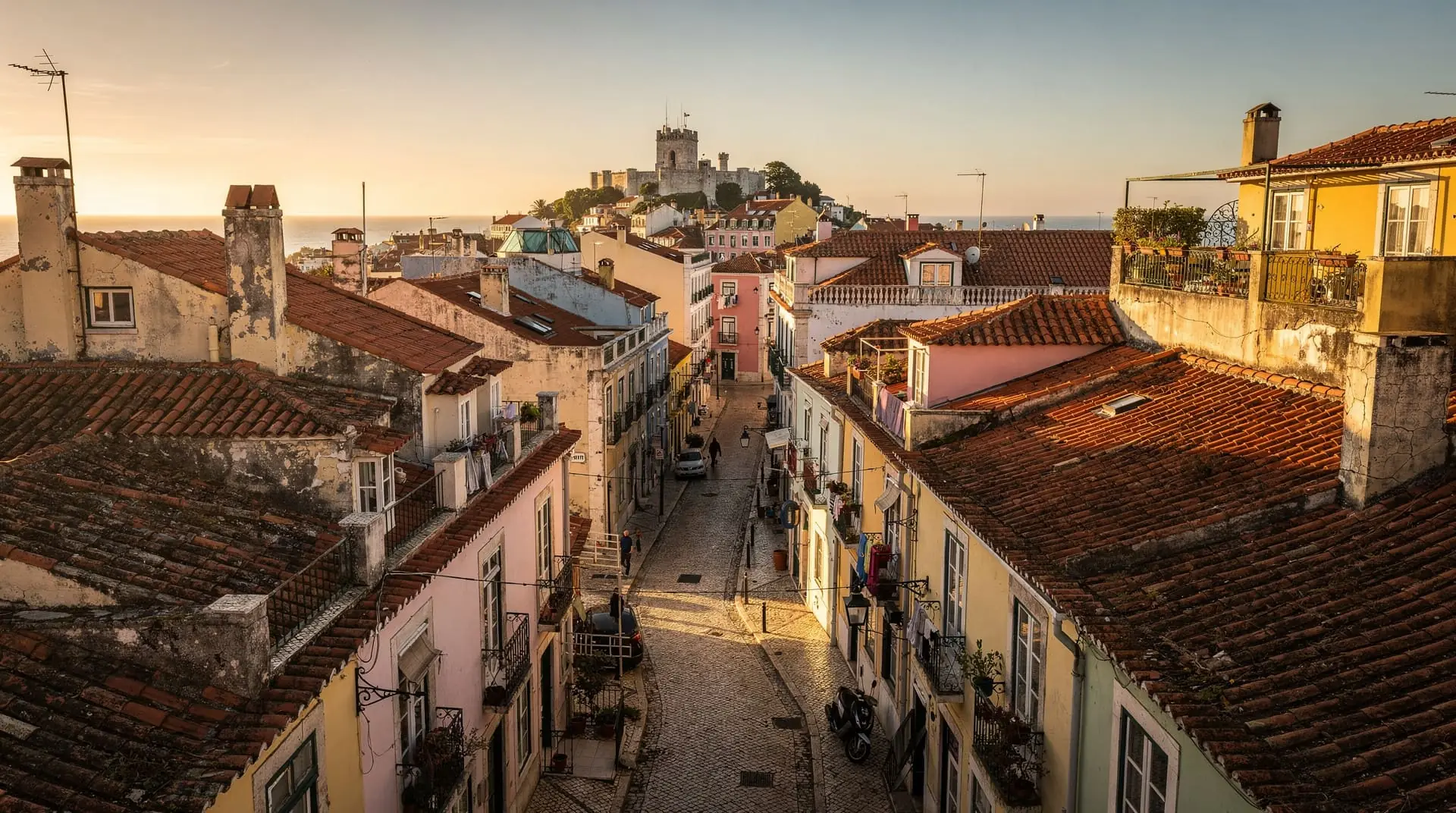
Two neighbourhoods that share a hill and very little else in character. Bairro Alto — the Upper Quarter — is Lisbon’s nightlife district: a dense, labyrinthine grid of bars, fado restaurants, tascas, and music venues that fills up after 22:00 and empties around 04:00. The streets are narrow enough that the noise from a dozen open bar doors merges into a continuous wall of sound.
Half a kilometre north, Príncipe Real occupies a quieter section of the same hill. It is Lisbon’s most refined neighbourhood: a botanical garden, excellent independent bookshops, the weekend Feira de Antiguidades (antique market), and a concentration of good brunch spots and natural wine bars. The kind of place you visit in the daytime with a clear head, not at midnight.
Most visitors do both, in sequence: Príncipe Real in the afternoon, Bairro Alto after dinner.
| Where | Hillside west of Chiado, Príncipe Real just north of Bairro Alto |
| Cost | Bar drinks €4–7; Botanical Garden €3.50 |
| Time needed | Half a day (Príncipe Real) or an evening (Bairro Alto) |
| Getting there | Metro Baixa-Chiado + uphill walk, or Elevador da Glória |
| Best time | Príncipe Real by day; Bairro Alto from 22:00 Thu–Sat |
Getting there
Metro — Baixa-Chiado station (blue/green lines) is the nearest metro to both districts. From the Chiado exit, Bairro Alto is a 5-minute uphill walk (Rua do Norte or Rua Garrett). Príncipe Real is 15 minutes further on foot north along Rua da Escola Politécnica.
From Cais do Sodré — 15-minute walk uphill, or tram 28 to the Camões stop.
Bus — Bus 758 runs from Cais do Sodré through Chiado to Príncipe Real (Jardim Botânico stop). Bus 773 runs a similar route. Both run late.
On foot from Rossio — head west up Rua do Carmo (shopping street), continue through Chiado, and the Bairro Alto grid starts above Rua Garrett. Príncipe Real is north of Bairro Alto along Rua da Escola Politécnica.
The funicular Elevador da Glória runs from Praça dos Restauradores (beside Rossio) to the top of Bairro Alto — a short ride, €3.90 one way, or covered by the Lisboa Card. Worth using once for the experience.
Bairro Alto: Lisbon after dark
Bairro Alto is Portugal’s most concentrated nightlife district: roughly 20 square blocks with upwards of 100 bars, restaurants, and fado houses. The rhythm is consistent: restaurants from 19:00, bars from 22:00, the streets fully alive from 23:00, winding down around 03:00–04:00.
What to do
Bar-hopping — the Bairro Alto model is small bars (40–80 people capacity), mostly with no entry fee, drinks at €4–7, and music from a Spotify playlist or a small speaker. Many have no seating — you stand on the pavement outside with your drink. Streets to start: Rua da Barroca, Rua do Norte, Rua do Diário de Notícias.
Fado vadio — informal fado happens in tascas throughout Bairro Alto. Unlike the Alfama tourist dinners, this is neighbourhood fado: a singer who works in the restaurant or came in from next door, a Portuguese guitar, a crowd of regulars who know the songs. Tasca do Chico has a branch near here; several other small venues on Rua do Norte and Rua do Diário de Notícias host it on weekdays.
Live music venues — Zé dos Bois (Rua da Barroca) is an arts centre with a genuine music programme: jazz, experimental, world music. Minimal admission fee, usually €5–10.
Wine bars — the neighbourhood has a good concentration of wine-focused bars. Enoteca Chafariz do Vinho (Rua da Mãe d’Água) occupies a 18th-century cistern and has one of the best Portuguese wine lists in the city, with glasses from €5.
Bairro Alto nightlife tour with drinks — a guided bar tour of the neighbourhood for visitors who want local context on which venues to prioritise. Includes welcome drinks and skips the longest queues. Useful for first-timers on a single night.
What to eat (dinner before the bars)
Taberna da Rua das Flores (Rua das Flores, Chiado border) — the most consistent petiscos spot in the area. Arrive early or wait.
Alma (Rua Anchieta, Chiado) — Henrique Sá Pessoa’s flagship: sophisticated modern Portuguese cooking. One Michelin star, ~€70/head. Book well ahead.
Pharmácia (Rua Marechal Saldanha) — quirky restaurant in a former pharmacy, decent food, good terrace. More fun than gastronomically serious. ~€25/head.
O Telheiro do Marquês (Travessa da Queimada) — old-school Bairro Alto tasca, no frills, bacalhau and grilled meats at €10–15. The kind of place that has been here for 40 years and will be here for 40 more.
Príncipe Real: the refined hill
Príncipe Real emerged as Lisbon’s wealthy 19th-century residential neighbourhood — solid stone palaces, wide pavements, a proper botanical garden. It remains upmarket but has become more mixed over the past decade, with independent shops, good restaurants, and a weekend antique market that draws the city’s design-conscious crowd.
Jardim Botânico (Botanical Garden)
The main botanical garden of the University of Lisbon occupies a dramatic slope below Rua da Escola Politécnica. 1.5 hectares of subtropical plants, large old trees, and a palm collection that feels genuinely wild in places. Entry €3.50, free on the first Sunday of the month. Quiet, rarely crowded, and a good respite from cobblestones.
A separate entry takes you to the Natural History and Science Museum with its original 18th-century natural history collection — interesting if you like taxidermied megafauna and mineral specimens.
Feira de Antiguidades (weekend antique market)
Saturday and Sunday mornings, Praça do Príncipe Real fills with antique dealers: tiles, bronze, furniture, books, vintage postcards, old maps. Quality varies; prices are negotiable. Arrive before 11:00 for the best material before the dealers start trading between themselves.
Shopping
Príncipe Real has the best independent shopping in Lisbon — not luxury brands, but design, ceramics, books, vintage, and food.
- Embaixada (Praça do Príncipe Real 26) — a neo-Moorish palace converted into a concept shopping gallery. About 30 Portuguese independent brands: clothing, ceramics, perfume, food. The architecture is worth the detour even without buying.
- El Corte Inglés is nearby but breaks the neighbourhood’s character; skip it.
- Conserveira de Lisboa (Rua dos Bacalhoeiros, technically Baixa but 10 min walk) — tins of Portuguese sardines, tuna, and mackerel, beautifully packaged. The best edible souvenir from Lisbon.
Brunch and coffee
Princesa do Castelo (Rua Costa do Castelo) — the walk takes you slightly east toward Alfama, but this café’s terrace below the castle walls is one of the city’s best. Coffee and pastries only.
Copenhagen Coffee Lab (Rua Nova da Piedade) — Scandinavian-style specialty coffee in a bright space. Good pastries. Reliable wifi. ~€5 for a coffee.
Nicolau (Rua de São Nicolau) — one of Lisbon’s most popular brunch spots. Queue at weekends. Eggs benedict, açaí bowls, fresh juices. Budget €18–25 for brunch.
Wine tasting in Príncipe Real
The neighbourhood has a concentration of wine bars and specialist shops:
Premium wine and tapas tasting session — a 2-hour guided tasting of Portuguese wines paired with petiscos. Good for visitors who want to understand the regional differences (Alentejo, Douro, Setúbal) before buying. Takes place in a wine bar rather than a winery, which suits city itineraries.
Walking to LX Factory from here
From the south end of Bairro Alto, heading west down Rua do Século and continuing past Calçada do Combro, you reach the waterfront in about 20 minutes. LX Factory — a converted 19th-century industrial complex under the 25 de Abril bridge — hosts independent shops, restaurants, and a Sunday market (11:00–18:00) that is one of the better weekend activities in Lisbon. Worth combining with a morning in Príncipe Real and an afternoon in Belém, making the whole western arc of the city a logical single day.
On Sundays, the LX Factory market is probably Lisbon’s best: food vendors, vintage clothing, design objects, books, and ceramics from Portuguese makers. The surrounding restaurants open for brunch from 11:00; the Danish food stand (smørrebrød) is consistently good.
São Pedro de Alcântara viewpoint
At the top of the Glória funicular, the Miradouro de São Pedro de Alcântara gives a panoramic view across Baixa toward Alfama and the castle. The viewpoint has a mapped plan at street level identifying every landmark visible from the terrace. Benches, a garden, and usually a busker. Free. One of the best miradouros in the city without the altitude climb.
From here, Bairro Alto is three blocks east; Príncipe Real is 10 minutes north.
Honest tips
Noise — Bairro Alto residents have been complaining about nighttime noise for 30 years. The municipality has imposed some sound limits (bars must keep doors closed after midnight), but the street noise from 100+ venues is inescapable on weekend nights. If your hotel is in Bairro Alto, ear plugs are not optional; they are survival equipment. Príncipe Real is quieter.
The Pink Street alternative — Rua Nova do Carvalho (Cais do Sodré, 15 minutes walk south) is painted pink and has a different vibe: larger bars, more DJ music, younger international crowd. Not Bairro Alto’s neighbourhood-bar character, but less crowded in peak season. See the Pink Street guide.
Pub crawls — organised pub crawls exist for Bairro Alto and are reasonably priced (€15–25, includes drinks). They are good for solo travellers who want to meet people. For everything else, independent bar-hopping is more interesting. See pub crawls in Lisbon.
Taxi and Uber from Bairro Alto at 02:00 — demand exceeds supply on weekend nights. Either walk down to Chiado (10 min) where supply is higher, or book your Uber 15–20 minutes before you actually need it.
The Museu do Chiado (Museu Nacional de Arte Contemporânea)
On the Chiado–Bairro Alto edge, Rua Serpa Pinto: Portugal’s national museum of contemporary art, housed in a former convent. The 19th- and 20th-century Portuguese art collection is the strongest — sculpture, symbolism, and early modernism that receives almost no international attention. Entry €4.50; free on Sunday mornings. Often overlooked, which means you can move through at your own pace.
The museum garden is a quiet retreat from the Chiado streets — stone benches, trees, and a view over the lower city. Open when the museum is open; access via the entrance on Rua Serpa Pinto.
How it fits your itinerary
Príncipe Real is most naturally combined with a Chiado afternoon: visit Chiado from 14:00, walk uphill through Bairro Alto (most interesting by day in a quieter way), reach Príncipe Real by 16:00, browse the shops, have a coffee, walk down via São Pedro de Alcântara viewpoint as the sun drops.
Bairro Alto nightlife starts after dinner — plan dinner in Chiado or Príncipe Real from 19:00–21:00, then bars from 22:00 onward.
The romantic Lisbon itinerary combines Príncipe Real with Alfama at sunset and a Tagus cruise. The 2-day itinerary includes Bairro Alto for dinner on day two.
Bairro Alto vs Príncipe Real: which one fits you
| Bairro Alto | Príncipe Real | |
|---|---|---|
| Best for | Bar-hopping, fado vadio, late nights | Botanical garden, design shops, brunch |
| Peak hours | 22:00–02:00 Thu–Sat | 10:00–18:00, any day |
| Noise level | Very high after midnight | Quiet |
| Typical spend | €4–7 per drink, no entry fee | €5 coffee, €18–25 brunch |
| Good for kids | No | Yes, especially the garden |
Neither neighbourhood works well as a full standalone day — Bairro Alto is dead before 19:00 and Príncipe Real has little going on after dark. The combination described above (Príncipe Real by day, Bairro Alto after dinner) is the pattern almost every local and repeat visitor settles on, and it avoids the mistake of showing up to Bairro Alto at 4pm expecting atmosphere that only exists after dark.
Travellers with young children or an early flight the next day generally do best sticking to Príncipe Real entirely and treating Bairro Alto as a walk-through rather than a destination — the garden, the shops and a relaxed lunch cover a satisfying half-day without any late-night commitment. Solo travellers looking to meet people tend to get more out of Bairro Alto specifically, where the standing-room bar culture makes striking up a conversation far more natural than in a seated restaurant elsewhere in the city.
Sunday market day: LX Factory and Príncipe Real together
If your visit falls on a Sunday, the LX Factory market (11:00–18:00) and the Príncipe Real antique market (mornings) can be combined into one design-and-shopping day without much backtracking. Start at Príncipe Real’s Feira de Antiguidades before 11:00 for the best pieces, browse Embaixada and the surrounding shops, have an early lunch or coffee in the neighbourhood, then walk or taxi down through Bairro Alto to LX Factory for the afternoon market and a late lunch or early dinner at one of its food stalls. The two markets have almost no overlap in what they sell — antiques and vintage tiles at Príncipe Real, contemporary design and streetwear at LX Factory — so it never feels repetitive. See the walking route to LX Factory described above for the connecting leg on foot.
Frequently asked questions about Bairro Alto and Príncipe Real
What is Bairro Alto known for?
Primarily its nightlife — it is Lisbon’s main bar district, dense with small bars, fado tascas, and music venues that operate mostly from 22:00 to 04:00. It is also a daytime neighbourhood with good restaurants and proximity to Chiado.
Is Bairro Alto safe at night?
Generally yes. The area is busy and well-lit on bar nights. Pickpocketing in crowded street clusters happens; keep your bag in front. The occasional aggressive drunk exists but is not the norm. Do not wander onto the very quiet side streets alone after 02:00.
What is the difference between Bairro Alto and Príncipe Real?
Bairro Alto is the nightlife grid (bars, late-night restaurants, fado houses). Príncipe Real is the quieter residential neighbourhood immediately north — botanical garden, antique market, independent shops, brunch spots, wine bars. They share the same hill but have completely different rhythms.
When does Bairro Alto come alive?
Restaurants from 19:00. Bars start filling from 22:00. The streets are at their busiest from 23:30 to 02:00 on Thursday, Friday, and Saturday nights. Sunday through Wednesday is significantly quieter.
Is Príncipe Real good for a full day?
Not quite — half a day is right. Combine the Botanical Garden, the weekend antique market (if present), Embaixada shopping gallery, and a wine bar in the afternoon. Then walk down to Chiado for dinner and into Bairro Alto for the evening if that suits you.