Lisbon
The complete honest guide to Lisbon — neighbourhoods, transport, food, monuments, day trips and real logistics for 2026.
Quick facts
Top tours and experiences
We earn a small commission if you book through GetYourGuide — at no extra cost to you. Every tour is hand-picked and verified.
Lisbon: 48-Hour Hop-On-Hop-Off Bus Tour and Oceanarium Entry
Lisbon: MAAT Entry Ticket & Dolphin Watching Boat Tour
Lisbon: Alfama, Mouraria Walking Tour with Fado Night, Tapas
Lisbon: Hop-On Hop-Off Bus Tour
Lisbon: 1-or 2-Day Hop-On Hop-Off Bus Tour
Lisbon: Boat Tour Ticket and Hop-on Hop-off 48-Hour Bus
Lisbon is a city of seven hills, a wide river, and roughly 2,800 hours of sunshine per year. It is also one of Europe’s oldest capitals — older than London, Paris, or Madrid — and carries that age well: crumbling Moorish walls next to 18th-century Pombaline grids, Art Nouveau tile facades beside ultra-modern museums. The port that launched Vasco da Gama’s fleet now hosts tech start-ups and some of the continent’s most interesting restaurants.
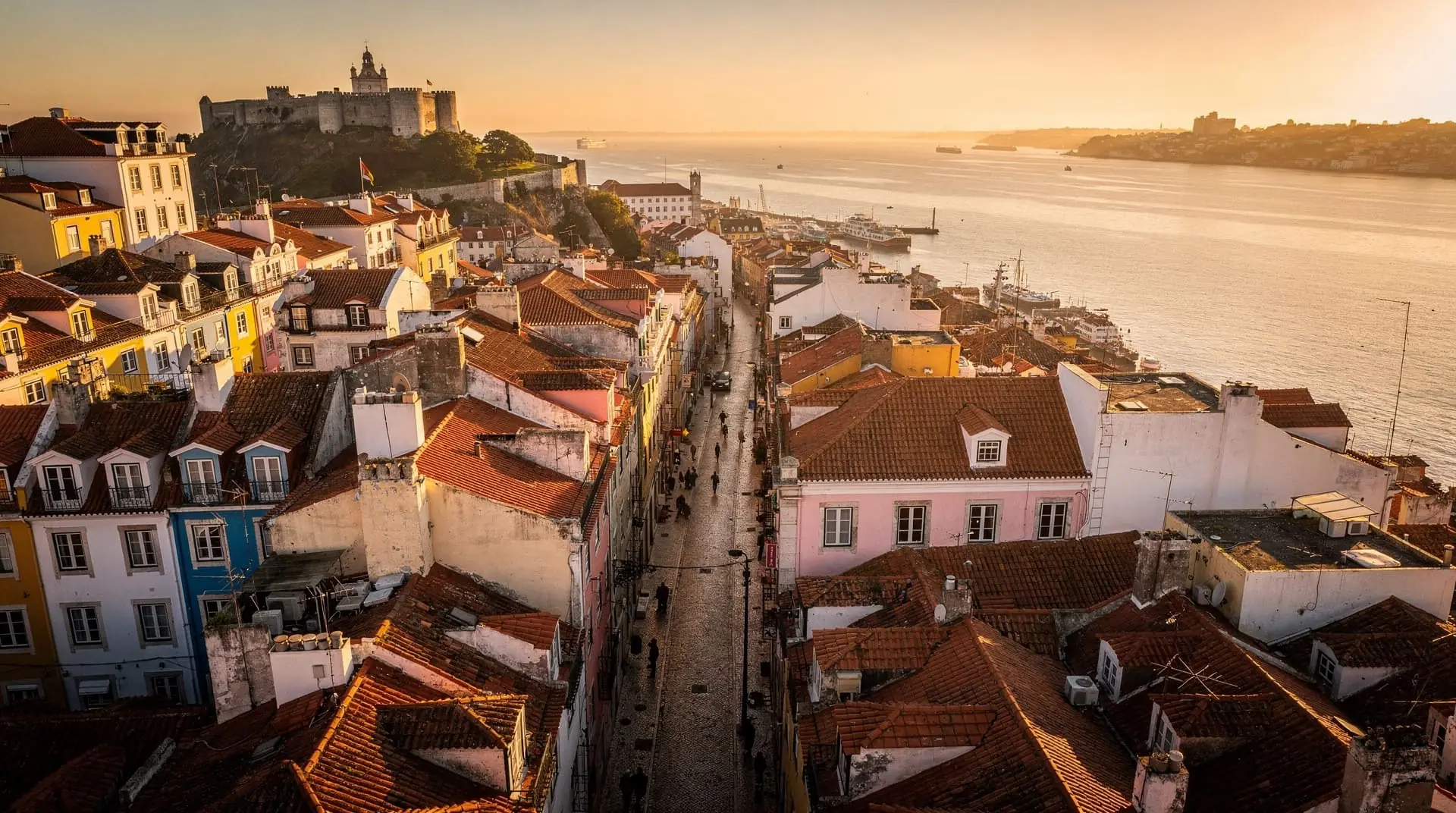
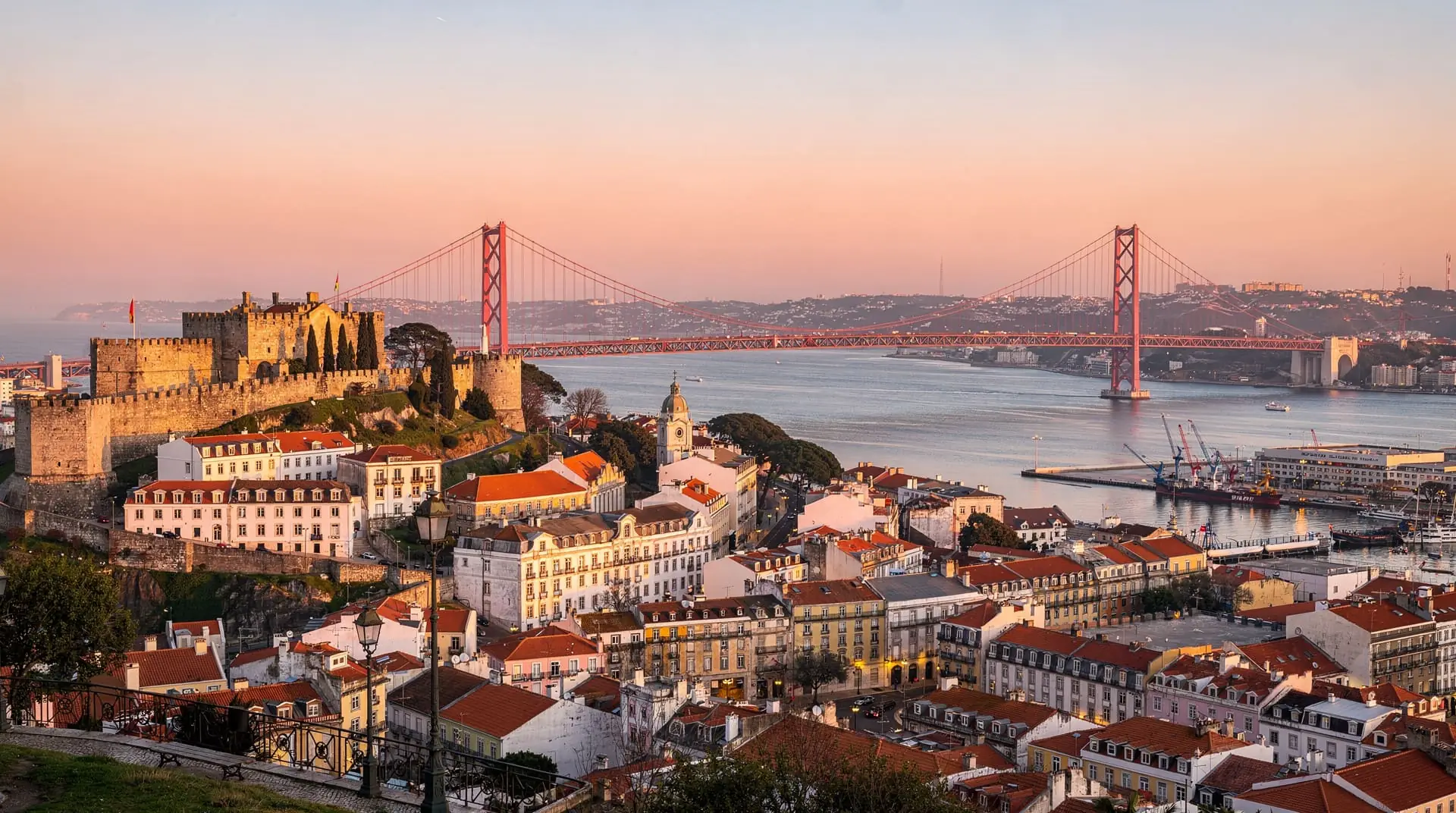
What brings people back is not any single sight. It is the pace: steep trams grinding uphill past laundry lines, a cold glass of Vinho Verde in a tiny Alfama tasca, a miradouro sunset over the Tagus with the 25 de Abril bridge turning orange. Lisbon is unhurried in a way that most European capitals have lost.
This guide covers the whole city honestly: the real transport options, which tourist traps to sidestep, where to eat without embarrassment, and how to organise a visit of any length.
| Where | Portugal’s capital, north bank of the Tagus estuary |
| Cost | Moderate for Western Europe; meals €12–40, single transport fare €1.85 |
| Time needed | 3–5 days minimum |
| Getting there | Metro red line from the airport, 20 min to Alameda |
| Best time | April–June and September–October |
The lay of the land
Lisbon sits on the north bank of the Tagus (Tejo) estuary where the river is wide enough to feel like the sea. The city rises from the waterfront up a series of hills — colinas — each with its own character.
Baixa is the flat, Pombaline grid at the centre, rebuilt after the 1755 earthquake. Grid-straight streets, pedestrian Rua Augusta, and Praça do Comércio facing the river. Functional, central, touristy.
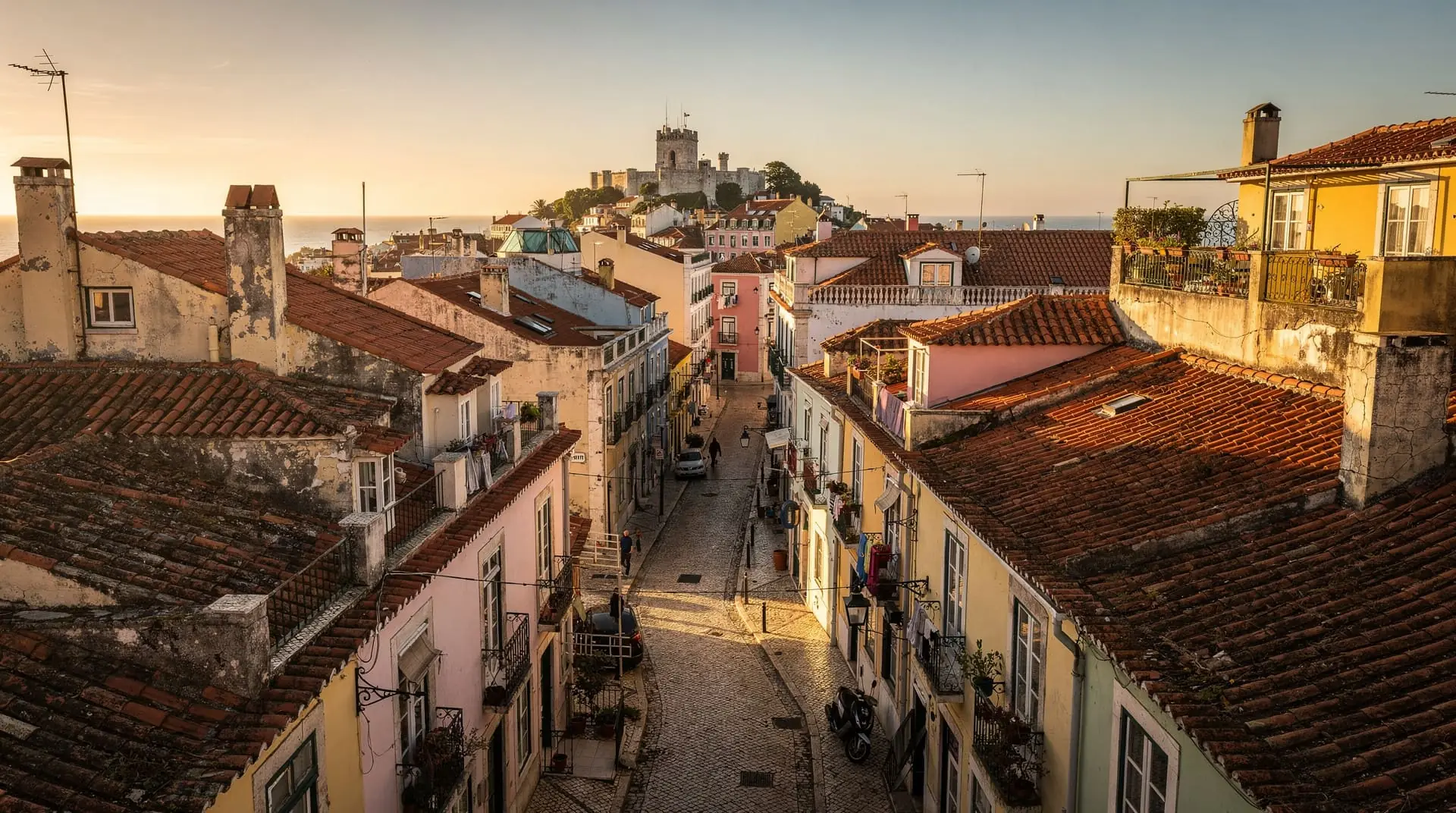
Alfama is the Moorish quarter that survived the earthquake: steep alleys, fado houses, São Jorge Castle on the ridge. The oldest and most photographed part of the city.
Chiado and Bairro Alto climb west of Baixa. Chiado is literary cafés and mid-range shopping; Bairro Alto is where the nightlife happens.
Príncipe Real is the refined hilltop neighbourhood above Chiado — independent bookshops, a botanical garden, weekend antique market.
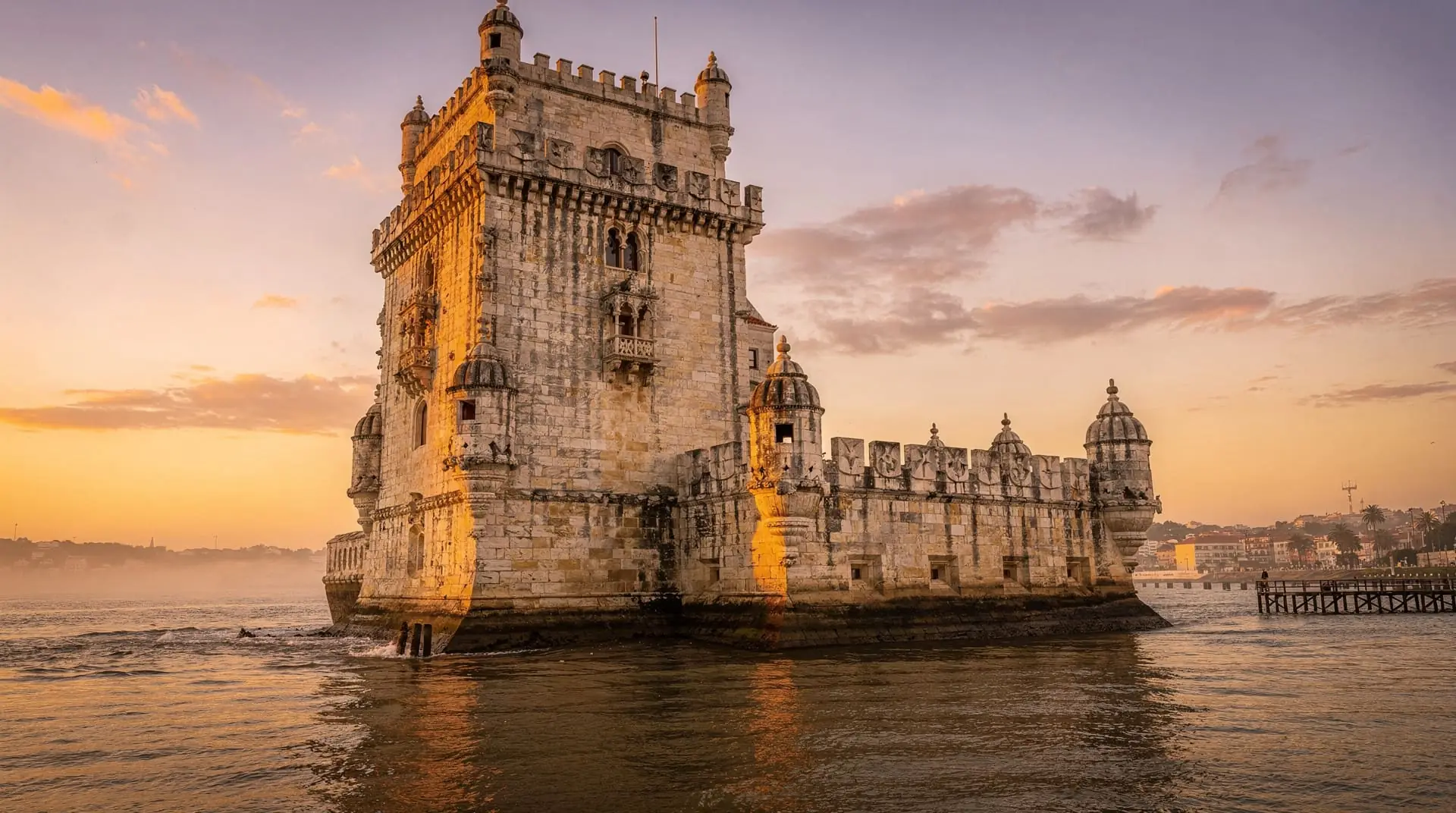
Belém is 6 km west along the river: Jerónimos Monastery, Belém Tower, pastéis de nata. A half-day on its own.
Graça and Mouraria lie north and east of Alfama — quieter, more local, with the best viewpoints if you know where to look.
Parque das Nações is the Expo ‘98 legacy in the north-east: Oceanário, modern architecture, family-friendly riverside.
For a full neighbourhood-by-neighbourhood breakdown, see the destinations guide.
Getting there and around
From the airport
Humberto Delgado Airport sits 7 km north-east of the centre. The metro line red runs directly into the city: Aeroporto station → Alameda (change for the green/blue lines) takes about 20 minutes and costs a single Viva Viagem fare (€1.85 on a charged card, plus €0.50 for the card itself). The airport metro runs from roughly 06:30 to 01:00.
Taxis from arrivals should use the meter; expect €10–15 to Baixa/Chiado. Uber and Bolt work reliably and are often cheaper — compare before joining the taxi queue. Avoid the unlicensed drivers who approach you in the arrivals hall. Full breakdown in the airport transfer guide.
The metro
Four colour-coded lines. The blue line (Linha Azul) runs east–west through the centre, stopping at Baixa-Chiado and Terreiro do Paço. The green line (Linha Verde) crosses the blue at Baixa-Chiado. The yellow line runs north through Marquês de Pombal. The red line serves the airport and the eastern waterfront. Single fares are €1.85; the Lisboa Card covers unlimited rides.
Trams, funiculars, and the elevador
Tram 28 is famous — and genuinely useful, running from Martim Moniz through Alfama, Baixa, Chiado, and Estrela. But it is also heavily pickpocketed. Keep phones and wallets in front pockets or inside bags; do not stand at the doors scrolling. See the honest tram 28 guide for what to actually expect.
The funiculars (Glória, Bica, Lavra) and the Elevador de Santa Justa lift connect the valleys to the hilltops. The Santa Justa lift (€5.30 return, or free with Lisboa Card) is worth the queue once for the views; it is not a practical daily commute option.
Trains to day-trip destinations
Sintra: CP train from Rossio station, departures every 20–30 min, journey 40 min, fare ~€2.35. Tickets at the Rossio machines — no booking needed.
Cascais: CP train from Cais do Sodré station, departures every 30 min, journey 40 min, fare ~€2.35. The coastal line runs through Belém, Estoril, and along the Riviera.
Setúbal and ferry links: buses from Praça de Espanha or Sete Rios.
See getting around Lisbon and trains to Sintra and Cascais for full timetables and tips.
What to see
Alfama and the castle
São Jorge Castle stands on the highest hill, with sweeping views in every direction. Skip the audio guide rental — the views from the ramparts justify the entry (€15, online tickets avoid the queue). Below the castle, Alfama rewards aimless wandering more than any planned route. Portas do Sol and Santa Luzia terraces are the prime viewpoints.
The National Pantheon and the church of São Vicente de Fora are slightly north of Alfama’s tourist crush — calm, impressive, and rarely crowded.
Baixa, Chiado, and the Rua Augusta Arch
The Pombaline lower city is best on foot. Walk from Praça do Comércio — a vast riverside square that was once the royal entry to the city — north through the commercial grid to Rossio square. The Rua Augusta Arch offers a rooftop terrace and good views (€3.50). Chiado is five minutes uphill on the 28 tram or up the Elevador de Santa Justa.
Belém
Allow a half-day minimum. Jerónimos Monastery (€12, book online to skip the queue) is the high-water mark of Manueline architecture; the south portal is one of the most intricate stone carvings in Europe. Belém Tower is best viewed from outside — the interior is cramped and overpriced relative to what you see. The Padrão dos Descobrimentos (Monument to the Discoveries) has a worthwhile top-level view (€10). MAAT contemporary art museum is 10 minutes on foot and offers a change of pace.
Full coverage in the Belém destination guide.
Parque das Nações
Mostly of interest for families (Oceanário), architecture fans, and anyone staying in the east. Covered in the Parque das Nações guide.
Where to eat
Lisbon’s food scene has improved dramatically in the past decade. Named places worth seeking out:
Time Out Market (Cais do Sodré) — the original, not a copy. Around 35 restaurants under one roof, quality is genuine. Go for lunch when it is calmer. Expect to pay €12–18 a head without drinks.
Cervejaria Ramiro (Intendente) — the city’s best seafood restaurant and one of Europe’s finest. Order percebes (barnacles), amêijoas à Bulhão Pato (clams in garlic and white wine), and finish with a prego steak sandwich. Book a table or arrive before 12:30. Expect €40–60 per person.
Taberna da Rua das Flores (Chiado) — outstanding petiscos (Portuguese small plates) in a tiled room that seats about 30. No reservations; arrive early or expect a wait. Budget €20–30 per person.
Pastéis de Belém — the original pastel de nata bakery at Belém, open since 1837. Queue is usually 15–30 minutes at the shop front; buy to go and eat at the riverside. A pastel costs €1.40.
Manteigaria (Chiado and Mercado da Ribeira) — makes the best pastéis de nata in the city centre, usually without the Belém queue.
A Brasileira (Chiado) — the historic coffee house from 1905, with Fernando Pessoa’s bronze statue outside. Coffee is ordinary; go for the atmosphere and a custard tart.
Solar dos Presuntos (Rato area) — Lisbon institution for traditional northern Portuguese cooking: bacalhau, roast lamb, Alentejo-style pork. Reservations essential. ~€40/head.
One honest warning: almost every restaurant in the tourist areas places bread, olives, or cheese on your table without asking. This is the couvert and will appear on your bill at €2–5 per person. You can wave it away immediately, or simply accept it. It is not a scam — it is legal — but it surprises first-timers. See restaurant couvert explained.
Where to stay
Baixa and Chiado — central for everything, noisier, tends toward higher prices. Good for first-timers who want to walk everywhere. Bairro Alto Hotel (Chiado, €300+/night) is the prestige address; Internacional Design Hotel (Rossio) offers style at mid-range prices (€150–200).
Alfama — small boutique properties, atmospheric but inconvenient. Memmo Alfama (~€250/night) has a rooftop pool; Solar dos Mouros is smaller and quieter.
Príncipe Real — elegant and walkable. As Janelas Verdes is a small art-hotel in a period townhouse (~€180/night).
Parque das Nações — quieter, cheaper, better connected to the airport. Good for families and business travellers; less interesting for exploring on foot.
Budget travellers: Alfama Patio Hostel and Home Lisbon Hostel (both €20–35 for dorms) rank consistently high. For full guidance see where to stay in Lisbon.
How long to spend
1 day — Baixa, Alfama, and São Jorge Castle. Use the 1-day itinerary.
2 days — Add Chiado, Bairro Alto, and a fado show. 2-day itinerary.
3 days — Add Belém (half-day) and a Tagus sunset cruise. 3-day itinerary.
4–5 days — Add a day trip: Sintra (easiest), Cascais (most relaxed), or Arrábida (best beach scenery). See which day trip from Lisbon.
7 days — Full immersion including Évora and the Alentejo, or multiple days in Sintra and the coast. 7-day itinerary.
Tours worth booking
For a city this hilly and dense with history, a guided tour on the first morning pays for itself in context. Several options:
Best of Lisbon walking tour — Rossio, Chiado and Alfama — a 3-hour introduction covering the main districts. Good for orientation before doing anything independently.
For a first-timer overview with less walking, the walking tour with historic tram 28 ride and tastings combines the famous tram with a guided walk and local food stops.
If you want the full city from day one, a hop-on hop-off bus covers all districts including Belém; combine it with the Oceanarium ticket to save money.
Honest tips and traps
Tram 28 pickpockets — it is a real and consistent problem. The tram is worth taking, but watch your belongings actively at every stop and on the platform. Particularly bad at Graça, Alfama, and Estrela stops. Covered in detail in tram 28 pickpockets guide.
Fake fado near Rossio — tourist-facing “fado” restaurants around Praça do Comércio and near Rossio are expensive and inauthentic. Real fado happens in Alfama houses (Tasca do Chico, Zé da Viola, Sr. Fado) or at legitimate dinner shows. See best fado houses for honest recommendations.
Couvert charges — as described above. Legal, common, not optional once you eat it.
Taxi from the airport — always insist on the meter or use Uber/Bolt. Fixed-rate “taxi vouchers” offered near arrivals are typically double the metered fare. See taxi and airport scam.
Sintra day trip without planning — Sintra is 40 minutes from Rossio but absolutely requires booking palace tickets in advance during spring and summer. Turning up without tickets means queuing for 60–90 minutes or being turned away. Use the Sintra ticket planner to check what to book.
The Lisboa Card — worth it if you visit 3+ museums and use the tram/metro at least twice per day. The 24-hour card (€22) breaks even easily with Jerónimos + castle + one or two metro rides. Full comparison at Lisboa Card worth it? and the Lisboa Card calculator.
Fitting Lisbon into a longer trip
Lisbon makes sense as a base for the whole western Alentejo and Estremadura coast. The train network covers Sintra and Cascais directly; buses and private tours reach Évora, Óbidos, Fátima, and Nazaré in a day each. See the day trips from Lisbon hub and the day trip matcher to figure out the best fit for your schedule.
For a coast-focused trip, the Lisbon–Sintra–Cascais itinerary combines city and seaside in 4–5 days.
Lisbon by season
Weather, crowds, and prices shift enough month to month that timing your trip well makes a real difference:
| Season | Weather | Crowds | Notes |
|---|---|---|---|
| Apr–Jun | Warm, 18–24°C | Moderate, rising toward June | The best balance of good weather and manageable crowds |
| Jul–Aug | Hot, 28–34°C | Very high, prices peak | Book accommodation and Sintra tickets weeks ahead |
| Sep–Oct | Warm, 20–26°C | Moderate, easing after September | Second-best window; sea still warm enough to swim |
| Nov–Feb | Mild, 10–16°C | Low | Rain possible but rarely continuous; best prices |
| Mar | Transitional, 14–19°C | Low to moderate | Spring flowers appearing, jacarandas not yet in bloom |
Jacaranda season (purple-flowering trees across the city, particularly around Estrela and Avenida da Liberdade) typically peaks in May — worth timing a visit around if photography is a priority. See our Lisbon in spring guide for the full seasonal breakdown, and Lisbon in summer and Lisbon in winter for the other extremes.
First time in Lisbon: what to prioritise
If this is your first visit and you have three days, the honest priority order is: Alfama and the castle (day 1), Baixa/Chiado plus Belém (day 2), and one day trip — Sintra for palaces, Cascais for a relaxed coastal afternoon (day 3). Resist the temptation to add a fourth or fifth neighbourhood on a short trip; Lisbon rewards slow exploration more than a checklist approach, and the hills make rushing between distant points genuinely tiring. The first-time Lisbon tips guide expands on this with a fuller first-timer checklist, and how many days in Lisbon helps you calibrate trip length against your actual interests.
Frequently asked questions about Lisbon
How many days do I need in Lisbon?
Three days covers the main districts (Alfama, Baixa, Belém) and leaves room for one day trip. Four to five days is comfortable and allows Sintra or Cascais. Anything shorter than two nights means constantly rushing.
Is Lisbon safe?
Generally yes. Pickpocketing is the main concern, concentrated on tram 28, the Alfama and Baixa tourist circuits, and the Rossio metro station. Keep bags in front, phones in pockets. Street crime is rare. See the Lisbon safety guide for a full assessment.
What is the Lisboa Card and is it worth buying?
The Lisboa Card (€22/24h, €37/48h, €45/72h) covers all metro, tram, bus, and suburban train rides including Sintra and Cascais, plus free or discounted entry to most major museums. It pays off for active visitors. Use the Lisboa Card calculator to check your specific itinerary.
When is the best time to visit Lisbon?
April–June and September–October. Weather is warm (18–24°C), crowds are manageable, and accommodation prices sit below summer peaks. July and August are hot (30°C+), extremely busy, and expensive. Winter is mild and pleasantly quiet — rain is possible December–February but rarely continuous. Detail in best time to visit Lisbon.
How do I get from the airport to the city centre?
Metro line red from Aeroporto station to Alameda (20 min), then change for the green or blue line. Alternatively, Uber/Bolt from arrivals (€10–14, 15–25 min depending on traffic). Avoid unlicensed drivers. Full options in the airport transfer guide.
What should I eat in Lisbon?
Start with pastéis de nata (custard tarts, best at Manteigaria in Chiado or the original Pastéis de Belém). Try bacalhau (salt cod, 365 recipes in theory), petiscos (small plates) at Taberna da Rua das Flores, seafood at Cervejaria Ramiro, and a bifana (pork sandwich) from a local café. Full recommendations in the where to eat in Lisbon guide.
What’s the ideal first-time itinerary for 3 days in Lisbon?
Day 1: Alfama, São Jorge Castle, and a fado dinner. Day 2: Baixa, Chiado, and a half-day in Belém for Jerónimos Monastery and pastéis de nata. Day 3: a day trip — Sintra for palaces or Cascais for the coast. This covers the essentials without overloading any single day. See the 3-day itinerary for the full hour-by-hour plan.
Is Lisbon expensive compared to other European capitals?
Moderate. Meals run €12–20 for casual dining and €30–60 for a nicer dinner with wine — noticeably cheaper than Paris or London for comparable quality. Transport is inexpensive (€1.85 single fare, or the Lisboa Card for unlimited travel). Accommodation has risen significantly in the past decade but remains below Western European capital averages outside August.