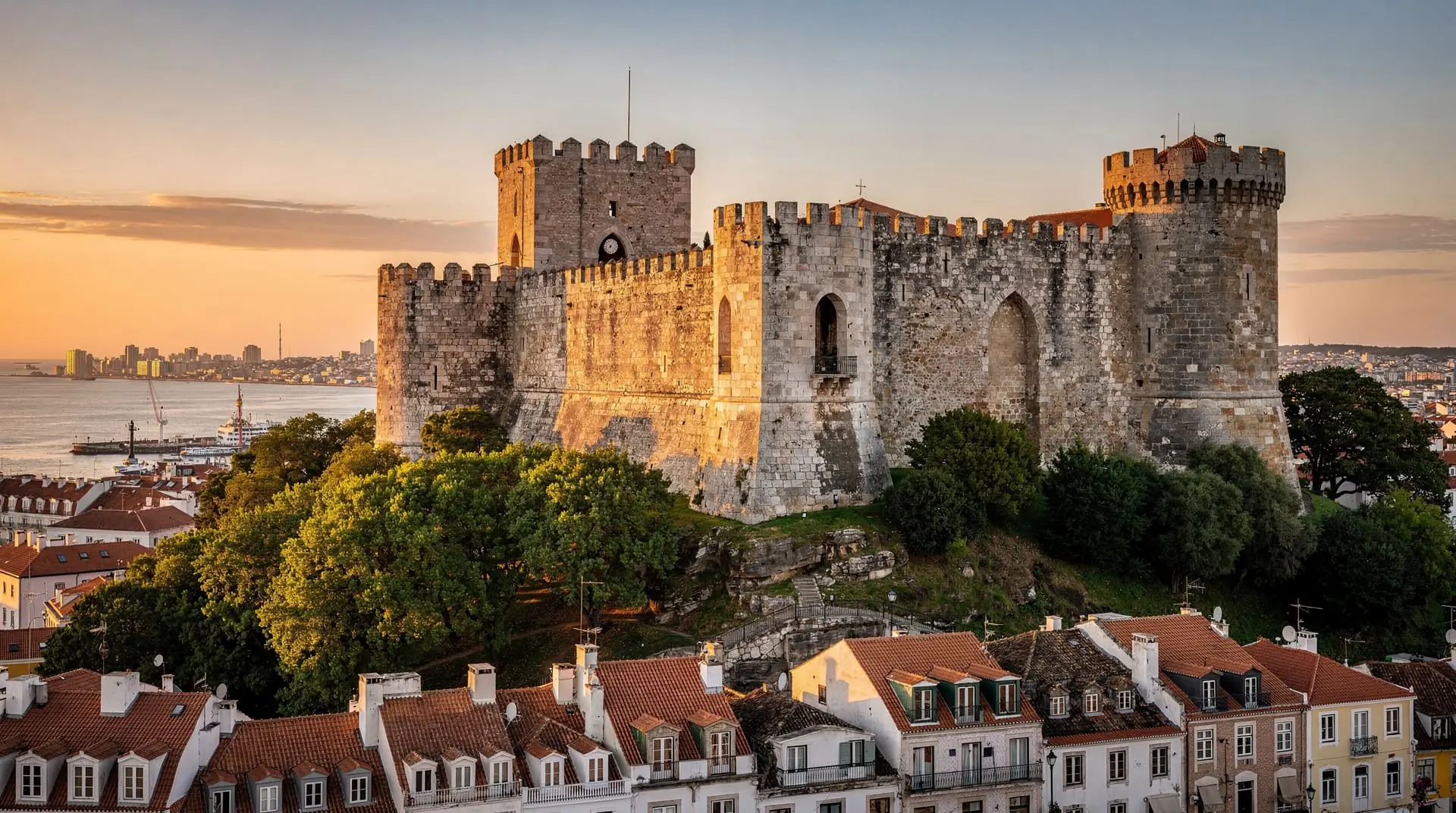
São Jorge Castle: visiting Lisbon's Moorish hilltop fortress
Last reviewed
What is the best way to get to São Jorge Castle?
Walk up through Alfama from the Sé cathedral — it takes about 20 minutes on steep narrow streets and gives you the neighbourhood experience. Alternatively, tram 28 to Largo das Portas do Sol gets you close to the east entrance with less climbing. From Baixa, tuk-tuk is popular but not necessary.
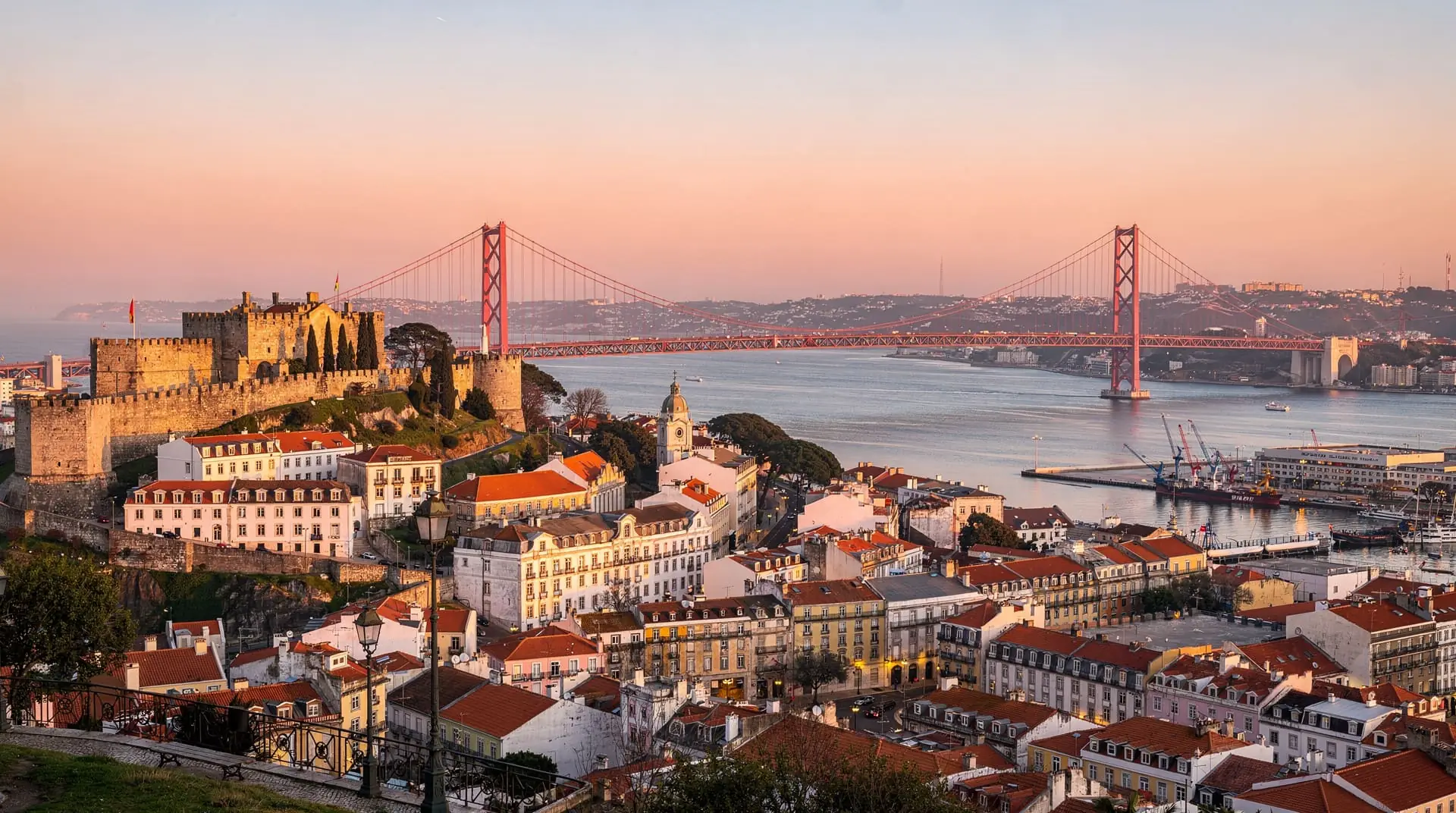
São Jorge Castle occupies the highest hill in central Lisbon, and Lisboetas have been building on it for at least 3,000 years. The Phoenicians settled here, the Romans extended it, the Visigoths used it, and the Moors built the castle that gave the site its current character in the 9th–11th centuries. The Portuguese recaptured it in 1147 — the 12th-century siege is commemorated in statues near the entrance gate — and subsequent monarchs used it as a royal palace until the 1511 earthquake and later the 1755 disaster reduced much of the interior to rubble.
What you visit today is largely a 1940s reconstruction under Salazar, which architectural historians debate endlessly. Nonetheless, the curtain walls, towers, and the views across Lisbon’s seven hills and the Tagus are genuinely spectacular. And the peacocks roaming the castle grounds are a peculiar pleasure.
| Where | Highest hill in Alfama, above the Sé cathedral |
| Cost | Adult around €15; under-25 EU resident around €7.50; under-10 free |
| Time needed | 1.5–2.5 hours |
| Getting there | 20-min walk from Sé, or tram 28 to Portas do Sol |
| Best time | 09:00 opening, or after 16:00 |
What is inside the castle
The site divides into three sections:
The castle proper (Castelo): the inner fortification with 11 towers, a central keep (Torre de Ulisses), a covered walkway around the battlements, and the remains of the royal palace. This is where most visitors spend their time — the walkway circuit takes 30–45 minutes and the views reward at every tower.
The archaeological site: the excavations in the inner courtyard revealed Phoenician, Roman, Visigothic and Moorish remains. A small covered shelter protects the dig. The finds include ceramics, coins and building foundations spanning 2,500 years of continuous habitation on this hill.
Santa Cruz do Castelo: the medieval village inside the outer walls. A handful of residents still live here in the narrow streets. There is a small Romanesque church (Igreja de Santa Cruz do Castelo) and several miradouros with views across Mouraria and Graça.
The Torre de Ulisses has a camera obscura — a rotating periscope that projects live images of the city onto a white table. Sessions run every 30–45 minutes and require a supplementary fee (€3). On a clear day it is genuinely impressive; on an overcast day it is underwhelming. Ask at the ticket desk whether conditions are good before paying.
Tickets
Adult: €15 (2026). Includes all sections plus the camera obscura waiting list. Under-25 EU residents: €7.50. Under-10: free.
Skip-the-line tickets are worth buying online — the ticket window queue can run to 30 minutes in peak season, though São Jorge is less bottlenecked than Belém Tower or Jerónimos.
São Jorge Castle skip-the-line entry ticketThe e-ticket with audio guide is useful because there are relatively few interpretation panels inside — the audio guide fills in context that the physical site lacks.
São Jorge Castle e-ticket with audio guideLisboa Card: São Jorge Castle is included. Worth factoring into your card calculation — see the Lisboa Card worth-it guide.
Ticket options compared:
| Ticket | Price (2026) | Best for |
|---|---|---|
| Standard adult entry | around €15 | Visitors buying at the gate |
| Skip-the-line entry | around €15–17 | Peak season, avoiding the queue |
| E-ticket with audio guide | around €18–20 | Visitors who want context (few on-site panels) |
| Under-25 EU resident | around €7.50 | Eligible EU visitors |
| Under-10 | free | Families |
| Lisboa Card | included | Visitors doing 3+ paid sights in a day |
Getting to the castle: routes compared
Walking up through Alfama
The most rewarding approach. From the Sé (cathedral) — itself worth 20 minutes — follow Rua Augusto Rosa uphill, then continue through the steep alley network towards the castle gates. Distance from Sé: approximately 600 m, 20 minutes with inclines. You pass through the heart of the oldest neighbourhood in Lisbon.
From Praça do Comércio (Baixa): add another 10–15 minutes to reach the Sé first.
The Alfama guide has a recommended walking route that goes through the Largo do Chafariz de Dentro, past the fado museums, and up through the miradouro network.
Tram 28 to Largo das Portas do Sol
Tram 28 runs from Martim Moniz through Alfama to Largo das Portas do Sol, where you alight and walk 300 m west along Rua de Santa Cruz do Castelo to the east entrance of the castle. This is significantly less climbing than the Sé route.
Important warnings about tram 28: the carriages are very small and extremely crowded in peak season — standing room only for most of the journey. It is the single most pickpocketed location in Lisbon. Keep bags in front, phones in inner pockets. See the tram 28 pickpockets guide for detail. If you find tram 28 too crowded, bus 737 covers a similar route to the castle area.
Tuk-tuk from Baixa
Tuk-tuks operating from Praça do Comércio charge €15–25 per vehicle for the ride up to the castle. It saves the climb but not the ticket queue. If you have mobility limitations or young children in a buggy, it is a reasonable option. If you are physically able, the walk through Alfama is more interesting.
The views and what you can see
From the castle towers, on a clear day, you can identify:
- The 25 de Abril suspension bridge (modelled on the Golden Gate) to the southwest
- The Cristo Rei statue at Almada, south of the bridge — see the Cristo Rei guide
- The dome of the National Pantheon to the northeast, visible above Alfama
- The Tagus estuary and, in very clear conditions, the far bank at Setúbal
- The aqueduct arches (Aqueduto das Águas Livres) to the northwest
- The Eduardo VII park and the modern city spreading north
The best viewpoints within the castle are the northeast tower (Torre Albarrã, for the Mouraria/Graça view) and the southwest tower (for the Baixa and Tagus view). The central keep tower has the widest 360-degree view but requires a separate climb.
The peacocks
Peacocks have been resident in the castle grounds since the mid-20th century. No one is entirely sure when they arrived or why. They are free-roaming throughout the inner gardens and occasionally stroll past tourists with magnificent indifference. In spring the males fan their tails. Children are reliably delighted.
The peacocks are not behind any fence. Do not feed them or attempt to touch them. They are faster than they look.
Timing your visit
Opening hours: daily 09:00–21:00 (March–October); 09:00–18:00 (November–February). Last entry one hour before closing.
Best time: arrive at 09:00 when the castle opens, before tour groups arrive at 10:00–11:00. Late afternoon (after 16:00 in summer) is also good — light is warm for photography and crowds thin.
Worst time: 11:00–14:00, particularly on Saturdays in July–August. Tour buses unload on Rua de Santa Cruz do Castelo.
Time needed: 1.5–2.5 hours, depending on pace. Allow extra for the camera obscura if you want it.
Combining with Alfama
São Jorge Castle naturally combines with a morning in Alfama. A suggested order:
09:00 — Castle opens. Head directly to the battlements circuit before the crowds arrive. 11:00 — Exit via the east gate to Largo das Portas do Sol. The miradouro here (free) has the same hilltop view without the entry fee. 11:30 — Walk downhill through Alfama: Rua dos Remédios, Largo do Chafariz de Dentro, the Fado Museum (optional, €5). 13:00 — Lunch in Alfama: Tasca do Chico or Zé da Mouraria for petiscos; both book out, so either reserve ahead or arrive for opening. 14:30 — Continue north to Graça and the Senhora do Monte viewpoint for arguably the best panorama in Lisbon.
Alfama and São Jorge Castle walking tourThe history of the hill and the 1147 siege
The capture of the castle in 1147 is the founding moment of Portuguese Lisbon, and it is one of the stranger sieges in medieval history. Afonso Henriques — who had declared himself King of Portugal only 4 years earlier and had just defeated the Moors at the Battle of Ourique — needed to take Lisbon as part of his campaign to push south. He could not take the city alone.
By chance, a fleet of approximately 164 ships carrying crusaders from England, Germany and Flanders was sheltering in the Tagus estuary after a storm. Afonso recruited them for the siege with a promise of loot. The actual siege took 17 weeks. The Moors defending the castle negotiated terms of safe conduct; these were subsequently violated by the crusaders, who massacred the garrison. The bishop who had negotiated the terms was murdered.
The mixed force of Portuguese and crusaders that took the city is reflected in the castle today: there are statues of the crusader leaders near the main gate, placed there in modern times to commemorate the siege. The complexity of what actually happened — Portuguese sovereignty asserted through the violence of mercenary crusaders who then violated their own negotiated terms — is not the story the plaques tell.
The 1755 earthquake and the Salazar reconstruction
The Lisbon earthquake of 1 November 1755 destroyed much of the city and significantly damaged the castle. The royal palace within the walls, which had been the primary royal residence until the construction of Mafra and Queluz, was rendered uninhabitable. The ruins were subsequently used by the military and then largely abandoned.
The “reconstruction” you see today dates primarily from 1938–1940, when the Salazar regime undertook a national heritage project to restore the castle as a symbol of Portuguese medieval identity. The work was done quickly and with significant invention — the towers were rebuilt, the battlements added, and the archaeological record partially destroyed in the process.
This is why architectural historians are ambivalent about the site: the walls are real, the general layout is authentic, but many of the specific details are 20th-century constructions based on assumptions rather than evidence. The ongoing archaeological excavations (the dig visible in the inner courtyard) represent a more rigorous approach to the site’s history than the Salazar-era reconstruction.
None of this prevents the castle from being a genuine pleasure to visit — the views are authentic, the atmosphere is real, and the peacocks are entirely original.
What to skip
The museum room inside the castle: a small collection of archaeological finds. The labels are in Portuguese. Unless you read Portuguese and have a particular interest in Visigothic ceramics, you can walk through in five minutes.
The souvenir shops at the exit: standard tourist mark-up. Better craft shops are on Rua Augusta in Baixa or the Feira da Ladra flea market (Tuesdays and Saturdays) near the National Pantheon.
Honest warnings
The approach from Baixa on foot is very steep. In summer heat (July–August, regularly 30–35°C), the climb from Sé to castle takes it out of you. Bring water. There is one café inside the castle walls selling drinks at tourist prices.
Tram 28 is not a sightseeing tram. It is a functioning city tram that happens to have a scenic route. It is not air-conditioned, it is very crowded, and professional pickpockets work it. If your only reason for taking it is to reach the castle, consider the alternative of a bus or tuk-tuk.
Photography restrictions at dusk: the castle closes before sunset in winter (closes at 18:00). In summer it stays open until 21:00, giving dramatic golden-hour light on the Tagus from the towers — that is the best photographic window.
Fitting São Jorge into your trip
For first-timers on a 2-day Lisbon trip, São Jorge Castle and Alfama is typically Day 1 — the Bairro Alto, Baixa-Chiado and Belém fill Days 2 and 3. The castle-plus-Alfama combination runs a natural 9:00–14:00 morning.
The day-trip-matcher tool can help decide how to balance Lisbon city days against excursions to Sintra or the coast.
Free viewpoints nearby if you’re on the fence
If the €15 entry gives you pause, several free miradouros in the immediate area give a version of the same panorama. Portas do Sol, right at the castle’s east gate, has essentially the same hilltop elevation without the fee. A short walk further gets you to the best Lisbon viewpoints ranking, which compares Portas do Sol against Senhora do Monte and the other Alfama and Graça miradouros.
For the neighbourhood below the castle, the Alfama destination guide and the 48 hours in Alfama blog post cover how to spend a full day around the hill, and the fado in Alfama guide is useful if you’re planning to end the day with a fado dinner nearby. If you’re taking tram 28 to reach the castle, read the tram 28 pickpockets guide before boarding — it’s the single most targeted route in the city.
Frequently asked questions about São Jorge Castle
Is São Jorge Castle worth the €15 entry fee?
For most visitors, yes. The battlements walk, the views across Lisbon, and the archaeological site give you 2+ hours of content. The peacocks are a bonus. If you hold a Lisboa Card, you are not paying the extra €15 anyway. The main reason to skip it would be if you have only one day and prefer to spend it in Belém.
Can you walk around the castle walls?
Yes. The covered walkway runs along the main curtain wall and all 11 towers. It is the highlight of the visit — you can walk completely around the inner fortification at battlement level. Some sections have steps; all sections are narrow. Not suitable for large prams.
Are there free viewpoints near the castle?
Yes. Largo das Portas do Sol (at the east end of Alfama, stop for tram 28) and the Miradouro da Graça (15 minutes’ walk north from the castle) both have panoramic views comparable to the castle and are free. The castle adds the archaeological context and the battlements access.
Does tram 28 go to the castle?
Tram 28 stops at Largo das Portas do Sol, about 300 m from the castle’s east entrance. It does not go to the main (north) entrance. The walk from Portas do Sol is easy and mostly flat. See the tram 28 guide for the full route.
Can you bring a buggy or wheelchair to São Jorge Castle?
The outer grounds are accessible. The battlements walkway is not wheelchair accessible due to steps and narrow passages. The archaeological site is partially accessible. Call ahead (+351 218 800 620) to confirm current conditions if you have specific requirements.
What is the peacock situation?
The castle grounds are home to a small population of free-roaming peacocks. They are present year-round. In spring the males display. They are not tame but are accustomed to people. Keep children at a respectful distance.
Is there anywhere to eat inside or near the castle?
One café/bar inside the castle walls, basic snacks and drinks at tourist prices. Better options: the restaurants along Largo das Portas do Sol (Chapitô has a terrace with views), or walk down to Alfama proper for more authentic and better-priced options.
How busy does São Jorge Castle get, exactly?
In peak season (July–August, and around any major cruise ship arrival at the nearby Santa Apolónia terminal), the castle can feel genuinely crowded between 10:30 and 14:00 — tour groups clustering at the ticket gate and the main towers, and the battlements walkway moving at the pace of the slowest group ahead of you. Outside these windows, even in summer, the site is comfortable: the grounds are large enough to spread visitors out, and the archaeological area and Santa Cruz village rarely feel busy at any time of day.
Shoulder season (April–June, September–October) is markedly quieter while still offering warm, clear-sky conditions for the views. Winter (November–March) is the quietest overall, with the trade-off of shorter opening hours and a real chance of overcast skies dulling the panorama — check the forecast before committing to a winter morning visit specifically for the views.
Does the queue really matter that much?
For most of the year, no — the walk-up queue at São Jorge rarely exceeds 15–20 minutes outside the July–August peak, which is notably shorter than the queues at Belém Tower or Jerónimos Monastery on the same day. The skip-the-line ticket earns its value specifically in high summer or if you’re arriving at the worst window (11:00–14:00 on a Saturday), when the wait can genuinely stretch past 30 minutes. Outside those conditions, buying a standard ticket at the gate and reading the queue in person is a reasonable gamble.
Related guides
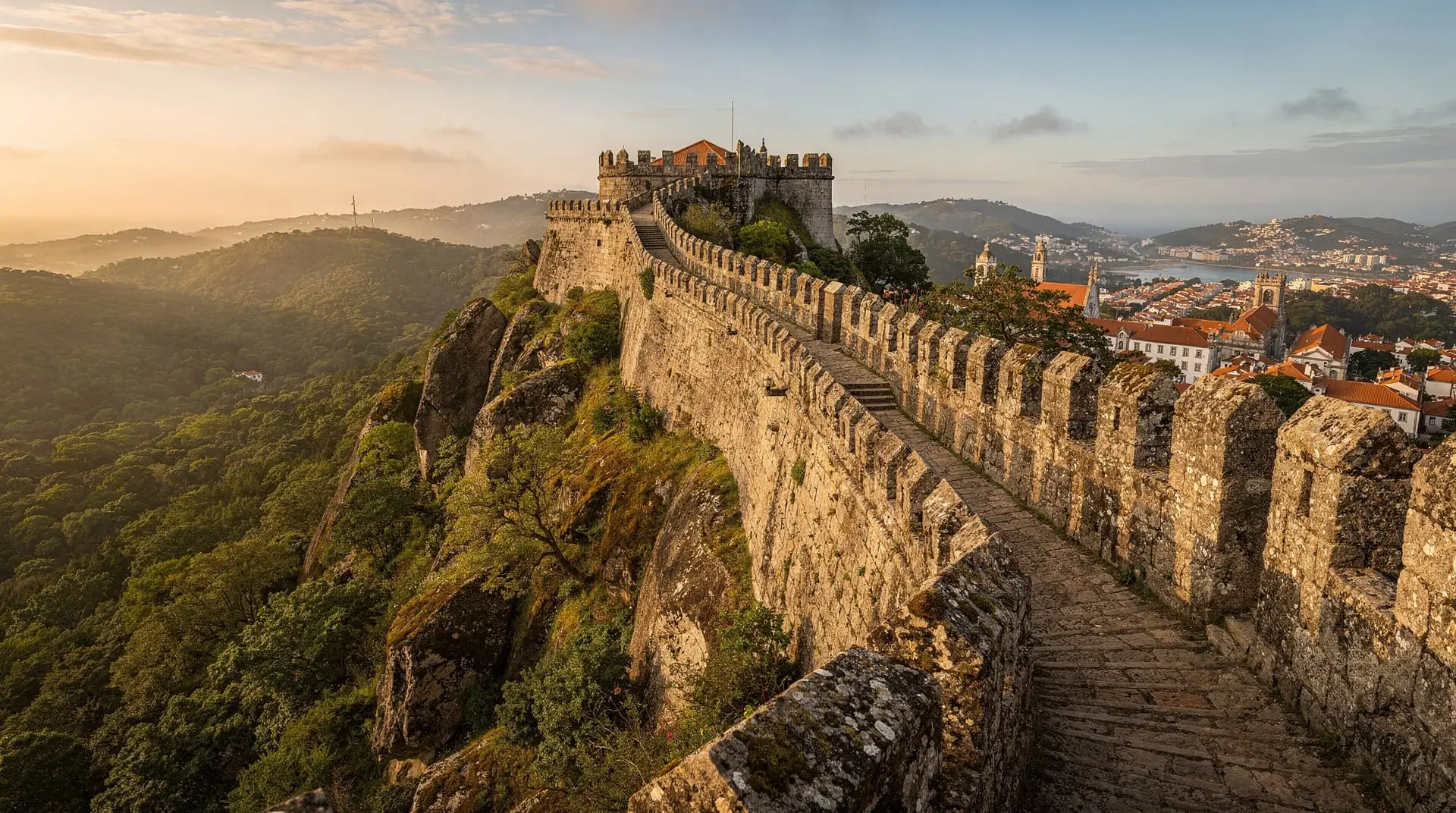
Moorish Castle Sintra: ramparts, views and how to get there
Complete guide to Sintra's Moorish Castle — 10th-century ramparts, the walk from town or bus 434, combined visits with Pena Palace, and honest tips.

Pena Palace: tickets, queues and how to make the most of your visit
How to visit Pena Palace in Sintra — timed entry tickets, bus 434, park-only vs palace+park options, and what to expect inside the Romantic hilltop castle.
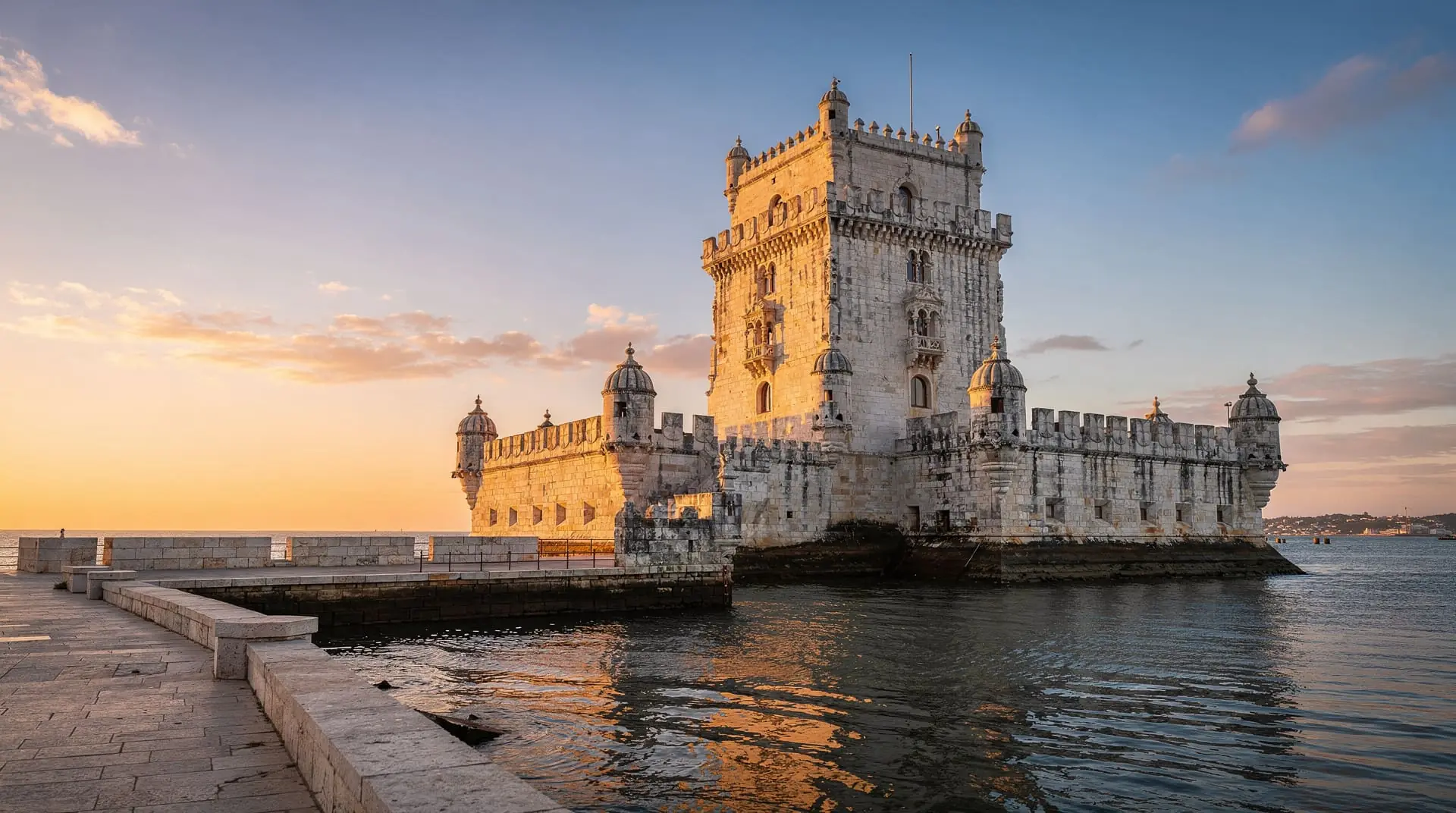
Belém Tower: tickets, queues and what to expect inside
How to visit Belém Tower without wasting an hour in the queue. Fast-track tickets, best time to go, and what the Manueline tower actually shows you.
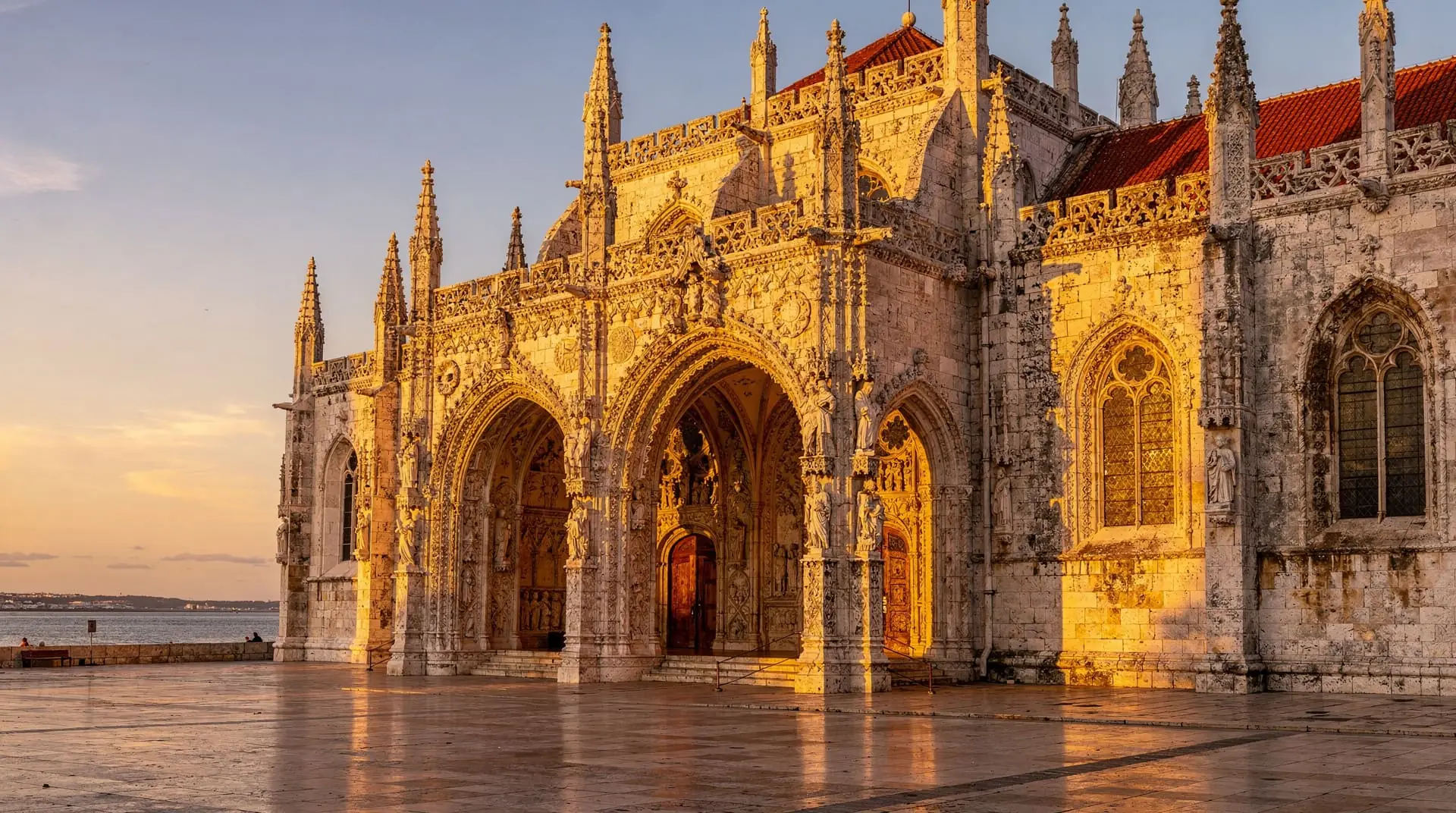
Jerónimos Monastery: the complete visit guide
Everything you need to visit Jerónimos Monastery in Belém — tickets, timed entry, the cloister, Vasco da Gama's tomb, and how long it really takes.
Ready to book? Top tours for this guide
We earn a small commission if you book through GetYourGuide — at no extra cost to you. Every tour is hand-picked and verified.
Lisbon: 48-Hour Hop-On-Hop-Off Bus Tour and Oceanarium Entry
Lisbon: MAAT Entry Ticket & Dolphin Watching Boat Tour
Lisbon: Alfama, Mouraria Walking Tour with Fado Night, Tapas
Lisbon: Hop-On Hop-Off Bus Tour
Lisbon: 1-or 2-Day Hop-On Hop-Off Bus Tour