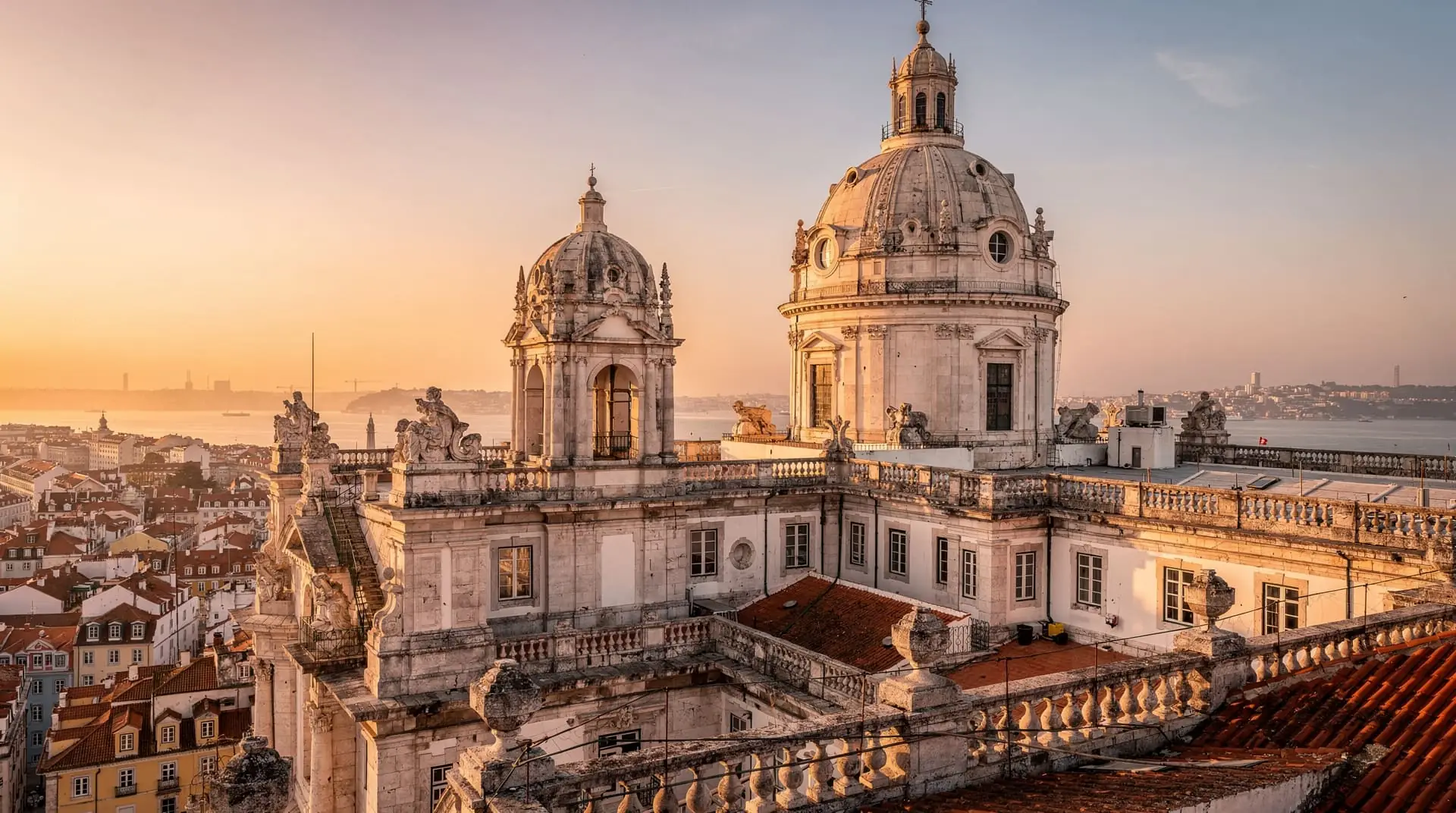
National Pantheon Lisbon: the Santa Engrácia dome and rooftop views
Last reviewed
Who is buried in the National Pantheon in Lisbon?
Portugal's national figures of state — including presidents, military heroes and writers — are interred or commemorated here. Amália Rodrigues (the Queen of Fado) was reinterred here in 2001, and Camões's cenotaph is here (his actual remains are at Jerónimos). The Fado connection makes the Pantheon a particularly resonant site for visitors who have attended a fado show.
| Where | Campo de Santa Clara, northeast Alfama |
| Cost | Around €4 |
| Time needed | 60–90 minutes |
| Getting there | Tram 28 to Portas do Sol, then an 800m walk, or bus 734 |
| Best time | Tue–Sat, paired with the Feira da Ladra market |
The National Pantheon is housed in the Church of Santa Engrácia, one of the most famous architectural jokes in Portuguese history. Construction began in 1681 under King Pedro II and the baroque dome was not completed until 1966 — a 285-year building project that became a national byword for interminable delay. “Obras de Santa Engrácia” (Santa Engrácia works) is still used in Portuguese to describe any project that drags on forever.
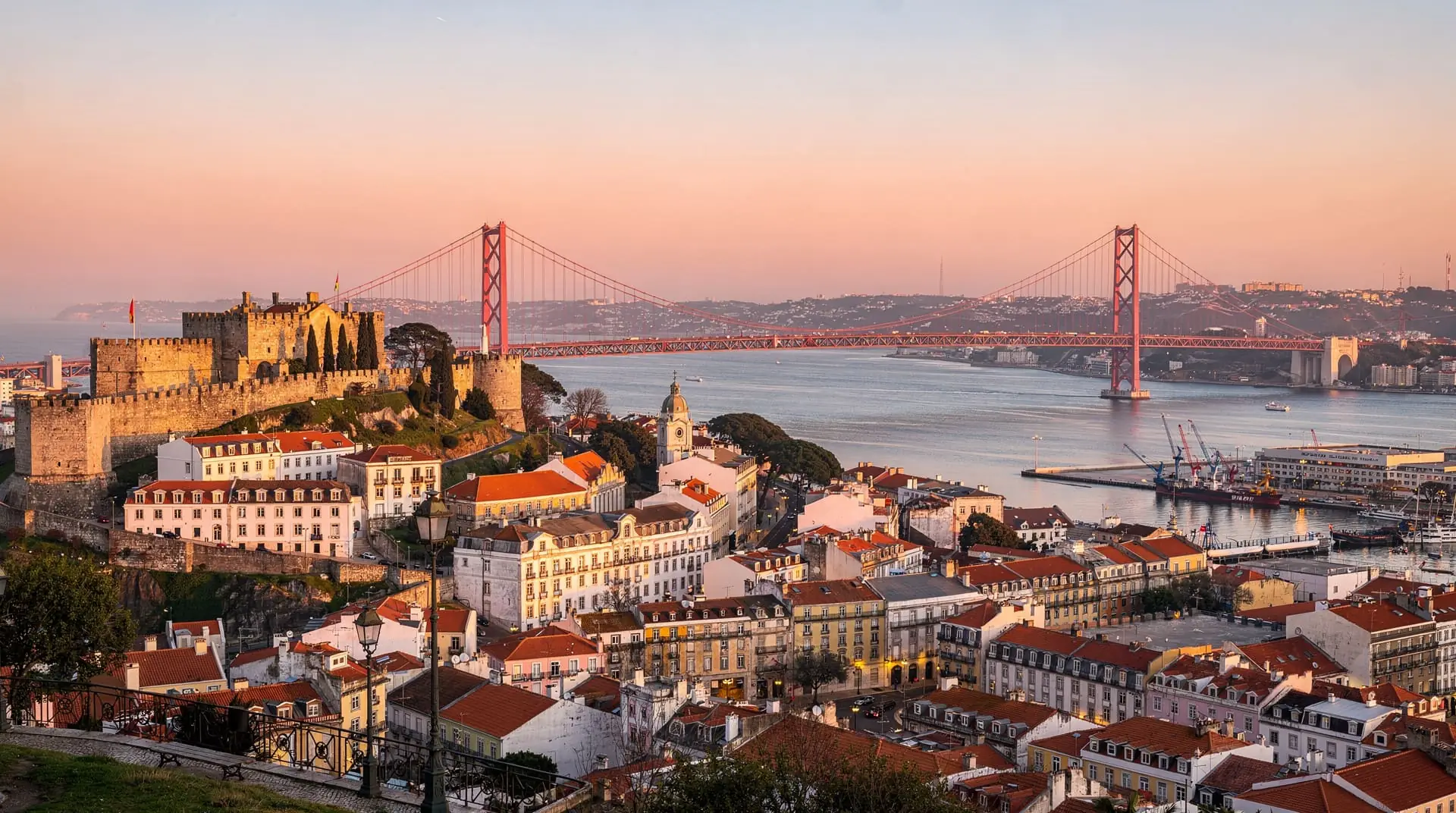
The completed result is outstanding. The interior dome — one of the finest baroque church interiors in Portugal — rises 65 metres above the polished marble floor. The rooftop terrace at the drum level provides 360-degree views over Alfama, the Tagus and the Graça hillside that rival the more famous miradouros and include an excellent angle on the Church of São Vicente de Fora immediately north.
The Pantheon’s second claim is the tombs and cenotaphs of the people who made Portugal. Amália Rodrigues, the fadista who became Portugal’s most internationally recognised artist of the 20th century, was reinterred here in 2001 against considerable public controversy — she had supported the Salazar regime, which divided opinion. Her tomb draws visitors who have heard fado and want to understand its history.
What is a cenotaph and why does it matter here
Many of the tombs in the National Pantheon are cenotaphs — commemorative monuments to people whose actual remains are elsewhere. Vasco da Gama is commemorated here but buried at Jerónimos. Luís de Camões is commemorated here but also buried at Jerónimos (in a tomb that historians dispute is actually Camões). The cenotaphs are intended as national symbols rather than funerary containers.
This distinction matters for visitors who come expecting the drama of actual interment sites. The Pantheon is a hall of national memory, not primarily a necropolis. The marble sarcophagi are symbolic — they hold urns of earth from locations significant to each figure’s life, in some cases, rather than full remains.
The exceptions include: Amália Rodrigues (interred 2001), Fernando Pessoa (1985), Aquilino Ribeiro (1983), and José Saramago (2011) — these are genuine burials, transferred from their original graves.
Tickets and entry
Adult ticket (2026): €4. Under 14: free. The National Pantheon is notably good value compared to most Lisbon monuments.
National Pantheon entry ticketThe e-ticket with audio city tour is particularly useful if you want to understand the significance of the figures commemorated:
National Pantheon e-ticket and audio city tourWalk-up tickets are usually available. The Pantheon does not operate timed entry and rarely has significant queues, even in peak season. This makes it a good fallback when São Jorge Castle or Jerónimos are crowded.
Lisboa Card: included.
Getting there
The National Pantheon is at the Campo de Santa Clara, in the northeast corner of Alfama, adjacent to the Feira da Ladra flea market.
From Baixa/Alfama: 28 tram to Portas do Sol (then 800 m northeast on foot), or walk north from the Sé through Alfama to Santa Clara (about 25 minutes). Bus 734 connects Rossio to Campo de Santa Clara directly.
From Graça: walk south on Rua da Graça, then east. 10–15 minutes.
The area is hilly. From Portas do Sol, the walk to the Pantheon goes via São Vicente de Fora (another baroque church worth 30 minutes) and then into the Campo de Santa Clara.
Inside the Pantheon: the dome and the floor
The interior is a single unified space — no nave/transept division typical of basilica churches, but a Greek cross plan beneath the central dome. The floor is polished coloured marble in geometric patterns. The dome rises through a drum level (where the rooftop terrace is) to the inner cupola at 65 metres.
The acoustic quality is exceptional — the dome creates a resonant chamber that has been used for concerts. During the Santo António festival in June, occasional fado performances take place here.
The tombs to find
Amália Rodrigues (1920–1999): the dominant fadista of the 20th century. Her international fame — performances at Carnegie Hall, recordings that sold millions, a career spanning five decades — made fado a global art form. The tomb is in the south transept arm. Flowers are frequently left.
Fernando Pessoa (1888–1935): Portugal’s greatest modernist poet, author of the Book of Disquiet and the inventor of multiple literary “heteronyms” (entirely fabricated author personalities with their own biographies, writing styles and philosophical positions). His cenotaph is in the west arm.
Vasco da Gama: cenotaph only (actual burial at Jerónimos). West arm, opposite Pessoa.
Afonso de Albuquerque: the Governor-General of Portuguese India who established Portuguese dominance in the Indian Ocean, captured Goa and Malacca in the early 16th century. Cenotaph in the east arm.
José Saramago (1922–2010): Nobel Prize laureate (Literature, 1998), author of Blindness, The Gospel According to Jesus Christ and Baltasar and Blimunda (set at Mafra Palace). His ashes were interred here in 2011.
The rooftop terrace
Access from inside the Pantheon via a staircase. The terrace is at the drum level, about 30 metres above street level, and the view is 360 degrees around the Alfama hillside:
- North: São Vicente de Fora (the twin-towered baroque facade is immediately below), Graça hillside
- East: the Tagus estuary and the hills of Almada beyond (on clear days, the Cristo Rei statue is visible)
- South: the Tagus waterfront, the industrial Beato district, the Vasco da Gama bridge (the newer, longer crossing visible to the east)
- West: São Jorge Castle on the hill, Alfama rooftops descending to the river
This is a less well-known viewpoint than the Miradouro da Graça or Portas do Sol — you encounter fewer visitors. The early afternoon light (12:00–15:00) is particularly good on the northern face with São Vicente de Fora as the primary subject.
Combining with the Feira da Ladra
The Feira da Ladra (Thieves’ Market) operates on Tuesdays and Saturdays in the Campo de Santa Clara, immediately outside the Pantheon entrance. It is Lisbon’s oldest flea market — azulejo tiles, vintage clothing, books, tools, ceramics, post-Soviet military ephemera, and a great deal of outright junk.
The tiles market requires careful attention: genuine antique azulejos are occasionally available at reasonable prices, but many are modern reproductions sold as antique. Examine glaze cracking and clay body colour for age indicators. A genuine 18th–19th century tile typically has a hand-painted quality with slight irregularities; mass-produced reproductions are more uniform.
Arrive by 09:00 for the best selection. The market winds down by 13:00–14:00 on both days.
For souvenir shopping more broadly, see the where to shop Lisbon guide.
The fado connection
Amália Rodrigues transformed fado from a working-class Lisbon genre into an international art form in the 1950s–1980s. Her recordings with guitar accompaniment defined the classic fado sound. After her death in 1999, 3 days of national mourning were declared — which gives a sense of her cultural status in Portugal.
Visiting the Pantheon after attending a fado show in Alfama gives the tomb visit a different weight. The fado houses closest to the Pantheon include Tasca do Chico (Rua do Diário de Notícias — actually in Bairro Alto, but the same fado tradition) and the smaller venues around the Largo do Chafariz de Dentro in Alfama.
For fado show recommendations, see the best fado houses guide. For the history of fado itself, see the fado guide.
Santa Engrácia: the 285-year building project
The Church of Santa Engrácia — which became the National Pantheon in 1916 — has a construction history that is almost as interesting as its contents. The original church on the site burned down in the early 17th century following a sacrilege: a Jew named Simão Pires Solis was accused (probably falsely) of stealing a consecrated host, and the church was burned by a mob in 1630. The current baroque structure was begun in 1681.
Construction proceeded intermittently through the 18th century, halted by funding crises, the 1755 earthquake (which damaged the unfinished structure), and political instability. By the early 19th century the church had its walls and much of its interior structure but no dome — the huge rotunda sat open to the sky.
The expression “obras de Santa Engrácia” entered the Portuguese language to describe any project that drags on indefinitely. It became a national joke. When the Estado Novo regime finally completed the building in 1966 — 285 years after construction began — it was a propaganda coup: Salazar’s government presented the completion as evidence of Portuguese national determination and competence. The irony that a dictatorship completed a building synonymous with governmental incompetence was apparently too much for the official press to comment on.
The building was converted to its current Pantheon function (honouring national figures) by decree in 1916, when Portugal was still an early republic. The first burials did not occur until the 1980s.
Fernando Pessoa and the literary tombs
The National Pantheon has become an important literary pilgrimage site due to the presence of Fernando Pessoa’s cenotaph and José Saramago’s tomb. Both writers are central to understanding 20th-century Portuguese culture.
Fernando Pessoa (1888–1935) lived most of his life in Lisbon — he was born there, educated partly in South Africa (his stepfather was the Portuguese consul in Durban), and returned to Lisbon at 17, never leaving again. He worked as a commercial translator and wrote poetry obsessively in three main heteronyms (invented author identities with distinct philosophies and styles: Alberto Caeiro, Ricardo Reis, and Álvaro de Campos) as well as under his own name. The Book of Disquiet, his prose-poem journal published posthumously in multiple incomplete versions, is the most important Portuguese-language literary work of the 20th century for many readers. He died at 47 from cirrhosis.
In his lifetime he published almost nothing. His heteronyms were barely known outside his immediate circle. The posthumous assembly of his trunk of manuscripts — the famous “trunk” that contained over 25,000 documents written in Portuguese, English and French — took decades to process. His reputation grew slowly through the 1950s–1960s and accelerated after Saramago and others championed his work. His centenary in 1988 was a major national cultural event.
José Saramago (1922–2010) was already at the National Pantheon in spirit before his ashes arrived: his novel Baltasar and Blimunda (Memorial do Convento) is set at Mafra Palace and his The Gospel According to Jesus Christ caused sufficient national controversy (the Portuguese government withdrew it from a European literary prize competition in 1992, citing its irreverent treatment of religion) that Saramago left Portugal for Lanzarote, where he lived until his death.
He won the Nobel Prize for Literature in 1998 — the only Portuguese-language writer ever to do so. His ashes were brought back to Lisbon and interred at the Pantheon in 2011 under a symbolic olive tree grown from a cutting of the tree in front of his Lanzarote house.
Is it worth pairing with a fado night?
Visitors who have already attended a fado show in Alfama consistently report that Amália Rodrigues’s tomb lands differently than it would cold. If you can sequence the two — a fado evening followed by a Pantheon visit the next morning, or the reverse — the connection between the music and the memorial is more legible. See the best fado houses guide for venue recommendations and the fado in Alfama guide for how to plan an evening that avoids the tourist-trap “fado dinner” shows.
The neighbourhood: northeast Alfama
The area around the Pantheon — Campo de Santa Clara, São Vicente de Fora, Santa Engrácia — is the quieter, more residential northeast corner of Alfama. Less touristy than the Alfama core around the castle steps, this neighbourhood rewards an hour of wandering:
São Vicente de Fora: the 17th-century church immediately north of the Pantheon has its own rooftop accessible via the sacristy (small entry fee). The azulejo panels in the cloister depict Jean de la Fontaine’s fables.
The Mouraria neighbourhood: to the west — the historic Islamic neighbourhood of Lisbon, now a multicultural area with Pakistani, Indian and Cape Verdean communities alongside traditional Portuguese residents. See the Graça and Mouraria guide.
A half-day around the Pantheon
The Pantheon works best as part of a slower northeast Alfama morning rather than a rushed single stop. A realistic sequence:
| Time | Stop |
|---|---|
| 09:00 | Feira da Ladra market (Tuesday or Saturday only) |
| 10:00 | São Vicente de Fora church and its own rooftop |
| 10:45 | National Pantheon: dome, tombs, rooftop terrace |
| 12:15 | Walk south into Alfama proper, or what to do in Alfama for the rest of the day |
Outside market days, start with São Vicente de Fora and the Pantheon around 09:30–10:00 when the interior is quietest, then continue into Alfama for lunch. This keeps the northeast corner of the neighbourhood — one of its least crowded stretches — as a coherent half-day rather than a single 90-minute detour.
Practical information
Opening hours: Tuesday–Sunday 10:00–17:00 (winter); 10:00–18:00 (summer). Closed Monday, 1 January, Easter Sunday, 1 May, 13 June (Santo António), 25 December.
Photography: permitted throughout, including on the rooftop.
Accessibility: the main floor is accessible. The rooftop terrace requires a staircase and is not wheelchair accessible.
Time needed: 60–90 minutes for a visit that includes the interior, the tombs and the rooftop.
What to wear: standard. No dress code.
Frequently asked questions about the National Pantheon
Is the National Pantheon the same as the Jerónimos Monastery?
No. Both contain tombs of national figures, but they are separate buildings. The Jerónimos Monastery in Belém houses the tombs of Vasco da Gama and Luís de Camões (and cenotaphs of other explorers). The National Pantheon in Alfama is a purpose-built memorial hall for national figures of state and culture, including Amália Rodrigues, Fernando Pessoa and José Saramago.
Who is the most visited tomb at the National Pantheon?
Amália Rodrigues consistently receives the most visitor attention — flowers are frequently left. Fernando Pessoa’s cenotaph is also heavily visited, particularly by literary tourists.
Is the National Pantheon worth visiting?
At €4 entry and with the rooftop terrace, it is one of the best-value visits in Lisbon. The dome interior is genuinely beautiful, the rooftop view is underrated, and the tombs are resonant if you know who the occupants were. Not essential for a 2-day visit, but excellent for anyone spending 3+ days in Lisbon.
Can I visit the National Pantheon on a Monday?
No. Like most state museums and monuments in Portugal, the Pantheon is closed on Mondays.
What is the Feira da Ladra market next to the Pantheon?
The Feira da Ladra (Thieves’ Market) is Lisbon’s oldest flea market, operating in the Campo de Santa Clara on Tuesdays and Saturdays. It sells antiques, vintage clothing, tiles, books and miscellaneous goods. Worth visiting for the atmosphere; antique tile buyers should be careful to distinguish genuine period pieces from reproductions.
How do I get to the National Pantheon from São Jorge Castle?
From São Jorge Castle, walk northeast (downhill from the castle’s east gate) through Alfama for about 15–20 minutes. The route via São Vicente de Fora is well-signed. Alternatively, bus 734 connects the area. Tram 28 stops at Portas do Sol, from which it is an 800 m walk.
Is José Saramago buried in the National Pantheon?
Yes. José Saramago, Nobel Prize laureate and Portugal’s most internationally acclaimed novelist, was interred in the National Pantheon in 2011. His ashes were transferred from Lisbon’s Alto de São João cemetery. His cenotaph is in the west arm of the Pantheon.
Related guides
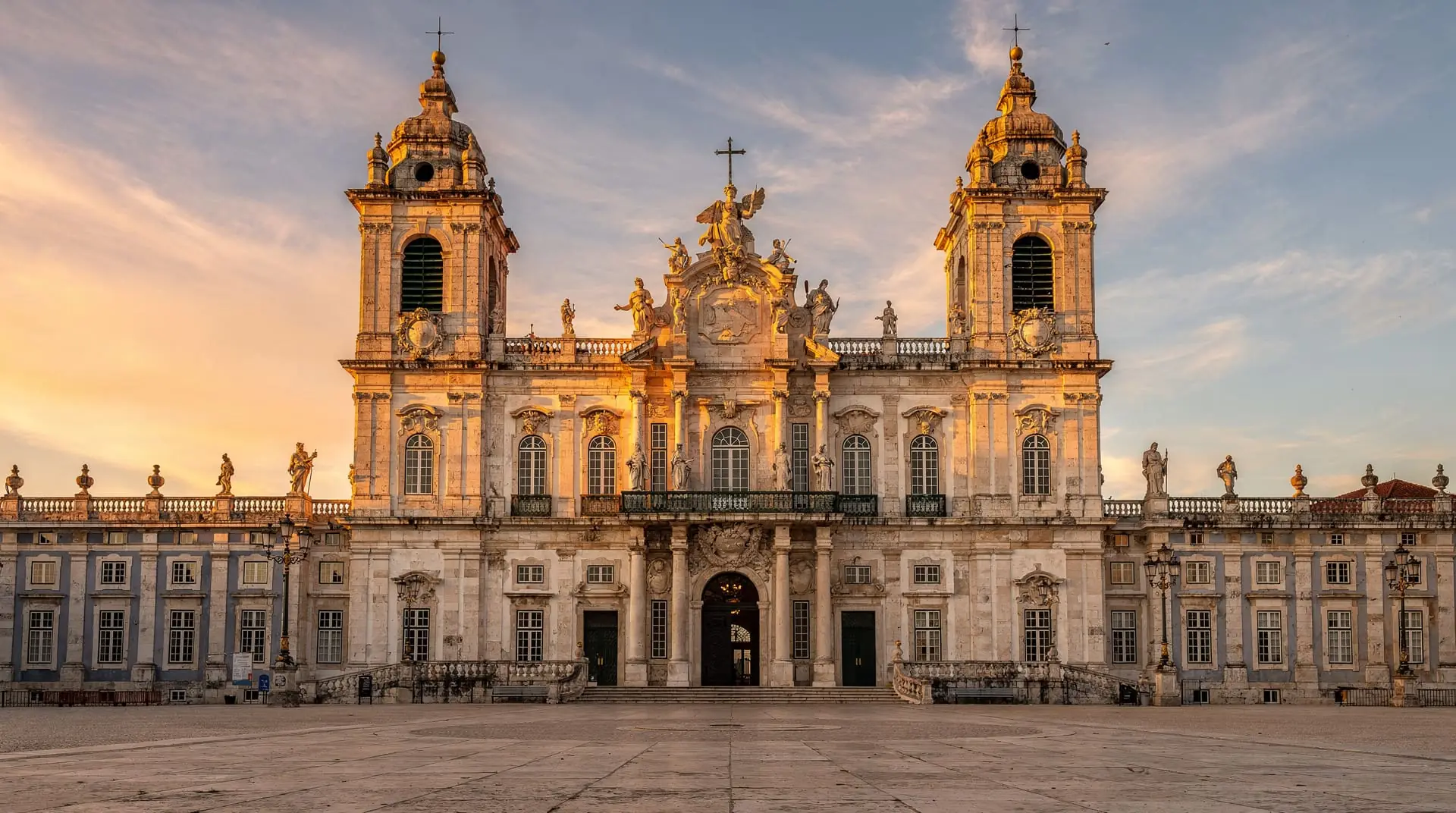
Mafra Palace: Portugal's most extravagant baroque monument
Guide to Mafra Palace and convent — the baroque library, hunting reserve, how to get there from Lisbon, and why José Saramago set a novel here.
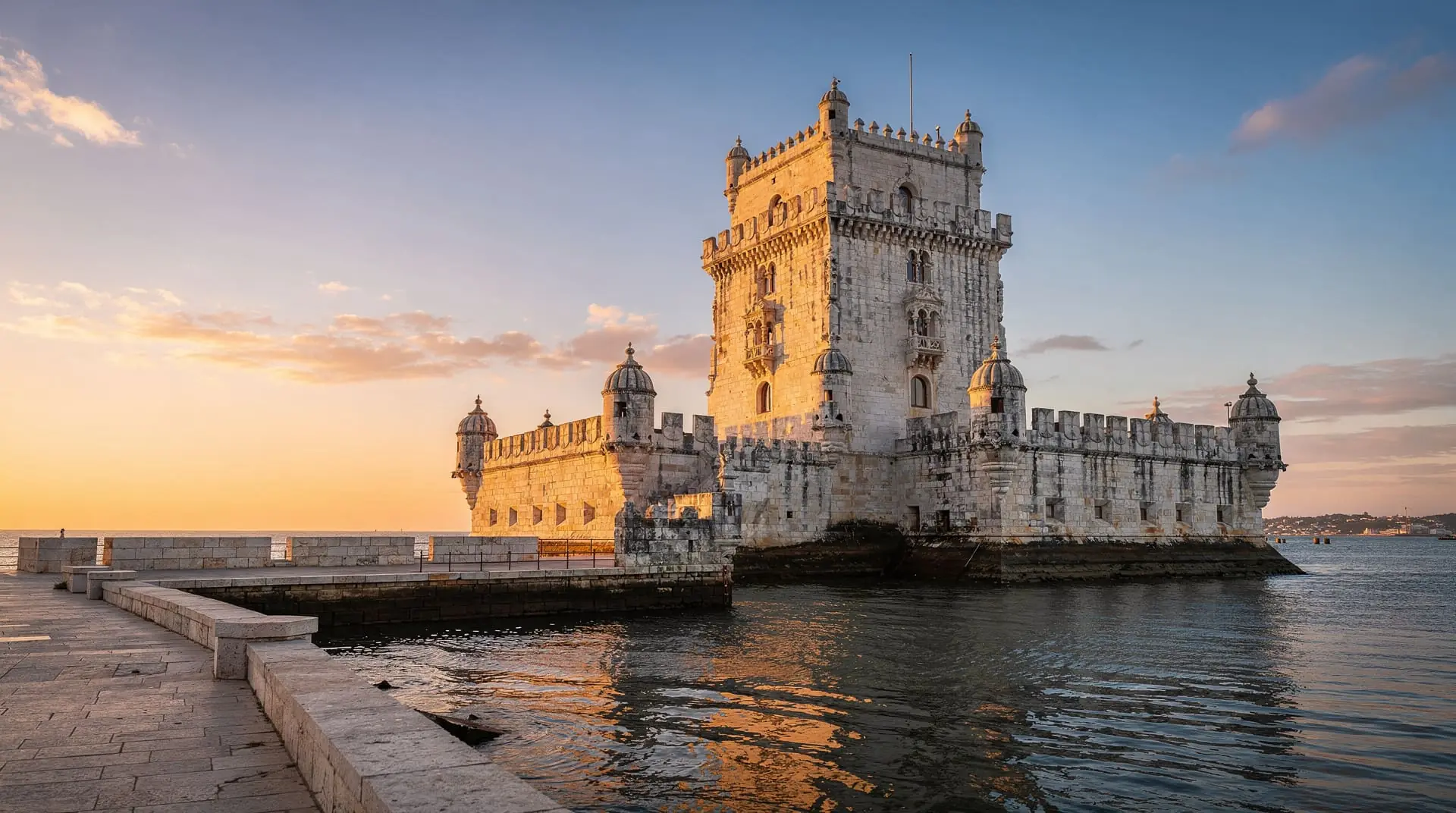
Belém Tower: tickets, queues and what to expect inside
How to visit Belém Tower without wasting an hour in the queue. Fast-track tickets, best time to go, and what the Manueline tower actually shows you.
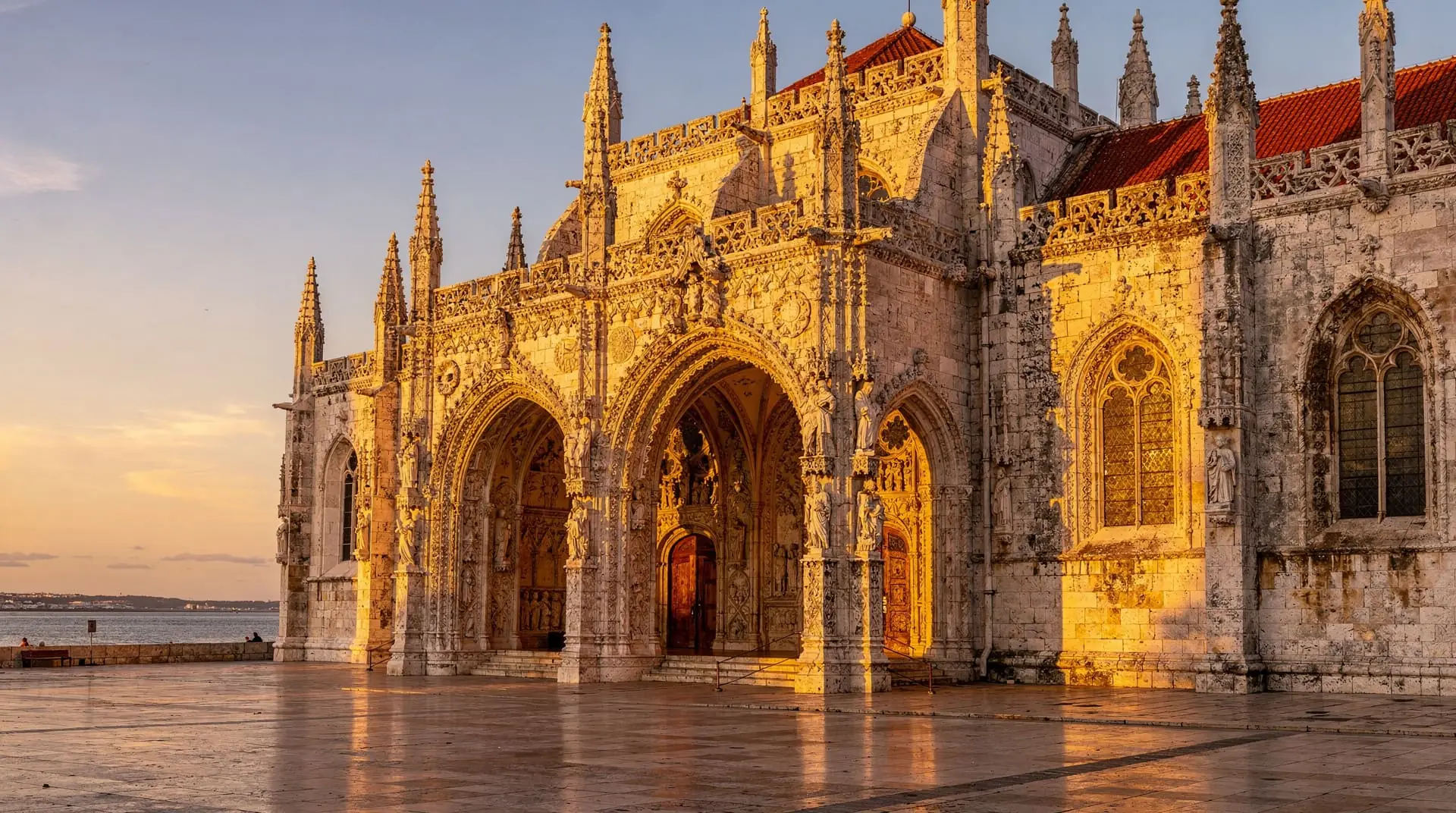
Jerónimos Monastery: the complete visit guide
Everything you need to visit Jerónimos Monastery in Belém — tickets, timed entry, the cloister, Vasco da Gama's tomb, and how long it really takes.

Pena Palace: tickets, queues and how to make the most of your visit
How to visit Pena Palace in Sintra — timed entry tickets, bus 434, park-only vs palace+park options, and what to expect inside the Romantic hilltop castle.
Ready to book? Top tours for this guide
We earn a small commission if you book through GetYourGuide — at no extra cost to you. Every tour is hand-picked and verified.
Lisbon: 48-Hour Hop-On-Hop-Off Bus Tour and Oceanarium Entry
Lisbon: MAAT Entry Ticket & Dolphin Watching Boat Tour
Lisbon: Alfama, Mouraria Walking Tour with Fado Night, Tapas
Lisbon: Hop-On Hop-Off Bus Tour
Lisbon: 1-or 2-Day Hop-On Hop-Off Bus Tour