Mafra Palace: Portugal's most extravagant baroque monument
Last reviewed
How do you get to Mafra Palace from Lisbon?
No direct train. From Lisbon (Sete Rios or Campo Grande station), take an Mafrense bus to Mafra town — journey 45–55 minutes, approximately €3.50 each way. Mafra Palace is 100 m from the bus stop in the town centre. By car: A8 motorway north, exit Mafra, about 40 minutes from Lisbon.
| Where | Mafra town, 40 km north of Lisbon |
| Cost | Around €6 for the palace complex; Tapada separate, around €3–5 |
| Time needed | 2–2.5 hours for the palace; add 2 hours for the Tapada |
| Getting there | Mafrense bus from Campo Grande or Sete Rios, around 45–55 min |
| Best time | Weekday mornings; closed Mondays |
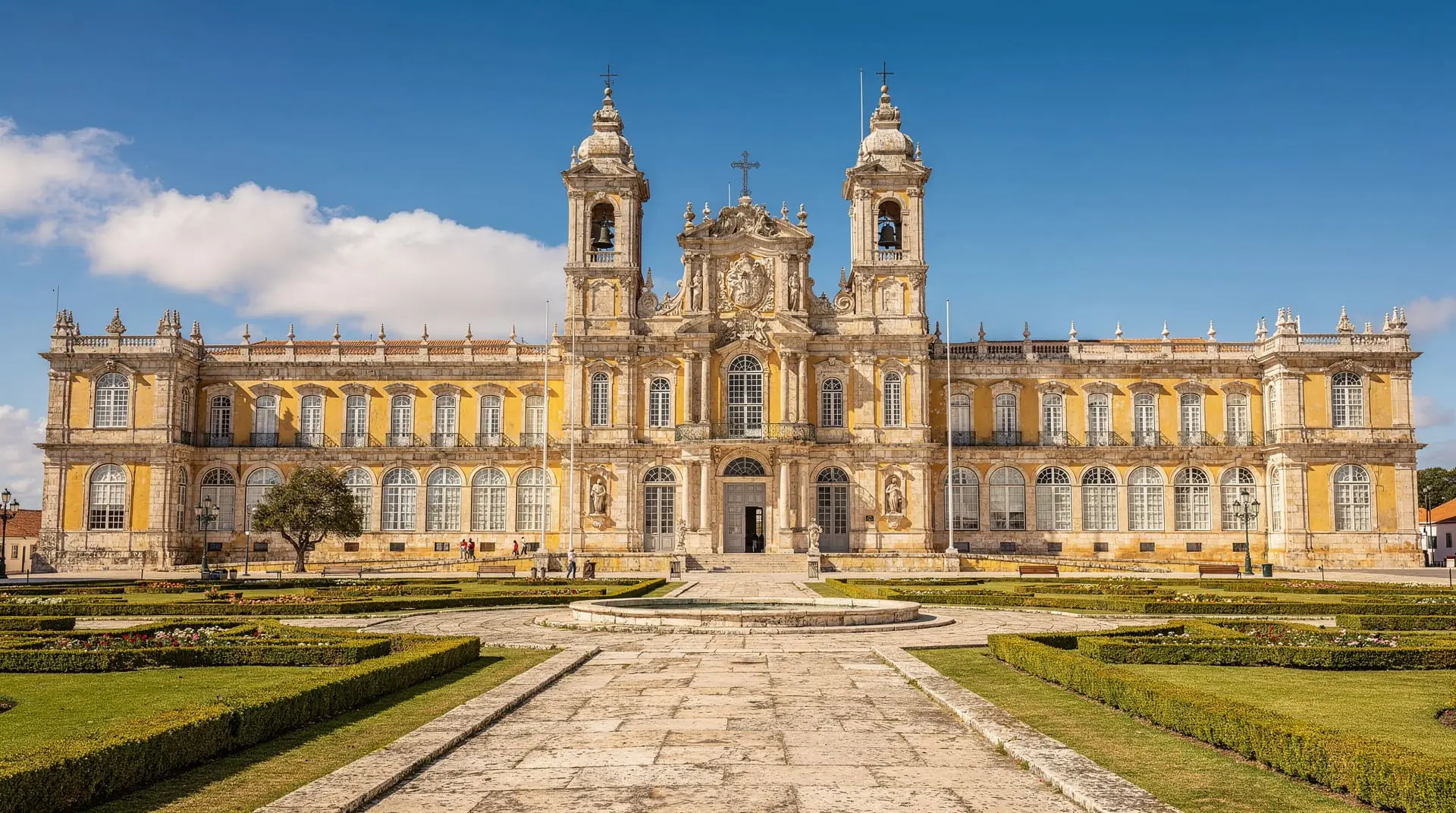
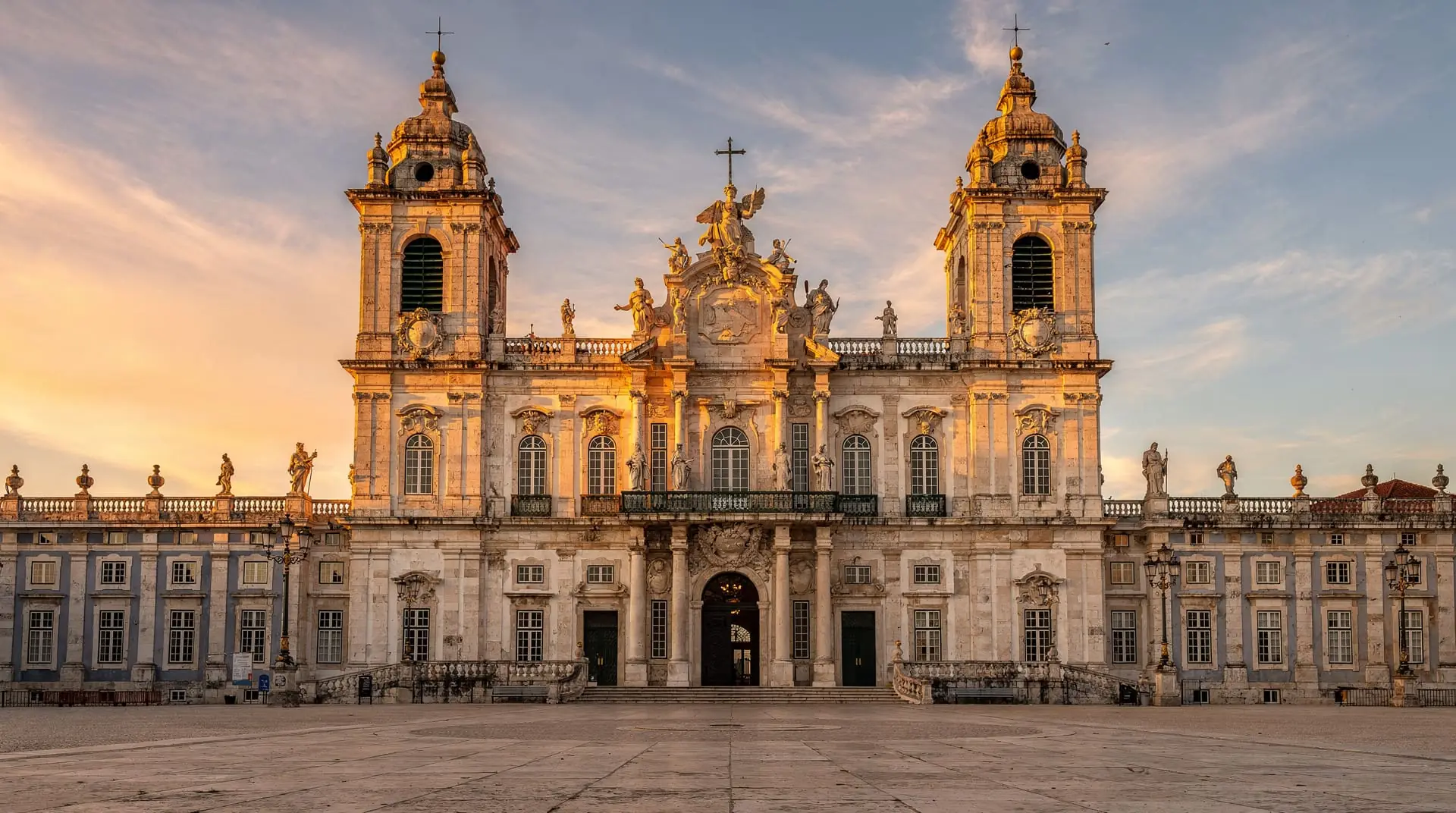
The Palácio Nacional de Mafra is one of the most ambitious buildings ever erected in Portugal. Ordered by King João V in 1711 in fulfilment of a vow — if his queen bore him a son, he would build a convent — it consumed 13 years of construction, 52,000 labourers at peak, and an enormous slice of the income from Brazilian gold. The result is a baroque palace-convent complex measuring 220 metres across its main facade, with 1,200 rooms, 156 staircases, 29 inner courtyards and a library of 36,000 volumes that remains one of the finest rococo libraries in the world.
José Saramago set his 1982 novel Baltasar and Blimunda here, describing the construction through the eyes of a maimed soldier and a clairvoyant woman. The novel is one of the best reasons to visit Mafra — reading it before or after the visit transforms the palace from an impressive accumulation of stone into a human story of extraordinary ambition.
What you are visiting
The Mafra complex comprises:
The palace wings: state apartments, royal quarters, hunting rooms, trophy halls. Extensively furnished in 18th-century Portuguese, Dutch and Flemish styles. The royal apartments have been systematically restored and are among the best-preserved 18th-century palace interiors in Portugal.
The basilica: a classical church with two bell towers, 114 bells (the largest carillon in Portugal, cast in Antwerp), and a nave lined with Italian marble statuary. The acoustics are outstanding.
The convent: the Franciscan friars’ quarters, cells, chapter house and refectory. The friary was suppressed in 1834 (along with all Portuguese religious orders) and has functioned as a military academy since.
The library (Biblioteca Mafra): the centrepiece of the visit for most cultured travellers. A 83-metre long rococo hall, two storeys, lined with books bound in vellum from floor to ceiling. Carved wooden galleries provide upper access. Population control is now managed by a colony of free-roaming pipistrelle bats that emerge at night to eat the insects that would otherwise destroy the books. You may not enter the library itself — you view it from behind a barrier at the entrance, but the effect is fully legible.
The Tapada Nacional de Mafra: a 1,000-hectare walled hunting reserve adjacent to the palace, used by the royal family from the 18th century. Now a public conservation area with deer, boar, foxes and extensive forest trails. Separate entry. Guided tours available.
Tickets and access
Palace complex ticket (2026): €6 per adult. Children under 15: free. The Mafra Palace is notably good value compared to Sintra and Belém monuments.
The ticket includes the palace wings, basilica, convent cloisters, refectory, chapter house and library view.
The Tapada de Mafra has separate entry (€3–5 per adult) and guided tours on foot, by Jeep or by ox-cart at various prices (€15–25 per person). Check the Tapada website for schedules.
From Lisbon: Mafra Palace and Ericeira day tourIf you prefer a guided experience from Lisbon that includes transport:
Mafra Convent, Queluz Palace and Ericeira tour from LisbonA private tour from Lisbon covering Mafra, Ericeira and Sintra in a premium vehicle:
From Lisbon: Mafra, Ericeira and Sintra private day tourWalk-up tickets are almost always available — Mafra does not operate a timed-entry system and does not sell out, even in summer.
Getting to Mafra from Lisbon
By bus (recommended)
Mafrense buses (line 901, 902) depart from Campo Grande metro station (yellow line) and Sete Rios. Journey time approximately 45–55 minutes. Fare approximately €3.50 each way. Buses run roughly every 30–45 minutes during the day; check the Mafrense website for the exact schedule as it varies by day.
Mafra bus terminal is 100 m from the palace — exit and the facade is immediately visible at the top of the square.
The return journey: last bus back to Lisbon typically runs until 19:30–20:00. Check the return schedule before you leave Lisbon.
By car
A8 motorway north from Lisbon, exit at Mafra. Approximately 40 minutes from the centre. Free parking in Mafra town. This is the most flexible option for combining Mafra with the coast at Ericeira (20 km northwest — see the Ericeira guide).
By guided tour from Lisbon
Multiple operators offer Lisbon–Mafra day trips, often combined with Ericeira or Queluz. Useful if you prefer not to manage the bus schedule. This Mafra, Ericeira and Queluz day tour from Lisbon or Cascais is one of the options that bundles all three stops.
The library: Portugal’s most beautiful room
The Biblioteca do Palácio de Mafra deserves its own section because it is exceptional even by the standards of European royal libraries. Built between 1717 and 1770, it was designed by the German architect João Frederico Ludovice in the style of an Italian baroque library hall — the model is clearly the Clementine Library at the Vatican, which Ludovice had visited.
The 36,000 volumes include manuscripts, incunabula (books printed before 1501), and works of theology, science, history and literature. The collection was partially assembled from confiscated private libraries during the 18th century. The books are arranged by subject and size — the colour variation of the vellum bindings creates the characteristic visual effect of the room.
The bat colony (a population of perhaps 200 pipistrelles) roosts in crevices in the upper gallery and emerges after dark. The palace does not publicise this as a feature but it is well-documented. The bats eat the book-destroying insects and have been an informal part of the library’s conservation strategy for centuries. You will not see them during a daytime visit.
Comparing Mafra to other Portuguese monuments
Mafra is João V’s answer to the Escorial — the Spanish royal monastery-palace near Madrid built by Philip II. The comparison is explicit: João V sent Portuguese architects to Spain specifically to study the Escorial before commissioning Mafra. The Mafra complex is smaller than the Escorial but more ornate.
The Portuguese royal pantheon at Jerónimos (see the Jerónimos Monastery guide) represents the Manueline moment (1500–1520); Mafra represents the Baroque moment (1711–1730) when Brazilian gold was funding extraordinary expenditure. Both are expressions of imperial self-belief in stone.
Combining Mafra with Ericeira
Ericeira, Portugal’s only World Surfing Reserve, is 20 km northwest of Mafra — 20 minutes by car, reachable by local bus (Mafrense line from Mafra town). Combining Mafra Palace in the morning with lunch and an afternoon in Ericeira makes an excellent day trip, particularly in April–October when the weather is good for the coast.
A suggested day structure with Mafrense buses:
08:30: Bus from Campo Grande (Lisbon) to Mafra (55 min, ~€3.50) 09:30: Arrive Mafra. Short walk to palace gates. 10:00–12:30: Mafra Palace visit (palace wings, basilica, library) 12:30: Mafrense bus from Mafra to Ericeira (~30 min) 13:00: Lunch in Ericeira — Mar às Costas or A Tasca do Valentim for grilled fish by the harbour 14:30–17:00: Walk Ericeira, visit the surf spots, the old town 17:30: Mafrense bus back to Lisbon (via Mafra or direct Ericeira–Lisbon service)
Check the return schedule carefully when you arrive — the last bus from Ericeira to Lisbon typically runs around 19:00–20:00 on weekdays, earlier on weekends.
The Queluz Palace alternative
If Mafra is a full baroque statement, the Palácio Nacional de Queluz — 15 km southwest of Mafra, and much closer to Lisbon (reachable by train from Lisbon Rossio in 35 minutes) — is the more intimate 18th-century palace. Queluz has Portuguese and French formal gardens, the famous Corredor das Mangas (Sleeve Corridor) tiled canal, and well-preserved royal apartments. It is covered by the Lisboa Card and much easier to reach independently.
Several guided tours combine Queluz with Mafra in a single day — see the mf-002 tour option or similar. A Queluz–Mafra combination works well with a car and gives you both the intimate French-influenced baroque and the monumental Iberian-baroque in a single day, with a meaningful stylistic contrast.
| Mafra Palace | Queluz Palace | |
|---|---|---|
| Style | Monumental Iberian baroque | Intimate French-influenced rococo |
| Distance from Lisbon | 40 km, ~45–55 min by bus | 15 km, ~35 min by train |
| Crowds | Low, rarely busy | Moderate, covered by Lisboa Card |
| Highlight | The 83m rococo library | Gardens and the tiled Corredor das Mangas |
The 18 bells and the carillon
The basilica at Mafra has 114 bells — the largest carillon in Portugal — cast in Antwerp by the Belgian foundry of Wilhelm Witlockx between 1730 and 1733. The carillon is divided between the two bell towers flanking the facade: 57 bells per tower. The largest bell weighs over 9 tons.
Carillons (sets of tuned bells played from a keyboard) were primarily a Flemish and Dutch tradition; their presence at Mafra is a direct consequence of João V’s taste for northern European Baroque and his diplomatic connections with the Habsburg Netherlands. Portuguese carillon music is otherwise essentially absent from the country’s musical tradition — Mafra is an island of northern European musical culture in an Iberian setting.
Concerts on the carillon are performed on occasional Sundays. Check with the palace for current schedules. The sound of 57 bells being played from a single keyboard, carried across the town square, is remarkable.
The construction story
52,000 workers at peak. That number — documented in contemporary accounts — needs unpacking to be fully legible. The “construction” of Mafra did not just mean architects and skilled craftsmen. It meant quarrymen at the marble and limestone extraction sites across the Ribatejo and Alentejo, carters bringing stone overland on ox-carts, food suppliers for the worker camp, rope-makers, blacksmiths, mortar mixers, water carriers. It was, in effect, a temporary city.
João V issued a decree requiring every parish in Portugal to send labourers to the Mafra site. The system was effectively a corvée — forced labour at minimal pay, with workers housed in barracks at the site. The death toll during construction is not precisely recorded but was certainly significant: working conditions in the 1720s–1730s involved heavy stone, inadequate scaffolding and exposure to the winter weather of the Sintra foothills.
Saramago’s novel (see below) makes this the central moral question of the Mafra project: the building exists because thousands of nameless people were compelled to build it, and the monument’s beauty and the misery of its construction are inseparable. The carvers who made the library decoration were craftsmen who had no choice about where they applied their skill.
Saramago’s Mafra
José Saramago’s novel Baltasar and Blimunda (Memorial do Convento in Portuguese) is set during the construction of Mafra Palace in the 1720s. The novel follows Baltasar Sete-Sóis, a soldier who lost his hand in the War of the Spanish Succession, and Blimunda, a woman who can see inside people’s bodies. The background — the corvée labour of tens of thousands of workers, the Inquisition auto-da-fé in Lisbon, the Franciscan friars, the flying machine that Padre Bartolomeu de Gusmão attempts to build — is as meticulously researched as it is fantastical.
The novel is considered one of the great works of 20th-century Portuguese literature and one of Saramago’s finest books. Reading it before visiting makes the palace’s scale feel differently weighted — not as a monument to João V’s piety but as a monument to the labour of 52,000 people whose names the official history does not record.
Practical information
Opening hours: Tuesday–Sunday 09:30–17:30 (last entry 17:00) in winter; 09:30–18:00 (last entry 17:30) in summer. Closed Monday. Also closed 25 December and 1 January.
Time needed: 2–2.5 hours for the full palace complex. Add 2 hours if you visit the Tapada.
Accessibility: most of the palace is accessible. Some staircases in the older sections are steep.
Photography: permitted throughout the palace. Tripods not allowed.
Food and drink: there is a café in the palace grounds. Several cafés and restaurants in Mafra town (100 m from palace gates). The town is pleasant but not a gastronomic destination — eat in Ericeira if you are combining the two.
Frequently asked questions about Mafra Palace
How long does it take to visit Mafra Palace?
The palace complex alone takes 2–2.5 hours if you visit all sections thoroughly. The library is the highlight — budget 30 minutes there. The Tapada (hunting reserve) requires a separate 2-hour minimum and ideally a guided tour.
Is Mafra Palace better visited with or without a guide?
Without a guide, the palace is still very impressive — the scale alone communicates the ambition. A guide adds enormously to understanding the political context (the rivalry with Spain and the Vatican, the use of Brazilian gold, the Franciscan order’s role) and makes the library section significantly richer. Consider booking a guided day trip from Lisbon if this matters to you.
Can I visit Mafra on a Monday?
No. Mafra Palace is closed on Mondays. This catches visitors out regularly — plan accordingly.
What is the Tapada de Mafra?
A 1,000-hectare walled hunting reserve adjacent to the palace, established by João V in the 18th century. It contains the largest population of wild red deer in Portugal, as well as boar, foxes and various raptors. Guided walking tours, jeep tours and ox-cart tours are available. Separate entrance and ticket from the palace.
Is Mafra worth the journey from Lisbon?
Yes, for visitors with 4+ days in Lisbon and an interest in 18th-century architecture and history. The palace is extraordinary and completely un-crowded compared to Sintra or Belém. The combination with Ericeira (for lunch and surf culture) makes it an excellent day trip.
What is the best Lisbon itinerary to include Mafra?
The 5-day Lisbon itinerary includes Mafra as one of the day-trip options alongside Sintra, the Arrábida coast and Évora. If you only have 3 days, Sintra takes priority. Mafra is better for a 4th or 5th day with more time.
Related guides
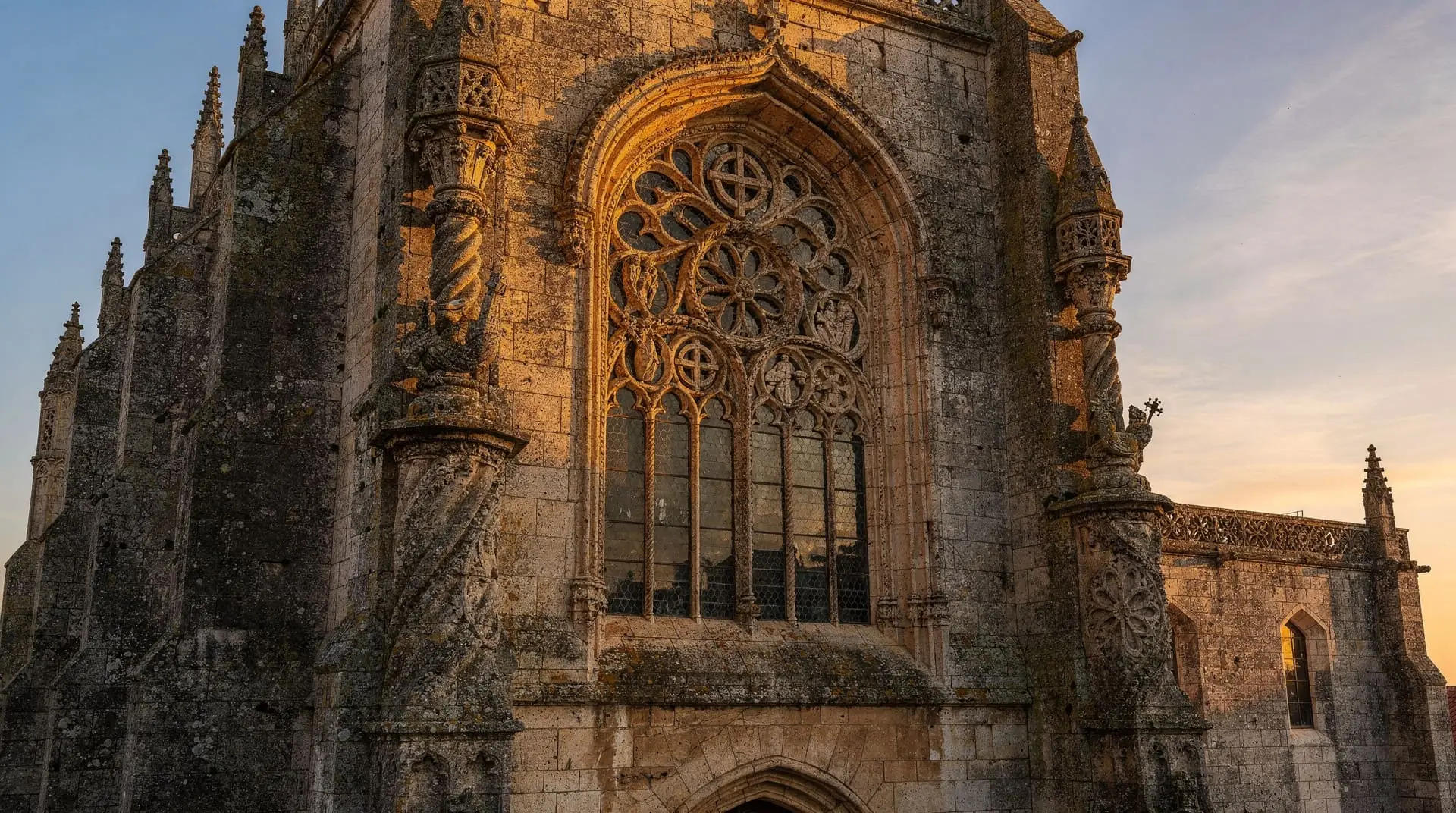
Convent of Christ in Tomar: the Templar headquarters and Manueline window
Visit guide for the Convent of Christ in Tomar — Templar castle, circular Charola, the most complex Manueline window in Portugal, and day trip logistics.
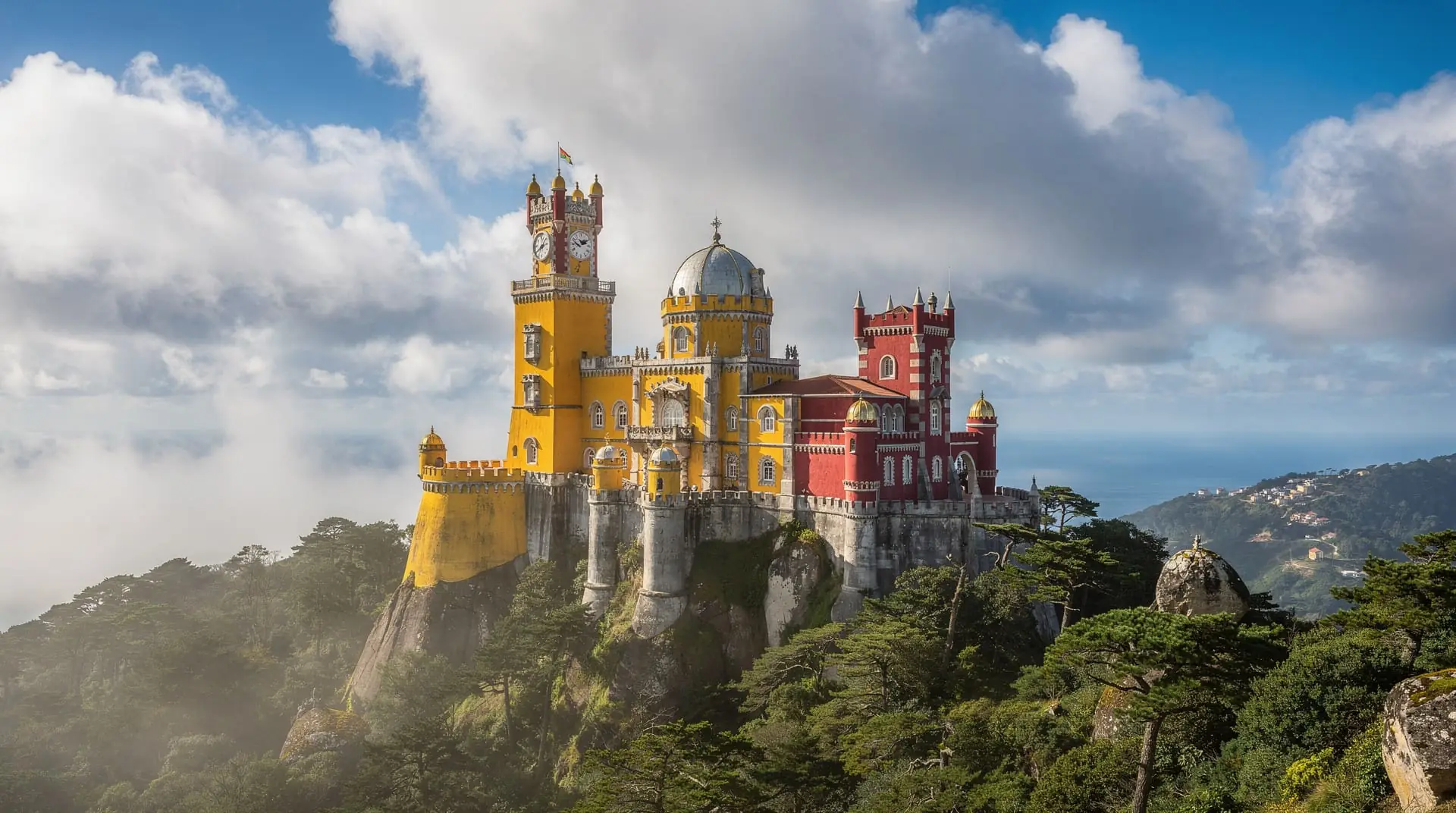
Pena Palace: tickets, queues and how to make the most of your visit
How to visit Pena Palace in Sintra — timed entry tickets, bus 434, park-only vs palace+park options, and what to expect inside the Romantic hilltop castle.
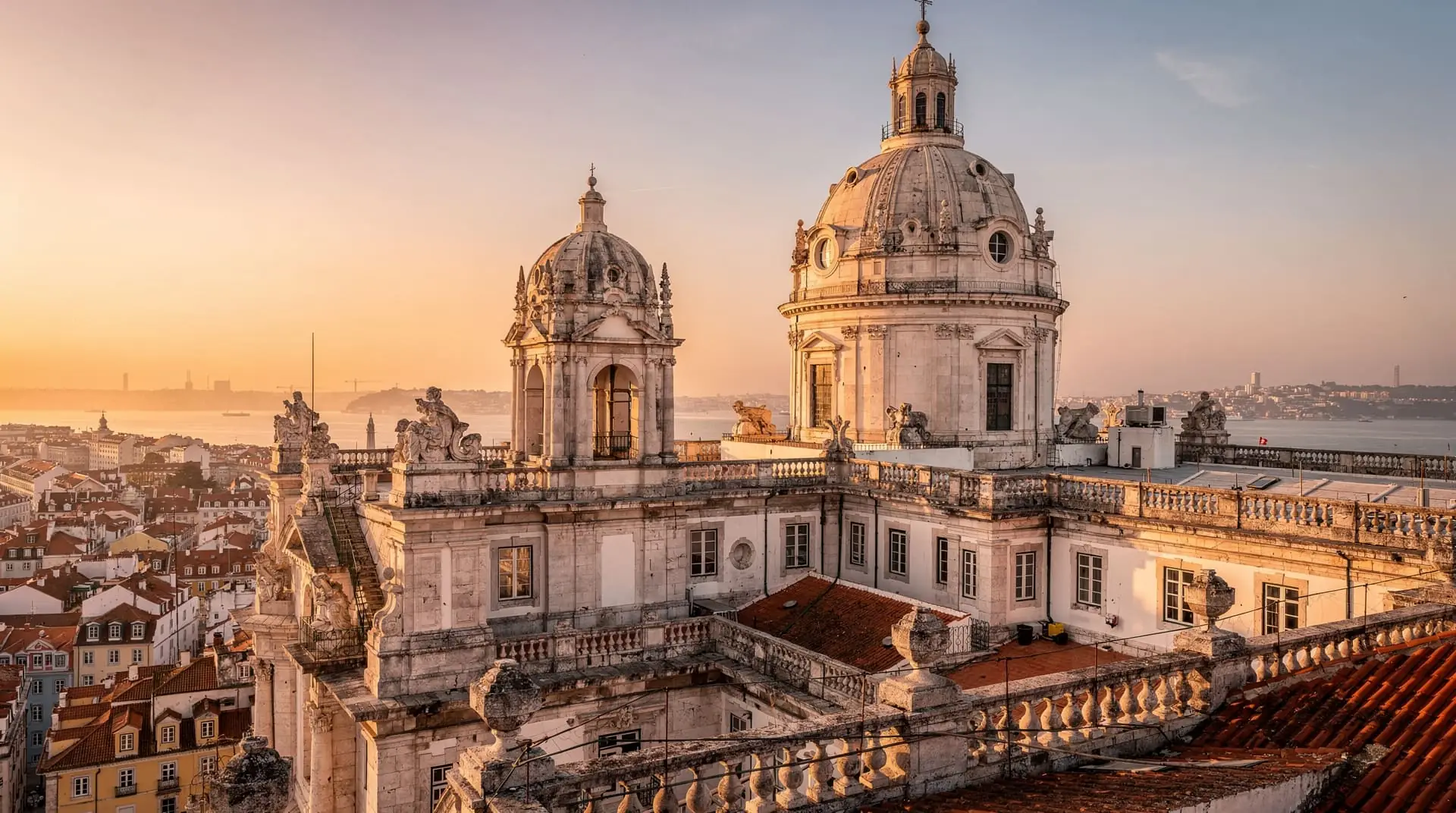
National Pantheon Lisbon: the Santa Engrácia dome and rooftop views
Lisbon's National Pantheon — Amália Rodrigues' tomb, the baroque dome, rooftop views over Alfama, and combining with the Feira da Ladra flea market.
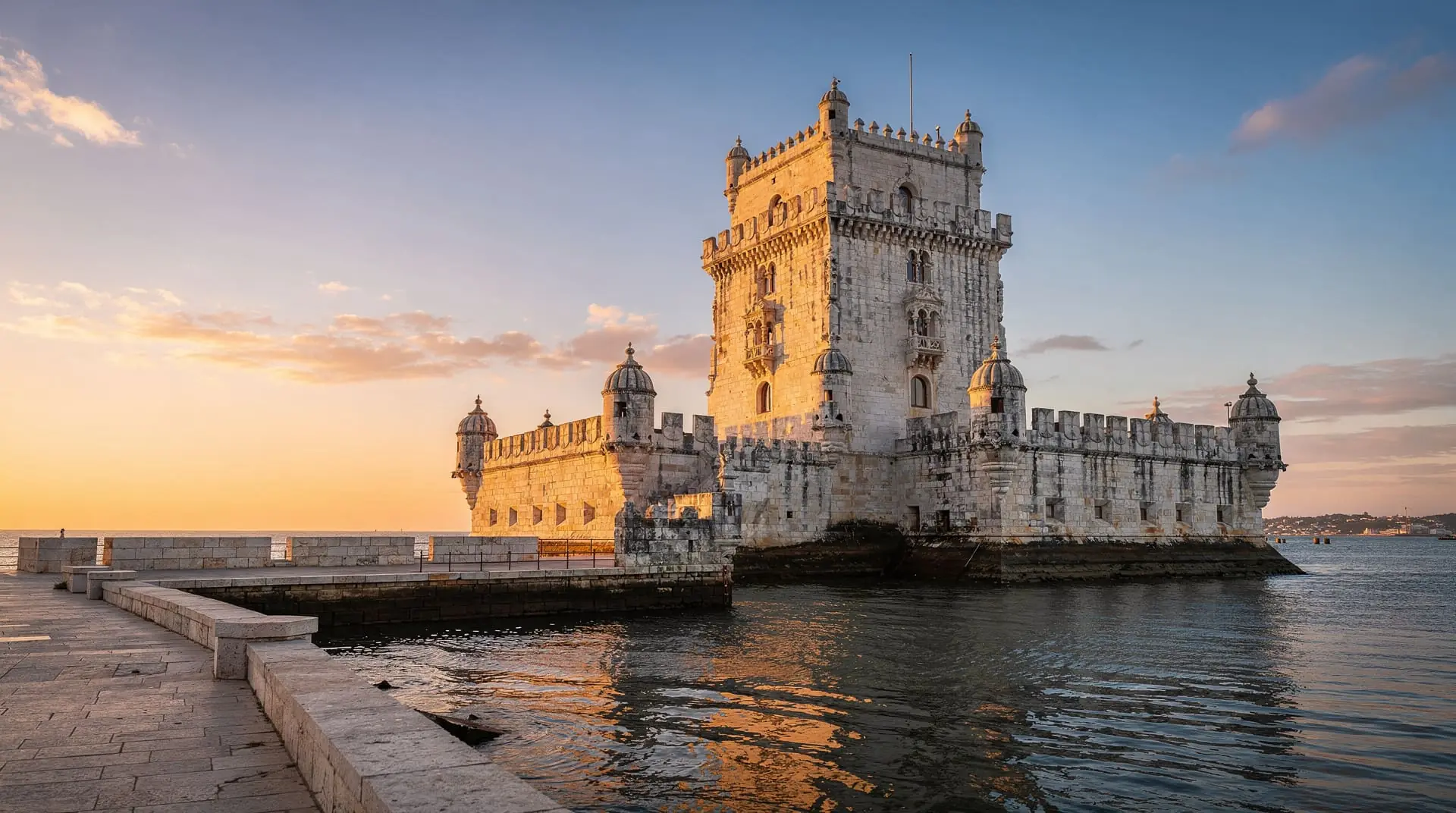
Belém Tower: tickets, queues and what to expect inside
How to visit Belém Tower without wasting an hour in the queue. Fast-track tickets, best time to go, and what the Manueline tower actually shows you.
Ready to book? Top tours for this guide
We earn a small commission if you book through GetYourGuide — at no extra cost to you. Every tour is hand-picked and verified.