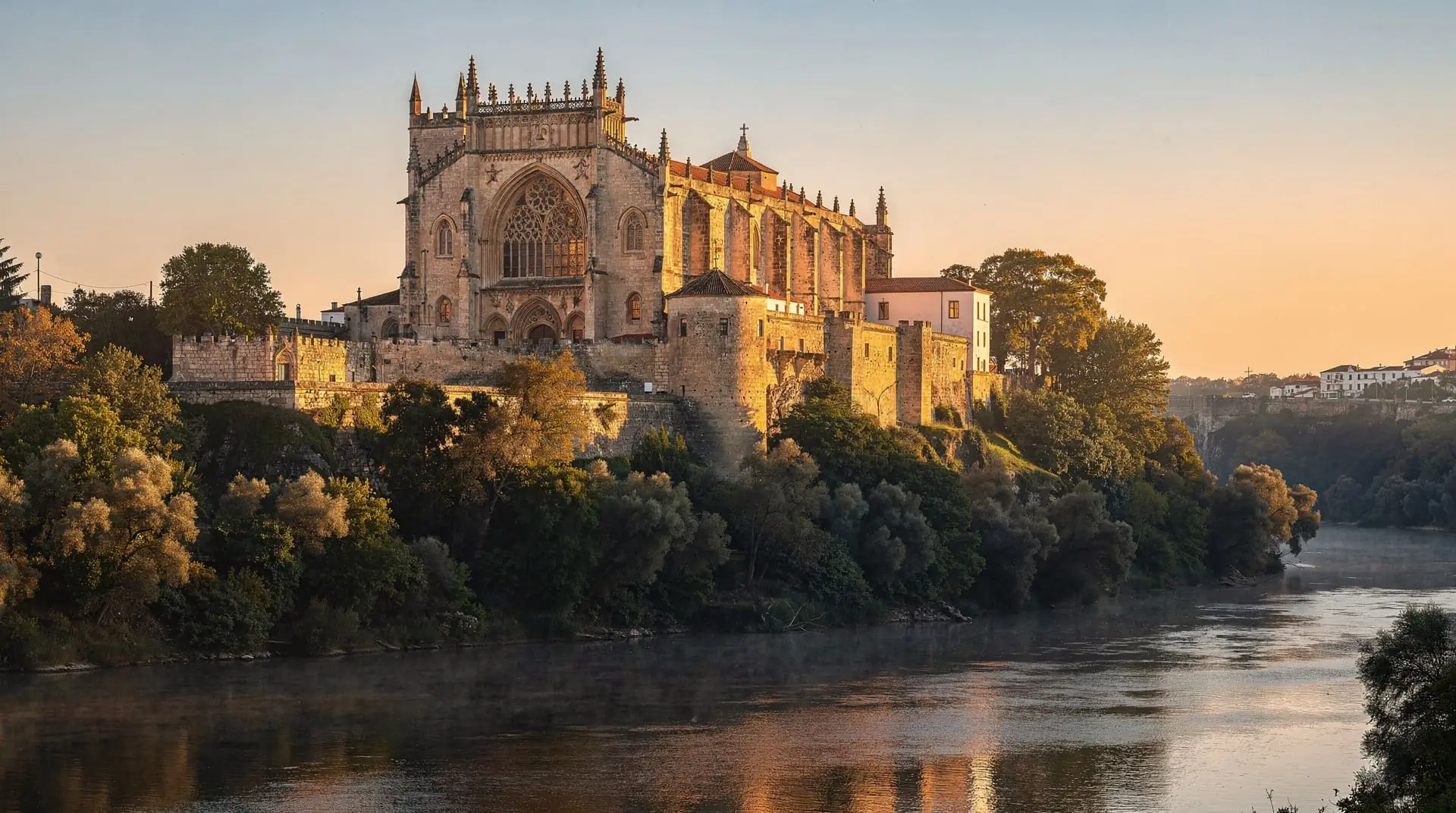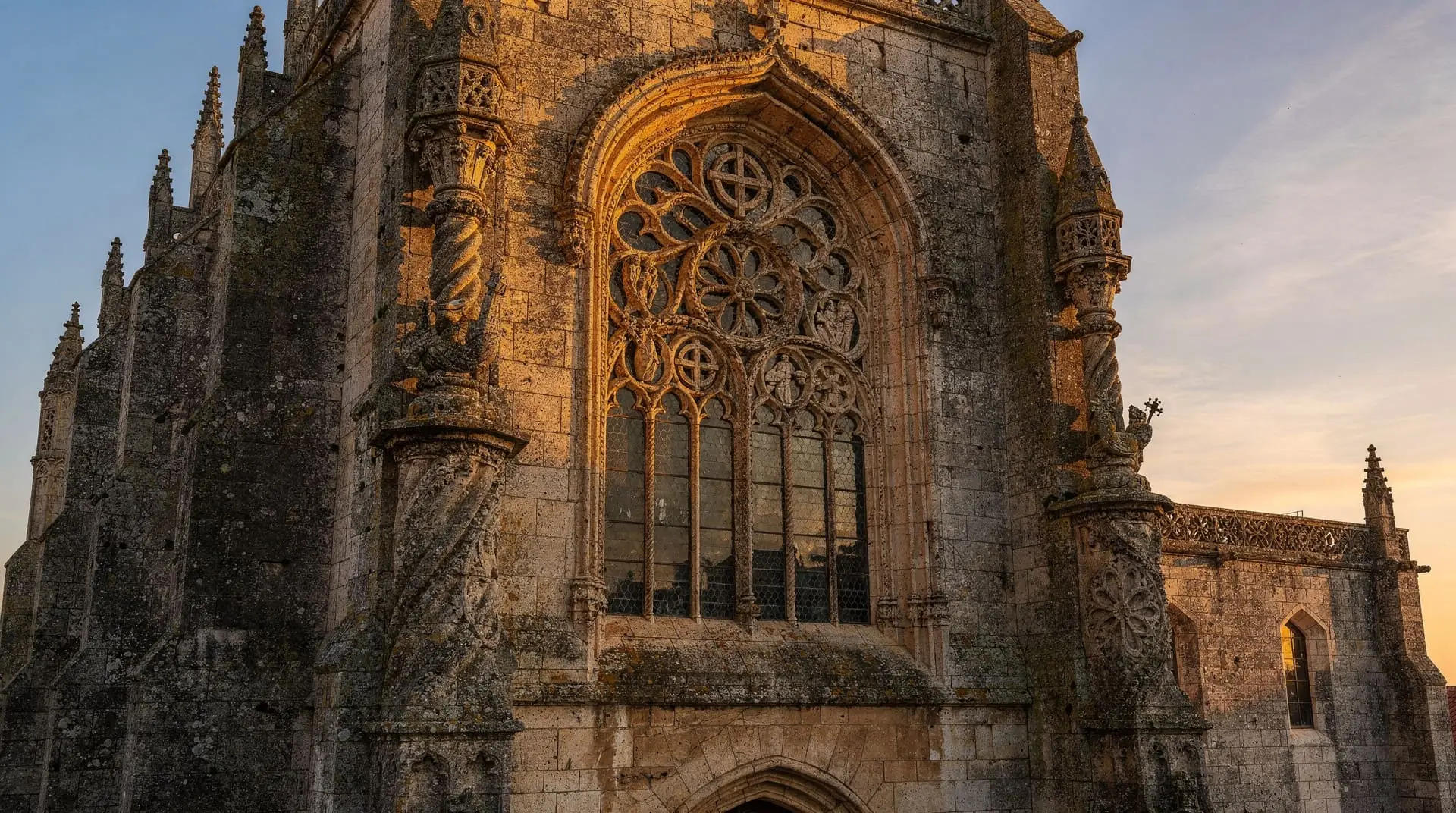
Convent of Christ in Tomar: the Templar headquarters and Manueline window
Last reviewed
What is the Manueline window at the Convent of Christ?
The chapter house window, carved around 1510–1515, is the single most complex piece of Manueline stone carving in existence — a 12-metre high composition incorporating rope, coral, anchors, armillary spheres, a knight's helmet, roots and branches all woven together. It took a decade to carve and remains unique. Most visitors consider it the finest thing they see in Portugal.
The Convento de Cristo in Tomar is the reason Portuguese architects study medieval stonework. It is also a 900-year history of one of the most powerful military orders in European history, encoded in stone on a hilltop above a small medieval town 140 km north of Lisbon.
The Knights Templar established their Portuguese headquarters here in 1160. When the Templar order was dissolved across Europe in 1312, Portugal’s King Dinis refounded it as the Order of Christ — and the new order funded Vasco da Gama’s voyage to India. The cross on Portuguese Age of Discovery ships was the Cross of Christ, an inheritance from the Templars. The convent, continuously extended from the 12th to the 17th centuries, is the physical record of that 500-year accumulation.
The famous chapter house window is the culmination of Manueline architecture — more complex, more specific, more deeply symbolic than anything at Jerónimos Monastery or Belém Tower. If you see one Manueline building in Portugal, it should probably be the one in Tomar.
| Where | Tomar, ~140km / 1h40 north of Lisbon by train |
| Cost | €6 adult ticket, under 12 free (not covered by the Lisboa Card) |
| Time needed | 2–3 hours for the convent, add 2 hours for Tomar town |
| Getting there | Direct-ish train from Santa Apolónia/Entrecampos, or a guided tour |
| Best time | Morning, before 12:00, for light on the chapter house window |
What you are visiting
The complex divides into several distinct sections built across five centuries:
The Templar Rotunda (Charola)
The oldest surviving part, built in the 12th century as an octagonal oratory modelled on the Church of the Holy Sepulchre in Jerusalem — a common Templar building type. It is also called the Rotunda or the Templar round church. The original Templars could ride their horses into the circular nave during services (a privilege of the military orders).
The interior is painted with 15th–16th century frescoes of apostles, knights and biblical scenes, many heavily restored but still powerful. The Charola remains consecrated and is one of the best-preserved Romanesque-Templar church interiors in Europe.
The chapter house window
Accessible from the cloister of the Santa Bárbara gallery, the chapter house window is the monument’s centrepiece. Carved around 1510–1515 by Diogo de Arruda under Manuel I’s commission, it is impossible to describe adequately in words. The frame is built from a coral-reef base, rising through interwoven rope, anchor chains, armillary spheres (Manuel I’s symbol), cork oak roots, seaweed, and finally a profusion of maritime motifs topped by a heraldic shield and a knight’s helmet sprouting branches.
The window is not an opening to the chapter house — it is a window to an exterior gallery, lit from outside. Stand across the cloister from it, in the morning light that hits the west-facing stonework, and you understand why it is considered the apex of the Manueline style.
The Main Cloister (Claustro Principal)
The largest and most classical of the convent’s eight cloisters, built by João de Castilho (who also worked on Jerónimos) in the 16th century. A perfect two-storey Renaissance cloister with Tuscan columns — a deliberate counterpoint to the Manueline excess of the chapter house window. The two styles are deliberately juxtaposed; the Main Cloister represents the Mannerist-Renaissance reaction to Manueline exuberance.
The remaining cloisters
Seven other cloisters span different periods and styles — Romanesque, Gothic, Manueline and Renaissance. Walking the sequence gives you a compressed history of six centuries of Portuguese architectural evolution in one complex.
The Templar Castle
The original 12th-century Templar castle walls surround the convent on the hilltop. You can walk sections of the walls and see the exterior of the Charola from the castle courtyard. The views over Tomar town and the Nabão River are good from the castle perimeter.
Getting to Tomar from Lisbon
By train
The most comfortable option. Fertagus or Comboios de Portugal services from Lisbon Santa Apolónia or Entrecampos, usually with one change at Entroncamento (or occasionally Santarém). Total journey approximately 1 hour 40 minutes. Fare approximately €10–14 each way. Tomar station is 1.5 km from the convent (flat walk via the riverside park and up the hill).
By car
IC3 or A1 north then A13 to Tomar. Approximately 1 hour 45 minutes from central Lisbon. Parking available in Tomar town centre and at the base of the convent hill.
By guided tour from Lisbon
Multiple operators run Tomar day trips from Lisbon, often combined with the Almourol Castle (a Templar river island fortress, 40 minutes south of Tomar) or with Batalha Monastery.
From Lisbon: Tomar, Convent of Christ and Almourol Castle tour From Lisbon: Knights Templar tour to Tomar and Almourol CastleThe guided tour option is particularly good for Tomar because the Templar and Order of Christ history requires context that independent visitors often lack. A private tour with a specialist guide:
From Lisbon: Knights Templar private tour to TomarTickets and entry
Adult ticket (2026): €6. Under 12: free. Lisboa Card does not cover Tomar — it only covers Lisbon city monuments.
The ticket includes the full convent complex: all cloisters, the Charola, the chapter house window exterior, the castle walls.
Walk-up tickets are almost always available — Tomar is one of Portugal’s less crowded UNESCO sites. There is no timed-entry system.
Opening hours: daily 09:00–18:30 (summer); 09:00–17:30 (winter). Last entry 30 minutes before closing.
Time needed: 2–3 hours for a thorough visit. Many architectural history enthusiasts spend longer.
Combining Tomar with other sites
Tomar town
The Tomar destination guide covers the wider town beyond the convent in more depth. Tomar itself is a pleasant medieval town. The synagogue-turned-museum (Museu Luso-Hebraico de Abraham Zacuto) is one of the best-preserved 15th-century synagogues in Portugal, surviving the 1496 expulsion of Portuguese Jews because it was converted to a store. The Nabão River has pleasant riverside cafés. The town is small enough to cover in 2 hours on foot.
Almourol Castle
A Templar castle on an island in the Tagus, 40 km south of Tomar. Reached by a short boat crossing (€2 return, runs throughout the day from the bank opposite the castle). The exterior is excellently preserved; the interior is accessible via steep stairs. Worth 90 minutes if you are travelling with a car. Not practical by public transport.
Batalha Monastery (combined day trip)
Batalha, 30 km west of Tomar (by car), contains another UNESCO monument: the Monastery of Santa Maria da Vitória, also Manueline in parts, with extraordinary unfinished chapels that rival anything in Portugal. By train, the Tomar–Batalha connection requires a car or tour.
How Tomar compares to Lisbon’s Manueline sites
| Site | Style highlight | Crowds | Time needed |
|---|---|---|---|
| Convent of Christ, Tomar | Chapter house window — the most complex Manueline carving anywhere | Low, even in August | 2–3 hours |
| Jerónimos Monastery | Cloister scale and royal tombs | High, timed entry recommended | 1.5–2 hours |
| Belém Tower | Riverside fortress with Manueline detailing | Very high, long queues | 45–60 min |
| Mafra Palace | Baroque scale, not Manueline, but comparable day-trip logistics | Low to moderate | 2 hours |
If you only have time for one Manueline monument on this trip and can spare a full day, Tomar’s window is arguably the finer piece of stone carving — but Jerónimos and Belém are far more convenient if your days are limited to Lisbon itself. The day trips from Lisbon guide and the tomar day trip guide both help weigh Tomar against other options if you’re still deciding, and the which day trip from Lisbon comparison covers the full list.
The Templar and Order of Christ history
The Knights Templar arrived in Portugal in the 12th century as part of the crusading movement and were granted Tomar by King Afonso Henriques in 1159–1160 as reward for their role in reconquering central Portugal from the Moors. They built the castle and the Charola by around 1190.
When Pope Clement V dissolved the Templar order at the Council of Vienne in 1312 — largely under pressure from Philip IV of France, who owed the Templars vast debts — Portugal’s King Dinis negotiated an unusual exception. The Portuguese Templars were not arrested or tried (unlike their counterparts in France, who were burned). In 1319, King Dinis refounded the order as the Order of Christ, with the same personnel, the same assets, and the same headquarters at Tomar.
The Order of Christ subsequently became the institutional sponsor of Portuguese maritime exploration. Henry the Navigator (Infante Dom Henrique) was Governor-General of the Order from 1420 until his death in 1460 — he used its income to fund the voyages along the African coast. Vasco da Gama, Pedro Álvares Cabral (discoverer of Brazil) and Bartolomeu Dias (who rounded the Cape of Good Hope) all sailed under the Cross of Christ. The connection is direct: Tomar funded the Age of Discovery.
The Manueline additions to the convent — the chapter house window, the Main Cloister — were commissioned by Manuel I at the peak of this maritime success. The window is a monument to that moment.
What to look for at the chapter house window
Stand on the opposite side of the Santa Bárbara cloister walk, at medium distance, to see the full composition. Then approach and examine the detail sections:
- At the base: the roots of a cork oak emerging from the ground (a symbol of Portugal’s Atlantic bark cork trade)
- Rising through the middle: anchor chains, rope in perfect twisted stone, seaweed and barnacles
- At the central position: a round porthole window (the actual aperture), surrounded by marine flora
- At the upper section: armillary spheres (Manuel I’s personal symbol, the same one on Belém Tower), the Cross of Christ, heraldic shields of Portugal and the Order of Christ
- At the top: a knight’s helmet from which branches grow, the royal arms
The composition is simultaneously cosmological and heraldic — it summarises the entire world view of the Manueline moment: Portuguese ships navigating by the spheres of heaven, enriched by the sea’s biological abundance, sustained by royal power and divine sanction.
Tomar town beyond the convent
Tomar is a genuinely pleasant small city, and the 2 km between the train station and the hilltop convent passes through a well-preserved medieval and Renaissance centre that rewards a slow walk.
Praça da República: the main square, with a 15th-century Gothic church (Igreja de São João Baptista) whose portal is one of the best late Gothic facades in the Ribatejo region. The Manuel I armillary sphere appears on the portal — the same symbol as on Jerónimos and Belém Tower, linking Tomar visually to the Lisbon Manueline monuments.
Museu Luso-Hebraico de Abraham Zacuto: the 15th-century synagogue, converted to a storage room after 1496 (when Manuel I expelled the Jewish population under Spanish pressure and promised not to harm them while simultaneously ending their communal institutions). The synagogue structure survived because it was useful as a store. It is now a small museum. Abraham Zacuto was the Jewish astronomer whose astronomical tables the Portuguese used for navigation — Vasco da Gama carried copies. The connection between the Tomar Jewish community and the Age of Discovery is a largely untold story.
Nabão River: the river running through Tomar has a pleasant riverside path. The 12th-century Templar mill (Moinho de Cardiga) is 20 km south on the Tagus near Almourol — not walkable, but visible from the bridge if you look east.
Convento de Santa Iria: a smaller 16th-century convent on the river. Saint Iria, the patron of Tomar, was a 7th-century virgin martyr whose body was thrown into the Nabão and floated downstream to what became the saint’s cult site. The hagiography is typical of the period; the riverside setting is attractive.
Practical tips and honest advice
Photography: the chapter house window is best photographed in morning light (before 12:00) when the west-facing stone is in direct light. Afternoon light is flatter. Bring a camera with a good wide angle — you need to be 8–10 m back to capture the full frame, and then close for detail.
The crowds: Tomar is genuinely uncrowded by Lisbon-area standards. Even in July and August, you can often have the cloister and window virtually to yourself during the first morning hour. This is in stark contrast to Jerónimos or Pena.
The town cafés: the cafés on Praça da República in Tomar town serve good coffee. For lunch, try A Bela Vista or O Trovador for traditional Portuguese cooking (bacalhau in multiple preparations, migas Alentejanas). Avoid the restaurant directly adjacent to the castle gate.
The couvert warning: as in all of Portugal, restaurants may bring bread and olives to the table without being asked. This is a billable couvert (€1.50–3.00 per person). You can refuse it. See the restaurant couvert scam guide for how to handle this clearly.
Accessibility: the convent involves uneven medieval stonework, stairs between cloister levels, and a sloped approach from the town. Wheelchair users and visitors with mobility limitations should expect a partial visit — the Charola and Main Cloister are the most accessible sections, while some of the smaller cloisters and the castle walls require stairs. There is no lift.
What to skip if time is short: with under two hours, prioritise the Charola, the chapter house window, and the Main Cloister — the remaining five smaller cloisters are of genuine interest to architecture specialists but add diminishing returns for a general visitor on a tight schedule.
Frequently asked questions about the Convent of Christ
How long should I budget for Tomar as a day trip from Lisbon?
A comfortable day trip: 09:00 train from Lisbon, arrive Tomar ~11:00 (with connection), convent visit 11:30–14:00, lunch in town, afternoon at leisure or Almourol Castle, train back 17:00–18:00, arrive Lisbon ~19:00. The train journey is comfortable and scenic through the Ribatejo plains.
Is the Convent of Christ included in the Lisboa Card?
No. The Lisboa Card covers only Lisbon city monuments. Tomar is a separate journey and the convent ticket (€6) is purchased on site.
Can I combine Tomar with Sintra in one day?
Not practically. Both are full-day destinations in opposite directions from Lisbon. Tomar is north; Sintra is west. Attempting both means seeing neither properly.
Why is the chapter house window not inside the chapter house?
It is an exterior window on the outer wall of the chapter house, facing into the Santa Bárbara cloister. The “chapter house window” is a misnomer — it is actually the chapter house’s main exterior facade window. You view it from the cloister gallery.
What are the Almourol Castle and should I combine it with Tomar?
The Castelo de Almourol is a Templar river castle on a small island in the Tagus, 40 km south of Tomar. It is dramatically sited, well-preserved, and reachable by a short boat crossing. With a car, it makes a natural morning stop en route from Lisbon to Tomar, or an afternoon visit after the convent. By public transport, the combination is difficult.
What is the Templar history in Tomar worth knowing before I visit?
At minimum: the Templars built the castle and circular chapel in the 12th century; the Order of Christ replaced them in 1319 and funded the Age of Discovery; Henry the Navigator governed the Order from this headquarters from 1420. The Manueline additions to the convent (the cloisters, the famous window) were built at the height of Portuguese maritime success in the early 16th century. That sequence — Templar crusaders, Order of Christ, Age of Discovery — is the whole story.
Is Tomar worth it if I’m short on time in Lisbon and can only do one or two day trips?
If your time is limited to two or three days total, prioritise Sintra or Évora first — they’re closer or more essential to a first Lisbon visit. Tomar rewards visitors with 5+ days who want a quieter, more specialist site; the 5-day itinerary with day trips is a reasonable framework for fitting it in without rushing the rest of the trip.
Related guides
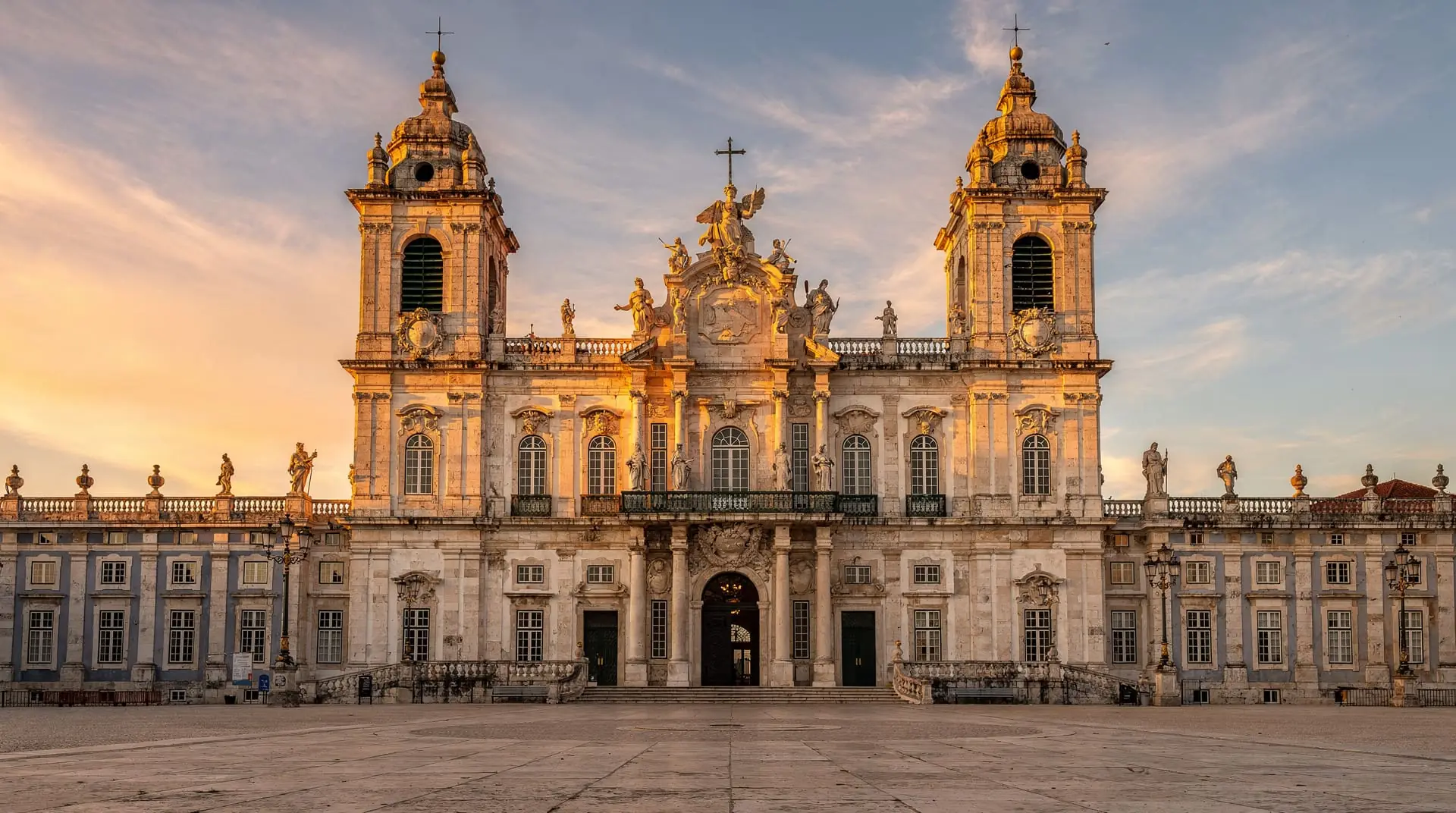
Mafra Palace: Portugal's most extravagant baroque monument
Guide to Mafra Palace and convent — the baroque library, hunting reserve, how to get there from Lisbon, and why José Saramago set a novel here.
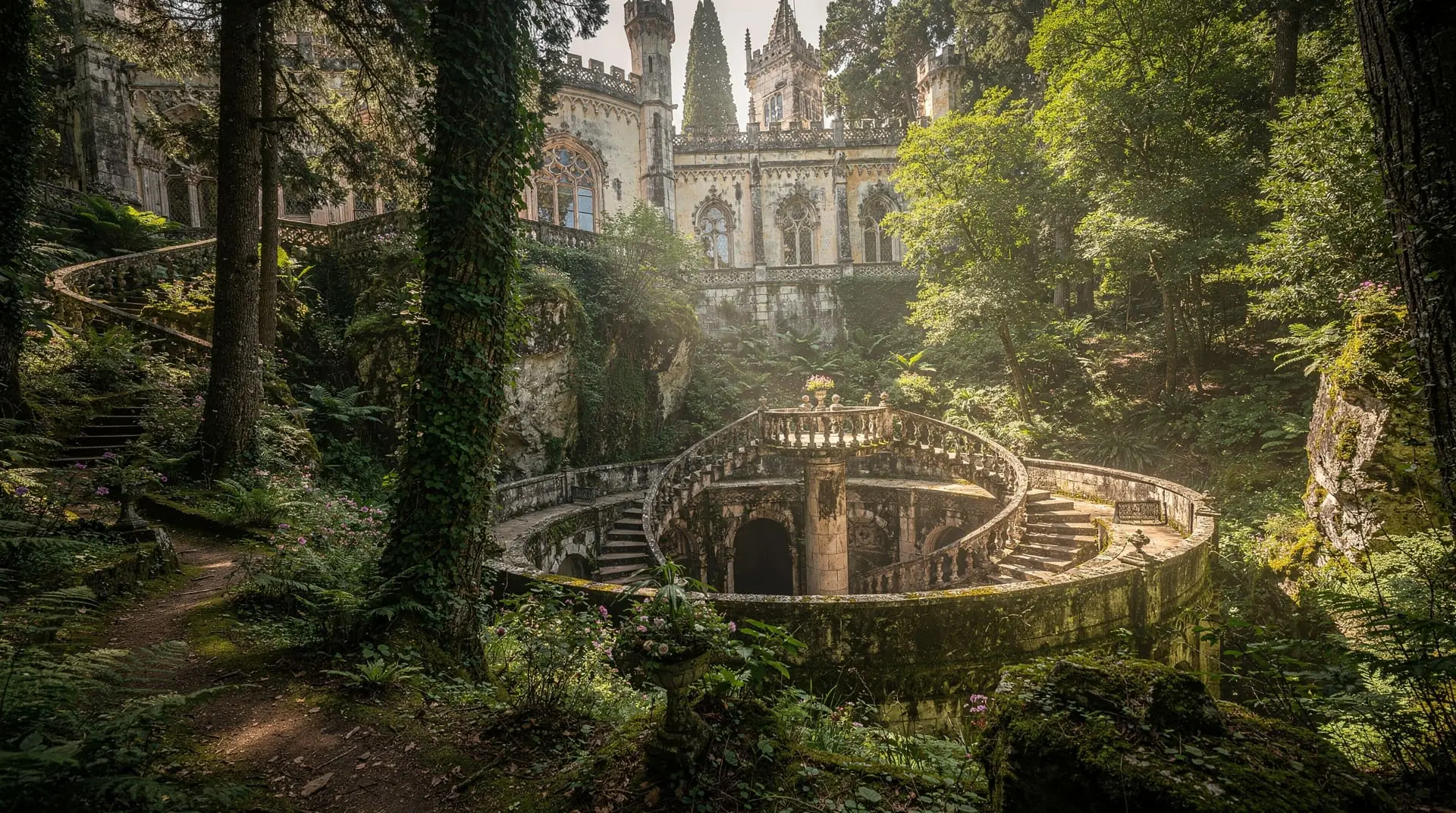
Quinta da Regaleira: the Initiation Wells and esoteric gardens
Visit guide for Quinta da Regaleira in Sintra — the Initiation Wells, timed-entry tickets, dawn tip, and how to combine it with Pena Palace and the town.
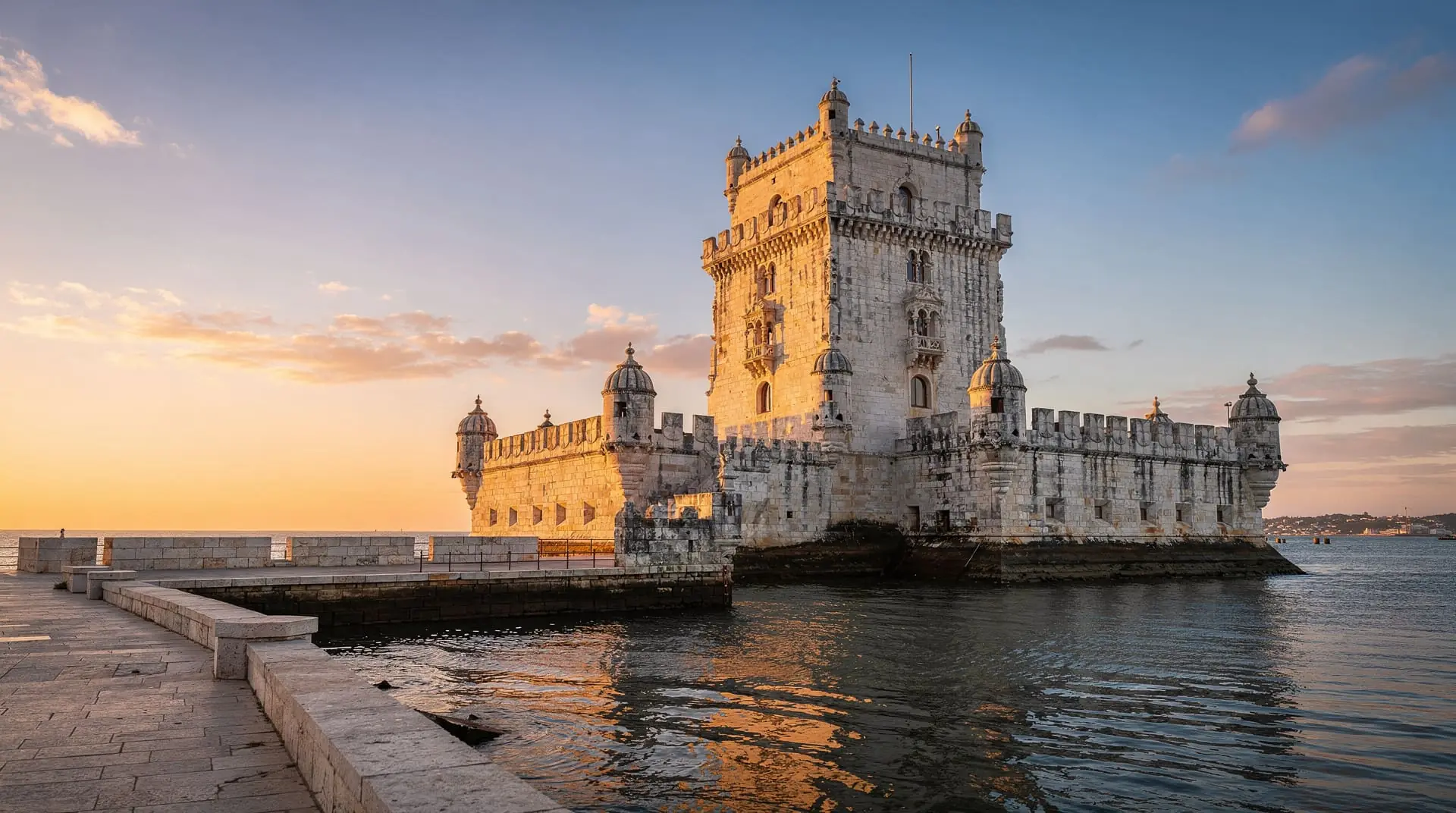
Belém Tower: tickets, queues and what to expect inside
How to visit Belém Tower without wasting an hour in the queue. Fast-track tickets, best time to go, and what the Manueline tower actually shows you.
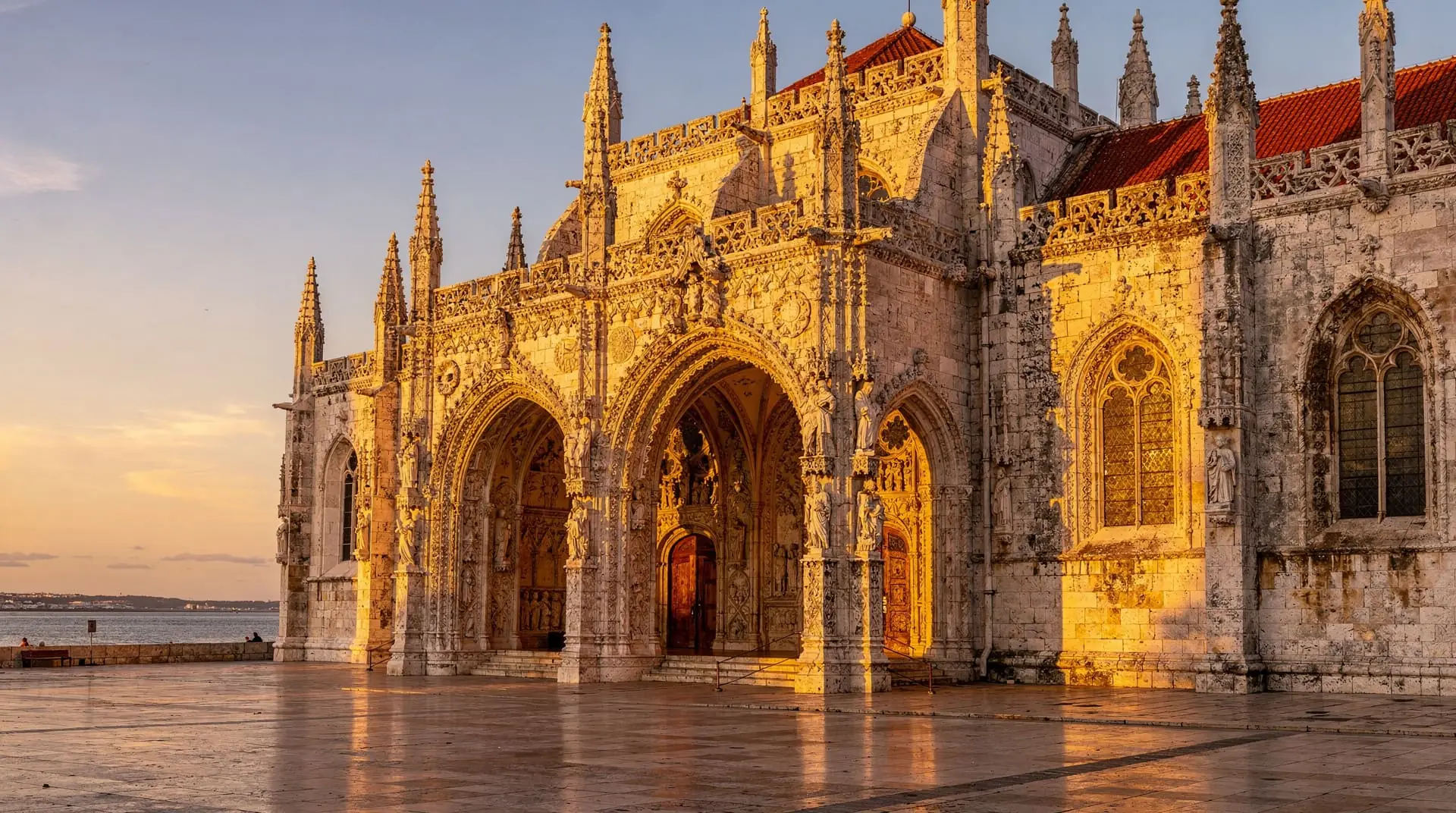
Jerónimos Monastery: the complete visit guide
Everything you need to visit Jerónimos Monastery in Belém — tickets, timed entry, the cloister, Vasco da Gama's tomb, and how long it really takes.
Ready to book? Top tours for this guide
We earn a small commission if you book through GetYourGuide — at no extra cost to you. Every tour is hand-picked and verified.