Costa da Caparica beaches — the complete guide to Lisbon's surf coast
Last reviewed
How do I get to Costa da Caparica from Lisbon?
The easiest route is bus 161 from Praça de Espanha metro station (about 45 minutes, €2.05). Alternatively take the ferry from Cais do Sodré to Cacilhas (€1.35, 10 minutes) then bus 135 to Caparica town (30 minutes). Both routes run regularly. By car via Ponte 25 de Abril takes 30 minutes but traffic backs up on summer weekends.
What Costa da Caparica actually is
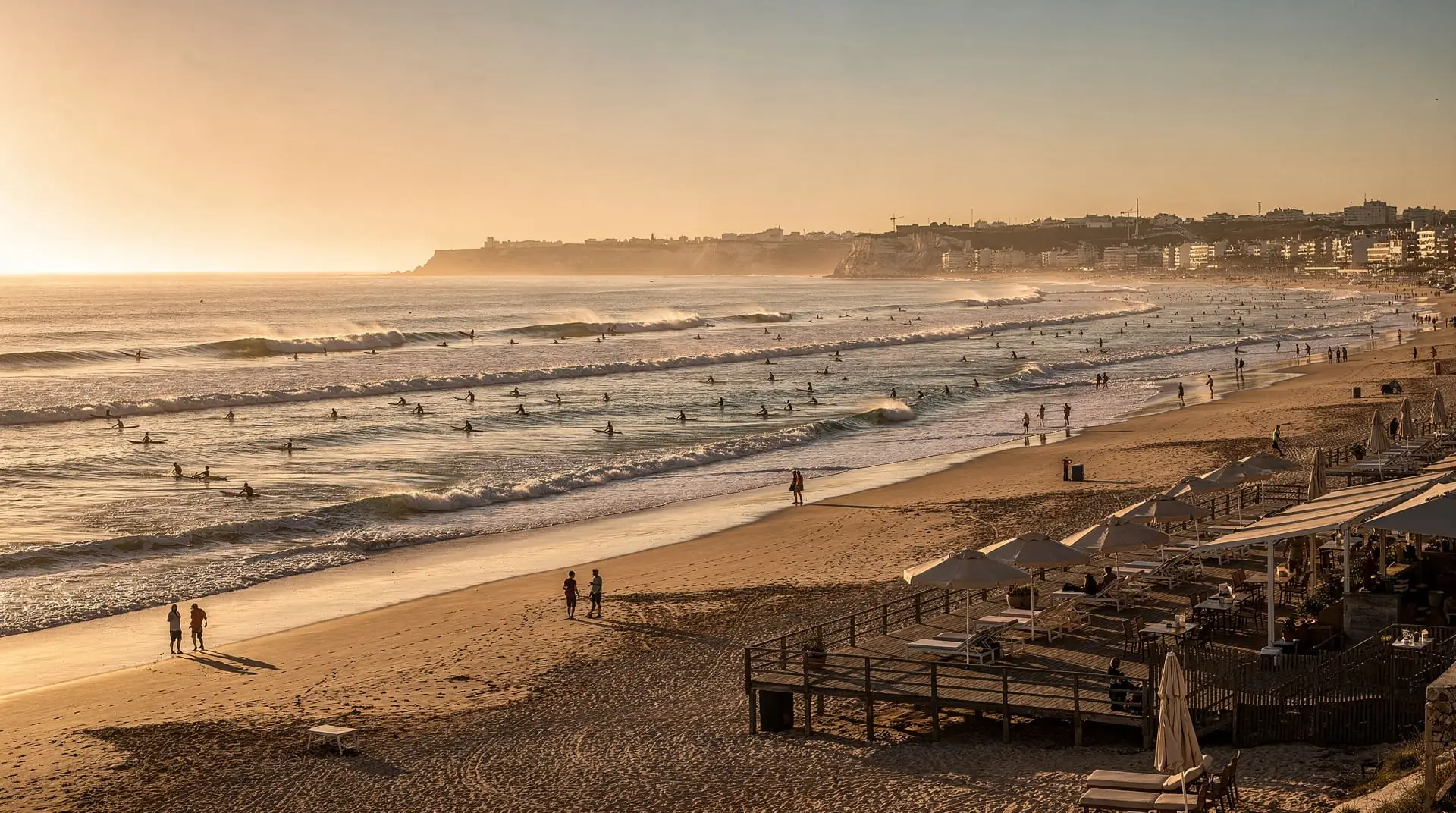
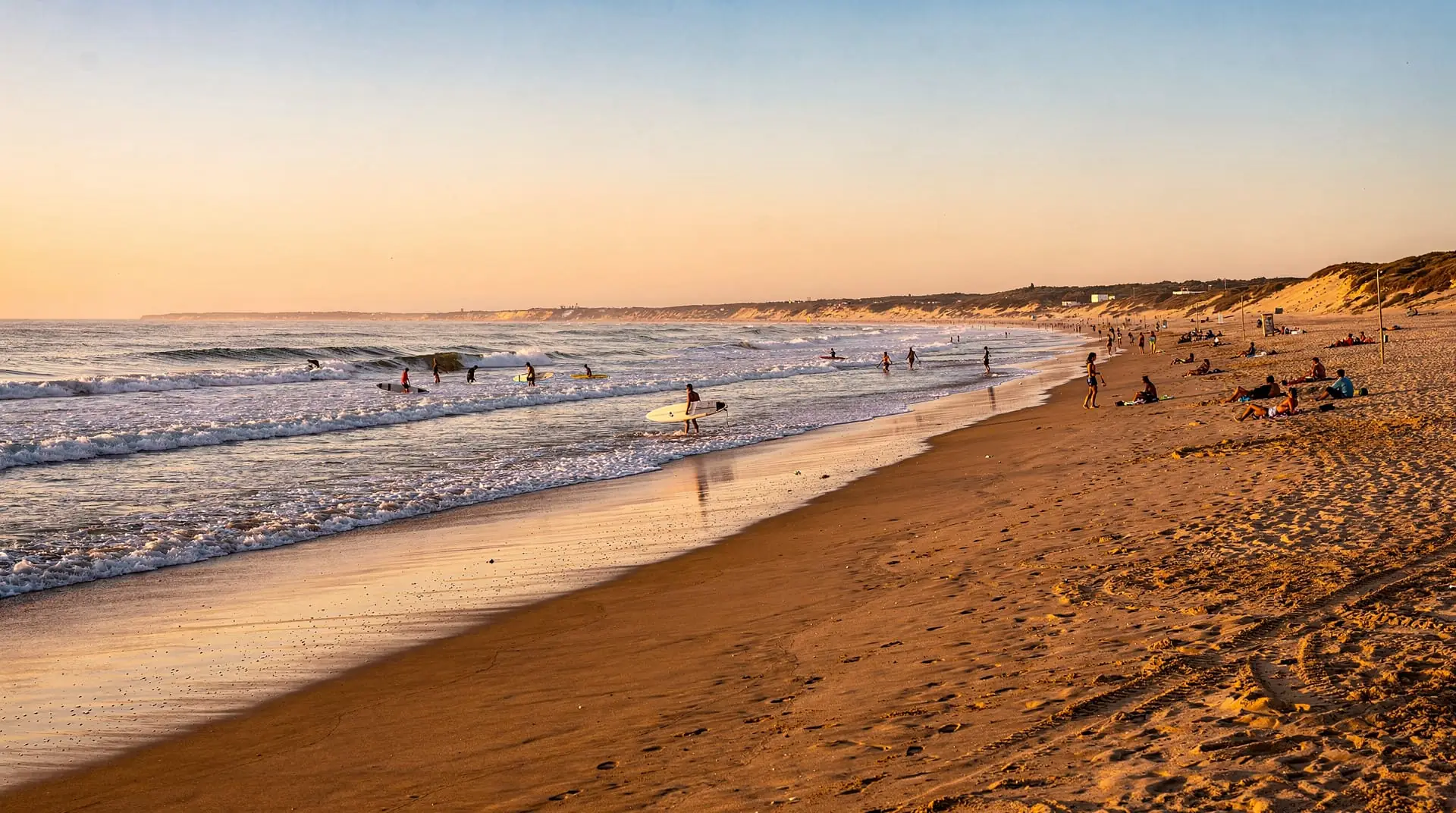
Costa da Caparica is a 30-kilometre ribbon of Atlantic beach running south from the Arrábida headland at the mouth of the Tagus. It is the working-class antidote to Cascais, historically the beach destination for Lisbon families who could not afford a house on the Estoril coast. That history still shows: Caparica town is unpretentious, the restaurants are honest, the surf schools are genuine, and the beach scene runs on fresh fish and cold Super Bock rather than cocktails and sunbeds.
The coast faces southwest, catching Atlantic swells that arrive from the northwest with enough force to produce consistent beach-break surf. On summer weekends it is one of the busiest beaches in Portugal. On a Tuesday in early June, you can walk the northern stretch and find stretches of near-empty sand.
| Where | 30km Atlantic coast, south side of the Tagus |
| Cost | Free beach access; bus around €2.05; surf lessons €35–50 |
| Time needed | Half a day for a quick fix, a full day with the Transpraia |
| Getting there | Bus 161 from Praça de Espanha (45 min), or ferry + bus via Cacilhas |
| Best time | October–April for waves, June–September for swimming and barracas |
The numbered praias: which one to choose
The Caparica coast is divided into numbered sections (praias) running from north to south. Each has its own character and a different mix of visitors. The Transpraia mini-train runs along the promenade in summer (usually June to mid-September), connecting the main town to the southern sections — it is the easiest way to explore the strip.
Praia de Caparica / Praia 1 sits at the northern end, immediately south of the town centre. It is the most developed: rows of beach bars (barracas), surf schools, rental loungers, and lifeguards from June to September. It is also the most crowded. Best for families who want facilities and do not mind company. The Posto de Turismo is here; so are the main bus stops.
Praias 2-6 are broadly similar to Praia 1 but slightly less crowded the further south you go. The water quality and wave consistency is good throughout. These are the core family beaches on summer weekends.
Praias 7-10 are popular with a younger crowd. Posto 9 (Praia 9) has become known for its beach bar scene — a collection of barracas with music, cold drinks, and a social atmosphere that runs from mid-morning to sunset. Do not confuse Posto 9 with a club; it is a beach-bar culture, relaxed, open-air, no entry fee.
Praias 11-17 grow quieter and less developed. Beach bars thin out. The sand remains excellent, the waves consistent. Good choice for anyone who wants a proper beach without the Praia 1 circus.
Praias 17 onwards are naturist-friendly and very quiet. Few facilities. The Transpraia continues south but the stops become more spaced out. This section appeals to those who want solitude — in midsummer, it is genuinely possible to find long stretches of sand with very few people.
Which praia for what you want
| Section | Best for | Crowd level |
|---|---|---|
| Praia 1–2 | Families, first-timers, full facilities | Very high in summer |
| Praia 3–6 | Solid all-rounder, still full facilities | High |
| Praia 9 (Posto 9) | Beach-bar social scene, younger crowd | High, social not oppressive |
| Praia 11–17 | A real beach without the circus | Moderate |
| Praia 17+ | Solitude, naturist sections | Low |
Surf at Caparica: what to expect
Costa da Caparica is the closest quality surf beach to Lisbon and one of the most consistent beach-break setups on the Portuguese coast. The beach picks up northwest swells well and the multiple banks along the 30-kilometre strip mean there is almost always somewhere rideable.
Wave conditions: The best surf runs from October to April when Atlantic storm swells arrive from the northwest. Summer (July-August) brings smaller, cleaner conditions — good for beginners but less exciting for experienced surfers. Early mornings in summer often have glassy, light-wind conditions before the onshore sea breeze kicks in around noon.
Surf schools: Multiple schools operate along the northern strip, concentrated around Praia 1 and Praia 2. Lessons typically cost €35-50 for a 2-hour group session including board and wetsuit. The Atlantic water runs 17-19°C in summer — most people wear at least a 3/2mm wetsuit.
Surf experience at Costa da CaparicaBoard rental: Available from most surf schools at around €15-25 per day (board + wetsuit). You do not need to take a lesson to rent equipment. Bring your own or rent from the school and find a bank that suits your level.
Rip currents: Caparica has well-marked rip channels at regular intervals along the beach. Swim between the red-and-yellow lifeguard flags in summer (flags are posted June-September). The rips look calm — that is the danger. If you are not a confident swimmer, stay within the flagged zone.
Surf etiquette for beginners: Caparica’s northern breaks get busy with schools in summer mornings. Stick to the section your instructor assigns, look both ways before paddling out, and never let go of your board in a crowded lineup — it becomes a hazard to other surfers. If you are renting equipment independently rather than taking a lesson, ask the rental shop which bank is currently working best; conditions shift week to week as sandbanks move.
What to pack: A rashvest or reef-safe sunscreen (many surf schools now discourage standard sunscreen, which washes off into the water), a change of clothes, flip-flops for the walk from the sand to the bus stop, and a dry bag for your phone and wallet if you’re renting a board independently. Changing facilities at the main praias are basic — a cubicle and a cold shower rather than anything more.
Beach bars and eating on the strip
The Caparica beach bar (barraca) is a Portuguese institution. A basic structure of wood and corrugated metal, usually serving grilled fish, bifanas (pork sandwiches), pastas de nata, beer, and soft drinks. Quality varies but the best ones are genuinely good for a simple beach lunch.
Borda d’Água (near Praia 1) is well-regarded for grilled fish. Sardinhas assadas (grilled sardines) in summer, lulas (squid), and dourada (sea bream). Expect to pay €12-18 for a fish main course with salad and chips. Cash preferred.
Posto 9 cluster (Praia 9) has several good barracas competing for the lunchtime crowd. The atmosphere is more social here — popular with Lisbon twenty-somethings who take the bus for a beach day. Good spot for a cold beer and a sandwich if you do not need a full meal.
Caparica town (5-10 minute walk from Praia 1) has a small grid of streets with proper restaurants, a fish market, and the usual Portuguese range of tascas for bacalhau and grilled meat. Restaurant Tasca do Verdinho on Rua dos Pescadores is a local favourite for honest seafood at non-tourist prices.
The Transpraia mini-train
The Transpraia is a narrow-gauge railway that runs parallel to the beach from Caparica town south through the numbered praias. It is slow, fun, and practical — essentially a beach bus on rails with open sides.
Season: Usually mid-June to mid-September, weather permitting. It does not run outside summer.
Schedule: Runs roughly every 20-30 minutes from the northern terminus (next to the main bus stop in Caparica town) south to Praia 29 or thereabouts. The journey from Praia 1 to Praia 17 takes about 25 minutes.
Tickets: Sold on board. The full route costs around €2.50 each way. You can get on and off at any stop.
Practical note: The Transpraia is not fast and the last service back north runs around sunset. Check return times before taking it south — stranding yourself at Praia 22 with no bus connection would be an annoying end to a good beach day.
Getting to Costa da Caparica
Option 1 — Bus 161 from Praça de Espanha: The most direct public transport route. Bus 161 (Carris/TST network) departs from Praça de Espanha metro station (Yellow line) and runs direct to Caparica town in about 45 minutes. Tickets around €2.05. Runs regularly on weekdays, more frequently at weekends. In summer the bus can be very full on weekend mornings — arrive at the stop early.
Option 2 — Ferry + bus from Cais do Sodré: Take the Transtejo ferry from Cais do Sodré terminal to Cacilhas (€1.35, 10-15 minutes, runs every 10 minutes during peak hours). From Cacilhas bus terminal, take TST bus 135 direct to Caparica (about 30-35 minutes, €1.90). Total journey from central Lisbon: 45-55 minutes. This route is more scenic but involves two transfers.
Option 3 — Car: Via the Ponte 25 de Abril (toll €1.85 eastbound). Journey time is 25-30 minutes from central Lisbon in normal conditions, up to 60+ minutes on Saturday mornings in July-August when the bridge backs up. Parking near the beach costs €3-5/day in official car parks (follow blue P signs from the main road). Do not park on verges — fines are routine.
From Cascais or Sintra: No direct public transport link. Requires going back to Lisbon then south across the bridge.
Getting around once you’re there: Caparica town itself is walkable, and the Transpraia handles movement along the beach in summer. Outside the Transpraia season (mid-September to mid-June), the only way to reach the southern praias without a car is on foot along the boardwalk or by taxi — factor this in if you’re visiting in shoulder season and hoping to explore beyond Praia 1–6. Rideshare apps (Uber, Bolt) work reliably in Caparica town and can be a practical way back to the bus stop after a long beach day when the last direct bus is inconvenient.
How long to spend at Caparica
A half-day (4-5 hours) is comfortable if you come for a surf session or a simple beach afternoon. Arrive by late morning, swim, eat at a barraca, catch the bus back before the evening traffic. This works well as an addition to a Lisbon stay without eating a whole day.
A full day works well if you want to explore several praias via the Transpraia, take a surf lesson in the morning, and stay for a late lunch. The Transpraia southern end in the afternoon is a pleasant change from the busy northern section.
Two days is unnecessary unless you are specifically there for surf camp or have accommodation in Caparica itself.
Honest assessment
Caparica is not Portugal’s most beautiful beach. The northern section in peak summer is genuinely very crowded and the aesthetic is function over form. But the waves are real, the transport connections from Lisbon are reliable, and the beach-bar culture is authentically Portuguese rather than tourist-facing.
If you are after a quick beach fix from Lisbon without a car, it is a better option than it gets credit for. If you want something visually spectacular, skip it and go to Arrábida or Guincho instead.
Surf lesson at Costa da Caparica beachPractical details
Lifeguards: June to September, daily from around 9am to 7pm. Swim between the red-and-yellow flags.
Water temperature: 17-19°C in summer (July-September), 14-16°C in winter.
Facilities: Toilets and showers at the main praias (small charge, around €0.50-1). Accessible toilets at Praia 1.
Accessibility: Praia 1 has some beach wheelchairs available (enquire at the Posto de Turismo). The main boardwalk is paved and accessible; the sand itself is not.
Dogs: Banned from the main beaches June-September. Dog-friendly sections are signposted south of Praia 17.
Medical: First-aid post near Praia 1 during summer.
Cash vs card: Most barracas now accept cards, but smaller stalls and the fish market in Caparica town often prefer cash. Carry small notes for a quick beer or ice cream without holding up a queue.
Caparica vs Carcavelos: which surf beach should you pick?
The two most accessible surf beaches from Lisbon are Caparica (south of the Tagus) and Carcavelos (west of Lisbon on the Cascais train line). They sit in direct comparison for anyone deciding where to spend a beach day.
Carcavelos advantages: Direct train from Cais do Sodré (25 minutes, €2.30) — no ferry, no bus transfer. Compact, easy to navigate. The beach is smaller but the access is simpler. Better for visitors staying in Lisbon’s historic centre who want to be in and out efficiently.
Caparica advantages: Much longer beach (30km vs 7km), giving the Transpraia option for exploring different praias with different characters. The wave quality is generally considered slightly better for intermediate surfers when a good northwest swell is running. The beach bar culture is more developed at Caparica than Carcavelos. More space on peak summer weekends.
Verdict: For a first beach day with limited time: Carcavelos. For a full day with flexibility and interest in surf or beach bar culture: Caparica.
Beyond the beach: Almada and the Cristo Rei viewpoint
The ferry from Cais do Sodré to Cacilhas (the starting point for the Caparica bus route) also gives access to one of Lisbon’s best viewpoints: the Cristo Rei statue and the Almada clifftop above the south bank of the Tagus.
From Cacilhas, a local bus (or a longer walk) reaches the base of the Cristo Rei statue — a 28-metre Christ figure on a 75-metre base, modelled on the Rio de Janeiro Christ the Redeemer and built in 1959. The lift to the crown of the base costs €8 and the views across Lisbon are exceptional, comparable to anything available from within the city. On a clear day the Sintra hills are visible 35km to the northwest.
Almada itself (the town below the cliffs) has a good neighbourhood character worth an hour or two: the historic old town (Almada Velha) above the cliffs has a miradouro looking directly across the Tagus to the Alfama, and several cafés with extraordinary views.
Combining Almada and the Cristo Rei viewpoint with an afternoon at Caparica makes an efficient day: ferry from Cais do Sodré, Cacilhas and Cristo Rei in the morning, bus 135 to Caparica for the afternoon, bus 161 back to Lisbon in the evening.
Caparica in winter and shoulder season
The beach at Caparica does not close in winter — the sea never does. Between October and March the town is quieter, the beaches are nearly empty, and the surf is often at its best. A Tuesday morning in December at Praia de Caparica with a 2-metre northwest swell and light offshore wind produces better waves than the entire month of August.
The beach bars (barracas) close progressively through October and most are shut by November. A few of the more established ones reopen for weekends and on mild winter days. The Transpraia does not run outside summer.
Shoulder season (April-May and September-October): The best compromise between weather, crowds, and open facilities. The surf schools are still running, the beach bars at Praia 1 are mostly open, but the beach handles weekend crowds without becoming oppressive. Recommended for surf-focused visitors in particular.
Family beach day at Caparica: practical tips
With young children, Caparica requires more planning than Carcavelos but is manageable.
Best beach section for families: Praia 1 and Praia 2 — closest to the main facilities (toilets, first aid, beach bar with proper menus). The lifeguard posts are concentrated here. The Transpraia is fun for children (essentially a small tourist train along the beach) and gives a legitimate reason for taking a beach “journey.”
Tide and waves: Atlantic beaches have significant tidal ranges. Low tide exposes considerably more sand and creates shallower, slower-breaking waves near the shore — better for children learning to swim. High tide at Caparica compresses the beach and increases wave height near shore. Check the tide table: low tide plus 2 hours either side is the best family window.
Sun protection: The Atlantic coast reflects significantly less heat than Mediterranean beaches but the UV index is the same. Portuguese sun in July and August causes rapid sunburn, often before visitors feel it coming. Factor 30+ applied every 90 minutes, rashvests for children.
Water shoes: The Caparica beach itself is clean sand but the sea floor can have small shells and stones. Water shoes for children are a worthwhile addition.
Honest assessment of Caparica’s recent changes
Caparica has changed notably in the last five years. The opening of several fashionable beach clubs and the social media attention on the Posto 9 area have drawn a younger, more design-conscious Lisbon crowd that coexists sometimes uncomfortably with the traditional working-class beach character.
The northern praias (1-5) remain broadly accessible and honest in their pricing. A beer at a barraca costs €2.50. A grilled sardinha plate with salad costs €9-12. These prices have not (yet) moved to match the Comporta or Cascais premium end.
The fashionable cluster around Posto 9 is more expensive and more self-conscious. Worth knowing rather than treating all of Caparica as a single homogeneous experience.
The Transpraia is unchanged — a slow, friendly, slightly rickety institution that runs because it has always run.
See also: best beaches near Lisbon, surfing near Lisbon, surf lessons in Lisbon, ferries Tagus guide, Almada destination, and day trips from Lisbon for how Caparica fits alongside other options.
FAQ
Do I need to book a surf lesson in advance? In peak summer (July–August), yes — the schools around Praia 1 and Praia 2 fill their morning slots. Outside peak season, walk-up bookings are usually fine, especially on weekdays.
Is Costa da Caparica suitable for a half-day trip without a car? Yes, and it’s one of the more efficient car-free beach trips from Lisbon — bus 161 direct from Praça de Espanha takes 45 minutes with no transfers, making it comparable in effort to reaching Cascais by train.
Related guides
Best beaches near Lisbon — ranked by type and access
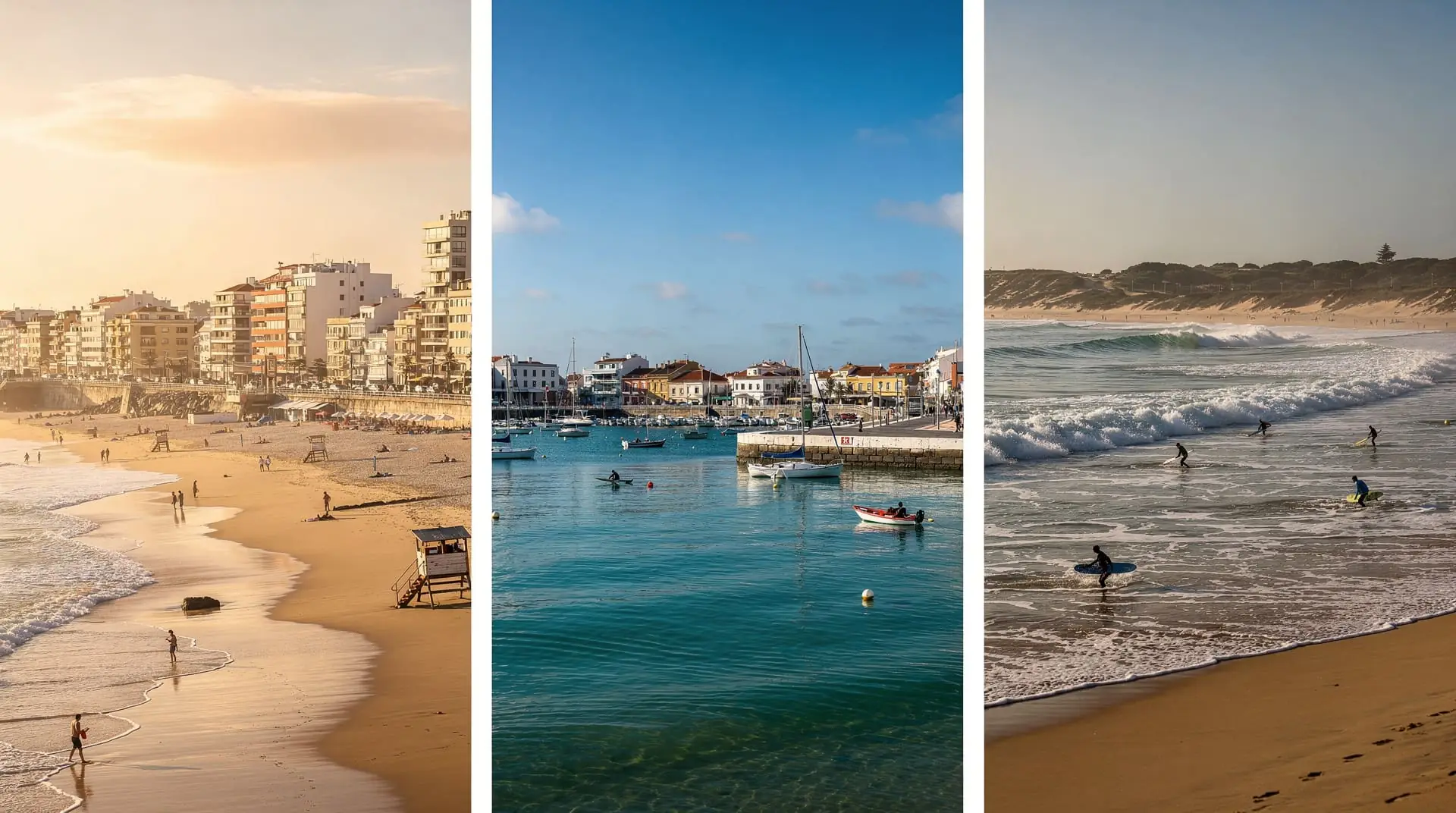
The 6 best beaches near Lisbon ranked: Caparica, Carcavelos, Cascais, Guincho, Arrábida, Comporta. By train, bus, and car with honest tips.
Cascais beaches — from town bays to Guincho's Atlantic wind
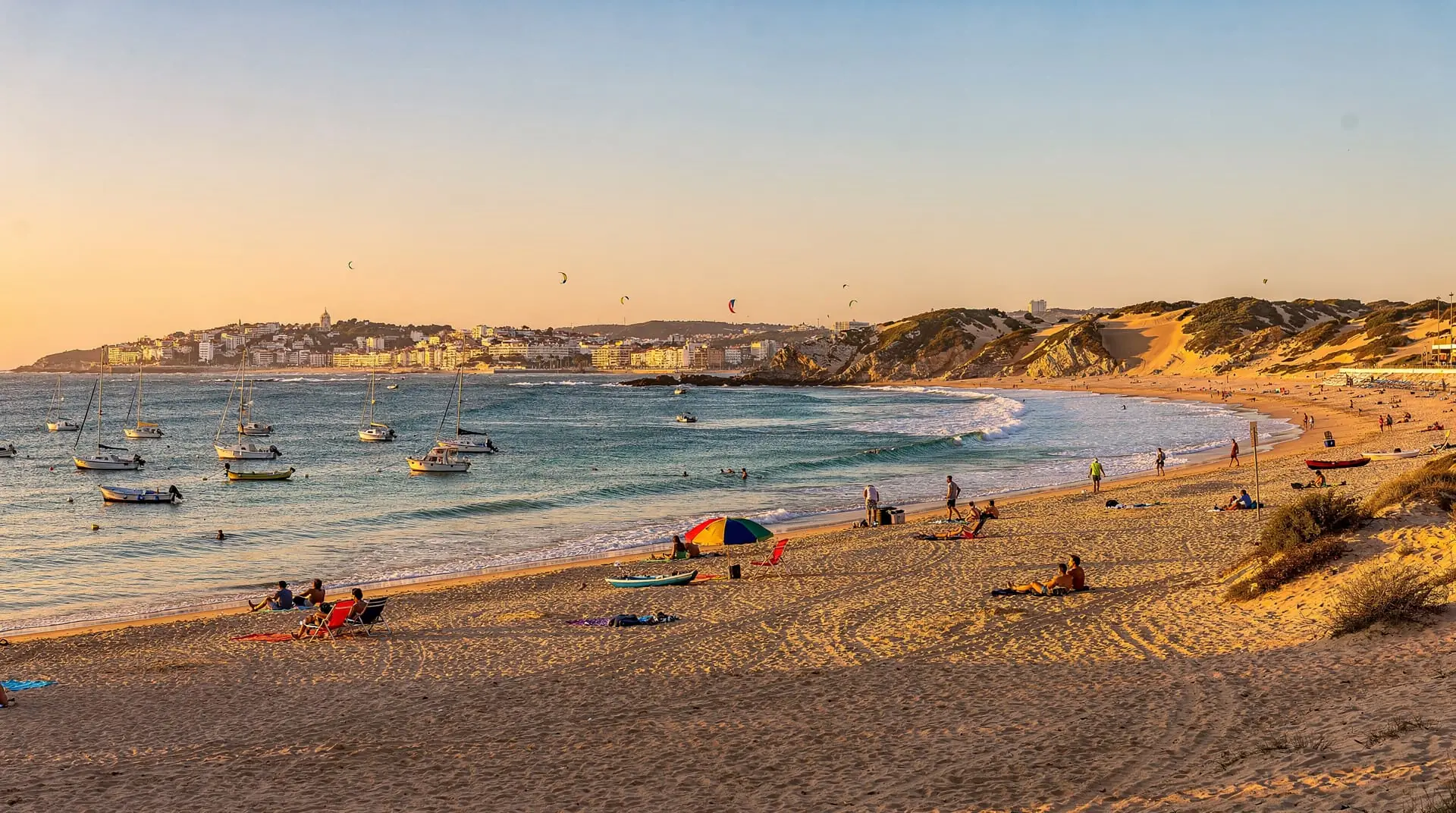
Guide to all Cascais beaches: Praia da Conceição, Praia da Rainha, Praia do Tamariz, and Guincho. By train from Lisbon in 40 minutes.
Arrábida beaches — turquoise water, limestone cliffs, summer access rules
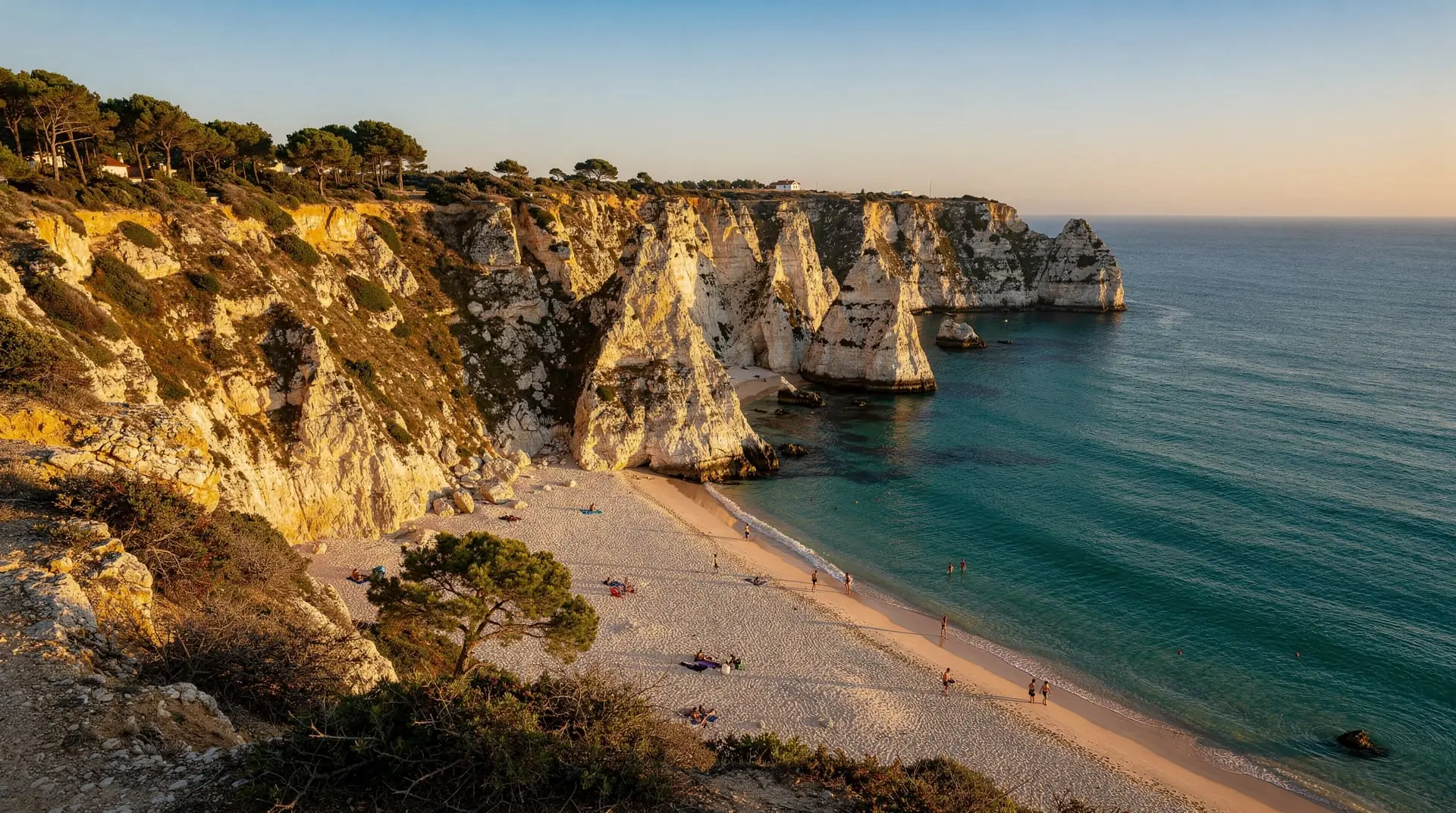
Complete guide to Arrábida beaches: Galapinhos, Galapos, Portinho, Figueirinha. Turquoise water, access restrictions June-Sept, and how to get there.
Comporta beaches — wild dunes, strong currents, and what to know before you go
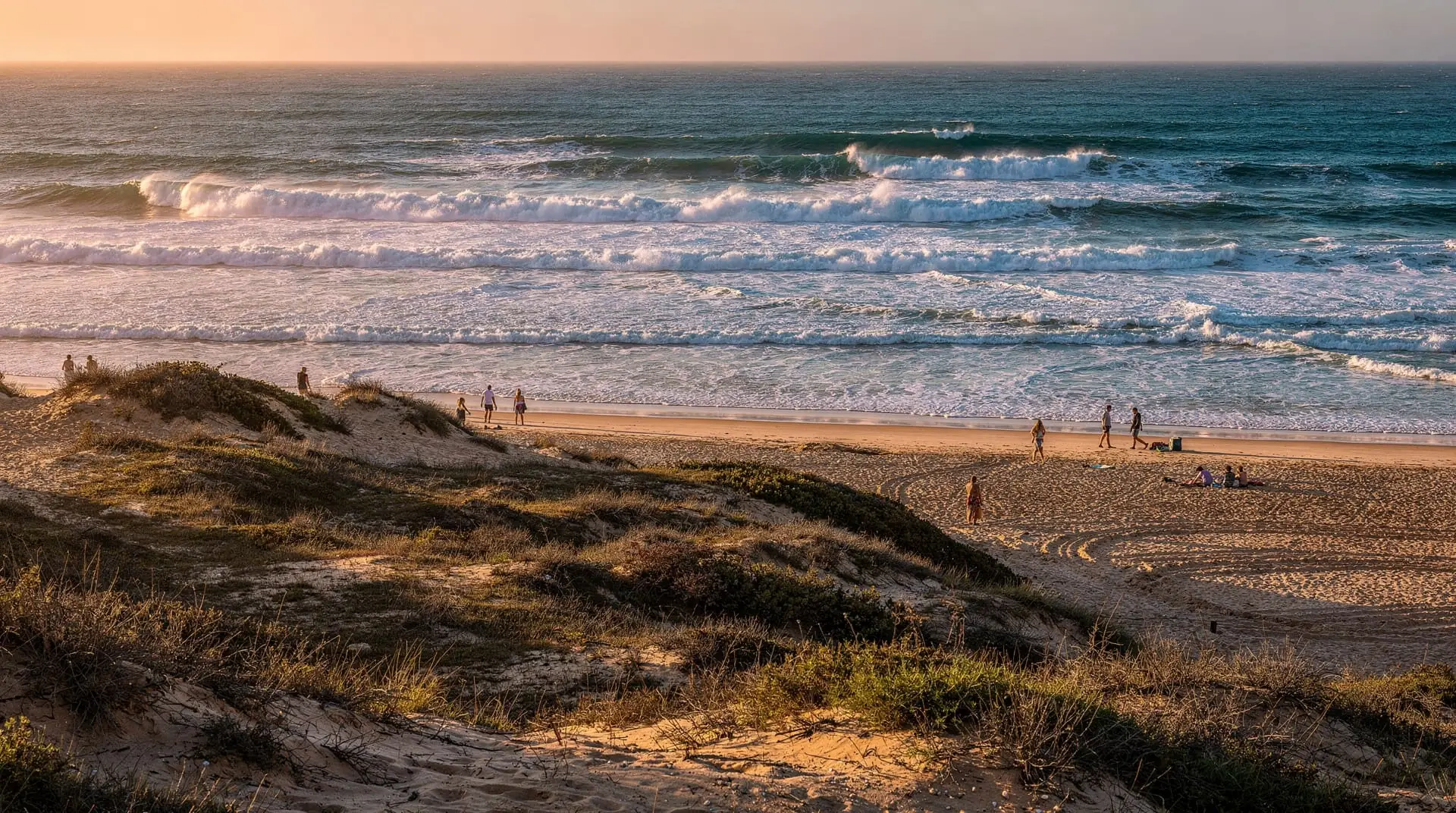
Guide to Comporta beaches: Praia do Carvalhal, Praia do Pego, Praia da Comporta, dune walks, Sublime beach club, and honest advice on currents and access.
Ready to book? Top tours for this guide
We earn a small commission if you book through GetYourGuide — at no extra cost to you. Every tour is hand-picked and verified.