Comporta beaches — wild dunes, strong currents, and what to know before you go
Last reviewed
What are the Comporta beaches like and how do I get there?
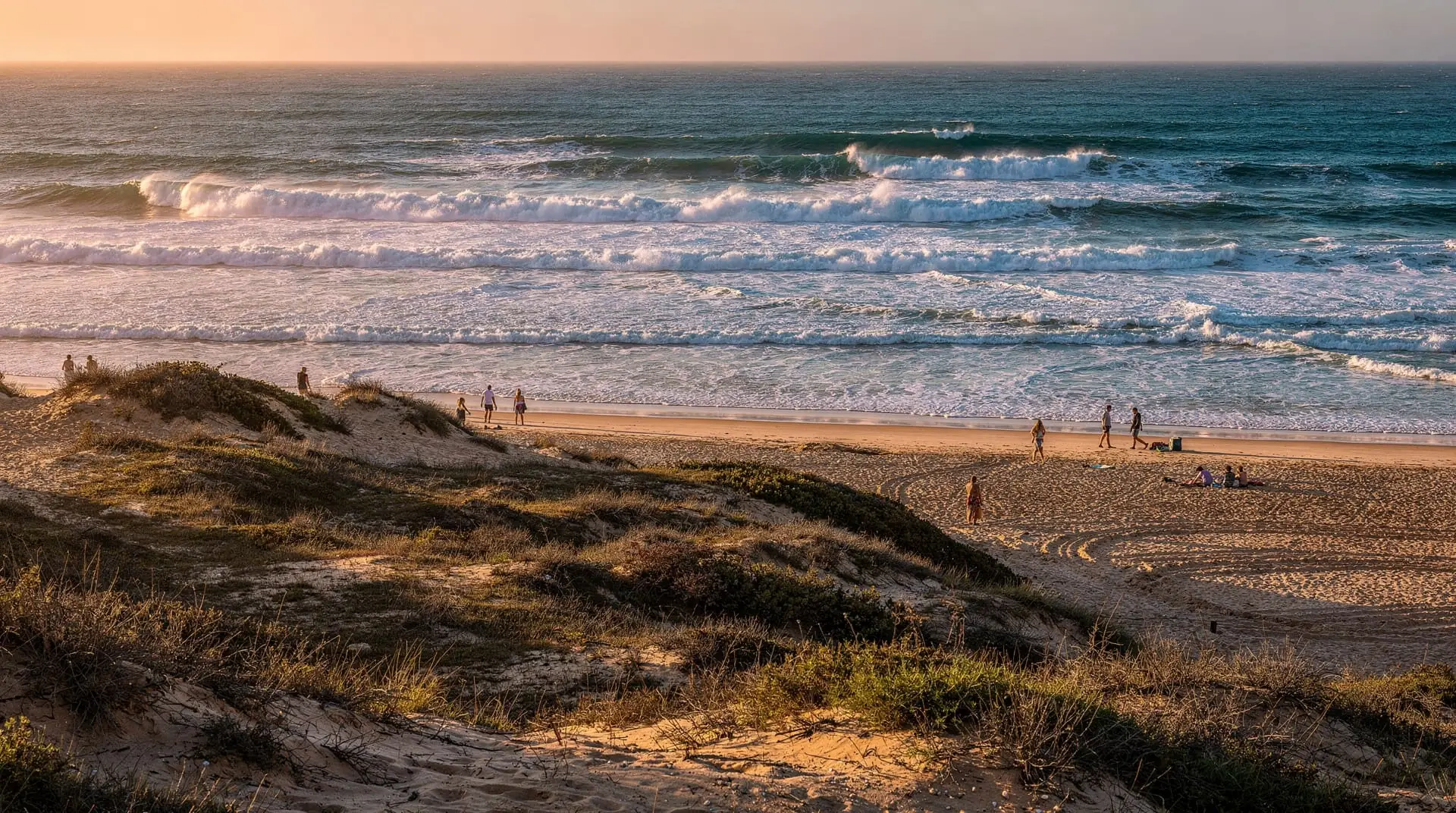
Comporta beaches are wide, wild Atlantic strands backed by pine forest and massive dunes — among the most unspoiled on the Portuguese coast. Water is cold (17-20°C in summer) and currents can be strong; non-swimmers should be careful. There is no practical public transport to the beaches. By car from Lisbon: 90-100 minutes via A2 and south from Alcácer do Sal, or via the Tróia ferry from Setúbal.
Comporta: the beach Lisbon’s architects discovered
Comporta was a rice-farming village and not much else until the 1990s, when a combination of cheap land, extraordinary landscape, and proximity to Lisbon (90 minutes by car) made it a quiet find for creative professionals, architects, and artists. That quiet find is no longer quiet — Comporta now appears in international lifestyle media, attracts a mix of Portuguese and European visitors with money and taste, and has prices to match the reputation.
None of this has spoiled the landscape. The dunes are still enormous. The beaches are still 20 kilometres of largely undeveloped Atlantic coast. The rice paddies between the village and the sea still exist. Horses still wander the beach at low tide. The pace is slower than any of the beaches closer to Lisbon.
What makes Comporta a destination rather than just a beach is this combination: a genuinely beautiful and undeveloped natural landscape within striking distance of Lisbon. What makes it an honest recommendation rather than a guaranteed pleasure is a set of real-world constraints: no public transport, strong currents, summer crowds in a finite space, and prices that have risen sharply as the area’s reputation has grown.
| Where | 90–100 min south of Lisbon by car, or via the Setúbal–Tróia ferry |
| Cost | Free beach access; parking around €3–4/day in summer; lunch €15–55/person |
| Time needed | Half a day minimum, a full day to see more than one beach |
| Getting there | Own car (easiest) or a guided tour from Lisbon — no useful public transport |
| Best time | May, June, September for quiet sand and swimmable sea without August crowds |
The four main beaches
Praia do Carvalhal
The largest and most accessible of the Comporta beaches, about 10 kilometres south of the village of Comporta. Carvalhal has a car park, a small café-bar, and a stretch of sand wide enough to handle visitor numbers without feeling oppressive — except on August bank holiday weekends when everywhere in the area reaches capacity.
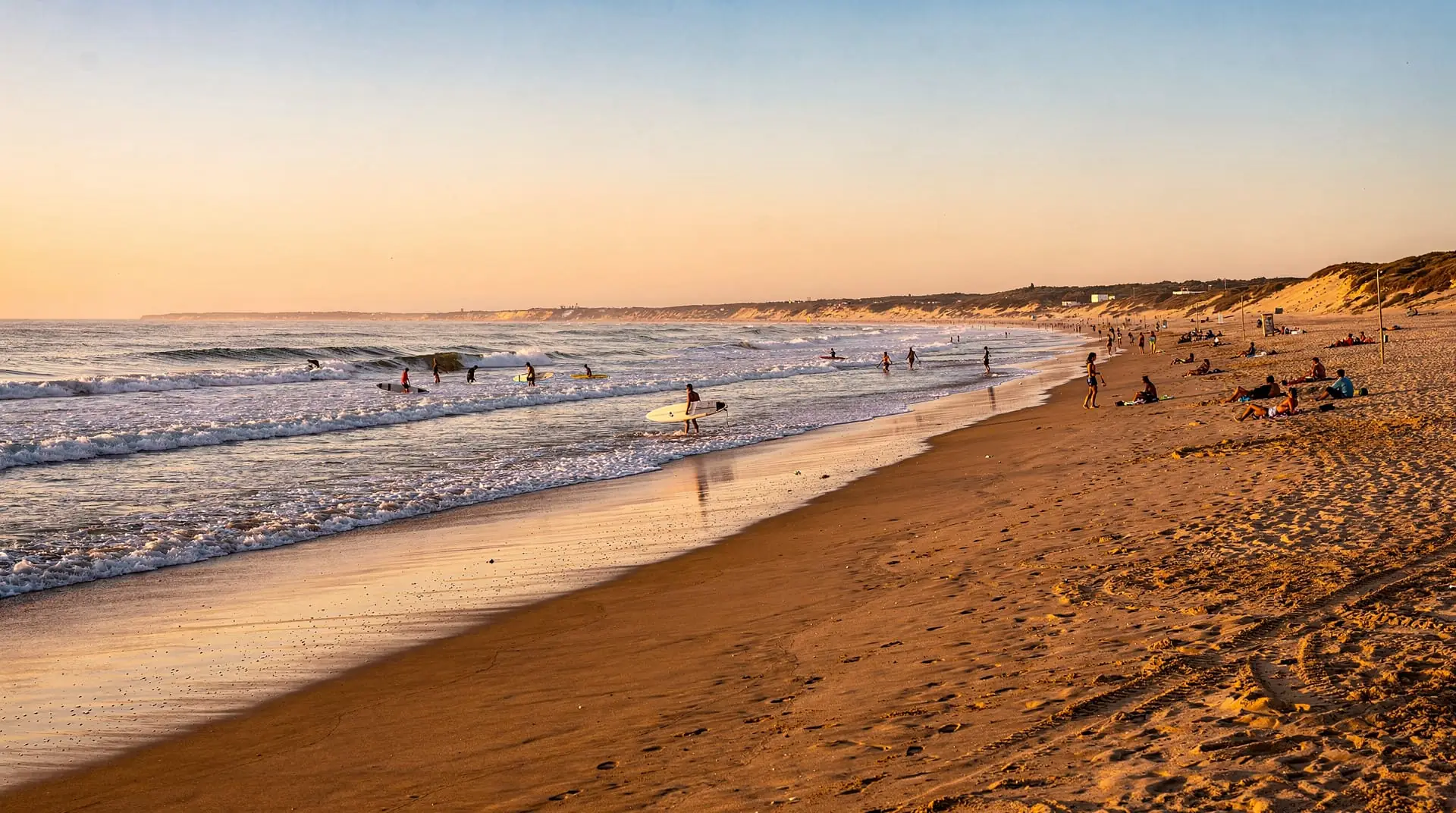
The beach faces directly west. Long Atlantic swells arrive with enough force to generate waves worth surfing at times, and also enough force to create dangerous rip currents at others. The current condition is not predictable without checking a forecast. Do not assume that because the water looks calm it is safe.
Facilities: Car park (paid in summer, approximately €3-4/day), one or two beach bars serving drinks and basic food (sandwiches, chips, local cheese). No lifeguards in 2025-2026. Shower facilities limited.
Praia do Pego
Slightly north of Carvalhal, Praia do Pego has a different character: a narrower, more intimate stretch of sand reached through a corridor of pine trees. It has become a reference point for the design-conscious Comporta crowd, partly because of its visual quality and partly because of the beach club that operates here in summer.
The beach itself is beautiful in a way that is genuinely difficult to photograph well — the scale of the dunes behind, the pale sand, the lack of development on the horizon. On a weekday in early June, it is close to perfect. On a weekend in August it is still beautiful but considerably fuller.
Facilities: More limited than Carvalhal, though a seasonal beach bar operates and sunbed rental is available from the club operators. Parking is a short walk from the sand.
Praia da Comporta
The beach that names the area, at the northern end of the Comporta coastline near the mouth of the Sado estuary. The estuary influence creates slightly different wave conditions here — generally calmer at the northern end near the river mouth, more exposed further south.
This beach is popular for morning walks, particularly at low tide when the packed sand is firm enough for cycling and jogging. Horses from local farms sometimes use the beach in the early morning.
What to know: The estuary setting makes this slightly less pure Atlantic than Carvalhal or Pego — the water is sometimes mixed with estuary sediment after rain, creating visibility conditions different from the other beaches.
Comparing the four beaches at a glance
| Beach | Best for | Facilities | Crowd level |
|---|---|---|---|
| Praia do Carvalhal | First-timers, families with confident swimmers | Car park, café-bar | Busiest in August |
| Praia do Pego | Design-conscious visitors, photography | Seasonal beach bar, sunbeds | Full but manageable |
| Praia da Comporta | Morning walks, low-tide cycling | Minimal | Quietest of the four |
| Sublime/Pego area | A splurge lunch with beach access | Full-service beach club | Moderate, resort crowd |
Sublime Comporta beach area
Sublime Comporta is a high-end resort hotel about 2km inland from the beach, with direct beach access and a well-regarded beach club. It is not a public beach but the beach itself (Praia do Pego) is public — the club charges for sunbed rental and service but the sand itself is free to use.
If you are visiting Comporta for a day without staying at the hotel, you can access the beach independently and use the adjacent public area. The club’s restaurant serves lunch at prices consistent with the hotel category: €20-35 for a main course, excellent quality.
The current problem: honest advice
Comporta beaches are exposed Atlantic coast with no natural shelter. This produces several conditions that need to be understood:
Rip currents: All four beaches have rip currents that develop particularly on swell days. A rip is a narrow channel of water flowing offshore at speed — it can sweep a swimmer out quickly, particularly children and non-swimmers. Rips are typically visible as a slightly darker, flatter patch of water between breaking waves. If caught in one: do not swim against it, swim parallel to shore until out of the current, then swim in diagonally.
No lifeguards: As of 2025-2026, Comporta beaches do not have permanent lifeguard patrols. This is a significant difference from Carcavelos or Caparica, which have lifeguards on duty from June to September.
Surf currents: On days with breaking waves, longshore drift runs south-to-north along the Comporta coast. This is not dangerous in itself but means swimmers who enter the water at one point can emerge 200 metres north if they spend time in the water.
Practical advice: If you are not a confident open-water swimmer, stay very shallow (ankle-to-knee depth) and watch the wave patterns before committing to deeper water. Keep children within arm’s reach in the water regardless of how calm it looks.
Flags: Where flags are flown (mainly at Carvalhal in peak season), treat them as a minimum standard, not a guarantee — a green flag on an unpatrolled Comporta beach is not equivalent to a green flag on a lifeguarded beach like Carcavelos. Ask at the beach bar if conditions look uncertain; the staff generally know the day’s swell.
A realistic checklist before you drive down
Because there is no lifeguard, no useful public transport and limited signal in parts of the dunes, a few minutes of preparation change the day. Fill the car with fuel before leaving Lisbon or Setúbal — there are few stations on the final stretch. Bring cash; several beach bars and the more local restaurants do not reliably take cards. Download an offline map of the Comporta–Melides stretch, since reception drops between the pine forest and the coast. If you plan to walk the dunes at Carvalhal or Pego, wear proper shoes rather than flip-flops — the sand is soft and hot in July and August, and the marram grass edges can be sharp. And check the tide times if a beach walk is part of the plan: some sections are only comfortably walkable at low tide.
Getting to Comporta from Lisbon
Comporta is genuinely inaccessible by public transport, which is an honest constraint rather than a minor inconvenience.
By car (Option 1 — via A2 and Alcácer do Sal): A2 south from Lisbon (toll: approx €2.35), then the IP1 south, then west through Alcácer do Sal towards Comporta. Total distance about 120 kilometres, journey time 90-110 minutes depending on traffic. This is the standard route.
By car (Option 2 — via Tróia ferry): Train from Lisbon (Sete Rios or Oriente) to Setúbal (about 50-55 minutes, €4.60), then the Atlanticferries ferry from Setúbal dock to Tróia (30 minutes, roughly €3.50 per person foot passenger or €14 for a car). From Tróia drive south along the peninsula to Comporta (30-35 minutes). This route is scenic — the ferry crosses the Sado estuary with views of the Serra da Arrábida — but adds time and expense. The ferry does not run at night.
By tour: A small number of operators run day excursions to Comporta from Lisbon, sometimes combined with Arrábida or Azeitão wine. These make logistical sense if you do not have a car.
Arrábida and Comporta private tour from Lisbon with wine tastingEating and drinking in the Comporta area
The Comporta food scene is better than the size of the village suggests, though prices reflect the fashionable reputation. Expect to pay significantly more than the Lisbon average.
Comporta Restaurant (village centre): The original Comporta design restaurant, serving grilled fish, petiscos, and creative Portuguese dishes at a terrace with views across the rice paddies. Lunch €20-30 per person. Worth booking in summer.
Dunas Beach Bar (near Praia da Comporta): Simple beach bar with sunbeds, decent grilled fish, cold beer. More casual than the village restaurants and more forgiving of sand and wet swimwear.
Tasca do Celso (in the village): The genuine local option, a small tasca serving bacalhau, cataplana (seafood stew), and daily specials at prices closer to reality (€10-16 for a main). Popular with locals and in-the-know visitors. Cash preferred.
Sublime Comporta hotel restaurant: Open to non-residents. Beautiful setting among the pine trees, creative menu, excellent local wine list focused on Setúbal and Alentejo producers. Lunch €35-55 per person. Worth considering if it is a special occasion.
Accommodation in Comporta
Accommodation in Comporta ranges from genuinely expensive to very expensive.
Sublime Comporta: The design hotel that put Comporta on the international map. Rooms from approximately €350-700/night in summer depending on category. Pool, restaurant, spa, beach access. Fully booked months in advance in August.
Casas na Areia: A small group of architectural guesthouses in the dunes, highly design-focused. Different character from Sublime — more intimate, more remote. Similar price range.
Monte Casal (Carvalhal area): A smaller property with a more mid-range positioning than Sublime, still at €150-250/night in summer.
For most day visitors, staying in Setúbal or Comporta itself for one night and using it as a base makes more financial sense than paying Comporta hotel rates for a beach day.
When to go
Comporta in July and August is warm, sunny, and increasingly busy. Parking at the main beach accesses is limited and fills early. The fashionable beach club crowd is present and audible. Still beautiful but not the solitary experience it once was.
May, June, and September offer noticeably better conditions: fewer people, lower prices, and the same extraordinary landscape. The sea in May is cold (16-17°C) but swimmable. October brings heavier Atlantic weather but the dunes and pine forests are beautiful in autumn light.
The winter months (November-March) are when Comporta briefly returns to its agricultural character. Most beach bars and some restaurants close. The landscape is wild and occasionally dramatic with Atlantic storms. Not a beach destination but genuinely interesting for the right visitor.
Small group Arrábida and Comporta wine tour from LisbonDune walks and nature
The dunes behind Comporta beaches are among the largest and most intact on the Portuguese coast. Walking up into the dune system above Praia do Carvalhal or Praia do Pego reveals a landscape of marram grass, pine forest, and extraordinary light — particularly at sunset when the dunes turn golden. These are proper dunes with real ecological interest, not manicured dune walkways.
Walking south from Carvalhal along the beach at low tide towards Melides (about 15 kilometres) is a serious but achievable walk for fit visitors. The beach is continuous, the dunes constant, and you will see very few people in the middle section. Arrange transport from Melides in advance — there is no public bus.
Birdwatching: the rice paddies between the village and the beach attract waders and raptors. White storks are present in summer. The Sado estuary to the north is a wintering ground for flamingos (best viewed from Setúbal or Tróia). See the day trip to Comporta guide for a full-day itinerary combining beach, dunes, and nature.
Comparing Comporta and Arrábida: which to choose
Visitors often try to decide between Comporta and Arrábida for a day trip from Lisbon. They are not really comparable — they are entirely different experiences — but the choice matters because both take a full day and neither is trivial to reach.
Choose Arrábida if: You want turquoise water, dramatic limestone scenery, clear snorkelling conditions, and a beach that is visually spectacular in a way that photographs well. Arrábida is the closer option (75 minutes by car or tour) and provides the most scenic beach experience in the Lisbon region. The access complication is the summer vehicle restriction, solved by a day tour.
Choose Comporta if: You want wild, undeveloped Atlantic beach with dune landscape, a sense of genuine remoteness, and a slower pace. Comporta is further (90-100 minutes) and has no public transport, but the experience of standing on a 20-kilometre beach with very few people visible in either direction is quite different from anything Arrábida provides.
If you have two days: Do both. Arrábida one day (by tour, visiting Galapinhos and a winery at Azeitão), Comporta the other day (by car, spending time on the dunes, lunch in the village, afternoon at Praia do Carvalhal).
Comporta vs Costa da Caparica: budget vs landscape
A different comparison worth making: if budget and easy transport matter more than isolation, Costa da Caparica is reachable by bus from Praça de Espanha in 45 minutes, has lifeguards in summer, and costs nothing beyond the bus fare. Comporta trades that convenience for scale, silence and a landscape that Caparica — busier and more developed — simply does not have. Visitors doing a single Lisbon trip with limited time are usually better served by Caparica or Cascais; Comporta rewards a second or third visit to the region more than a rushed first one.
Accommodation and staying overnight in Comporta
Most visitors treat Comporta as a day trip from Lisbon, and the 90-100-minute drive makes that feasible. But staying overnight changes the experience entirely — the beach in the late afternoon when the day-trippers have gone, early morning before anyone arrives, and the village at dinner rather than lunch.
Sublime Comporta: The design hotel that established the area’s international reputation. Reed-roofed villas in the pine forest, pool, excellent restaurant. Rooms from approximately €350-700/night in summer, lower outside peak season. Fully booked in August by March.
Monte Casal: A smaller property in the agricultural hinterland, converted from a working farm. More informal than Sublime, less expensive (€150-250/night summer). Good pool, small restaurant.
Casa da Comporta (rental houses): The local tradition is self-catering rental in one of the traditional wooden village houses. Several agencies handle these rentals — search “casa de férias Comporta” for local listings. A 3-bedroom house for a week in August: €3,000-5,000. Not cheap, but shared among a group of friends this is manageable.
Nearby alternatives: Alcácer do Sal (30 minutes inland) has a Pousada converted from a medieval castle with rooms at €100-180/night. This gives access to Comporta without paying Comporta resort prices. The drive to the beach is 30 minutes.
The rice paddy landscape: what it is and why it exists
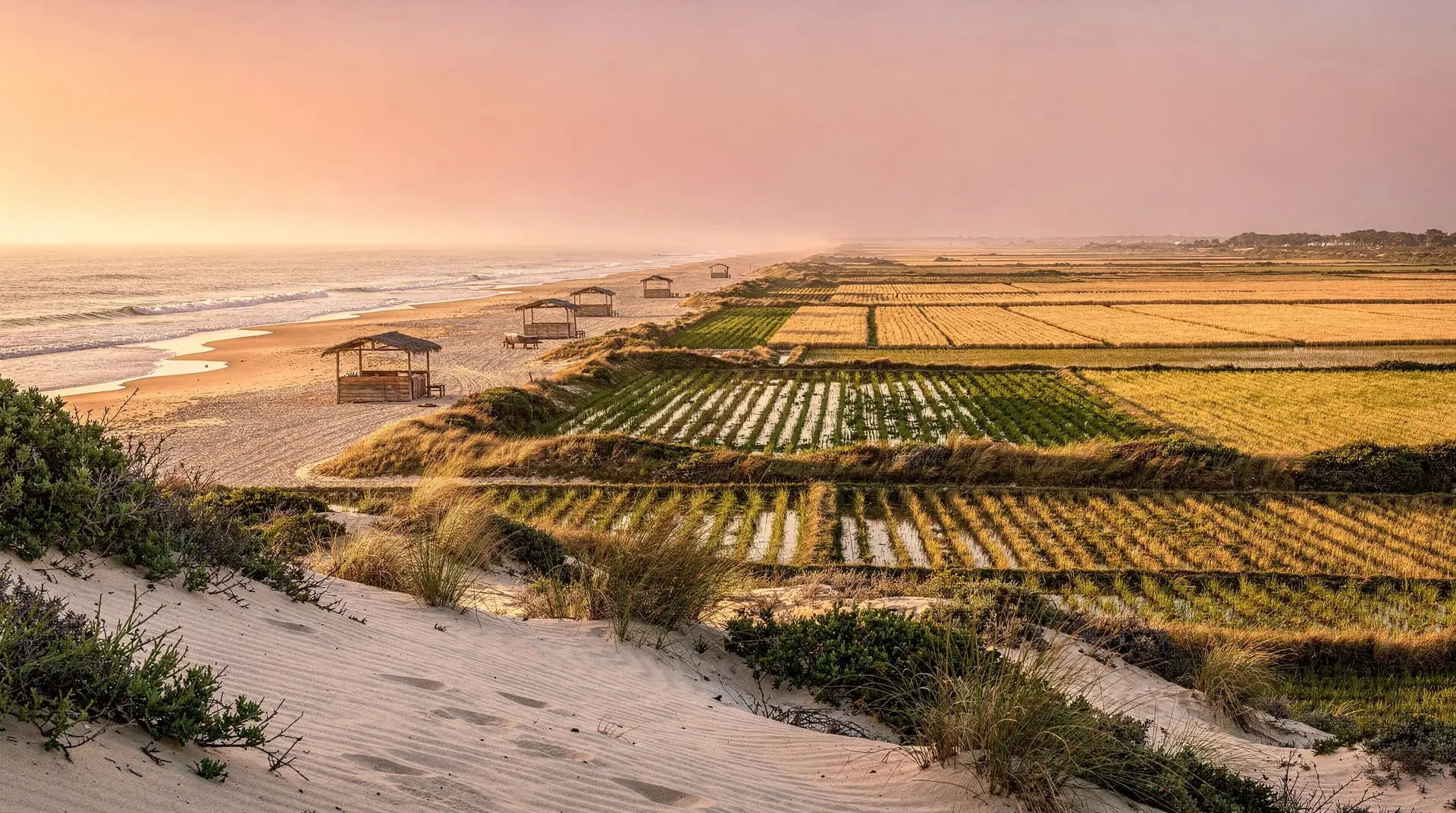
Between the village of Comporta and the beach, the flat land is covered in rice paddies — an unexpected agricultural scene in what is marketed as a beach destination. The rice cultivation here dates back to the 19th century when the area was developed by the Herdade de Comporta (the large agricultural estate that owned most of the land until it was broken up).
The rice paddies are not merely scenic. They are a functioning agricultural system that floods seasonally, creating habitat for egrets, herons, and waders. The Herdade da Comporta estate (now a tourism and wine operation) still cultivates rice on part of the original estate.
The visual effect of driving through rice paddies to reach a wild Atlantic beach — passing egrets and storks in the flooded fields — is part of what makes Comporta feel different from any other Portuguese coastal destination. This transition landscape between rice agriculture and Atlantic dune is unique on the coast of Portugal.
Tróia: the alternative entry point to the Comporta coast
Tróia is a peninsula between the Sado estuary and the Atlantic, directly across the estuary from Setúbal. The ferry from Setúbal to Tróia runs regularly (Atlanticferries, roughly every 30-45 minutes in summer, less frequently in winter, about 25-30 minutes crossing). From the Tróia ferry terminal, a drive south of about 30-35 minutes reaches the Comporta area.
The ferry approach to Comporta is slower than the A2 highway route but has distinct advantages:
Dolphin watching on the ferry: The Sado estuary has a resident population of around 30 common bottlenose dolphins. They are visible from the ferry, particularly on the Setúbal to Tróia crossing in the morning when dolphins are actively feeding. This is free wildlife watching, not an organised tour.
Roman ruins at Tróia: Before driving south, the Tróia Roman ruins (Cetaria, a 1st-3rd century AD fish-salting factory) are walkable from the ferry terminal. Admission approximately €5. Worth 30-45 minutes for anyone interested in Roman Portugal.
Tróia beach: The peninsula itself has good Atlantic beaches on the western side and calmer estuary water on the eastern (Setúbal-facing) side. Families with very young children may prefer the estuary side for its calmer water. The Tróia resort has accommodation, restaurants, and a casino.
See also: day trip to Comporta, Tróia destination, best beaches near Lisbon, Setúbal and Arrábida day trip, the day trip transport overview for public transport alternatives, and Arrábida beaches if you want turquoise water instead of wild Atlantic dunes.
FAQ
Do I need a 4x4 to reach the Comporta beaches? No. The access roads and car parks at Carvalhal, Pego and Praia da Comporta are all paved or well-maintained gravel, fine for a standard rental car. A 4x4 is unnecessary unless you plan to drive the unpaved tracks further south towards Melides.
Are the Comporta beaches good for young children? Praia da Comporta near the estuary mouth is the calmest option and best suited to families with small children, since it is more sheltered than Carvalhal or Pego. None of the four beaches has a lifeguard, so close supervision is essential regardless of which one you choose.
Related guides
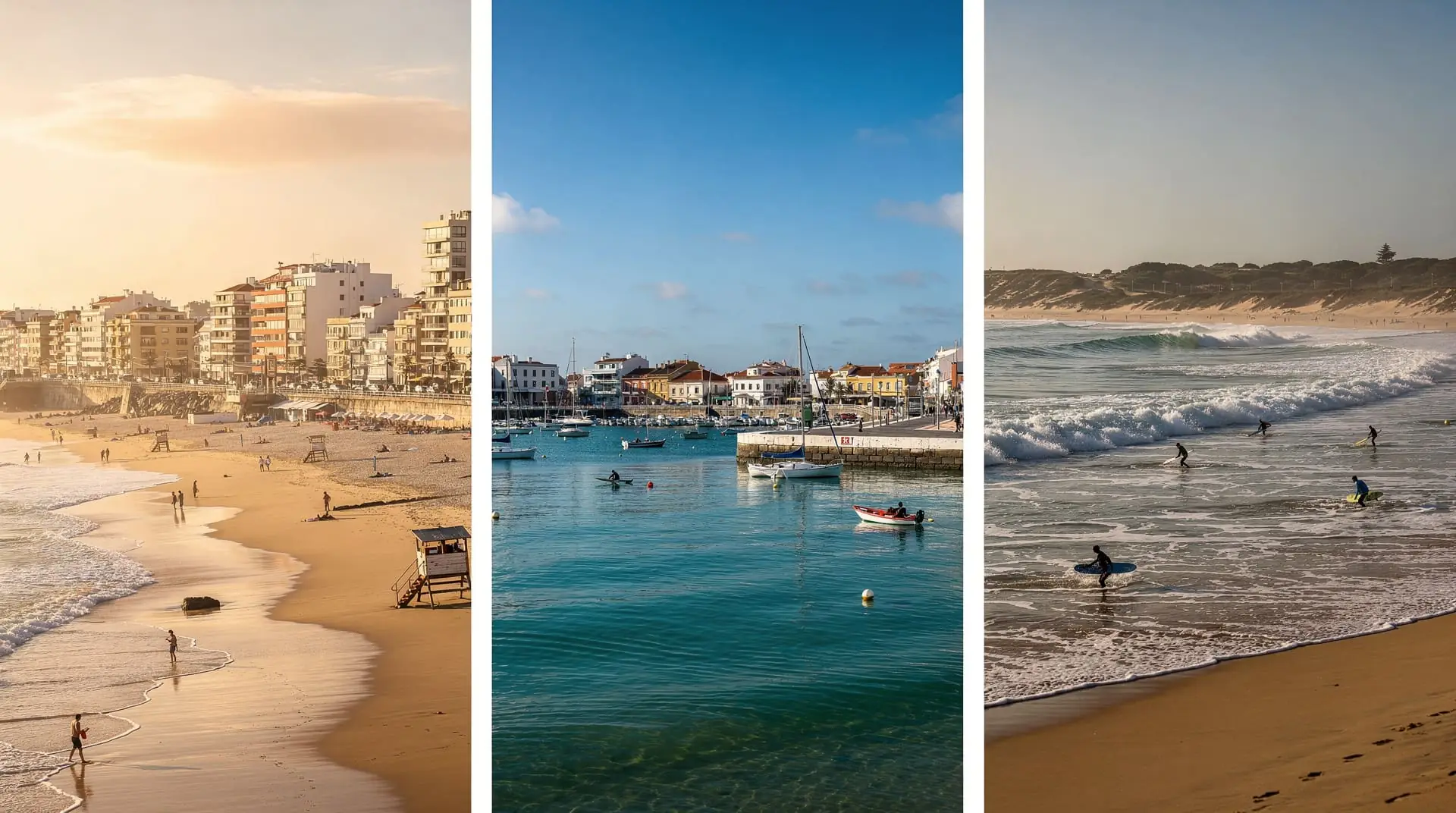
Best beaches near Lisbon — ranked by type and access
The 6 best beaches near Lisbon ranked: Caparica, Carcavelos, Cascais, Guincho, Arrábida, Comporta. By train, bus, and car with honest tips.
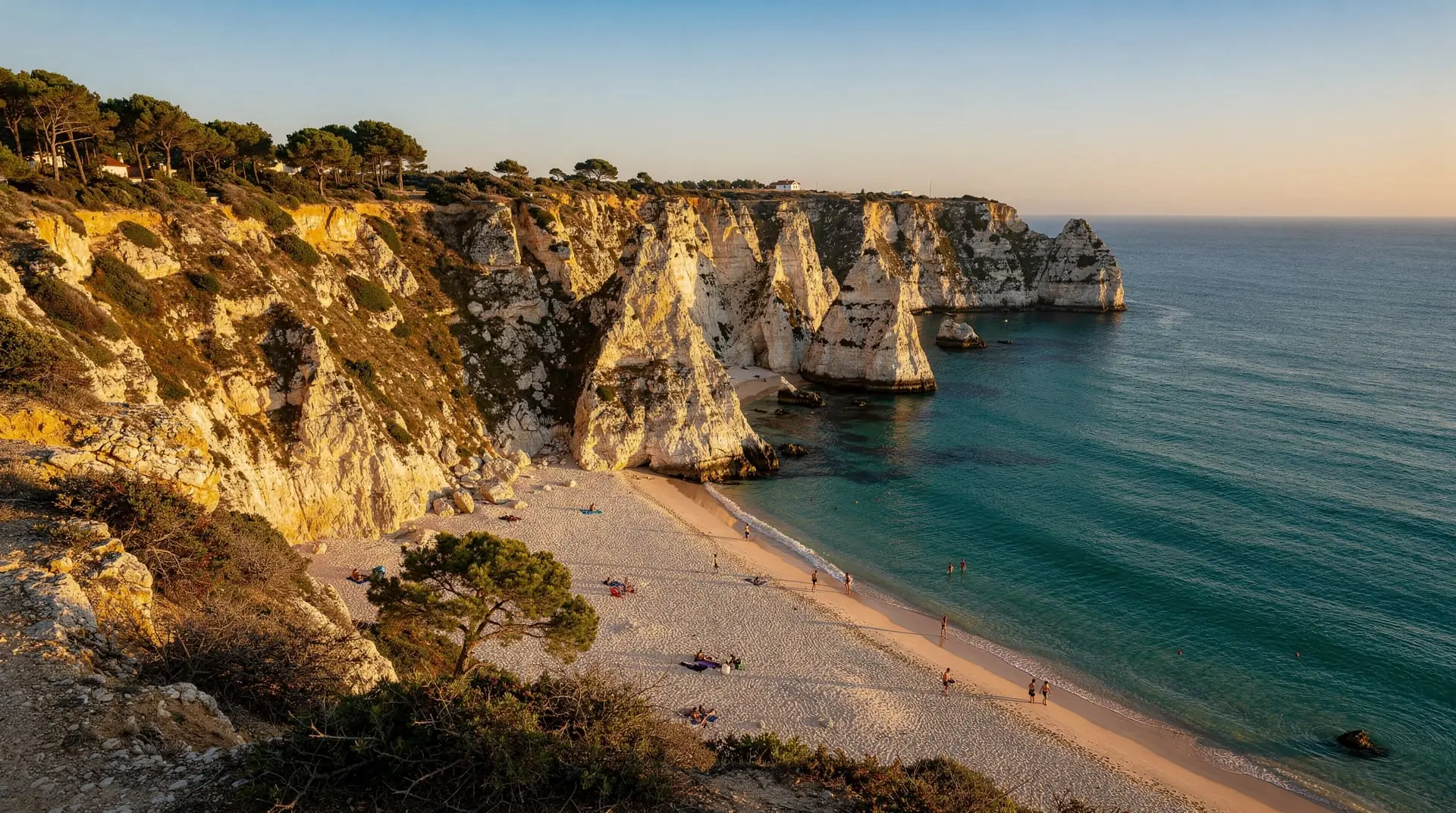
Arrábida beaches — turquoise water, limestone cliffs, summer access rules
Complete guide to Arrábida beaches: Galapinhos, Galapos, Portinho, Figueirinha. Turquoise water, access restrictions June-Sept, and how to get there.
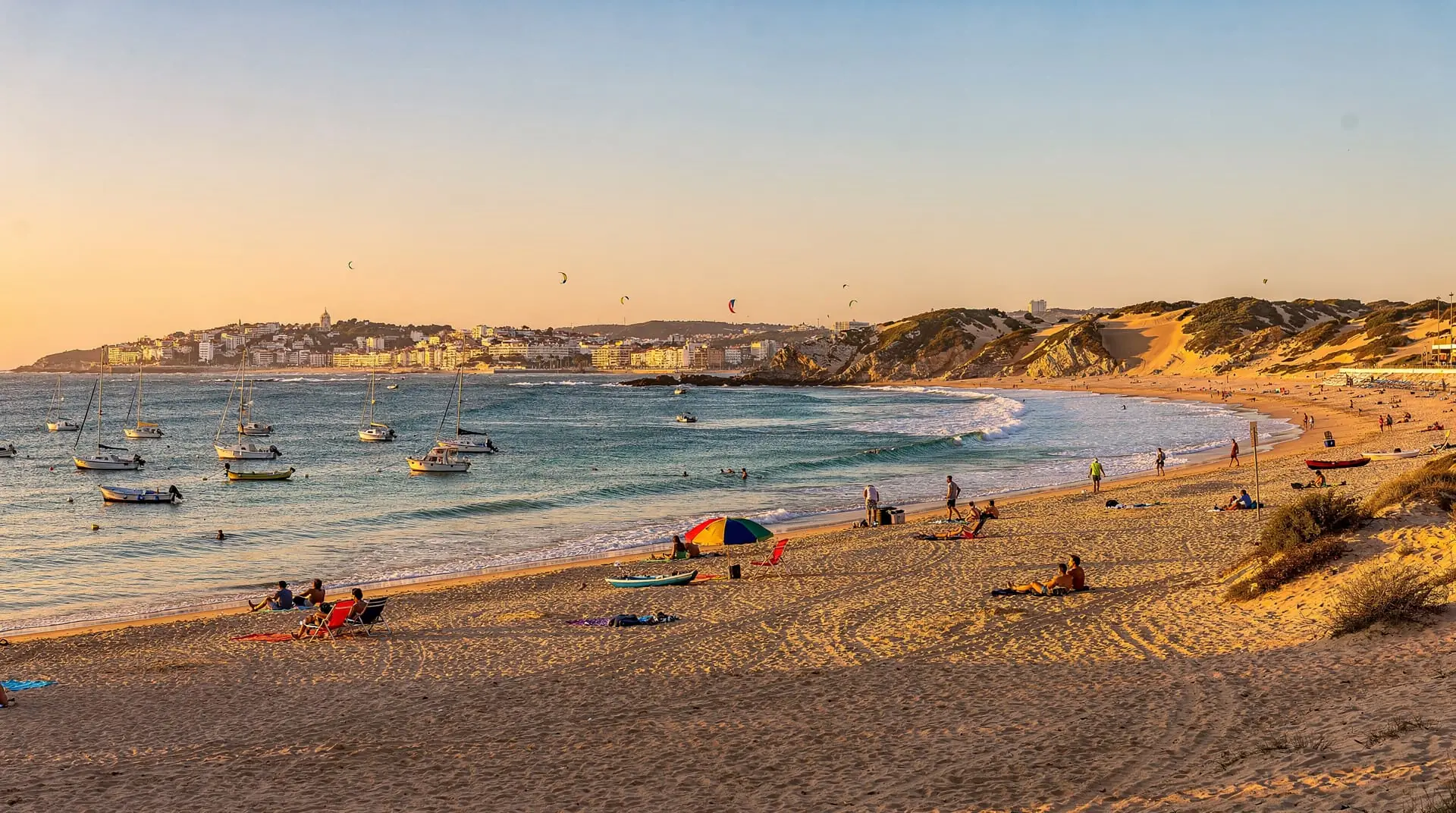
Cascais beaches — from town bays to Guincho's Atlantic wind
Guide to all Cascais beaches: Praia da Conceição, Praia da Rainha, Praia do Tamariz, and Guincho. By train from Lisbon in 40 minutes.
Costa da Caparica beaches — the complete guide to Lisbon's surf coast
Everything about Costa da Caparica: the Transpraia mini-train, best praias, surf spots, beach bars, and how to get there from Lisbon.
Ready to book? Top tours for this guide
We earn a small commission if you book through GetYourGuide — at no extra cost to you. Every tour is hand-picked and verified.
Herdade da Comporta Private Selection Winetasting
Herdade da Comporta Winetasting
Melides: Horse Riding on the Beach with Wine Tasting