Nazaré day trip from Lisbon: giant waves, Sítio funicular and what changes by season
Last reviewed
How do I get to Nazaré from Lisbon for a day trip?
Rede Expressos bus from Sete Rios, approximately 2 hours, around €12 each way. Several buses daily. Nazaré is a working fishing town with beaches (summer), Sítio village on the cliff above (funicular, €1.40 each way), and Praia do Norte where 20m+ waves break in winter (November–February only). Two very different destinations depending on when you go.
| Where | 120 km north of Lisbon, Silver Coast |
| Cost | Around €12 each way by bus; ~€45–50 for a full day |
| Time needed | Full day (bus from Sete Rios, ~2 hrs each way) |
| Getting there | Rede Expressos bus from Sete Rios |
| Best time | Nov–Feb for giant waves; Jun–Sep for the beach town |
Nazaré has two identities that are so distinct it almost functions as two different day trips depending on when you go.
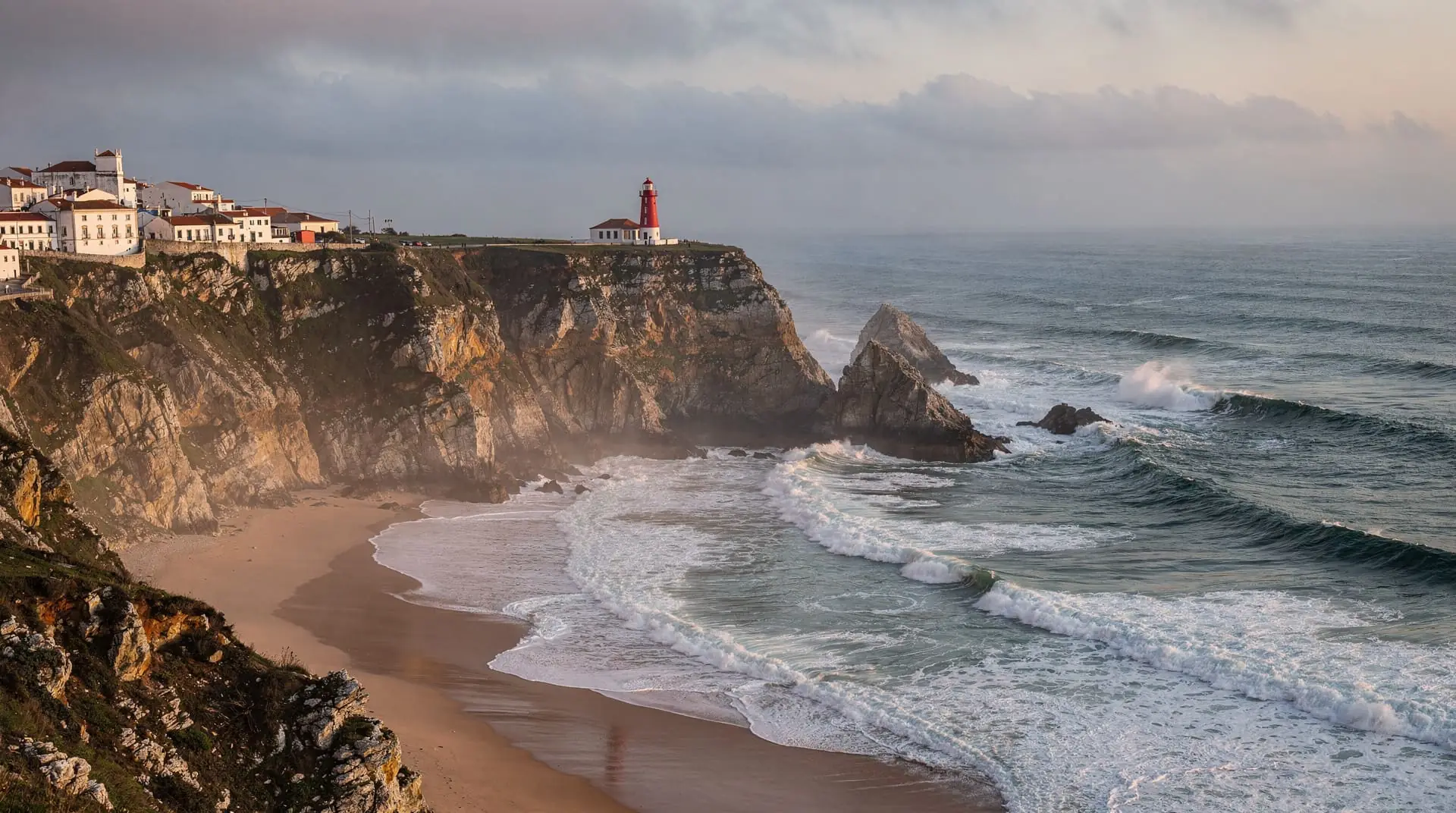
In summer (June–September), it’s a Portuguese Atlantic beach town: 3.5 km of sandy beach below a clifftop village, sardine grills on the seafront, women in traditional seven-petticoat dress (a genuine local tradition, not a costume show), fish racks drying in the wind, and the funicular up to Sítio village for coffee and views.
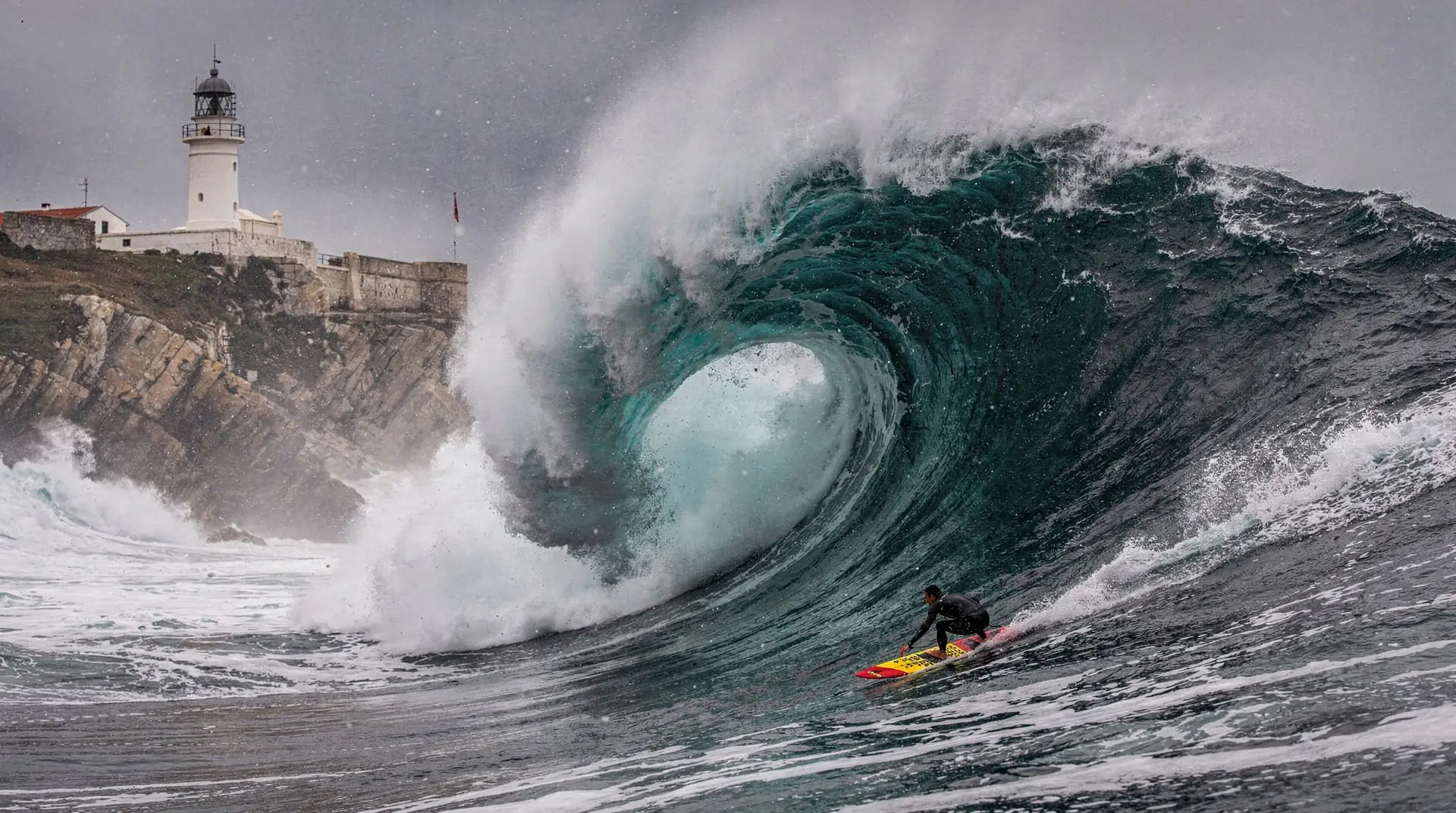
In winter (November–February), it’s something else entirely. Praia do Norte — the north beach, separated from the main beach by the promontory of Sítio — receives swells generated by North Atlantic storms that refract over an underwater canyon (the Nazaré Canyon, the deepest in Europe), stacking into waves that regularly exceed 20 metres and occasionally 30 metres. These are the biggest rideable waves ever recorded. The world surfing record has been broken at Nazaré multiple times. Garrett McNamara, Sebastian Steudtner and a handful of others tow-in surf here in conditions that would kill an unprepared person.
For the spectator — standing on the Sítio fort promontory in November, watching a 25-metre wave detonate 200 metres offshore — Nazaré is one of the most viscerally impressive natural spectacles you can witness in Europe for free.
Getting to Nazaré from Lisbon
By bus: Rede Expressos from Sete Rios bus terminal. Journey time approximately 2 hours (with a stop at Caldas da Rainha or direct service depending on the route). Cost: approximately €12 each way. Departures 4–6 times daily, first around 7:30am.
Returning: Buses back to Lisbon run until approximately 7–8pm. Check the timetable on rede-expressos.pt when you arrive — last buses can be earlier on certain days.
By car: A8 north from Lisbon, then IC9 coastal road. Approximately 120 km, 90–100 minutes. In summer, Nazaré has paid parking areas on the beachfront and streets above.
By organised tour: Most Lisbon tours pair Nazaré with Óbidos and/or Fátima. A combined Nazaré + Óbidos tour takes 8–9 hours and covers both towns without the logistics of bus connections.
Nazaré Big Wave Capital and medieval Óbidos tour from LisbonNazaré in summer: the beach town
The main beach (Praia de Nazaré)
The town beach is genuinely large — 3.5 km of sand in a south-facing bay, backed by the fishing harbour. Waves on the main beach are suitable for swimming; lifeguards are posted in peak season. The seafront promenade (Avenida da República) has cafés, ice cream shops, and the traditional fish-sellers who dry their catch on wooden frames along the beach.
The fish dryers: Rows of fresh fish (bacalhau, polvo, sardines) laid on drying racks in the salt sea wind — one of the most photogenic and genuinely traditional sights in Nazaré. The drying area is on the north end of the beach, near the harbour. Visit in the morning when the drying is freshest.
The women in traditional dress: Older Nazaré women wear seven petticoats (a tradition dating to the time when husbands at sea were mourned — each petticoat representing a day of the week). You’ll see them, genuinely, not in a museum context. It’s a living tradition, not a performance.
The funicular to Sítio
The Elevador da Nazaré connects the seafront (Suberco station) with Sítio village on the clifftop above, 110 metres higher. Cost: €1.40 each way. Runs continuously throughout the day. The top gives panoramic views of the main beach, the bay, and the Atlantic.
Sítio village has the Santuário de Nossa Senhora da Nazaré (the pilgrimage church — the original town was here, not at the beach) and several small restaurants with clifftop views. It’s quieter and more genuinely Portuguese than the seafront below.
Seafood in Nazaré
The town’s culinary identity is fish — dried, grilled, stewed. Caldeirada de peixe (fish stew with potatoes, tomatoes and olive oil) is the dish most associated with Nazaré. Grilled sardines in summer. Bacalhau cooked multiple ways.
Recommended restaurants:
- A Tasca (Rua Adrião Batalha 54): long-standing local favourite, honest fish cooking, reasonable prices.
- Restaurante Mar Bravo (seafront, Praça Sousa Oliveira): panoramic view from the upper level, mid-range pricing, reliable grilled fish.
- O Casalinho (Rua das Flores, Sítio): in the clifftop village, quieter than the seafront restaurants, good caldeirada.
Nazaré in winter: the giant waves
Praia do Norte and the Nazaré Canyon
Praia do Norte is separated from the main beach by the Sítio promontory. In calm conditions, it’s an unremarkable stretch of wild beach. When a major North Atlantic swell arrives — typically from October through March — the underwater Nazaré Canyon (170 km long, 5,000 metres deep, running directly toward this beach) funnels and amplifies the swell into the largest breaking waves in the world.
The waves are dangerous. The current world record (around 30+ metres) was set here. Professional big wave surfers come in January and February when the biggest swells arrive; they use jet skis to tow-in because paddling into a 20-metre wave is not physically possible.
Viewing: From the Fort of São Miguel Arcanjo on the tip of the Sítio promontory (free entry, telescopes available), you look directly across to Praia do Norte. When waves are breaking, the view is from a helicopter angle — you see the entire wave face as it rises and detonates. On a big-wave day in January, the roar is audible 500 metres away.
Wave days: Big wave swells don’t happen every day. Check forecasts on magicseaweed.com or surfline.com for Nazaré Norte. A winter visit with no planned swell gives you a quiet, off-season beach town with empty restaurants and no waves of consequence. A swell arrival in the 8–15 metre range (common in winter) gives impressive waves; a 20m+ event happens several times per winter.
Tow-in sessions: When professional surfers are active (usually published 24–48 hours before on the Red Bull and WSL social channels), crowds gather at the fort. Parking becomes limited; arrive early.
From Lisbon: Big Waves Nazaré, Óbidos and Batalha tourFull day itinerary: summer version
7:30am: Bus from Sete Rios.
9:30am: Arrive Nazaré. Walk the seafront to the fishing harbour and fish dryers.
10:00am: Funicular to Sítio. Coffee at a clifftop café. Visit the Santuário de Nossa Senhora da Nazaré.
11:00am: Fort of São Miguel Arcanjo viewpoint.
Noon–1:30pm: Lunch on the seafront or in Sítio.
2:00pm: Beach time on Praia de Nazaré.
4:30pm: Bus back to Lisbon (arrive ~6:30pm) or connect to Óbidos (30 km south, bus via Caldas da Rainha).
Full day itinerary: winter wave version
7:30am: Bus from Sete Rios. Check wave forecast before departing — if Praia do Norte is showing 8m+ surf, go. If it’s flat, reconsider or combine with Óbidos.
9:30am: Arrive. Walk directly to the fort at Sítio for wave viewing.
10:00am–noon: Watch the surfing. If a tow-in session is happening, this is exceptional.
Noon: Lunch in Sítio village — fewer tourists, good caldeirada.
2:00pm: Walk Praia do Norte if accessible (closed near water on big-wave days). Visit Nazaré’s ethnography museum (small, good context on fishing traditions).
4:00pm: Return bus to Lisbon.
Nazaré by month: what to expect
| Months | Waves | Beach town | Crowds |
|---|---|---|---|
| Jun–Sep | Flat, no big-wave surf | Full beach season, fish dryers, traditional dress | High |
| Oct | Building swells begin | Quiet transition | Low |
| Nov–Feb | Peak big-wave season (8–30m) | Quiet, few tourists off the fort | Low, except tow-in event days |
| Mar–May | Occasional late-season swell | Reopening for the season | Low–moderate |
For a broader look at how the Silver Coast changes across the year, see the Lisbon day trips by season guide and the surfing near Lisbon guide for how Nazaré compares to closer surf spots like Ericeira and Carcavelos.
Combining Nazaré with Óbidos and Fátima
The classic Silver Coast day from Lisbon (by car or tour) covers:
- Fátima (sanctuary, 40 min from Nazaré by road)
- Batalha Abbey (magnificent Manueline monastery, 20 min from Fátima)
- Nazaré (2 hours)
- Óbidos (90 min) Return to Lisbon approximately 8pm.
This combination is one of the most popular organised day tours from Lisbon and covers the main highlights of the Silver Coast in one long day. See Fátima day trip for the sanctuary details and Óbidos day trip for the walled town.
Which day trip to pick: Nazaré vs the alternatives
If giant waves or a genuine fishing-town atmosphere are the draw, Nazaré is worth the full-day commitment. If you have less time or want something closer to Lisbon, compare it against the other Silver Coast and coastal options in the which day trip from Lisbon guide and the day trips from Lisbon overview. For visitors specifically chasing surf culture without the 2-hour bus ride, surfing near Lisbon covers closer spots like Ericeira and Carcavelos that work as half-day trips instead.
Practical information
Distances: Nazaré to Óbidos is 32 km (30–40 min by car), making them natural companions. Nazaré to Batalha is 25 km (20 min). Nazaré to Fátima is 42 km (40 min). All three can be combined on a long day by car or on a Silver Coast tour.
Wave tourism etiquette: On big-wave days, the fort promontory is crowded. Don’t obstruct professional surf photographers, who are working with long lenses at the cliff edge. Do not go onto Praia do Norte beach on days with large waves — the beach is closed on serious swell days and the shore break is unpredictable even at the water’s edge.
Cost: Bus €12 each way + funicular €2.80 round trip + lunch €15–20 = approximately €45–50 for a complete day. Good value for the range of experiences available.
Frequently asked questions about the Nazaré day trip
When are the best times to see the giant waves at Nazaré?
November through February, with December, January and February being the peak months for big-wave surf. Major swell events (producing 15m+ waves) are announced 24–48 hours ahead by the surfers and WSL on social media. Check surfline.com or magicseaweed.com for Nazaré Norte before your visit.
How far is Nazaré from Lisbon?
120 km by road, approximately 90–100 minutes by car. By Rede Expressos bus from Sete Rios, approximately 2 hours (some routes slightly longer with stops).
Is Nazaré worth visiting in summer?
Yes — the beach town character is genuine, the fish drying racks are fascinating, and the Sítio views are excellent. But if giant waves are the reason you’re going, visit November–February. The summer version of Nazaré is a pleasant Silver Coast beach town, not a spectacle of nature.
Can I combine Nazaré and Óbidos in one day?
Yes, easily by car (32 km apart). By public transport it requires a bus change at Caldas da Rainha — check the Rede Expressos timetable, as the Caldas–Óbidos connection runs frequently but the timing needs to match your Nazaré departure. An organised tour handles the connections automatically.
What food is Nazaré famous for?
Dried fish (particularly bacalhau and polvo/octopus), caldeirada de peixe (fish stew), grilled sardines, and percebes (barnacles). The fish drying on the beach is not just decorative — it’s how the town has preserved its catch for centuries.
Is the Praia do Norte beach safe to walk on?
In calm conditions (flat swell) yes, it’s a walkable wild beach. On wave days — anything above 3–4 metres — the sand near the water is hazardous due to unpredictable shore break and potential rip currents. On big-wave competition days, the beach is closed at the water’s edge. Follow signs and lifeguard instructions.
Related guides

Fátima day trip from Lisbon: the sanctuary, basilicas and the pilgrimage dates that matter
Fátima day trip from Lisbon — 90-min bus from Sete Rios, sanctuary scale, May 13/Oct 13 pilgrimage dates, and honest advice for non-religious visitors.

Óbidos day trip from Lisbon: the walled town, ginjinha cups and honest timing
Óbidos day trip guide — bus from Sete Rios (75 min, €8), medieval walls, ginjinha in chocolate cups, where to eat, and whether Óbidos justifies a full day.
Cascais day trip from Lisbon: train, marina, Boca do Inferno and Guincho beach
How to do a Cascais day trip from Lisbon — 40-min train from Cais do Sodré, marina walk, Boca do Inferno, Guincho lunch, and the best time to return.
Best day trips from Lisbon: ranked by distance, transport and honest effort
Best day trips from Lisbon ranked honestly — Sintra, Cascais, Évora, Arrábida, Óbidos, Nazaré, Fátima, Comporta. Real logistics, prices and timing.
Ready to book? Top tours for this guide
We earn a small commission if you book through GetYourGuide — at no extra cost to you. Every tour is hand-picked and verified.