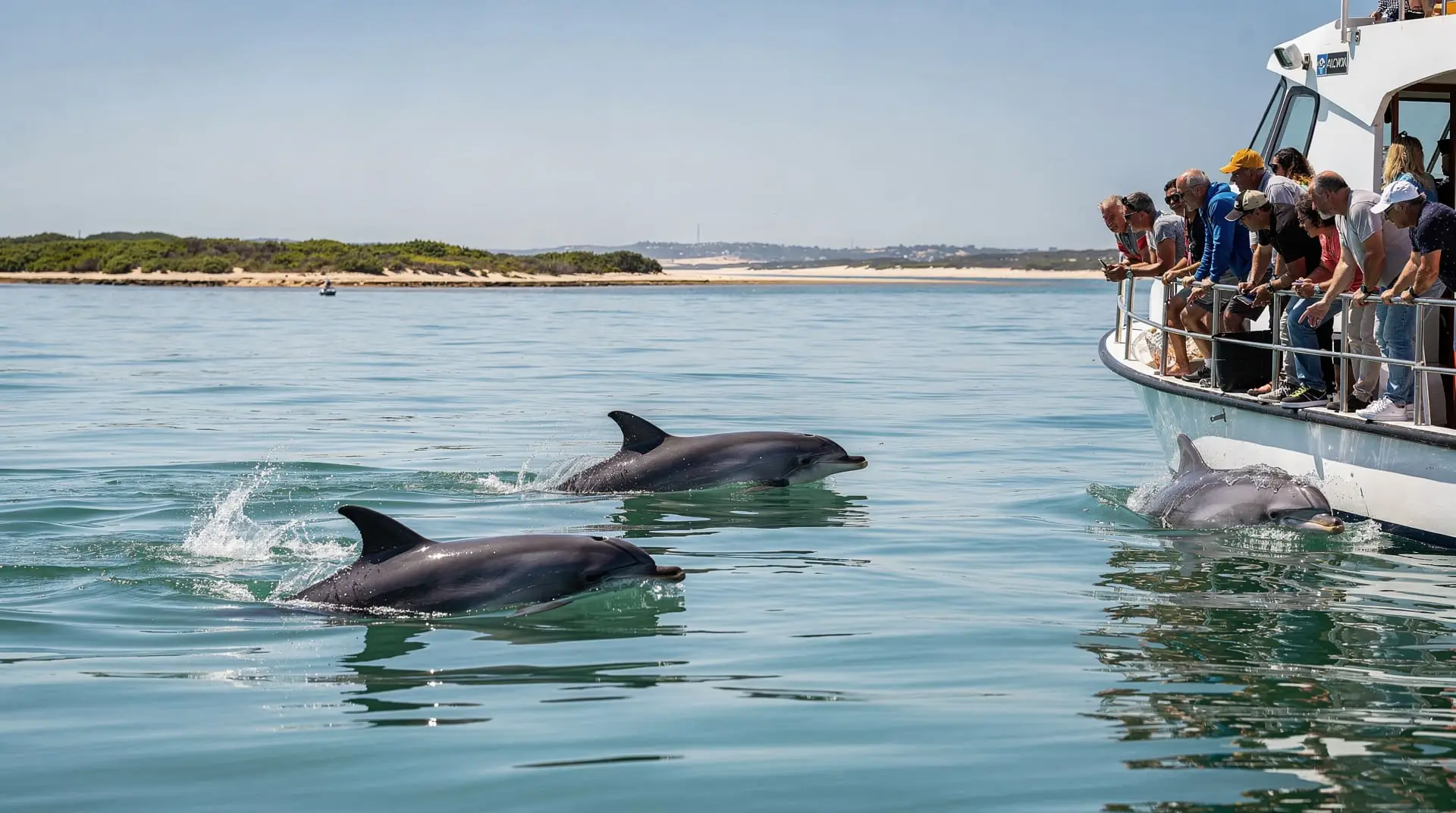
A day on the Sado with dolphins: the estuary trip from Setúbal
Published
I want to tell you about August 30th in Setúbal: the kind of hot, still morning where the air smells of salt and the estuary is flat as glass. And then the dolphins, which were real.
| Where | Setúbal, about 50km southeast of Lisbon |
| Cost | around €35-45/person for a 3-4hr boat trip |
| Time needed | half a day for the boat, a full day combined with Arrábida |
| Getting there | bus (~50min) or train via Barreiro ferry (~1hr) from Lisbon |
| Best time | July-September for warmest water; book ahead in high summer |
Getting to Setúbal
From Lisbon’s Praça de Espanha bus terminal, the Rede Expressos bus to Setúbal takes approximately 50 minutes and costs €5.50. There are also connections from Sete Rios bus terminal. You can also take the train from Barreiro (reached by ferry from Terreiro do Paço) to Setúbal, which takes about one hour and costs roughly €3.70. By car, it’s 50 kilometres via the A2 motorway. The day trip transport guide has the wider picture if you’re comparing this against other south-of-the-river options.
If you’re still deciding whether Setúbal is the right day trip for your trip at all, the which day trip from Lisbon comparison weighs it against Sintra, Cascais, and Évora.
Most of the dolphin watching operations depart from the Setúbal waterfront, specifically from the marina near the Doca de Setúbal. It’s a short walk from the bus station. The tour I booked was a three-hour morning departure at 9:00, returning around noon, with an afternoon option at 14:00 also available.
If you’d rather not deal with bus timetables, an organised day trip from Lisbon bundles the transport and the boat into one booking, which removes the only genuinely fiddly part of this trip.
Dolphin watching day trip from Lisbon, transport and boat includedThe Sado estuary itself
The Sado is one of the few places in Europe where bottlenose dolphins have established a resident — rather than migratory — population. There are currently estimated to be around 30-40 dolphins in the resident pod that inhabits the estuary. This distinction matters: resident dolphins are more predictable than open-ocean sightings. The boats are not chasing animals that may or may not appear; they’re visiting a territory the dolphins know and use.
This doesn’t mean the encounter is guaranteed in any specific form. On our trip, the dolphins were sighted within about twenty minutes of departure, a group of seven or eight, surfacing in the rhythmic way they do — once, twice, then gone, then appearing fifty metres to the left. The captain cut the engine and we drifted. The dolphins approached the hull.
That moment — when the engine is off and the animals come to you, because they’re curious rather than because you’re chasing them — is the one I’d been told about but hadn’t quite believed. They surface close enough to hear the exhalation. Close enough to see the grey-white colour of the belly when they roll. The boat was silent.
Book the Setúbal dolphin watching tour directly from the waterfrontWhat the tour actually includes
The tour I took was four hours — longer than the standard three-hour versions — and included a stop in the estuary for swimming. The water in the Sado in August is around 22 degrees, which feels warm by Atlantic standards, and the estuary bottom near the dolphin habitat is sandy and shallow. Several people jumped off the side of the boat.
The guide — a marine biologist, which is not always the case on wildlife tours — explained the conservation status of the Sado population, the individual identification techniques (dorsal fin patterns), and the threats the pod faces. The main one is boat traffic; the Sado is also an industrial port, and there is genuine tension between the heavy vessel traffic and the dolphin habitat. This is worth knowing.
Prices vary by operator and season. In August 2023 I paid €45 for the four-hour version. The standard three-hour tour is typically €35-40. Booking ahead is essential in July-August when tours fill up; less critical in September but still worth doing.
Combining with Arrábida
Setúbal sits at the northern edge of the Serra da Arrábida, a limestone ridge that drops dramatically into some of the clearest water on the Portuguese coast. The Arrábida Natural Park is a 30-minute drive or bus ride from Setúbal town centre.
If you have a full day, the logical combination is: dolphin watching in the morning (9:00-13:00), lunch in Setúbal (the fish restaurants along the waterfront are good — I had grilled robalo with potatoes and salad for €14 at a no-fuss place near the marina), then Arrábida in the afternoon. The beach at Portinho da Arrábida — a small turquoise bay at the foot of the cliffs — is one of the best beaches near Lisbon. It gets crowded in August but is manageable before 11:00 and after 16:00.
The Setúbal and Arrábida day trip guide covers the full logistics for doing this combination from Lisbon in one day. If beaches are the priority rather than the dolphins, the Arrábida beaches guide ranks the coves and tells you which ones are worth the walk down.
How this compares to other Lisbon-area wildlife trips
Setúbal isn’t the only place near Lisbon selling a wildlife encounter, and it’s worth knowing how it stacks up before you commit a day to it.
| Option | What you actually see | Reliability |
|---|---|---|
| Sado estuary (Setúbal) | Resident bottlenose dolphin pod | Very high (~95%), dolphins live here year-round |
| Sesimbra/open-ocean boat trips | Transient dolphins, occasional other cetaceans | Lower, weather and season dependent |
| Tagus estuary birdwatching | Migratory and resident bird species | High in season, no mammal guarantee |
The estuary trip wins on reliability precisely because the dolphins aren’t migrating through — they live there. That’s the whole case for choosing Setúbal over an open-ocean tour if seeing dolphins, not just trying to, is the point of your day.
The honest version of the dolphin question
People ask whether you’re guaranteed to see dolphins. The honest answer is: with resident estuary dolphins, the sighting rate is very high — around 95% according to the operators, and consistent with what I’ve heard from people who’ve done multiple trips. The open-ocean cetacean tours from Sesimbra or Lisbon itself have lower sighting rates because they’re dealing with transient populations.
That said: dolphins are wild animals and behave as such. Some days you see seven or eight in a close encounter. Some days you see a fin at distance and nothing more. The boats generally extend the trip or offer a partial refund if no sighting occurs. Read the booking conditions.
Another option: the Sado estuary dolphin trip departing from Tróia or Setúbal waterfrontWhat I can tell you from August 30th: the pod came to the boat. They surfaced three times within five metres of the hull. The guide pointed out an individual she’d named by its dorsal fin pattern and said she’d been watching this animal for eleven years. The estuary was flat and gold in the morning light.
For the broader day trip context — which day trips from Lisbon are worth the time, and which overdeliver — see day trips from Lisbon. The dolphin watching from Setúbal consistently comes up as one of the most satisfying, particularly for visitors who’ve already done Sintra and want something completely different.
Related guides
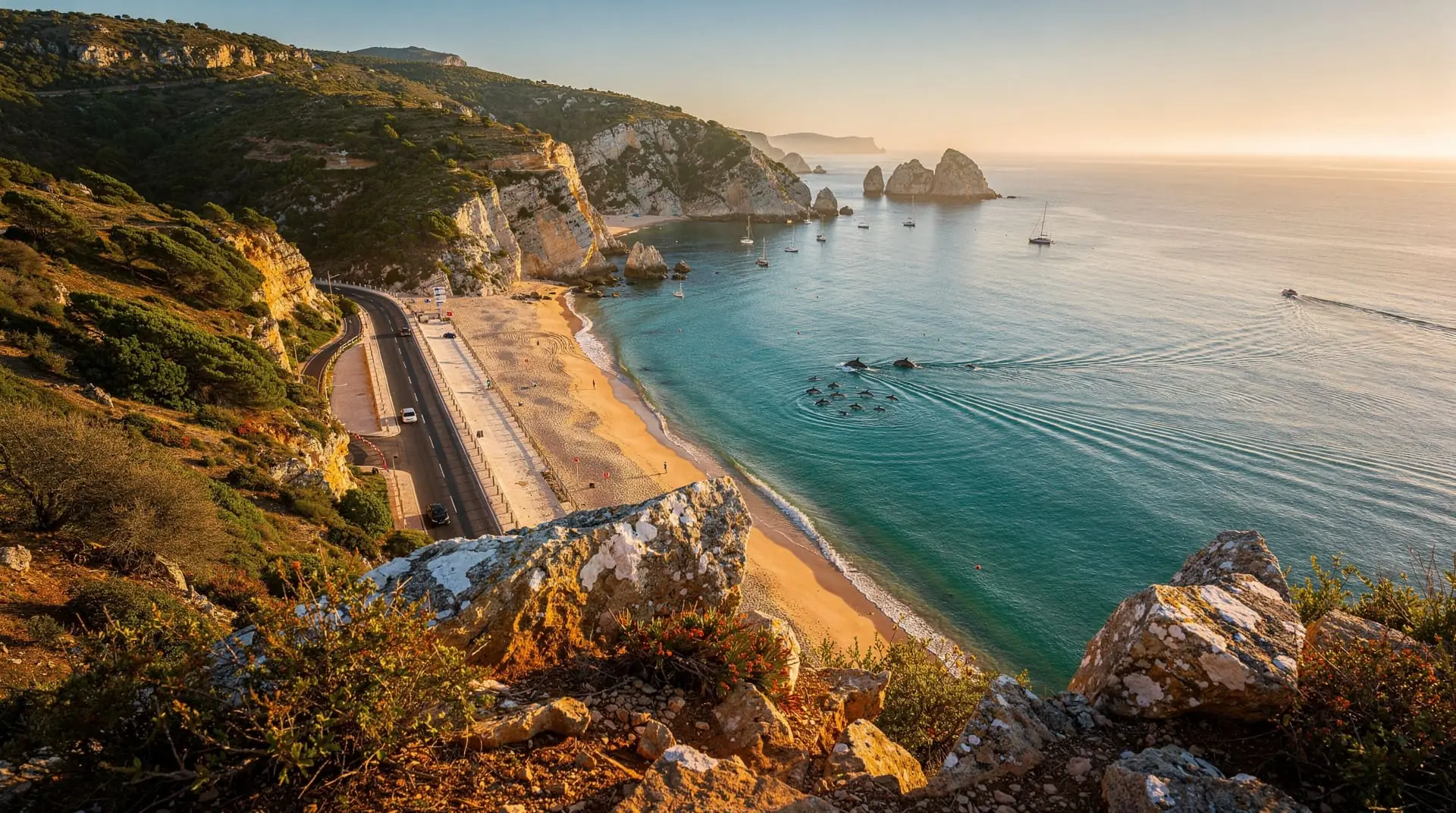
Setúbal and Arrábida day trip: beaches, dolphins and the summer road restrictions
Setúbal and Arrábida day trip — Galapinhos beach, Portinho da Arrábida, dolphin watching, summer road restrictions explained, and carless options.
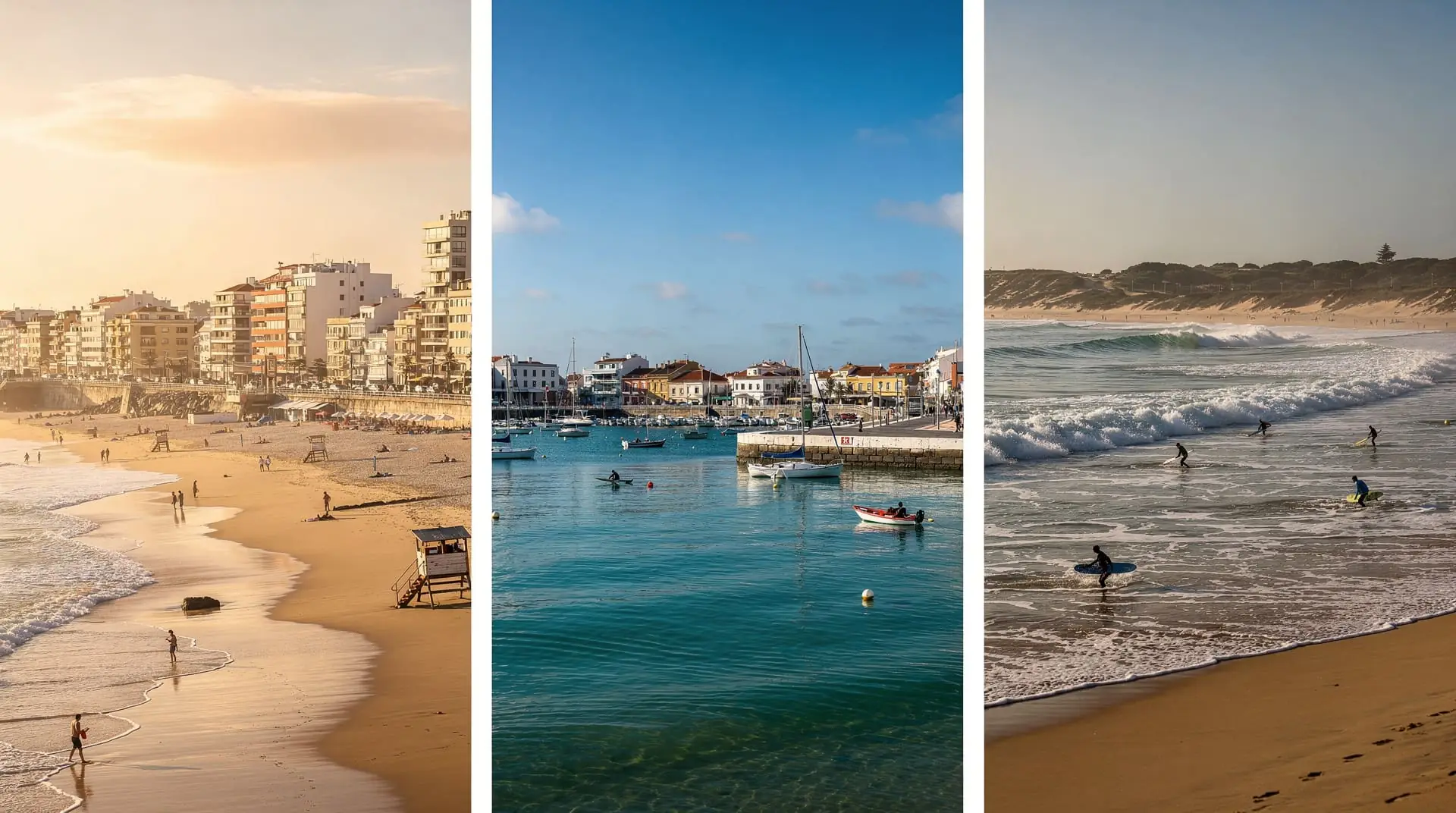
Best beaches near Lisbon — ranked by type and access
The 6 best beaches near Lisbon ranked: Caparica, Carcavelos, Cascais, Guincho, Arrábida, Comporta. By train, bus, and car with honest tips.
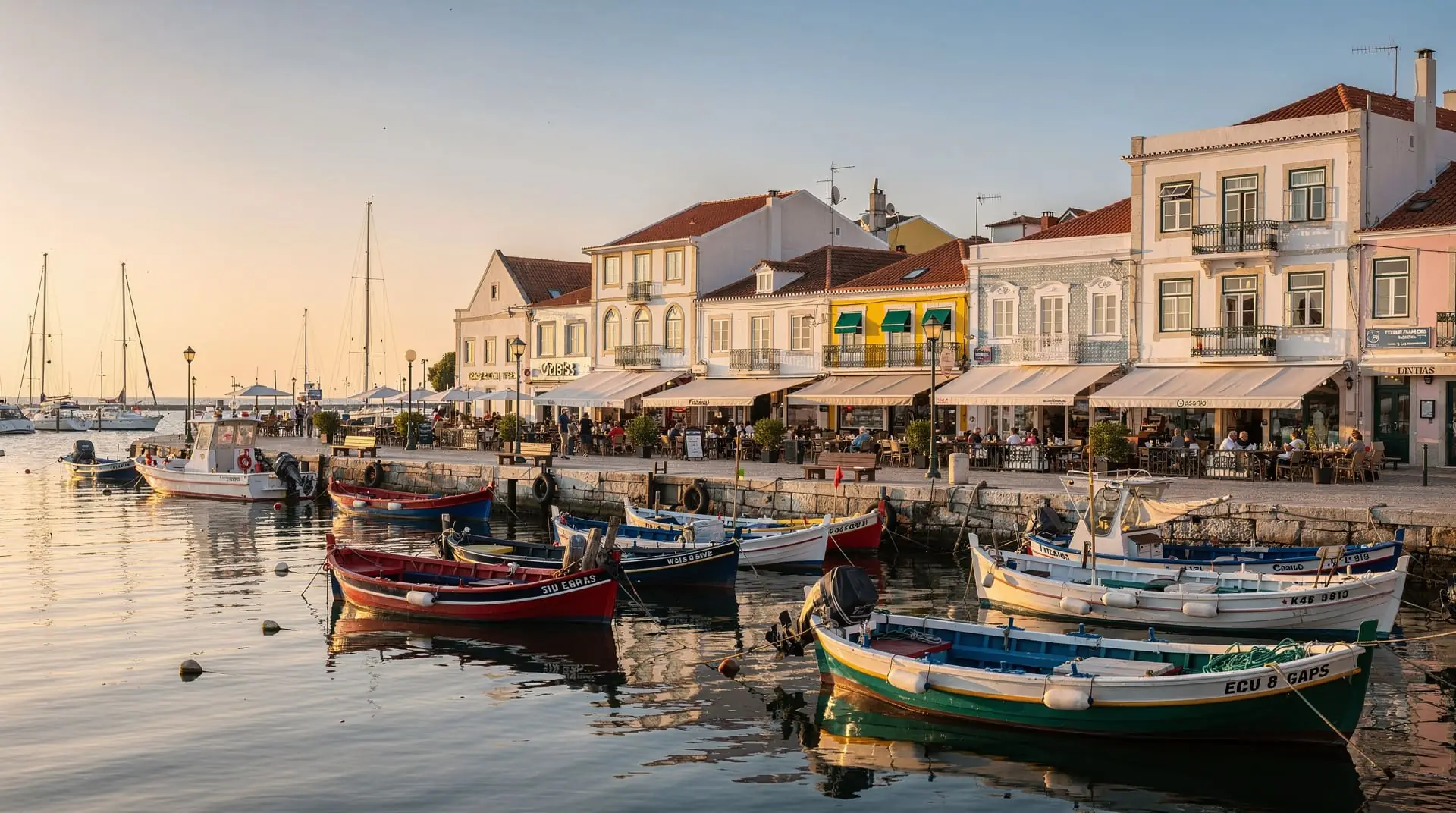
Cascais day trip from Lisbon: train, marina, Boca do Inferno and Guincho beach
How to do a Cascais day trip from Lisbon — 40-min train from Cais do Sodré, marina walk, Boca do Inferno, Guincho lunch, and the best time to return.

Sintra day trip from Lisbon: the definitive plan from the 7am train to sunset
The honest Sintra day trip guide: 7am Rossio train, Pena Palace first, Regaleira after lunch, ticket stack reality, crowds, and what to skip.